In the Sacred Valley of the Incas, high in the Peruvian Andes, the town of Ollantaytambo rises in great stone terraces up a steep mountainside. Part fortress, part temple, part royal estate, it is one of the finest surviving examples of Inca planning, and one of the very few places where people still live in an Inca-built town.
Ollantaytambo is remarkable both for its monumental architecture, including a temple of colossal stone blocks hauled from across the valley, and for its living streets, whose grid and water channels were laid out more than five centuries ago.
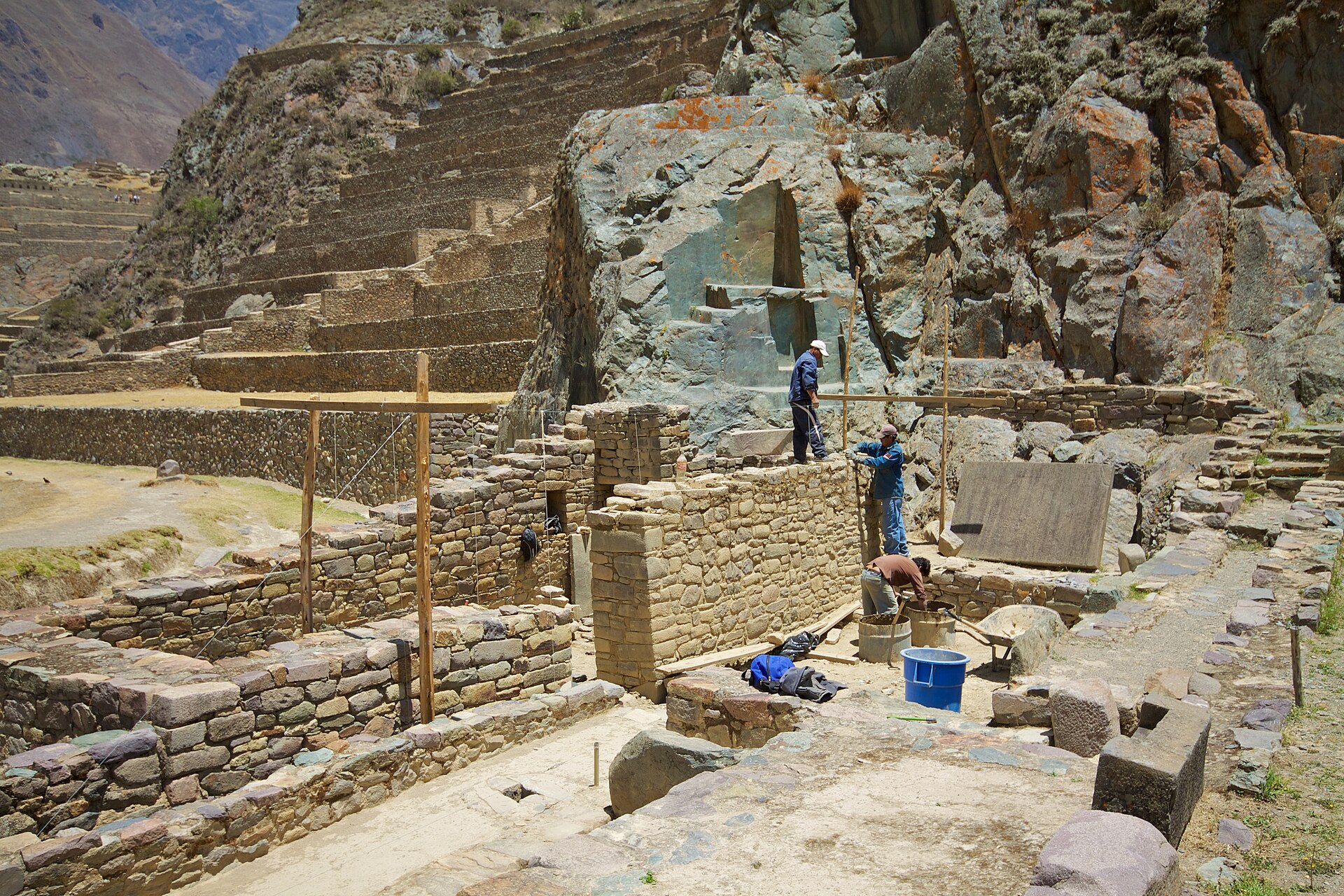
Table of Contents
- The Living Inca Town of the Sacred Valley
- A Royal Estate of Emperor Pachacuti
- The Great Terraces
- The Temple of the Sun and Its Six Monoliths
- Moving Megaliths Across a River
- The Original Inca Town Grid
- Storehouses on the Mountainside
- Water Engineering and Sacred Fountains
- The Battle of Ollantaytambo
- Ollantaytambo Today
- Nearby Places
- Closing Thoughts
The Living Inca Town of the Sacred Valley
Ollantaytambo lies in the Sacred Valley, watered by the Urubamba River, between the Inca capital of Cusco and the famous citadel of Machu Picchu. The valley’s mild climate and fertile land made it a favoured region of the Inca elite.
What makes Ollantaytambo special is that it was never abandoned. The modern town still follows the original Inca street plan, and people live in buildings raised on Inca foundations, walking streets laid out by the empire’s planners.

A Royal Estate of Emperor Pachacuti
Ollantaytambo is traditionally linked to the great Inca emperor Pachacuti, who expanded the empire and rebuilt Cusco in the fifteenth century. He is said to have conquered the region and made Ollantaytambo his personal estate.
As a royal estate it combined functions: a ceremonial and religious centre, an administrative hub, an agricultural showcase and, when needed, a fortress. Its buildings reflect the wealth and power of the imperial family.
The Great Terraces
The most striking feature of Ollantaytambo is the series of massive terraces that climb the steep hillside. Beautifully built and remarkably well preserved, they turned a near-vertical slope into usable, stable land.
These terraces served both to grow crops, creating microclimates for different plants, and as a monumental staircase leading up to the temple above. Their scale and precision are a testament to Inca engineering.

The Temple of the Sun and Its Six Monoliths
At the top of the terraces stands the unfinished Temple of the Sun, whose centrepiece is a wall of six gigantic monoliths of pink stone, fitted together with thin spacers and precisely worked faces.
Each block weighs many tonnes, and their fine joints show the extraordinary skill of Inca masons. The temple was never completed, perhaps interrupted by the Spanish conquest, leaving a tantalising glimpse of work in progress.

Moving Megaliths Across a River
One of the great puzzles of Ollantaytambo is how its builders moved the huge stones of the Temple of the Sun. The quarry lies on a mountainside on the far side of the valley, several kilometres away and across the river.
The Incas had no draft animals strong enough for the task and no iron tools, yet they dragged these enormous blocks down one slope, across the valley and river, and up to the temple site. Ramps and the labour of many workers made the seemingly impossible possible.

The Original Inca Town Grid
Below the temple lies the old town, one of the best-preserved examples of Inca urban planning. Its streets form a neat grid of blocks, each containing a cluster of dwellings around a shared courtyard.
Down the middle of many streets run stone water channels, part of an ancient system still carrying fresh water through the town. To walk these lanes is to move through a functioning Inca settlement.

Storehouses on the Mountainside
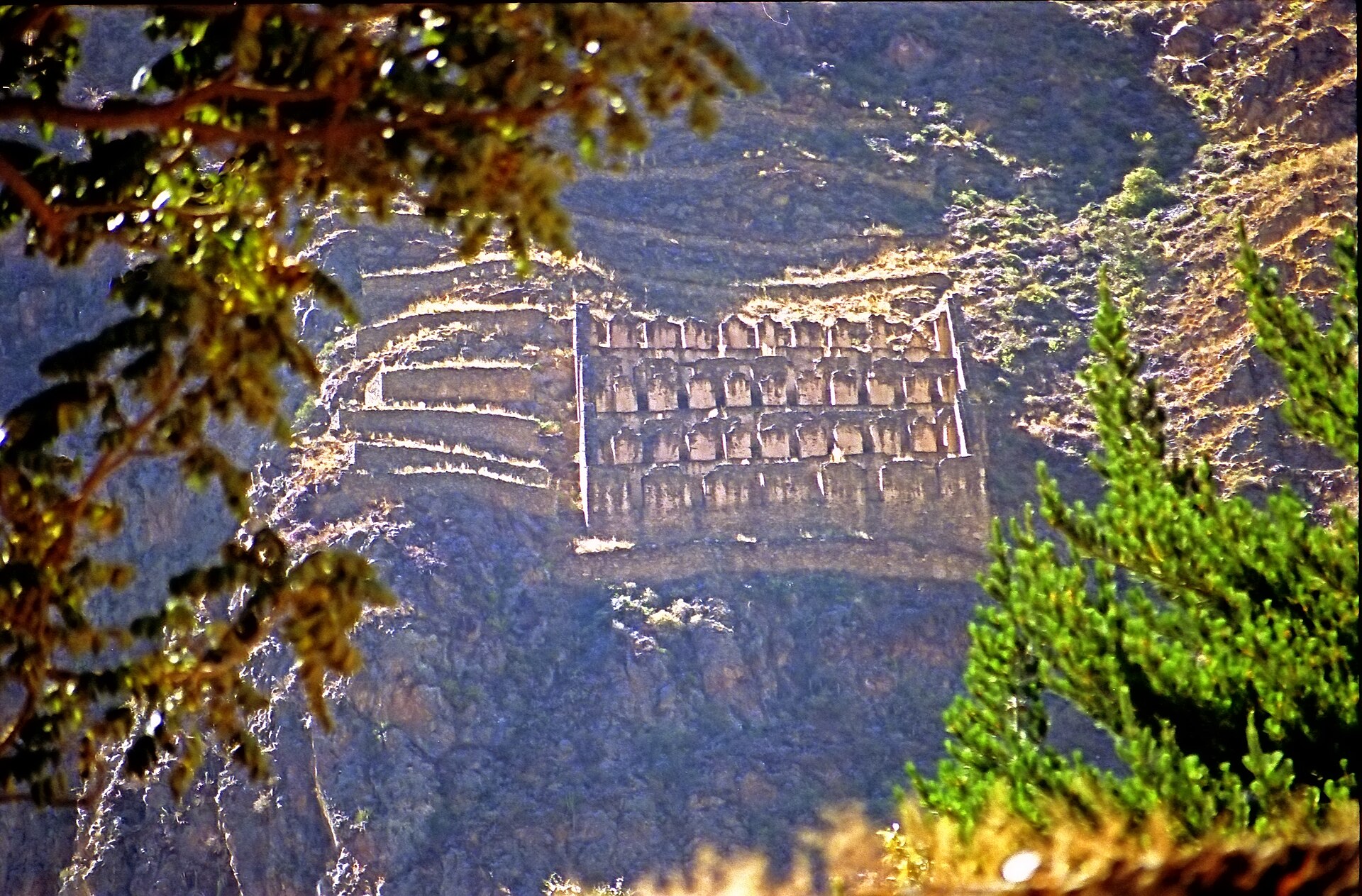
On the steep slopes across from the main ruins stand rows of Inca storehouses, or qollqas. Built high up to catch the cool mountain winds, they kept grain and other produce fresh for long periods.
These storehouses reflect the Inca genius for administration and food security, stockpiling supplies against times of need. Their position high on the hillside also made them easy to see and to guard.
Water Engineering and Sacred Fountains
The Incas were masters of water, and Ollantaytambo is full of channels, drains and fountains that still work today. Carefully carved stone conduits distribute water through the terraces and town.
Among them are ceremonial fountains and baths, such as the beautifully cut basin sometimes called the Bath of the Princess, where water was used in ritual as well as daily life. The whole site reflects a deep reverence for water.

The Battle of Ollantaytambo
Ollantaytambo is famous as the site of a rare Inca victory over the Spanish. During the great rebellion led by Manco Inca, the defenders used the high terraces as ramparts and even flooded the plain below to bog down the Spanish cavalry.
From the heights they repelled a Spanish assault, one of the few times the conquistadors were driven back. Though the Incas ultimately had to retreat deeper into the mountains, the battle remains a proud moment in the story of resistance.
Ollantaytambo Today
Today Ollantaytambo is a major stop for travellers in the Sacred Valley, many passing through on their way to Machu Picchu. Yet it remains a real, living town rather than a mere museum.
Its combination of spectacular ruins and continuing Inca-rooted daily life makes it unique. Protected as part of Peru’s rich heritage, Ollantaytambo offers one of the most complete pictures anywhere of the Inca world.

Nearby Places
- Tulum — a Maya city of the Americas that, like Ollantaytambo, met the Spanish in the age of conquest.
- Petra — another mountainous ancient site famous for mastering stone, water and dramatic terrain.
- Baalbek — a site, like Ollantaytambo, that raises the age-old question of how ancient builders moved colossal stones.
Closing Thoughts
Ollantaytambo is the Inca Empire preserved in stone and in daily life: monumental terraces and temple megaliths above, a living grid of streets and running water below.
Site of one of the Incas’ few victories over the Spanish, and still home to people who walk its ancient lanes, Ollantaytambo is far more than a ruin. It is one of the most vivid and complete survivals of a great American civilisation.
You May Like
Mafra, the Palace a King Built From a Vow


One thought on “Ollantaytambo: The Living Inca Town Where Megaliths Crossed a River”