In the Beqaa Valley of Lebanon stand some of the most colossal temples the Roman world ever built. This is Baalbek, known in antiquity as Heliopolis, the City of the Sun, where columns taller than a six-storey building once framed a sanctuary of almost unimaginable scale.
Baalbek is famous for two things above all: the sheer size of its temples, among the grandest ever raised by Rome, and the astonishing megalithic stones in its foundations, blocks so vast that people still marvel at how they were ever moved.

Table of Contents
- The Colossal Temples of Ancient Heliopolis
- From Phoenician Shrine to Roman Sun City
- The Great Court and Monumental Entrance
- The Temple of Jupiter and Its Six Columns
- The Trilithon: Stones Beyond Belief
- The Stone of the Pregnant Woman
- The Temple of Bacchus, the Best-Preserved
- The Round Temple of Venus
- Later History: Fortress, Faith, and Earthquake
- Baalbek Today and UNESCO
- Nearby Places
- Closing Thoughts
The Colossal Temples of Ancient Heliopolis
Baalbek sits in a fertile valley between two mountain ranges in what is now Lebanon. Here, over several centuries, the Romans built a temple complex on a scale intended to overawe, dedicating it to a trio of gods worshipped as a local form of Jupiter, Venus and Mercury.
The result was one of the largest sanctuaries in the entire Roman Empire. Even in ruin, its surviving columns and carved stone convey the ambition of a project that took generations to complete.

From Phoenician Shrine to Roman Sun City
Long before the Romans arrived, the site was sacred. Local peoples had worshipped a sun and storm god here for centuries, and the name Baal, meaning lord, survives in its modern form.
When the region came under Greek and then Roman control, the old cult was reinterpreted through classical gods, and the Romans renamed the place Heliopolis. They then set about rebuilding its sanctuary in the grandest imperial style.
The Great Court and Monumental Entrance
Worshippers approached the temples through a monumental gateway and a series of grand courts, arranged to build a sense of anticipation. These spaces were surrounded by columned porticoes, niches and altars where rituals and sacrifices took place.
The scale of even these forecourts is enormous, and they were richly decorated with sculpture and carving. They formed a fitting prelude to the towering temple that stood beyond.

The Temple of Jupiter and Its Six Columns
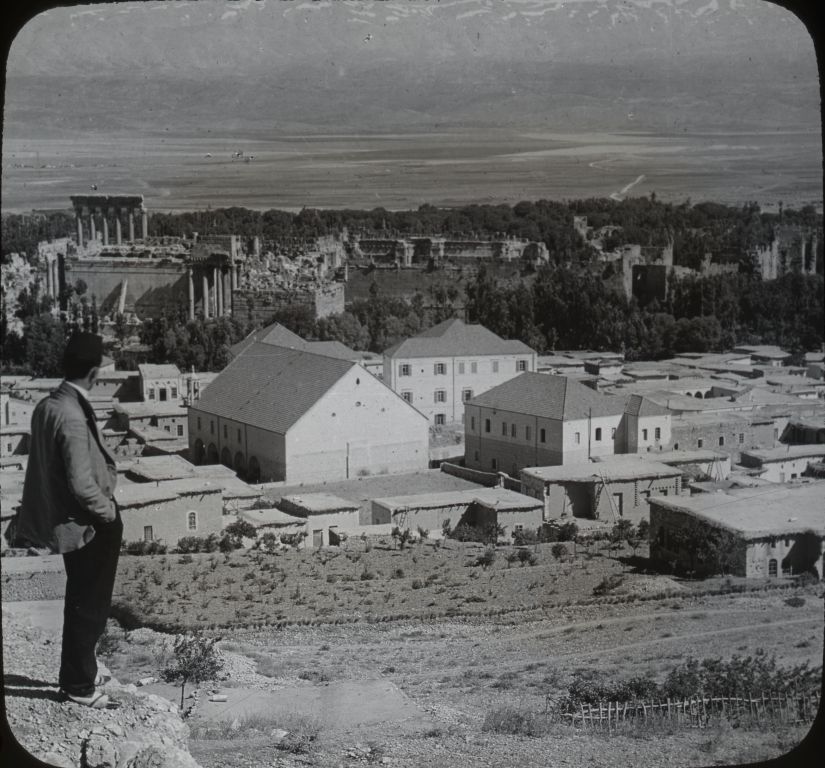
The greatest structure at Baalbek was the Temple of Jupiter, whose columns stood around twenty metres tall and nearly two and a half metres thick, among the largest ever used in a temple. Today only six of them remain standing in a row.
Even these survivors, silhouetted against the sky, give a breathtaking impression of the original. The full temple, with dozens of such columns, must have been one of the most imposing buildings anywhere in the ancient world.

The Trilithon: Stones Beyond Belief
Beneath the Temple of Jupiter runs a wall containing the Trilithon, three gigantic blocks of stone each weighing several hundred tonnes, fitted together with astonishing precision. They are among the largest building stones ever placed by human hands.
How the Romans quarried, moved and raised such masses without modern machinery remains a subject of genuine study and debate. The Trilithon is a powerful reminder of just how sophisticated ancient engineering could be.
The Stone of the Pregnant Woman
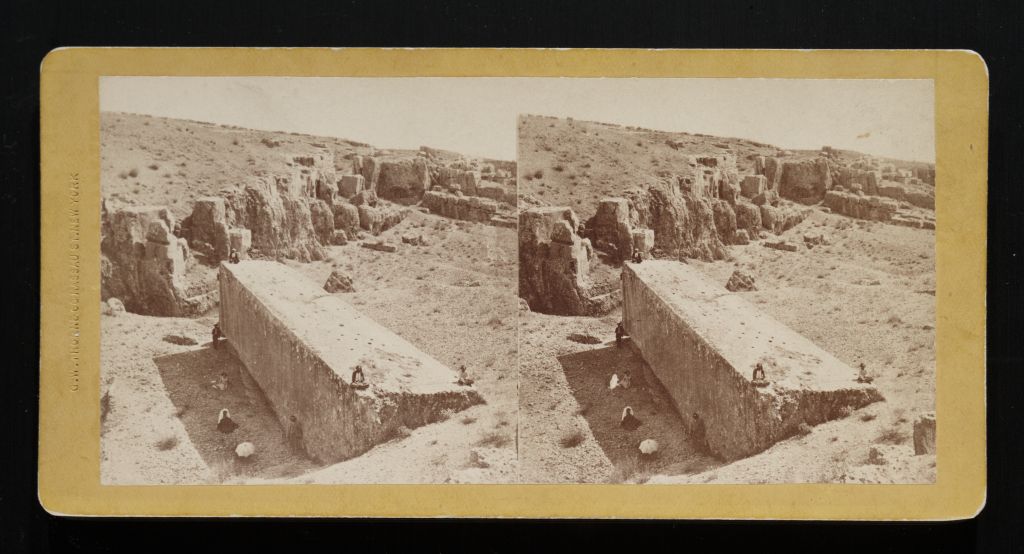
In a quarry a short distance from the temples lies an even larger block, known as the Stone of the Pregnant Woman, together with others nearby that are larger still. Cut but never moved, they remain where the ancient masons left them.
These blocks, weighing perhaps a thousand tonnes or more, show the ambitions and the limits of the builders. They offer a rare glimpse of an ancient construction site frozen in mid-project.
The Temple of Bacchus, the Best-Preserved
Beside the ruined Temple of Jupiter stands the smaller but far better-preserved Temple of Bacchus. Though modest by Baalbek’s standards, it is actually larger than the Parthenon in Athens and one of the most complete Roman temples anywhere.
Its walls, columns and richly carved doorway survive in remarkable condition, allowing visitors to experience the interior of a great Roman temple almost as it once was. The detail of its decoration is extraordinary.


The Round Temple of Venus
A short walk from the main sanctuary stands a small and unusual temple often associated with Venus. Circular in plan with a curved, scalloped entablature, it breaks from the strict rectangular form of most classical temples.
Its inventive, almost playful design later attracted the admiration of Renaissance architects. It shows that even at monumental Baalbek there was room for architectural experiment.

Later History: Fortress, Faith, and Earthquake
As the Roman Empire became Christian, the temples were closed and partly converted, and later, under Islamic rule, the great complex was turned into a fortress, its temples enclosed within defensive walls.
Over the centuries powerful earthquakes toppled many of the columns and cracked the great structures. Yet enough survived, protected within the citadel, to astonish the European travellers who began to visit in later centuries.
Baalbek Today and UNESCO
Baalbek was inscribed on the UNESCO World Heritage List in 1984 as one of the finest examples of imperial Roman architecture. Its temples, quarries and megaliths continue to draw visitors and scholars alike.
Today the site hosts a renowned international arts festival, with performances staged against the backdrop of the ancient columns. Few settings on earth so vividly combine the grandeur of the ancient world with the life of the present.
Nearby Places
- Palmyra — another spectacular sanctuary city of the Roman Near East, with its own great Temple of Bel.
- Petra — the rock-cut caravan capital of the Nabataeans, blending eastern and classical architecture like Baalbek.
- The Roman Forum and the Colosseum — the monumental heart of the empire that raised the temples of Baalbek.
Closing Thoughts
Baalbek unites two kinds of wonder: the refined splendour of Roman temple architecture at its most ambitious, and the raw mystery of megalithic stones whose placement still challenges our understanding.
To stand beneath the six remaining columns of the Temple of Jupiter, or beside the vast quarried blocks nearby, is to feel the full weight of ancient ambition. Baalbek remains one of the supreme achievements of the builders of antiquity.
You May Like

Mafra, the Palace a King Built From a Vow


One thought on “Baalbek: The Roman Sun City With Columns and Stones Beyond Belief”