On a lonely mountain summit in southeastern Turkey, more than two thousand metres up, a row of colossal stone heads gazes out over the surrounding peaks. These giant faces, toppled from the bodies of enormous seated statues, once guarded the tomb-sanctuary of a king who declared himself the equal of the gods. This is Mount Nemrut, one of the most extraordinary and haunting monuments of the ancient world.
Built by Antiochus I of the little kingdom of Commagene, the sanctuary blended Greek and Persian gods and set the king among them for eternity. High, remote and mysterious, with its enormous heads scattered across the mountaintop, Nemrut is often called the eighth wonder of the ancient world.
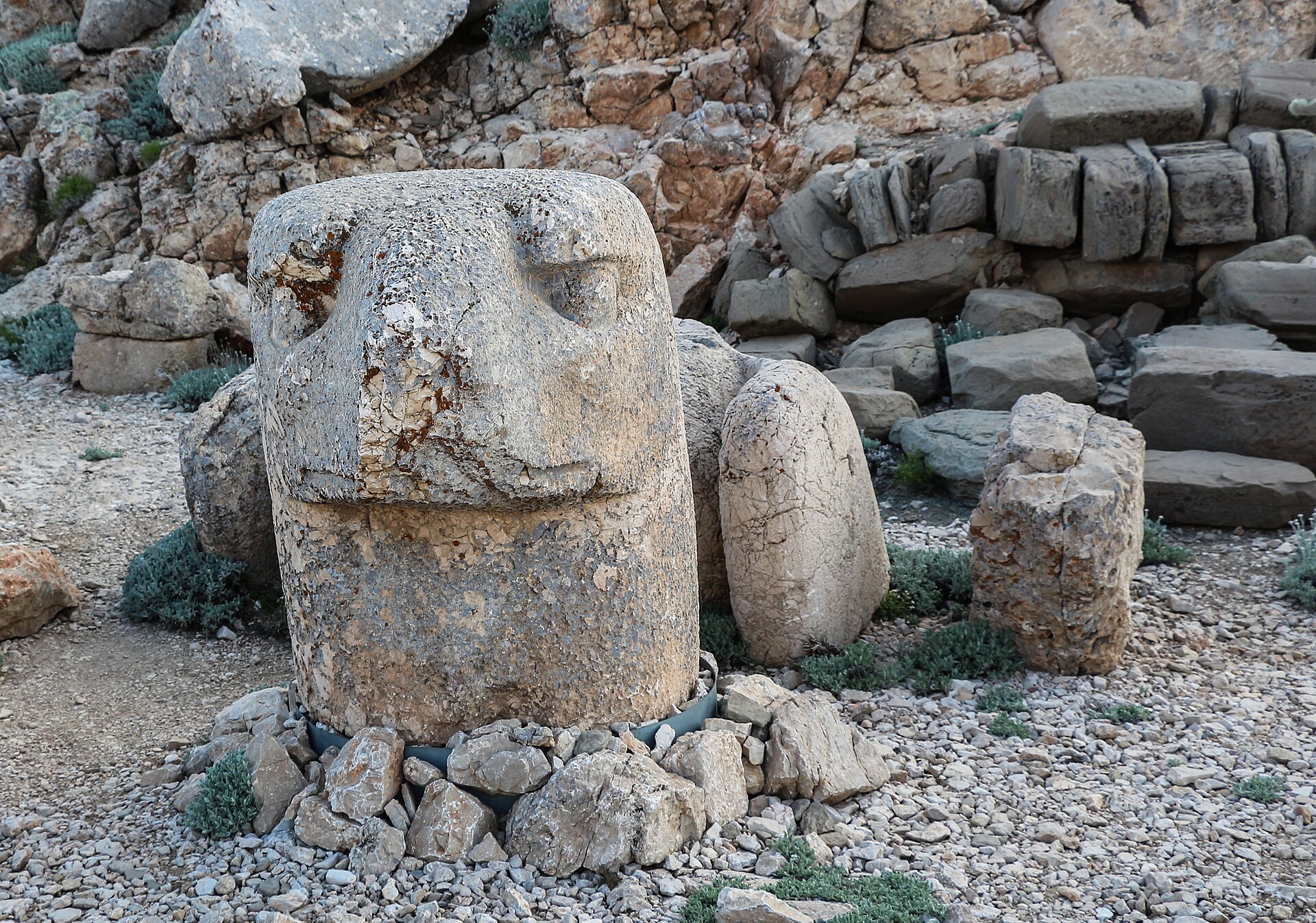
Table of Contents
- The Mountain of the Gods
- King Antiochus I of Commagene
- The Colossal Statues
- The Fallen Heads
- A Blend of Greek and Persian Gods
- The Royal Tomb-Mound
- Guardian Eagles and Lions
- Sunrise and Sunset on the Summit
- An Undiscovered Tomb?
- Rediscovery and UNESCO
- Getting There
- Nearby Places
- Closing Thoughts
The Mountain of the Gods
Mount Nemrut rises high in the Taurus range of southeastern Turkey, one of the tallest peaks in the region. On its summit an ancient king built a sanctuary and tomb, a place literally reaching toward the heavens.
The remoteness and height of the site were deliberate, meant to bring the king closer to the gods and to make his monument visible and unforgettable. Even today, reaching the windswept summit feels like a pilgrimage.

King Antiochus I of Commagene
The sanctuary was the work of Antiochus I, who ruled the small kingdom of Commagene in the first century BC. Caught between the great powers of Rome and Persia, Commagene was a minor state, but its king had grand ambitions.
Antiochus claimed descent from both Greek and Persian royalty and presented himself as a divine ruler. His monument on Mount Nemrut was designed to secure his place among the gods forever.
The Colossal Statues
On terraces near the summit, Antiochus set up rows of enormous seated statues, several of them around eight or nine metres tall when complete. They depicted the king enthroned among a group of gods, all of similar size, as equals.
These colossal figures, carved from great blocks of stone, were an astonishing undertaking for so small a kingdom. They express the king’s determination to be remembered as a god among gods.

The Fallen Heads
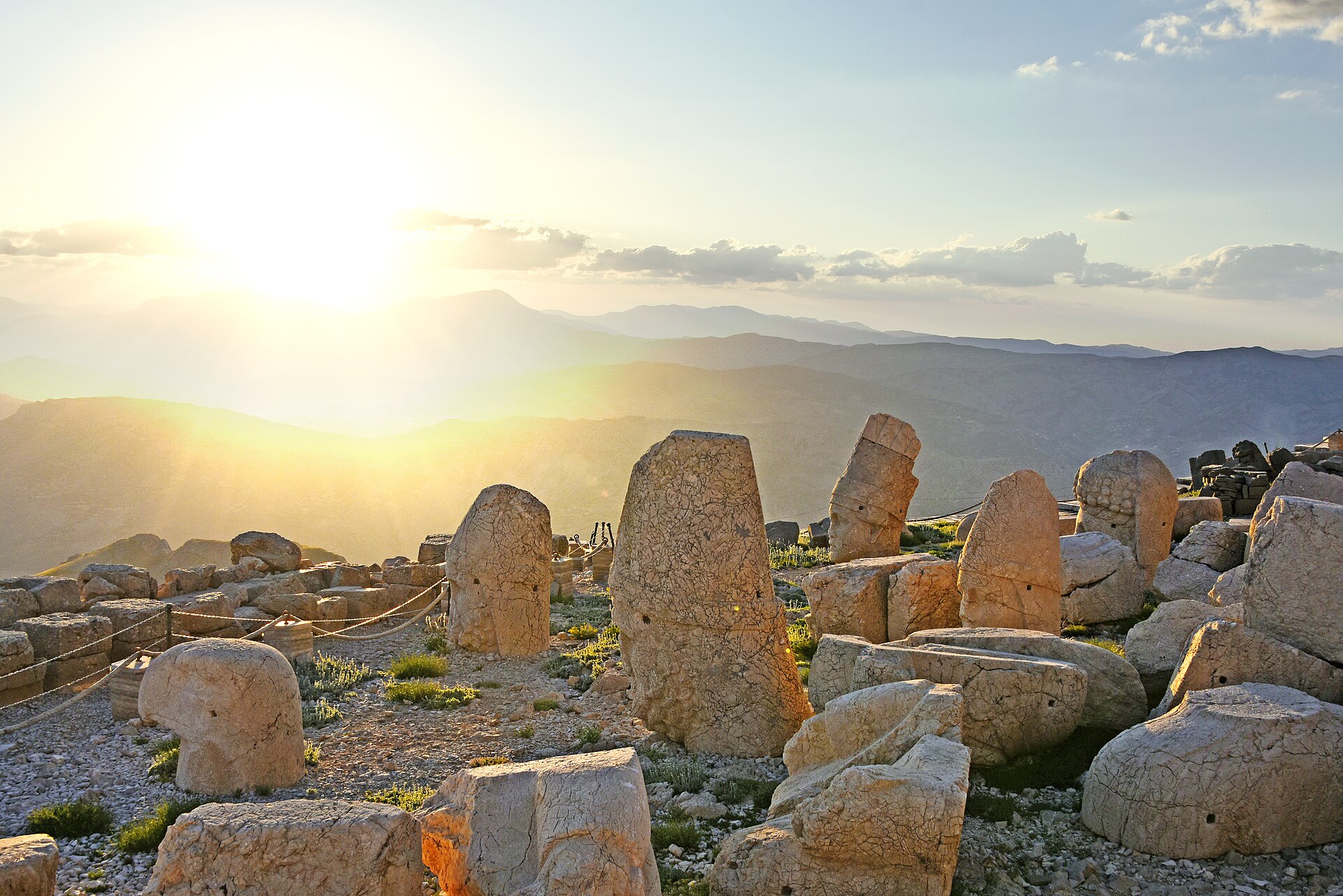
Over the centuries earthquakes toppled the great statues, and their massive heads tumbled down from the bodies to the terraces below. Today these heads lie apart from their seated figures, staring up at the sky.
It is these scattered giant faces, calm and enigmatic, that give Nemrut its unforgettable and eerie atmosphere. Ranged across the mountaintop, they are among the most striking images in all of archaeology.
A Blend of Greek and Persian Gods
The gods honoured at Nemrut reflect the mixed culture of Commagene. They combine Greek and Persian deities into single figures, such as a god merging the Greek Zeus with the Persian Ahura Mazda.
Inscriptions carved on the monument set out Antiochus’s beliefs and instructions for his cult. Nemrut is a vivid expression of a world where East and West met and blended on the frontier between empires.
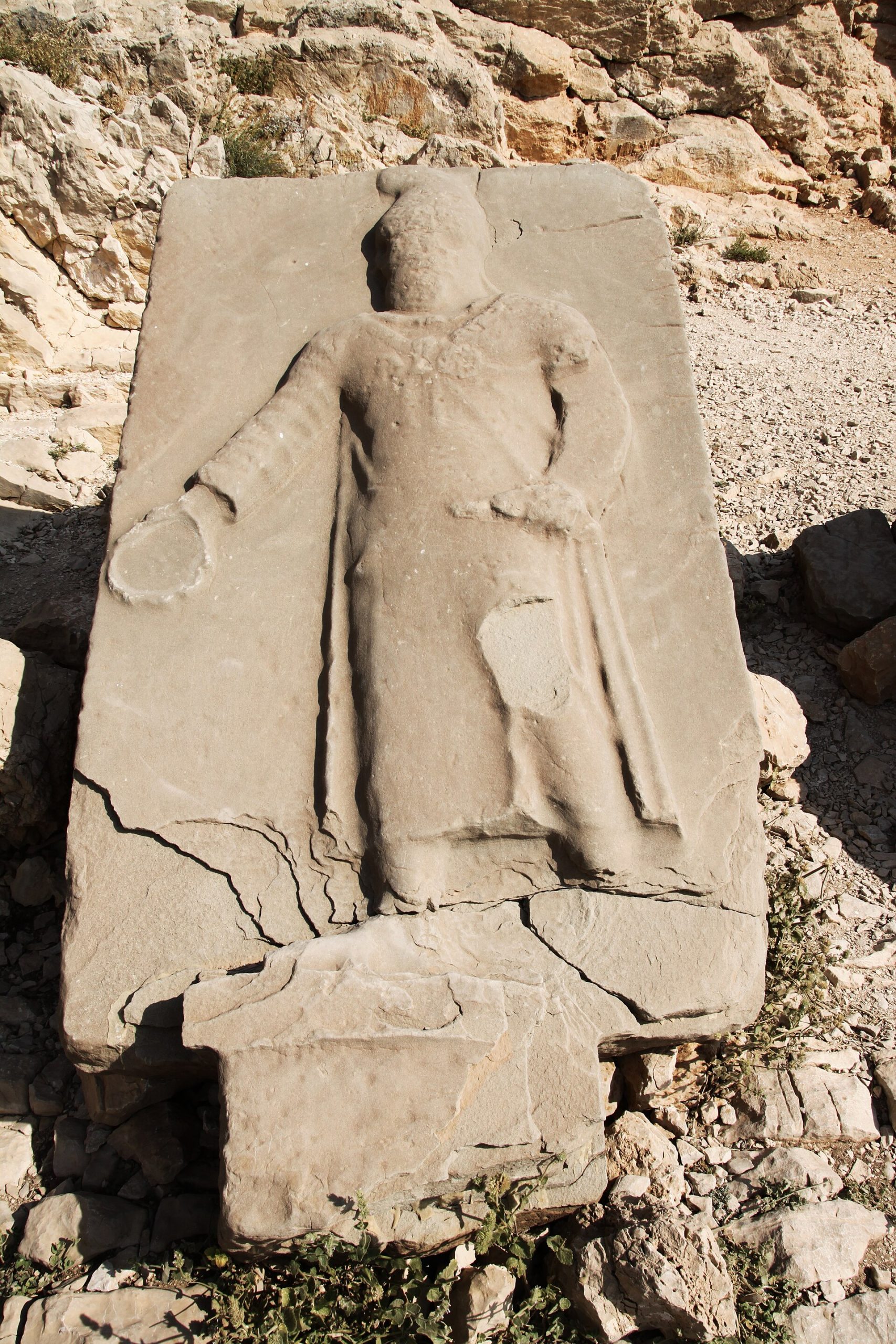
The Royal Tomb-Mound
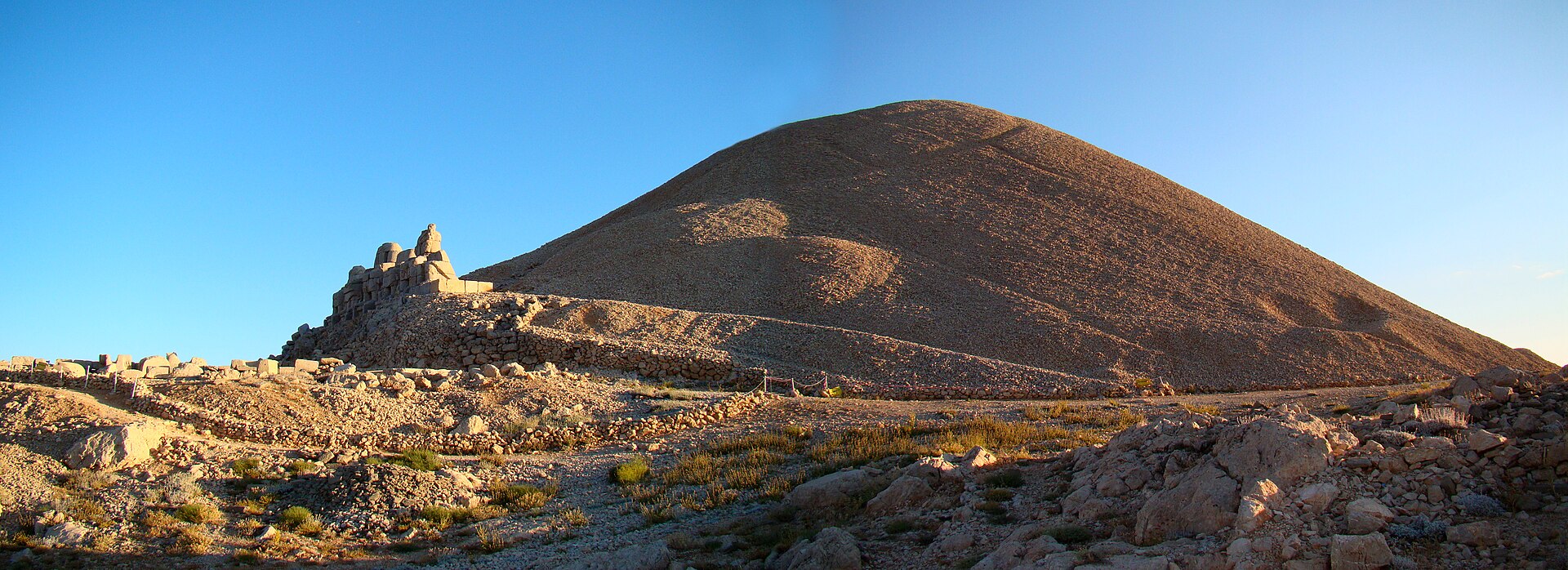
At the centre of the sanctuary rises a great artificial mound of crushed rock, many metres high, built over the summit. This tumulus is believed to cover the tomb of Antiochus himself.
The terraces with their statues are arranged around this mound on different sides. The whole complex was designed as a monumental resting place where the god-king would be worshipped for all time.
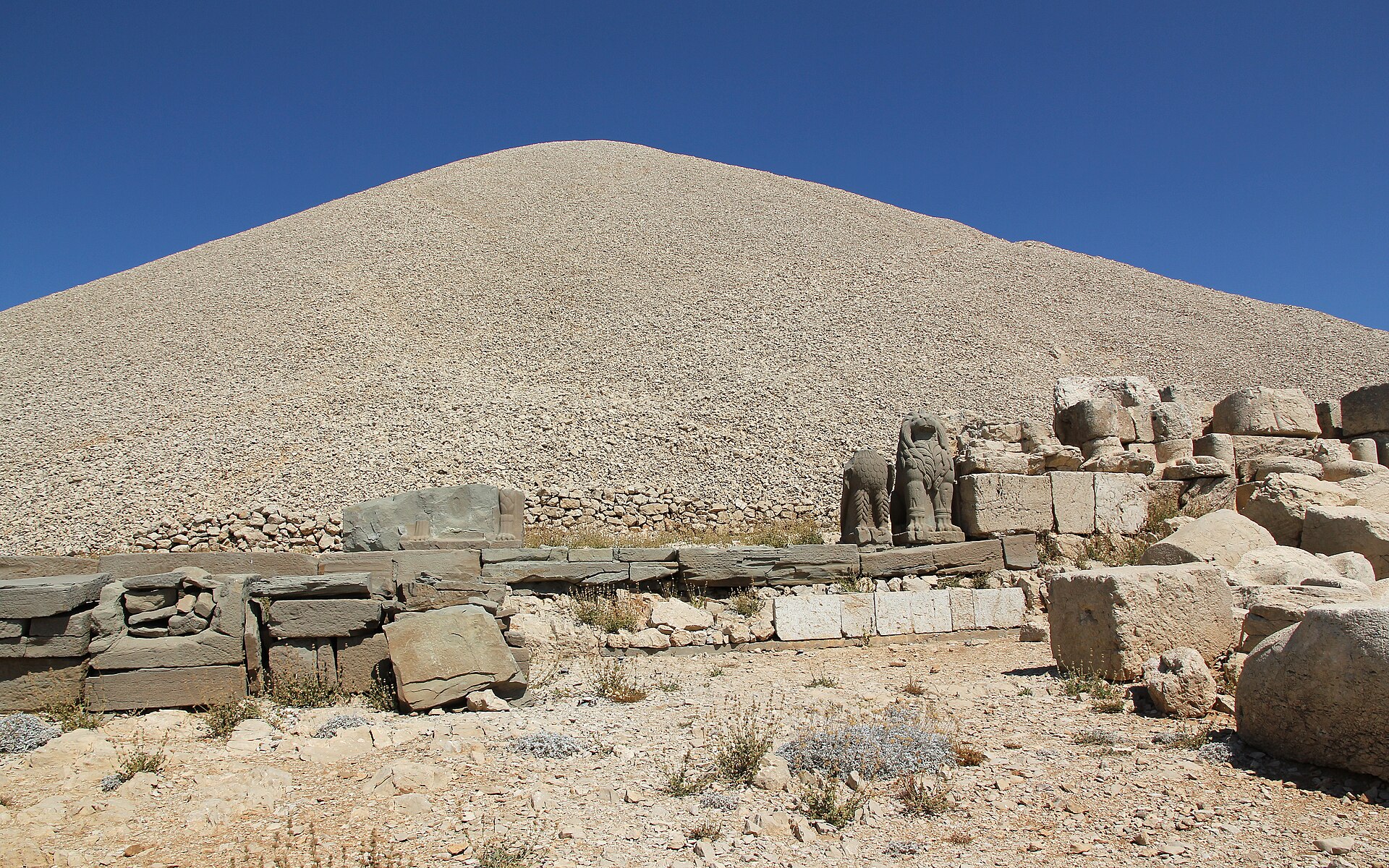
Guardian Eagles and Lions
Among the statues stood guardian figures of eagles and lions, sacred animals that protected the sanctuary and symbolised power and divinity. Their carved forms are found among the toppled stones.
One famous carved slab, showing a lion covered with stars, is thought to be an ancient horoscope, perhaps marking a significant date in the king’s reign. It is one of the oldest such astrological monuments known.
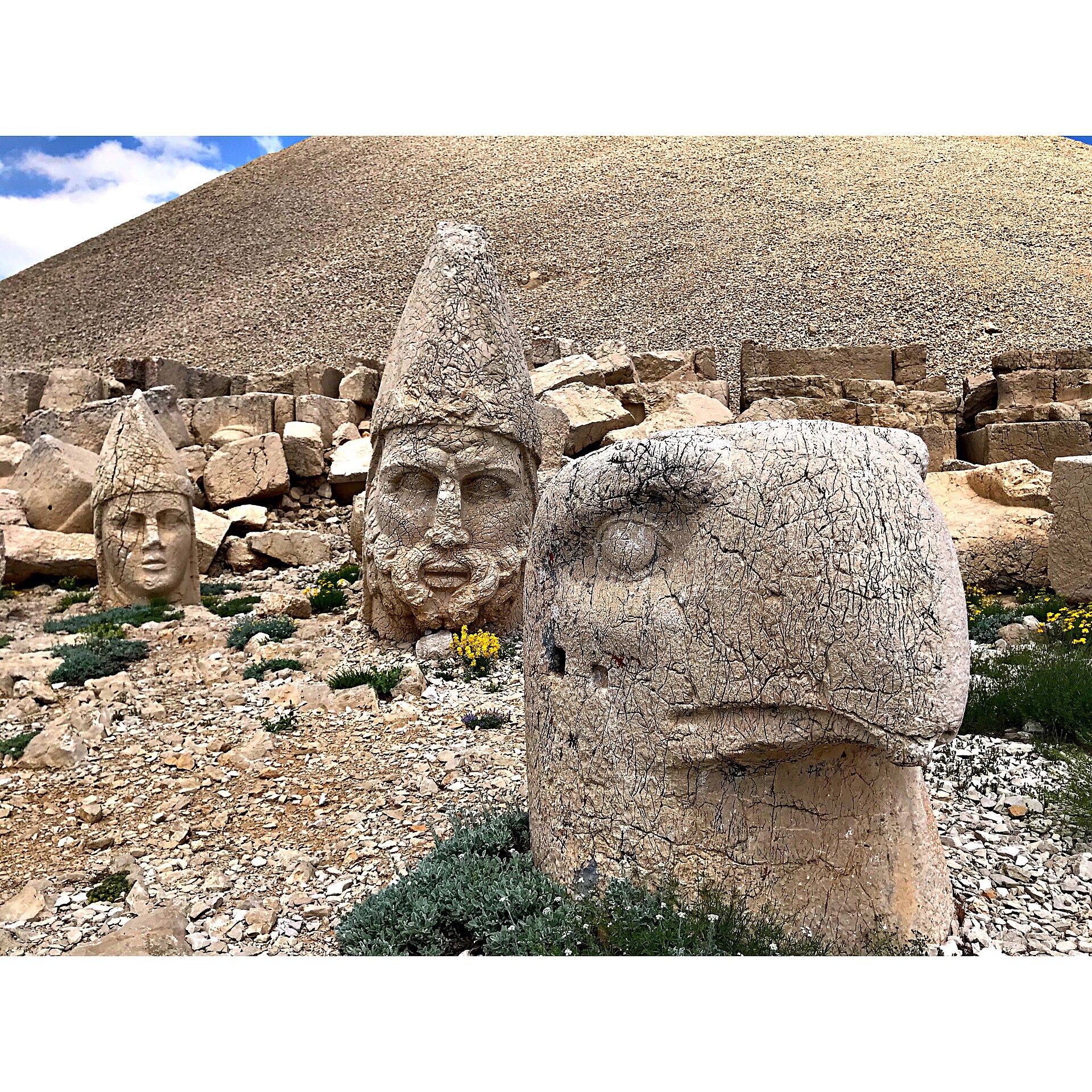
Sunrise and Sunset on the Summit
Mount Nemrut is famous for its dawn and dusk, when the low sun bathes the giant heads in golden and rose light. Many visitors climb before dawn to watch the sun rise over the statues.
The sight of the colossal faces glowing against the sky, high above the surrounding mountains, is unforgettable. It is easy to understand why the king chose this dramatic spot to face eternity.

An Undiscovered Tomb?
Despite much study, the actual burial chamber of Antiochus has never been found. The great mound of loose stone is extremely difficult to excavate, as tunnelling into it risks collapse.
This means that, if the king’s tomb lies within, it may still be intact and undisturbed after two thousand years. The possibility adds to the mystery that surrounds this remarkable mountain sanctuary.
Rediscovery and UNESCO
Mount Nemrut was largely forgotten until the late nineteenth century, when it was brought to wider attention and later studied by archaeologists. Its dramatic statues astonished the world.
The sanctuary was inscribed on the UNESCO World Heritage List in 1987. Today it is one of the most famous sights in eastern Turkey, drawing travellers to its lonely summit and its giant, watching heads.
Getting There
Mount Nemrut lies in Adiyaman Province in southeastern Turkey, within a national park. The nearest towns are Adiyaman and Kahta, and the region can be reached by air via Adiyaman or Malatya airports.
From the towns below, visitors travel by road up the mountain and then climb the final stretch on foot to the summit terraces. Trips are usually timed for sunrise or sunset, and warm clothing is needed even in summer.
Coordinates: 37.9810, 38.7414 — open Mount Nemrut in Google Maps.
Nearby Places
- Gobekli Tepe — another extraordinary monument of southeastern Turkey, from a far more ancient age.
- Hatra — another frontier kingdom between Rome and Persia that blended Greek and eastern gods.
- Easter Island — another remote place of colossal stone heads, sometimes compared with Nemrut.
Closing Thoughts
Mount Nemrut is the monument of a king who would be a god: a mountaintop sanctuary of colossal statues, their giant heads now scattered across the summit, gazing out over the peaks for two thousand years.
Blending the gods of East and West, and perhaps still hiding an untouched royal tomb, it is one of the most dramatic and mysterious sites of the ancient world. To watch the sun rise over its silent stone faces is an experience like no other.
You May Like
Mafra, the Palace a King Built From a Vow