On a hilltop in southeastern Turkey stands a monument that has rewritten the story of human civilisation. Gobekli Tepe is the oldest known temple in the world, built around eleven and a half thousand years ago, long before writing, metal, pottery, or even farming. Its great carved stone pillars are thousands of years older than Stonehenge or the pyramids.
That hunter-gatherers, with only stone tools, could quarry, carve and raise these massive monoliths has astonished archaeologists. Gobekli Tepe suggests that the urge to build sacred monuments may have come before, and perhaps even helped bring about, settled life and farming.
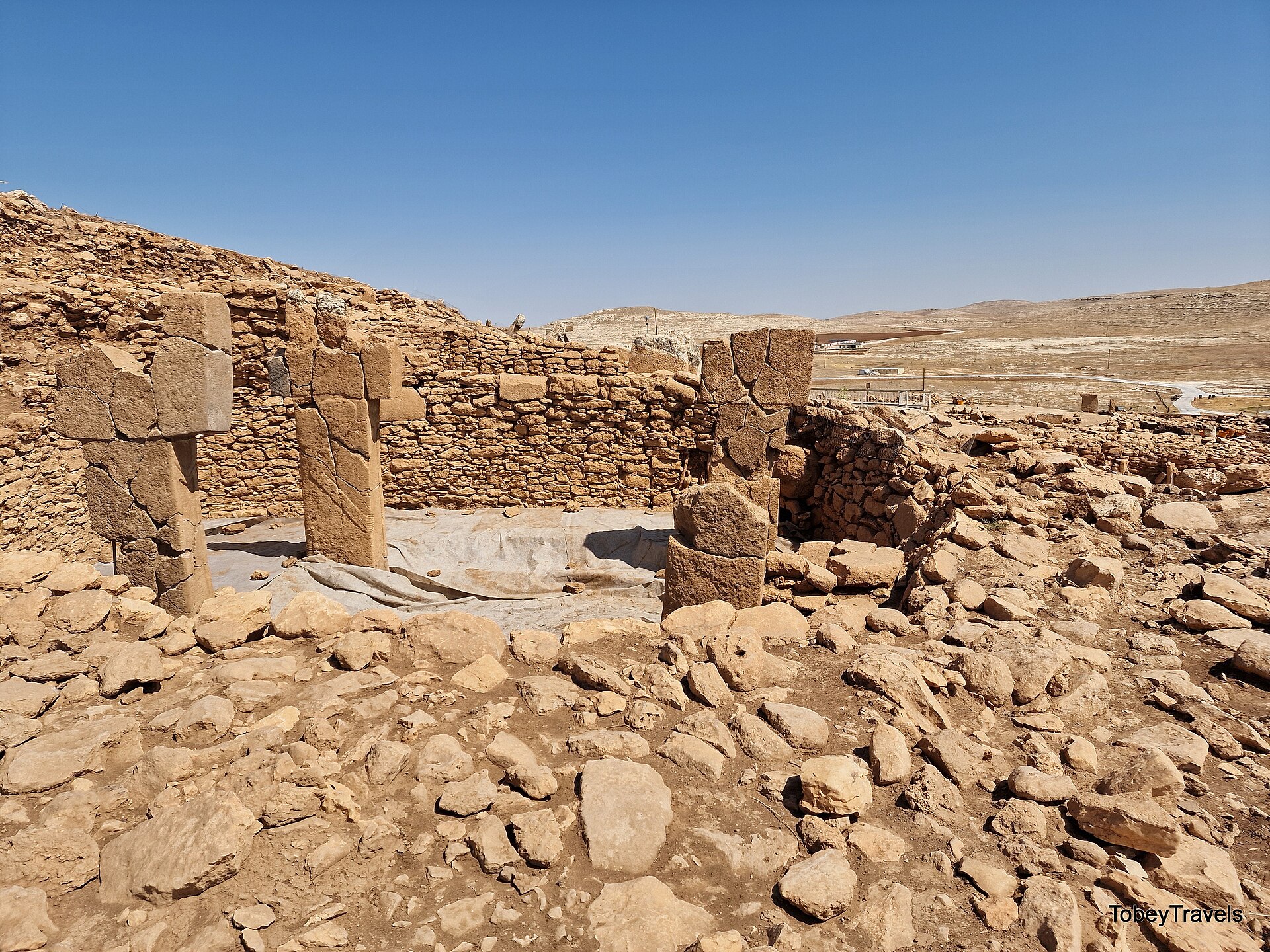
Table of Contents
- The World’s Oldest Temple
- Before Farming, Before Pottery
- The T-Shaped Pillars
- The Great Enclosures
- Carvings of Animals
- Who Built It and Why
- Rewriting the Story of Civilisation
- Symbols and Beliefs
- Deliberately Buried
- Excavation, the Region, and UNESCO
- Getting There
- Nearby Places
- Closing Thoughts
The World’s Oldest Temple
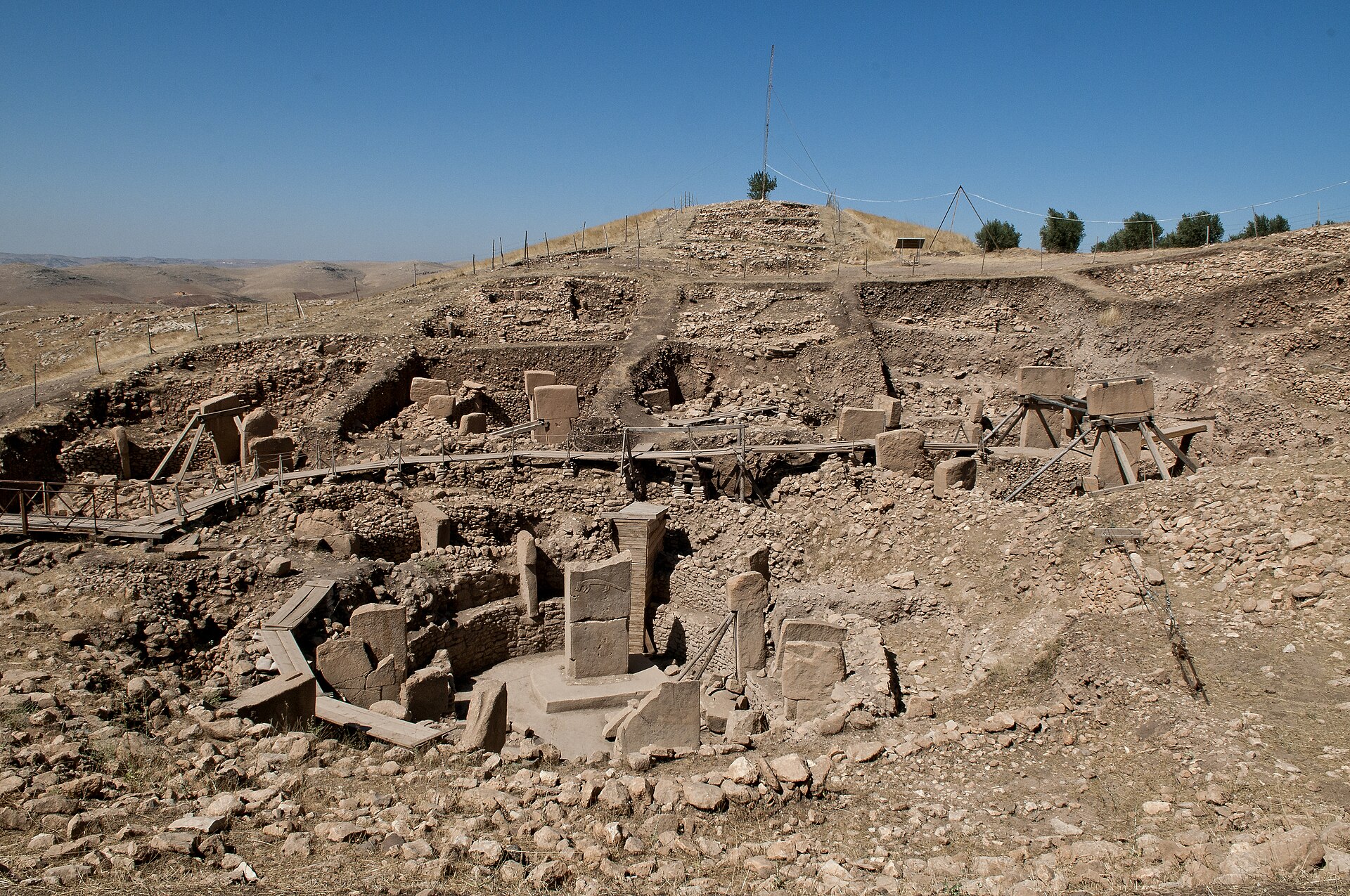
Gobekli Tepe means Potbelly Hill in Turkish, after the rounded mound that concealed it. Beneath that mound lie circles of huge stone pillars, built around 9500 BC, making the site by far the oldest monumental architecture known.
To grasp its age, consider that it is roughly twice as old as the first cities of Mesopotamia and the pyramids of Egypt. Nothing on this scale was thought possible so early, and its discovery stunned the world of archaeology.
Before Farming, Before Pottery
What makes Gobekli Tepe so revolutionary is who built it. It was raised by hunter-gatherers, people who lived by hunting wild animals and gathering wild plants, before the invention of agriculture, pottery or metal tools.
For a long time scholars believed that only settled farming societies could organise the labour to build monuments. Gobekli Tepe overturns that idea, showing that mobile hunting peoples were capable of extraordinary collective effort.
The T-Shaped Pillars
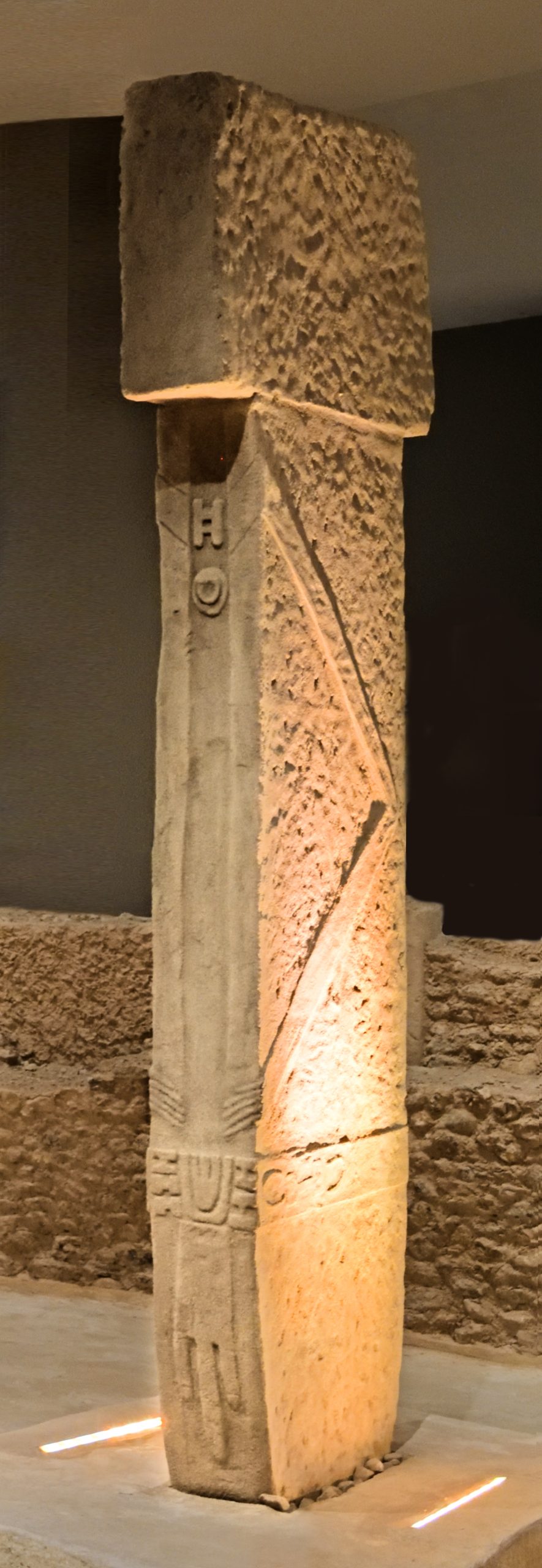
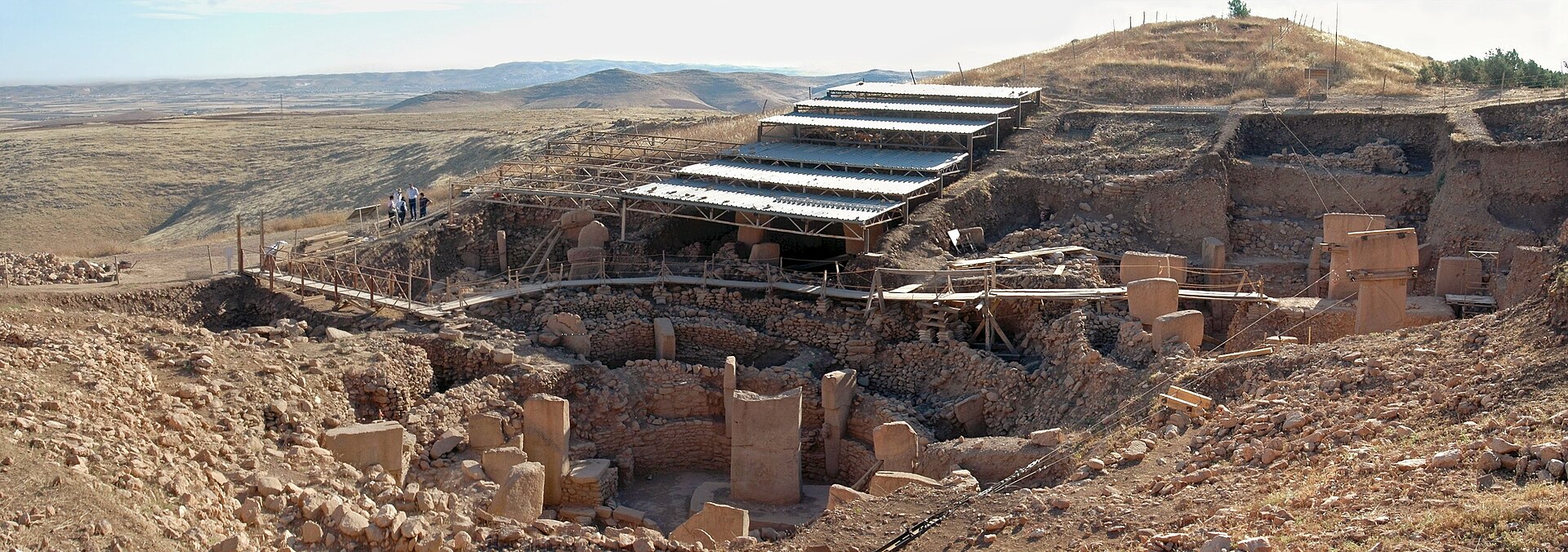
The heart of Gobekli Tepe is its T-shaped limestone pillars, some standing over five metres tall and weighing many tonnes. Arranged in circles, with two larger pillars at the centre of each, they may represent stylised human or divine figures.
Some pillars have arms, hands and belts carved on them, strengthening the idea that they are abstract beings. Quarried and raised with only stone tools, they are a staggering technical achievement for their age.
The Great Enclosures
The pillars are set within a series of roughly circular enclosures, ringed by walls and benches. Several such enclosures have been uncovered, and geophysical surveys suggest many more still lie buried in the mound.
These spaces were almost certainly used for gatherings and rituals rather than as ordinary dwellings. They may have drawn people together from a wide area for ceremonies, feasts and shared beliefs.
Carvings of Animals
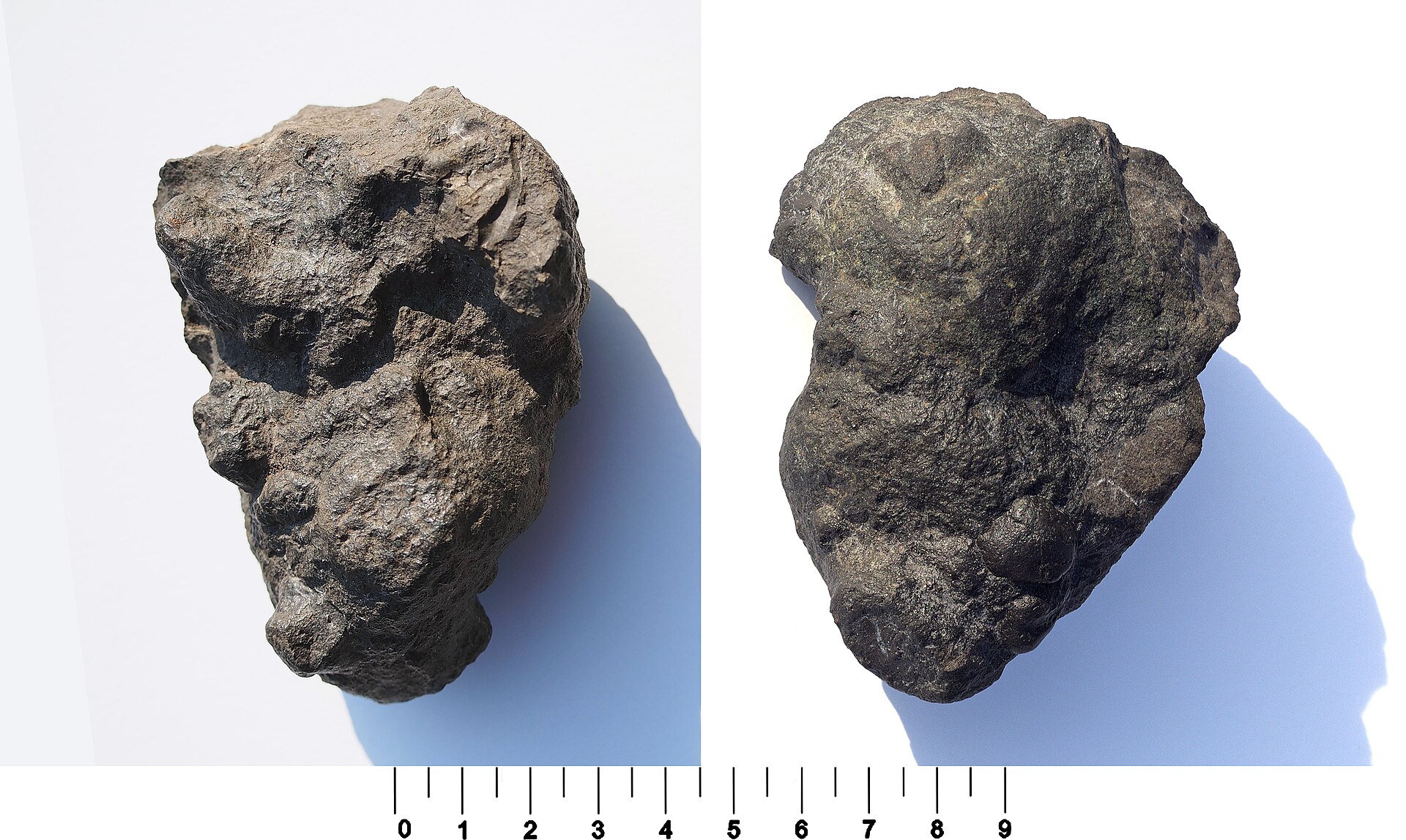
The pillars of Gobekli Tepe are richly carved with animals: foxes, boars, snakes, scorpions, birds, wild cattle and more. These are creatures of the wild world the builders knew, rendered with striking skill.
The meaning of these carvings is unknown, but they clearly mattered deeply to their makers. They may relate to myths, clan symbols, or beliefs about the spirit world, offering a rare glimpse into the minds of Stone Age people.

Who Built It and Why
No one lived permanently at Gobekli Tepe in the ordinary sense; it seems to have been a special ceremonial place. Building it would have required large numbers of people to gather, work together and be fed, perhaps over generations.
The need to feed such gatherings may even have encouraged the domestication of wild grains nearby, some of the earliest steps toward farming. In this view, religion and ritual may have helped drive the birth of agriculture.
Rewriting the Story of Civilisation
The traditional story held that farming came first, producing surplus food, settled villages and only then temples and organised religion. Gobekli Tepe suggests the sequence may have been more complex, with monumental religion appearing remarkably early.
Whether or not it directly caused the rise of farming, the site shows that complex belief, cooperation and monumental building were within reach of hunter-gatherer societies. It has forced a rethink of how civilisation began.
Symbols and Beliefs
Beyond animals, the pillars bear abstract signs and symbols whose meaning is lost to us. Together with the human-like form of the great central pillars, they hint at a rich world of belief and ritual.
Gobekli Tepe gives us the earliest known evidence of organised religion on a monumental scale. It is a window, however clouded, onto the spiritual life of people at the very dawn of settled human society.
Deliberately Buried
One of the great mysteries of Gobekli Tepe is that it was deliberately buried in antiquity. At some point its builders, or their descendants, filled in the enclosures with earth and rubble, covering the pillars.
This intentional burial, whatever its reason, helped preserve the site for thousands of years. It also deepens the mystery of a people who first raised these monuments and then chose to hide them away.
Excavation, the Region, and UNESCO
Gobekli Tepe was recognised as extraordinary through the excavations led by the German archaeologist Klaus Schmidt from the 1990s. His work revealed the true age and importance of the site.
It lies in a region rich in other very early sites, and the nearby city of Sanliurfa has a fine museum displaying finds, including one of the oldest life-sized human statues ever found. Gobekli Tepe was inscribed on the UNESCO World Heritage List in 2018.

Getting There
Gobekli Tepe lies in Sanliurfa Province in southeastern Turkey, about fifteen kilometres northeast of the city of Sanliurfa. Sanliurfa has an airport with flights from Istanbul and Ankara.
From the city the site is a short drive away, and a modern visitor centre and protective canopy now shelter the excavations. A visit is best combined with the Sanliurfa Archaeology Museum and the region’s other early sites.
Coordinates: 37.2231, 38.9224 — open Gobekli Tepe in Google Maps.
Nearby Places
- Nabta Playa — another very early ritual stone circle, from the deep prehistory of the Sahara.
- Mohenjo-daro — one of the first cities, from thousands of years after the builders of Gobekli Tepe.
- Nineveh — a great later capital of the same Near Eastern world where farming and cities eventually arose.
Closing Thoughts
Gobekli Tepe is where the story of monuments, and perhaps of civilisation itself, begins: circles of towering carved pillars raised by hunter-gatherers before farming, pottery or writing existed.
Older than the pyramids by many thousands of years, and then mysteriously buried by its own makers, it has forced us to rethink how human society and religion began. Few discoveries have so profoundly changed our understanding of the deep human past.
You May Like
Mafra, the Palace a King Built From a Vow


One thought on “Gobekli Tepe: The World’s Oldest Temple, Built by Hunter-Gatherers Before Farming”