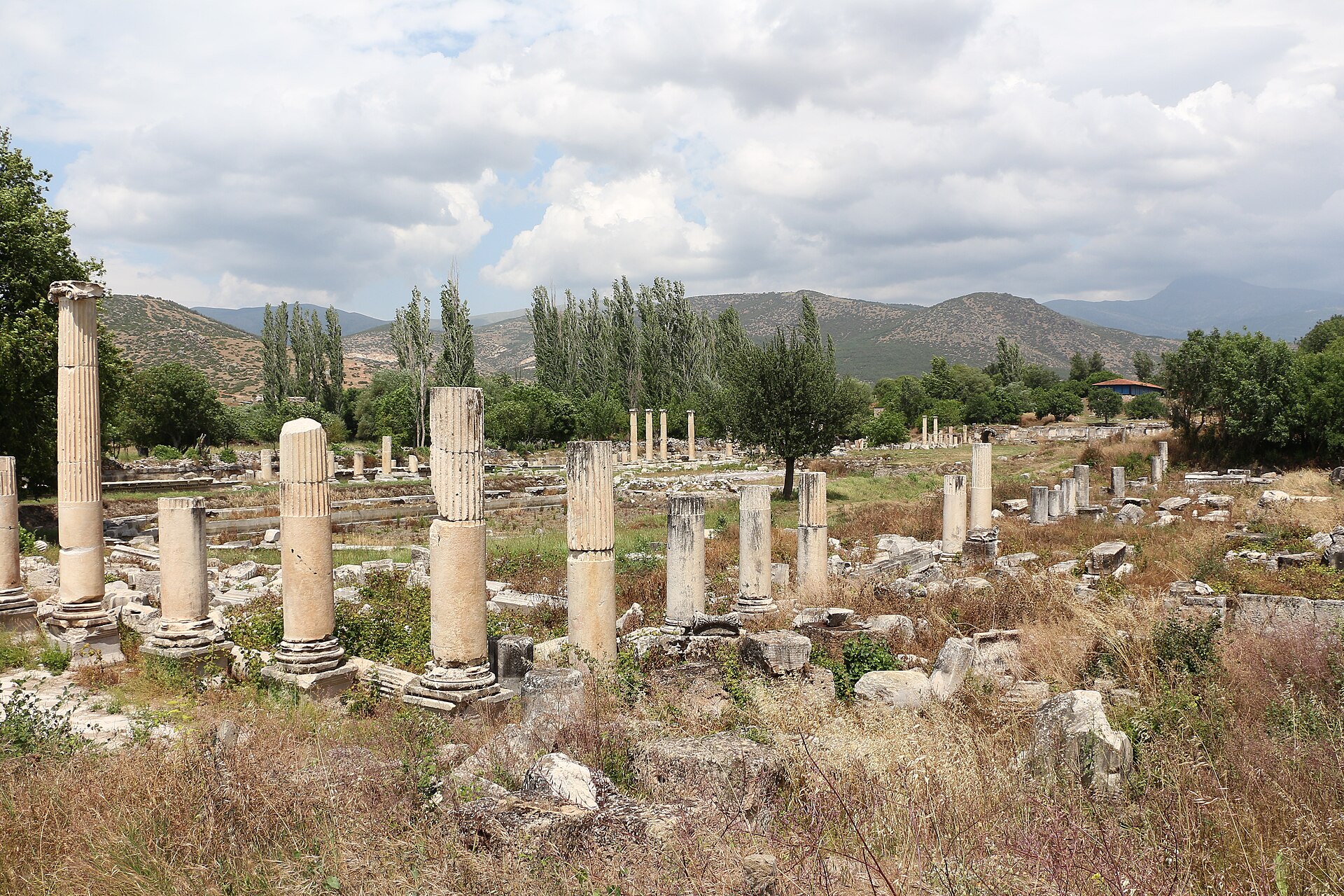
In the countryside of western Turkey lies Aphrodisias, one of the most beautiful and best-preserved ancient cities in the world. Named after Aphrodite, the goddess of love and beauty, it was famed throughout the Roman world for its magnificent marble and for a school of sculptors whose work was prized from Rome to the eastern provinces.
Blessed with fine marble quarried in the hills nearby, Aphrodisias became a city of statues, temples and monuments of exceptional quality. Its stadium, its temple of the goddess and its wonderfully carved reliefs make it a place of rare elegance and completeness.

Table of Contents
- The City of Aphrodite
- A City Devoted to Beauty and Sculpture
- The Tetrapylon
- The Temple of Aphrodite
- The Sebasteion
- The Great Stadium
- The Theatre and the Bouleuterion
- The Marble and the Sculptors’ School
- From Aphrodite to a Christian City
- Rediscovery and UNESCO
- Getting There
- Nearby Places
- Closing Thoughts
The City of Aphrodite
Aphrodisias was dedicated to Aphrodite, and its name and identity were bound up with the goddess. It grew into a prosperous city under Greek and then Roman rule, enjoying special favour and privileges.
Set in a fertile valley, the city flourished for centuries as a centre of culture, religion and art. Its ruins today are spread across a peaceful landscape, giving it a serene and unspoiled atmosphere.

A City Devoted to Beauty and Sculpture
Aphrodisias owed much of its fame to marble. Rich quarries in the nearby hills provided fine white and grey stone, and the city became home to a celebrated school of sculptors.
Their statues and reliefs were admired across the Roman Empire, and works signed by Aphrodisian sculptors have been found far away, including in Rome itself. The city was, quite literally, built on the art of carving stone.
The Tetrapylon
One of the most striking monuments of Aphrodisias is the Tetrapylon, a grand ornamental gateway of columns marking the approach to the temple of Aphrodite. Beautifully restored from its original blocks, it is a masterpiece of decorative architecture.
Its richly carved columns and pediment show the skill of the city’s craftsmen. Framed against the sky, it is one of the most memorable sights in all of Turkey.
The Temple of Aphrodite
At the heart of the city stood the Temple of Aphrodite, the focus of its religious life. Its elegant columns still stand, though the building was later transformed into a Christian church.
The temple was the spiritual centre of a cult that drew worshippers of the goddess from far and wide. Its survival, adapted through the centuries, reflects the long life of the city.

The Sebasteion
One of the great treasures of Aphrodisias is the Sebasteion, a temple complex built to honour the Roman emperors alongside Aphrodite. Its walls were covered with a spectacular series of carved marble reliefs.
These reliefs, showing emperors, gods and personifications of conquered peoples, are among the finest and most complete of their kind. They are a priceless record of Roman imperial art and ideology.

The Great Stadium
At the northern edge of the city lies its stadium, one of the largest and best-preserved in the ancient world. It could seat around thirty thousand spectators for athletic contests and other spectacles.
Its long oval of stone seating survives almost intact, an astonishing sight. Later, part of it was adapted for gladiatorial and wild-beast shows, reflecting changing tastes over the centuries.

The Theatre and the Bouleuterion
Aphrodisias had a fine theatre, built into a low hill, for plays and public gatherings, its stage backed by an elaborate facade. Nearby stood the bouleuterion, or council house, a beautifully preserved covered hall.
The bouleuterion, where the city council met, is one of the best-preserved such buildings anywhere, its seating and stage still clearly visible. Together these buildings reveal the rich civic life of the city.


The Marble and the Sculptors’ School
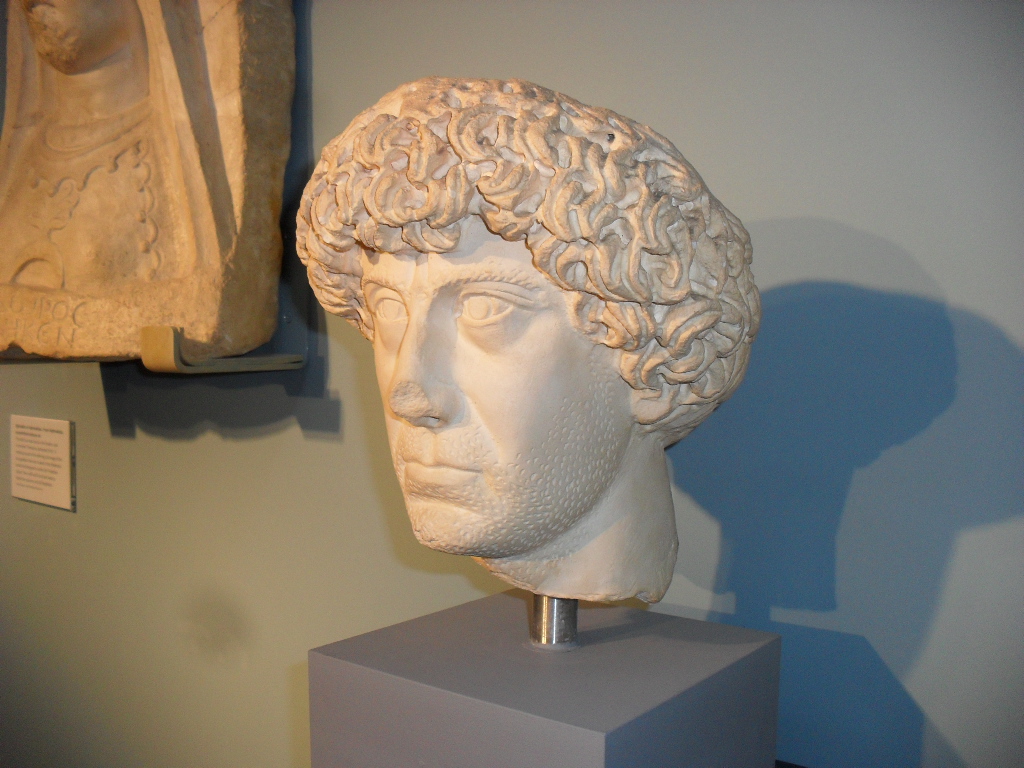
The abundance of marble shaped the whole character of Aphrodisias. Around its civic centre and public spaces stood countless statues, and workshops turned out sculpture for local use and for export.
Many fine statues, portraits and reliefs found at the site are displayed in an excellent museum there. They allow visitors to appreciate the extraordinary skill that made Aphrodisias the city of sculptors.
From Aphrodite to a Christian City
As the Roman world became Christian, the cult of Aphrodite was suppressed, and her temple was converted into a church. Even the city’s name was eventually changed to distance it from the pagan goddess.
Aphrodisias remained an important city into the Byzantine period before declining, weakened by earthquakes and changing times. Its gradual abandonment left its monuments to the countryside.
Rediscovery and UNESCO
Long half-buried beneath a village, Aphrodisias was revealed by decades of careful excavation in the twentieth century, which uncovered its monuments and its wealth of sculpture.
The city and its marble quarries were inscribed on the UNESCO World Heritage List in 2017. Today Aphrodisias, with its superb museum, is celebrated as one of the most beautiful and rewarding ancient sites in Turkey.
Getting There
Aphrodisias lies in Aydin Province in western Turkey, near the village of Geyre, inland from the Aegean coast. It is roughly a two to three hour drive from the coastal resorts and from the city of Denizli.
Most visitors come by car or organised tour, often combined with the nearby travertine terraces and ruins of Hierapolis at Pamukkale. An excellent museum at the site displays its finest sculptures.
Coordinates: 37.7089, 28.7231 — open Aphrodisias in Google Maps.
Nearby Places
- Ephesus — the other great ancient city of western Turkey, also famed for its marble monuments.
- Pergamon — a Hellenistic capital of the same region, celebrated like Aphrodisias for its great sculpture.
- The Acropolis of Athens — the model of Greek marble architecture that cities like Aphrodisias carried forward.
Closing Thoughts
Aphrodisias is the ancient city of beauty made real: the city of Aphrodite, built of fine marble and filled with the work of its own celebrated sculptors, from its jewel-like gateway to its vast stadium.
Serene, complete and richly carved, it offers one of the most elegant encounters with the classical world anywhere in Turkey. Few places so perfectly unite the Greek love of beauty with the grandeur of Rome.
You May Like
Mafra, the Palace a King Built From a Vow


One thought on “Aphrodisias: The Marble City of Aphrodite and Its Master Sculptors”