On the Aegean coast of Turkey lie the ruins of Ephesus, one of the greatest cities of the ancient world and the finest surviving classical city in the eastern Mediterranean. Its marble streets, its towering library and its vast theatre still convey the wealth and splendour of a metropolis that was once home to hundreds of thousands of people.
Ephesus was famous throughout antiquity for the Temple of Artemis, one of the Seven Wonders of the World, and later became a great centre of early Christianity. Today its magnificent ruins make it one of the most visited and rewarding ancient sites on earth.
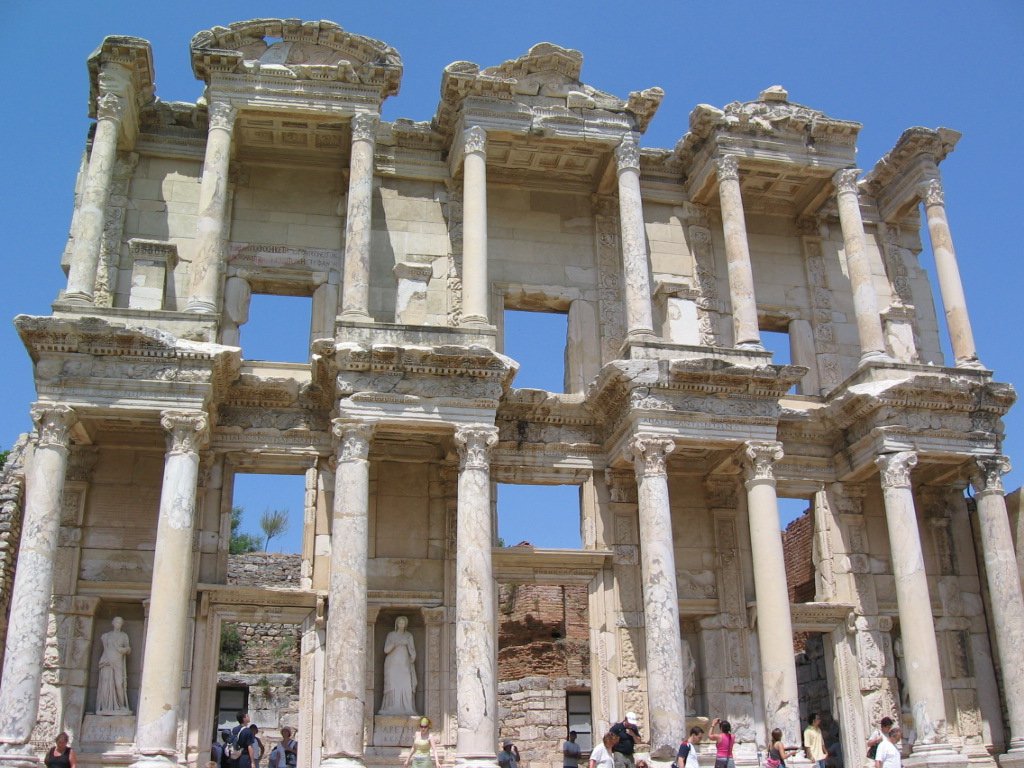
Table of Contents
- The Great City of the Roman East
- From Greek Colony to Capital of Asia
- The Temple of Artemis: A Wonder of the World
- The Library of Celsus
- The Great Theatre
- Curetes Street and the Temple of Hadrian
- The Terrace Houses
- Daily Life: Agora, Baths, and Latrines
- Ephesus and Early Christianity
- Silt, Decline, and Rediscovery
- Getting There
- Nearby Places
- Closing Thoughts
The Great City of the Roman East
Ephesus was one of the largest and most important cities of the Roman Empire, the capital of the province of Asia and a major port and trading centre. At its height it may have been home to around a quarter of a million people.
Its ruins are correspondingly grand and extensive, preserving streets, temples, baths, houses and public buildings on a scale that lets visitors experience the richness of a great Roman city.

From Greek Colony to Capital of Asia
Ephesus began as a Greek colony many centuries before the Romans came, growing wealthy through trade and the fame of its great temple. It passed through the hands of various rulers, including the kingdom of Pergamon, before becoming Roman.
Under Rome it reached its greatest splendour, richly rebuilt and adorned by emperors and wealthy citizens. Much of what survives today dates from this prosperous imperial age.
The Temple of Artemis: A Wonder of the World
The glory of ancient Ephesus was the Temple of Artemis, an enormous marble temple to the goddess that was counted among the Seven Wonders of the Ancient World. It was larger than the Parthenon and famous throughout antiquity.
Rebuilt several times after fire and destruction, the temple has now almost entirely vanished, and only a single reconstructed column marks its site. Yet its fame once drew pilgrims and traders from across the ancient world.

The Library of Celsus
The most famous building at Ephesus today is the Library of Celsus, whose beautifully restored two-storey facade of columns and statues is one of the iconic images of the ancient world. It was built as both a library and a tomb for a Roman official.
Once holding thousands of scrolls, it was one of the great libraries of the empire. Its elegant, richly decorated front, cleverly designed to look even grander than it is, remains a masterpiece of Roman architecture.
The Great Theatre
Ephesus boasts one of the largest theatres of the ancient world, built into a hillside and able to seat around twenty-five thousand spectators. It was used for plays, concerts and public gatherings.
According to the Bible, it was here that a riot broke out against the apostle Paul, stirred up by silversmiths who made shrines of Artemis. The theatre is still occasionally used for performances today.

Curetes Street and the Temple of Hadrian
Running through the heart of the city is Curetes Street, a marble-paved avenue lined with columns, statues, shops and monuments. Walking it gives a vivid sense of the grandeur of daily life in Ephesus.
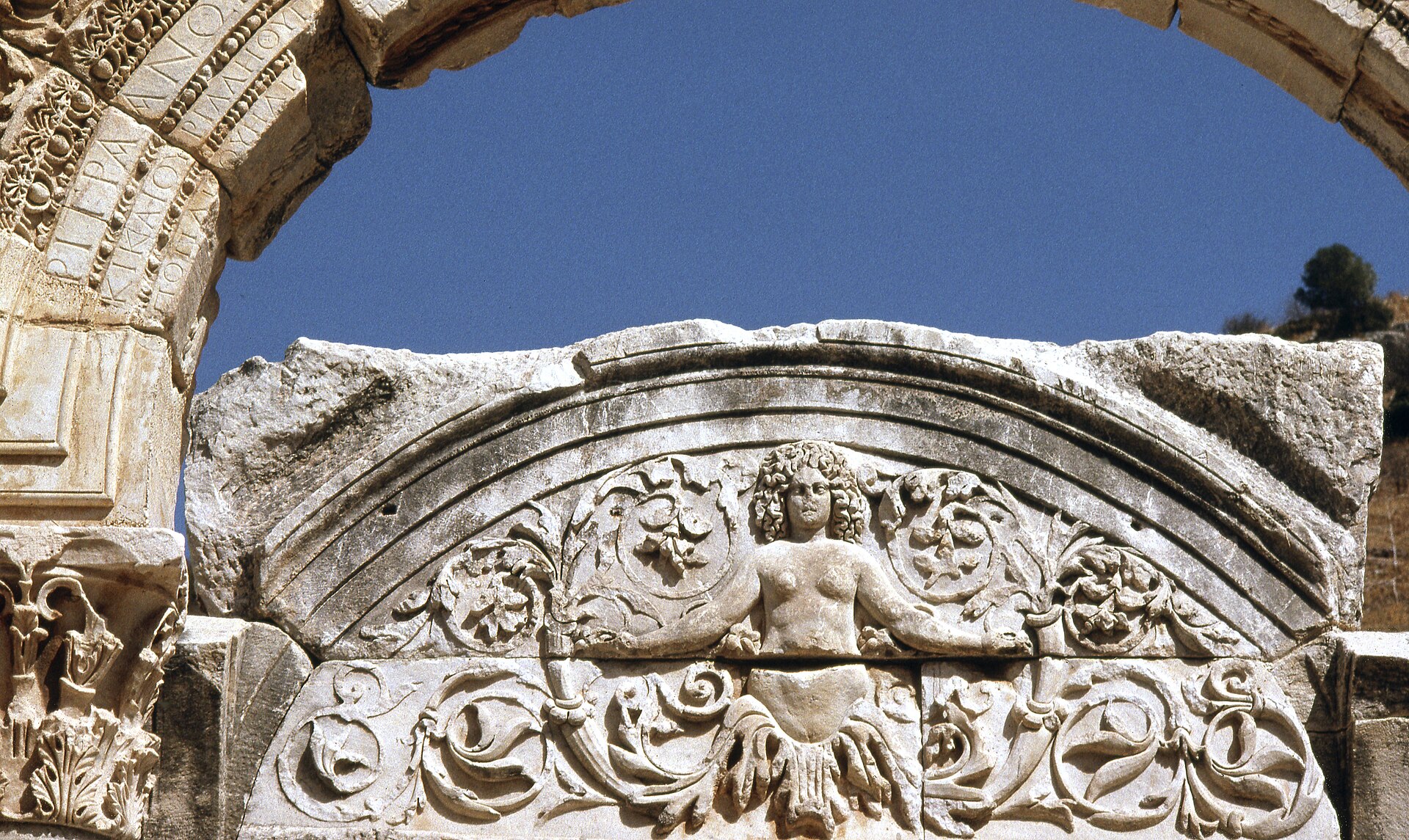
Along the street stands the exquisite little Temple of Hadrian, its arched facade richly carved with figures and decoration. It is one of the most charming and photographed monuments of the city.

The Terrace Houses
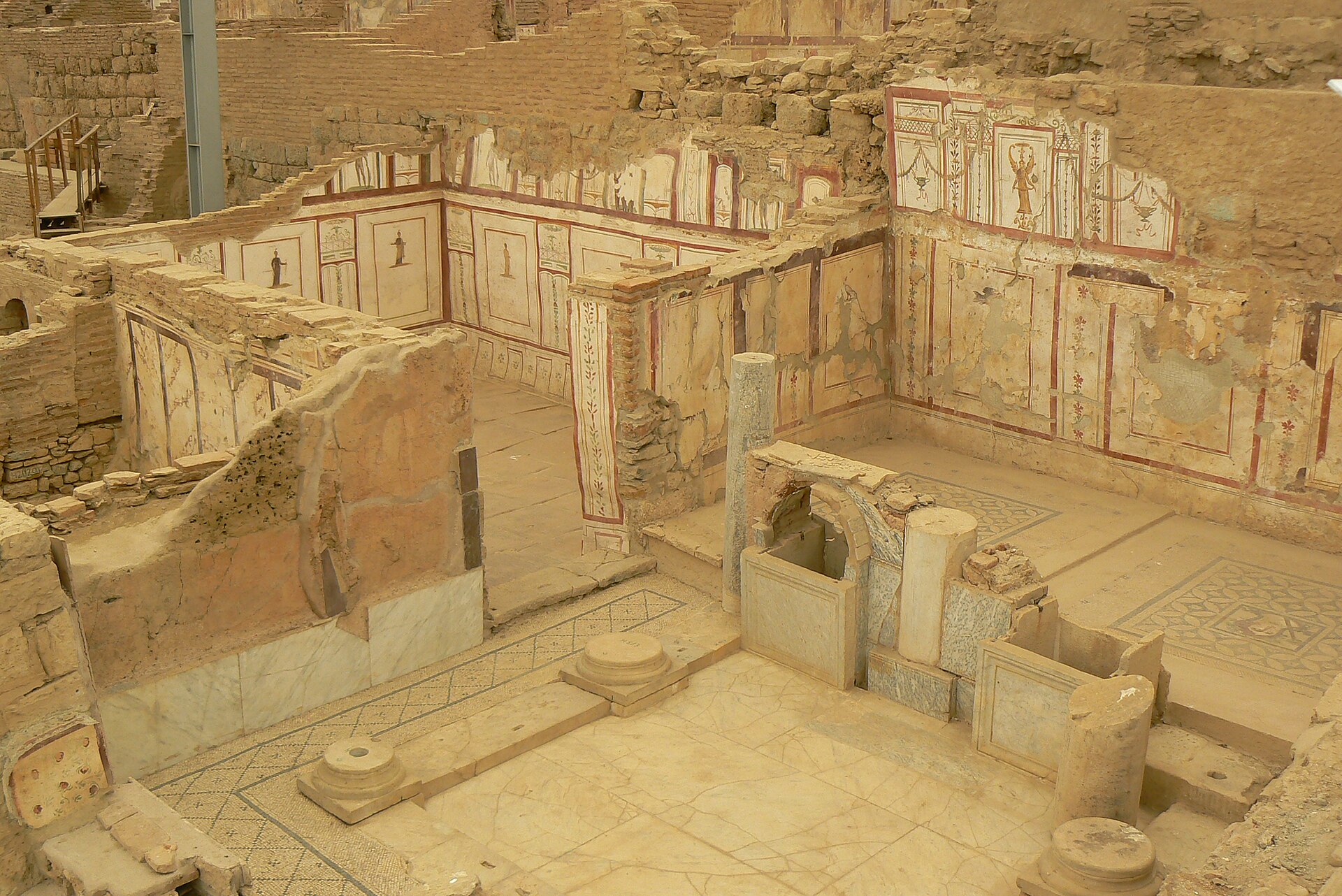
On the slope above Curetes Street stand the terrace houses, the luxurious homes of the wealthy citizens of Ephesus. Preserved under a protective roof, they retain their wall paintings, marble panelling and elaborate mosaic floors.
These houses give an intimate picture of how the rich lived, with private courtyards, heating systems and beautiful decoration. They are among the most revealing domestic remains in the Roman world.
Daily Life: Agora, Baths, and Latrines
Ephesus preserves all the amenities of a great Roman city. Grand gateways led into the commercial agora, the bustling marketplace, while bath complexes offered bathing, exercise and socialising.
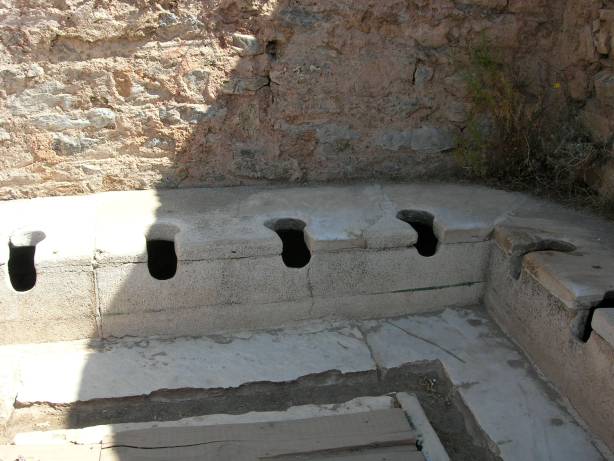
Even the communal public latrines survive, a long marble bench where citizens sat together, a frank reminder that Roman public life extended to the most everyday of needs.

Ephesus and Early Christianity
Ephesus played a major role in the early history of Christianity. The apostle Paul lived and preached here, and one of his letters, to the Ephesians, is part of the New Testament.
Christian tradition also holds that the Virgin Mary spent her last years near Ephesus, and a house revered as hers is a place of pilgrimage. The city later hosted an important early church council.
Silt, Decline, and Rediscovery
Ephesus owed its wealth to its harbour, but over the centuries the river silted up the bay, leaving the city stranded inland. As its port died, so did its prosperity, and the great city gradually declined and was abandoned.
Rediscovered and excavated from the nineteenth century onward, Ephesus was inscribed on the UNESCO World Heritage List in 2015. Today the sea lies several kilometres away, and the once-great port stands in a green plain.
Getting There
Ephesus lies near the town of Selcuk in Izmir Province, on the Aegean coast of western Turkey. The nearest airport is at Izmir, and the site is easily reached by road or rail, with Selcuk just a couple of kilometres away.
Many visitors come on day trips from the resort town of Kusadasi or from cruise ships that dock nearby. The site is large, so comfortable shoes and time are needed to explore it fully.
Coordinates: 37.9395, 27.3417 — open Ephesus in Google Maps.
Nearby Places
- Pompeii — another superbly preserved Roman city, frozen by a volcano rather than stranded by silt.
- The Acropolis of Athens — the Greek world whose culture shaped Ephesus long before Rome arrived.
- Jerash — another beautifully preserved Roman provincial city, with its own colonnaded streets and grand monuments.
Closing Thoughts
Ephesus is the Roman city at its most complete and magnificent: marble avenues, a soaring library, a vast theatre and the luxurious homes of the rich, all set beside the vanished harbour that once made it great.
Home to a wonder of the ancient world and a cradle of early Christianity, it unites Greek, Roman and Christian history in a single spectacular site. Few places let the visitor walk so grandly through the classical past.
You May Like
Mafra, the Palace a King Built From a Vow


3 thoughts on “Ephesus: The Marble City of Artemis, the Library of Celsus, and Saint Paul”