Crowning a steep hill above the town of Bergama in western Turkey, the ancient city of Pergamon was one of the most brilliant capitals of the Greek world. From this dramatic acropolis a dynasty of kings ruled a wealthy realm and made their city a great centre of art, learning and medicine, rivalling even Alexandria.
Pergamon is famous for its breathtakingly steep theatre, its monumental Great Altar, and a library so important that it gave its name to parchment. Its ruins, spread across the hilltop and the plain below, are among the most spectacular in all of Turkey.

Table of Contents
- The Acropolis City of the Attalids
- A Kingdom of Culture
- The Steepest Theatre in the World
- The Great Altar of Pergamon
- The Library of Pergamon and Parchment
- The Temple of Trajan
- The Asclepion: An Ancient Medical Centre
- The Red Basilica
- Rivalry, Rome, and Decline
- Rediscovery and UNESCO
- Getting There
- Nearby Places
- Closing Thoughts
The Acropolis City of the Attalids
Pergamon rose to greatness under the Attalid dynasty in the centuries after Alexander the Great, when it became the capital of a powerful kingdom in western Asia Minor. Its kings grew fabulously wealthy and ambitious.
They chose to build their city on a steep, commanding hill, creating a spectacular acropolis of temples, palaces and public buildings arranged in dramatic terraces. Few ancient cities enjoyed so theatrical a setting.
A Kingdom of Culture
The Attalid kings used their wealth to make Pergamon a great centre of Hellenistic culture. They were generous patrons of art and learning, and the city became famous for its sculpture, its buildings and its scholarship.
Pergamon consciously modelled itself on Athens, even naming a sanctuary after Athena, and sought to be a new capital of Greek civilisation in the east. Its cultural ambitions matched its political power.

The Steepest Theatre in the World
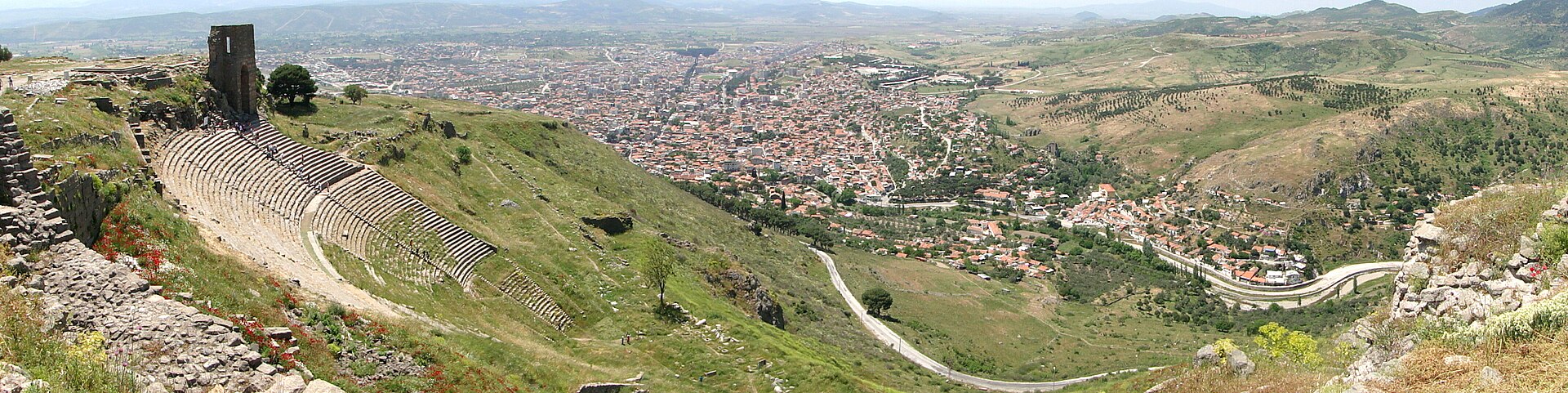
The most breathtaking monument of Pergamon is its theatre, built into the almost vertical slope of the acropolis. With around eighty rows of seats stacked steeply up the hillside, it is often called the steepest theatre of the ancient world.
From its highest seats the view plunges dizzyingly down to the stage and out over the plain far below. Watching a performance here must have been an unforgettable experience.

The Great Altar of Pergamon
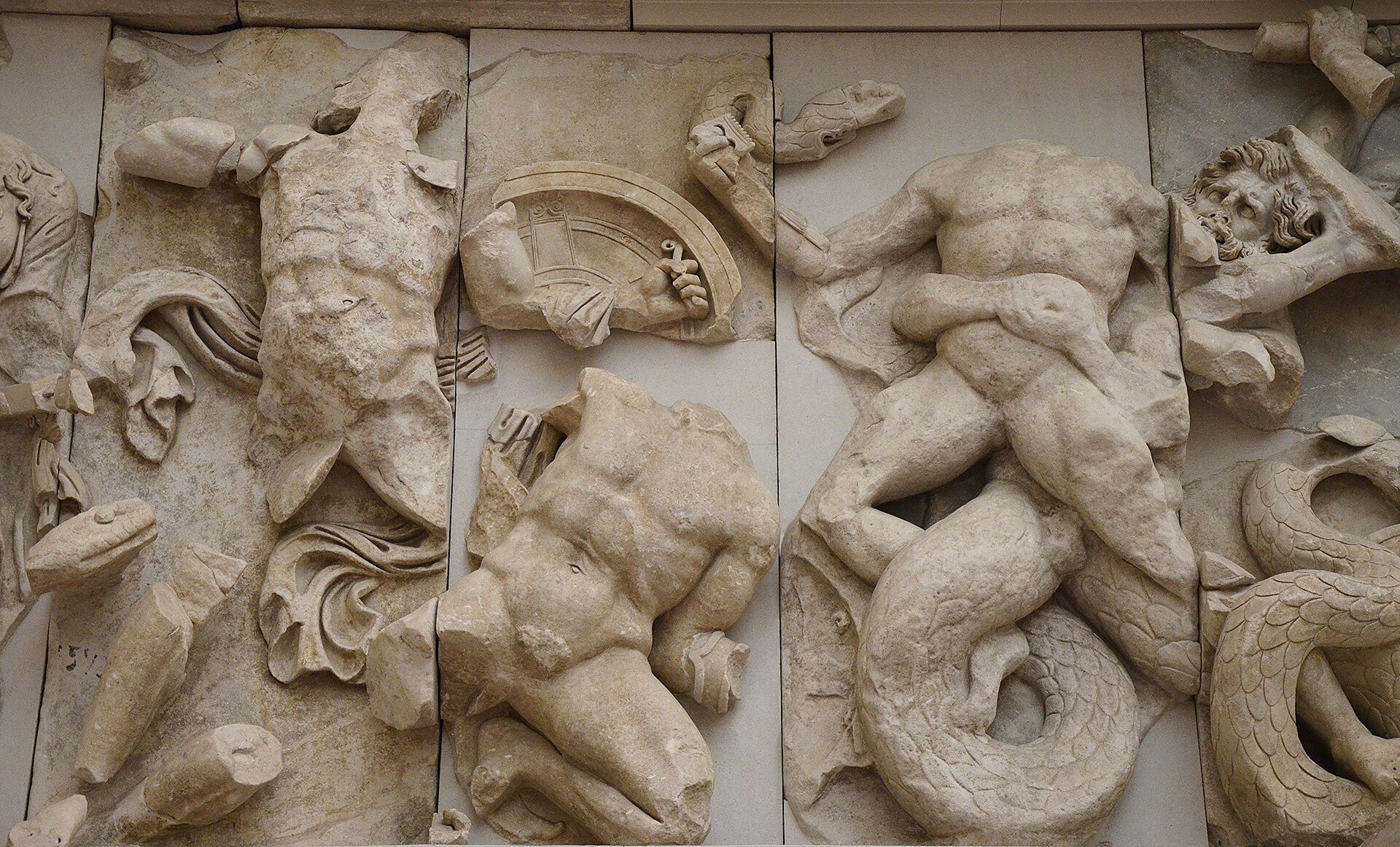
Pergamon’s most famous work of art was the Great Altar, a huge monument whose base was wrapped in a spectacular sculpted frieze showing the battle between the gods and the giants. It is one of the masterpieces of Hellenistic art.
The frieze, full of drama, movement and emotion, was removed in the nineteenth century and reconstructed in a museum in Berlin, where it remains a major attraction. At Pergamon itself, the altar’s terrace still marks its commanding position.
The Library of Pergamon and Parchment
Pergamon boasted one of the greatest libraries of the ancient world, second only to that of Alexandria, holding tens of thousands of scrolls. It was a symbol of the city’s devotion to learning.
According to a famous story, when Egypt cut off the supply of papyrus to check Pergamon’s rivalry, the city perfected the use of treated animal skins for writing. From the city’s name comes our word parchment.

The Temple of Trajan
High on the acropolis stands the Temple of Trajan, a gleaming marble temple built in the Roman period to honour the emperors. Its re-erected white columns are among the most striking sights of the upper city.
Set on a great terrace with commanding views, the temple shows how Pergamon continued to flourish under Roman rule, adorned with grand new monuments.

The Asclepion: An Ancient Medical Centre
On the plain below the acropolis lies the Asclepion, a sanctuary of Asclepius, the god of healing, that was one of the most famous medical centres of the ancient world. People came from far away to be cured here.
Treatments combined religion with early medicine, including baths, exercise, dream interpretation and the use of the sacred spring. The great physician Galen, whose ideas shaped medicine for centuries, was born at Pergamon and trained here.

The Red Basilica
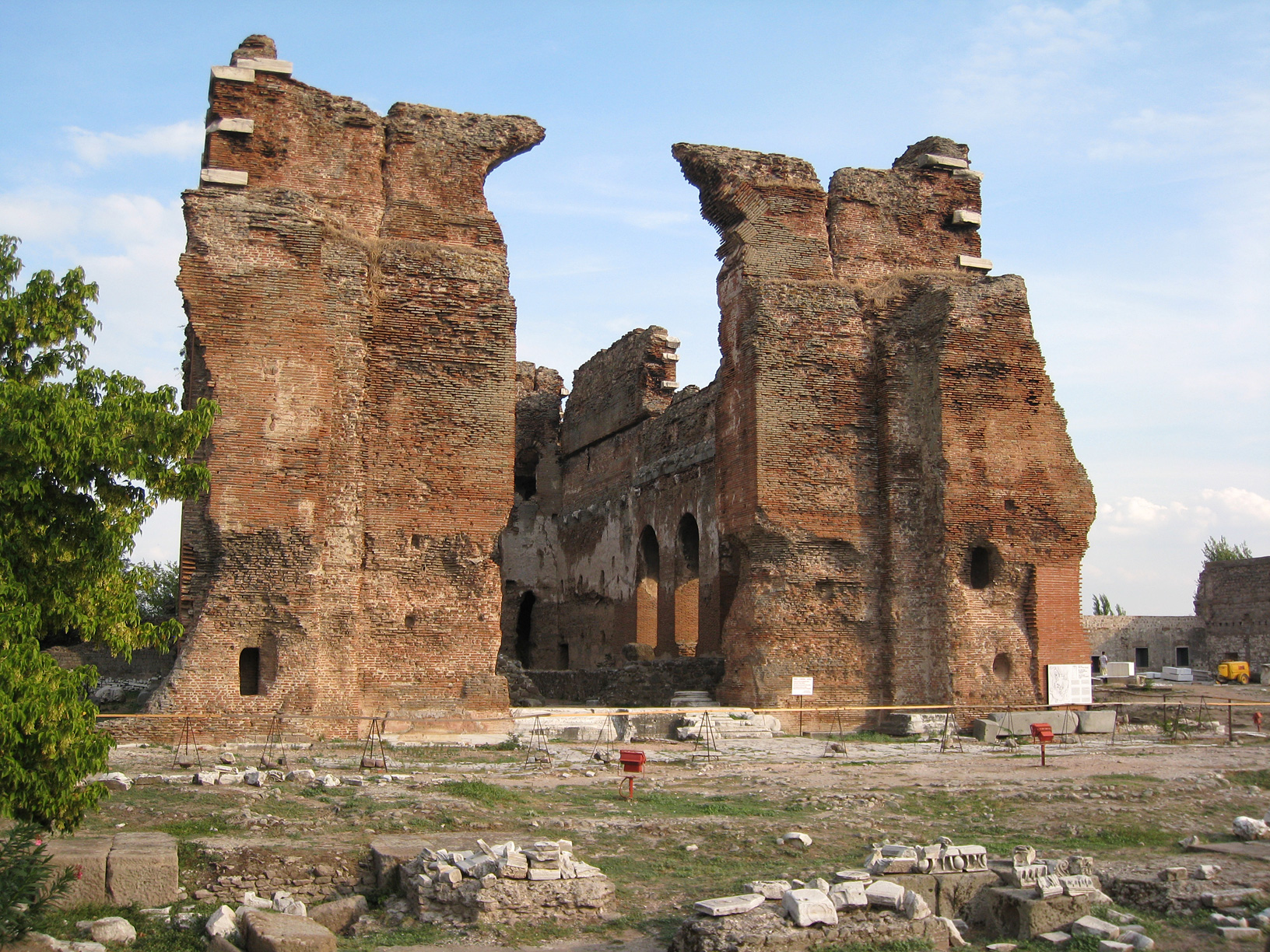
In the town below stands the Red Basilica, an enormous temple of brick, originally dedicated to Egyptian gods such as Serapis and Isis. Its massive walls tower over the surrounding streets.
Later converted into a Christian church, it is mentioned in the Bible as one of the Seven Churches of Asia. Its sheer scale is a reminder of the wealth and religious diversity of Roman Pergamon.
Rivalry, Rome, and Decline
The Attalid kingdom was a close ally of Rome, and its last king famously left his entire realm to Rome in his will, making Pergamon the centre of the new Roman province of Asia.
The city remained important for centuries but gradually declined in late antiquity as power and trade shifted elsewhere. Its great monuments were left to decay on the hillside.
Rediscovery and UNESCO
German archaeologists excavated Pergamon from the nineteenth century, uncovering its monuments and carrying the Great Altar frieze to Berlin. Their work revealed the full splendour of the Hellenistic capital.
Pergamon and its surrounding landscape were inscribed on the UNESCO World Heritage List in 2014. Today a cable car carries visitors up to the acropolis to marvel at one of the most dramatically sited cities of the ancient world.
Getting There
Pergamon lies above the town of Bergama in Izmir Province, on the Aegean side of western Turkey. The nearest major city and airport is Izmir, about a hundred kilometres to the south.
Visitors usually reach Bergama by road, and a cable car climbs from the town to the upper acropolis. The Asclepion and the Red Basilica, lower down, are also easily visited on the same trip.
Coordinates: 39.1324, 27.1840 — open Pergamon in Google Maps.
Nearby Places
- Ephesus — the other great ancient city of western Turkey, with its own famous library and grand monuments.
- The Acropolis of Athens — the model that culture-loving Pergamon consciously sought to rival in the east.
- Delphi — another great Greek sanctuary crowded, like Pergamon, with monuments of art and devotion.
Closing Thoughts
Pergamon is the Hellenistic city at its most ambitious: a royal capital piled up a steep hillside, crowned with temples and the steepest of theatres, and home to a library that gave the world parchment.
From its altar of gods and giants to its famous healing sanctuary and the birthplace of the physician Galen, Pergamon united power, art and knowledge. Its dramatic ruins remain one of the great sights of the ancient world.