When Mount Vesuvius erupted in 79 AD, it destroyed not only Pompeii but also the smaller, wealthier seaside town of Herculaneum. Buried under a different kind of volcanic material, Herculaneum was preserved in even greater detail, its wooden furniture, upper storeys and even food surviving where at Pompeii they were lost.
Herculaneum is the other great victim of Vesuvius, less famous than Pompeii but in some ways even more astonishing. Its beautifully preserved houses, its haunting boathouses full of skeletons, and a villa that held an entire ancient library make it one of the most remarkable archaeological sites in the world.
Table of Contents
- The Other Victim of Vesuvius
- A Wealthy Seaside Town
- Buried Differently from Pompeii
- The Boathouses and the Skeletons
- Preserved Wood, Food, and Everyday Objects
- Houses, Mosaics, and Frescoes
- The Well-Preserved Interiors
- The Villa of the Papyri and Its Library
- Rediscovery and Difficult Excavation
- Conservation and UNESCO
- Getting There
- Nearby Places
- Closing Thoughts
The Other Victim of Vesuvius
Herculaneum lay on the coast a short distance from Pompeii, closer to the volcano. It was a smaller town, but a richer and more fashionable one, a resort where wealthy Romans built elegant seaside villas.
Like Pompeii, it vanished in the eruption of 79 AD. But because it was buried in a different way, Herculaneum preserved things that were destroyed elsewhere, offering a uniquely complete picture of a Roman town.

A Wealthy Seaside Town
Herculaneum was an affluent community, with fine houses, bath complexes, shops and public buildings arranged along a neat grid of streets. Its position by the sea made it a desirable place to live.
The quality of its buildings and decoration reflects the wealth of its inhabitants. Even ordinary houses were well built, and the grander residences were richly adorned with art.
Buried Differently from Pompeii
While Pompeii was buried under falling ash and pumice, Herculaneum was engulfed by fast-moving flows of superheated volcanic material and mud. These sealed the town under many metres of dense rock.
This difference is why Herculaneum is so exceptionally preserved. The heat carbonised rather than destroyed organic materials, and the depth of the burial protected upper floors and delicate objects that were lost at Pompeii.
The Boathouses and the Skeletons
For a long time it was thought that most of Herculaneum’s people had escaped. Then, near the ancient shoreline, archaeologists discovered a row of arched boathouses filled with hundreds of skeletons.
These were the townspeople who had fled to the waterfront hoping for rescue, only to be killed by the intense heat of the volcanic surge. The find is one of the most moving and sobering discoveries of the whole site.

Preserved Wood, Food, and Everyday Objects
The most extraordinary feature of Herculaneum is the survival of organic materials. Wooden doors, beds, shelves and even a baby’s cradle have been preserved in carbonised form, along with ropes, cloth and food.
Loaves of bread, fruit and other foodstuffs have been found, giving an astonishingly vivid picture of daily life. Such survivals are almost unknown at other Roman sites and make Herculaneum uniquely valuable.

Houses, Mosaics, and Frescoes
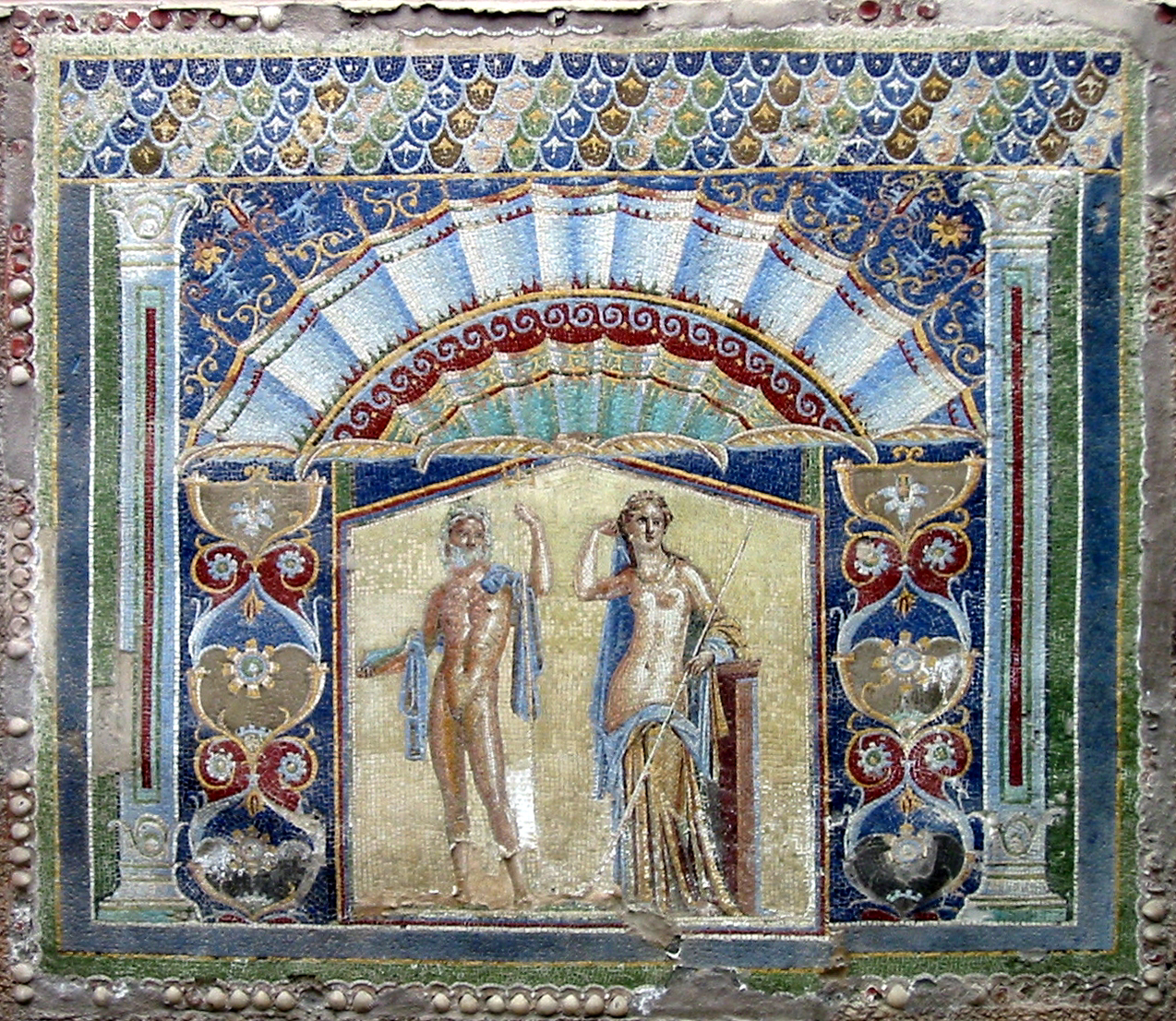
The houses of Herculaneum retain some of the finest decoration of any Roman town. Brilliantly coloured frescoes cover many walls, and floors and fountains are adorned with intricate mosaics.
One famous house preserves a stunning mosaic of the sea gods Neptune and Amphitrite, its colours still vivid. These decorations show the refined taste and wealth of the town’s citizens.

The Well-Preserved Interiors
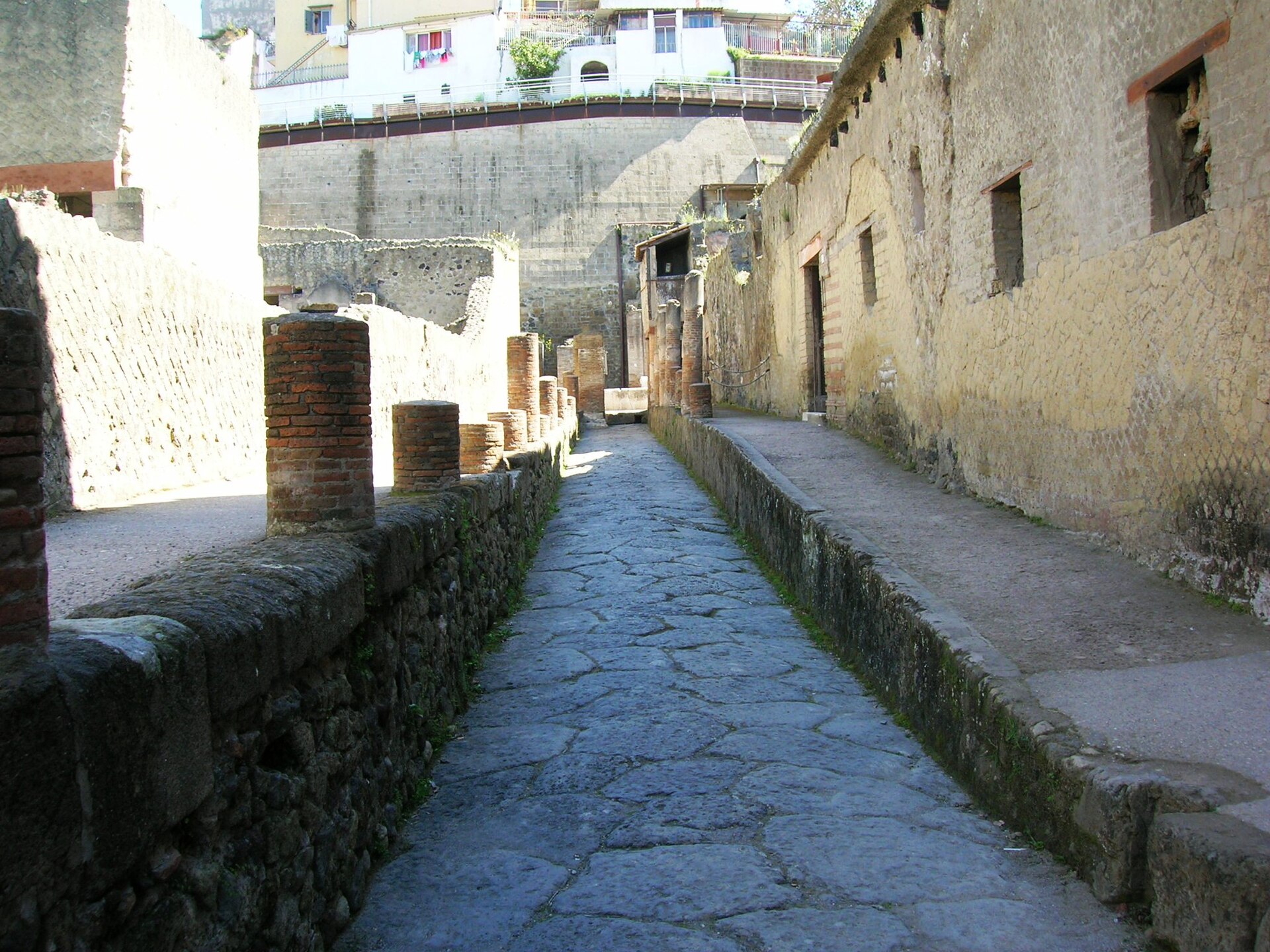
Because Herculaneum was buried so deeply, many buildings kept their upper storeys, balconies and even parts of their roofs, which were lost at Pompeii. Walking its streets, one can look up at second floors and wooden balconies.
This gives a much fuller sense of what a Roman town actually looked like in three dimensions. The interiors, with their surviving fittings, feel startlingly intimate and alive.
The Villa of the Papyri and Its Library
On the edge of the town stood a luxurious mansion known as the Villa of the Papyri, once perhaps owned by a relative of Julius Caesar. It held a magnificent collection of art and, uniquely, an entire library of papyrus scrolls.
The scrolls were carbonised by the eruption into fragile black cylinders. Long thought unreadable, they are now being deciphered using advanced scanning and imaging, offering the tantalising prospect of recovering lost works of ancient literature.

Rediscovery and Difficult Excavation
Herculaneum was rediscovered in the eighteenth century, even before Pompeii, when well-diggers struck its buried theatre. Early exploration was carried out through tunnels dug deep into the hardened rock.
Because the town lies buried so deeply, and beneath the modern town of Ercolano, excavation has always been difficult, and much of Herculaneum still lies unexcavated beneath the living streets above.
Conservation and UNESCO
Herculaneum, together with Pompeii and the nearby villas, was inscribed on the UNESCO World Heritage List in 1997. Major conservation projects have worked to protect its fragile remains from decay and the weather.
Though smaller and less visited than Pompeii, Herculaneum offers an even more intimate encounter with Roman life. Its preserved wood, food and interiors make it one of the most precious windows onto the ancient world.
Getting There
Herculaneum lies beneath the modern town of Ercolano, near Naples in the Campania region of southern Italy. Like Pompeii, it is easily reached from Naples or Sorrento by the local Circumvesuviana railway, which has a stop close to the site.
The ruins are more compact than Pompeii and can be seen in a couple of hours, making it easy to combine both sites, and a climb up Vesuvius, in a single trip.
Coordinates: 40.8058, 14.3489 — open Herculaneum in Google Maps.
Nearby Places
- Pompeii — the larger and more famous town destroyed in the same eruption of Vesuvius, usually visited together with Herculaneum.
- The Roman Forum and the Colosseum — the monumental heart of the empire whose everyday life Herculaneum so vividly preserves.
- Ephesus — another great Roman city, famous like Herculaneum’s Villa of the Papyri for its ancient library.
Closing Thoughts
Herculaneum is Pompeii’s quieter twin, and in some ways its equal or better: a wealthy seaside town preserved so completely that wooden furniture, food and even a library of scrolls survived the fury of Vesuvius.
From the heartbreaking skeletons in its boathouses to the carbonised books slowly yielding their secrets, Herculaneum offers an unmatched intimacy with the Roman world. It remains one of the most extraordinary and moving archaeological sites on earth.
You May Like
Mafra, the Palace a King Built From a Vow