On a ridge above the southern coast of Sicily stands one of the most spectacular groups of Greek temples anywhere in the world. The Valley of the Temples at Agrigento preserves a row of great Doric temples, including one so complete it rivals anything in Greece itself, set among almond trees with the blue Mediterranean beyond.
These temples are the legacy of Akragas, one of the wealthiest and most powerful Greek cities of the ancient world. Their golden columns, glowing in the Sicilian sun, are a magnificent reminder that Greek civilisation flourished far beyond Greece, across the islands and coasts of the central Mediterranean.

Table of Contents
- The Valley of the Temples
- Akragas: A Great Greek City of Sicily
- The Temple of Concordia
- The Temple of Juno
- The Temple of Heracles
- The Temple of Olympian Zeus and the Telamons
- The Temple of Castor and Pollux
- Greek Sicily and Magna Graecia
- Carthage, Rome, and Decline
- Rediscovery and UNESCO
- Getting There
- Nearby Places
- Closing Thoughts
The Valley of the Temples
The Valley of the Temples is a long ridge lined with the remains of great Greek temples, built in the fifth and sixth centuries BC. Despite its name, it runs along a height rather than a valley, overlooking the sea.
Several of the temples survive in remarkable condition, their rows of Doric columns standing against the sky. Together they form one of the largest and best-preserved groups of ancient Greek architecture in existence.
Akragas: A Great Greek City of Sicily
The temples belonged to the ancient city of Akragas, founded by Greek colonists and grown into one of the richest cities of the Greek world. At its height it may have had hundreds of thousands of inhabitants.
Its wealth came from farming, trade and its strategic position, and its citizens were famous for their luxury. The great temples were built to display the city’s power and to honour its gods.
The Temple of Concordia
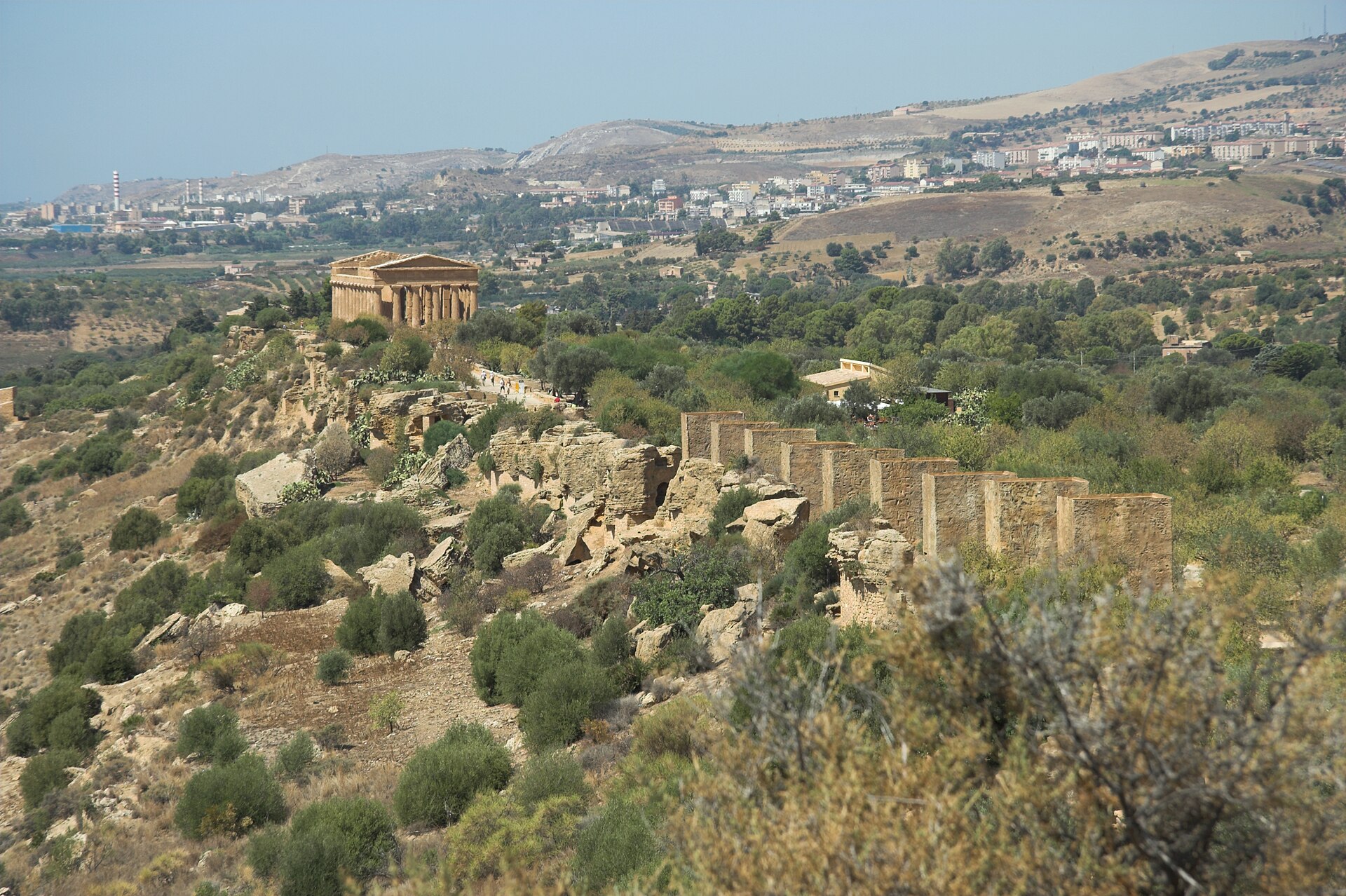
The jewel of Agrigento is the Temple of Concordia, one of the best-preserved Greek temples anywhere in the world. Its complete ring of columns and much of its upper structure still stand, giving a near-perfect image of a classical temple.
It owes its survival to being converted into a Christian church in later centuries, which protected it from destruction. In the golden light of evening its stone glows a warm honey colour.

The Temple of Juno
At the eastern end of the ridge stands the Temple of Juno, or Hera, its columns rising dramatically on the highest point of the valley. Though partly ruined, it retains much of its colonnade.
Traces of burning on its stones may date from the sack of the city in ancient times. From here there are sweeping views along the whole line of temples.

The Temple of Heracles
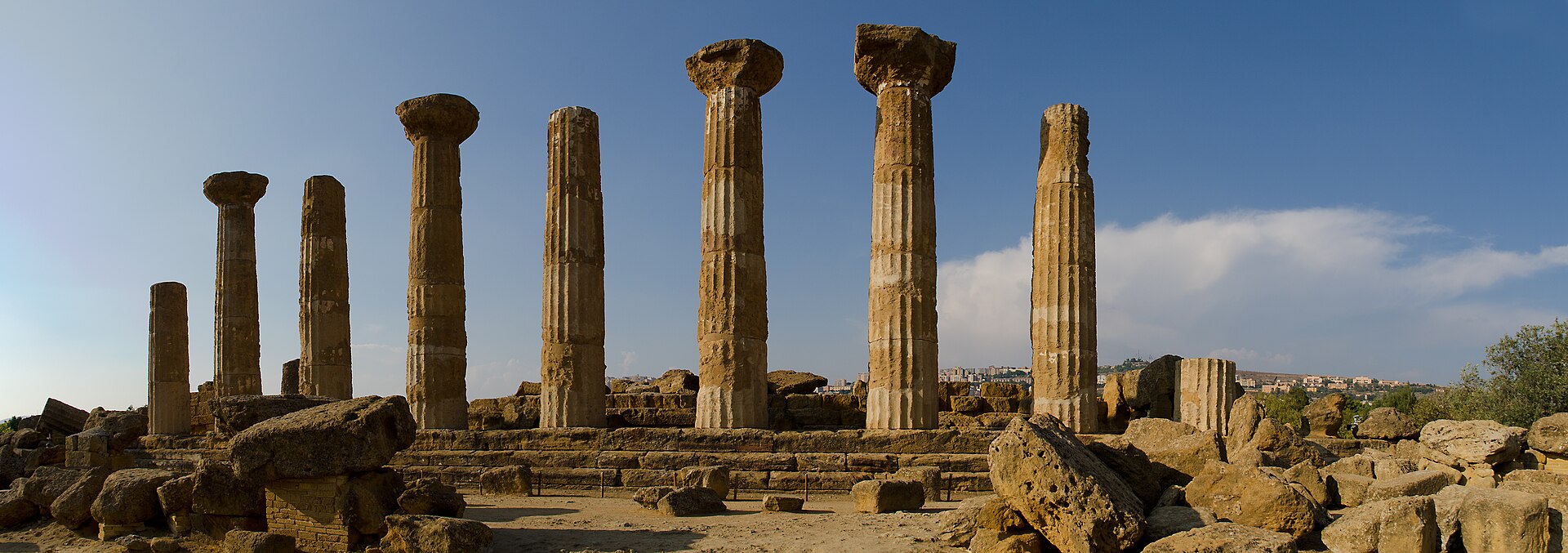
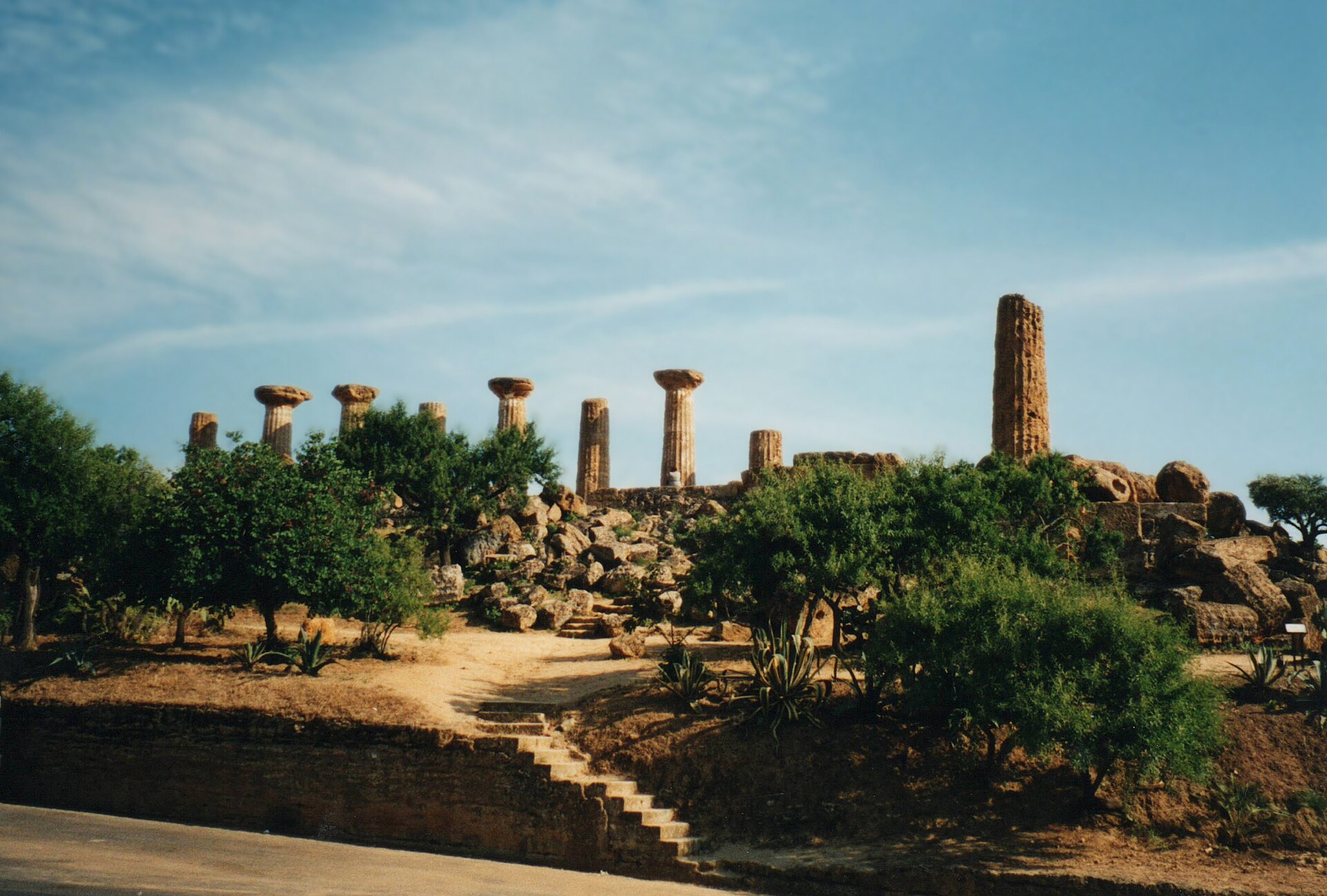
The Temple of Heracles is among the oldest in the valley, dedicated to the hero-god the Greeks worshipped as Herakles and the Romans as Hercules. Several of its columns have been re-erected, standing tall among the fallen stones.
Once one of the most admired temples of the city, it gives a sense of the scale and ambition of religious building at Akragas.
The Temple of Olympian Zeus and the Telamons
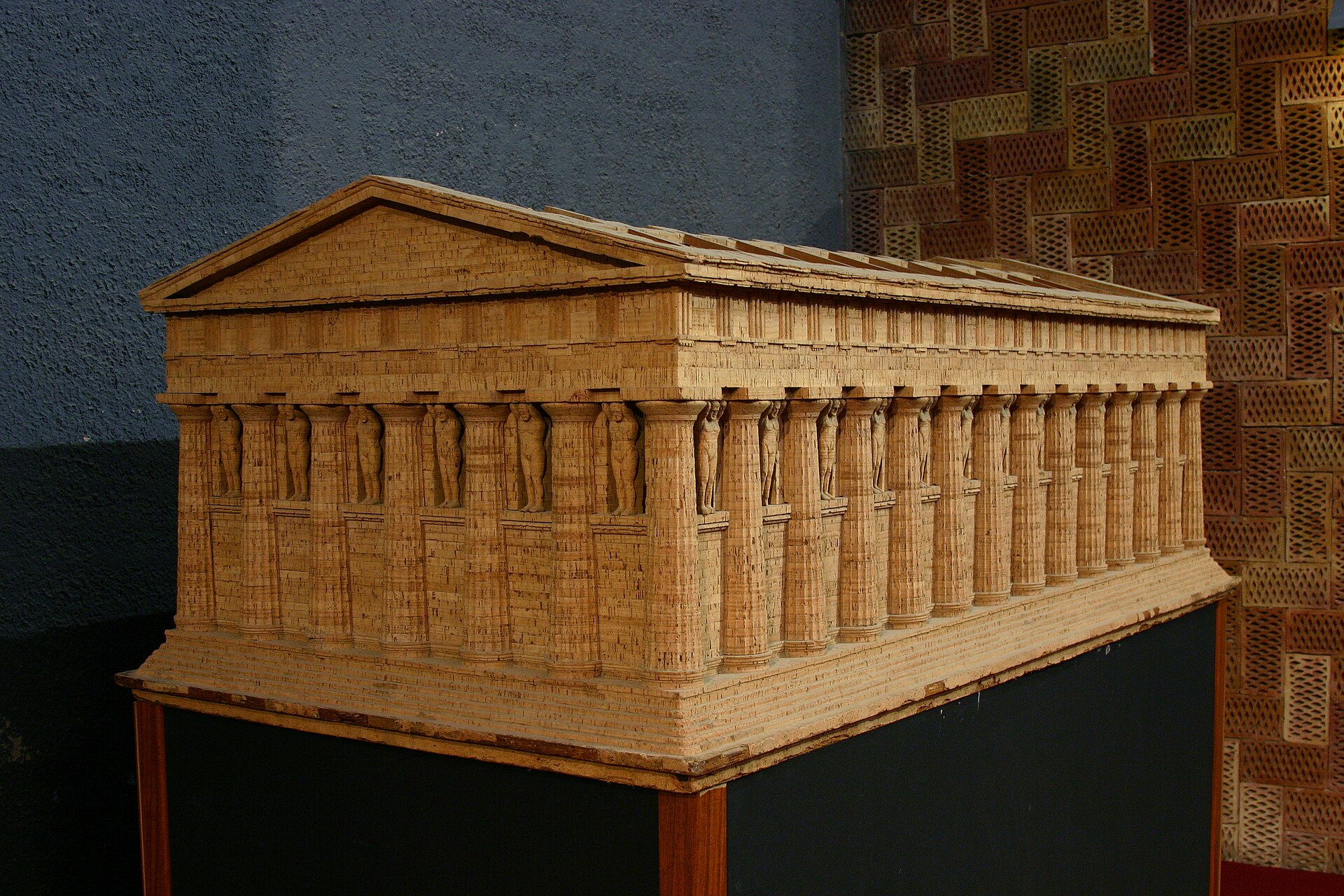
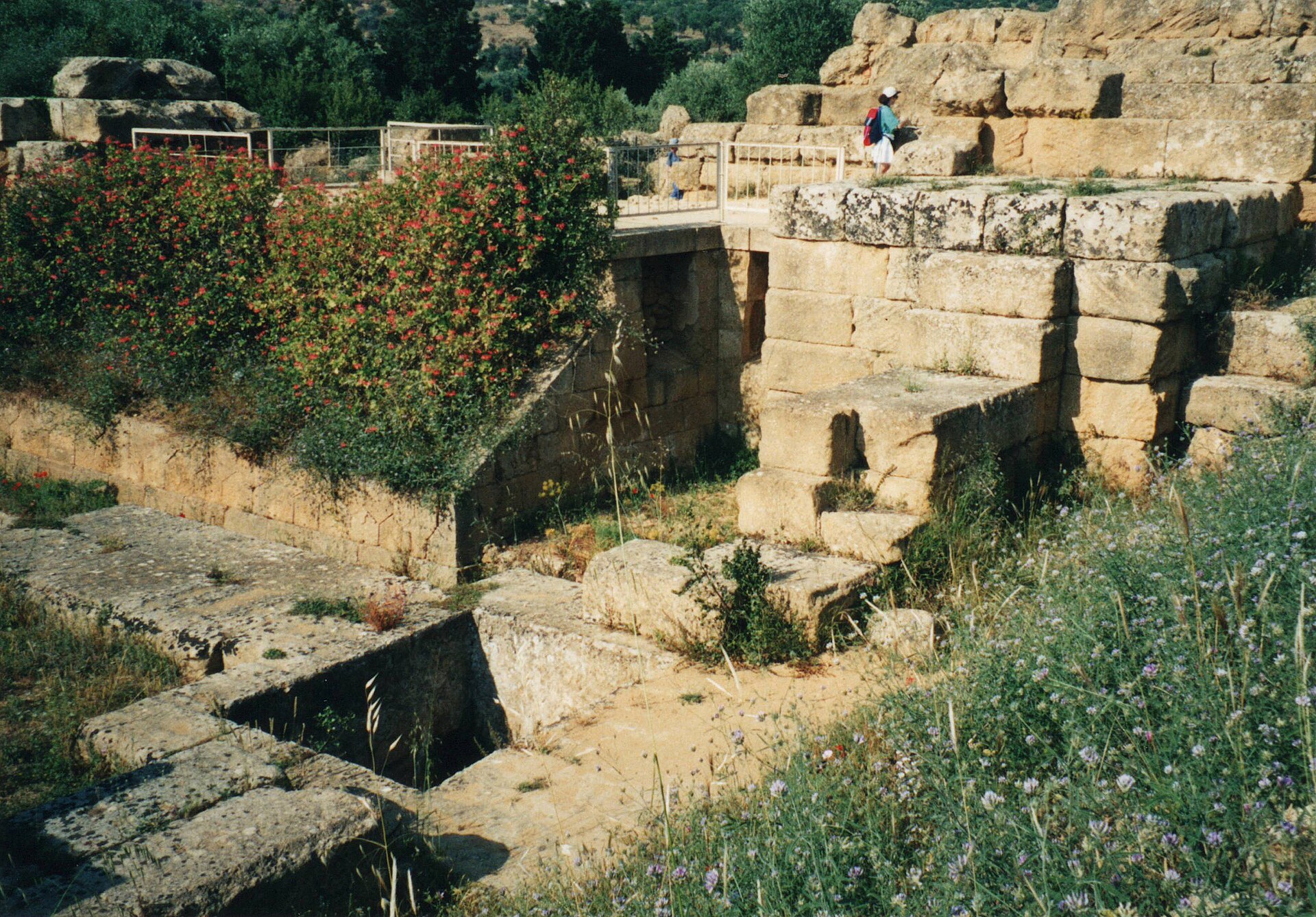
The most ambitious temple of all was the Temple of Olympian Zeus, one of the largest Greek temples ever attempted. It was so vast that it used giant stone figures, called telamons or atlantes, standing among its walls to help support the structure.
The temple was never fully finished and later collapsed, leaving a great field of ruins. One of the colossal telamons, several metres tall, gives a startling sense of the temple’s enormous scale.
The Temple of Castor and Pollux
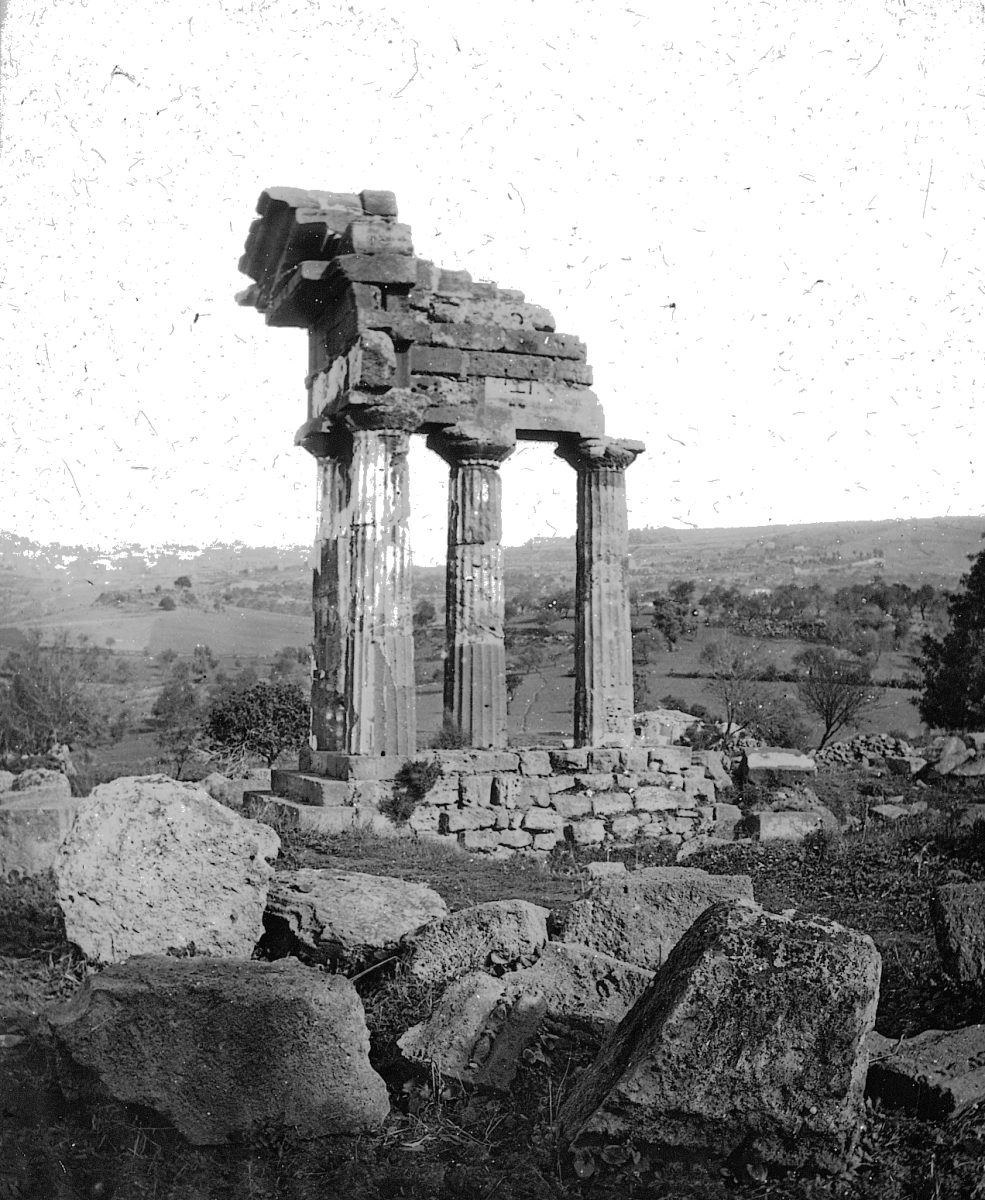
A group of four re-erected columns, topped by a corner of entablature, marks the Temple of Castor and Pollux, dedicated to the divine twins. Though largely a nineteenth-century reconstruction, it has become an emblem of Agrigento.
Set against the sky, these columns are among the most photographed sights in Sicily, a graceful symbol of the whole archaeological area.
Greek Sicily and Magna Graecia
Agrigento was part of the wider Greek world of southern Italy and Sicily, known as Magna Graecia, or Greater Greece. Greek colonists founded many great cities here, which sometimes rivalled the cities of Greece itself in wealth and culture.
These western Greeks produced philosophers, poets and athletes, and built temples on a grand scale. Agrigento was one of the brightest jewels of this flourishing colonial world.
Carthage, Rome, and Decline
Akragas stood on the frontier between the Greek and Carthaginian spheres in Sicily, and it suffered in the long wars between them, being captured and sacked more than once. Later it came under Roman rule.
Over the centuries the city declined, and many of its temples fell into ruin through earthquakes and neglect. Yet enough survived to preserve the memory of its former greatness.
Rediscovery and UNESCO
From the eighteenth century, travellers on the Grand Tour came to admire the temples of Agrigento, and the site became famous across Europe. Systematic study and conservation followed.
The archaeological area of Agrigento was inscribed on the UNESCO World Heritage List in 1997. Today it is one of the most visited and beloved ancient sites in Italy, especially beautiful when the almond trees bloom in early spring.
Getting There
The Valley of the Temples lies just below the modern city of Agrigento, on the southern coast of Sicily, in Italy. Agrigento is reached by road or rail from Palermo and Catania, each around two hours away.
From the city the archaeological park is a short distance away, with car parking and bus links. The site is large and open, so it is best explored with time, ideally in the cooler light of morning or evening.
Coordinates: 37.2900, 13.5900 — open the Valley of the Temples in Google Maps.
Nearby Places
- The Acropolis of Athens — the heart of the Greek homeland whose temple architecture Agrigento so grandly echoes.
- Carthage — the great rival power that fought the Greek cities of Sicily, Akragas among them, for the island.
- Pompeii — another jewel of the classical world in Italy, from the later Roman age.
Closing Thoughts
The Valley of the Temples is Greek civilisation transplanted to Sicily at its most magnificent: a ridge crowned with great Doric temples, one of them almost perfectly preserved, glowing gold above the sea.
Legacy of the wealthy city of Akragas, these temples show that the genius of Greek architecture flourished across the whole Mediterranean. Amid almond blossom and Sicilian light, they are among the most beautiful ancient ruins in the world.
You May Like
Mafra, the Palace a King Built From a Vow