In the green hills of the northeastern Peloponnese lies Epidaurus, home to the most perfect and best-preserved theatre of the ancient Greek world. Its acoustics are so extraordinary that a whisper on the stage can be heard clearly in the highest of its more than fifty rows of seats.
But Epidaurus was far more than a theatre. It was the greatest healing sanctuary of the ancient world, dedicated to Asclepius, the god of medicine. People came from across the Mediterranean to seek cures here, making it a kind of ancient hospital and spiritual centre combined.
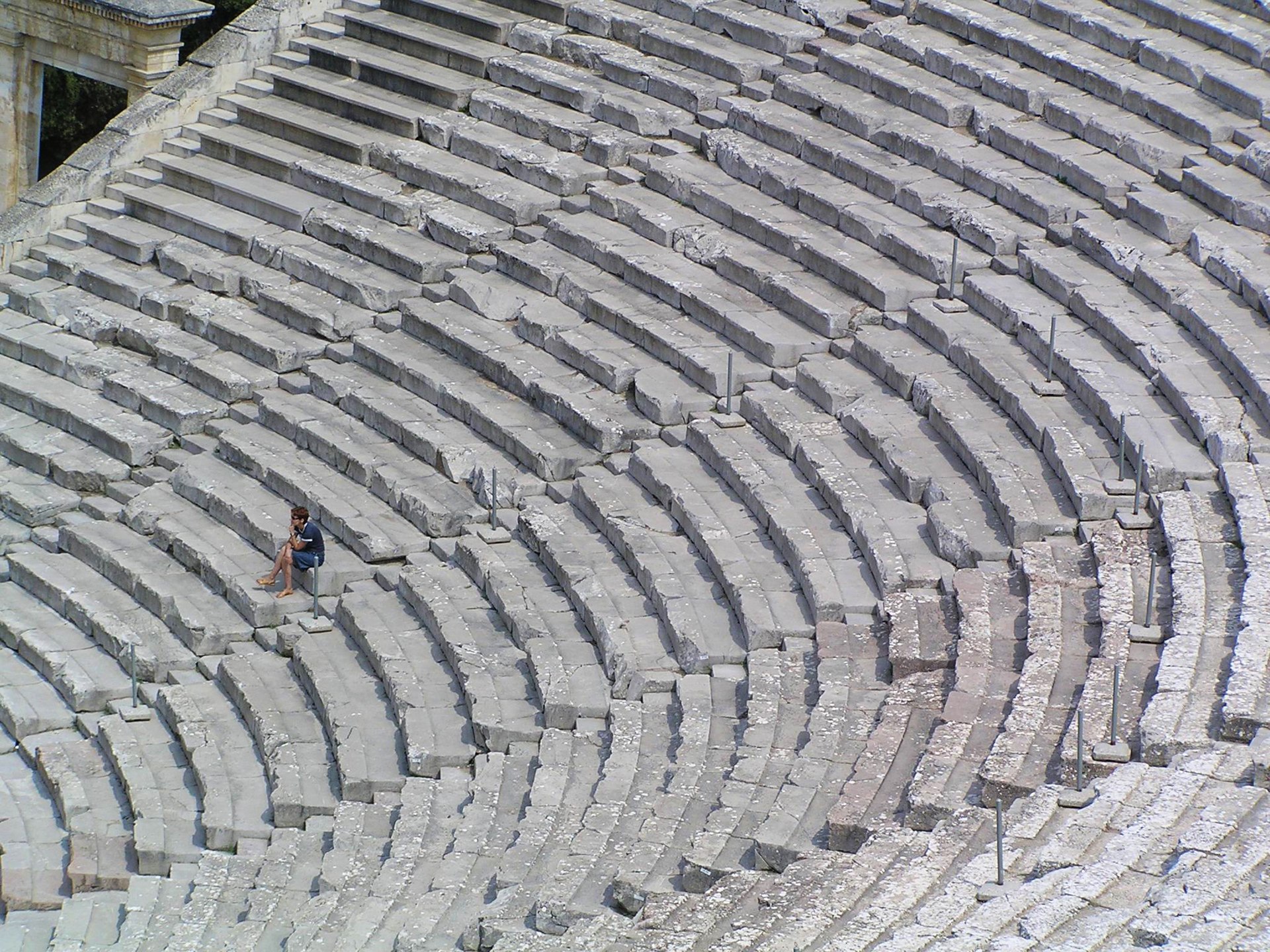
Table of Contents
- The Best-Preserved Ancient Theatre
- Perfect Acoustics
- The Sanctuary of Asclepius
- Asclepius, God of Healing
- Ancient Medicine and the Cult of Cures
- The Temple of Asclepius
- The Mysterious Tholos
- The Gateway and Guest Houses
- The Stadium and Games
- Decline, Rediscovery, and Performances Today
- Getting There
- Nearby Places
- Closing Thoughts
The Best-Preserved Ancient Theatre
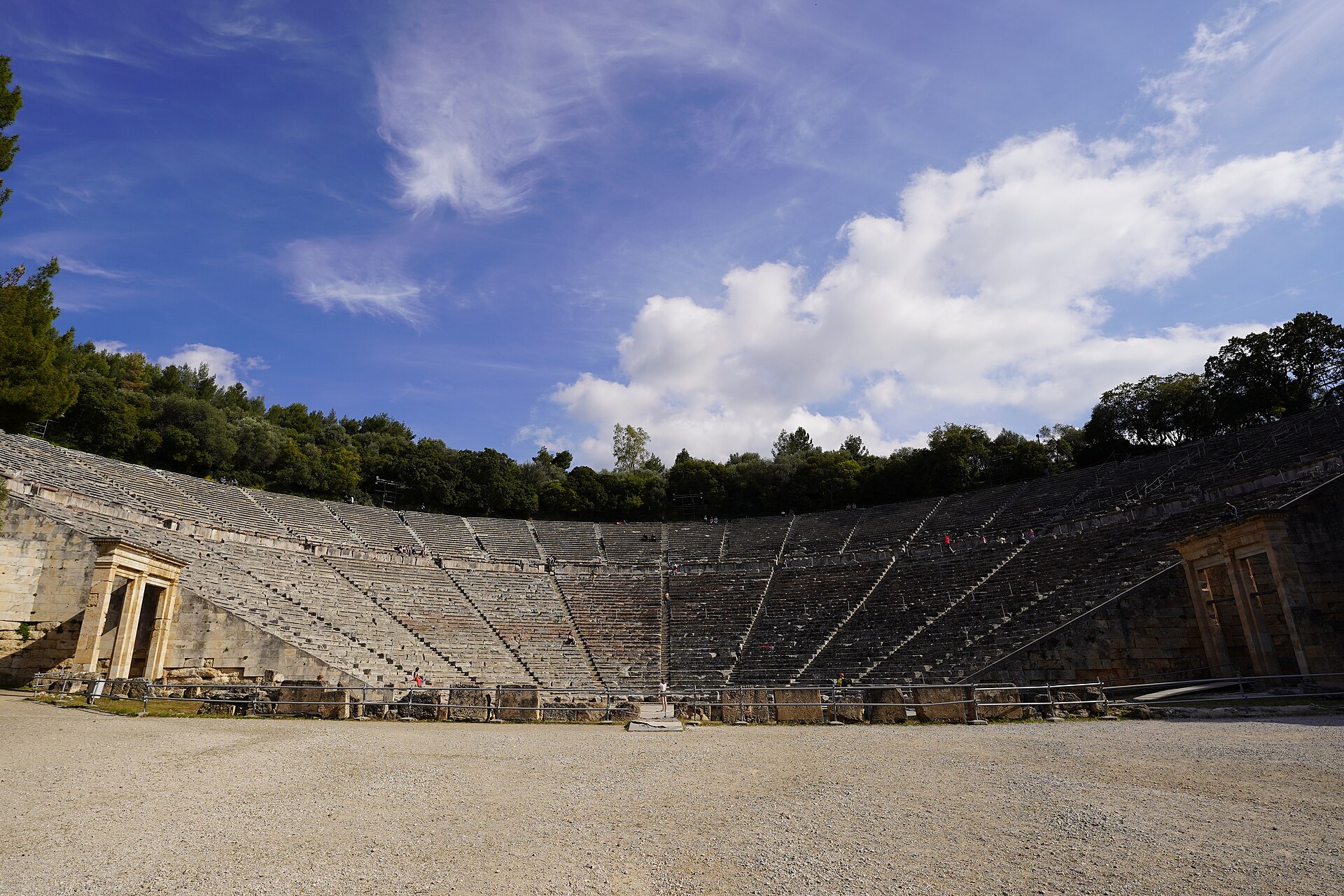
The theatre of Epidaurus, built in the fourth century BC, is widely regarded as the finest surviving ancient Greek theatre. Set into a hillside, its tiers of stone seats form a vast, elegant curve able to hold around fourteen thousand spectators.
Remarkably well preserved, it gives a near-perfect picture of what a Greek theatre looked like. Its harmonious proportions have made it a model admired by architects ever since.
Perfect Acoustics
Epidaurus is famous above all for its astonishing acoustics. A coin dropped or a match struck at the centre of the stage can be heard clearly in the back rows, without any amplification.
Modern studies suggest the rows of stone seats act as a natural filter, carrying the actors’ voices while damping background noise. Whatever the explanation, the effect still amazes visitors who test it today.
The Sanctuary of Asclepius
The theatre was part of a much larger complex, the sanctuary of Asclepius, the god of healing. This was the most important of all the ancient healing centres, drawing the sick and suffering from far and wide.
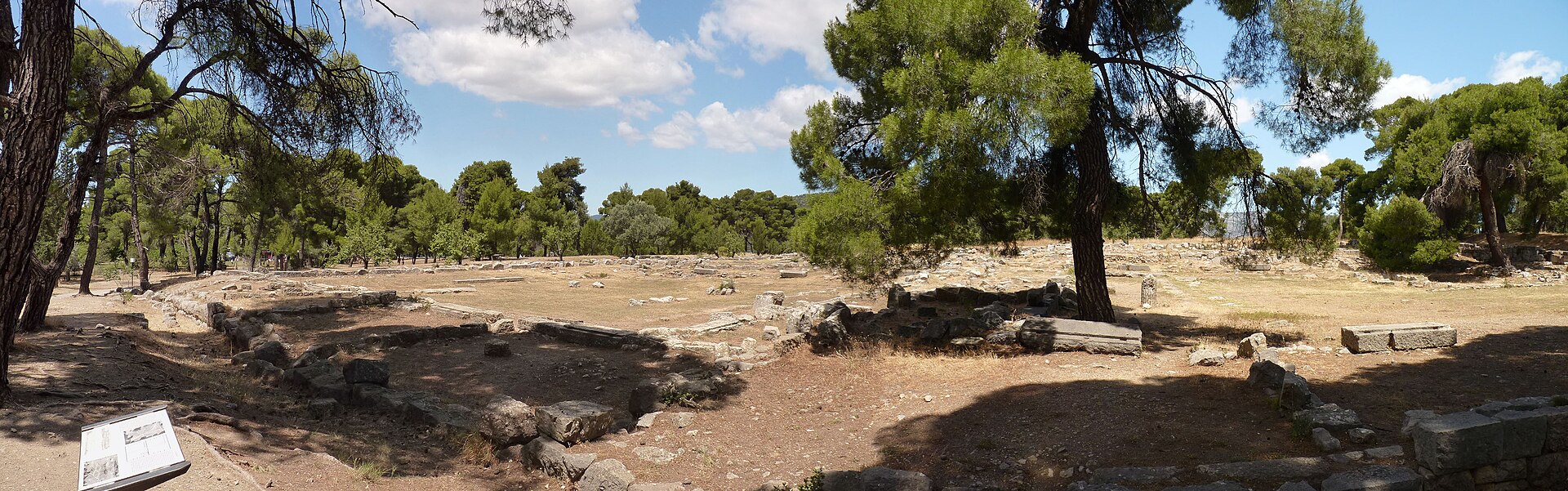
Spread across a peaceful valley, the sanctuary included temples, treatment buildings, guest houses, baths and sporting facilities, all serving the pilgrims who came in search of a cure.
Asclepius, God of Healing
Asclepius was the Greek god of medicine, usually shown holding a staff with a serpent coiled around it, a symbol still used for medicine today. His cult combined religious faith with real practices of care and treatment.
Snakes, sacred to the god, were kept at the sanctuary and were part of its healing rituals. The reverence for Asclepius shows how closely religion and medicine were entwined in the ancient world.

Ancient Medicine and the Cult of Cures
At Epidaurus the sick underwent a ritual that combined the spiritual and the practical. After purification and offerings, they slept in a special hall, hoping that the god would appear in a dream to heal them or prescribe a remedy.
Priests, who were also practical healers, then helped interpret the dreams and carry out treatments, which might include diet, exercise, herbs and baths. Inscriptions record many grateful patients’ accounts of their cures.
The Temple of Asclepius
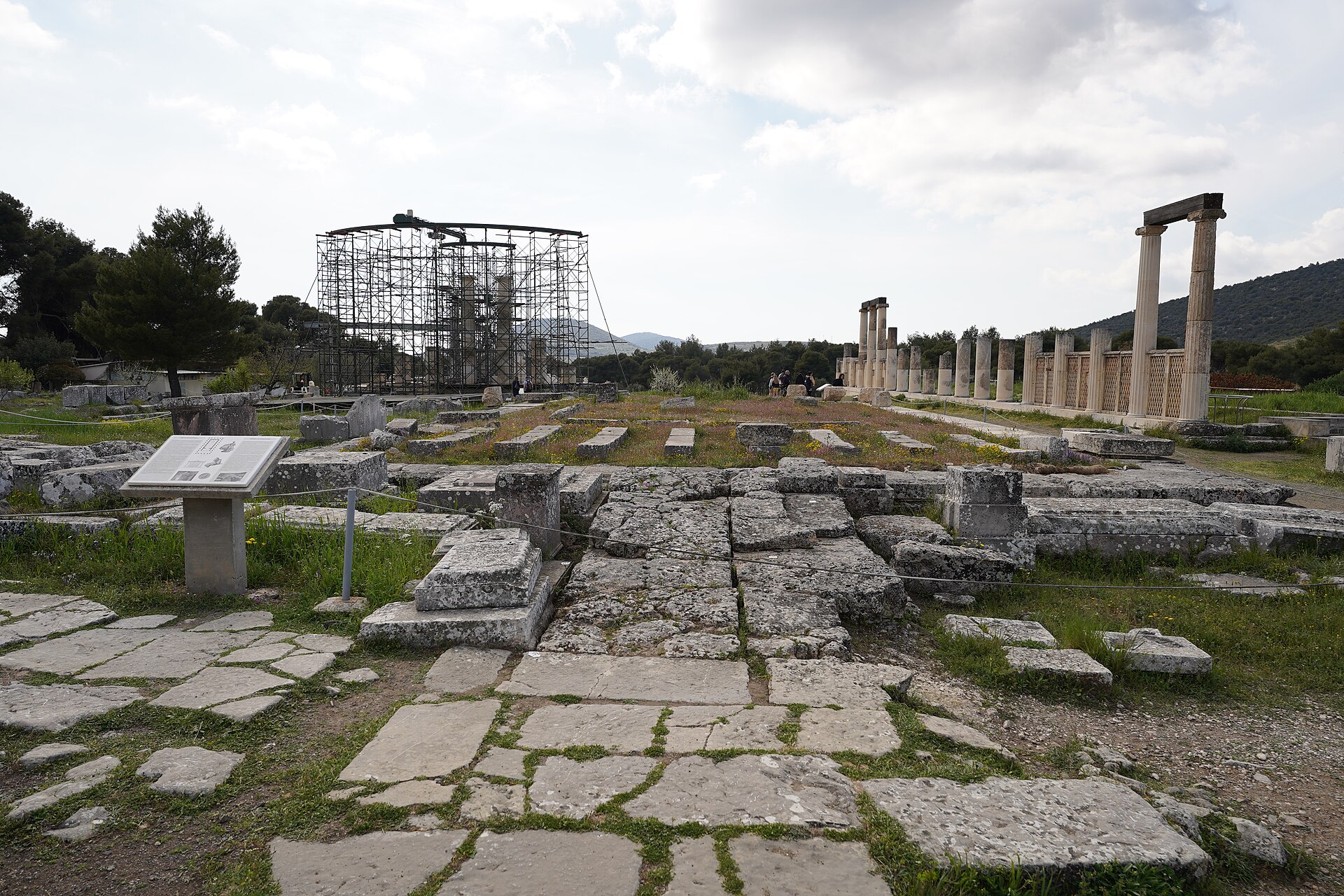
At the heart of the sanctuary stood the Temple of Asclepius, which housed a great statue of the god. It was the focus of worship and of the whole healing complex.
Though now reduced to its foundations, the temple was once richly decorated and central to the rituals of the sanctuary. Around it clustered the other sacred buildings.

The Mysterious Tholos
One of the most intriguing buildings at Epidaurus was the Tholos, a beautiful circular structure whose exact purpose is still debated. Beneath it lay a maze-like underground chamber.
Some think it was connected to the sacred snakes or to the mysteries of healing. Its elegant design and enigmatic function make it one of the most fascinating monuments of the site.

The Gateway and Guest Houses
Pilgrims entered the sanctuary through a monumental gateway and found within it everything needed for a long stay. A large guest house, or katagogion, provided accommodation for the many visitors.
These facilities show that Epidaurus functioned rather like a combination of hospital, spa and place of pilgrimage, able to receive and care for large numbers of people from across the Greek world.
The Stadium and Games
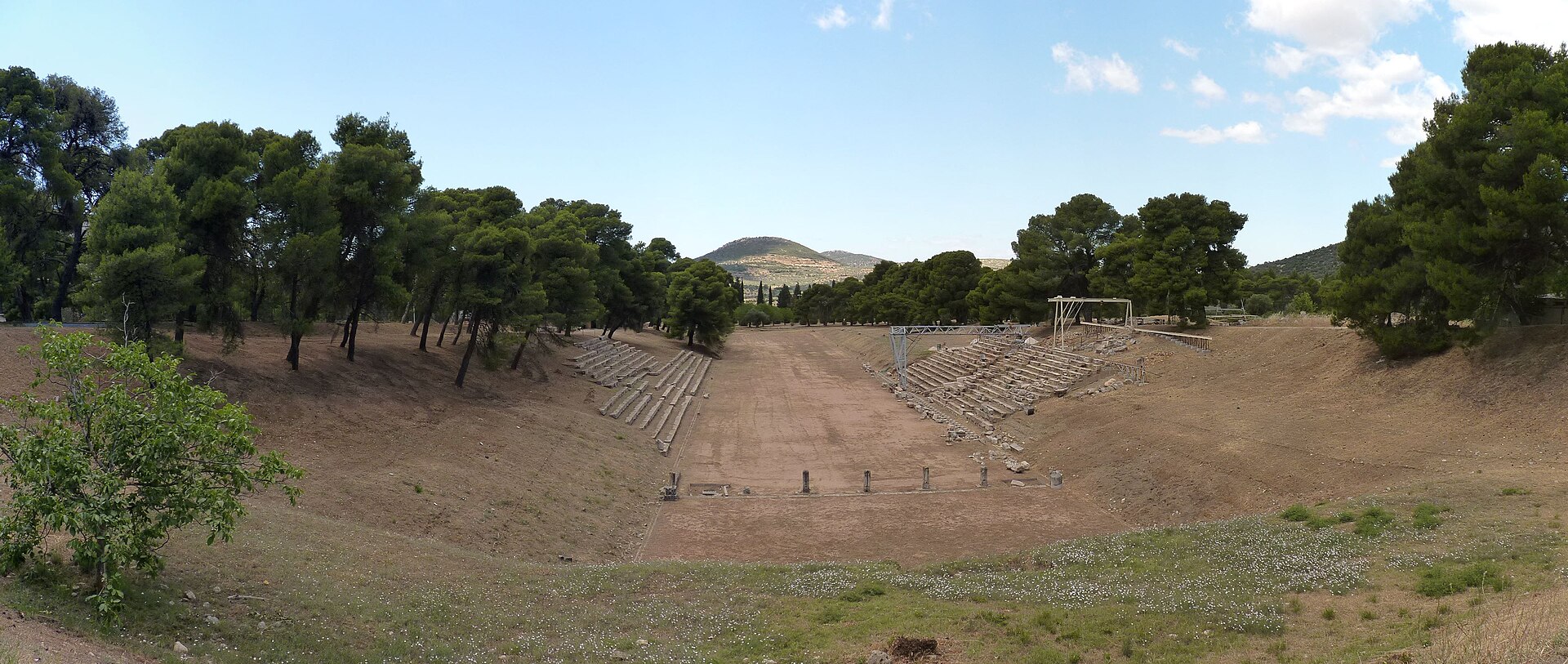
Like other great sanctuaries, Epidaurus held athletic and musical games in honour of its god, and it had its own stadium for the contests. Physical exercise was seen as part of health and healing.
The stadium, with its stone seating and starting lines, hosted these festivals, which combined worship, competition and celebration in the god’s honour.
Decline, Rediscovery, and Performances Today
The sanctuary flourished for many centuries before declining with the coming of Christianity and the banning of the old cults. It was eventually abandoned and its buildings fell into ruin.
Rediscovered and excavated, Epidaurus was inscribed on the UNESCO World Heritage List in 1988. Its magnificent theatre has been brought back to life, and each summer it hosts a famous festival of ancient drama, its perfect acoustics carrying the words of the classical playwrights once more.
Getting There
Epidaurus lies in the northeastern Peloponnese of southern Greece, in the region of the Argolid, roughly a two-hour drive from Athens. The nearest town is Nafplio, a popular base for exploring the area.
Most visitors come by car or organised tour, often combined with Mycenae and other ancient sites of the Argolid. In summer, attending a performance in the ancient theatre is an unforgettable experience.
Coordinates: 37.5963, 23.0790 — open Epidaurus in Google Maps.
Nearby Places
- Mycenae — the Bronze Age citadel of the same Argolid region, usually visited together with Epidaurus.
- Olympia — another great Greek sanctuary with its own temples, games and healing traditions.
- Pergamon — home to another celebrated Asclepieion, a great healing sanctuary of the god of medicine.
Closing Thoughts
Epidaurus unites two of the ancient world’s great gifts: the perfect theatre, where a whisper carries to the furthest seat, and the greatest of healing sanctuaries, where the sick sought cures from the god of medicine.
Still echoing each summer with the words of ancient drama, and still marked by the serpent staff of Asclepius that symbolises medicine to this day, Epidaurus remains one of the most harmonious and moving of all Greek sites.
You May Like
Mafra, the Palace a King Built From a Vow