On the edge of the Sahara in eastern Algeria lie the ruins of Timgad, one of the most complete Roman towns anywhere in the world. Founded from nothing as a colony for army veterans, it was laid out on a perfect grid and has survived so well, protected by desert sand, that it is often called the Pompeii of Africa.
Timgad shows the Roman town in its ideal form: straight streets crossing at right angles, a forum, a theatre, baths, a library and a triumphal arch, all built to a plan on the African frontier. It is a textbook of Roman urban design frozen in the sand.
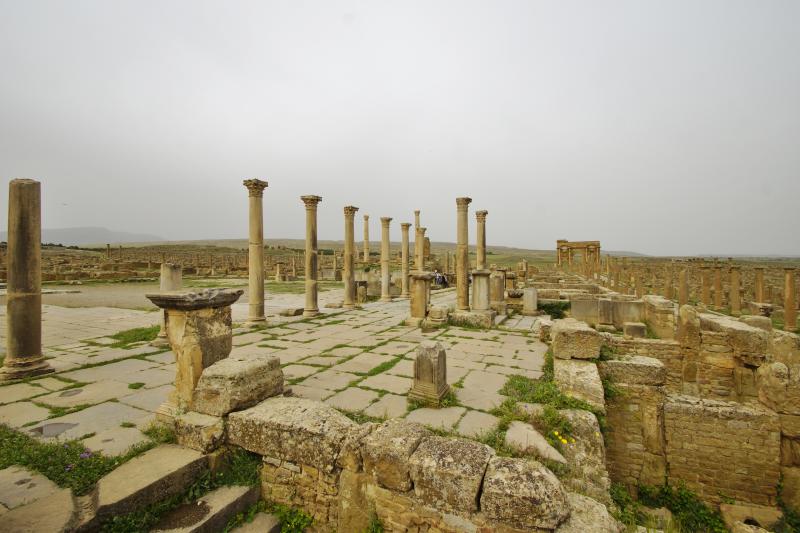
Table of Contents
- The African Pompeii
- A Colony for Roman Veterans
- The Perfect Roman Grid
- The Arch of Trajan
- The Forum and Public Life
- The Library of Timgad
- The Theatre
- Temples and the Capitol
- Baths, Latrines, and Mosaics
- Buried by Sand, Then Revealed, and UNESCO
- Getting There
- Nearby Places
- Closing Thoughts
The African Pompeii
Timgad, known in antiquity as Thamugadi, was buried by sand for many centuries, which preserved its buildings in remarkable completeness. When it was excavated, a whole Roman town emerged almost intact.
This exceptional preservation, together with its clear and regular plan, has earned it comparison with Pompeii. Few sites give so vivid a picture of an ordinary Roman provincial town.

A Colony for Roman Veterans
Timgad was founded around 100 AD by the emperor Trajan as a colony for retired soldiers of the Roman army. Settling veterans in new towns helped secure the frontier and reward long service.
Built on previously open ground, the town could be laid out from scratch according to the ideal Roman plan, without having to fit around older buildings. This makes Timgad a near-perfect example of Roman town planning.
The Perfect Roman Grid
Timgad was laid out as a precise square, divided by two main streets crossing at right angles and a regular grid of smaller streets, creating neat blocks. It is one of the finest surviving examples of the standard Roman town plan.
As the town grew and prospered, it spilled beyond its original square walls, but the original grid remains strikingly clear. Walking its paved streets, one experiences Roman order made visible.

The Arch of Trajan
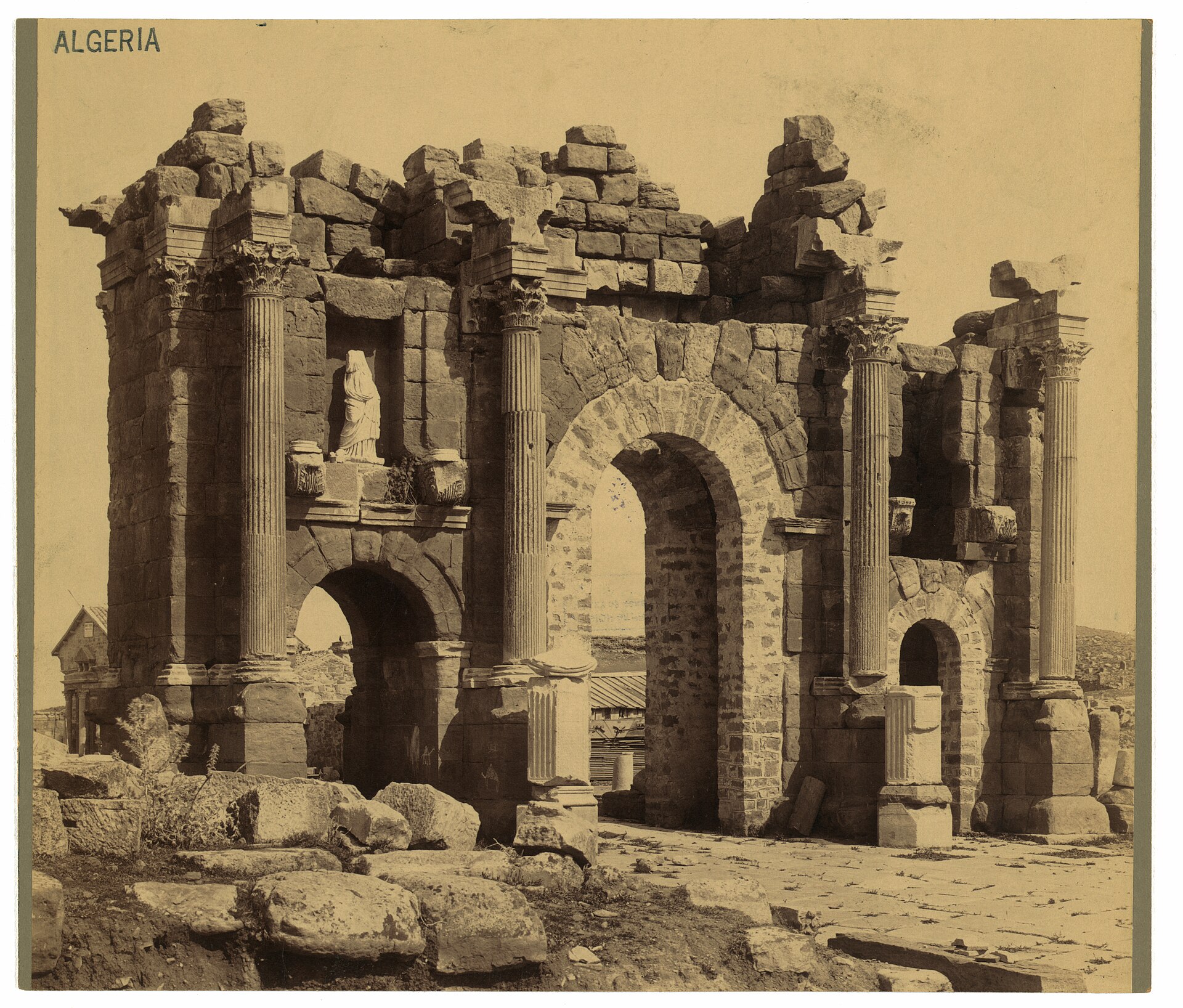
The most famous monument of Timgad is its great triumphal arch, often called the Arch of Trajan, which spanned the main street at the western edge of the original town. Its tall, elegant form is the symbol of the site.
Restored in modern times, the arch frames the view along the main street and out toward the mountains, a striking image of Roman monumental architecture on the African frontier.
The Forum and Public Life
At the centre of Timgad, where the two main streets met, lay the forum, the public square that was the heart of civic life. Surrounded by porticoes, temples, government buildings and shops, it was where citizens gathered.
Inscriptions and statues once filled the forum, honouring emperors and local benefactors. Even the graffiti carved into its paving, including a famous line about bathing and games being the good life, brings its people vividly to life.

The Library of Timgad
One of the most remarkable buildings at Timgad is its public library, a rare survival that shows how far Roman civic culture reached. Endowed by a wealthy citizen, it once held scrolls in wall niches around a central hall.
The presence of a substantial public library in a frontier town is striking evidence of the spread of literacy and learning across the Roman world, even far from the great cities.
The Theatre
Timgad had a fine theatre, built into a low hill, capable of seating several thousand spectators. It hosted plays and public performances for the townspeople.
Well preserved and sometimes still used today, the theatre is a reminder that the pleasures of Roman urban life were fully available even on the desert frontier.

Temples and the Capitol
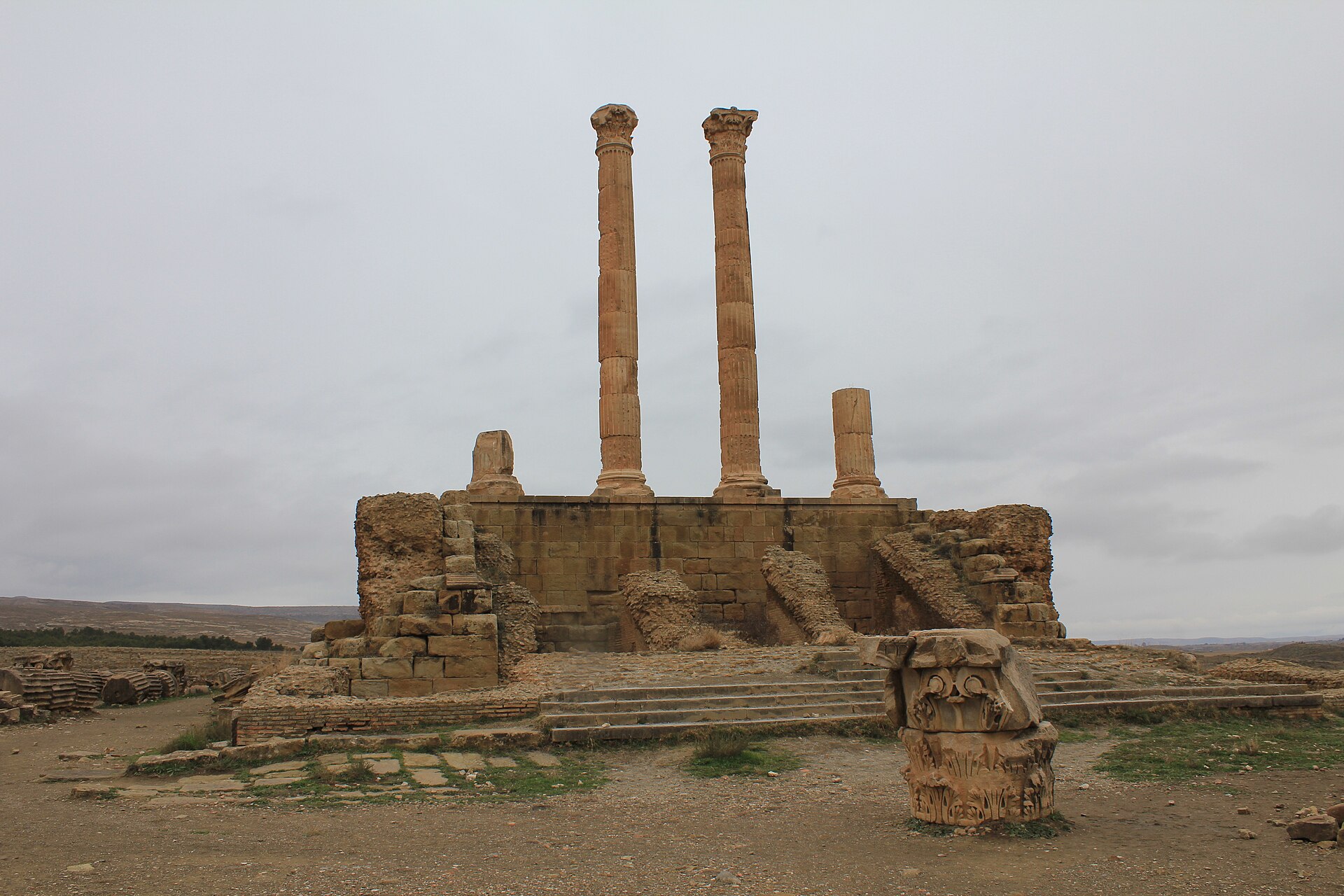
Like every proper Roman town, Timgad had its temples, including a Capitol dedicated to the great gods Jupiter, Juno and Minerva, whose columns still rise among the ruins.
Later, as the empire became Christian, churches were also built here, and Timgad became a centre of African Christianity. The mix of temples and churches reflects the changing faith of the Roman world.
Baths, Latrines, and Mosaics
Timgad was well equipped with the comforts of Roman life, including several bath complexes for washing, exercise and socialising. Even its public latrines survive, with their marble seats.
Many buildings were decorated with fine floor mosaics, some of which are now displayed in a museum at the site. These reflect the prosperity and taste of the townspeople in the city’s heyday.


Buried by Sand, Then Revealed, and UNESCO
After the fall of Roman power in the region, Timgad declined and was eventually abandoned. Sand gradually covered the town, hiding and protecting it for over a thousand years.
French archaeologists excavated the site from the late nineteenth century, revealing the remarkably complete town. Timgad was inscribed on the UNESCO World Heritage List in 1982 as an outstanding example of Roman town planning.
Getting There
Timgad lies in the Batna Province of northeastern Algeria, on the northern edge of the Aures Mountains, roughly thirty-five kilometres east of the city of Batna. Batna is the usual base for a visit.
The site is reached by road from Batna, which has an airport with domestic flights. Travel in Algeria requires some planning, so visitors should check current entry and travel requirements in advance.
Coordinates: 35.4842, 6.4686 — open Timgad in Google Maps.
Nearby Places
- Leptis Magna — another magnificent Roman city of North Africa, also preserved and later revealed by the sand.
- Pompeii — the Italian town whose completeness gives Timgad its nickname, the Pompeii of Africa.
- The Roman Forum and the Colosseum — the heart of the empire whose ideal town plan Timgad so perfectly embodies.
Closing Thoughts
Timgad is the Roman town made perfect: a whole city laid out on a flawless grid on the edge of the Sahara, complete with forum, theatre, baths and even a public library, and preserved by the desert for a thousand years.
Founded for retired soldiers and grown into a thriving African city, it is a textbook of Roman order written in stone. Few sites so clearly reveal the ideals and the reach of the Roman world.


One thought on “Timgad: The Perfect Roman Grid City the Sahara Preserved for a Thousand Years”