On the coast of Libya, half-buried for centuries beneath drifting sand, lie the ruins of Leptis Magna, one of the most magnificent Roman cities anywhere in the world. Its arches, basilicas and forums were built on a scale to rival Rome itself, funded by a local son who rose to become emperor.
Because the sand that buried Leptis Magna also protected it, the city survives in extraordinary completeness. Walking its streets today gives a vivid sense of the wealth and ambition of Roman Africa at its height.

Table of Contents
- A Roman Metropolis on the Libyan Coast
- From Phoenician Port to Roman City
- Septimius Severus, the Emperor from Leptis
- The Great Arch of Septimius Severus
- The Severan Forum and Its Gorgon Heads
- The Severan Basilica
- The Old Forum, Market, and Public Life
- The Theatre and Amphitheatre
- The Hadrianic Baths and the Harbour
- Burial by Sand, Rediscovery, and UNESCO
- Nearby Places
- Closing Thoughts
A Roman Metropolis on the Libyan Coast
Leptis Magna stands on the Mediterranean shore east of modern Tripoli, at the mouth of a seasonal river. In Roman times it was one of the three great cities of the region known as Tripolitania and grew immensely rich from trade and the fertile land around it.
At its peak it was among the leading cities of the entire empire, adorned with monuments of imported marble and granite. Its ruins today spread across a wide coastal site, a testament to that lost prosperity.
From Phoenician Port to Roman City
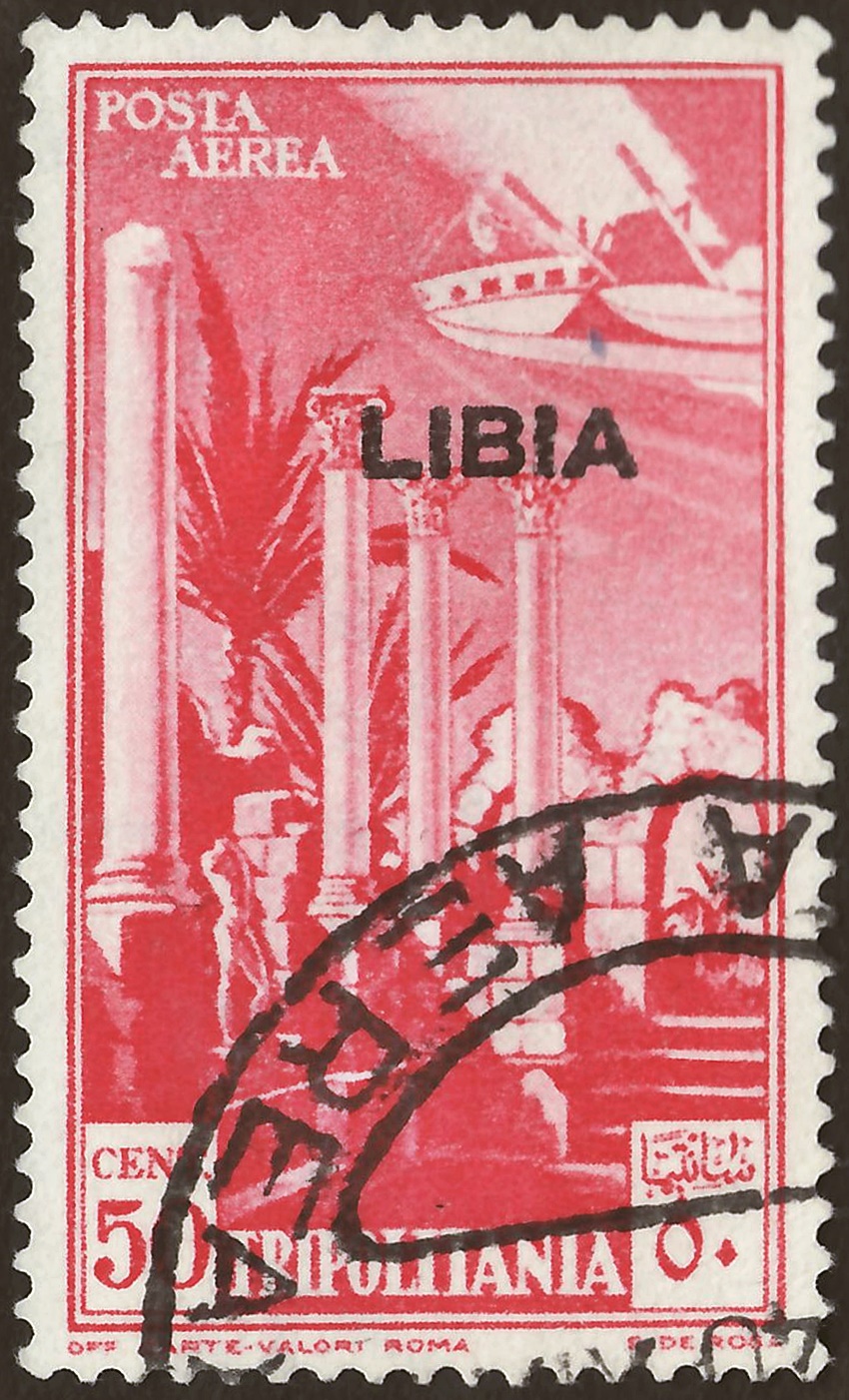
Like Carthage, Leptis began as a Phoenician trading post, founded to exploit the commerce of the North African coast. Over time it passed under Carthaginian and then Roman influence, growing steadily in size and wealth.
Its harbour was the key to its fortune, shipping olive oil, grain and the produce of the African interior across the Mediterranean. The wealth of this trade paid for the grand public buildings that still stand.

Septimius Severus, the Emperor from Leptis
Leptis Magna’s greatest patron was one of its own sons. Septimius Severus, born in the city, rose through the Roman ranks to become emperor at the end of the second century, the first emperor from Africa.
Proud of his birthplace, Severus lavished wealth on Leptis, funding a spectacular building programme that transformed the city into a showcase of imperial architecture. Much of what survives dates from this golden age.
The Great Arch of Septimius Severus
The most striking monument of Severan Leptis is a great four-way triumphal arch built to honour the emperor. Standing at a crossroads of the main streets, it was covered in elaborate carved reliefs celebrating the imperial family and their victories.
Its sculpture, deeply cut and richly detailed, ranks among the finest of the age. Reconstructed in modern times, the arch is once again one of the first sights to greet visitors to the ruins.

The Severan Forum and Its Gorgon Heads
Severus gave his city a magnificent new forum, a great open square surrounded by porticoes and shops. Its arcades were decorated with a famous series of carved heads of Gorgons and sea-nymphs, staring out from the arches.
These striking sculptures, blending Roman form with an almost hypnotic intensity, are among the most memorable images of Leptis Magna. They show the confidence and originality of its artists.

The Severan Basilica
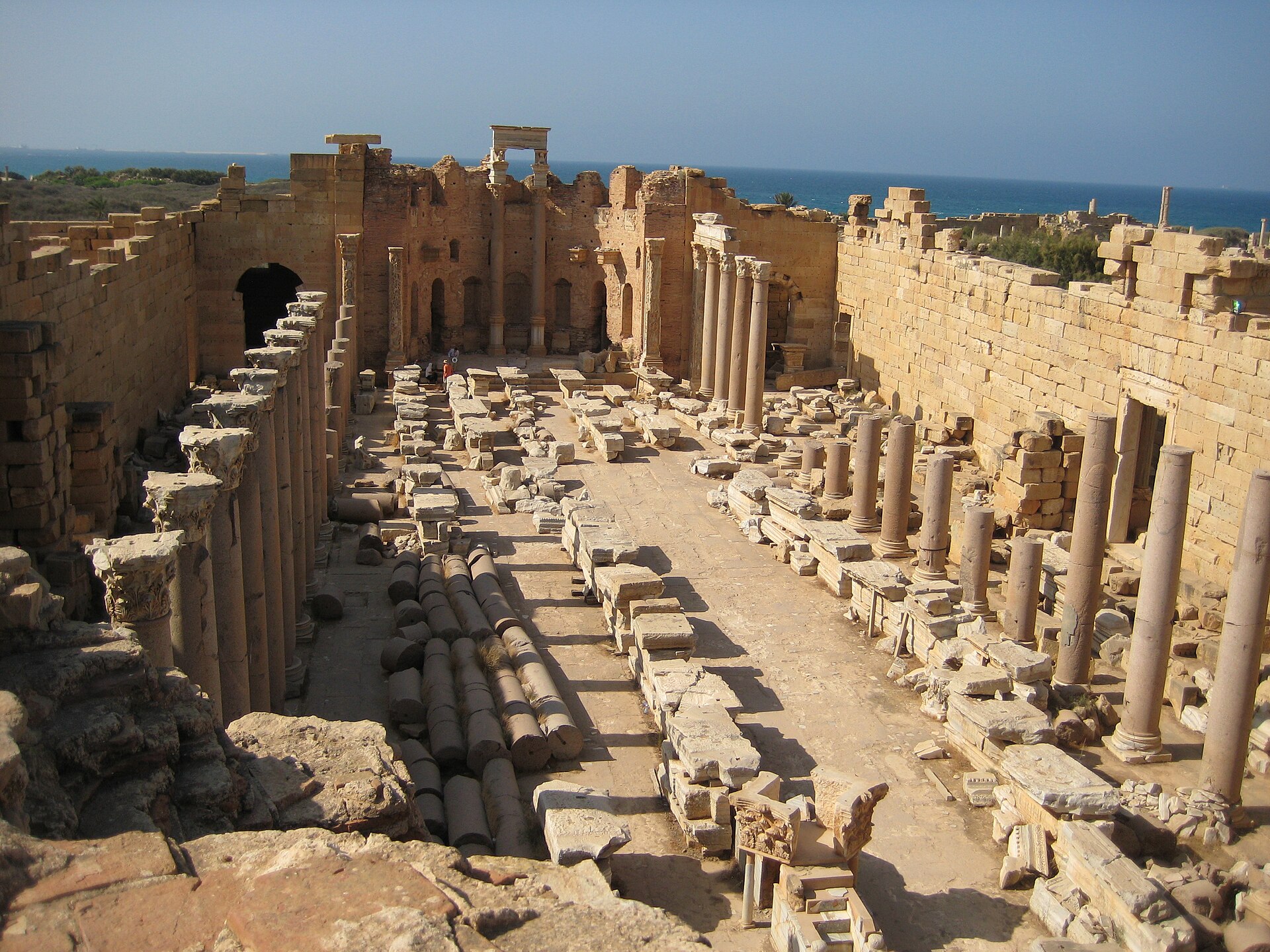
Beside the forum rose the Severan Basilica, a vast roofed hall used for law courts and public business. Rows of tall columns divided its interior, and richly carved pilasters decorated its ends.
One of the grandest basilicas of the Roman world, it was later converted into a Christian church. Its towering walls and columns still convey the ambition of Severus’s rebuilding of his home city.
The Old Forum, Market, and Public Life
Alongside the grand Severan additions, Leptis kept its older civic centre. The Old Forum, temples and a well-preserved market, or macellum, formed the heart of daily life, where citizens shopped, worshipped and gathered.
The market’s twin pavilions, with their counters and measuring tables, give an unusually clear picture of ancient commerce. Here the goods of Africa and the Mediterranean changed hands.

The Theatre and Amphitheatre
Leptis Magna enjoyed the full range of Roman entertainments. Its theatre, one of the oldest stone theatres in Africa, backed onto a temple and offered views toward the sea beyond the stage.
Outside the city an amphitheatre and a circus provided for gladiatorial games and chariot races. Together these buildings show how thoroughly the pleasures of Roman urban life had taken root on the African coast.

The Hadrianic Baths and the Harbour
Among the finest buildings at Leptis are the Hadrianic Baths, a huge and luxurious complex of heated rooms, pools and exercise grounds, faced with coloured marble. They rivalled the great bathing establishments of Rome itself.
Severus also rebuilt the harbour on an ambitious scale, with quays, warehouses and a lighthouse. Ironically the new design may have silted up too easily, and the great port never fully lived up to its builder’s hopes.

Burial by Sand, Rediscovery, and UNESCO
After the fall of Rome, Leptis declined, and following the Arab conquest it was gradually abandoned. Windblown sand buried much of the city, which unintentionally preserved its buildings from stone-robbers and the elements.
Excavated largely in the twentieth century, Leptis Magna was inscribed on the UNESCO World Heritage List in 1982. It stands today as one of the most complete and impressive Roman cities to survive anywhere, a masterpiece of the African provinces.
Nearby Places
- Carthage — the earlier Phoenician power on the same African coast, whose trading world Leptis inherited.
- The Roman Forum and the Colosseum — the imperial capital that Leptis Magna, under its own emperor, sought to rival.
- Jerash — another superbly preserved provincial Roman city, this one in the deserts of the East.
Closing Thoughts
Leptis Magna is the story of a frontier city that produced an emperor and was rewarded with monuments worthy of Rome itself. Its arches, forums and baths speak of a Roman Africa as wealthy and cultured as any part of the empire.
That so much survives is an accident of the sand that buried it. Rediscovered in modern times, Leptis Magna offers one of the fullest and most beautiful visions we have of a great city of the ancient world.
You May Like
Mafra, the Palace a King Built From a Vow


2 thoughts on “Leptis Magna: The African City That Gave Rome an Emperor and Was Saved by the Sand”