On a rocky hill in the Argolid of southern Greece stand the ruins of Mycenae, the stronghold of a warlike Bronze Age people who gave their name to a whole civilisation. This was the fabled kingdom of Agamemnon, leader of the Greeks in the Trojan War, and one of the great centres of power in the age of heroes sung by Homer.
Behind its massive walls and its famous Lion Gate, archaeologists uncovered royal graves filled with gold, including a mask once thought to be that of Agamemnon himself. Mycenae is where Greek legend and real Bronze Age history meet.
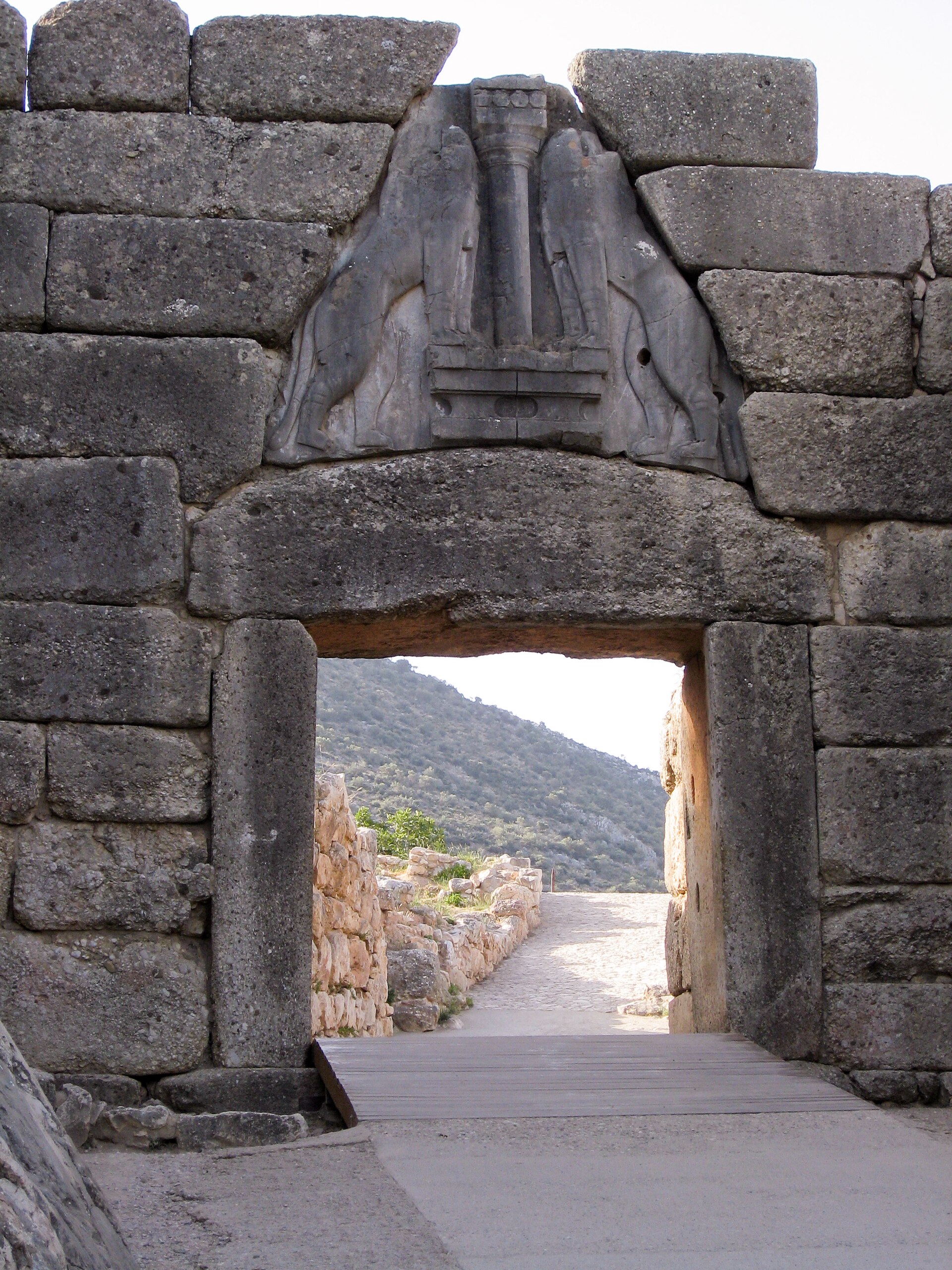
Table of Contents
- The Citadel of the Mycenaeans
- The Age of Heroes and Homer
- The Lion Gate
- Cyclopean Walls
- Grave Circle A and the Golden Masks
- Mycenaean Gold and Craft
- The Treasury of Atreus
- The Palace and Linear B
- Agamemnon, Troy, and Legend
- Collapse, Schliemann, and UNESCO
- Getting There
- Nearby Places
- Closing Thoughts
The Citadel of the Mycenaeans
Mycenae was a fortified citadel and palace, the seat of a powerful king who ruled the surrounding lands. It was the most important centre of the Mycenaean civilisation, which dominated mainland Greece in the late Bronze Age.
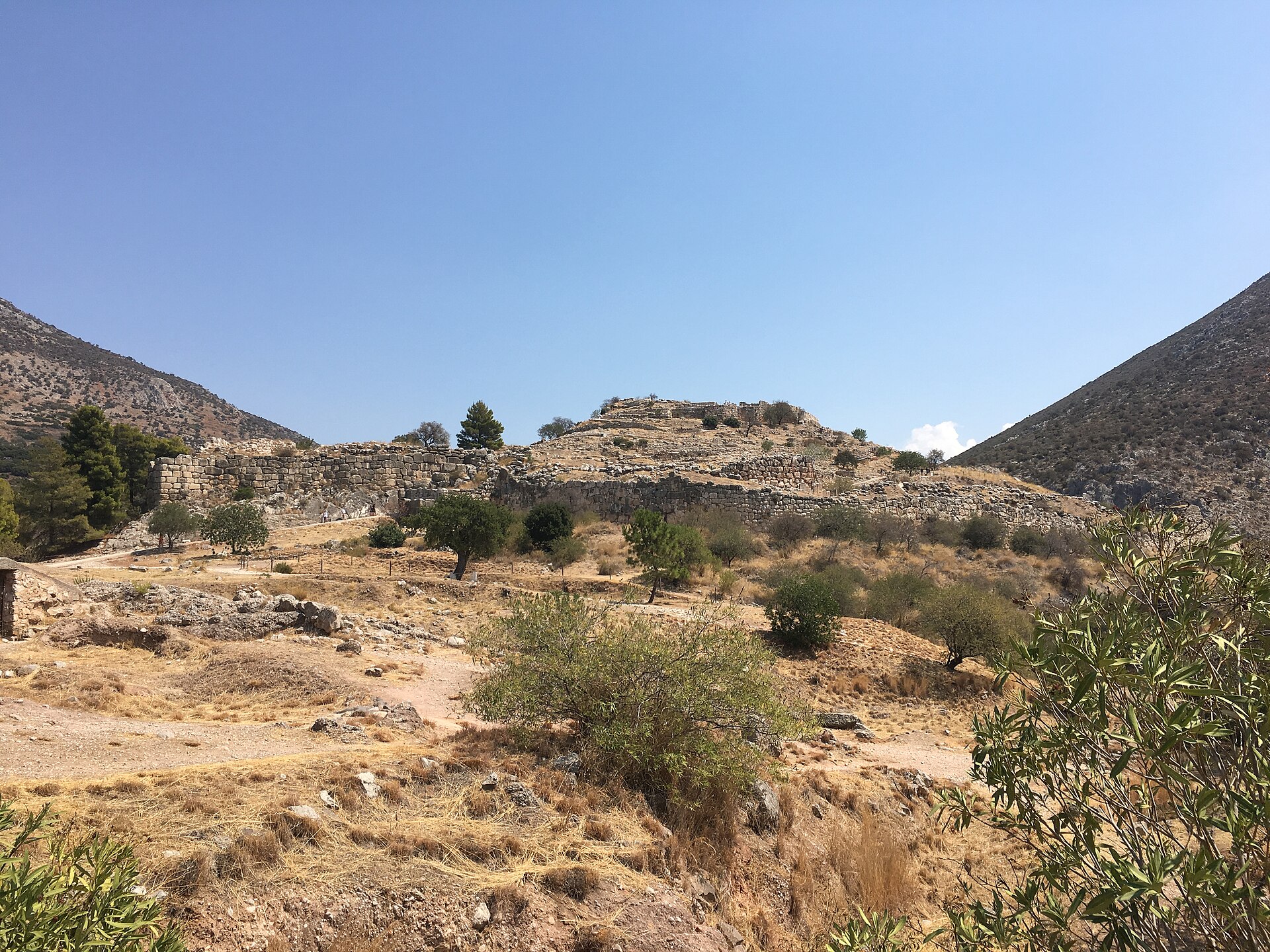
Perched on a hill between two higher peaks, the citadel controlled the routes through the region. From here its rulers commanded wealth, warriors and far-reaching trade across the Mediterranean.

The Age of Heroes and Homer
The Mycenaeans are the people of the Greek heroic age, the world described centuries later in Homer’s Iliad and Odyssey. To the classical Greeks, Mycenae was the city of Agamemnon, the king who led the expedition against Troy.
For a long time these stories were thought to be pure legend. The discovery of the rich remains of Mycenae showed that behind the myths lay a real and powerful Bronze Age world.

The Lion Gate
The main entrance to the citadel is the Lion Gate, one of the most famous monuments of prehistoric Europe. Above its massive lintel, two carved lionesses flank a column, guarding the way into the fortress.
This is the oldest known monumental sculpture in Europe, and it still stands where it was placed over three thousand years ago. Passing beneath it, visitors enter the world of the Mycenaean kings.
Cyclopean Walls
Mycenae was defended by enormous walls built of huge, roughly shaped blocks of stone. Later Greeks, unable to believe that ordinary men had raised them, said they must have been built by the Cyclopes, the one-eyed giants of myth.
These cyclopean walls, many metres thick, enclosed the palace, houses and graves of the citadel. They are a powerful expression of the might and ambition of the Mycenaean rulers.
Grave Circle A and the Golden Masks
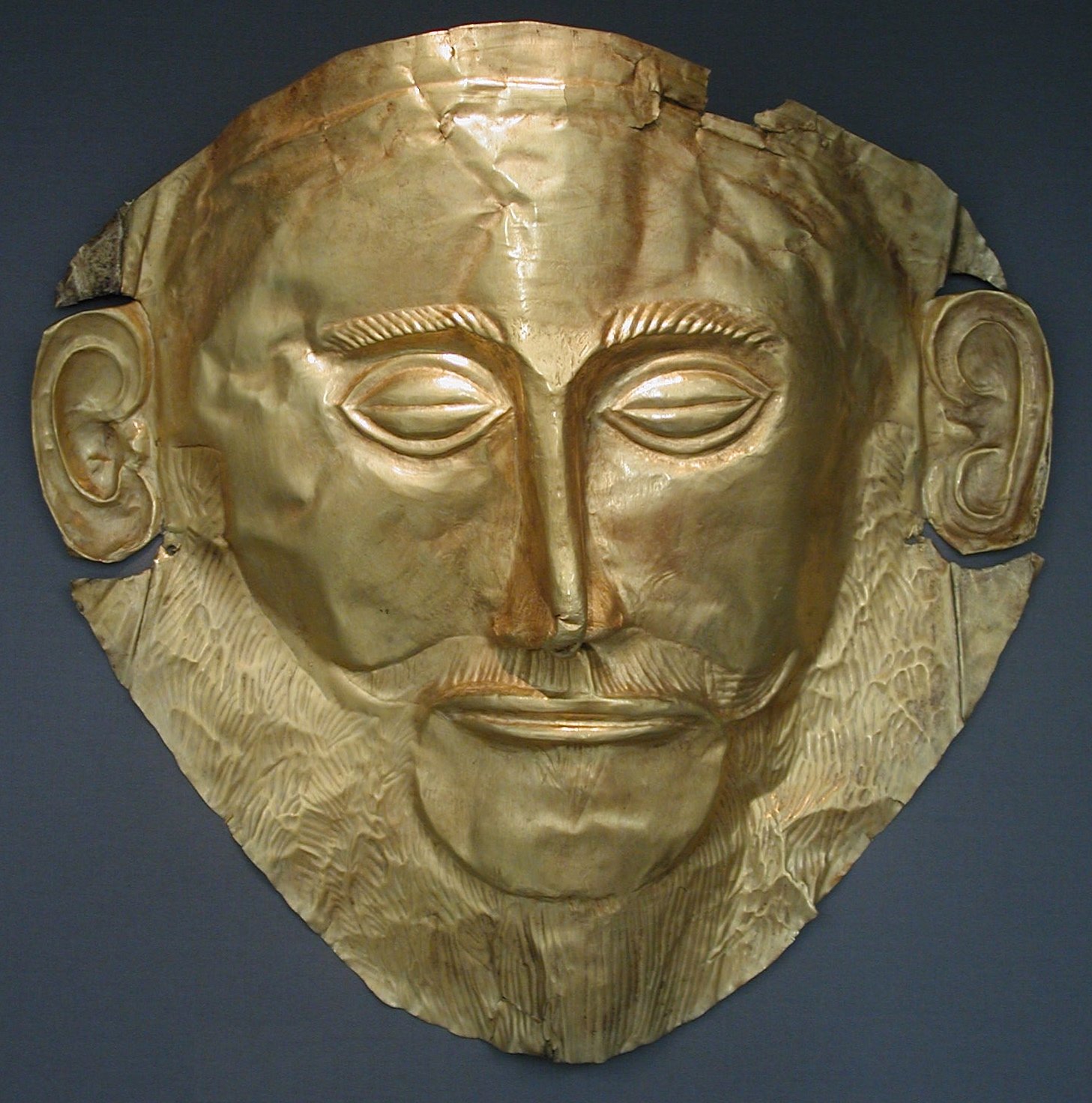
Just inside the Lion Gate lies Grave Circle A, a ring of royal shaft graves. When these were excavated, they were found to contain astonishing riches, including gold jewellery, weapons and funerary masks of beaten gold.
The most famous is a gold mask that its discoverer believed belonged to Agamemnon himself. Though it is in fact far older than the traditional date of the Trojan War, it remains one of the iconic treasures of the ancient world.

Mycenaean Gold and Craft
The graves and palaces of Mycenae have yielded a wealth of gold and fine craftsmanship, from inlaid daggers to delicate jewellery and drinking cups. So much gold was found that Homer’s description of Mycenae as rich in gold seemed fully justified.
These treasures reveal a society of warrior kings who prized display and luxury, and who had access to materials and skills from across the Mediterranean world.

The Treasury of Atreus
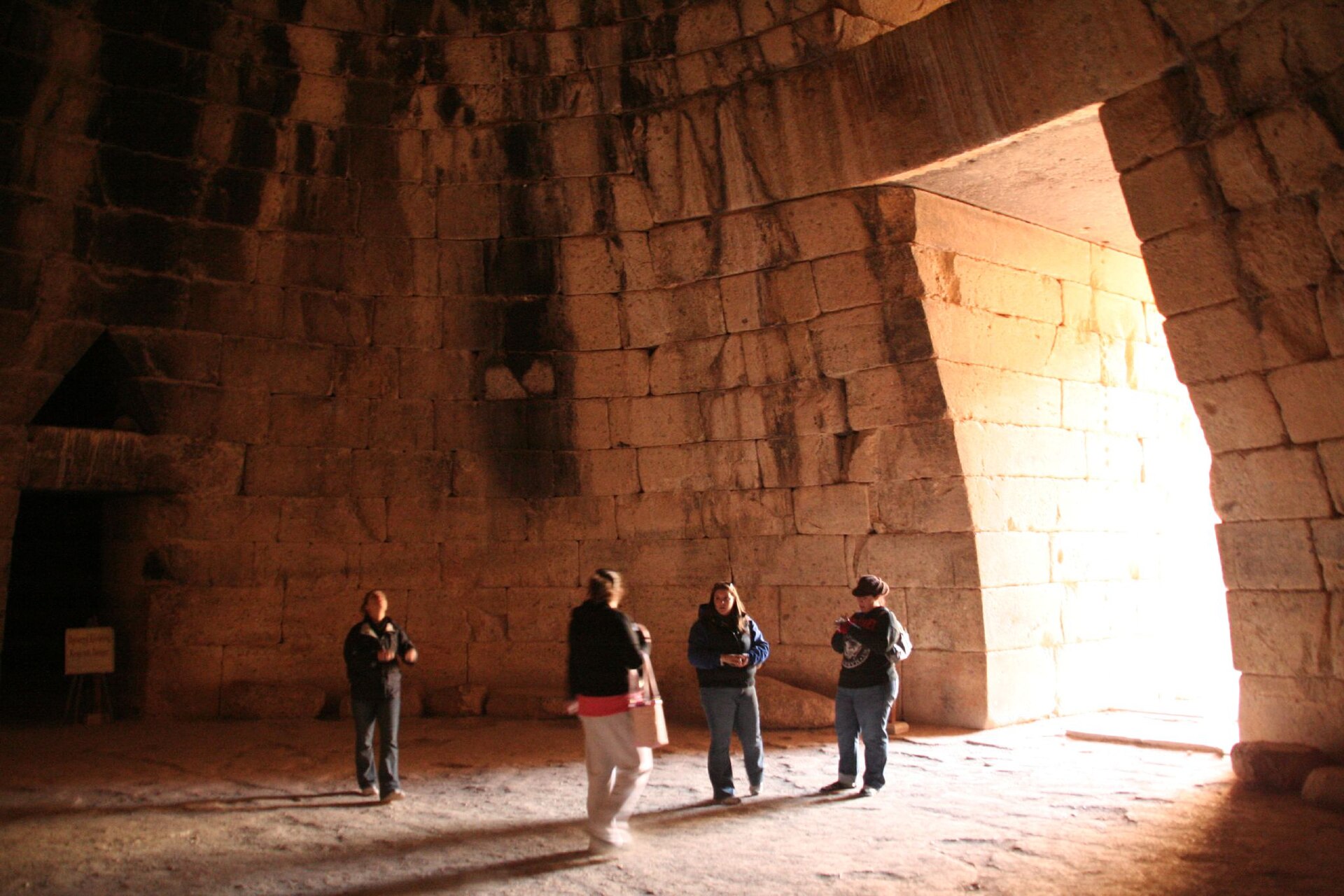
Outside the citadel walls stand great domed tombs, the finest of which is known as the Treasury of Atreus. Reached through a long passage and a towering doorway, it opens into a huge beehive-shaped chamber built of finely fitted stone.
Its corbelled dome was the largest of its kind in the ancient world for many centuries. These monumental tombs were the burial places of the Mycenaean royal family.

The Palace and Linear B
At the top of the citadel stood the royal palace, centred on a great hall, the megaron, with a hearth and throne. From here the king ruled his kingdom and conducted the ceremonies of state.
The Mycenaeans used a script known as Linear B, an early form of Greek written on clay tablets. Deciphered in the twentieth century, these tablets record the palace’s stores, workers and offerings, revealing a highly organised society.
Agamemnon, Troy, and Legend
In Greek legend, Mycenae was the home of the House of Atreus, a family cursed by murder and revenge, and of Agamemnon, who sacrificed everything to lead the Greeks against Troy and was killed on his return.
Whether or not a real Trojan War lies behind the myth, Mycenae was certainly a great power at the time, capable of the kind of expedition the legends describe. Myth and history are here impossible to fully separate.
Collapse, Schliemann, and UNESCO
Around 1200 BC the Mycenaean world collapsed in a wave of destruction whose causes are still debated, plunging Greece into a dark age. Mycenae itself declined and was eventually abandoned.
In the nineteenth century the German pioneer Heinrich Schliemann excavated the site and uncovered its golden graves, bringing the Mycenaeans back to the world’s attention. Mycenae was inscribed on the UNESCO World Heritage List in 1999.
Getting There
Mycenae lies in the northeastern Peloponnese in southern Greece, in the region of the Argolid, near the modern village of Mykines. It is roughly a two-hour drive from Athens.
Most visitors come by car or organised tour, often combined with other ancient sites of the Argolid such as the theatre of Epidaurus. A museum at the site displays finds from the citadel and graves.
Coordinates: 37.7308, 22.7561 — open Mycenae in Google Maps.
Nearby Places
- Knossos — the Minoan palace of Crete whose civilisation the Mycenaeans admired, absorbed and finally overtook.
- The Acropolis of Athens — the later Greek world that looked back on Mycenae as its own heroic age.
- Delphi — the sanctuary of the classical Greeks, heirs to the legends and heroes of Mycenaean times.
Closing Thoughts
Mycenae is the citadel of the Greek heroic age made real: cyclopean walls, a gate guarded by lions, and royal graves heavy with gold, the stronghold of the legendary Agamemnon.
Here the myths of Homer meet the discoveries of archaeology, and a lost Bronze Age civilisation steps out of legend into history. Standing beneath the Lion Gate, one feels the full weight of the age of heroes.
You May Like
Mafra, the Palace a King Built From a Vow


One thought on “Mycenae: The Golden Citadel of Agamemnon and the Age of Heroes”