On the east bank of the Nile in southern Egypt lies a stretch of ruins so vast that the ancient Greeks called it the city of a hundred gates. The Egyptians knew it as Waset; Homer sang of it as Thebes; today the modern town of Luxor sprawls among its temples. For more than a thousand years this was the religious and, for long stretches, the political heart of the ancient world.
Thebes is not a single monument but a whole sacred landscape. Temples for the living crowd the east bank where the sun rises, while an immense necropolis of royal tombs and mortuary temples spreads across the west bank where it sets. Taken together they form one of the richest concentrations of ancient architecture anywhere on earth, and a record in stone of the ideas that shaped pharaonic Egypt.
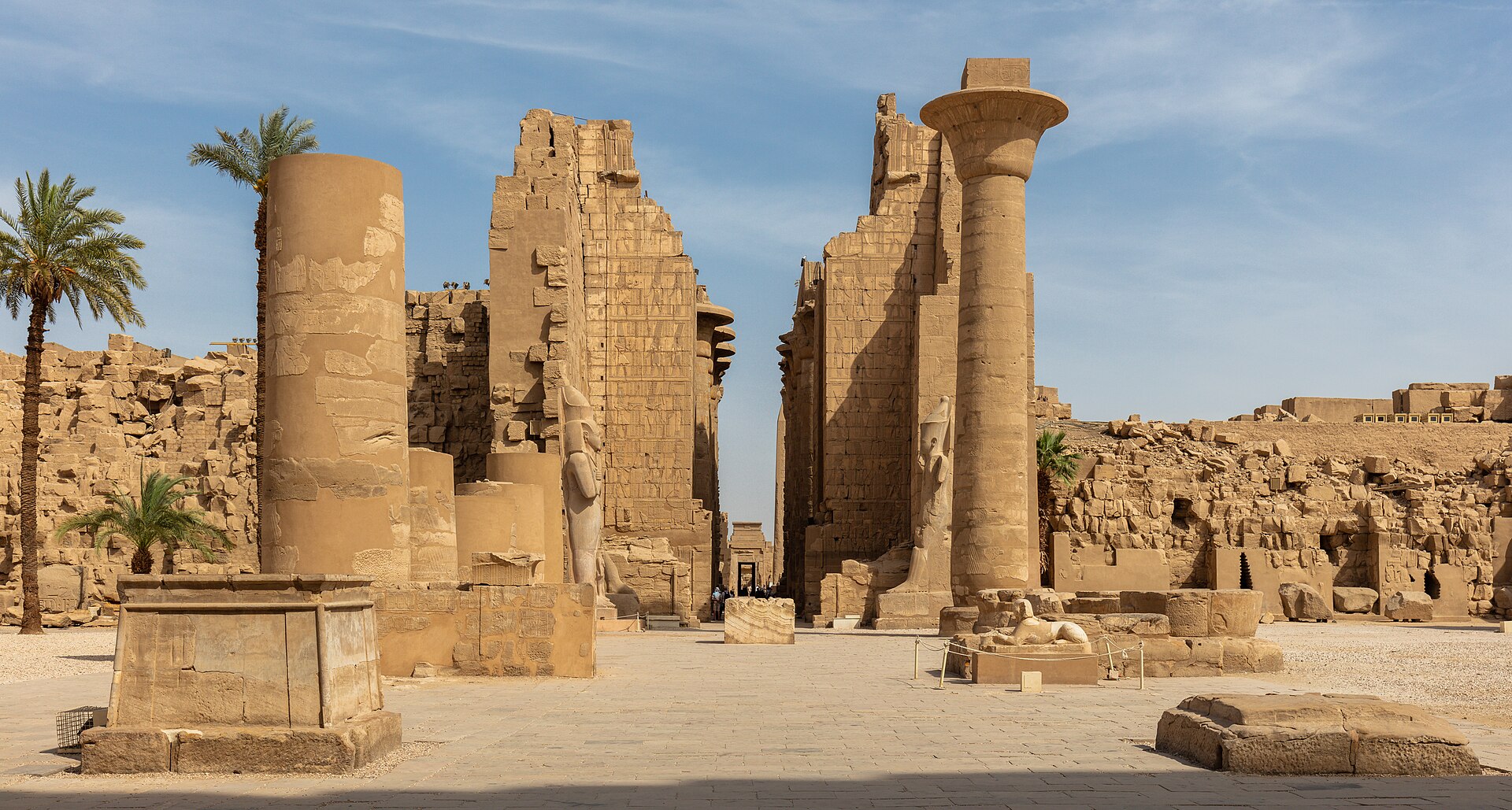
Table of Contents
- A City of a Hundred Gates on the Nile
- Karnak: The Largest Religious Building Ever Raised
- Luxor Temple and the Avenue of Sphinxes
- The West Bank: A Landscape Built for the Dead
- Deir el-Bahari and the Temple of Hatshepsut
- Amun and the Power of the Theban Priesthood
- Tutankhamun and the Treasures of the Valley of the Kings
- The Colossi of Memnon and the Singing Statue
- Rediscovery, Egyptology and the Race for Antiquities
- UNESCO Protection and Visiting Thebes Today
- Nearby Places
- Closing Thoughts
A City of a Hundred Gates on the Nile
Thebes rose to prominence during the Middle Kingdom, when local princes reunited Egypt and made their home town a capital. Its greatest age came in the New Kingdom, roughly between 1550 and 1070 BC, when warrior pharaohs such as Thutmose III and Ramesses II ruled an empire reaching into Nubia and the Levant and poured the spoils of conquest into their city.
The Nile divided Thebes into two symbolic halves. The east bank, associated with the rising sun and the world of the living, held the great temples of Karnak and Luxor. The west bank, where the sun died each evening, became the realm of the dead, lined with mortuary temples and honeycombed with tombs. The river itself was the highway that bound the two together.

Karnak: The Largest Religious Building Ever Raised
No single pharaoh built Karnak. It grew over some two thousand years as successive rulers added pylons, courts, chapels and obelisks, each trying to outdo the last. The result is the largest religious structure ever constructed, a precinct of stone covering an area big enough to hold several cathedrals.
Its most famous space is the Great Hypostyle Hall, where 134 columns rise in tight ranks, the tallest around twenty-one metres high and thick enough that several people can barely encircle them. Once roofed and painted in brilliant colour, the hall was meant to evoke a marsh of papyrus at the dawn of creation, a forest of stone in which the god was thought to dwell.

Luxor Temple and the Avenue of Sphinxes
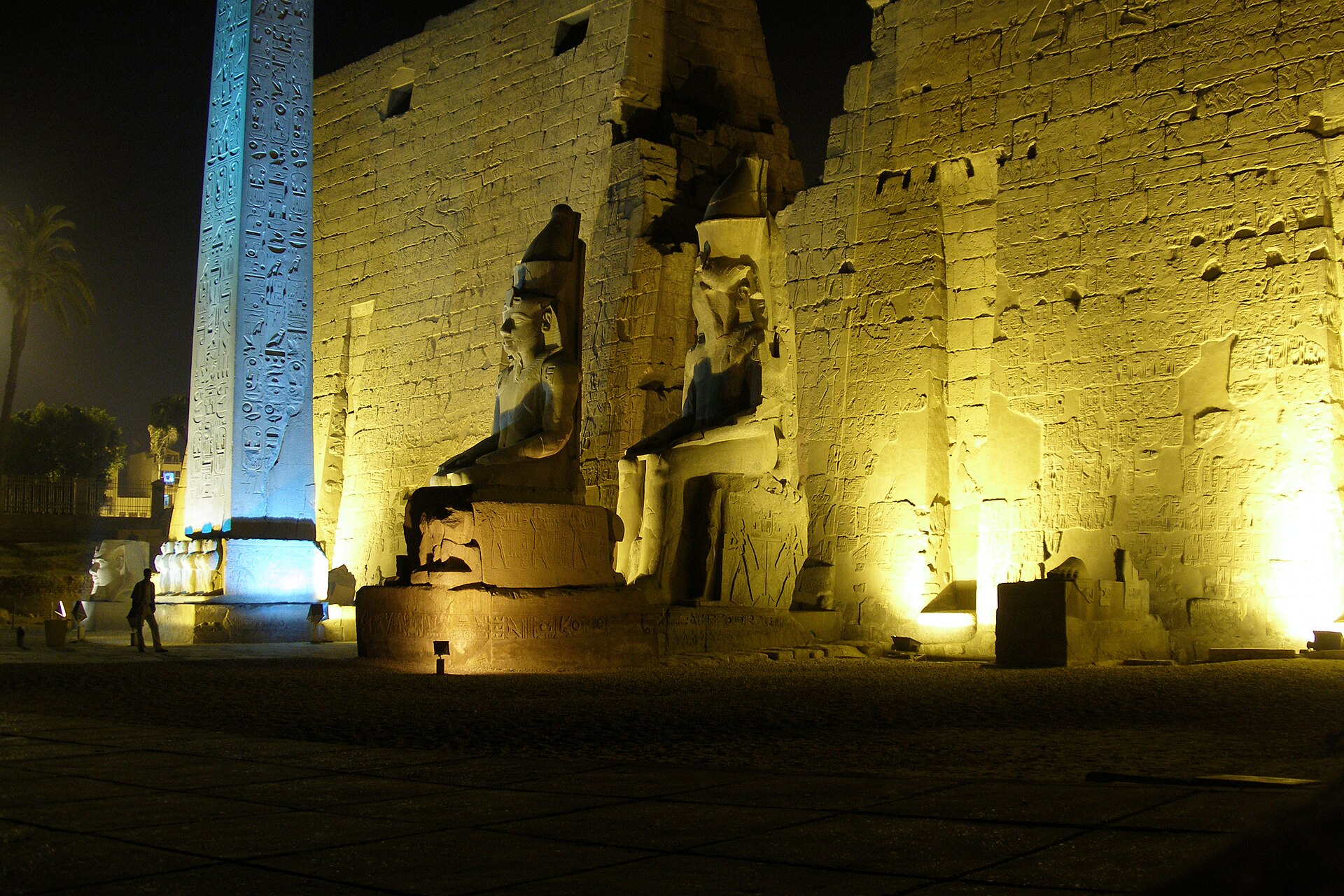
About three kilometres south of Karnak stands Luxor Temple, begun largely by Amenhotep III and extended by Ramesses II, whose colossal statues and single surviving obelisk still guard its entrance. Unlike most Egyptian temples it was not dedicated to a single god but to the rejuvenation of kingship itself.
The two temples were joined by a grand processional avenue lined with hundreds of sphinxes, along which the image of the god Amun was carried each year during the Opet festival. Recently restored, this Avenue of Sphinxes once again links Karnak and Luxor in an unbroken ceremonial line.
The West Bank: A Landscape Built for the Dead
Across the river, the desert cliffs hide the greatest royal cemetery in the world. Fearing the tomb robbery that had plundered the pyramids, the New Kingdom pharaohs abandoned visible monuments and cut their sepulchres deep into a remote valley, their entrances concealed and guarded.
Around these tombs spread the mortuary temples where the dead kings were worshipped, and the village of Deir el-Medina, home to the artisans who dug and decorated the tombs. Their surviving letters, receipts and sketches give us an unusually intimate portrait of ordinary working life in ancient Egypt.

Deir el-Bahari and the Temple of Hatshepsut
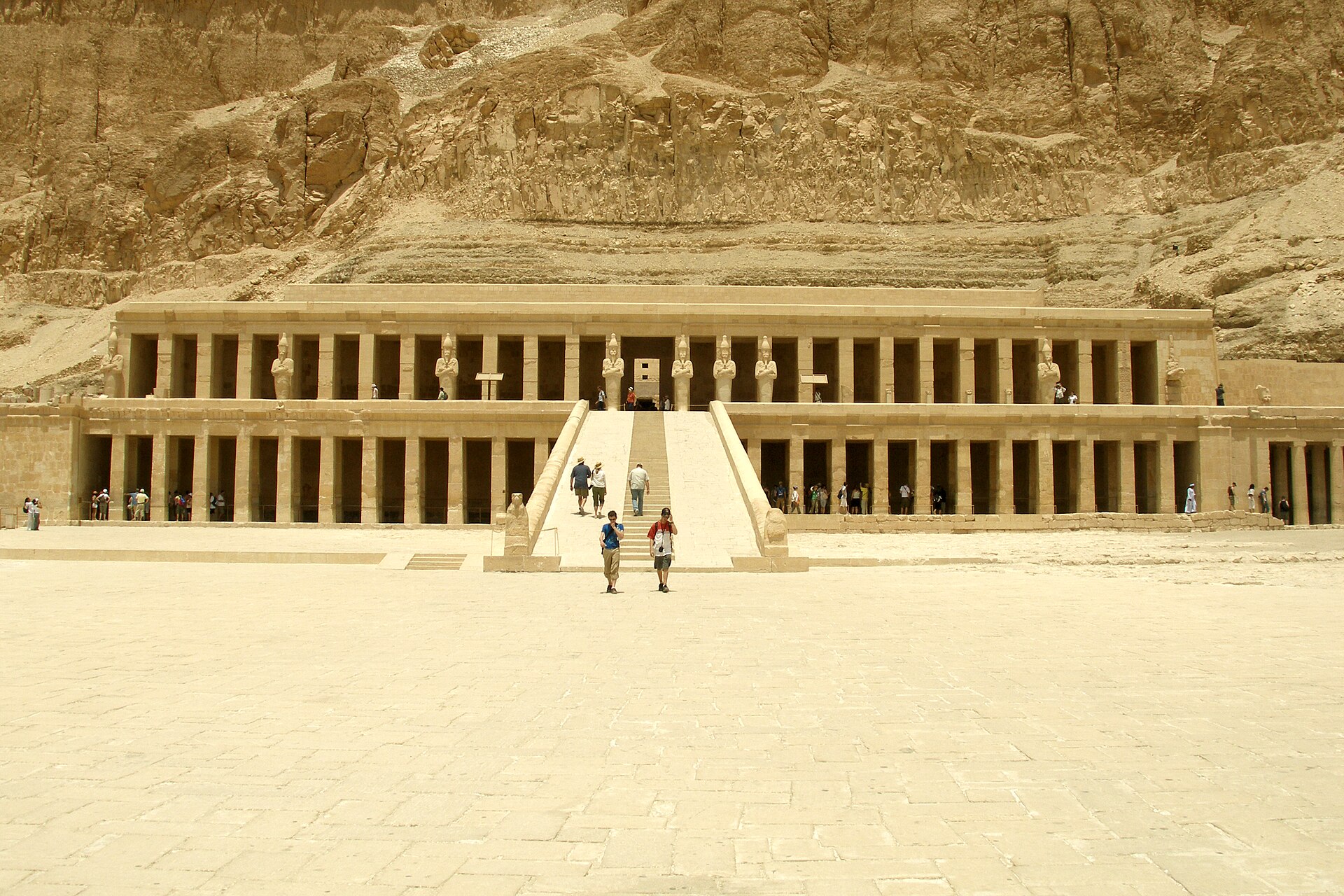
Set against a sheer wall of golden cliffs, the mortuary temple of Hatshepsut is one of the masterpieces of ancient architecture. Its rising terraces and long colonnades seem almost modern in their clean geometry, blending human design with the natural amphitheatre behind it.
Hatshepsut was one of the few women to rule Egypt as pharaoh in her own right, and her reliefs proudly record a trading expedition to the distant land of Punt. After her death her successor tried to erase her name, a reminder of how fiercely the memory of Thebes could be contested.
Amun and the Power of the Theban Priesthood
The wealth of Thebes flowed from its god. Amun, once a minor local deity, merged with the sun god Ra to become Amun-Ra, king of the gods and patron of the empire. Victorious pharaohs credited him with their conquests and repaid him with land, gold and monuments.
Over time this made the priesthood of Amun enormously rich and powerful. By the end of the New Kingdom the high priests of Thebes controlled so much land and treasure that they rivalled the pharaohs themselves, and eventually ruled the south of Egypt in all but name.

Tutankhamun and the Treasures of the Valley of the Kings
The Valley of the Kings holds more than sixty tombs, most stripped in antiquity. The great exception was discovered in 1922, when Howard Carter opened the almost intact tomb of the young pharaoh Tutankhamun and found chamber after chamber packed with gilded shrines, jewellery and the famous golden funerary mask.
Tutankhamun was a minor king, and the splendour of even his modest burial hints at the staggering riches that must once have filled the tombs of greater pharaohs. The find turned Thebes into a global sensation and fixed the Valley of the Kings in the popular imagination.
The Colossi of Memnon and the Singing Statue
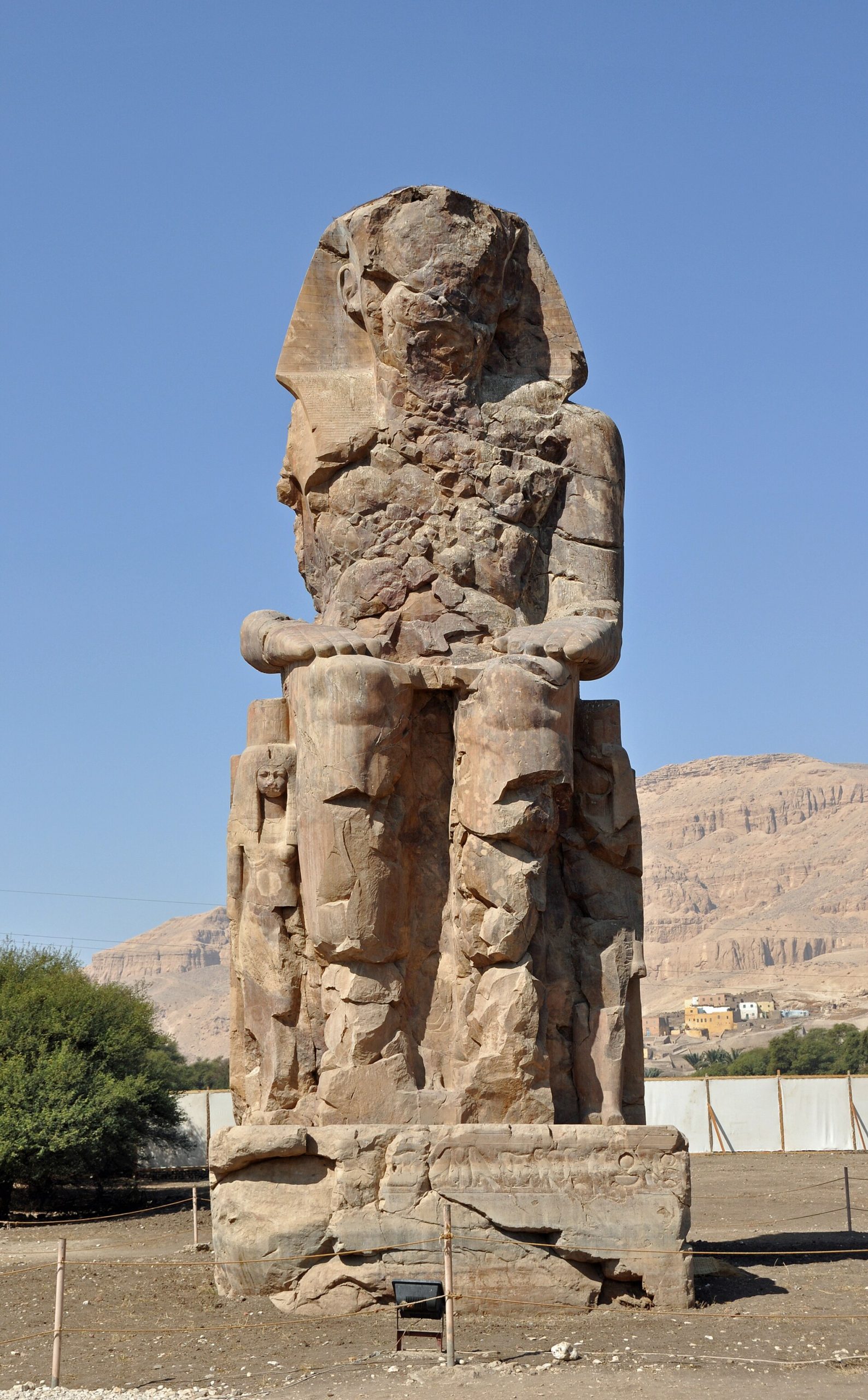
Standing alone on the west-bank plain are two seated giants of stone, each about eighteen metres high. They are all that survives above ground of the vast mortuary temple of Amenhotep III, once the largest in Thebes, long since quarried away and washed by the annual flood.
In Roman times one of the statues was said to sing at dawn, producing a strange musical note that drew tourists and emperors to hear it. The Greeks linked the sound to the mythical hero Memnon greeting his mother, the dawn. A later repair silenced the statue, but the name has stuck ever since.
Rediscovery, Egyptology and the Race for Antiquities
For centuries Thebes lay half-buried and largely forgotten by the outside world. That changed after Napoleon’s expedition to Egypt around 1800, when scholars and adventurers began to record and dig its monuments, and the decipherment of hieroglyphs let the temple walls speak again.
The nineteenth century brought a scramble for antiquities in which obelisks, statues and reliefs were carried off to museums across Europe and beyond. It also gave birth to modern Egyptology, and to the slow, painstaking work of recording Thebes properly rather than simply carting it away.

UNESCO Protection and Visiting Thebes Today
Ancient Thebes and its necropolis were inscribed on the UNESCO World Heritage List in 1979, recognising the whole landscape of temples and tombs as a treasure of humanity. Today conservators work to protect the fragile painted tombs from humidity, salt and the sheer pressure of visitors.
For the modern traveller, Luxor offers an unrivalled concentration of the ancient world within a few kilometres: Karnak and Luxor Temple on the east bank, and the Valley of the Kings, Deir el-Bahari and the Colossi across the river. Few places on earth let you walk so directly among the monuments of a lost civilisation.

Nearby Places
- The World’s Oldest Pyramid: The Step Pyramid of Djoser — the great leap in stone architecture that preceded the temples of Thebes.
- The Nubian Pyramids of Sudan and the Kingdom of Kush — the southern rivals and heirs of the pharaohs of Thebes.
- Kerma: The African Capital That Rivalled the Pharaohs — the Nubian power that Thebes fought and traded with along the Nile.
- Nabta Playa: A Stone Circle in the Sahara — the deep prehistoric roots of Egyptian astronomy long before Karnak rose.
Closing Thoughts
Thebes is less a ruin than a whole world preserved in stone: a city where the living worshipped their gods on one bank and buried their kings on the other, and where the ambitions of pharaohs and priests are still written across acres of temple wall.
To stand among the columns of Karnak or before the cliffs of Deir el-Bahari is to grasp how completely a single place can hold the memory of a civilisation. More than three thousand years after its golden age, Thebes remains one of the supreme achievements of the ancient world.
You May Like
Mafra, the Palace a King Built From a Vow


3 thoughts on “Thebes: The Egyptian City of a Hundred Gates Where Pharaohs Buried Their Kings”