In the dry plains of north-central Sri Lanka lie the ruins of Anuradhapura, the island’s first great capital and one of the longest-inhabited cities of the ancient world. For more than a thousand years it was the sacred and political heart of Sri Lanka, its skyline dominated by vast brick stupas that rivalled the pyramids of Egypt in size.
Anuradhapura is a place of living faith as well as ancient ruins. Pilgrims still come to worship at its great stupas and at a sacred tree said to be the oldest historically recorded tree on earth, making it one of the holiest sites in the Buddhist world.
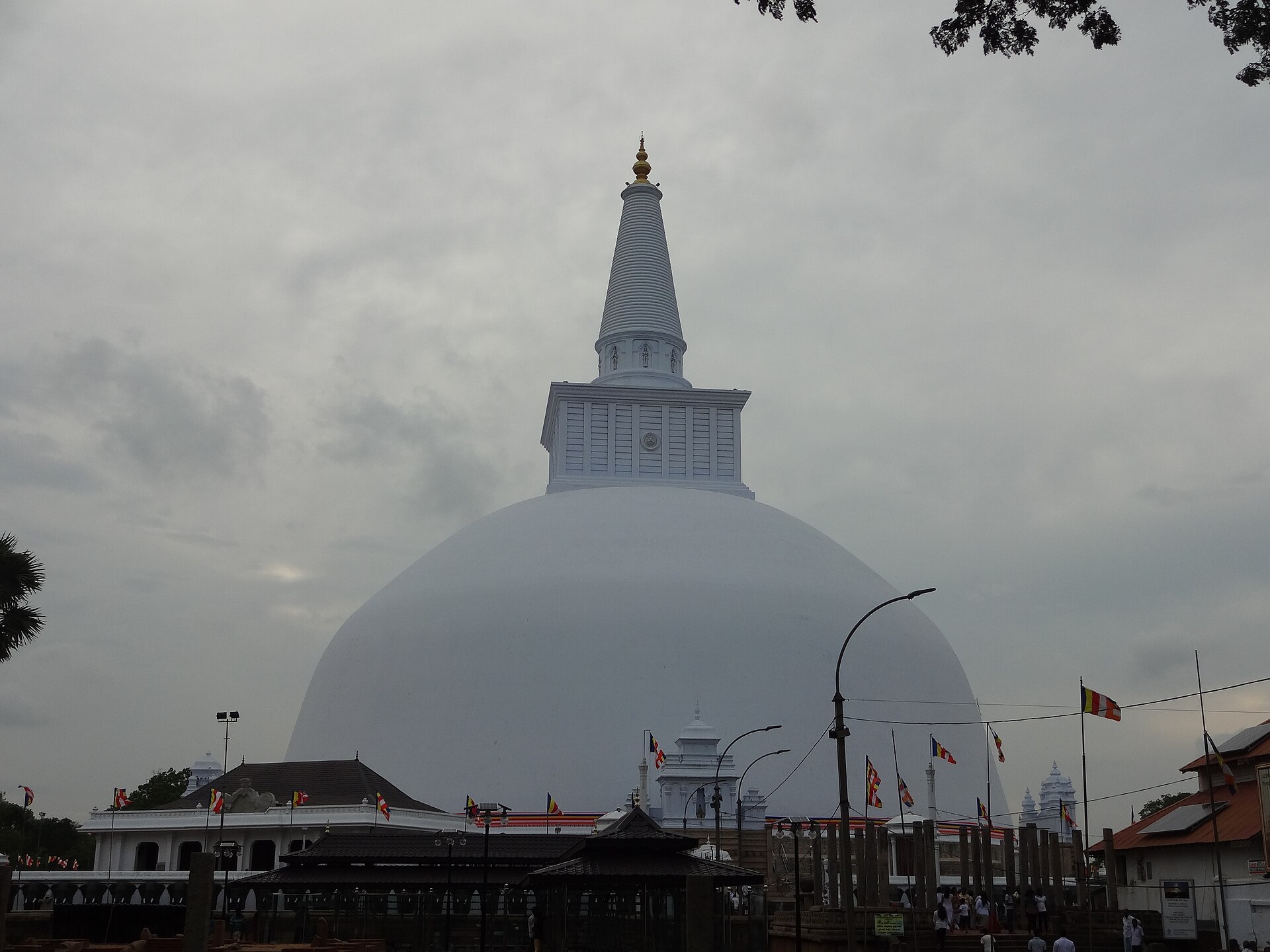
Table of Contents
- The First Great Capital of Sri Lanka
- A Kingdom Built on Buddhism
- The Sacred Bodhi Tree
- Ruwanwelisaya and the Great Stupas
- Jetavanaramaya: A Mountain of Brick
- The Samadhi Buddha and Sacred Sculpture
- Moonstones and the Art of the Threshold
- Water Engineering and the Great Tanks
- Monastic Life and the Twin Ponds
- Decline, Rediscovery, and UNESCO
- Getting There
- Nearby Places
- Closing Thoughts
The First Great Capital of Sri Lanka
Anuradhapura became the capital of Sri Lanka in the fourth century BC and remained so for around a thousand years, an extraordinary span of continuity. At its height it was a huge and sophisticated city with monasteries, palaces, hospitals and gardens.
Its rulers governed much of the island from here, and the city grew into one of the great centres of the ancient world, supported by an ingenious system of reservoirs that made the dry landscape bloom.
A Kingdom Built on Buddhism
Anuradhapura’s golden age began when Buddhism was introduced to Sri Lanka in the third century BC. The king and his people embraced the new faith, and the city became a stronghold of Buddhist learning and devotion.
Great monasteries arose, home to thousands of monks, and Anuradhapura became a beacon of Theravada Buddhism whose influence spread across Asia. Faith and kingship were deeply intertwined in the life of the city.

The Sacred Bodhi Tree
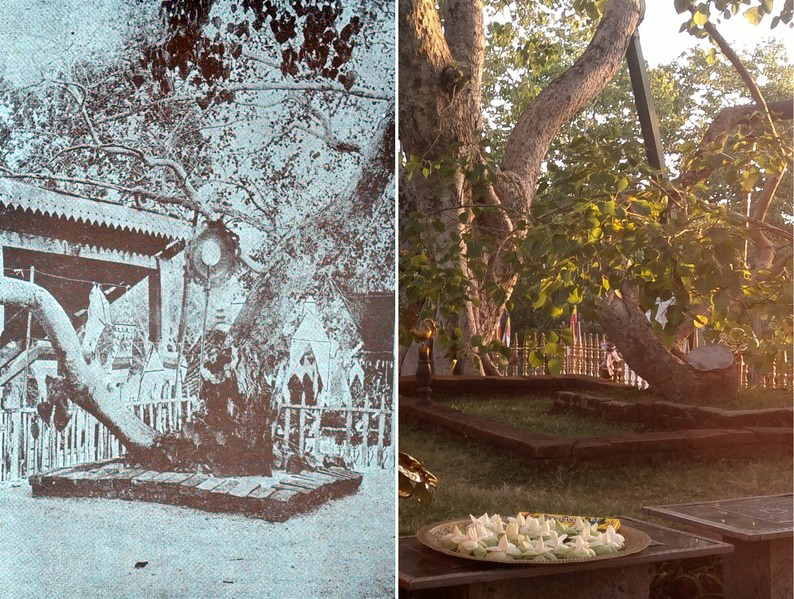
At the heart of Anuradhapura grows the Sri Maha Bodhi, a sacred fig tree said to have been grown from a cutting of the very tree in India under which the Buddha attained enlightenment. It was planted in the third century BC.
This makes it, by tradition, the oldest historically recorded tree in the world, tended without interruption for over two thousand years. It remains one of the most venerated objects in the Buddhist world, drawing pilgrims from across the island and beyond.
Ruwanwelisaya and the Great Stupas
Anuradhapura is famous above all for its stupas, or dagobas, huge dome-shaped monuments built to enshrine sacred relics. The gleaming white Ruwanwelisaya is among the most revered, its great dome rising above the surrounding plain.
These monuments were centres of worship and remain so today, circled by white-clad pilgrims. Their scale reflects the wealth and devotion of the kings who built them and the faith of the people who maintain them.
Jetavanaramaya: A Mountain of Brick
The most colossal of all the stupas is Jetavanaramaya, built of many millions of bricks. When completed it stood over a hundred metres tall, one of the tallest structures in the entire ancient world, surpassed only by the great pyramids.
Its sheer mass is a staggering feat of engineering, requiring vast resources and organisation. Even in its weathered state it towers over the ruins, a testament to the ambition of ancient Sri Lanka.

The Samadhi Buddha and Sacred Sculpture
Among the treasures of Anuradhapura is the Samadhi Buddha, a serene stone statue showing the Buddha in deep meditation. Its calm expression is regarded as one of the finest depictions of inner peace in Buddhist art.
Nearby, the rock temple of Isurumuniya is celebrated for its delicate carvings, including a famous sculpture of lovers. Together these works reveal the refinement of ancient Sri Lankan sculpture.


Moonstones and the Art of the Threshold
A distinctive feature of Anuradhapura’s architecture is the moonstone, a beautifully carved semicircular slab placed at the foot of staircases and entrances. Its concentric bands of animals, flowers and flames carry deep symbolic meaning.
The finest moonstones are considered masterpieces of Sri Lankan stone carving, representing the cycle of existence and the path toward enlightenment. They turned even a threshold into a work of sacred art.

Water Engineering and the Great Tanks
Anuradhapura could never have thrived without water. Its kings built an extraordinary network of reservoirs, called tanks or wewas, and canals to store the seasonal rains and irrigate the surrounding fields.
Some of these ancient tanks are vast, and many still function today. This mastery of hydraulic engineering, thousands of years old, was the true foundation of the city’s long prosperity.

Monastic Life and the Twin Ponds
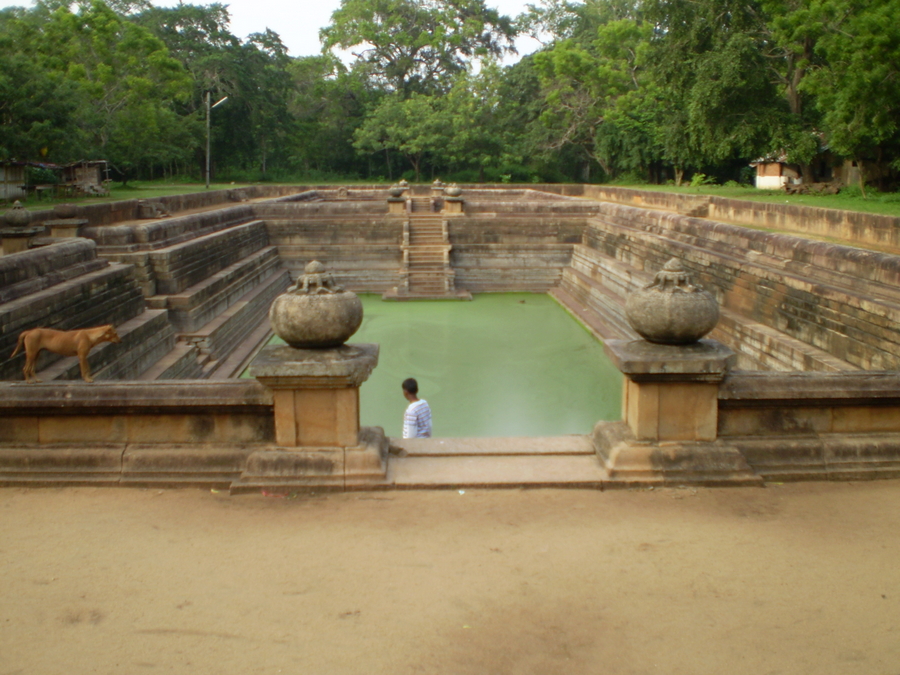
Thousands of monks lived in the great monasteries of Anuradhapura, and traces of their daily life survive across the site. Among the most elegant are the Kuttam Pokuna, a pair of finely built bathing ponds fed by an underground system.
Their clean lines and careful stonework show that even the practical needs of the monks were met with beauty and skill. The ponds are among the best-preserved examples of ancient Sri Lankan design.
Decline, Rediscovery, and UNESCO
After around a thousand years, invasions and shifting power led to the abandonment of Anuradhapura in favour of a new capital, Polonnaruwa. The great city was slowly swallowed by the jungle.
Rediscovered and excavated from the nineteenth century onward, Anuradhapura was inscribed on the UNESCO World Heritage List in 1982. Today it is both a major archaeological site and a living centre of pilgrimage.
Getting There
Anuradhapura lies in the North Central Province of Sri Lanka, about two hundred kilometres north of the capital, Colombo. It is well connected by road and rail, with regular trains and buses from Colombo and other major towns.
The sacred city is large and spread out, so visitors often explore it by bicycle, tuk-tuk or car. It is frequently combined with the nearby ancient sites of Polonnaruwa and Sigiriya on a tour of Sri Lanka’s cultural heartland.
Coordinates: 8.3350, 80.3887 — open Anuradhapura in Google Maps.
Nearby Places
- Sigiriya — the dramatic rock fortress of the same island, often visited alongside Anuradhapura.
- Borobudur — the great Buddhist monument of Java, part of the same world of Asian Buddhist devotion.
- Mohenjo-daro — an earlier South Asian city that, like Anuradhapura, mastered the management of water.
Closing Thoughts
Anuradhapura is a place where the ancient and the sacred meet: colossal brick stupas rivalling the pyramids, a tree tended for more than two thousand years, and reservoirs that still water the land.
For over a millennium it was the beating heart of Sri Lanka, and it remains a living centre of faith today. Few cities so completely unite monumental ruin, engineering genius and continuous devotion across the ages.