Hidden in a coastal forest near the shore of the Indian Ocean in Kenya lie the ruins of Gedi, a once-thriving Swahili town that was mysteriously abandoned and left to the jungle. Its coral-stone mosques, palace and houses, now wrapped in ancient trees, tell the story of a sophisticated African civilisation that traded across the ocean with the wider world.
Gedi is one of the finest surviving examples of a medieval Swahili town. Prosperous, literate and cosmopolitan, it flourished for centuries before being deserted for reasons still not fully understood, leaving behind an atmospheric and haunting ruin.
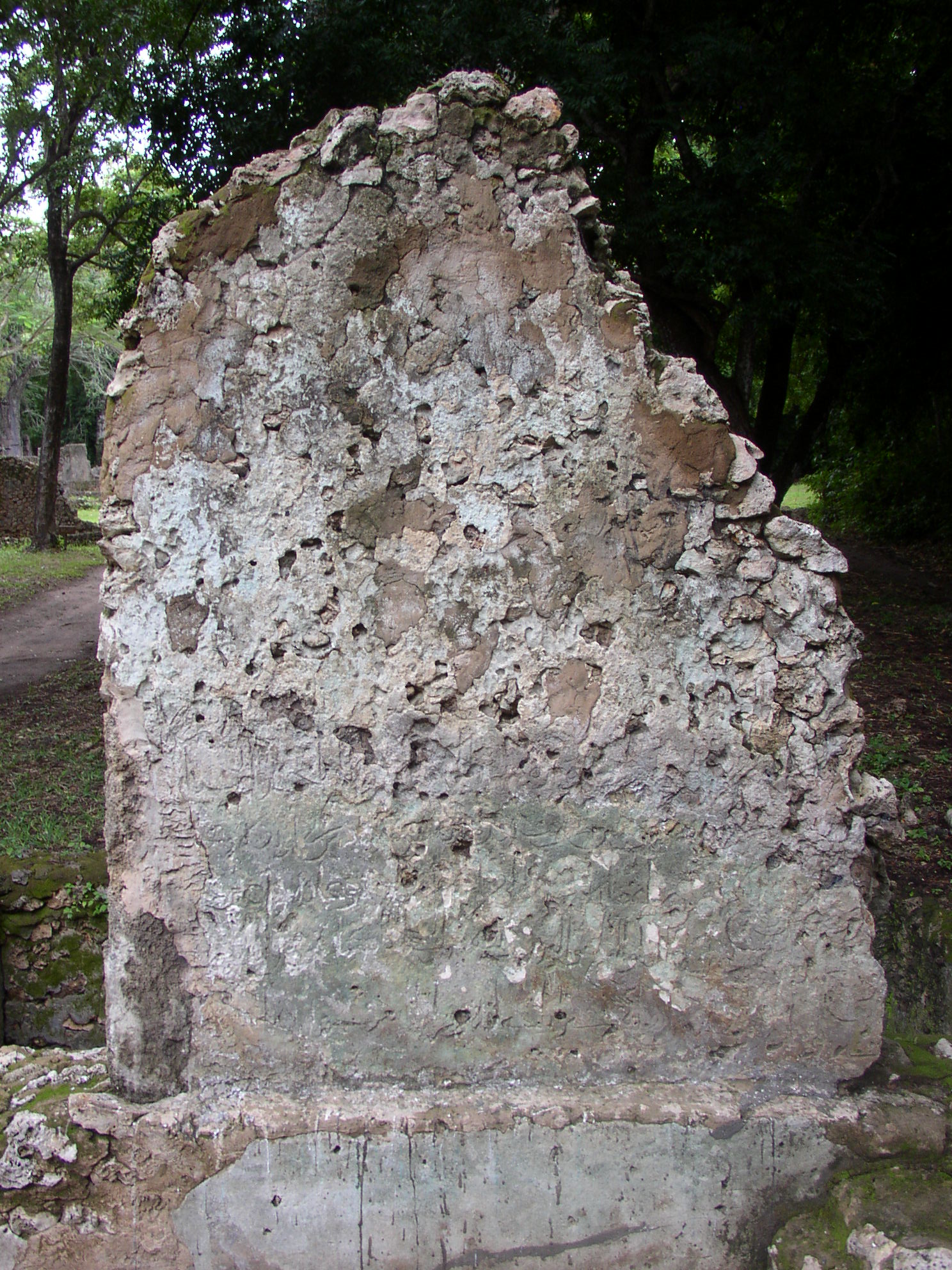
Table of Contents
- A Lost Town in the Forest
- The Swahili Coast Civilisation
- The Great Mosque and Islam
- The Palace of Gedi
- Houses of Coral Stone
- Pillar Tombs
- Water, Wells, and Sanitation
- Trade Across the Indian Ocean
- The Mystery of Abandonment
- Rediscovery, Legends, and Protection
- Getting There
- Nearby Places
- Closing Thoughts
A Lost Town in the Forest
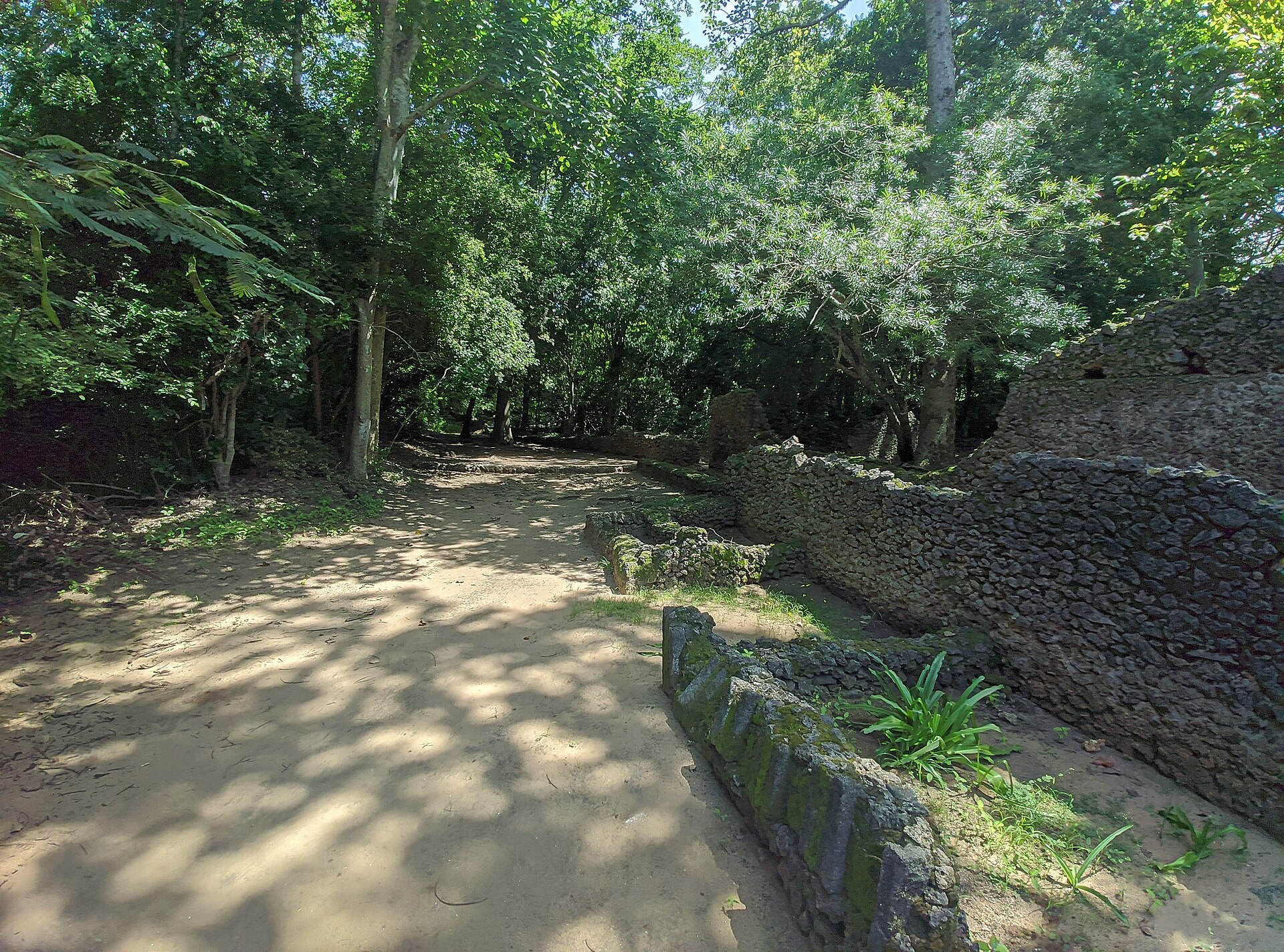
Gedi lies a few kilometres inland from the sea, enveloped in the coastal forest that has grown over and around its ruins. Great trees rise among the walls, giving the site a mysterious, almost enchanted atmosphere.
The town flourished from around the thirteenth century, reaching its height in the fifteenth. At its peak it was a substantial settlement of perhaps a few thousand people, with mosques, a palace and stone houses.
The Swahili Coast Civilisation
Gedi belonged to the Swahili civilisation, a chain of trading towns strung along the East African coast. These were African communities, speaking the Swahili language, who embraced Islam and grew rich through commerce with the Indian Ocean world.
The Swahili blended African roots with influences from Arabia, Persia and beyond, creating a distinctive coastal culture. Gedi is one of the best-preserved windows onto this cosmopolitan African world.

The Great Mosque and Islam
Religion was central to Gedi, and the town contained several mosques, the largest of which still stands. Its mihrab, the niche indicating the direction of Mecca, and its columns reflect the Islamic faith of the townspeople.
The presence of several mosques in a town of this size shows how thoroughly Islam had taken root along the Swahili coast. Faith and trade went hand in hand in these ocean-facing communities.

The Palace of Gedi
Among the grandest buildings is the palace, a substantial complex of rooms, courtyards and storage areas that housed the town’s ruler and elite. Its scale and layout reveal a stratified and organised society.
The palace, like the other fine buildings, was built of coral stone quarried from the nearby reef. Its ruins give a vivid sense of the wealth and status of Gedi’s leading families.

Houses of Coral Stone
The wealthier inhabitants of Gedi lived in solid houses built of coral stone and lime mortar, some with multiple rooms, bathrooms and indoor toilets connected to drains. Poorer residents lived in simpler mud and thatch dwellings that have not survived.
The stone houses show a comfortable and sophisticated way of life, with careful attention to privacy, hygiene and display. They reflect the prosperity that Indian Ocean trade brought to the town.

Pillar Tombs
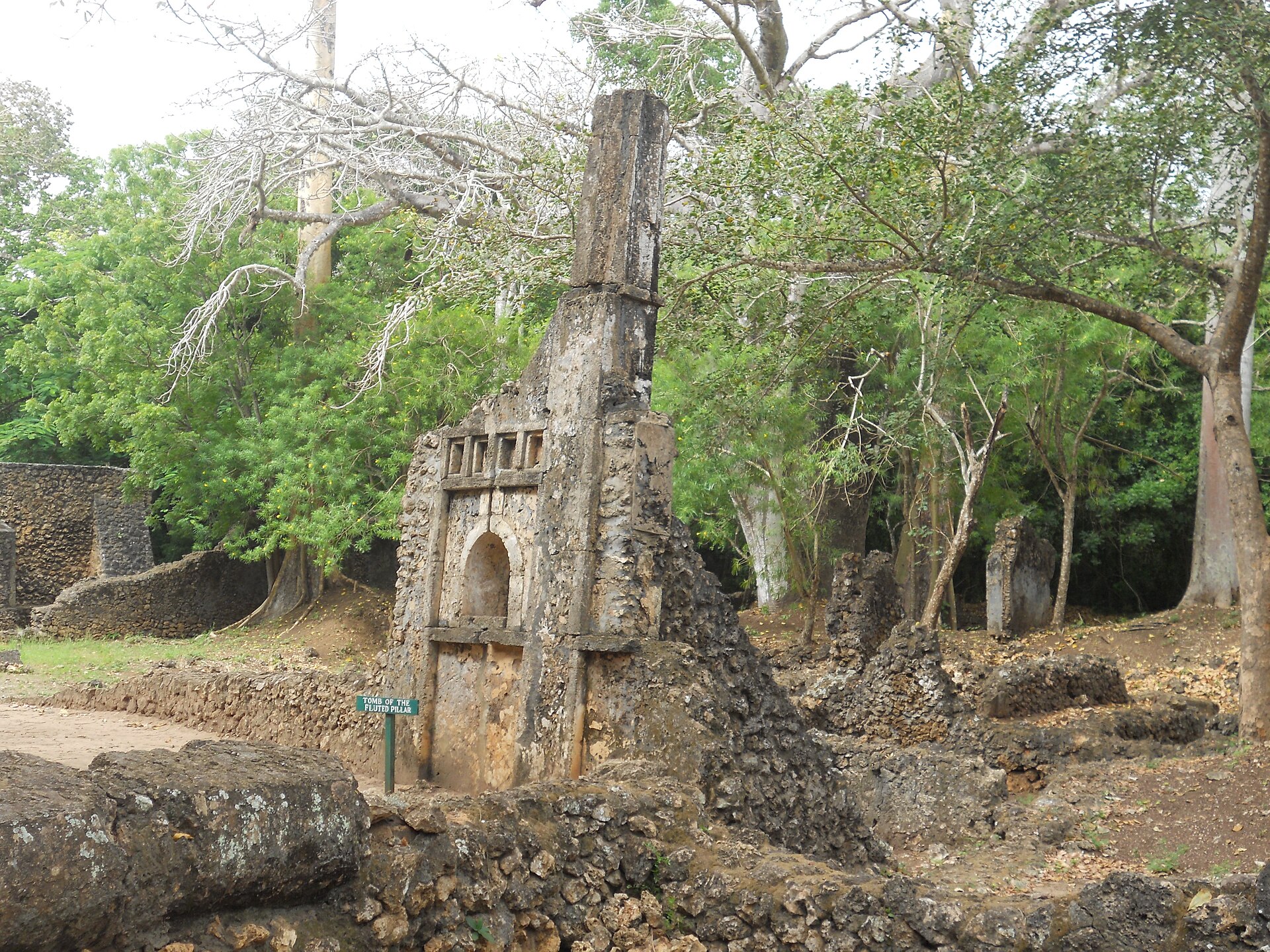
A distinctive feature of Gedi and the Swahili coast is the pillar tomb, a grave marked by a tall stone pillar. These monuments, sometimes decorated with inset bowls of imported porcelain, honoured important members of the community.
Pillar tombs are found up and down the Swahili coast and are among the most characteristic monuments of the culture. At Gedi they add to the sense of a town deeply concerned with faith, status and memory.
Water, Wells, and Sanitation
Gedi was well supplied with water from numerous wells, and its finer houses had bathrooms and drainage systems that were advanced for their time. Cleanliness held both practical and religious importance.
This concern with water and sanitation, like the town’s overall planning, reveals a settled, prosperous and sophisticated urban society, comparable in comfort to other trading towns of the medieval world.
Trade Across the Indian Ocean
Gedi’s wealth came from trade. Excavations have uncovered goods from across the Indian Ocean and beyond, including Chinese porcelain, Persian ceramics, glass beads and other imports, exchanged for African products.
This shows that Gedi, though inland from the shore, was fully part of a vast maritime trading network linking Africa to Arabia, India, China and Southeast Asia. The town was a small but connected node in a world economy.
The Mystery of Abandonment
Sometime around the seventeenth century Gedi was abandoned, and the reasons remain uncertain. Various explanations have been suggested, including raids by hostile neighbours, a falling water table, and the disruption of trade.
Whatever the cause, the townspeople left, and the forest reclaimed their homes and mosques. The suddenness and mystery of the abandonment give Gedi much of its haunting appeal.
Rediscovery, Legends, and Protection
Long known to local people, who regarded it with some awe, Gedi was studied and excavated in the twentieth century and made a protected national monument. Local tradition holds that the ruins are watched over by ancestral spirits.
Today Gedi is one of Kenya’s most important archaeological sites and a candidate for wider international recognition. Its combination of history, mystery and forest setting makes it a uniquely evocative place.
Getting There
Gedi lies on the coast of Kenya, near the town of Watamu and not far from the larger centre of Malindi. Both are popular seaside destinations with good road connections and nearby airfields.
From Malindi or Watamu the ruins are a short drive inland, and are easily visited as a day trip, often combined with the beaches and the nearby Arabuko-Sokoke forest. A small museum and marked paths guide visitors through the site.
Coordinates: -3.3097, 40.0161 — open Gedi in Google Maps.
Nearby Places
- Great Zimbabwe — another African trading power connected, like Gedi, to the commerce of the Indian Ocean coast.
- Aksum — an earlier East African civilisation that also grew wealthy on the Red Sea and Indian Ocean trade.
- Timbuktu — a West African Muslim trading city, a counterpart to the Swahili towns of the eastern coast.
Closing Thoughts
Gedi is a lost world in miniature: a prosperous, Muslim, ocean-connected African town, complete with palace, mosques and plumbing, swallowed by the forest and abandoned for reasons we still cannot fully explain.
Its coral walls beneath the great trees are a powerful reminder that medieval Africa was home to sophisticated, literate and wealthy urban societies, fully engaged with the wider world. Few ruins so quietly overturn old assumptions about the African past.
You May Like
Mafra, the Palace a King Built From a Vow