On the desert coast of northern Peru sprawls Chan Chan, the largest city ever built of mud brick and the greatest metropolis of pre-Columbian South America outside the Inca realm. Once the capital of the powerful Chimú kingdom, it covered a vast area with palaces, plazas and walls decorated with intricate friezes of fish, birds and waves.
Built entirely of adobe in one of the driest places on earth, Chan Chan is both a marvel and a fragile survivor. Its earthen walls, so long protected by the desert, now face growing danger from the rare but destructive rains of a changing climate.
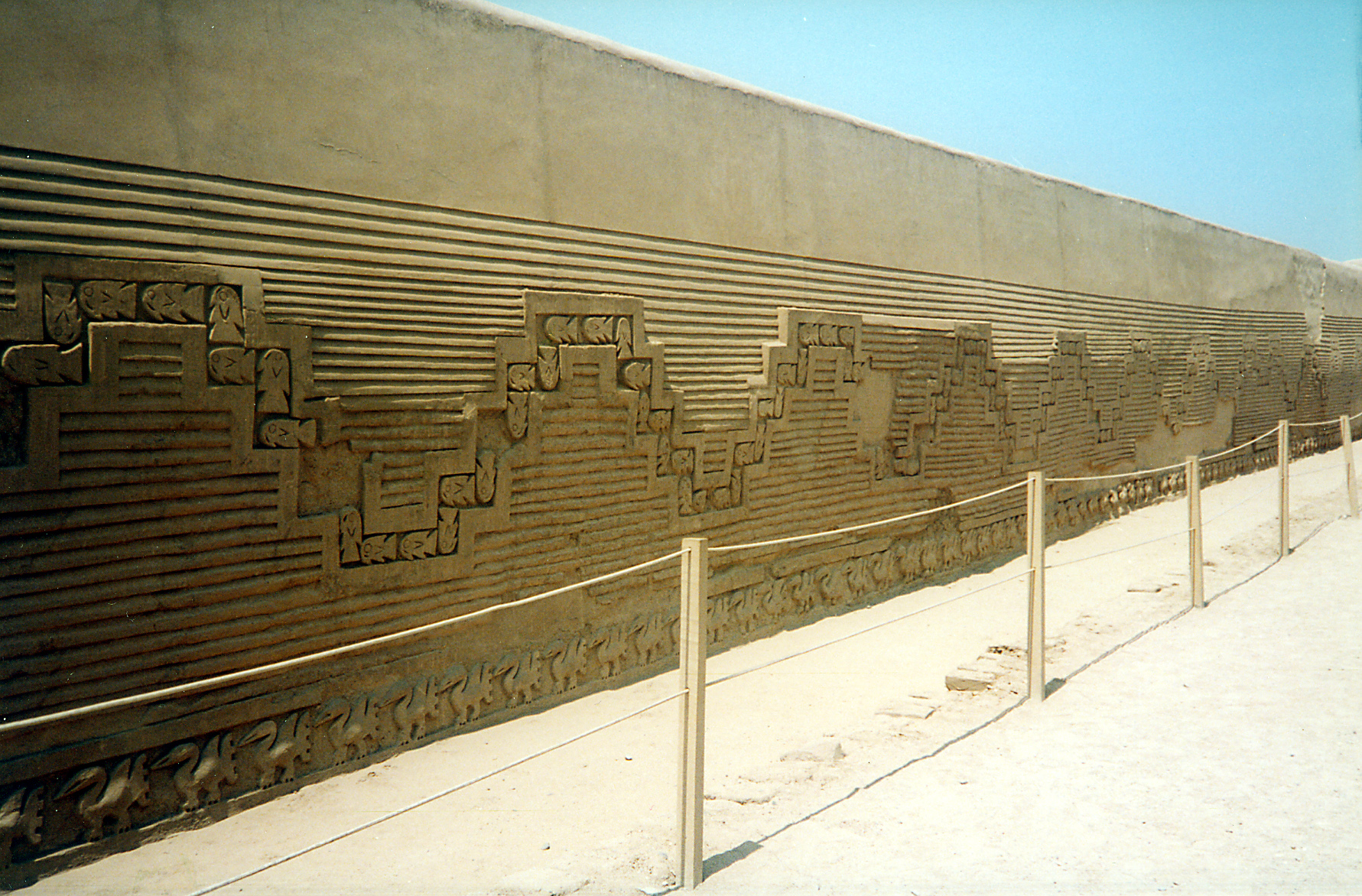
Table of Contents
- The Largest Adobe City in the World
- The Kingdom of Chimor
- Nine Royal Citadels
- Walls of Mud Brick
- Friezes of Fish, Birds, and Waves
- A Sea-Facing Culture
- The Great Ceremonial Plazas
- Water, Wells, and Chimú Engineering
- Conquest by the Inca
- Erosion, Rescue, and UNESCO
- Getting There
- Nearby Places
- Closing Thoughts
The Largest Adobe City in the World
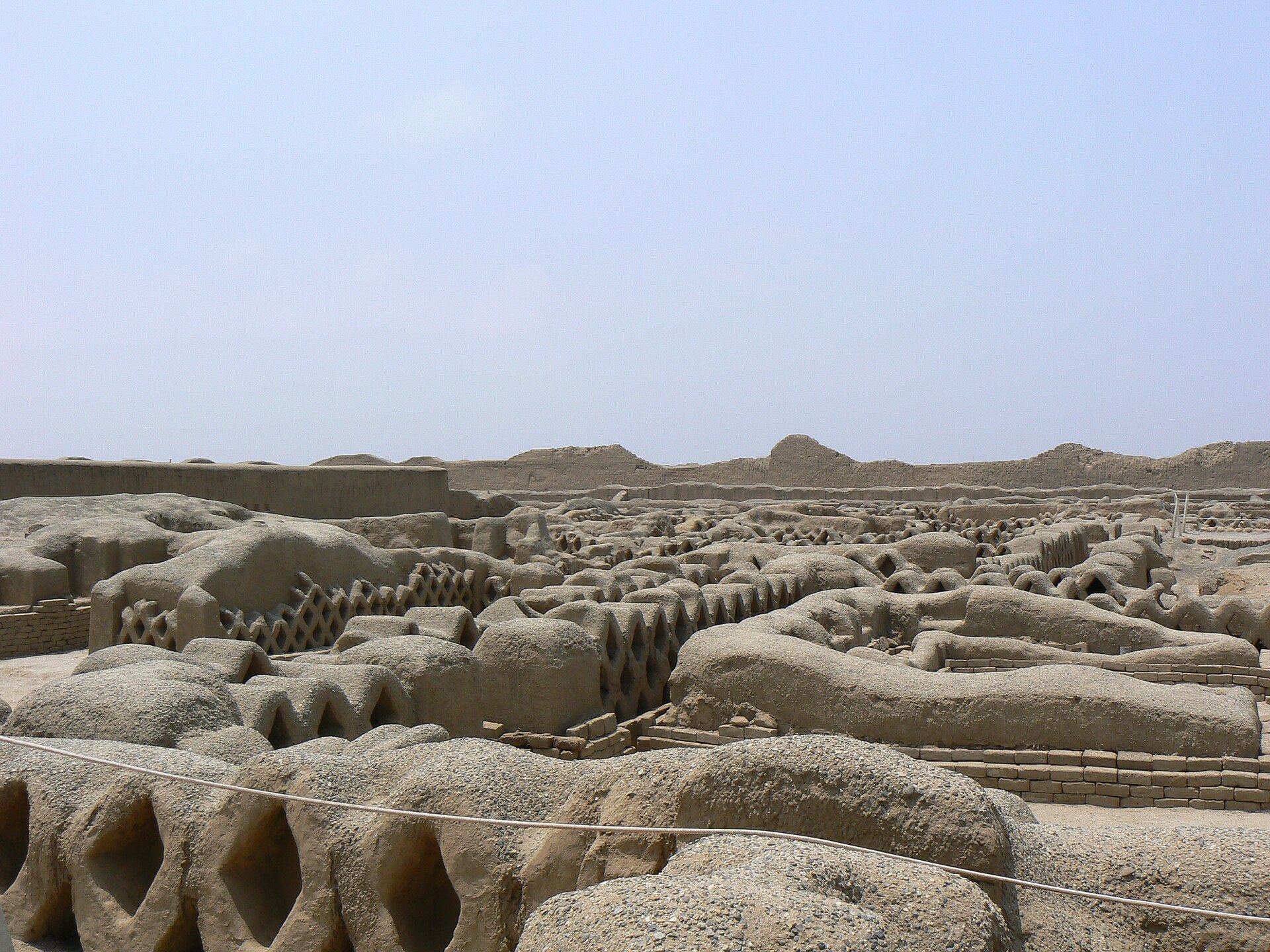
Chan Chan covered around twenty square kilometres and, at its height, may have housed tens of thousands of people. Built almost entirely from mud brick, it is the largest adobe city ever constructed anywhere in the world.
Its scale is astonishing: a whole capital of earthen walls, courtyards and passages rising from the coastal desert. Even reduced by centuries of erosion, the ruins stretch to the horizon.
The Kingdom of Chimor
Chan Chan was the capital of the kingdom of Chimor, ruled by the Chimú people, who dominated the northern coast of Peru for several centuries before the rise of the Inca. Theirs was a wealthy, highly organised state.
The Chimú were heirs to a long tradition of coastal civilisation, skilled in farming the desert through irrigation and in crafting fine metalwork and textiles. From Chan Chan they governed a long stretch of the Pacific coast.
Nine Royal Citadels
The heart of Chan Chan consisted of a series of great walled compounds, often called citadels or palaces. Each was built by a Chimú king as his residence, administrative centre and, ultimately, his tomb.
When a king died, his compound was sealed as a mortuary monument and his successor built a new one. This produced a cluster of these vast enclosures, each a self-contained royal city within the larger metropolis.

Walls of Mud Brick
The compounds were surrounded by towering perimeter walls of adobe, some originally many metres high, designed to control access and impress. Within them lay mazes of courtyards, corridors, storerooms and platforms.
Building on this scale in mud brick required enormous labour and organisation. The walls, though eroded, still convey the power and exclusivity of the Chimú elite who lived behind them.

Friezes of Fish, Birds, and Waves
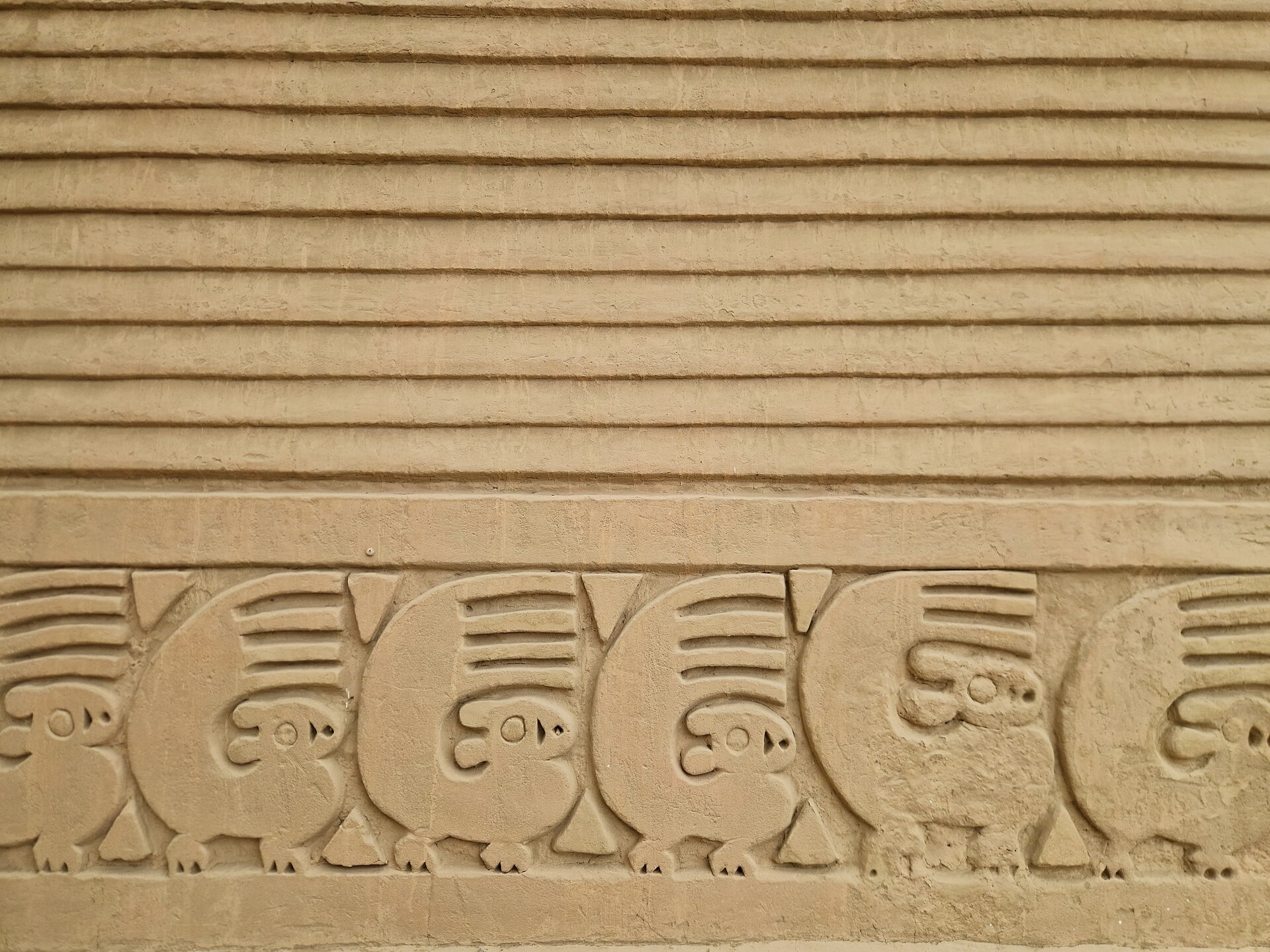
The most beautiful feature of Chan Chan is the decoration of its walls. Long friezes moulded into the adobe depict fish swimming in orderly rows, seabirds, waves and net-like patterns, endlessly repeated.
These designs reflect the Chimú’s deep connection to the sea, the source of much of their food and wealth. The rhythmic carvings turn plain mud walls into flowing images of the ocean and its creatures.

A Sea-Facing Culture
For the Chimú, the Pacific Ocean was central to life and religion. They revered the sea and the moon, and their art is filled with marine imagery, from the fish and pelicans on their walls to the designs on their pottery and textiles.
Fishing on reed boats and trading along the coast were vital to the economy of Chan Chan. The city’s very decoration proclaims a people who looked to the ocean as the source of their prosperity.
The Great Ceremonial Plazas
Within the royal compounds lay large open plazas used for ceremonies and gatherings. Surrounded by decorated walls and raised platforms, these spaces were the settings for the rituals of Chimú kingship.
From platforms overlooking the plazas, rulers could preside over their court and subjects. The combination of vast open space and richly ornamented walls created an impressive stage for royal and religious display.
Water, Wells, and Chimú Engineering
Chan Chan sits in an extremely dry desert, yet supported a large population. The Chimú achieved this through sophisticated irrigation, drawing water from rivers through long canals to green the surrounding fields.
Within the city, deep sunken gardens and wells reached down to the water table. This mastery of water in a barren land was the foundation of the whole civilisation.
Conquest by the Inca
In the fifteenth century the expanding Inca Empire turned against Chimor. After a struggle, the Inca conquered the Chimú, absorbing their kingdom and carrying off their skilled craftsmen to serve the new masters in Cusco.
Chan Chan declined under Inca rule, and later, after the Spanish conquest, it was plundered by treasure-hunters seeking the gold of the Chimú kings. The great adobe city was gradually left to the desert.
Erosion, Rescue, and UNESCO
Chan Chan was inscribed on the UNESCO World Heritage List in 1986 and, at the same time, placed on the list of World Heritage in Danger. Its greatest threat is water: the occasional heavy rains linked to El Nino can dissolve its unprotected mud walls.
Conservators now shelter the most delicate friezes and work to stabilise the adobe against the weather. Preserving the largest earthen city on earth against the rare rains of the desert is a constant battle.
Getting There
Chan Chan lies on the northern coast of Peru, just outside the city of Trujillo, roughly five kilometres from its centre and close to the fishing town of Huanchaco. Trujillo has an airport with flights from Lima.
From Trujillo the site is a short taxi or bus ride away, and is easily combined with the town’s museums and the nearby Moche pyramids. A visitor centre and the restored Tschudi compound are the usual focus of a visit.
Coordinates: -8.1058, -79.0745 — open Chan Chan in Google Maps.
Nearby Places
- Sacsayhuaman — a monument of the Inca, the empire that ultimately conquered the Chimú of Chan Chan.
- Ollantaytambo — an Inca town whose builders mastered desert water and stone, as the Chimú mastered adobe.
- Mohenjo-daro — another great brick-built city that depended on the careful control of water in a dry land.
Closing Thoughts
Chan Chan is a city sculpted from mud on the edge of the sea: nine royal citadels, endless walls, and friezes of fish and waves that turn earth into ocean.
The capital of a kingdom that rivalled the Inca, it is both a triumph of desert civilisation and one of the most fragile of all World Heritage sites. Every rare rainstorm is a threat to the largest earthen city humankind has ever built.