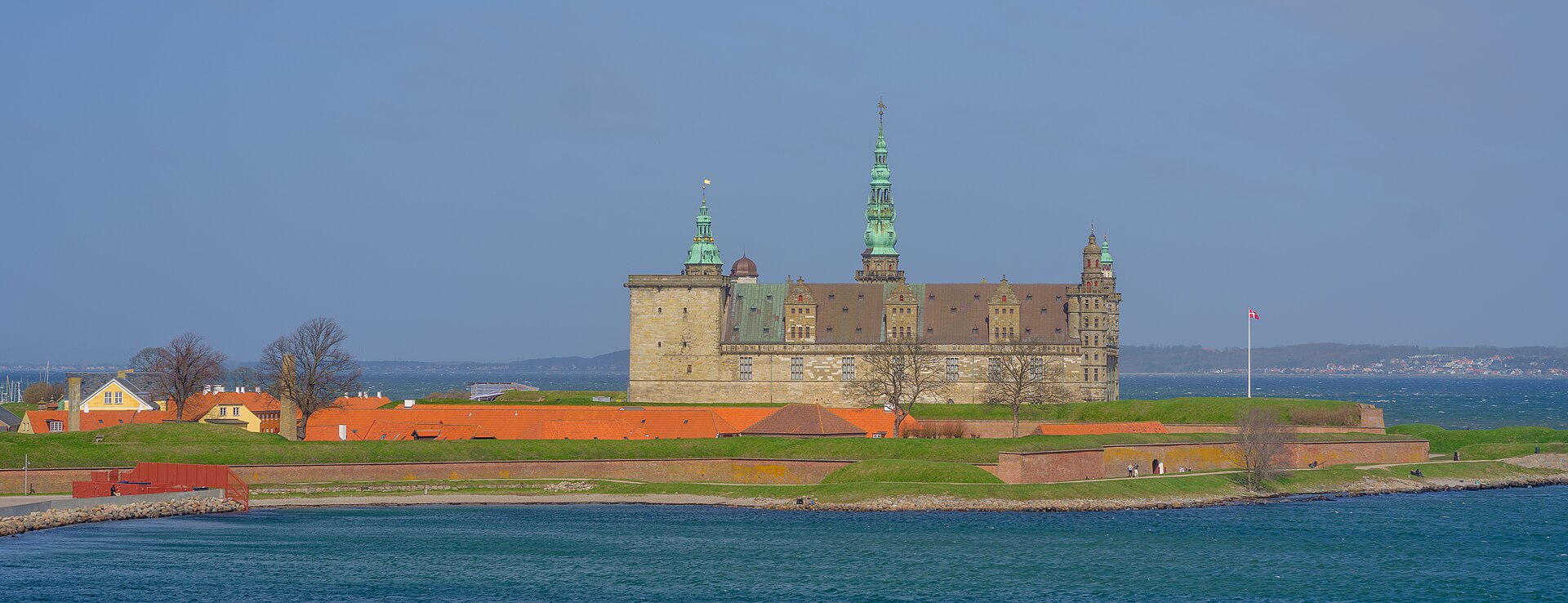
Some castles are famous for their history, and some for their beauty, but Kronborg is famous for a ghost that never existed. This great Renaissance fortress on the northern tip of the Danish island of Zealand is known to the world as Elsinore, the setting of Shakespeare’s Hamlet, and for four hundred years the melancholy Danish prince has haunted its ramparts in the imagination of readers and theatregoers everywhere. It is, quite simply, the most literary castle on earth.
But Kronborg is far more than a stage set for a play. It was one of the most important fortresses in the whole of Northern Europe, a mighty stronghold that controlled the narrow sound between Denmark and Sweden and grew fabulously rich on the tolls it extracted from every ship that passed. It is a masterpiece of Renaissance architecture, a UNESCO World Heritage Site, and a monument to the golden age of the Danish kingdom.
So come with me to the shores of the Øresund, where the Baltic meets the sea, and let us explore the castle the world calls Hamlet’s. We will discover the real history behind the legend, the tolls and wars and fires and kings, walk its great ballroom and its shadowy casemates where a sleeping hero waits, and understand why this Danish fortress, through the magic of a single play, became one of the most famous castles in the world.
In This Article
- The Fortress That Guarded the Sound
- From Krogen to Kronborg
- The King Who Built a Renaissance Jewel
- A Courtyard of Northern Splendour
- The Great Ballroom
- The Chapel That Survived the Flames
- Fire and the Rebuilding King
- The Sleeping Hero in the Casemates
- Elsinore, the Stage of Hamlet
- The Wealth of the Sound Dues
- A Star-Shaped Fortress
- Captured, Garrisoned and Endured
- A World Heritage Site by the Sea
The Fortress That Guarded the Sound
Everything about Kronborg begins with the water. The castle stands on a low spit of land at the northeastern tip of the Danish island of Zealand, at the very narrowest point of the Øresund, the strait that separates Denmark from Sweden and links the Baltic Sea to the wider oceans of the world. Here the sound is only a few kilometers wide, and from Kronborg you can see clearly across to the Swedish shore.
This narrow gateway was one of the most strategic points in all of Northern Europe. Every ship sailing in or out of the Baltic, laden with the grain, timber, furs and other riches of the north, had to pass through this bottleneck, within sight and cannon-range of the Danish coast. Whoever controlled this point controlled the trade of the entire Baltic, and the Danish crown was determined to control it absolutely.
Kronborg was built to enforce that control, a mighty fortress guarding the strait, its guns trained on the shipping lanes. From here the Danish kings extracted the famous Sound Dues, a toll levied on every passing ship, which for centuries poured enormous wealth into the royal treasury. The castle was, in a very real sense, a magnificent tollbooth, one of the great money-making engines of the Danish kingdom.
If you want to find this strategic spot before you visit, here are the coordinates for the castle on the Øresund. Zoom out and you will see how it sits at the pinch-point of the strait, facing the Swedish town of Helsingborg across the water, the fixed guardian of the gateway between the Baltic and the sea.
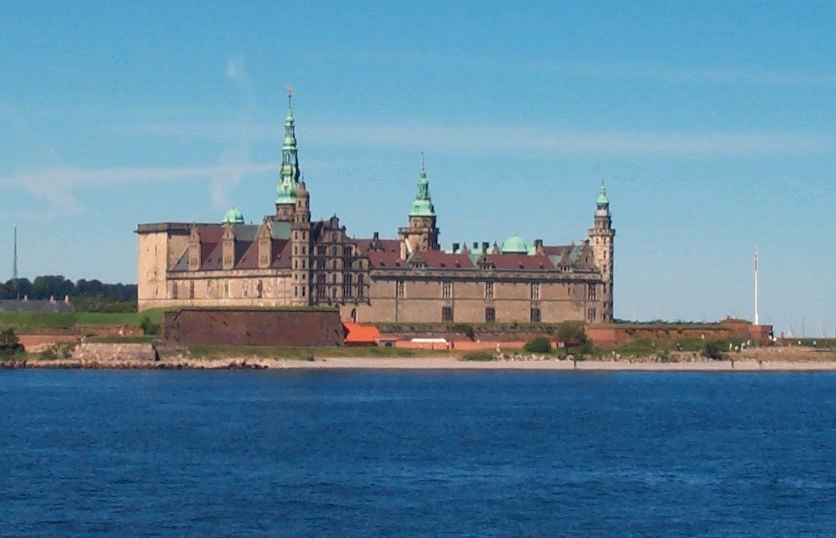
The narrowness of the strait meant that the guns of Kronborg could work together with a matching fortress on the Swedish side during the periods when both shores were Danish, closing the sound like a gate, and the loss of the Swedish shore in the seventeenth century was a strategic blow whose importance the castle’s whole later history reflects.
On a clear day the sight of ships still passing through the sound, as they have for a thousand years, brings the castle’s whole purpose vividly to life, and one can imagine the tension of the centuries when each of those vessels had to stop, lower its sails, and pay its due beneath the watching guns.
From Krogen to Kronborg
There had been a stronghold on this vital spot long before the Renaissance castle we see today. In the early fifteenth century, around 1420, King Eric of Pomerania built a fortress here called Krogen, meaning the hook or corner, precisely in order to enforce the collection of the Sound Dues that he had instituted. From the beginning, the fortress and the toll were inseparable, the castle existing to make the levy pay.
The Sound Dues became one of the most important sources of income for the Danish crown, and the little town of Helsingør, which the English called Elsinore, grew prosperous as ships anchored to pay their tolls and take on supplies. For centuries this toll on Baltic trade underwrote the wealth and power of Denmark, and the fortress at the sound was the golden goose that laid it.
Krogen was a medieval fortress, functional and grim, but as Denmark grew richer and more ambitious in the sixteenth century, such a plain stronghold no longer suited the dignity of the crown. The time came to transform the old fortress into something magnificent, a castle that would proclaim the wealth and sophistication of the Danish kingdom to every ship that passed and every foreign envoy who visited.
That transformation would be the work of one ambitious king, and it would turn the medieval Krogen into the Renaissance Kronborg, one of the most splendid castles in Northern Europe. But the underlying purpose never changed: whatever its beauty, Kronborg remained, at its heart, the fortress that guarded the sound and collected the tolls, the stronghold of Denmark’s control over the gateway to the Baltic.
The King Who Built a Renaissance Jewel
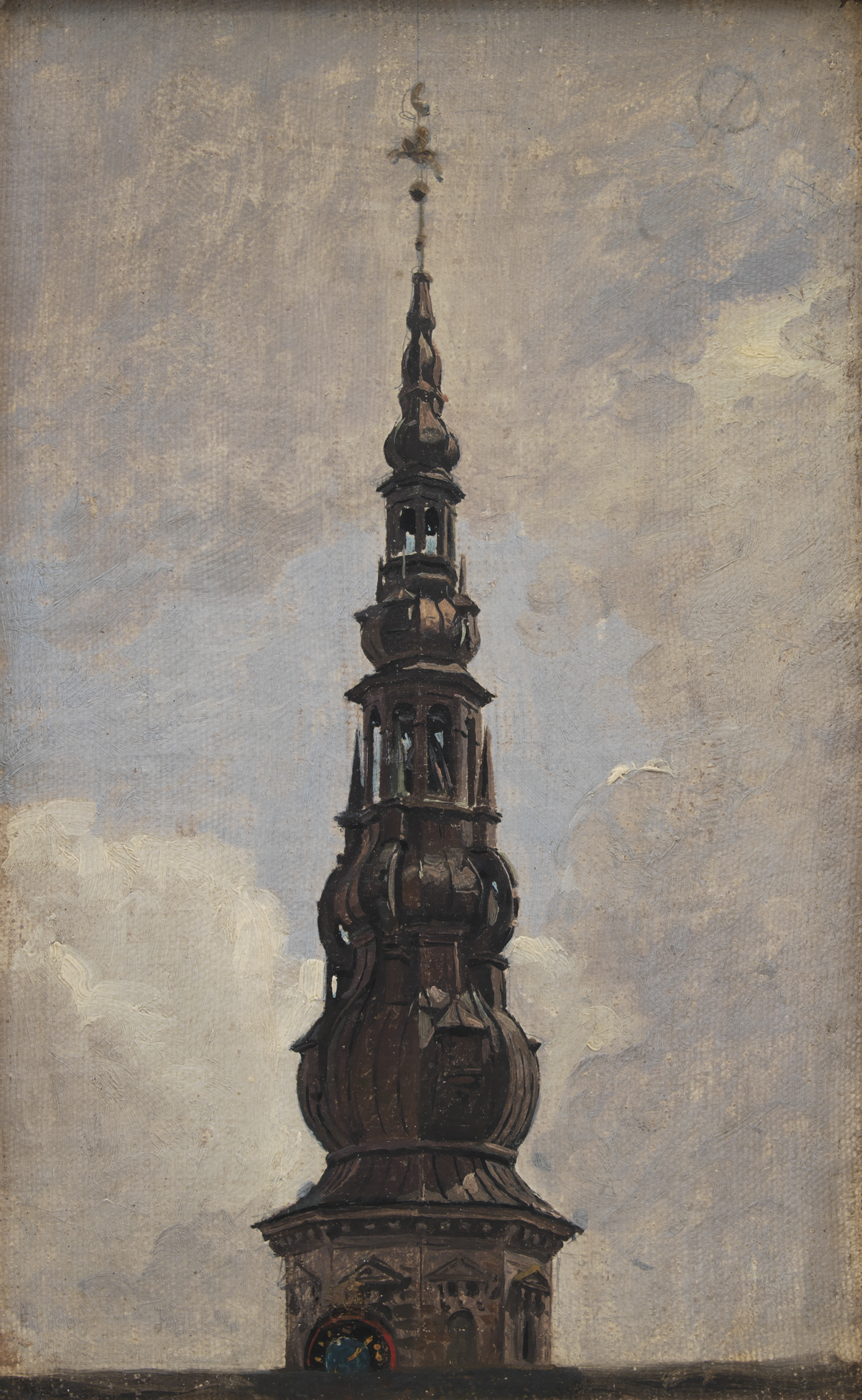
The man who created Kronborg was King Frederick II of Denmark, who in the 1570s and 1580s undertook a magnificent rebuilding of the old fortress of Krogen, transforming it into a splendid Renaissance castle and giving it the new name Kronborg, meaning crown castle. It was a project of enormous ambition, intended to make the fortress at the sound one of the most impressive castles in all of Europe.
Frederick spared no expense, and he drew on the finest talent available, above all the architects and craftsmen of the Netherlands, then the leading centre of Renaissance building in Northern Europe. Dutch masters such as Antonis van Obbergen shaped the castle, and Flemish and other craftsmen adorned it, so that Kronborg became a showcase of the Northern Renaissance style, its sandstone and copper gleaming above the sound.
The completed castle, finished around 1585, was a sensation. With its elegant spires, its richly decorated facades, its great hall and sumptuous royal apartments, Kronborg proclaimed the wealth, taste and power of the Danish crown to all of Europe. It was one of the most modern and magnificent castles of its age, a fitting symbol of Denmark at the height of its power and prosperity.
Frederick’s Kronborg was designed to impress, and impress it did. The tolls of the sound had paid for a Renaissance jewel, and the fortress that guarded the strait was now also a palace of European significance, a place where foreign ambassadors were received and the majesty of Denmark was displayed. It was this splendid castle, at the height of its fame, that would soon lend its setting to the most famous play ever written.
The castle was among the first great Renaissance buildings in Scandinavia, and its influence spread, helping to introduce the new architectural language to the whole region. In this sense Kronborg was not only a symbol of Danish power but a channel through which the culture of the wider European Renaissance flowed into the north.
A Courtyard of Northern Splendour
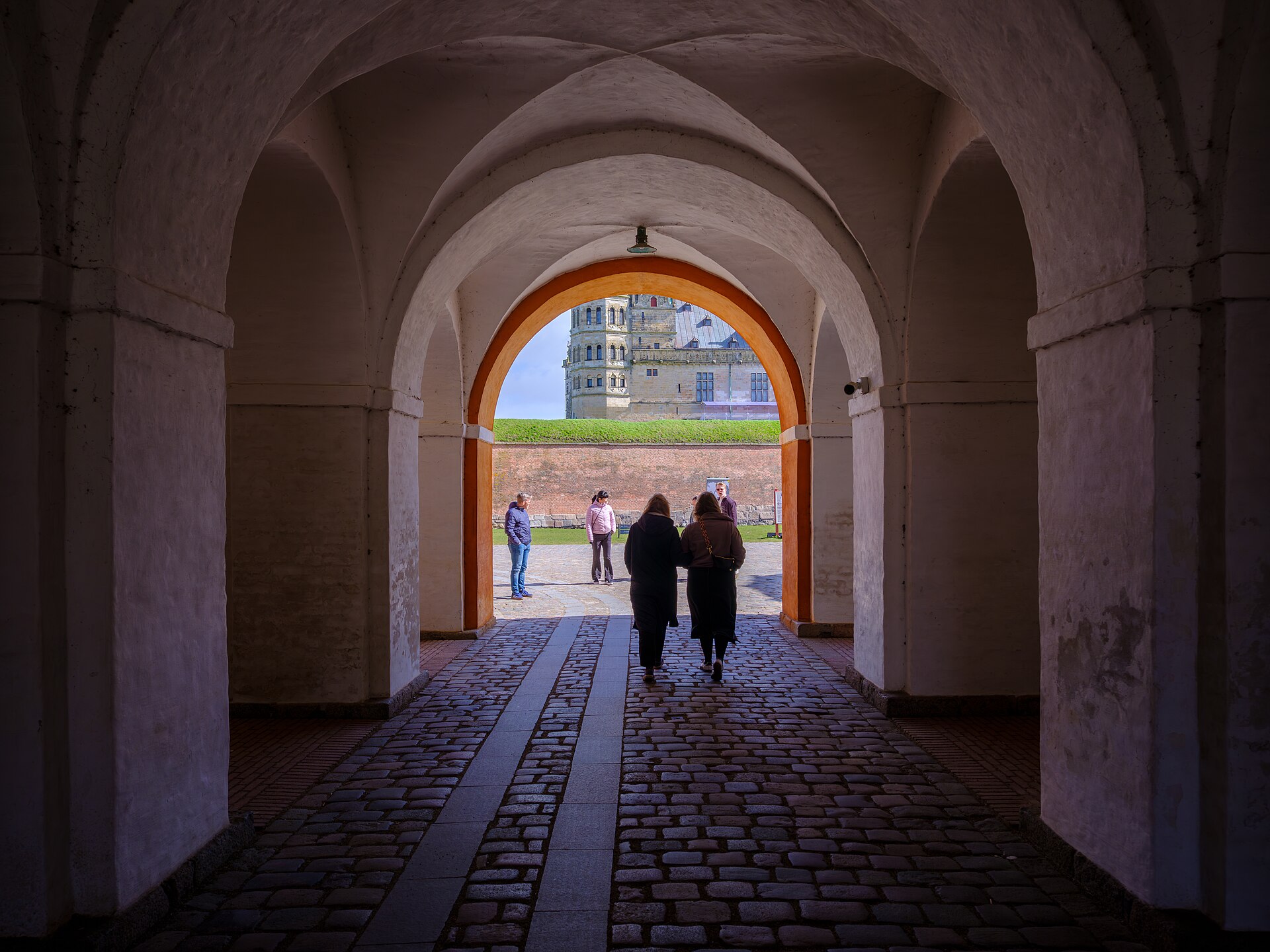
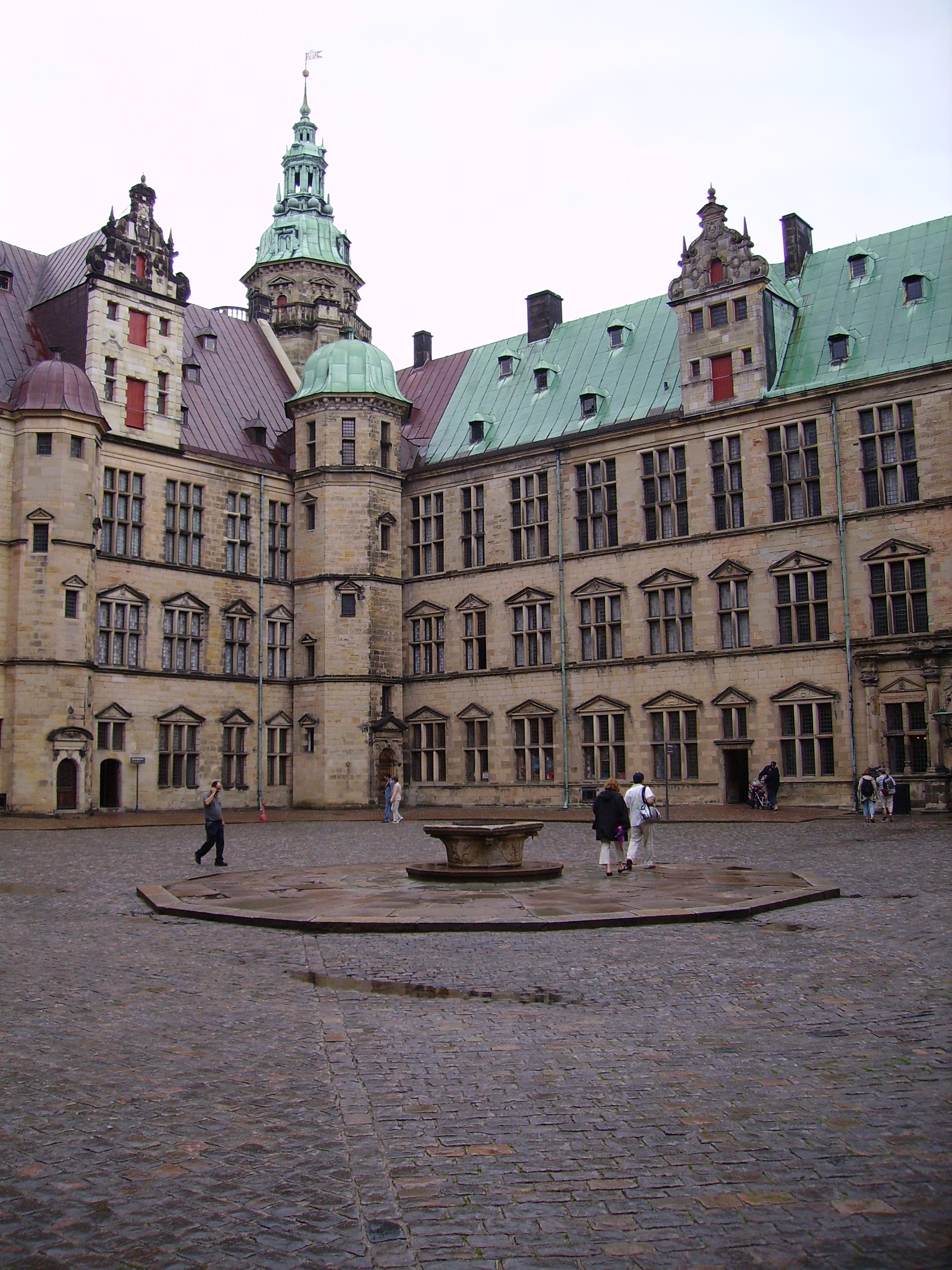
Pass through the gates of Kronborg and you enter its inner courtyard, the elegant heart of the Renaissance castle. Enclosed by the four wings of the palace, it is a harmonious composition of sandstone facades, ornamented gables and steep copper roofs, a piece of the Netherlandish Renaissance transplanted to the Danish coast. After the massive outer fortifications, the refinement of the courtyard comes as a graceful surprise.
The architecture here reflects the cosmopolitan ambitions of Frederick II and the skill of the Dutch and Flemish masters he employed. The details, the carved stone, the proportions of the windows, the rhythm of the gables, speak the international language of the Northern Renaissance, marking Kronborg as a building fully abreast of the latest European fashion, not a provincial fortress but a palace of continental sophistication.
The courtyard was the ceremonial and social heart of the castle, the space through which the court and its guests moved, and around it were arranged the great hall, the chapel, the royal apartments and the other principal rooms. It was designed to be experienced as a sequence of impressive spaces, drawing the visitor inward from the martial exterior to the cultivated luxury within.
Standing in the courtyard today, surrounded by the elegant Renaissance facades with the sky framed above, you sense the confidence and wealth of Denmark’s golden age. This was a castle built by a kingdom at the height of its power, secure in its command of the sound and its stream of tolls, and the beauty of the courtyard is the visible expression of that confident, prosperous age.
The Great Ballroom
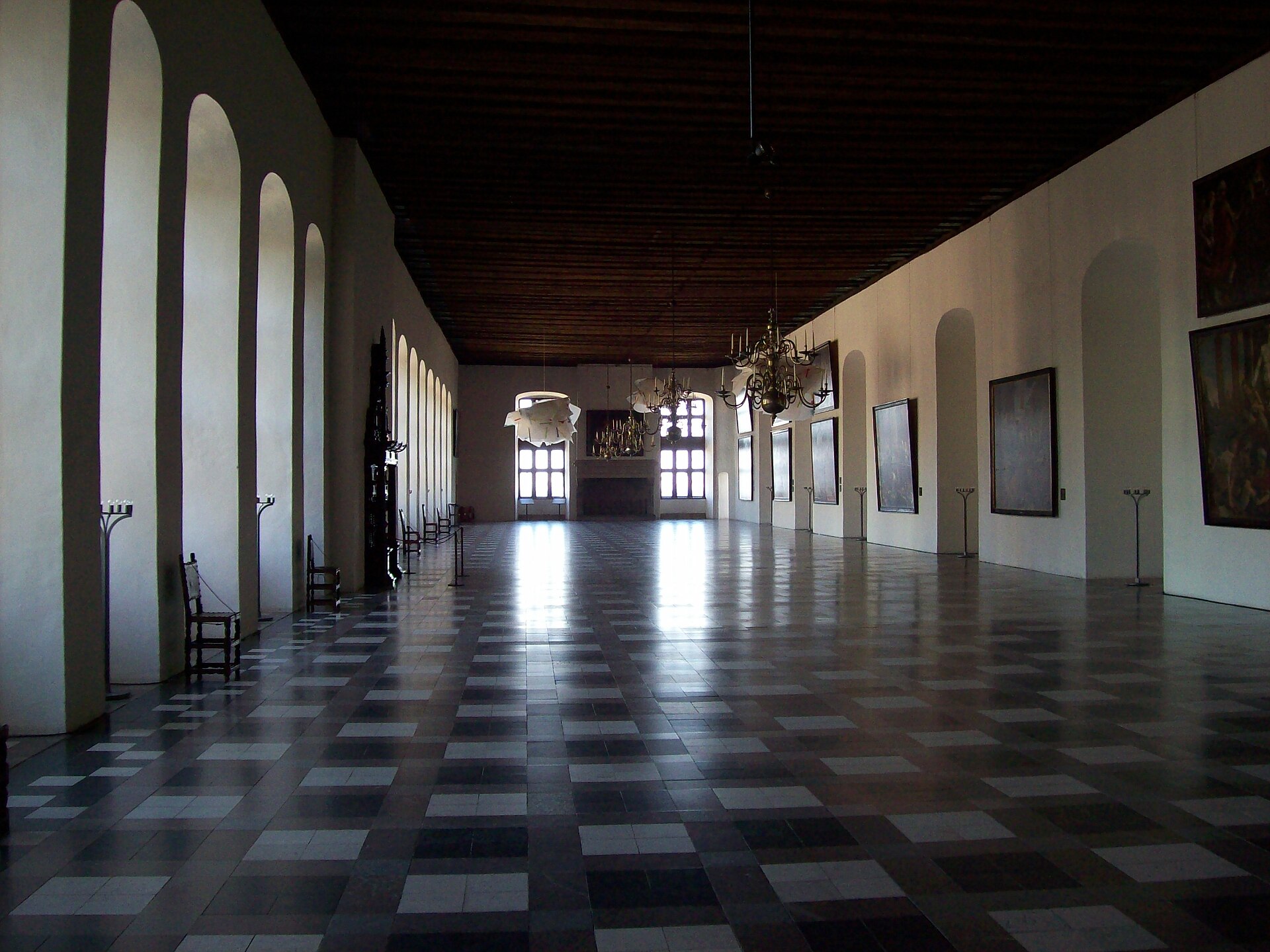
The single most magnificent room in Kronborg is its great ballroom, a vast hall that in its day was one of the longest and grandest rooms in all of Northern Europe. Stretching over sixty meters in length, it was the setting for the most splendid ceremonies and entertainments of the Danish court, a space designed to overwhelm visitors with the majesty and wealth of the crown.
In its original glory, the ballroom was sumptuously decorated, its walls hung with a famous series of tapestries depicting the kings of Denmark, a visual assertion of the antiquity and legitimacy of the royal line. Though many of these treasures were lost or dispersed over the turbulent centuries that followed, some survive, and the sheer scale of the room still conveys the grandeur of the events once held here.
Rooms of this size and splendour were statements of power in the Renaissance, stages on which a monarch could display his magnificence to his own nobles and to foreign envoys alike. The ballroom of Kronborg was among the grandest such stages in the north, a fitting setting for the court of a king who controlled the gateway to the Baltic and drew wealth from all its trade.
Walking the length of the great hall today, imagining it filled with courtiers and music and candlelight, the tapestries glowing on the walls, you can feel the ambition of Frederick II’s Kronborg. This was a room built to proclaim that Denmark was a great power and its king a great prince, and even now, centuries later, its scale alone is enough to make that case.
The lost tapestries of the kings of Denmark, woven for this very hall, were among the finest examples of the art produced in sixteenth-century Europe, and the surviving fragments, now among the castle’s greatest treasures, give a tantalizing sense of the splendour that once clothed these walls from end to end.
The Chapel That Survived the Flames
Among the treasures of Kronborg, the castle chapel holds a special place, not only for its beauty but for its remarkable survival. Richly decorated with carved and painted woodwork, gilding and fine detail, the chapel is one of the most complete Renaissance interiors in the castle, a jewel-box of devotional splendour befitting the court of a great Renaissance king.
The chapel’s survival is a story in itself, for in 1629 a catastrophic fire swept through Kronborg, destroying much of the castle’s interior and its treasures. The chapel, however, was spared the worst of the flames, and so it preserves, more than almost any other room, the original character and decoration of Frederick II’s Renaissance castle, a precious survival from before the disaster.
Because so much of the rest of the castle had to be rebuilt after the fire, and was altered again in later centuries, the chapel offers a rare direct glimpse of the sixteenth-century interior, of the taste and craftsmanship that Frederick commanded. Its carved galleries, its painted panels and its rich ornament let us see Kronborg as its builders intended it, before fire and time took their toll.
To sit in the chapel today is to be transported back to the golden age of the castle, to the world of Frederick II and his court at their devotions. Amid a castle so marked by fire, war and rebuilding, this beautiful room stands as a survivor, a fragment of the original Renaissance jewel preserved through the flames, and one of the loveliest spaces in all of Kronborg.
Remarkably, the chapel continued in use as a place of worship through all the castle’s changing fortunes, even during the long garrison years, so that its survival is not only physical but living, an unbroken thread of devotion running through four centuries of the castle’s turbulent history.
Fire and the Rebuilding King
The great fire of 1629 was one of the defining events in the history of Kronborg. Sweeping through the castle, it gutted much of the interior and destroyed a great deal of the splendour that Frederick II had created, leaving the proud Renaissance palace a fire-scarred shell. It was a devastating blow, and it fell to Frederick’s son and successor to repair the damage.
That successor was King Christian IV, one of the greatest and most energetic of all Danish monarchs, a passionate builder whose reign left magnificent monuments across Denmark. Christian threw himself into the rebuilding of Kronborg, restoring the castle to its former glory, reconstructing the interiors and the great hall, and returning the fortress to its place as a jewel of the Danish crown.
Christian IV’s rebuilding preserved the essential character and grandeur of Frederick’s Renaissance castle, so that Kronborg rose again from the fire much as it had been, its towers and spires once more crowning the sound. The reconstruction was a testament to the importance of the castle to the Danish monarchy, too vital a symbol and stronghold to be left in ruins.
This cycle of destruction and rebuilding, which would recur in Kronborg’s history, speaks to the resilience of the fortress and the determination of the Danish kings to maintain it. The Kronborg we admire today owes much to Christian IV’s restoration after the fire, a rebuilt Renaissance castle that carried the vision of Frederick II forward through disaster into the following centuries.
The Sleeping Hero in the Casemates
Beneath the castle lies another world entirely: the casemates, the dark, cold, vaulted chambers built into the thickness of the fortifications, where soldiers could be quartered and supplies stored in time of siege, safe from enemy fire. Descending into these shadowy passages, lit only dimly, is one of the most atmospheric experiences Kronborg has to offer.
And here, in the darkness, sits Denmark’s greatest legend. In the casemates rests a statue of Holger Danske, Ogier the Dane, a mythical hero of Danish folklore who, the legend says, sleeps beneath Kronborg with his great beard grown down into the stone. He waits, and will wait, until the day Denmark is in its gravest peril, when he will awake and rise to defend his homeland.
The legend of Holger Danske is one of the most beloved in Denmark, a symbol of the enduring spirit and protection of the nation, and its association with Kronborg gives the castle a mythic dimension to match its literary fame. The sight of the great sleeping figure in the gloom of the casemates is genuinely stirring, a hero out of legend waiting in the heart of the fortress.
There is something perfect about a castle that guards the gateway of a nation also sheltering, in its depths, the sleeping guardian of that nation. Between the literary ghost of Hamlet above and the legendary hero of Holger Danske below, Kronborg is a place doubly haunted by story, its stones charged with both the tragedy of a fictional prince and the myth of a nation’s eternal defender.
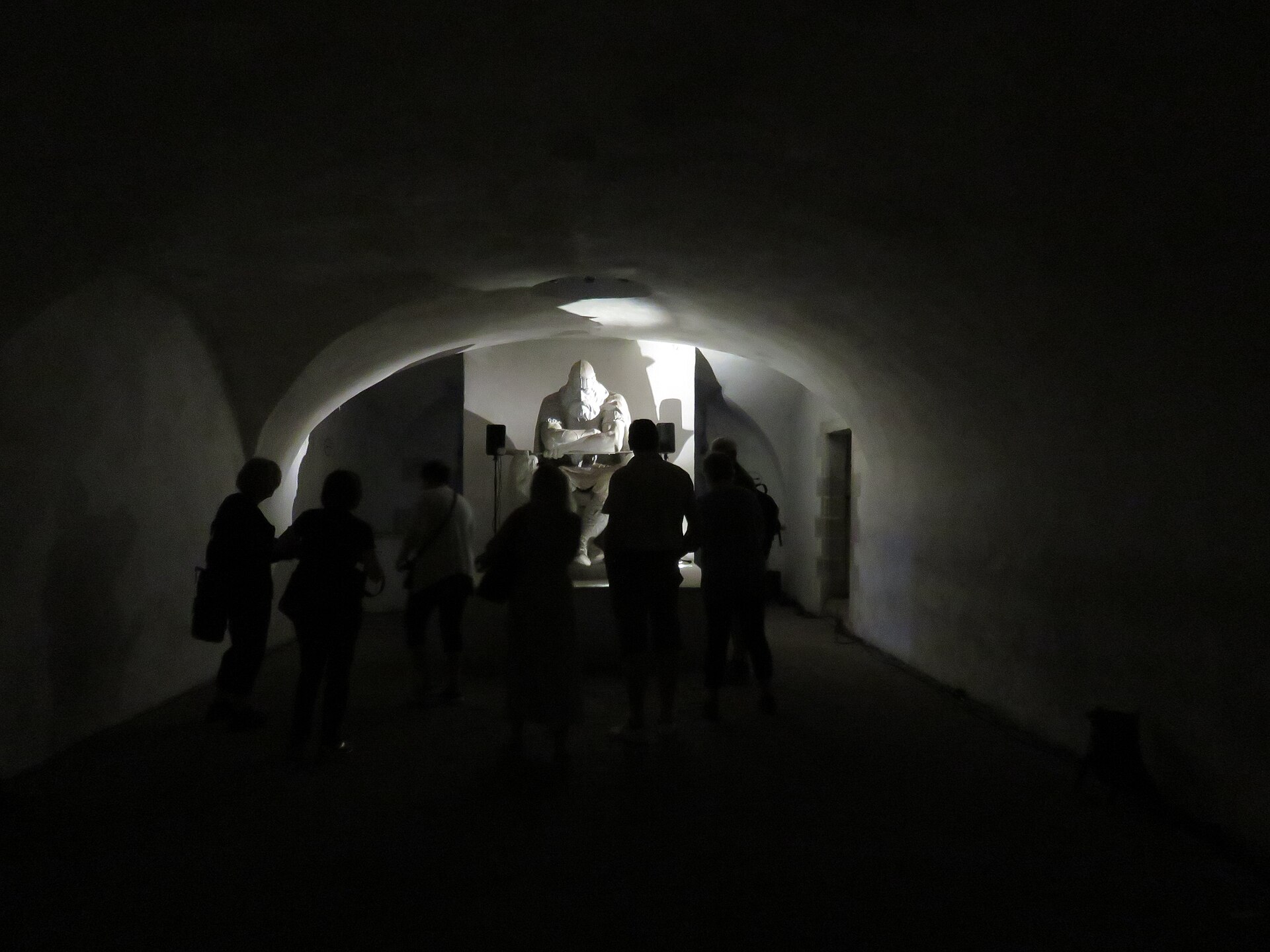
The image of Holger Danske has been invoked at moments of national crisis, most poignantly during the Second World War, when a Danish resistance group took his name, drawing on the legend of the hero who wakes to defend his country in its hour of greatest need. Myth and history thus met in the castle’s darkest chambers.
Elsinore, the Stage of Hamlet
The fame that carried Kronborg around the world came not from tolls or wars but from a play. When William Shakespeare wrote his tragedy Hamlet, around 1600, he set it at Elsinore, the English name for Helsingør, in the great castle by the sound, which is Kronborg. And so this Danish fortress became the setting for what many regard as the greatest play in the English language, its ramparts forever haunted by the melancholy prince.
It is almost certain that Shakespeare never visited Kronborg himself, learning of the castle at second hand, perhaps from English actors who had performed there, for the newly completed and famous castle was known across Europe. Yet through his imagination, Elsinore became one of the most evocative settings in all of literature, and Kronborg was bound forever to the tragedy of Hamlet, Ophelia and the ghost on the battlements.
The connection has become central to the castle’s identity. Kronborg is universally known as Hamlet’s Castle, and the association is celebrated and embraced, most famously through performances of Hamlet staged at the castle itself, in its courtyard and grounds, where great actors have played the Danish prince in the very setting Shakespeare imagined for him.
There is a wonderful circularity to it all. A real castle, built to guard a real strait, inspired a fictional setting for a play, and the fame of that play has now made the real castle famous around the world, drawing visitors who come as much for Hamlet as for history. Few places show so vividly how literature can transform a place, lending a Danish fortress an immortality that tolls and cannon never could.
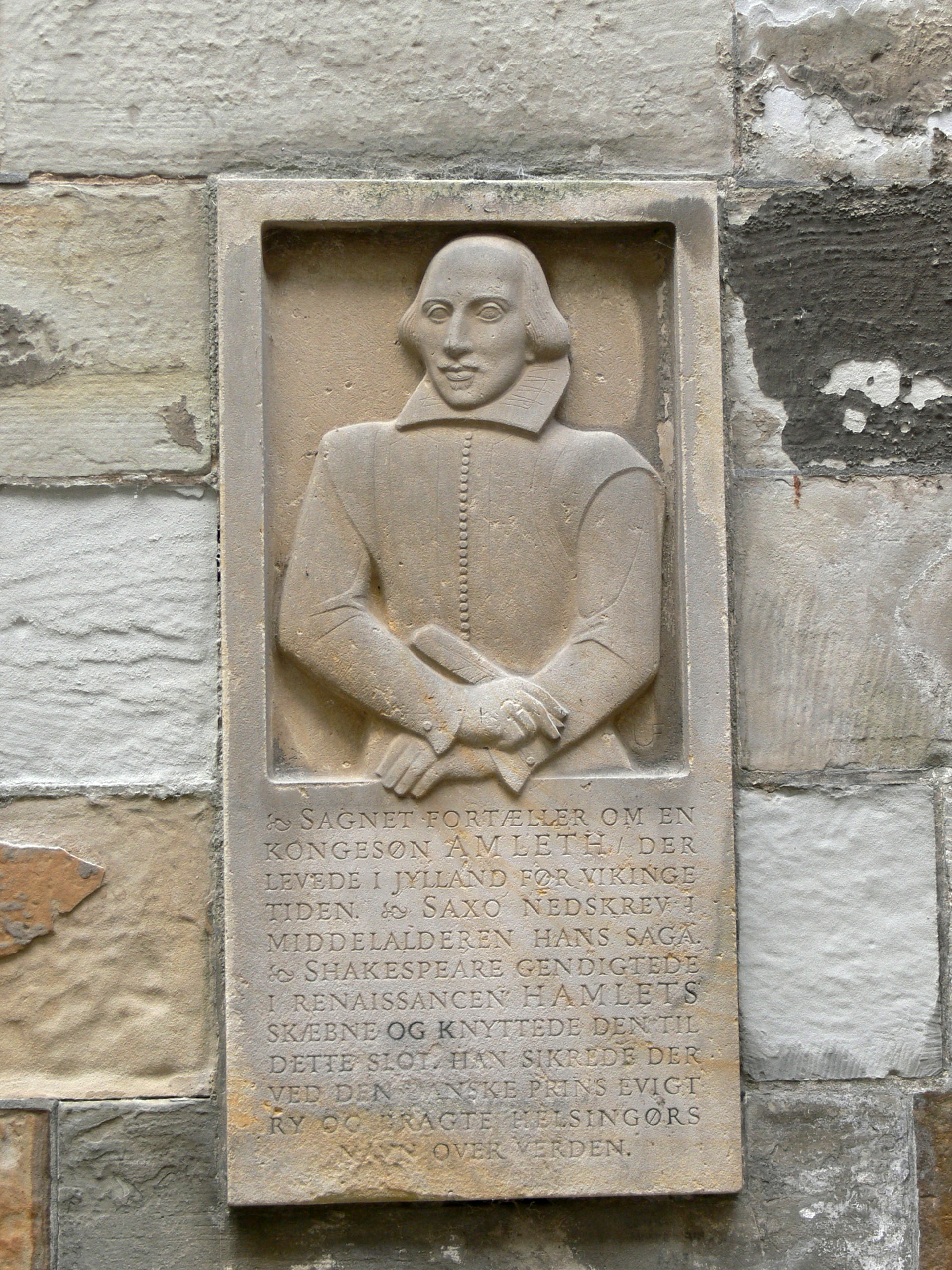
Generations of the greatest actors have taken the role of Hamlet at Kronborg, and the tradition of performing the play here has linked the castle to the history of the theatre itself, making it a place of pilgrimage for lovers of Shakespeare from around the world. The ghost on the battlements has become, in a sense, a permanent resident.
The Wealth of the Sound Dues
To understand why such a magnificent castle rose on this windswept spit of land, you must understand the extraordinary wealth of the Sound Dues. For more than four hundred years, from the fifteenth century until the middle of the nineteenth, the Danish crown levied a toll on virtually every merchant ship passing through the Øresund, and Kronborg was the fortress that enforced it.
The system was ruthlessly effective. Ships were required to stop at Helsingør and pay their dues, and the guns of Kronborg, trained on the narrow strait, ensured that none dared refuse or slip past without paying. The revenue was colossal, for the Baltic trade was one of the great commercial arteries of Europe, and at times the Sound Dues provided a substantial part of the entire income of the Danish state.
This wealth shaped the history of Denmark and of Kronborg alike. It funded the Renaissance rebuilding of the castle, the splendour of the court, and much of the power of the crown, and it made control of the sound a matter of the highest strategic importance, worth wars to defend. Kronborg was not merely a symbol of Danish power but a direct instrument of Danish wealth, the fortress that turned geography into gold.
The Sound Dues were finally abolished in 1857, under international pressure, ending four centuries of Danish toll-taking on the Baltic trade. But for the whole of Kronborg’s great age, the castle and the toll were one, the fortress existing to enforce the levy and the levy paying for the fortress, a self-sustaining engine of royal wealth guarding the gateway to the north.
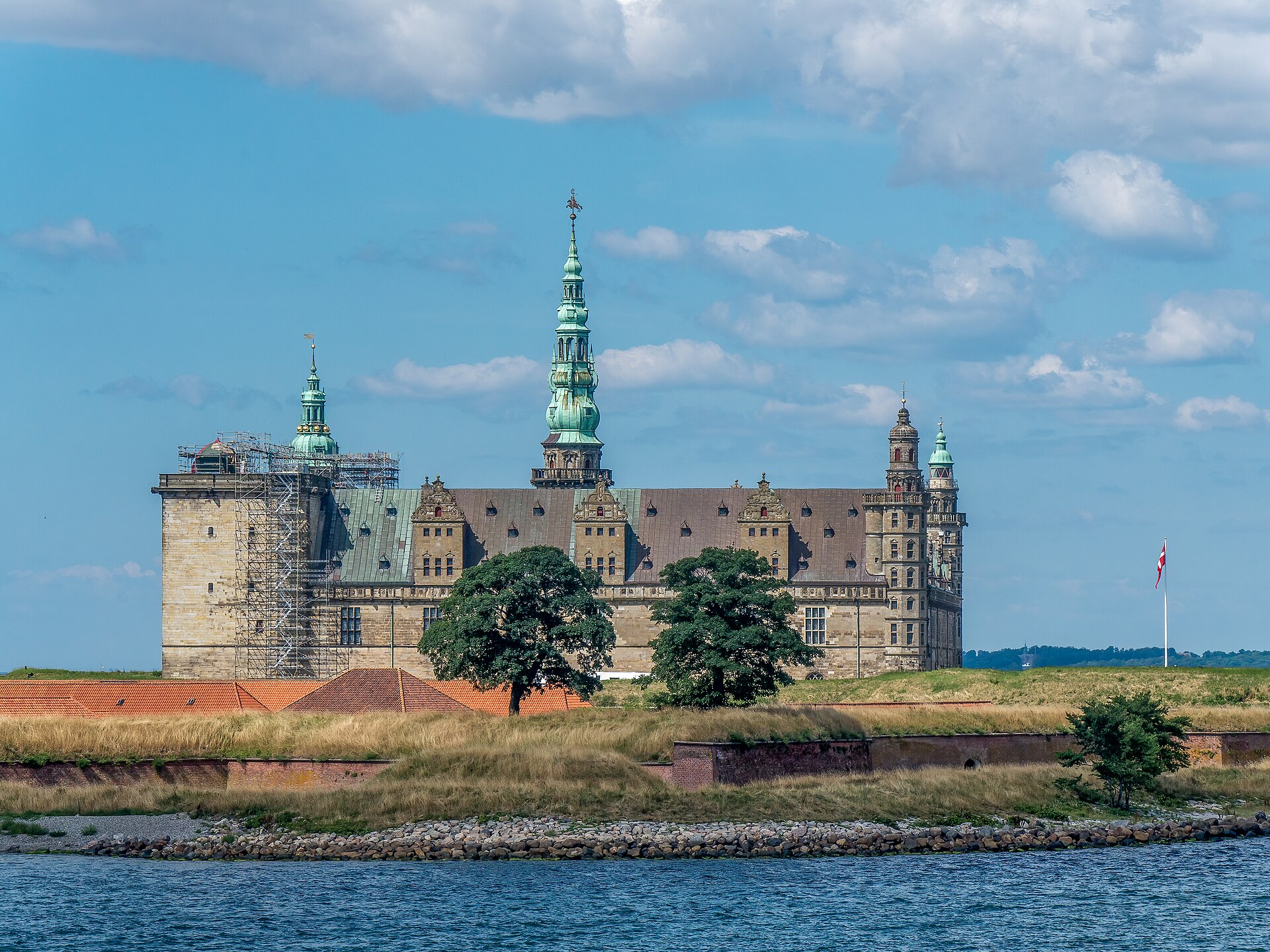
So important were the dues that detailed records were kept of the ships and cargoes that passed, and these Sound Toll Registers survive today as one of the most valuable sources for the economic history of early modern Europe, a vast archive of trade compiled ship by ship in the shadow of Kronborg.
A Star-Shaped Fortress
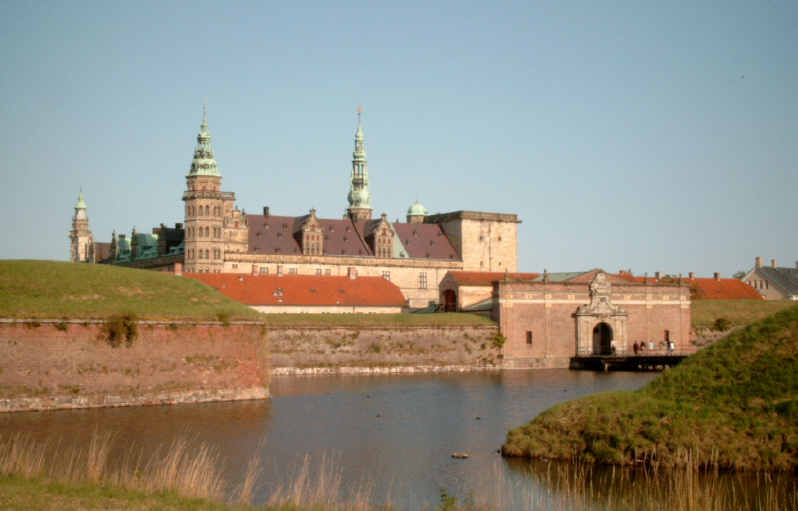
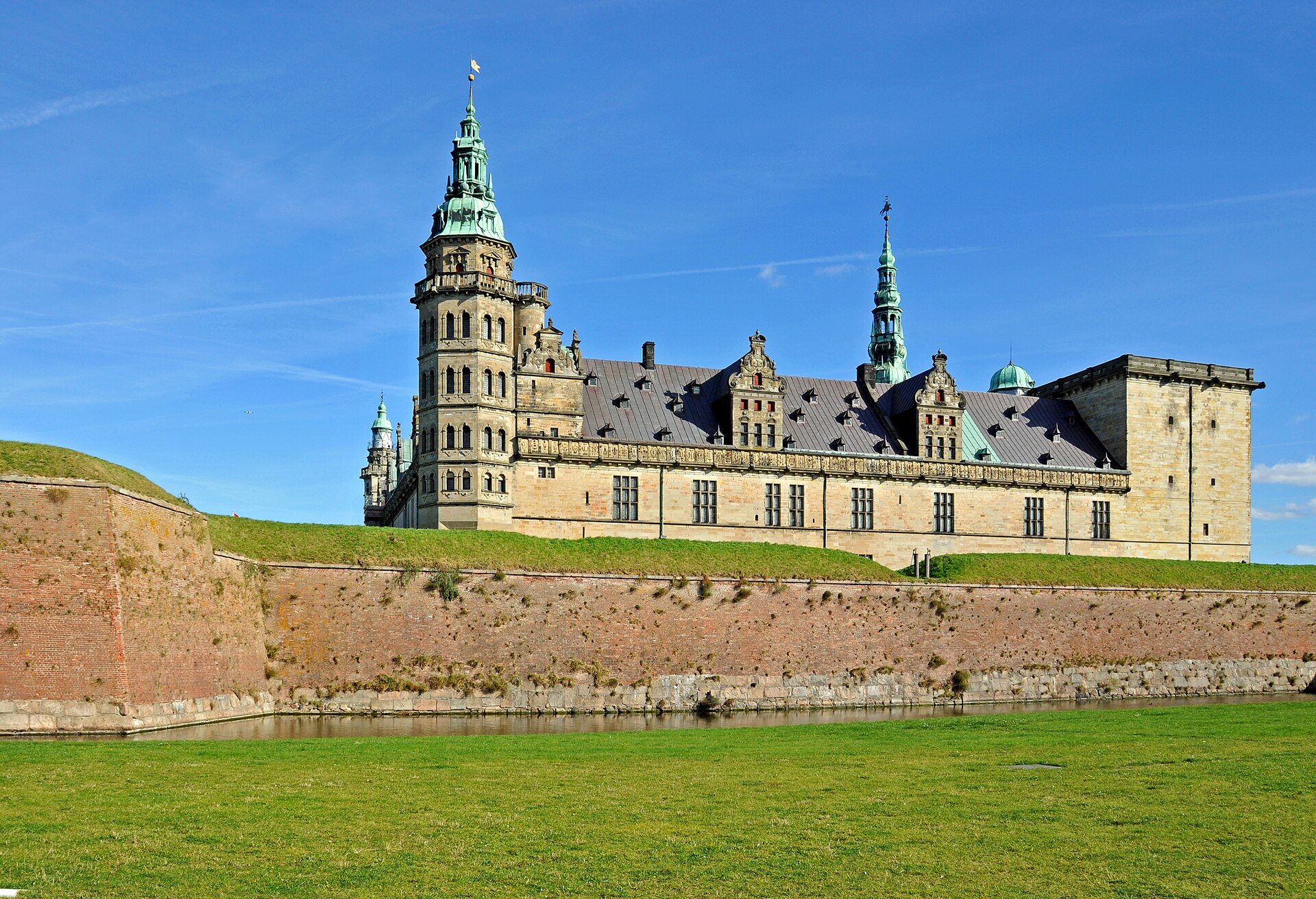
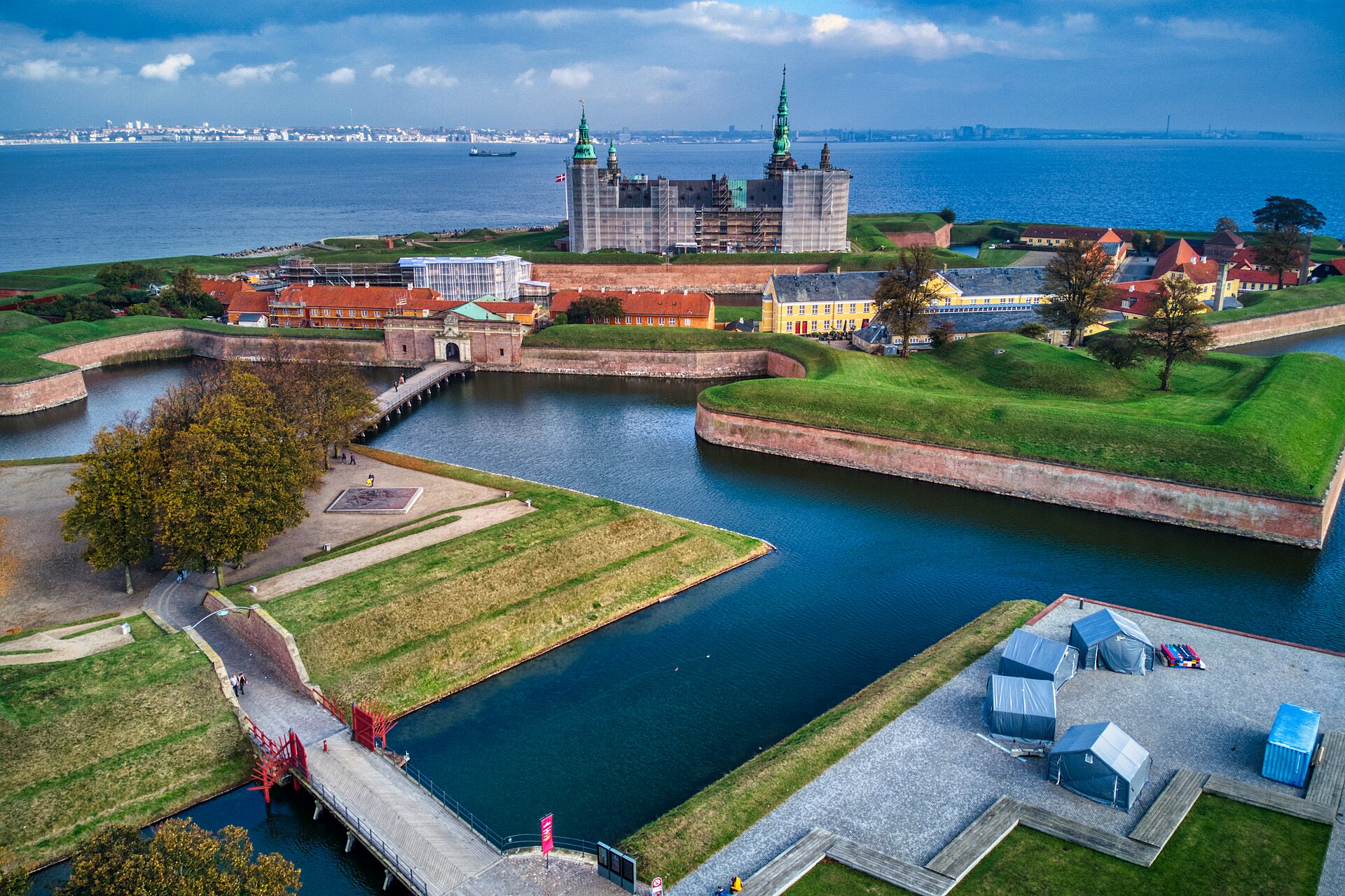
For all its Renaissance elegance, Kronborg was above all a fortress, and seen from above its military character becomes clear. The elegant castle at the centre is surrounded by an elaborate system of angled bastions, ravelins, walls and moats, the star-shaped fortifications of the early modern age, designed to resist the artillery of the gunpowder era and to command the approaches by land and sea.
These outer defences were as important as the beautiful castle they protected, for Kronborg guarded a point that great powers were willing to fight over. The bastions bristled with cannon, covering the strait and the landward approaches, and the whole complex was designed to be a formidable stronghold, capable of holding the sound against any enemy fleet or army that dared to challenge Danish control.
The star-fort design, with its geometric bastions projecting to give defenders overlapping fields of fire, represented the most advanced military engineering of its day, and Kronborg was among the strongest fortresses in Northern Europe. Its combination of a splendid Renaissance palace within a state-of-the-art artillery fortress made it both a jewel and a weapon, beauty and power fused on the shore of the sound.
To appreciate the full extent of the fortress, from the elegant castle to its ring of bastions and moats, it helps to see it whole, and this tour sweeps across Kronborg and through its courts and chambers. It conveys the scale and the double nature of the place, the Renaissance palace at the heart of a mighty artillery fortress, far better than any single view from the ground.
Captured, Garrisoned and Endured
Kronborg’s strength was tested, and once it failed. In 1658, during one of the many wars between Denmark and Sweden, a Swedish army besieged and captured the great fortress, a serious blow to Danish prestige and control of the sound. The Swedes held Kronborg for a time and carried off treasures, including some of its famous decorations, before the castle was eventually returned to Denmark.
The loss of Kronborg, however temporary, was a shock, and in its aftermath the Danes greatly strengthened the fortress, expanding and modernizing its outer defences to ensure it could never so easily be taken again. The elaborate ring of bastions and outworks that survives today owes much to this post-war rebuilding, as Denmark resolved to make the guardian of the sound truly impregnable.
In the centuries that followed, as the strategic and commercial importance of the sound gradually declined and the Sound Dues were finally abolished, Kronborg’s role shifted. For a long period it served primarily as a military barracks and garrison, home to soldiers rather than kings, its splendid rooms adapted to military use and its great days as a royal residence receding into the past.
This long military phase, if less glamorous than the age of Frederick II, was part of the castle’s endurance. Kronborg remained a working fortress and garrison into the modern era, its walls maintained, its guns manned, a permanent guardian of the Danish shore. Only later would it be recognized and preserved for what it truly was, one of the great historic castles of Europe, and opened at last to the world.
Even in its garrison years the castle never entirely lost its aura, and antiquarians and travellers, drawn above all by the Hamlet connection, continued to seek it out, so that its literary fame quietly preserved its reputation through the long decades when it served more as a barracks than a palace.
A World Heritage Site by the Sea
In the modern era, Kronborg has been recognized and cherished as one of the great cultural treasures of Denmark and of Europe. In 2000 the castle was inscribed as a UNESCO World Heritage Site, honoured both for its outstanding Renaissance architecture and for its unique cultural significance as the setting of Hamlet, a place where history and literature meet as at few other sites in the world.
Today Kronborg is a museum and one of Denmark’s most visited landmarks, drawing travellers from around the globe to walk its great hall, descend to the casemates of Holger Danske, explore its chapel and courtyard, and stand on the ramparts looking out across the sound to Sweden. Its double fame, as a Renaissance fortress and as Hamlet’s Elsinore, makes it a place of pilgrimage for lovers of history and literature alike.
The castle’s connection to Hamlet is celebrated most memorably through theatre, and Kronborg has become a famous venue for performances of the play, staged in the very setting Shakespeare imagined. To watch Hamlet performed within the walls of Kronborg, as the light fades over the sound, is one of the great experiences the castle can offer, literature returning home to the place that inspired it.
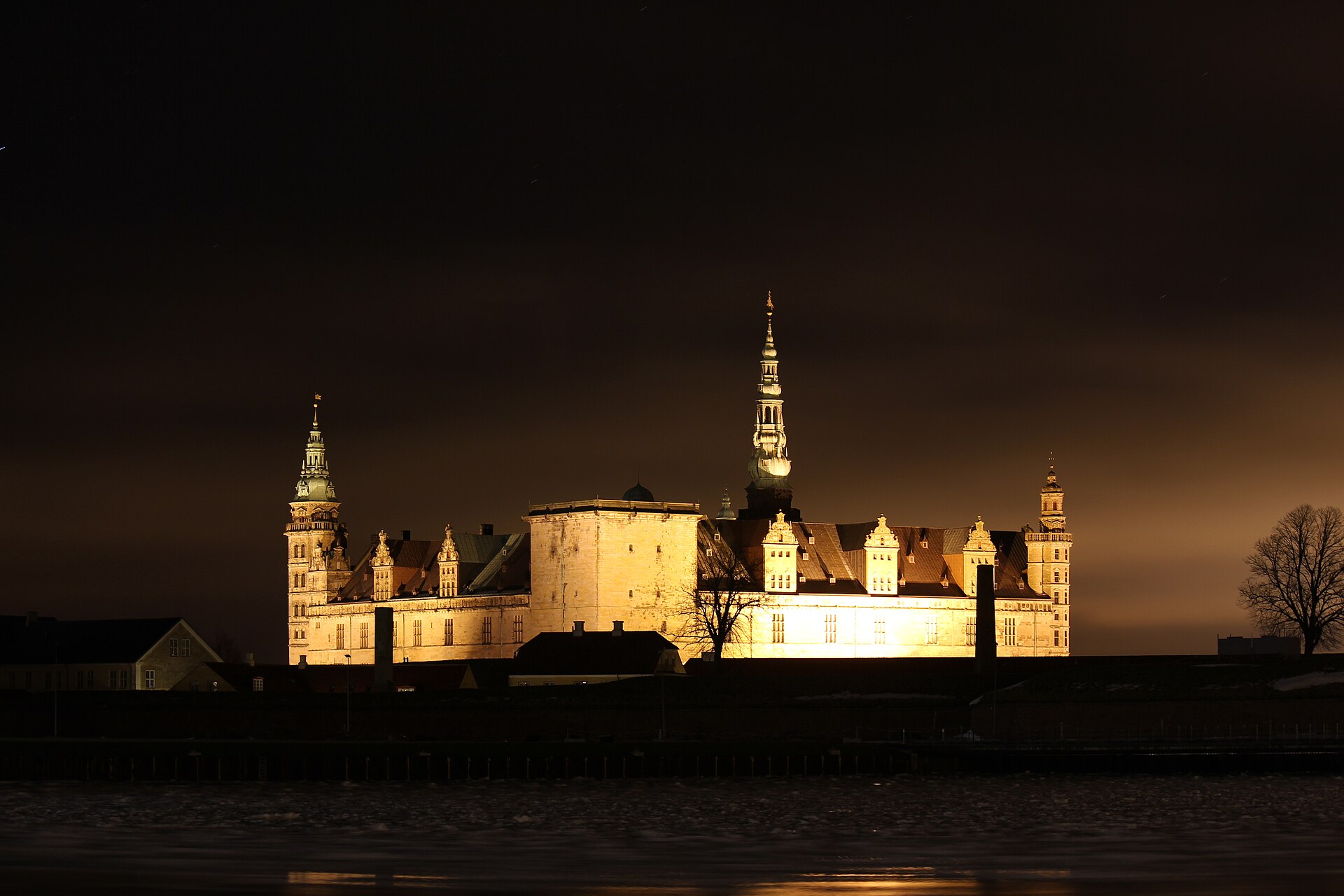
By day or by night, floodlit above the dark water, Kronborg remains a magnificent sight, the crowned castle guarding the gateway to the Baltic. It has been a tollhouse and a palace, a fortress and a garrison, and it is now a monument and a stage, but through every transformation it has kept its hold on the imagination, the most literary castle in the world and one of the enduring glories of Denmark.
The recognition by UNESCO placed Kronborg among the select company of the world’s most significant cultural sites, and it reflected a truth that visitors feel instinctively: that this is not merely a fine castle but a place where the currents of history, power and imagination have met and mingled for centuries in an unusually rich way.
Castles Nearby
- Malbork Castle: The World’s Largest Brick Fortress of Warrior-Monks
- Wawel Royal Castle: The Sacred Hill at the Heart of Poland
Why Hamlet’s Castle Still Casts Its Spell
Few castles wear their fame so lightly or so strangely as Kronborg. The world knows it as the haunt of a fictional prince, yet its real history, of tolls and wars, fires and kings, is every bit as compelling as the tragedy Shakespeare set within its walls. Kronborg is that rare place where literature and history reinforce each other, each lending the other depth and resonance.
Stand on its ramparts, with the wind off the sound and the Swedish coast a short way across the water, and you feel all its layers at once: the fortress guarding the strait, the Renaissance palace of a golden age, the tollhouse that gilded a kingdom, the stage of the greatest of plays, the resting place of a sleeping hero. Kronborg holds all of these in a single silhouette above the sea.
So begin your journey through the castles of the north here, at Hamlet’s Elsinore on the Øresund. Walk the great hall, descend to Holger Danske in the dark, and look out across the sound that made this fortress rich and powerful. Kronborg is proof that a castle can be immortalized as much by a poet’s imagination as by a king’s ambition, and it remains one of the most captivating fortresses in all of Europe.
You May Like
Mafra, the Palace a King Built From a Vow


3 thoughts on “Kronborg Castle: Hamlet’s Fortress on the Danish Sound”