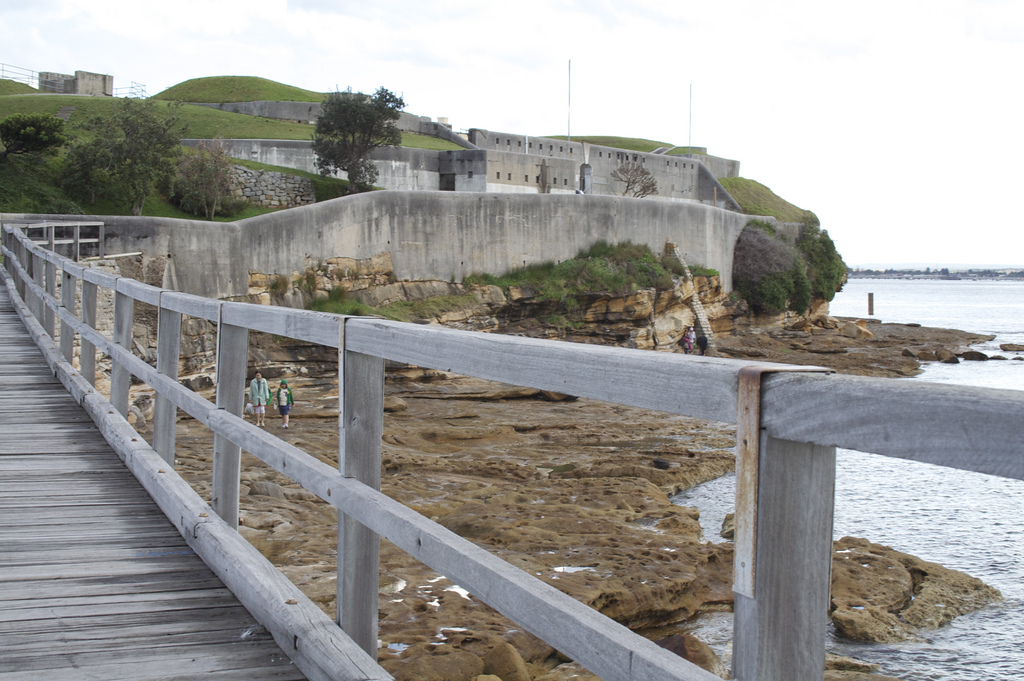
At the southern edge of Sydney, where the suburb of La Perouse looks out across the mouth of Botany Bay, a short wooden footbridge leads out to a small rocky island crowned with sandstone and concrete. This is Bare Island, and the low fort that occupies almost its entire surface is one of the most curious and revealing coastal fortifications in Australia. It is tiny, it is strange, and it hides a scandal that ended careers and reached all the way to a royal commission.
You could be forgiven for underestimating the place. There are no soaring battlements here, no dramatic keep on a hill, just a squat crescent of masonry hugging a windswept lump of rock a stone’s throw from the shore. Yet this modest fort was built to guard the back door to the richest city in the Australian colonies, and the story of how it was built, and how badly, is one of the great cautionary tales of colonial public works.
Bare Island has lived many lives. It began as a coastal gun battery meant to stop enemy warships slipping into Botany Bay, became the first home for aged war veterans in the country, was pressed back into service during the Second World War, and later found unlikely fame as a filming location for a Hollywood blockbuster. Few fortresses of its size have packed so much history into so little ground.
In the pages ahead you will cross the bridge onto the island and trace its whole improbable journey, from the Russian scare that called it into being, through the shoddy workmanship that nearly buried it in disgrace, to its gentle later years as a veterans’ refuge and its present life as a protected historic site and one of Sydney’s most beloved diving spots. It is a small island with a very large story.

In This Article
- A Small Bare Island at the Bay’s Mouth
- The Lost Explorer Who Named the Shore
- Fear of a Raider From the Sea
- The Engineers Behind the Plan
- The Guns on the Rock
- The Scandal in the Concrete
- The Bridge to the Mainland
- A Refuge for Old Soldiers
- Back to War for a Season
- A Fortress Goes to Hollywood
- The Best Diving in the State
- Preserving an Accidental Time Capsule
- Crossing the Bridge Today
A Small Bare Island at the Bay’s Mouth
The island wears its name honestly. When European explorers first charted this coast, they looked at the low, treeless lump of rock sitting near the shore at the entrance to Botany Bay and described it simply as a small bare island, and the plain description stuck. It became one of the oldest European place names on this stretch of coast, a piece of blunt observation that has outlasted grander christenings elsewhere.
But the island was never truly empty of meaning. Long before any European named it, the Aboriginal people of the area knew this coast intimately, and the shores around Botany Bay hold a deep Indigenous heritage that stretches back countless generations. The rock that colonists saw as bare sat within a landscape rich with knowledge and use, part of a country that had been lived in and understood for thousands of years.
Botany Bay itself carries an outsized place in the Australian story, for it was here that European contact with this part of the continent famously began. The whole district around La Perouse is layered with that history, from Indigenous presence to the first fraught encounters with newcomers, and Bare Island sits at the heart of it, a small stage on which large themes have played out.
So even before it became a fortress, the island occupied a meaningful spot, guarding the entrance to a bay whose name resonates through the nation’s history. That position at the mouth of Botany Bay is exactly what would later make it valuable to the military, for whoever held this rock held a commanding view of any ship trying to enter the bay from the sea.
The rock’s low, exposed character shaped everything that would be built upon it. There was little room and less shelter, and any structure raised here would have to make the most of a cramped and weather-beaten site hemmed in by the sea. That constraint is written into the fort that eventually appeared, a compact work that fills nearly the whole island and leaves scarcely a spare corner of bare rock uncovered.
The Lost Explorer Who Named the Shore
The suburb that hosts Bare Island carries the name of one of history’s great maritime mysteries. La Perouse is named for a French navigator whose expedition arrived at Botany Bay at a pivotal moment, just as the first British settlers were establishing themselves, before sailing away into the Pacific and vanishing without a trace. The name on the map is a memorial to a voyage that ended in unexplained disaster.
That the fort sits in a place named for a lost French explorer adds a layer of romance to an already storied stretch of coast. The district around Botany Bay became a meeting point of empires and ambitions, a place where French and British interests brushed past one another at the very dawn of European settlement in this part of the world, and the name endures as a trace of that encounter.
For the visitor, this deep background enriches the experience of the island. Bare Island is not an isolated curiosity but part of a landscape thick with history, from Indigenous heritage through the drama of first European contact to the fortifications of a later, more anxious age. The lost explorer’s name ties the little fort to a much larger and older story of exploration and encounter.
Standing on the island and looking back toward the shore, you are looking at ground that has drawn navigators, settlers, soldiers, and now visitors for centuries. The fort is only the most solid and visible expression of that long fascination with the mouth of Botany Bay, a place that has always seemed to matter far more than its quiet appearance might suggest.
Fear of a Raider From the Sea
Bare Island was built out of anxiety, the same nervous dread of naval attack that fortified so many Australian harbours in the later nineteenth century. Through these decades the British Empire and Imperial Russia eyed one another warily, and every downturn in their relations sent a shiver through the Australian colonies, which imagined hostile cruisers appearing off their coasts to bombard undefended towns and demand ransom.

Sydney had a particular reason to worry. It was a wealthy city, and its defenders fretted that an enemy warship might avoid the well-guarded main harbour and instead slip into Botany Bay to the south, using it as a back door to threaten the city from an unexpected direction. An undefended Botany Bay was a gap in Sydney’s armour, and a gap that a clever adversary might exploit.
The answer was to plug that gap with a fort, and the small island at the bay’s entrance was the natural place to put it. A battery here could command the approaches and make any raider think twice about using Botany Bay as a shortcut to the city’s riches. The rock’s position, once merely a geographic curiosity, became a genuine military asset in the calculations of the colony’s defenders.
This was the logic that called Bare Island into being. It was never meant to be a grand fortress but a specific answer to a specific fear, a small strong point closing off a vulnerable back entrance to a rich and nervous city. The whole design and scale of the fort flow from that modest but real strategic purpose.
It is easy, from a distance of many decades, to smile at the fear of Russian cruisers that never came. Yet at the time the anxiety was real and widely shared, fed by newspapers and by the genuine uncertainty of imperial politics on the far side of the world. Whole systems of coastal defence were built on the strength of that dread, and Bare Island is one of its most tangible surviving monuments, a fort raised against a threat that existed mostly in the anxious colonial imagination.
The Engineers Behind the Plan
The fort was shaped by some of the leading military and architectural minds available to the colony, the same experts who advised on coastal defence across the Australian colonies. Their thinking about how to guard vulnerable ports produced a network of fortifications, and Bare Island was one node in that wider scheme, designed to meet the particular problem of Botany Bay.
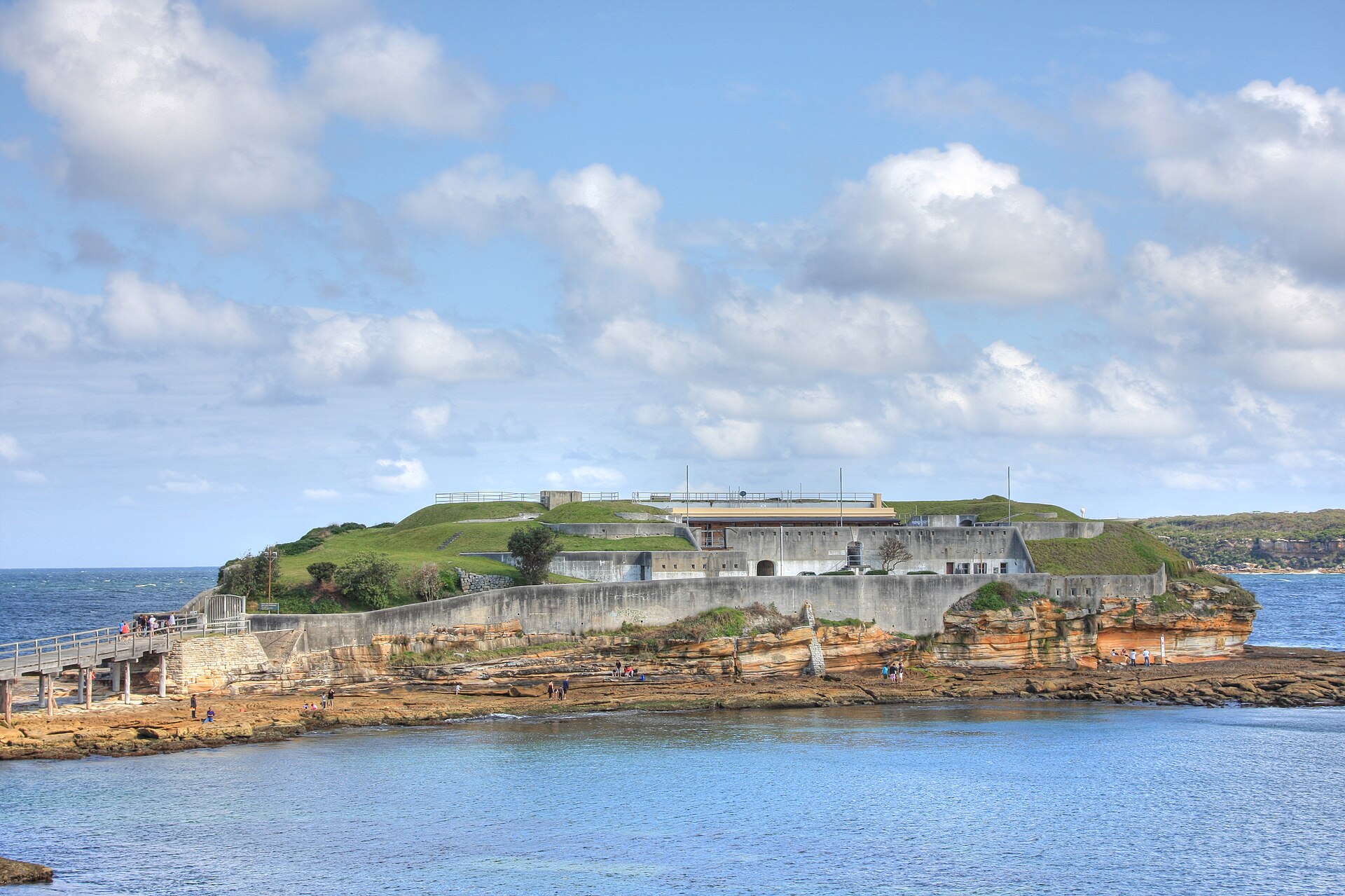
These were men who understood modern coastal defence, the idea that a fort should be low and hard to hit rather than tall and imposing, its guns protected and its profile minimal. The plan for Bare Island reflected that philosophy, a crescent-shaped work that hugged the rock and concentrated its firepower where an approaching ship would be most exposed. On paper it was a sound and thoughtful design.
The colonial architect of the day was also involved in bringing the fort into being, lending his authority to the project and its execution. The combination of military engineering expertise and architectural oversight should, in theory, have produced a solid and reliable piece of work, a small but competent fortress fit for its purpose.
Yet the gap between a good plan and a good building can be wide, and it was in the execution rather than the design that Bare Island would come to grief. The intentions were sound and the expertise was real, but the actual construction of the fort would soon become the subject of one of the colony’s most damaging public scandals, tarnishing reputations that had seemed beyond reproach.
It is worth remembering that these same experts left their mark on coastal defences all around the Australian colonies, so the failings at Bare Island were not for want of talent at the top. The problem lay lower down, in the gap between the drawing board and the building site, where good plans could be undone by poor materials and careless work. Bare Island stands as a reminder that a fortress is only ever as strong as the hands that actually raise it.
The Guns on the Rock
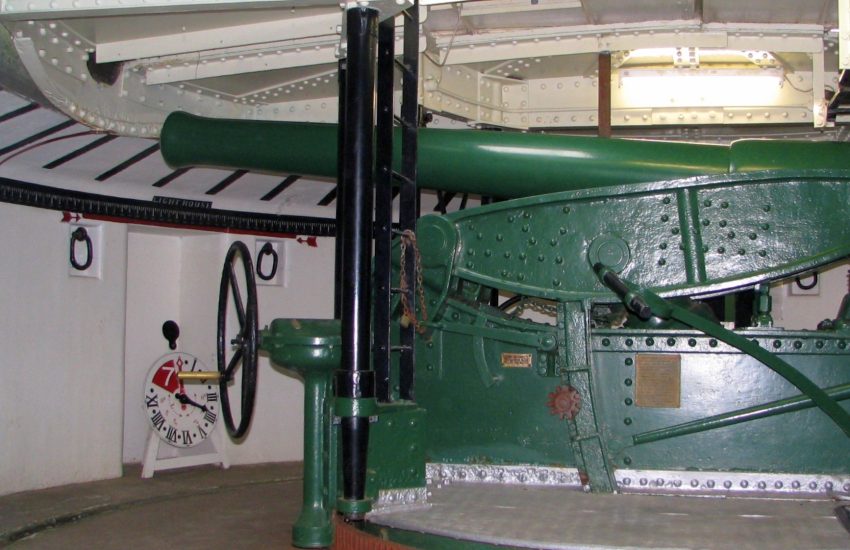
For all its small size, Bare Island was seriously armed, its crescent of masonry designed to carry heavy guns capable of striking an enemy warship. The armament included large rifled muzzle-loading guns, weighty pieces intended to throw destructive shells at any vessel rash enough to approach the bay, along with lighter and quicker-firing weapons to deal with closer or faster threats.
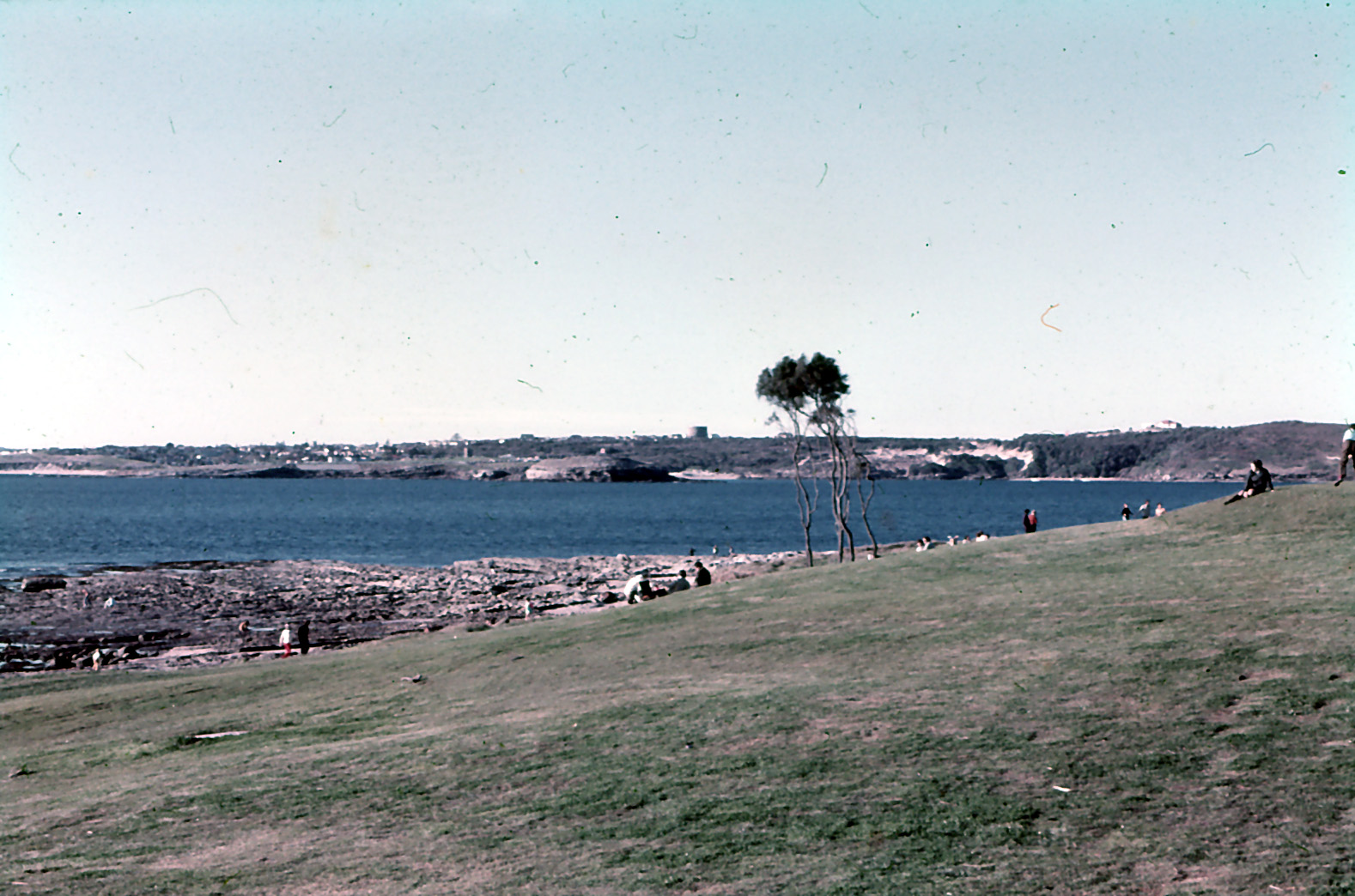
The heaviest gun was placed to command the most likely line of attack, the direction from which an enemy ship would probably come, so that the fort’s greatest firepower faced the greatest danger. This careful arrangement of weapons around the crescent reflected the whole point of the fort, which was to make the entrance to Botany Bay a dangerous place for any hostile vessel to enter.
Serving these guns required a garrison of soldiers stationed on the island, men who lived and drilled on this cramped rock, ready to work the weapons should an alarm ever come. Life on such a small and exposed island must have been a peculiar kind of military service, hemmed in by water on all sides and focused entirely on the guns and the sea beyond.
The guns were also protected in the modern manner, with the heaviest weapon housed in an armoured position designed to shield it from return fire. This attention to protecting the armament shows that, whatever went wrong with the fort’s construction, its designers had thought carefully about how it would actually fight, arranging its guns to deal maximum damage while surviving an enemy’s response.
The sheer concentration of firepower on so small a rock is striking. Where a larger fort might spread its guns across acres of ground, Bare Island packed its heavy weapons into a tight crescent, every gun close to its neighbours and to the magazines that fed them. This density made the little fort surprisingly formidable on paper, a compact fist of artillery guarding the entrance to the bay, however troubled its actual construction turned out to be.
The Scandal in the Concrete
Within a few years of the fort’s completion, something was clearly wrong. The structure, built using the relatively new technique of mass concrete, began to show signs of serious defect, and questions arose about the quality of the workmanship that had gone into it. What should have been a solid modern fortress was revealing itself as a shoddily built one, and the discovery would blow up into a full-scale colonial scandal.

The problems prompted an official inquiry, and eventually a royal commission was convened to investigate what had gone wrong. The investigation probed the design of the barracks, the choice of location, the way the contract had been awarded, and above all the quality of the construction, dragging the whole troubled project into the harsh light of public scrutiny.
The findings were damaging. Responsibility for the mismanagement was laid at senior doors, and the scandal effectively ended the public careers of those held accountable, including the colonial architect whose reputation had until then stood high. A small fort on a bare rock had become the instrument of professional ruin, a spectacular fall brought on by faulty concrete and poor oversight.
It is a striking irony that Bare Island’s most dramatic action was not against any enemy but in the committee rooms of a royal commission. The fort never fired its guns in anger, yet it left a deep mark on the colony all the same, as a byword for public works gone wrong and a hard lesson in the dangers of cutting corners on a supposedly modern building.
For the historian, the scandal gives Bare Island a fascination out of all proportion to its military importance. It is a rare surviving monument to a particular kind of colonial failure, a place where the confident new technology of mass concrete met careless execution and produced not a triumph but a debacle that echoed through the colony’s public life.
The affair also captures something about the confidence and haste of the colonial age. Eager to embrace the newest methods and materials, the builders reached for mass concrete before its use was fully mastered, and the result exposed how easily ambition could outrun competence. The fort stands, in a sense, as a monument to the perils of innovation without adequate care, a lesson cast quite literally in flawed concrete.
The Bridge to the Mainland
One of the most charming features of Bare Island is also one of the most practical, the wooden footbridge that connects the island to the shore at La Perouse. Before the bridge existed, reaching the island was an awkward business, requiring boats or other makeshift means to cross the short but real stretch of water separating the rock from the mainland.
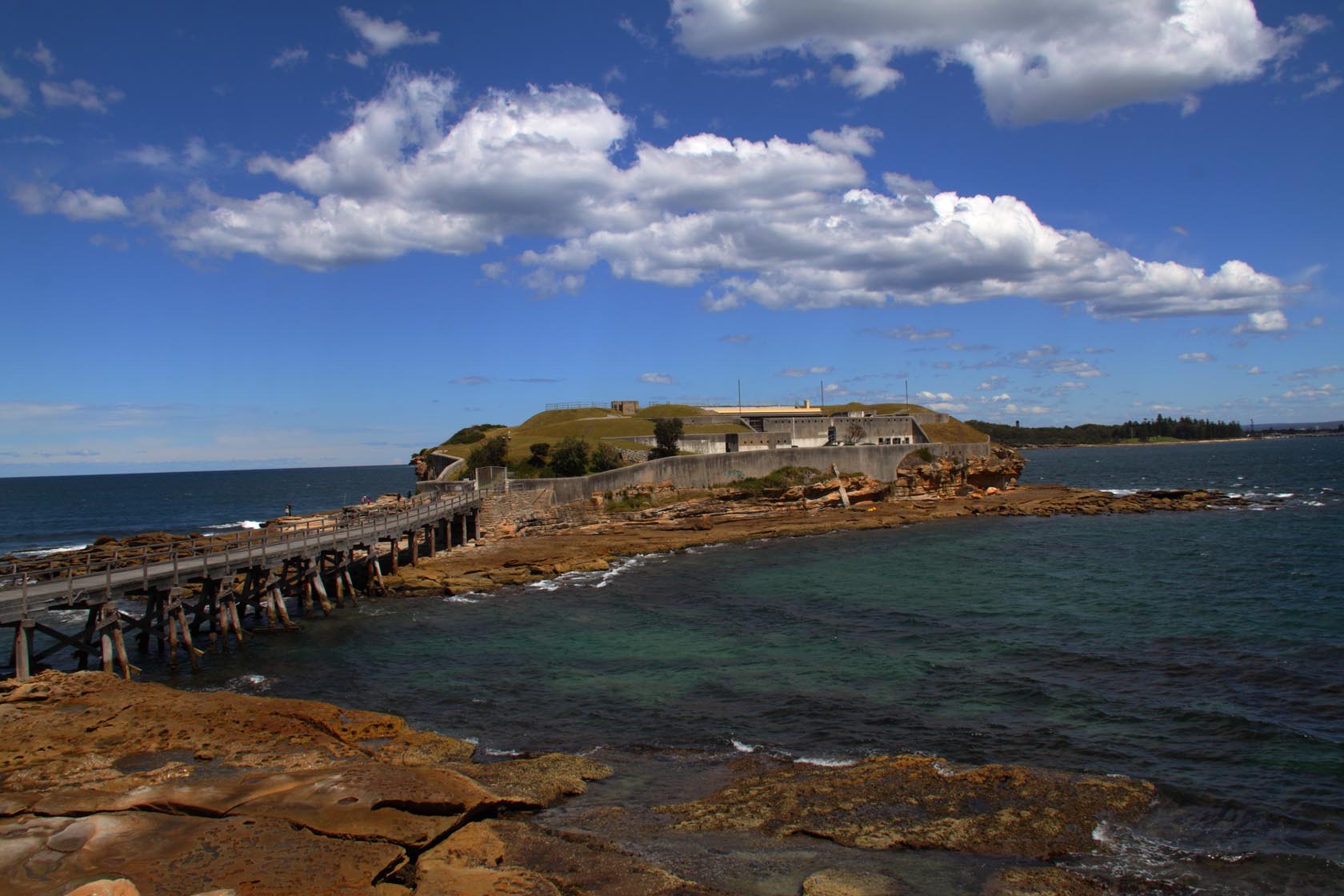
The bridge changed that, giving the garrison secure and reliable access to their island fortress. For the soldiers stationed on the rock, it was the umbilical cord that linked their cramped and watery posting to the rest of the world, allowing men and supplies to move back and forth without the difficulty and danger of a water crossing every time.
Today that same bridge, in its later form, is part of what makes a visit to Bare Island so appealing. The walk out across the water, with the bay on one side and the open sea beyond, is a small adventure in itself, building anticipation as you approach the fort and heightening the sense of crossing onto a place set apart from the ordinary world.
The bridge is a reminder that even a fort a short distance from the shore is still an island fortress, with all the isolation and drama that implies. That thin span of timber is the only thing standing between the visitor and a genuine sea crossing, and it lends the whole site a quality of separateness that a mainland fort could never possess.
The crossing also gives the fort much of its theatrical quality. Because you must walk out over the water to reach it, arriving at Bare Island feels like a small pilgrimage, a deliberate passage from the everyday world of the shore to the strange, self-contained world of the island. That sense of transition is part of why the place lingers in the memory of those who visit it.
A Refuge for Old Soldiers
As the nineteenth century gave way to the twentieth and the fear of naval raiders faded, Bare Island found a gentler purpose that few would have predicted. In the early years of the new century the fort was converted into a home for aged war veterans, becoming the first institution of its kind in the country, a place where old soldiers could see out their days.

This transformation, prompted in part by the advocacy of women’s groups who pressed for the care of ageing servicemen, gave the little fort a warmth quite unlike its martial origins. Where soldiers had once drilled beside heavy guns, elderly veterans now lived out their retirement, and the cramped island that had been built for war became a quiet refuge for men who had already given their service.
There is something poignant about a fortress ending up as a home for old soldiers, its guns fallen silent while the men it shelters carry their own memories of conflict. The island’s isolation, once a military virtue, now offered a kind of peace, a separate world across a footbridge where the noise of the growing city could not easily reach.
The veterans’ home carried on for many years, weaving the island into the social history of the district as much as its military history. It is one of the things that makes Bare Island so unusual, a coastal fort that spent a good part of its life not as a weapon but as a place of care, sheltering the very kind of men who had once been expected to fight from its walls.
The shift from fortress to refuge also reflected a change in the wider society, a growing sense that those who had served deserved care in their old age. That such care should be offered on a former gun battery, of all places, gave the arrangement a particular resonance, turning a symbol of war into a place of shelter and marking, in its own small way, a more humane impulse taking root in the young nation.
Back to War for a Season
The veterans’ peace was interrupted when the world went to war again. During the Second World War, Bare Island was reactivated for military use, its long retirement briefly suspended as the conflict brought fresh urgency to the defence of the coast. Once more the island had a wartime role to play, however modest, in the anxious years of the 1940s.

A small number of servicemen were stationed on the island during this period, and the old fort found itself pressed back into a version of its original purpose. After decades as a home for the aged, the rock again housed soldiers, a strange return to its beginnings prompted by a war far larger and more terrible than any the fort’s builders had imagined.
This wartime reactivation speaks to how the fear that had built the fort never entirely went away. The same coastline that had worried colonial defenders against Russian cruisers now faced a genuine threat in the Pacific war, and even a small and ageing fortress could be given a part to play when the danger felt real enough.
When the war ended, the island’s military chapter finally drew to a close for good. The brief return to service had been the last flicker of Bare Island’s life as a working fortress, and afterward the rock would settle into the quieter roles of retirement home, museum, and eventually protected historic site that would define its later existence.
The contrast with its role only a short time before could hardly have been sharper. A place that had been sheltering elderly veterans was suddenly, if briefly, a military posting once more, the quiet of the retirement home giving way again to the routines of soldiers. That the same small rock could serve such opposite purposes within a few years captures the strange adaptability that has marked Bare Island throughout its long life.
A Fortress Goes to Hollywood
Bare Island’s most unexpected claim to fame came not from war or scandal but from the movies. The atmospheric little fort, with its weathered stone and its dramatic setting on a rock surrounded by sea, caught the eye of filmmakers, and it appeared on screen in a major Hollywood action blockbuster, bringing the obscure Sydney fortress to audiences around the world.

For a place so small and so little known outside its own district, this brush with international cinema was a remarkable turn. Visitors who arrive at the island sometimes recognise it from the screen, their sense of the place shaped by the film before they ever cross the bridge, and the fort’s cinematic cameo has become part of the story that guides love to tell.
The island has featured in other productions too, its distinctive look lending itself to screen dramas that needed an evocative and slightly forbidding location. There is a certain justice in a fort that never fired a shot in real anger finding a second life as a backdrop for staged action, its guns and passages serving the imagination rather than any actual battle.
This pop-culture fame sits oddly but happily alongside the fort’s more sober history. A place remembered for a construction scandal and a stint as a veterans’ home has also, improbably, played its part in a globally famous film, adding yet another unlikely layer to the biography of one small bare island at the mouth of Botany Bay.
It also brought a new kind of visitor to La Perouse, people curious to see in person a place they had first glimpsed on a cinema screen. In that sense the film gave the old fort a fresh lease of relevance, drawing attention to a site that might otherwise have remained known only to locals, divers, and dedicated students of colonial history. Fame, however accidental, has a way of keeping a place alive.
The Best Diving in the State
The waters around Bare Island have given the place a whole other identity, one that has nothing to do with soldiers or scandals. The rocky shores and rich marine life beneath the surface have made this one of the most popular scuba diving sites in New South Wales, drawing crowds of divers to the same spot that once bristled with guns.

Beneath the waves, divers encounter an abundance of marine creatures, from the delicate and celebrated seahorses and sea dragons to the larger visitors that occasionally pass through. The contrast could hardly be sharper, a place built to repel intruders from the sea now cherished precisely for the life that thrives in the sea around it, welcoming visitors beneath the surface rather than firing on them from above.
On a fine summer day the water around the island can be busy with divers, their presence a testament to how completely the rock’s meaning has shifted. The fort still stands guard above, but the real crowds now come for what lies below, exploring a vibrant underwater world in the shadow of the old crescent battery.
This dual character, historic fortress above and thriving dive site below, is part of what makes Bare Island so distinctive. Few places let you contemplate a colonial construction scandal and a spectacular marine habitat in the same visit, and the island’s popularity with divers ensures that its waters are as alive today as its guns are silent.
For many Sydneysiders today, Bare Island means diving first and history second, a reversal that would astonish the anxious officials who built it. The rock that was meant to keep people out of the bay now draws them eagerly to its edges, wetsuits and air tanks where guns and soldiers once stood. It is a fitting emblem of how thoroughly a place can be reinvented by time and peace.
Preserving an Accidental Time Capsule
For all the trouble that went into building it, Bare Island survives today as a remarkably complete example of its type, a coastal fort of the late nineteenth century preserved almost intact. That very completeness has made it valuable to heritage authorities, who recognise the island as an unusually well-preserved window into the coastal defence technology of its era.

The fort demonstrates the evolving science of the age, from the ballistics of its guns to the industrial materials of its construction, including the early use of mass concrete that caused it so much grief. Ironically, the same technology that brought scandal also makes the fort historically important, a physical record of a moment when new materials were being tried and sometimes bungled.
Protecting such a site is a delicate task, balancing the need to conserve fragile old structures against the wear of weather and salt air with the desire to let people experience the place. The island is looked after as a heritage site, its fabric maintained so that the fort can go on telling its many stories to future generations of visitors.
In preserving Bare Island, the authorities have kept alive not just a fort but a whole tangle of history, military and social and technological, wrapped up in one small rock. The island stands as an accidental time capsule, its troubled construction and varied later lives all legible to anyone who takes the time to cross the bridge and look.
The listing of the fort as a place of heritage significance recognises exactly this richness. It is valued not only as a piece of military engineering but as a document of its whole troubled and varied history, from the ambitions of its designers to the failings of its builders and the many uses it later served. Few small forts carry so complete a record of their times etched into their fabric.
Crossing the Bridge Today
Visiting Bare Island today is a low-key pleasure with a surprising depth of history behind it. The island is managed as part of the national parks system, and access to the fort itself is by guided tour, which is the ideal way to experience a place whose story is so much richer than its modest appearance suggests. A guide can bring the scandal, the guns, and the veterans to life in a way that the silent stones alone cannot.

The approach across the footbridge sets the mood, carrying you out over the water toward the weathered fort on its rock. As you step onto the island you enter a world apart, small enough to take in at a glance yet dense with the layers of its past, from military strong point to veterans’ home to film set and dive site.
On the tour you can explore the crescent of the fort, see where the guns once stood, and venture into the passages that honeycomb the structure, gaining a real sense of how this cramped little fortress was meant to work. The intimacy of the place is part of its charm, letting you get close to the reality of coastal defence on a scale you can actually grasp.
View the exact location on Google Maps
Take a moment, too, to look outward from the island across the mouth of Botany Bay, the same view that made this rock worth fortifying in the first place. Standing here, with the bridge behind you and the water all around, you can appreciate how a small bare island became the setting for so much history, and why it remains one of the most quietly rewarding places to visit on the whole Sydney coast.
Castles Nearby
If Bare Island has sparked your interest in Australia’s coastal fortresses, two more Sydney and southern defences are worth a visit:
You May Like
Kingston on Norfolk Island: The Beautiful Fortress of a Feared Penal Colony