In the heart of Marrakesh, behind high walls of red earth, lies one of the most evocative ruins in the Islamic world. The El Badi Palace was once the most magnificent palace in Morocco, a vast complex of courtyards, pools, and pavilions sheathed in gold, marble, and precious stone, built by a triumphant sultan to proclaim the glory of his dynasty. Today it stands stripped and roofless, its great sunken gardens open to the sky, its bare walls crowned with the nests of storks, a haunting monument to vanished splendor.
The palace takes its name from one of the names of God in Islam, al-Badi, the Incomparable, and in its prime it was said to deserve the title, a wonder of the age adorned with the richest materials the world could provide. Built in the late sixteenth century by the Saadian dynasty at the height of their power, it was designed to overwhelm all who saw it with the wealth and majesty of the Moroccan sultanate.
Yet the El Badi Palace endured in its glory for barely a century before it was deliberately stripped of its treasures, its marble and gold carried off to adorn a new capital, leaving the shell of ruins that survives today. The story of the palace is thus one of dazzling rise and deliberate fall, a monument to both the heights of Saadian splendor and the ruthlessness of the dynasty that followed.
This is the third palace of a group of great Islamic and Moorish royal residences of the western Mediterranean in this series, joining the Alhambra of Granada and the Alcazar of Seville, and it completes a portrait of the palaces of al-Andalus and the Maghreb. To walk among the ruins of El Badi, beneath its bare red walls and the circling storks, is to feel both the grandeur and the transience of the courts of Morocco.
In This Article
- The Incomparable Palace in Ruins
- The Saadian Dynasty
- Ahmad al-Mansur and the Battle of the Three Kings
- Gold, Sugar, and the Wealth of Empire
- Building the Wonder of the Age
- The Great Courtyard and Pools
- The Pavilions and Halls
- The Splendor of the Court
- The Stripping of the Palace
- The Ruins and the Storks
- The Art of the Saadian Age
- The Treasure of the Minbar
- El Badi Today
The Incomparable Palace in Ruins
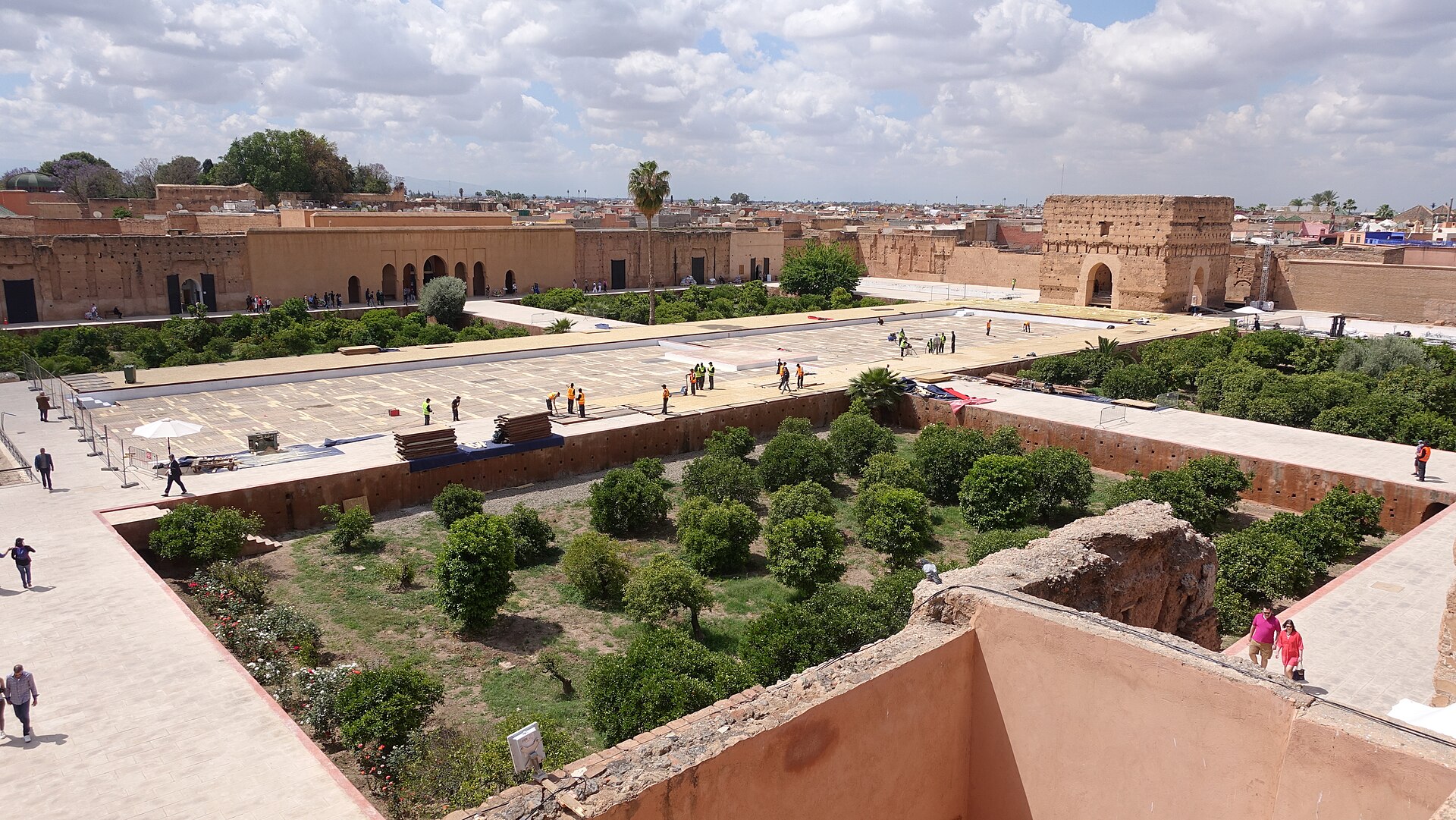
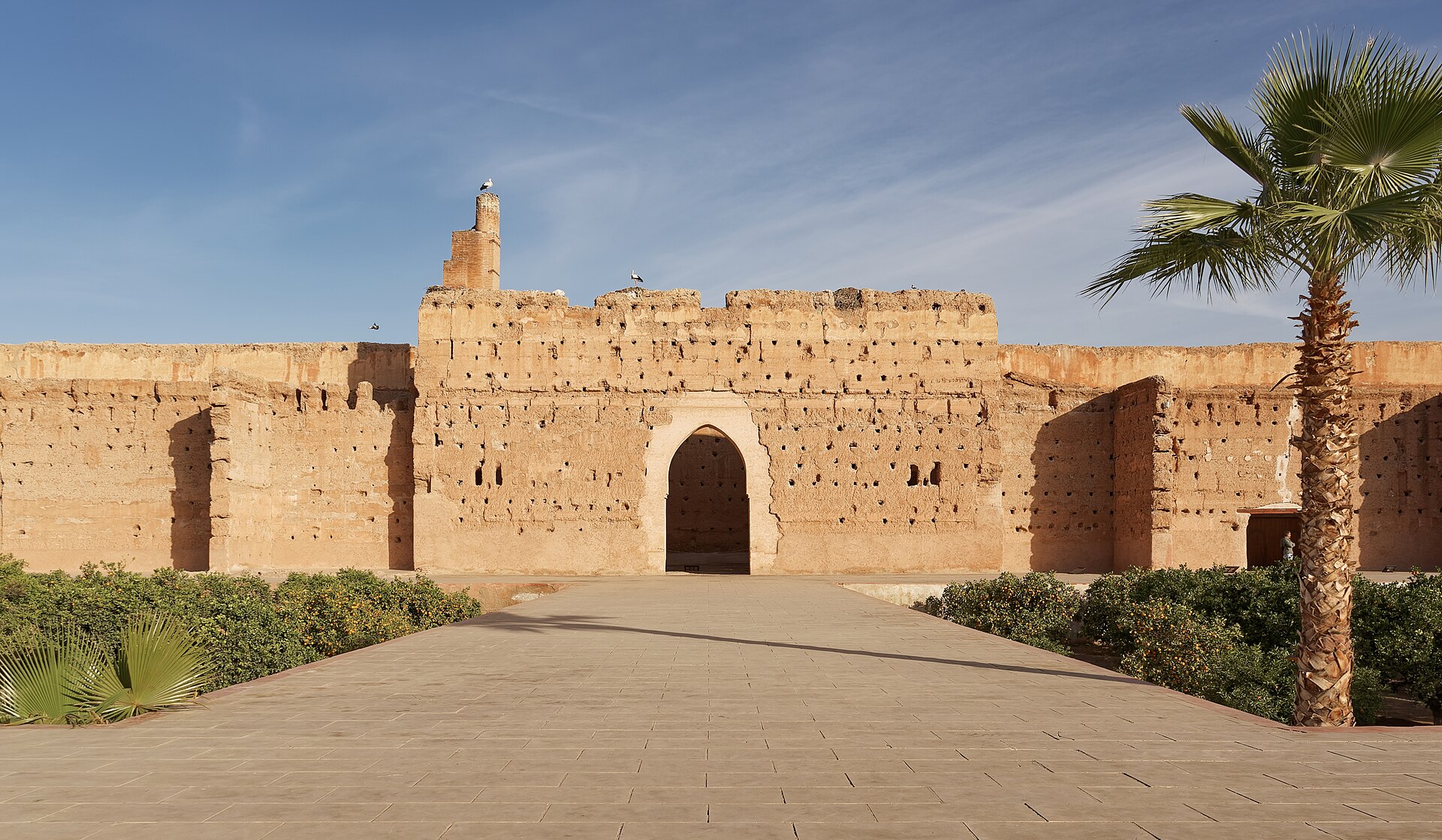
The El Badi Palace is today a vast walled enclosure of ruins in the heart of Marrakesh, its great courtyard open to the sky and surrounded by the bare remains of the pavilions and halls that once stood around it. Even in ruin, the scale of the complex is impressive, conveying the ambition of the palace in its prime.
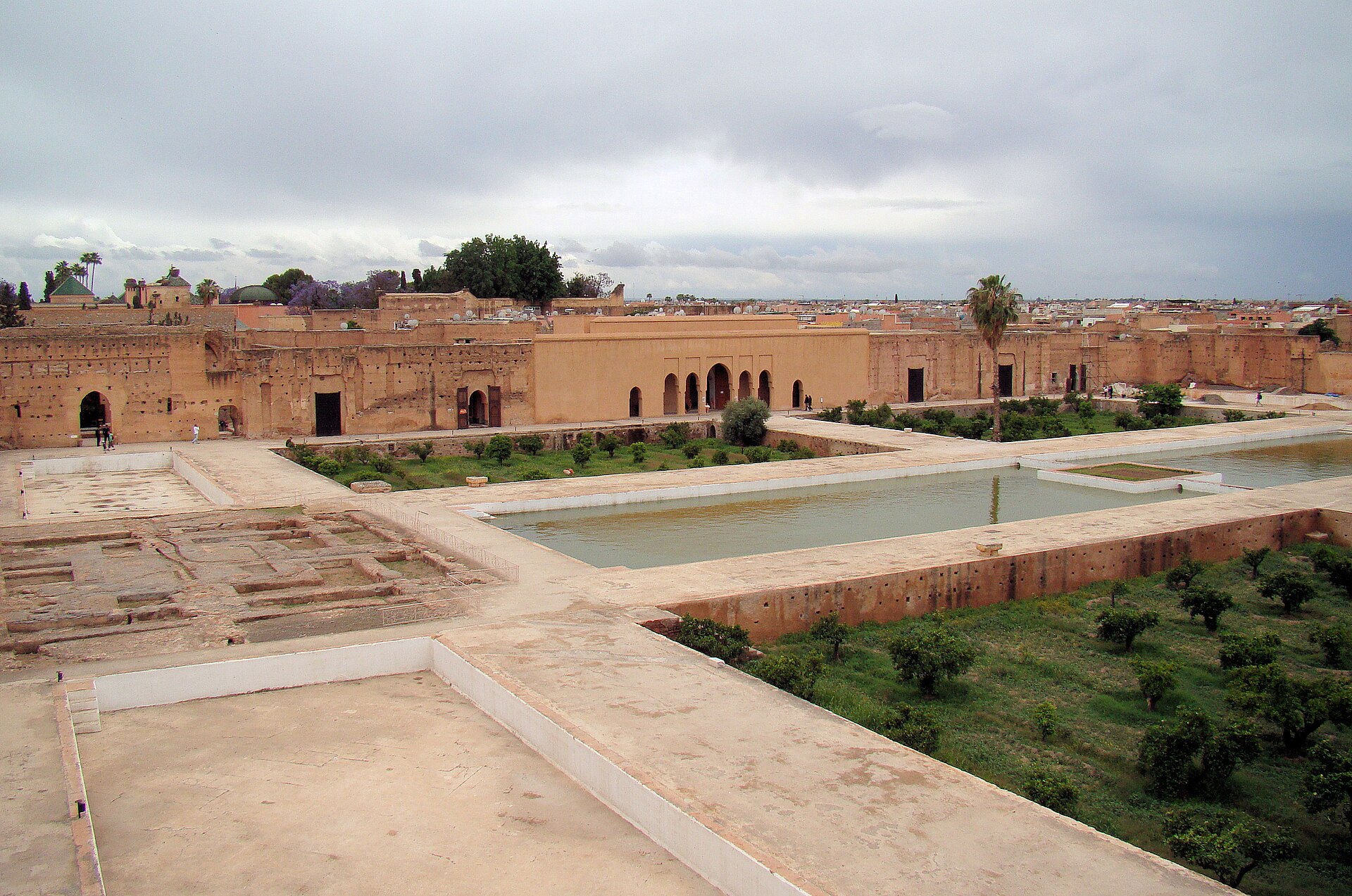
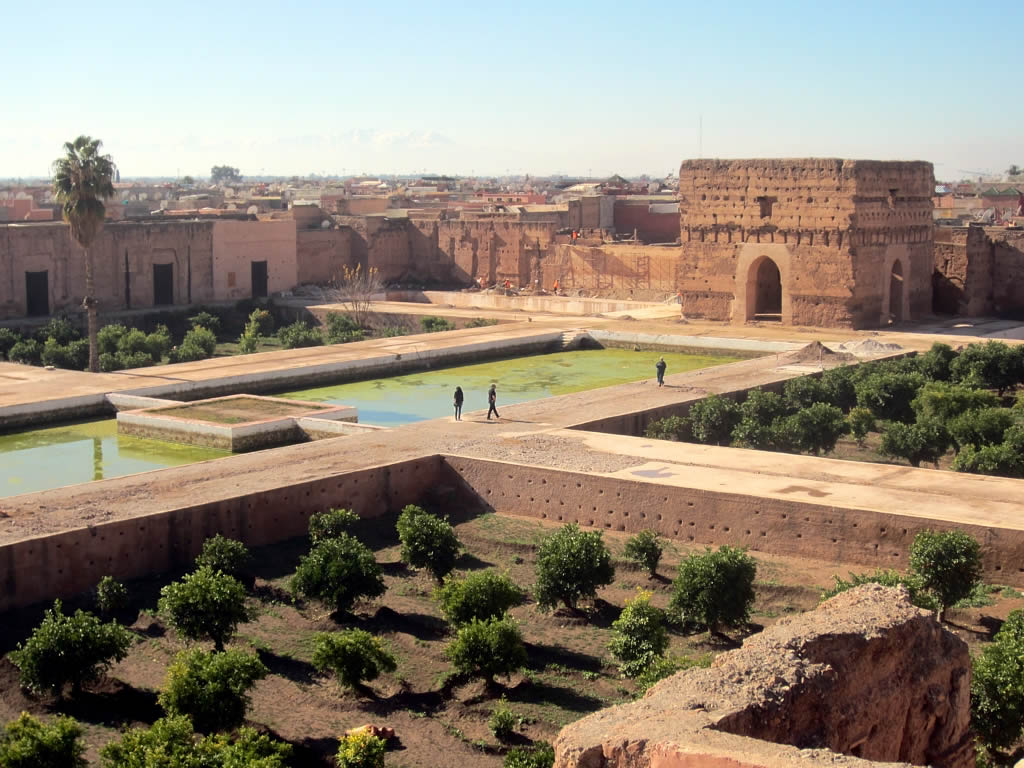
At the center lies an enormous sunken courtyard, once containing a great central pool and sunken gardens planted with orange trees, around which the palace was arranged. The pools and gardens, restored in part, give a sense of the original design, in which water and greenery played a central role.
Around the courtyard stood the pavilions and halls of the palace, of which only fragments and bare walls remain. In its prime these buildings were sheathed in marble, gold, and precious stone, but they were stripped long ago, leaving the red earthen structures that survive today.
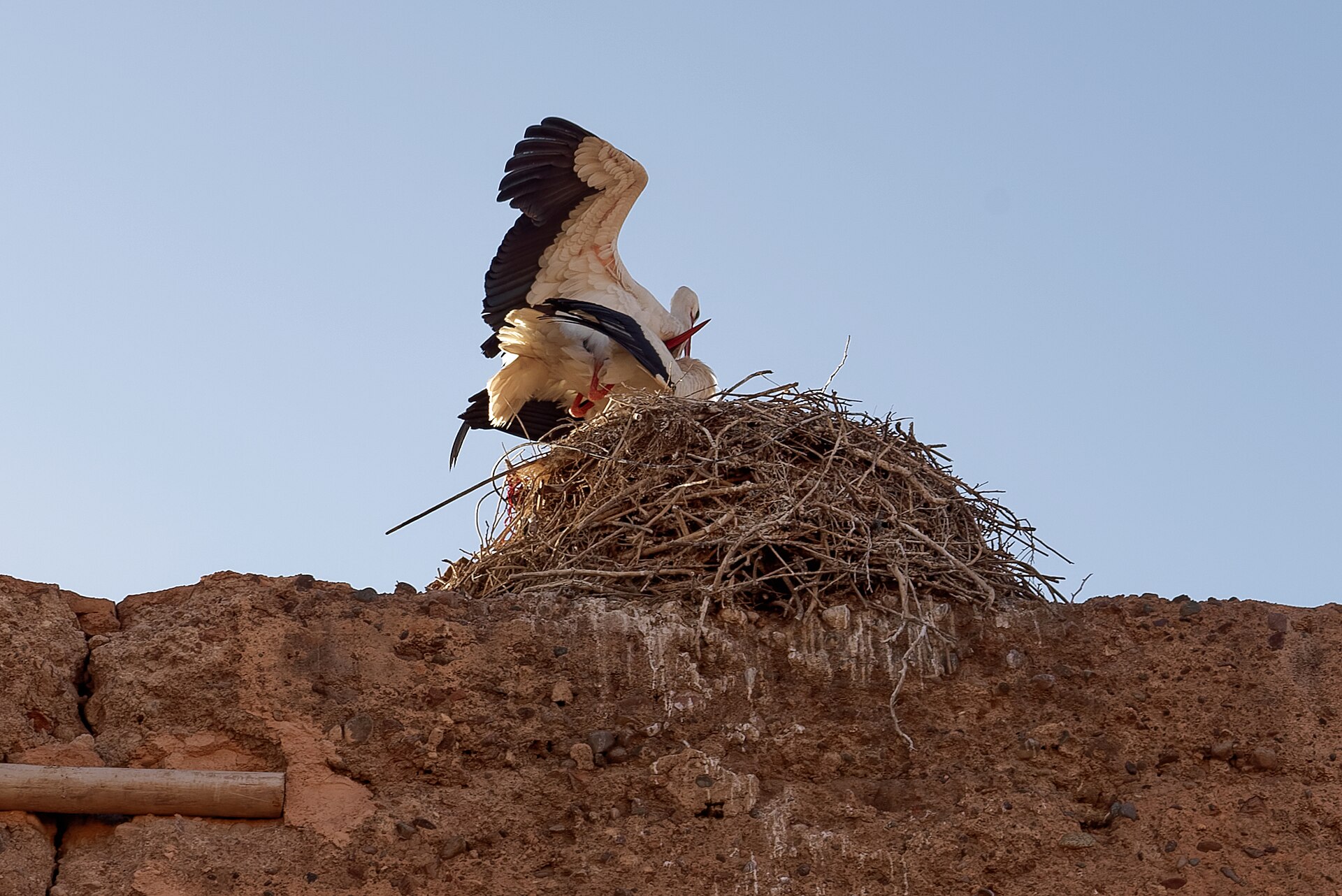
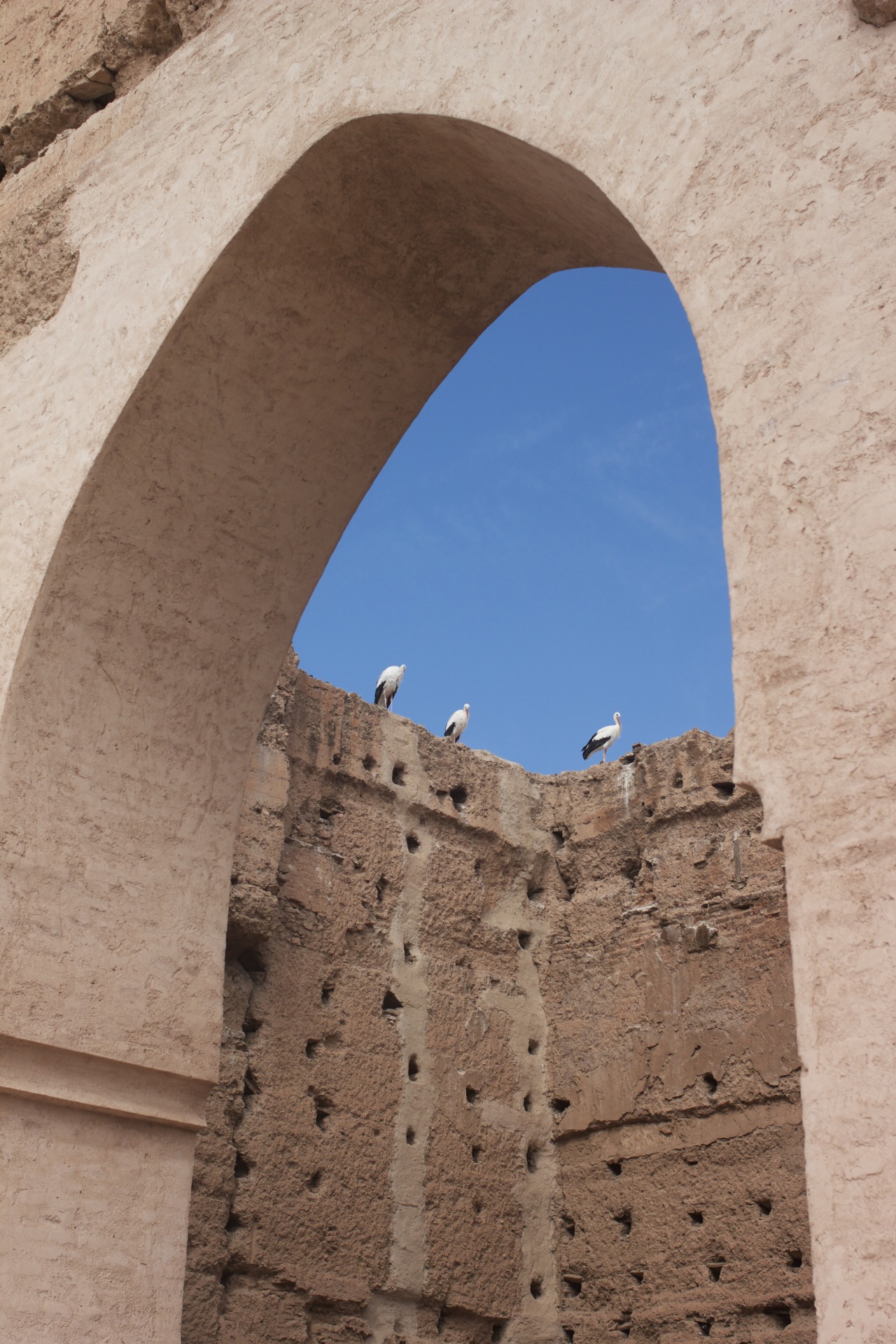
The bare walls are now home to storks, whose great nests crown the ramparts and whose presence has become one of the characteristic sights of the ruins. The birds, wheeling above the roofless palace, add to the atmosphere of romantic desolation that pervades the site.
For the visitor, the El Badi Palace offers a powerful and evocative experience, the ruins of a once-incomparable palace open to the sky, where imagination must supply the vanished splendor. Its scale, its sunken gardens, and its haunting atmosphere make it one of the most memorable monuments of Marrakesh.
The El Badi makes a poignant close to this Moorish group, for where the Alhambra and the Alcazar survive with their decoration largely intact, El Badi shows the opposite fate, a palace of equal ambition reduced to its bare bones. Seen together, the three reveal both the shared splendor of the western Islamic tradition and the different destinies that can await even the greatest buildings, some preserved as living treasures, others stripped to ruins within a lifetime of their making.
The Saadian Dynasty
The palace was built by the Saadian dynasty, who ruled Morocco in the sixteenth and seventeenth centuries and who made Marrakesh their capital at the height of their power. The Saadians were a sharifian dynasty, claiming descent from the Prophet, and under them Morocco enjoyed a period of wealth, power, and cultural flowering.

The Saadians came to power at a time when Morocco was threatened by both the Ottoman Turks to the east and the Iberian powers, Portugal and Spain, from across the sea. By resisting these threats and uniting the country, the dynasty established Morocco as an independent power, distinct from the Ottoman world and from Christian Europe.
Under the Saadians, Marrakesh flourished as a capital of art, learning, and trade, adorned with mosques, tombs, and palaces. The dynasty’s wealth, drawn from trade and from control of the routes across the Sahara, funded a golden age of building, of which the El Badi Palace was the crowning achievement.
The Saadians are remembered for their resistance to foreign domination and for their cultural patronage, which left Marrakesh with some of its finest monuments, including the exquisite Saadian Tombs as well as the El Badi Palace. Their reign was a high point in the history of independent Morocco.
The El Badi Palace is the supreme monument of Saadian ambition, built at the very height of the dynasty’s power and wealth. Its rise and fall mirror the fortunes of the dynasty itself, which flourished brilliantly and then declined, leaving its great palace to be stripped by the rulers who followed.
The Saadian achievement in resisting both the Ottomans and the Iberian powers deserves emphasis, for it is the reason Morocco alone among the lands of North Africa never fell under Ottoman rule and preserved its own distinct dynastic tradition. That independence, hard-won on the battlefield, is the political foundation on which the splendor of the El Badi rested, and it gives the palace its significance as a monument of Moroccan sovereignty as much as of royal luxury.
Ahmad al-Mansur and the Battle of the Three Kings
The builder of the palace was the Saadian sultan Ahmad al-Mansur, one of the greatest rulers in Moroccan history, whose reign in the late sixteenth century marked the zenith of the dynasty. He built the El Badi Palace to celebrate a great victory and to proclaim the glory of his reign.
Al-Mansur came to power in the aftermath of the Battle of the Three Kings, a momentous clash in which a Portuguese invasion of Morocco was crushed and three kings, the Portuguese king and two rival Moroccan claimants, died. The victory secured Moroccan independence and brought al-Mansur to the throne amid triumph.
The battle had far-reaching consequences, for the death of the Portuguese king without an heir led in time to the absorption of Portugal by Spain, while for Morocco it confirmed the power of the Saadian dynasty. Al-Mansur, whose title means the Victorious, began his great palace in the flush of this triumph.
Al-Mansur’s reign was a period of Moroccan power and ambition, in which the sultan maintained diplomatic relations with the powers of Europe and extended Moroccan influence across the Sahara. His wealth and prestige, at the height of the Saadian golden age, made possible the building of the incomparable palace.
In the El Badi Palace, Ahmad al-Mansur created a monument worthy of his victory and his power, a palace designed to be the wonder of the age. Its construction, over many years and at enormous expense, was the great project of his reign, the physical expression of the triumph and the glory of the Saadian sultanate.
The reach of al-Mansur’s ambition is worth pausing on, for few rulers of his age thought on so grand a scale. He corresponded with the queen of England and the powers of Europe, sent an army across the Sahara to seize the gold of the Songhai, and dreamed of yet greater conquests, and the El Badi Palace was the architectural expression of that boundless ambition. It was meant to announce to the world that Morocco, under the Saadians, stood among the great powers of the earth.
Gold, Sugar, and the Wealth of Empire
The extraordinary splendor of the El Badi Palace was made possible by the immense wealth of the Saadian state at its height, wealth drawn from trade, from the sugar industry, and above all from a great military expedition across the Sahara. This wealth funded the lavish materials that made the palace incomparable.
Under al-Mansur, Morocco grew rich from the trade in sugar, produced in the country and exported to Europe, and from the trans-Saharan trade in gold and other goods. The sultan’s control of these sources of wealth gave him the means to build on a scale and with a magnificence rarely matched.
The greatest source of the palace’s gold was a remarkable military expedition that al-Mansur sent across the Sahara to conquer the wealthy Songhai empire on the Niger River, a campaign that brought back enormous quantities of gold and captives. This treasure helped to finance the building of the palace.
Contemporary accounts held that al-Mansur paid for the palace with the gold of the Sudan, and he was given the title the Golden for the wealth that flowed to him from across the desert. The El Badi was, in a real sense, built with the riches of empire, drawn from Morocco’s reach across the Sahara.
This wealth allowed al-Mansur to import the costliest materials from across the world for his palace, marble from Italy, and precious stones and metals from many lands. The El Badi Palace was thus a monument not only to a military victory but to the commercial and imperial wealth of Morocco at the height of the Saadian age.
There is a grim irony in the sources of the palace’s splendor, for the gold that gilded its halls came in large part from the conquest of a distant African empire, a campaign that brought Morocco wealth but also captives and suffering. The beauty of the El Badi, like that of so many palaces in this series, rested on the hard realities of war and empire, and an honest account holds the magnificence and its cost together.
Building the Wonder of the Age
The construction of the El Badi Palace was a vast undertaking that occupied much of al-Mansur’s reign, employing craftsmen and materials gathered from many lands. The sultan spared no expense in creating a palace that would proclaim his glory and astonish all who saw it.
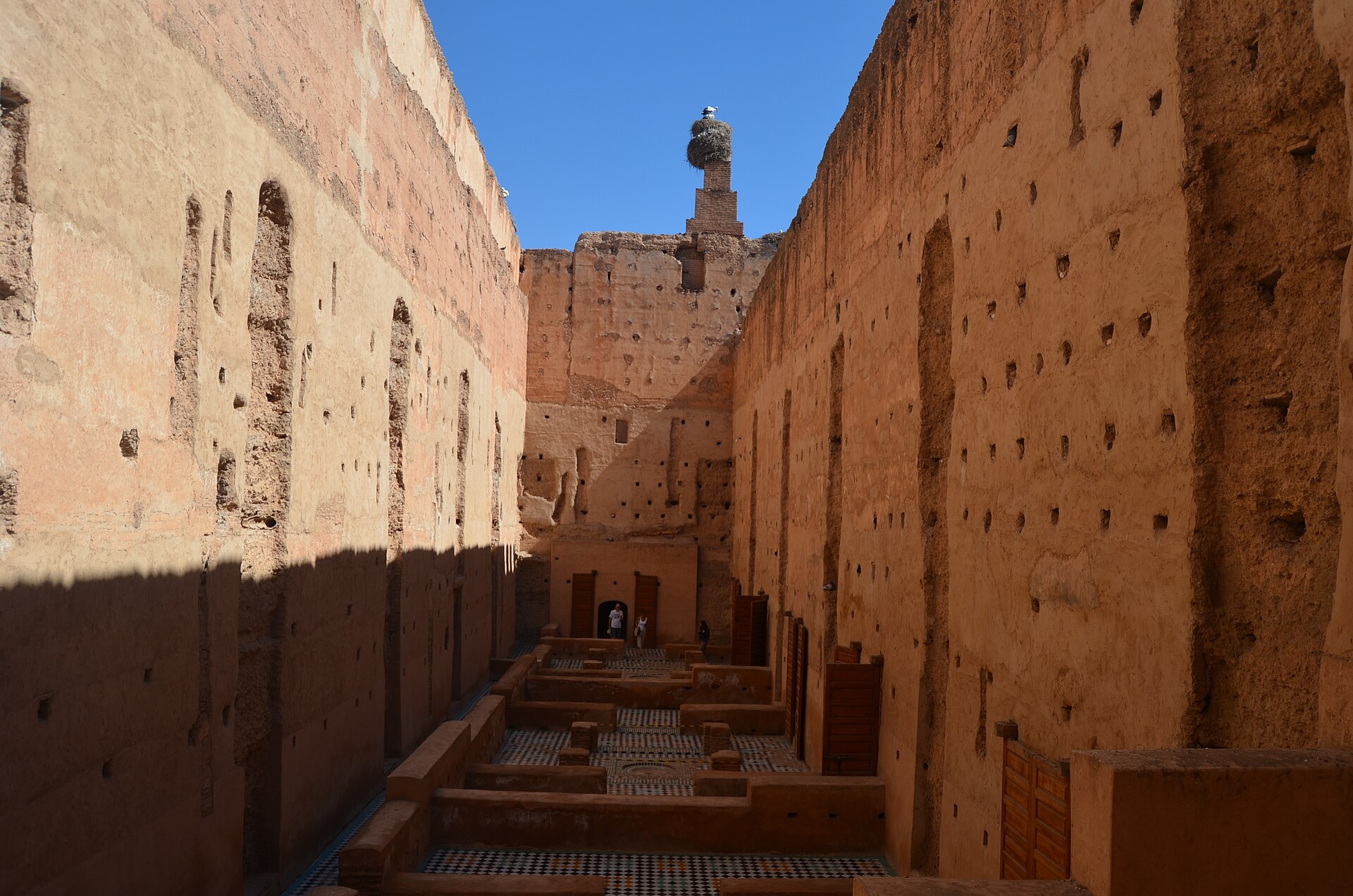
The palace was built to a grand plan, centered on an enormous courtyard with a great central pool and sunken gardens, surrounded by pavilions and halls. The scale of the complex was immense, designed for the grand ceremonies of the sultanate and for the reception of ambassadors and guests.
The finest materials were imported for the palace, above all marble from Italy, which was said to have been paid for by its weight in sugar, an emblem of the exchange of Moroccan wealth for European luxury. Gold, onyx, and precious stones adorned the walls and floors, creating interiors of dazzling richness.
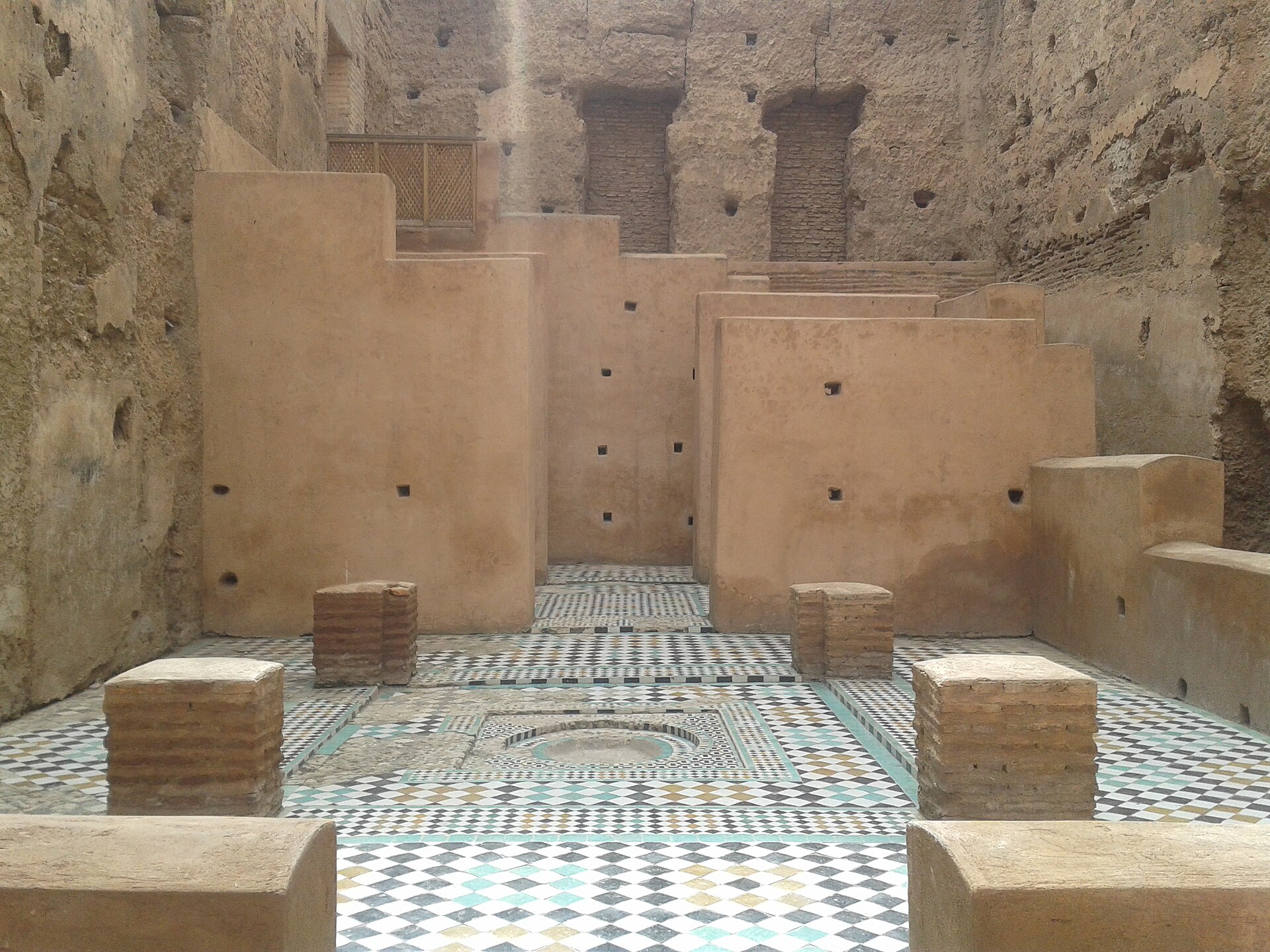
Craftsmen worked the palace in the finest traditions of Moroccan and Andalusi art, with carved plaster, glazed tile, and intricate ornament, though these have largely perished with the stripping of the palace. In its prime the El Badi combined the wealth of imported materials with the mastery of Moroccan craftsmanship.
The result was a palace regarded in its time as one of the wonders of the world, a fitting monument to the power and wealth of al-Mansur and the Saadian dynasty. The name El Badi, the Incomparable, expressed the ambition of the building, which was meant to have no equal among the palaces of the age.
The detail that the Italian marble was paid for by its weight in sugar has become one of the emblematic stories of the palace, and true or embellished, it captures something real about the Saadian economy. Morocco’s sugar was a luxury prized in Europe, and the exchange of that sweetness for the cold marble of Italy is a vivid image of a kingdom converting the produce of its land into the splendor of its court.
The Great Courtyard and Pools
The heart of the El Badi Palace was, and remains, its enormous central courtyard, a vast rectangular space arranged around a great central pool and sunken gardens. Even in ruin, the scale of this courtyard conveys the grandeur of the palace and the ambition of its builder.
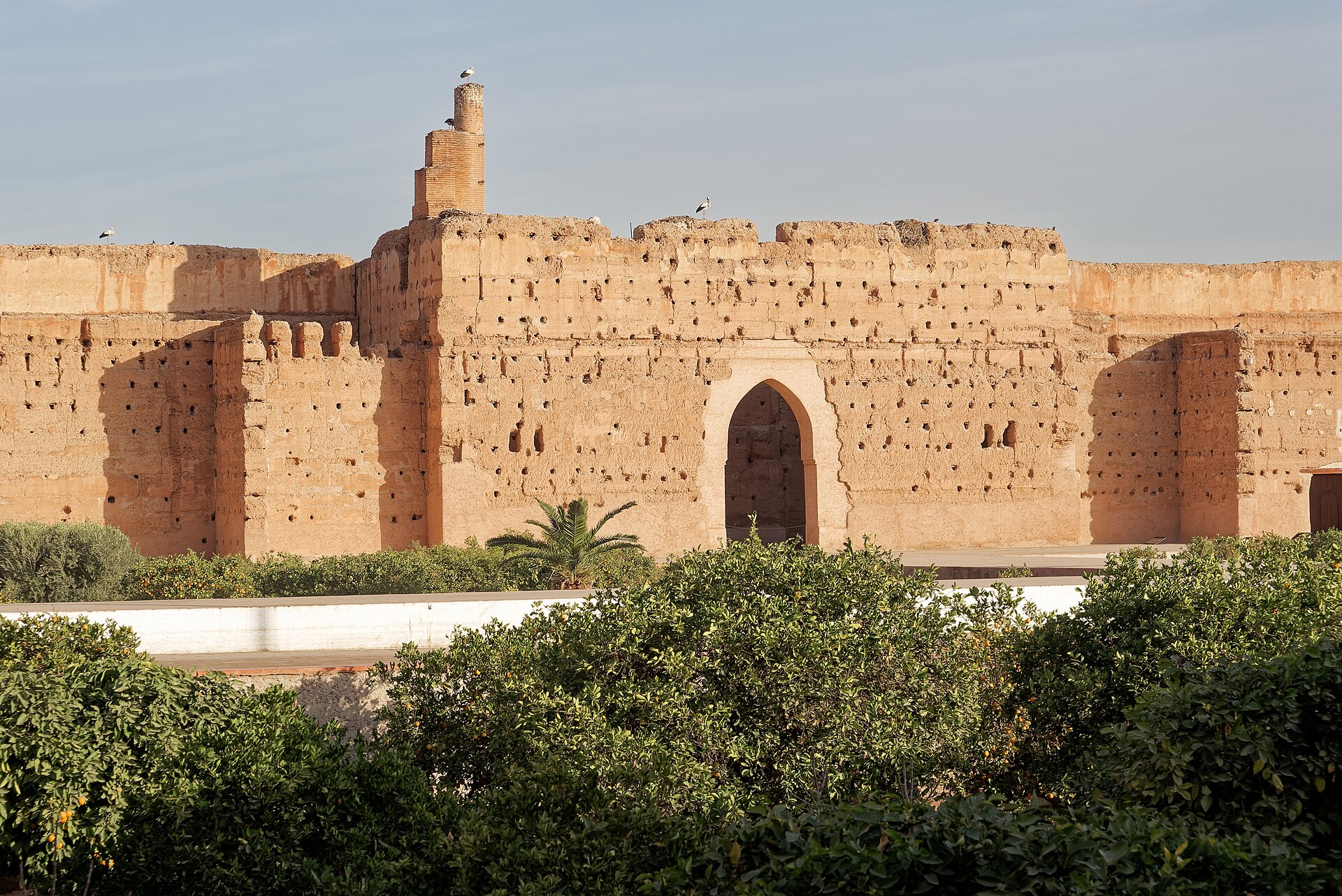
At the center lay a huge ornamental pool, flanked by smaller pools and by sunken gardens planted with orange trees, so that the fragrance and greenery of the gardens filled the court. Water and greenery, in the tradition of the Islamic paradise garden, were central to the design of the palace.
The sunken gardens were planted below the level of the surrounding walkways, so that a person standing on the paths looked out over the tops of the orange trees, a characteristic feature of Moroccan and Andalusi garden design. Channels of water fed the pools and the gardens, bringing coolness to the great court.
The central pool was of immense size, and could reportedly be used for spectacles on the water, a display of the wealth and ingenuity that made the palace famous. The command of water on such a scale, in a hot climate, was both a practical achievement and a symbol of the sultan’s power.
Today the great courtyard, with its restored central pool and sunken gardens, is the heart of the ruins and the space that best conveys the original grandeur of the palace. Open to the sky and surrounded by bare red walls, it remains a place of striking beauty and haunting emptiness.
Standing in the vast empty courtyard today, it takes an effort of imagination to picture it as it was, the great pool shining, the sunken gardens fragrant with orange blossom, the surrounding pavilions blazing with gold and marble. But the effort is worth making, for only then does the scale of what was lost become clear, and the bare red walls around you resolve into the frame of a vanished paradise.
The Pavilions and Halls
Around the great courtyard stood the pavilions and halls of the palace, structures of the utmost magnificence in which the sultan held his receptions and ceremonies. The grandest of these was a great reception pavilion, richly adorned, from which the sultan presided over the life of the court.
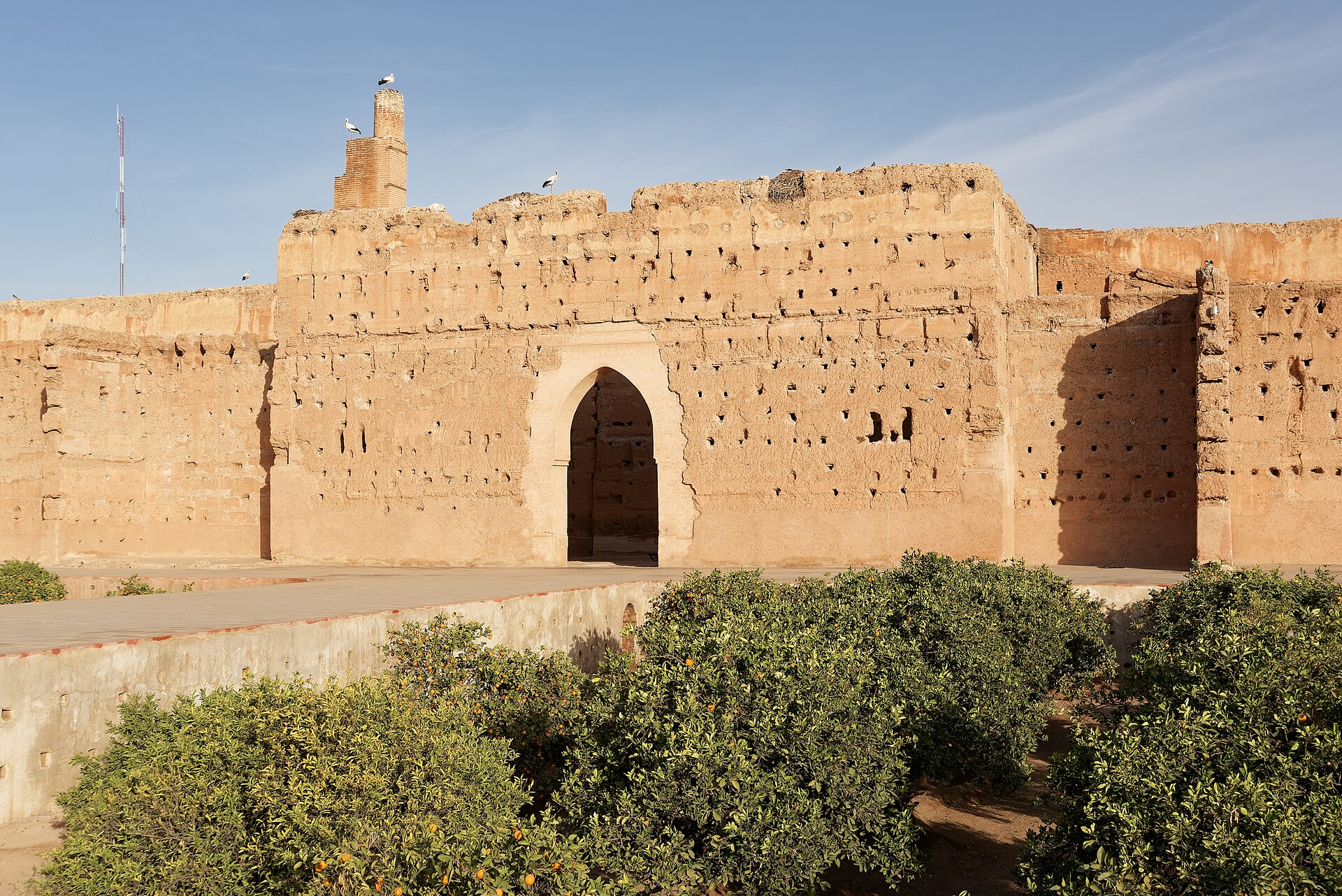
The pavilions were given evocative names and were sheathed in the costliest materials, their walls and floors covered with marble, their ceilings gilded, their surfaces worked with carved plaster and tile. In their prime they were among the most sumptuous interiors in the Islamic world.
The principal pavilion, a great hall on the courtyard, was the setting for the sultan’s grandest ceremonies, including the reception of ambassadors and the celebration of festivals. Here al-Mansur displayed the wealth and majesty of his reign to visitors from across the world.
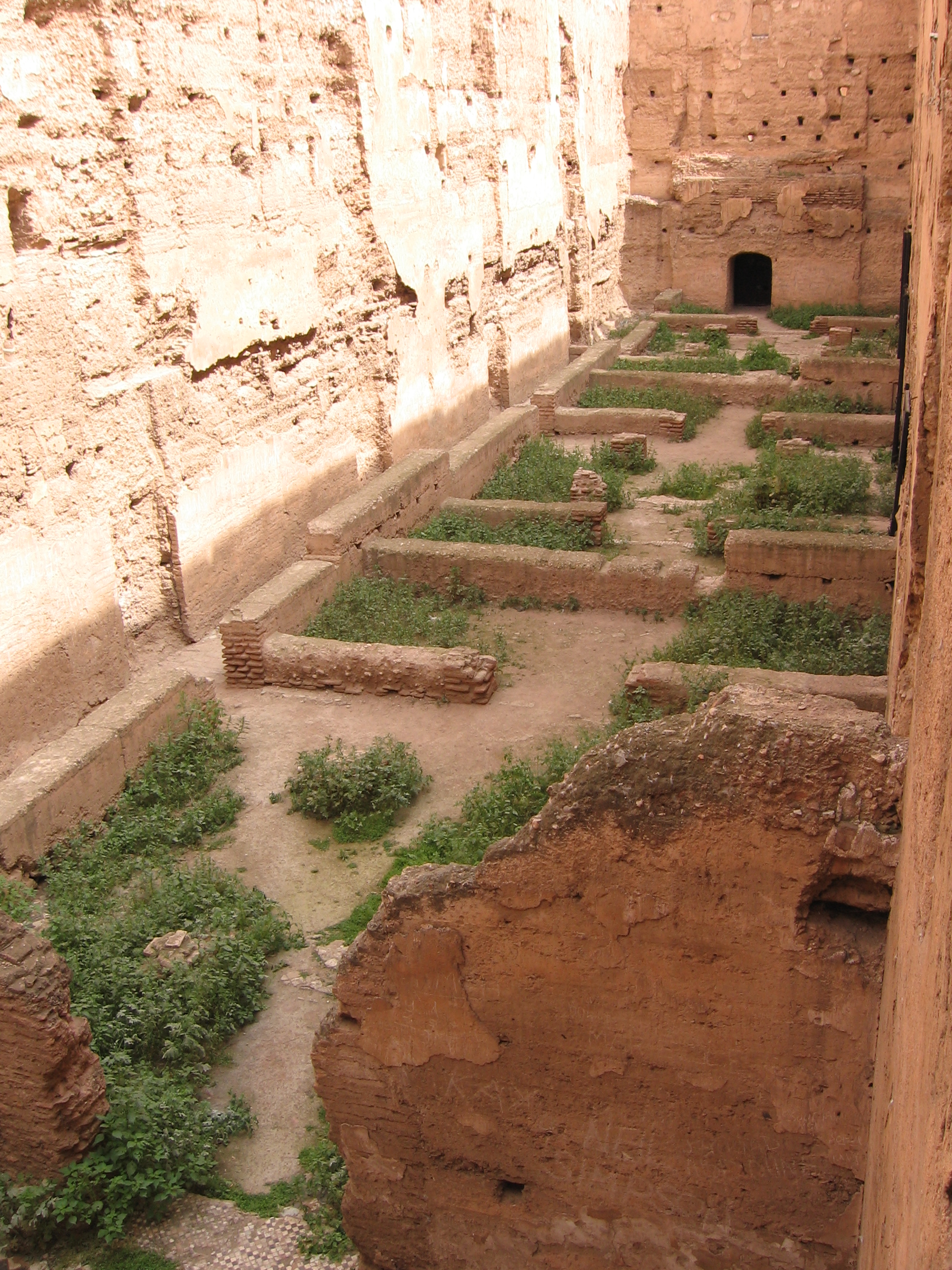
Underground passages and chambers ran beneath parts of the palace, serving practical functions and connecting different areas of the complex. These substructures, some of which survive, reveal the sophistication of the palace’s design beneath the vanished splendor above.
Of these once-magnificent pavilions only bare walls and fragments now remain, stripped of their marble and gold, but their scale and their positions around the courtyard still convey the arrangement of the palace. Imagination must supply the vanished richness that once made these halls the wonder of the age.
The evocative names given to the pavilions, drawn from the materials that adorned them or the pleasures they offered, are almost all that survives of their character, the buildings themselves being gone. Yet even these names, recorded by those who saw the palace in its glory, help to conjure the vanished halls, each a world of marble and gold, and they remind us how completely the stripping of the palace erased what was once among the wonders of the age.
The Splendor of the Court
The El Badi Palace was built above all for display, as a stage for the ceremonies through which the Saadian sultans proclaimed their power and majesty. Its grand courtyard and sumptuous pavilions were designed to overwhelm visitors with the wealth and glory of the Moroccan sultanate.
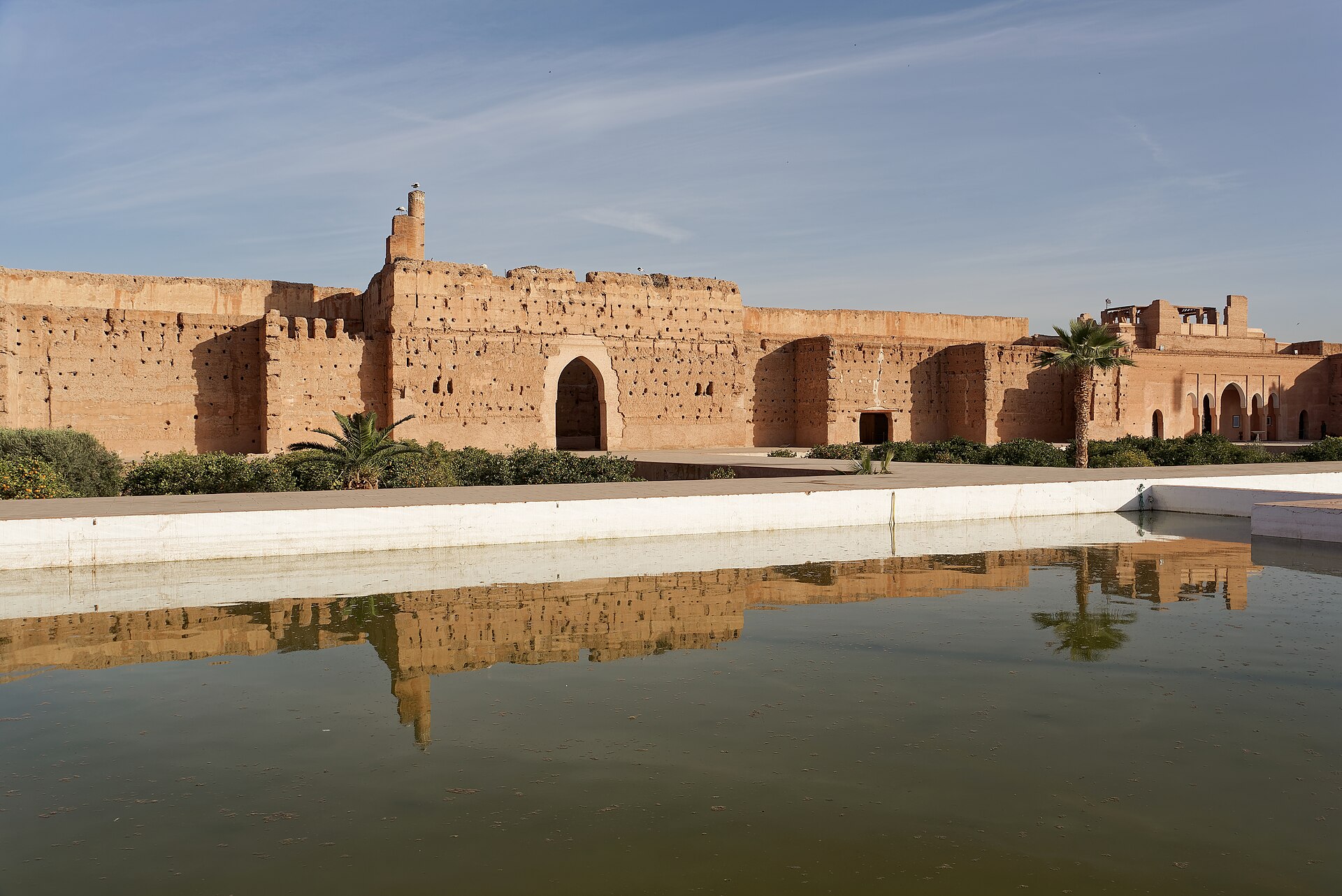
The reception of ambassadors was among the most important functions of the palace, and al-Mansur used its splendor to impress envoys from the powers of Europe and beyond. To be received amid such magnificence was to be shown the greatness of the sultan and the wealth of his realm.
A famous story tells that at the inauguration of the palace, a court jester or a wise man, asked his opinion of the magnificent building, predicted that it would one day make a fine heap of ruins, a prophecy that would prove all too accurate. The tale captures the pride of the palace and the transience that would overtake it.
The ceremonies of the court, the festivals, the receptions, and the displays of wealth, expressed the ideology of the Saadian sultanate, in which the ruler stood at the center of a magnificent and pious realm. The palace was the setting for this theater of power, designed to awe subjects and foreigners alike.
For the century of its splendor, the El Badi Palace was the ceremonial heart of Saadian Morocco, a place of dazzling display where the sultan received the world. Its later stripping and ruin only heighten, in retrospect, the sense of the vanished magnificence that once filled its courts.
The Stripping of the Palace
The glory of the El Badi Palace endured for barely a century, for after the decline of the Saadian dynasty it was deliberately stripped of its treasures by a later ruler. In the late seventeenth century the Alaouite sultan Moulay Ismail ordered the palace dismantled and its materials carried off.
Moulay Ismail was building a magnificent new capital at Meknes, and he plundered the El Badi Palace for its marble, gold, and precious materials to adorn his own great works. Over a period of years the palace was systematically stripped, its treasures removed to the new capital.
The stripping of the palace was thorough, reducing the incomparable El Badi to the shell of ruins that survives today. The marble that had been paid for with sugar, the gold of the Sudan, and the precious stones that had adorned the halls were all carried away, leaving only the bare earthen structures.
The destruction of the palace was in part a political act, for Moulay Ismail, founder of a new dynasty, had reason to erase the great monument of his Saadian predecessors even as he used its riches for his own glory. The stripping of the El Badi thus marked the passing of power from one dynasty to another.
The deliberate dismantling of the palace fulfilled, in a sense, the prophecy of the fine heap of ruins, transforming the wonder of the age into the evocative shell that survives. The El Badi Palace stands as a monument to the transience of earthly splendor, its glory deliberately undone within a century of its creation.
The stripping of the El Badi by Moulay Ismail is one of the great acts of architectural cannibalism in history, a deliberate transfer of one dynasty’s glory to another’s. Yet there is a strange justice in the way it left behind not nothing but a magnificent ruin, one that speaks more eloquently of the transience of power than any intact palace could. The bare walls and open courts say, better than gold ever could, that no splendor lasts forever.
The Ruins and the Storks
The El Badi Palace that survives today is a great enclosure of ruins, its bare red walls surrounding the vast sunken courtyard, open to the sky. The romantic desolation of the site, once the most magnificent palace in Morocco and now a roofless shell, gives it a powerful and melancholy atmosphere.
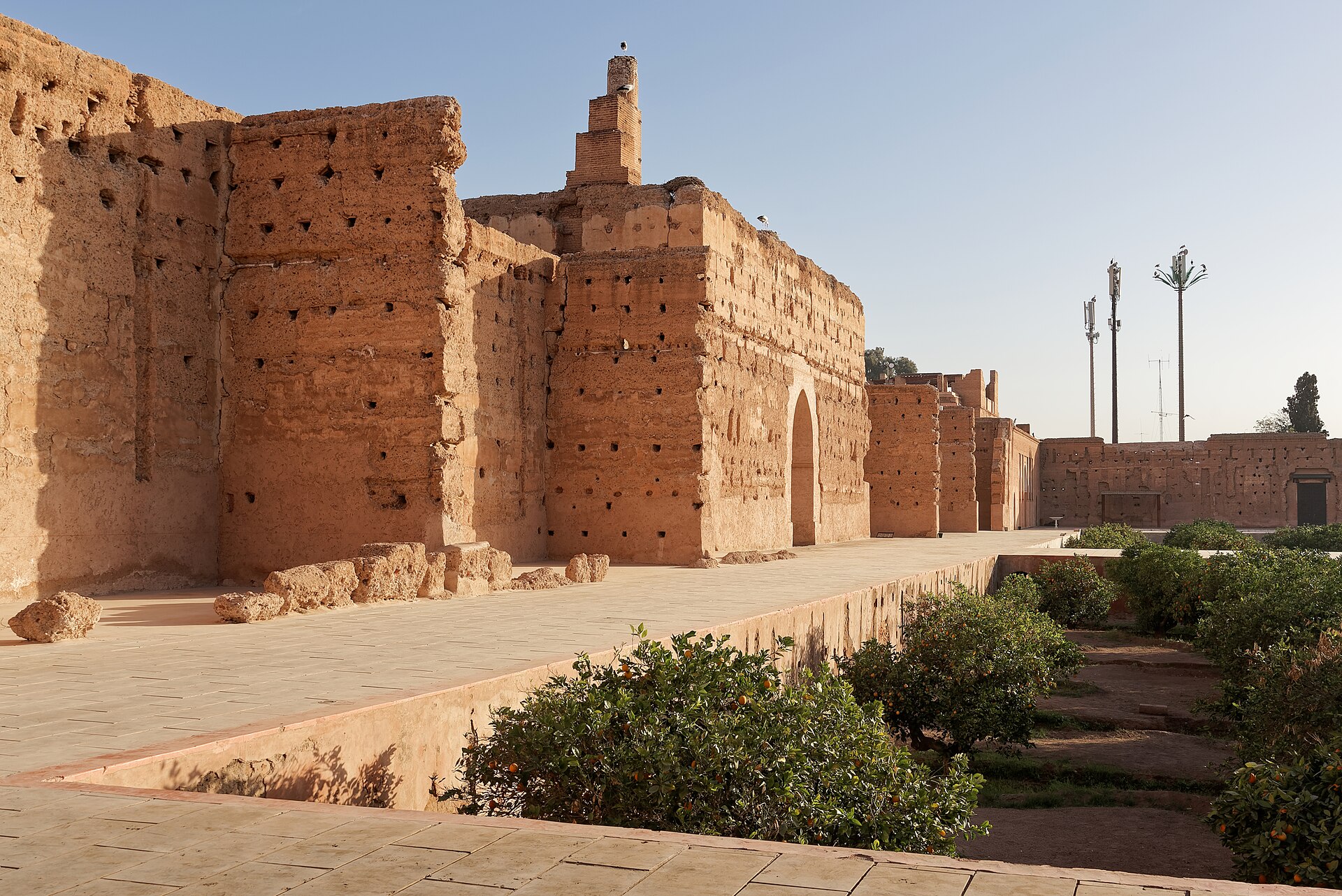
The bare walls of the palace have become a home for storks, whose large nests crown the ramparts and whose presence is one of the characteristic sights of the ruins. The great birds, standing on their nests or wheeling above the walls, add life and a strange beauty to the desolate site.
The sunken gardens and central pool have been restored in part, planted again with orange trees, so that a little of the original character of the great courtyard can be sensed. Walking among the ruins, the visitor can trace the outline of the vanished palace and imagine its former splendor.
From the ramparts of the ruins, reached by stairs, there are fine views over the palace and across Marrakesh to the Atlas Mountains beyond. The elevated walkways give a sense of the scale of the complex and a vantage point over the storks and their nests on the walls.
The ruins of the El Badi Palace are among the most atmospheric monuments of Marrakesh, a place where the grandeur and the transience of the Saadian age are equally present. Open to the sky, crowned with storks, the incomparable palace endures as a haunting memorial to vanished magnificence.
There is a particular quality to the light in the ruins toward the end of the day, when the low sun warms the red walls and the storks settle on their nests against a deepening sky. In that hour the melancholy of the place turns almost to peace, and the El Badi, stripped of its gold, reveals a beauty its builders never intended, the grave and simple beauty of great architecture reduced to its essential forms.
The Art of the Saadian Age
To understand what the El Badi Palace once was, it helps to look at the surviving art of the Saadian age elsewhere in Marrakesh, above all the exquisite Saadian Tombs, which escaped the stripping that reduced the palace to ruins. There the decoration that once adorned the El Badi can still be seen in its full glory.
The Saadian Tombs, the burial place of the dynasty including Ahmad al-Mansur himself, are a jewel of Moroccan art, their chambers adorned with carved plaster, glazed tile, and columns of imported Italian marble. Sealed and forgotten for centuries, they were rediscovered in the twentieth century almost intact.
The decoration of the tombs, with its intricate carved plaster, its honeycomb muqarnas vaulting, its geometric tilework, and its fine marble, represents the height of Saadian art, the same traditions that once covered the walls of the El Badi Palace. In the tombs, that vanished splendor survives.
This art belongs to the wider tradition of the western Islamic world explored in this series, closely related to the art of al-Andalus seen in the Alhambra and the Alcazar. The craftsmen of Saadian Morocco inherited and continued the artistic legacy of Muslim Spain, and their work is among its finest expressions.
Seeing the Saadian Tombs alongside the ruins of the El Badi Palace allows the visitor to reconstruct, in imagination, the lost magnificence of the palace. What the storks now guard as bare walls was once covered with the exquisite decoration that survives in the tombs, a glimpse of the incomparable palace in its prime.
The Treasure of the Minbar
Among the treasures displayed within the El Badi Palace today is one of the great masterpieces of Islamic art, the minbar, or pulpit, of the Koutoubia Mosque of Marrakesh. This extraordinary object, preserved and exhibited in the palace, is one of the finest works of medieval craftsmanship in the Islamic world.
The minbar is a tall stepped pulpit of wood, intricately decorated with inlay and carving of astonishing fineness, created centuries before the palace itself for the great mosque of Marrakesh. It is a supreme example of the woodworker’s art, its surfaces covered with geometric marquetry and carved ornament.
The minbar was made, according to tradition, in Cordoba, the great center of Andalusi craftsmanship, and brought to Marrakesh, a link between the arts of al-Andalus and those of Morocco. Its presence in the palace connects the El Badi to the wider world of western Islamic art explored in this series.
After serving in the Koutoubia Mosque for centuries, the minbar was eventually moved to the El Badi Palace for its preservation and display, where it can be seen in a dedicated space. Its survival and its exhibition make it one of the highlights of a visit to the ruins.
The minbar adds to the El Badi Palace a treasure of the first rank, a masterpiece of Islamic art preserved within the ruins of the incomparable palace. It reminds the visitor that, though the palace itself was stripped, the site still guards objects of extraordinary beauty from the golden age of Moroccan and Andalusi art.
El Badi Today
Today the El Badi Palace is one of the principal monuments of Marrakesh and a major attraction for visitors to the city, who come to walk among its ruins, climb its ramparts, and imagine its vanished splendor. Despite its ruined state, or perhaps because of it, the palace remains deeply evocative.
The site is used for cultural events, including a famous annual festival of popular arts, its great courtyard providing a dramatic setting for performances. In this way the palace continues to serve as a place of gathering and spectacle, echoing, however faintly, its original role.
The El Badi Palace forms part of the historic medina of Marrakesh, which is inscribed on the UNESCO World Heritage List, recognized for its outstanding value as a great city of the Islamic world. The palace is among the treasures that make the old city one of the most celebrated in Africa.
For Morocco, the El Badi Palace is a monument of national history, recalling the golden age of the Saadian dynasty and the reign of Ahmad al-Mansur, one of the greatest of Moroccan rulers. Its ruins stand as a reminder of both the heights of Moroccan power and the transience of earthly glory.
To stand in the great sunken courtyard of the El Badi Palace, beneath the bare red walls and the circling storks, with the Atlas Mountains beyond, is to encounter one of the most haunting monuments of the Islamic world. The incomparable palace is long stripped of its treasures, but its ruins still speak of the vanished splendor of Saadian Marrakesh.
Palaces Nearby
The El Badi Palace completes a trio of great Islamic and Moorish palaces of the western Mediterranean. Travel across the strait to the last palace of Muslim Spain in Granada, or to the Christian palace of Moorish splendor in Seville, to continue the journey through this brilliant world.
You May Like
Changgyeonggung: The Gentle Garden Palace of Seoul


2 thoughts on “The El Badi Palace: The Incomparable Ruin of Saadian Marrakesh”