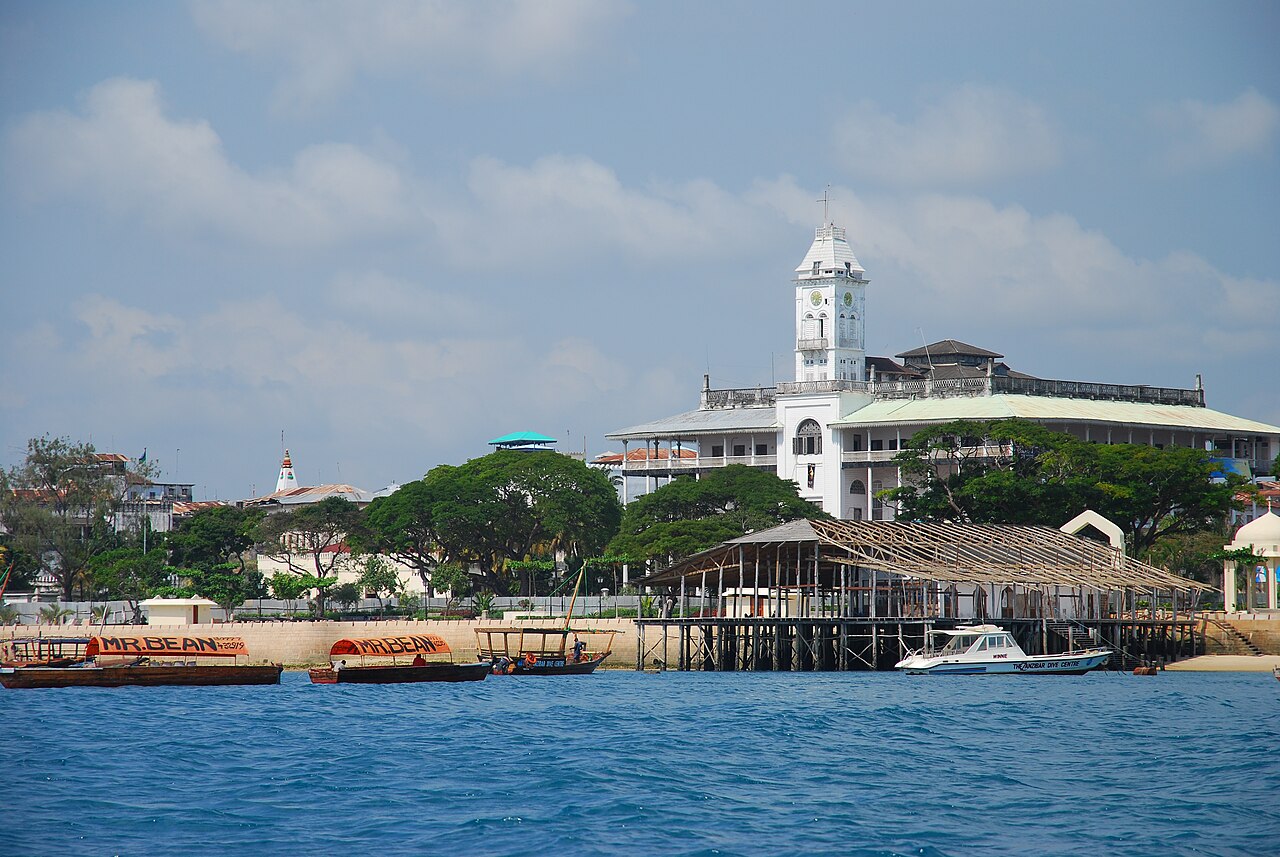
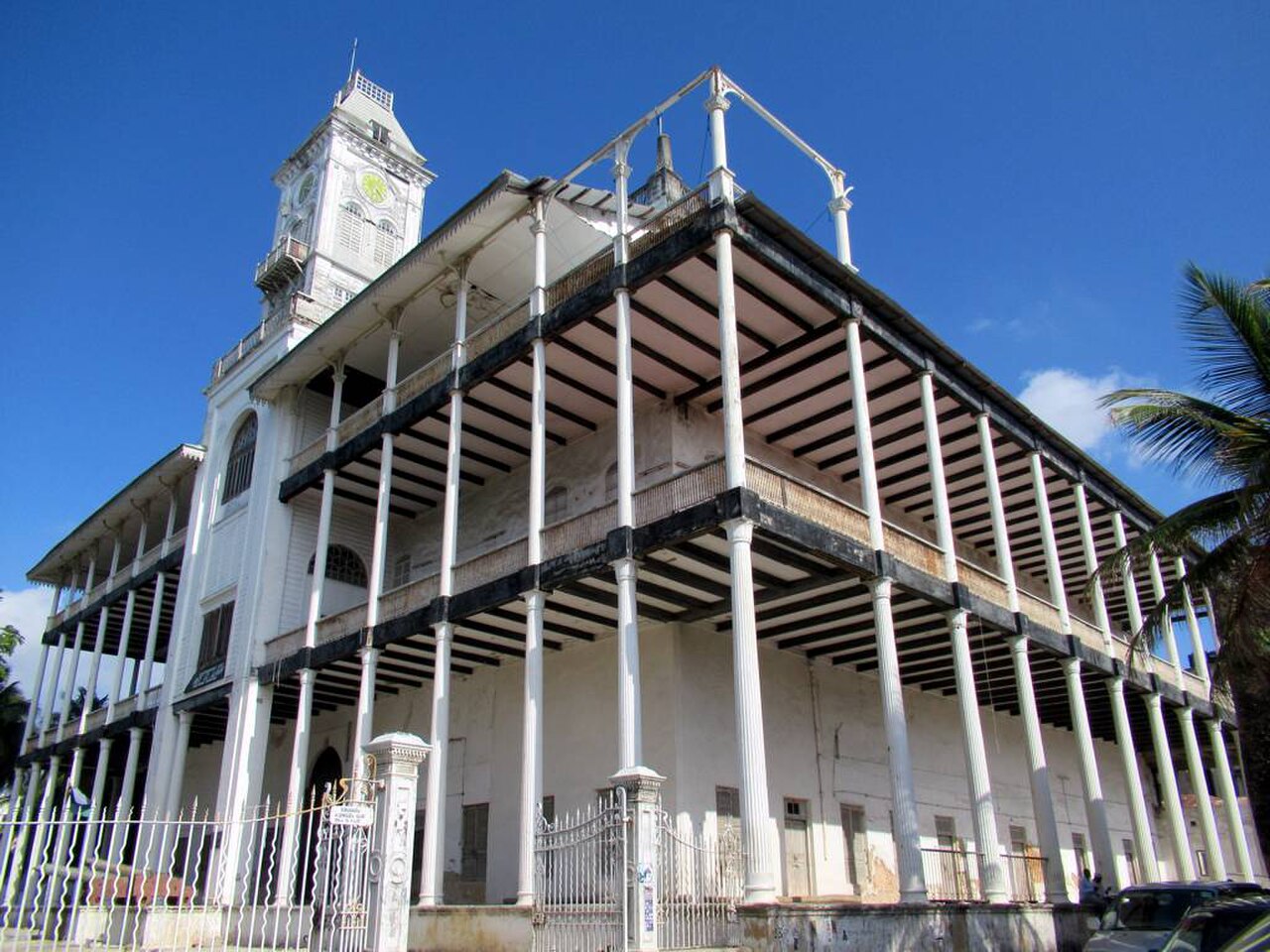
Stand on the seafront of Stone Town, on the island of Zanzibar, and one building refuses to let your eye move on. It rises in tier upon tier of slender pillars and deep verandas, wrapped in shade, crowned by a tall clock tower, its pale walls facing the Indian Ocean as if daring the sea to be more impressive. For well over a century this was the grandest structure on the whole East African coast, and the people who saw it built gave it a name that has stuck ever since: the House of Wonders.
Its proper name is Beit al-Ajaib, and it was raised in the 1880s as a ceremonial palace for the Sultan of Zanzibar, at a moment when this small island was one of the richest and most connected places in the western Indian Ocean. It was a house designed to astonish, the first building in the region to be lit by electricity, fitted with an electric lift, and supplied with running water, at a time when such things were marvels almost anywhere.
But the House of Wonders is more than a showpiece. Its story runs through the whole drama of nineteenth-century Zanzibar: the Omani sultans who ruled a maritime empire of cloves and commerce, the shadow of the slave trade that darkened that wealth, the shortest war in recorded history fought almost on its doorstep, and the long afterlife of the building as a museum of Swahili civilization. In the sections that follow you will get to know the palace and the world that produced it, a world where Arabia, Africa, India, and Europe met on a single crowded shore.
In This Article
- The Grandest House on the Coast
- The Sultan Who Built a Marvel
- Why They Called It the House of Wonders
- Verandas, Iron, and the Indian Ocean Style
- The Great Carved Doors of Zanzibar
- The Tower That Watches the Sea
- The Shortest War in History
- Cloves, Commerce, and a Darker History
- A Palace in a Living Maze
- From Palace to Museum
- Collapse, Loss, and the Work of Saving It
- The House of Wonders on Film
- Seeing the House of Wonders Today
The Grandest House on the Coast
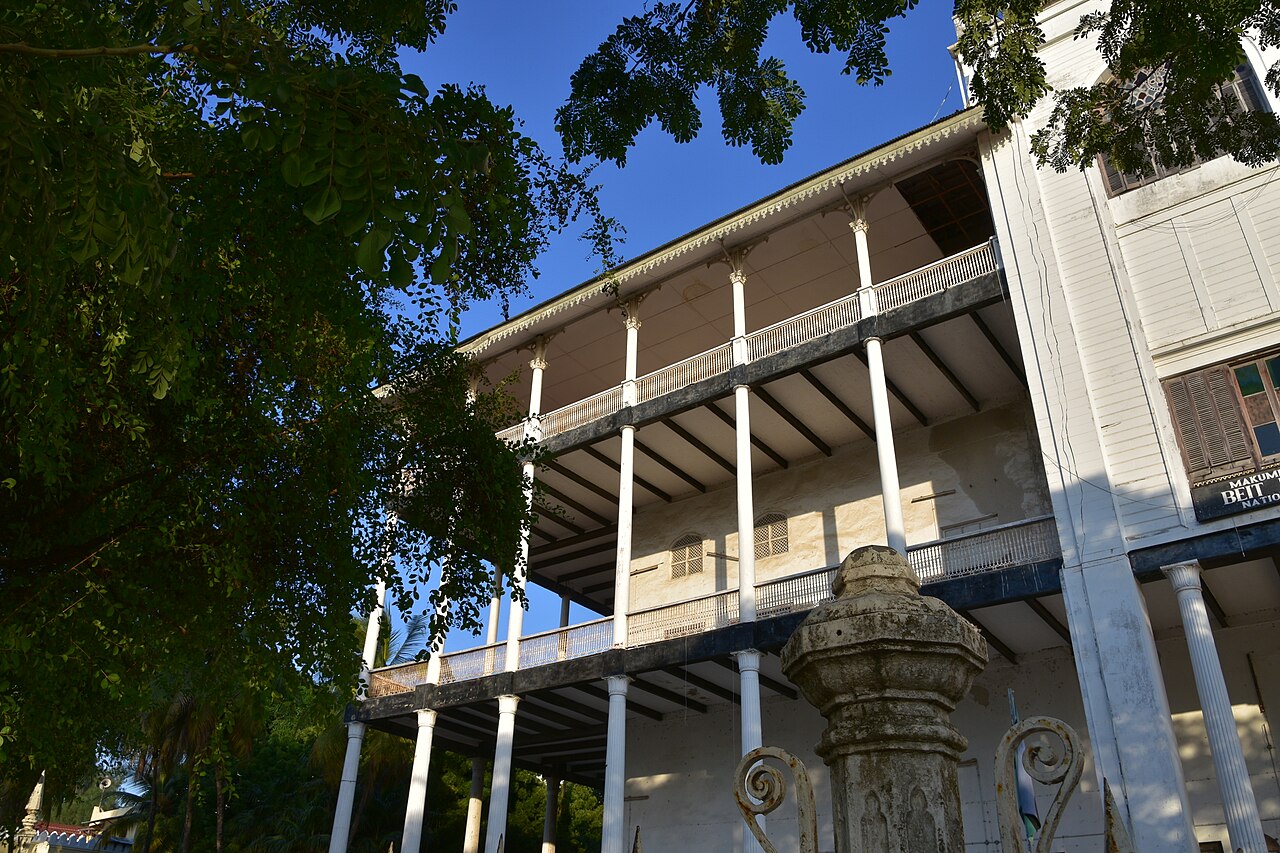
Approach the House of Wonders from the water, as generations of arriving travelers once did, and you understand at once why it earned its name. It stands right on the seafront of Stone Town, a great pale block of a palace lifted on rows of thin iron columns, its facades opened up into wide, shaded verandas that wrap around every floor. Above them rises a clock tower, and behind them the building climbs in ordered tiers, catching the sea breeze and throwing deep shadows across itself in the tropical light.
For most of its life it was simply the biggest and tallest building anyone on this coast had ever seen. In an age of low houses and narrow lanes, its sheer scale was a statement, a way of announcing that the sultan who built it commanded wealth and technology on a level with the great powers of the world. To islanders and visitors alike it seemed less a house than a wonder, and the Swahili name that fixed itself to it, Beit al-Ajaib, says exactly that.
The setting only sharpens the effect. On one side lies the endless blue of the Indian Ocean, dotted with the triangular sails of dhows; on the other, the dense coral-stone maze of Stone Town, with its mosques, merchant houses, and shaded alleys. The palace sits at the seam between the two, between the ocean that made Zanzibar rich and the crowded town that spent that wealth, facing outward toward the trade winds that carried ships to Arabia, India, and beyond.
Even now, after fire, decay, and a serious collapse, the building holds the waterfront the way a cathedral holds a European square. It is the thing you photograph, the thing you steer by, the thing that says, before you have learned a single date, that something important happened here. That instinct is exactly right, and the rest of this article is about what it was.
The Sultan Who Built a Marvel
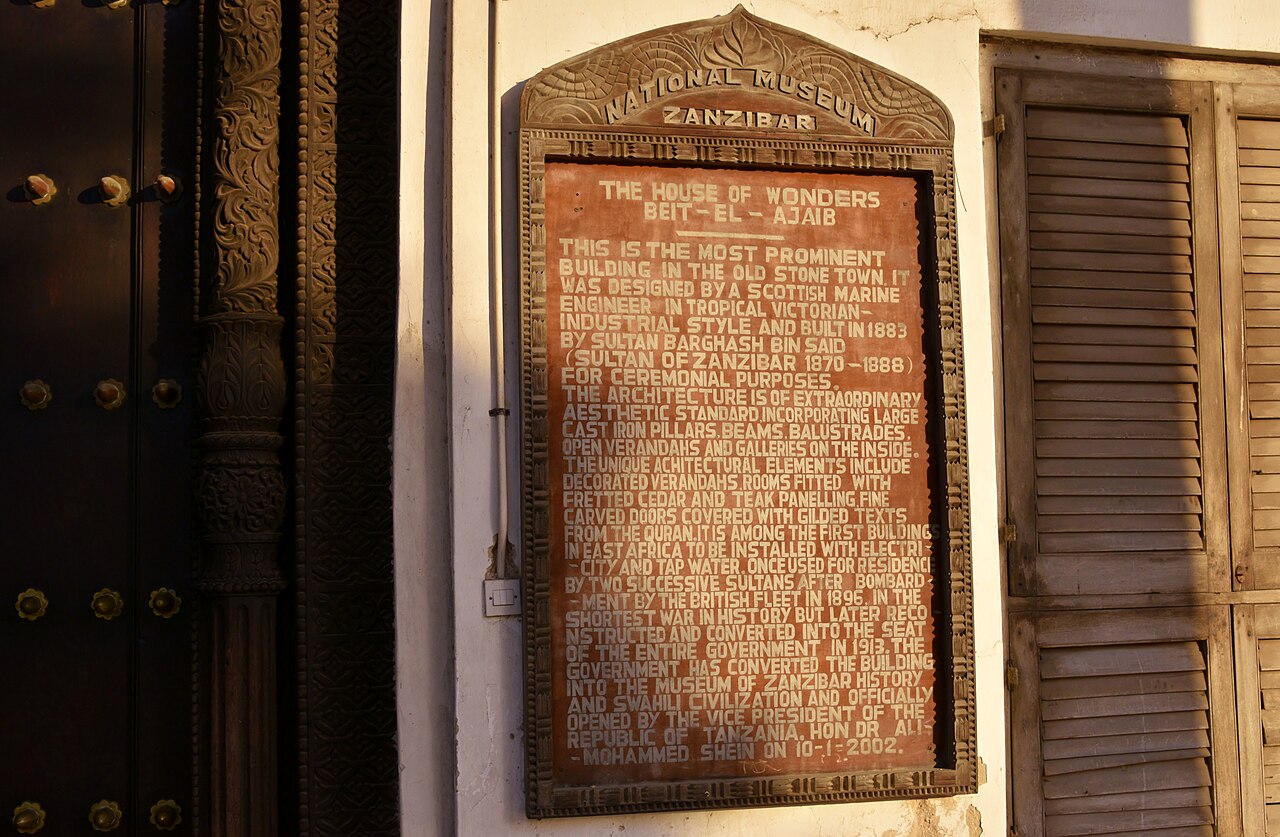
The House of Wonders is the creation of one man above all: Sultan Barghash bin Said, who ruled Zanzibar in the second half of the nineteenth century and built the palace in the early 1880s. Barghash came from the Omani dynasty that had made Zanzibar the center of a seaborne empire, and he was, by the standards of any age, a moderniser with a taste for the spectacular. He wanted his island to be seen as a civilized power, and he was willing to spend to prove it.
Under Barghash, Stone Town gained not just this ceremonial palace but piped water, public fountains, and other improvements, and the House of Wonders was the crown of the program. It was built as a place for state ceremony and display rather than as the sultan’s private home, a hall of audience and reception where the ruler could receive guests, hold court, and impress the representatives of foreign powers with a setting that owed nothing to anyone.
Barghash reigned at a delicate moment. The old Omani world of the western Indian Ocean was coming under ever heavier European pressure, above all from Britain, and the sultan spent his reign trying to preserve as much independence and dignity as he could while the ground shifted beneath him. Building a palace that outshone anything the Europeans had on the coast was part of that effort, an assertion of sovereignty rendered in iron, marble, and electric light.
It is worth remembering him, then, not simply as a builder of a pretty building but as a ruler making a statement in a losing game. The House of Wonders is the confident face of a monarchy that knew it was being surrounded, and chose to answer the pressure with magnificence. That tension, between the splendour of the palace and the vulnerability of the state behind it, runs all the way through its story.
Why They Called It the House of Wonders
The name was not poetic exaggeration; it was practically a technical specification. When it opened, the House of Wonders was crammed with novelties that most people on the coast had never seen and could scarcely believe. It is widely remembered as the first building in East Africa to be fitted with electric light, and it also boasted an electric lift, a genuine marvel in a region where such machinery was unknown, along with running water piped through the structure.
Imagine the impact. Visitors who had never seen an electric bulb in their lives walked into a building glowing from within after dark. People accustomed to climbing stairs found themselves carried between floors by a machine. Water arrived not from a well hauled by hand but from taps. To a nineteenth-century islander, and even to many European visitors, the palace really did seem to be full of wonders, and word of it spread up and down the coast.
These marvels were, of course, political as much as practical. By importing the newest technologies of the industrial world and installing them in his own palace, Barghash was making a point: Zanzibar was not a backwater to be dismissed, but a modern state capable of matching the powers that were circling it. The wonders were a form of diplomacy conducted through light bulbs and machinery, a way of demanding respect.
There is something poignant in it, too. All that dazzling modernity was installed by a ruler whose independence was already slipping away. Within a short span of years the sultanate would be reduced to a British protectorate, and the palace of wonders would find itself the ceremonial shell of a much diminished power. But for a moment, it truly was the most astonishing house on the whole East African shore.
It is easy, from the comfort of a world wired for electricity, to underestimate how strange these marvels must have felt. A lamp that burned without flame or oil, a room that rose through the floors of a building, water that came at the turn of a handle: each of these overturned assumptions that had held for as long as anyone could remember. The House of Wonders did not merely display new machines; it quietly announced that the rules of the possible had changed, and that Zanzibar meant to be part of whatever came next.
Verandas, Iron, and the Indian Ocean Style
Architecturally, the House of Wonders is a marvellous hybrid, a building that could only have come from the crossroads world of the Indian Ocean. Its great feature is the deep veranda: wide covered galleries, carried on slender cast iron columns, that wrap around the building on several levels. These verandas are perfectly suited to the climate, giving shade and catching the sea breeze, and they give the palace its distinctive layered, open silhouette.
The materials tell the story of Zanzibar’s connections. The iron columns and much of the ironwork were imported, brought by sea from the industrial workshops of Europe, while the structure itself rises from the coral stone and lime that build all of Stone Town. Inside, marble floors and imported fittings mingled with local craftsmanship, and the whole was arranged around a large central hall grand enough for the ceremonies of a sultan.
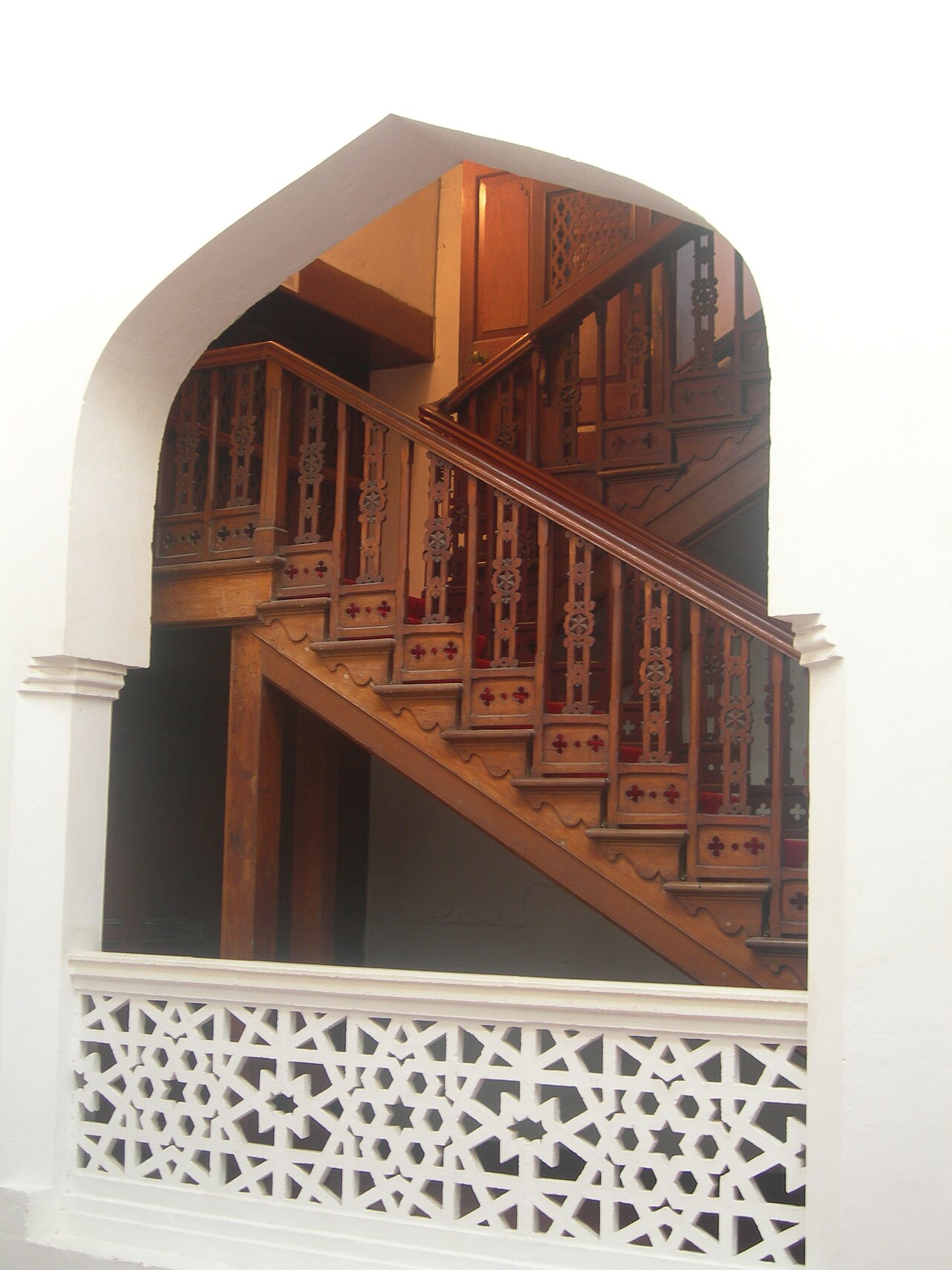
You can read several worlds in the design at once. There is the Arab and Swahili tradition of the coast, with its emphasis on shaded courtyards and carved detail; there is the influence of Indian building, brought by the large and prosperous Indian merchant community that helped drive Zanzibar’s economy; and there is the frank borrowing of European industrial technology and forms. The House of Wonders is what happens when all of these meet in one ambitious commission.
The result manages to be both monumental and airy. Unlike the heavy stone palaces of colder climates, this is architecture built to breathe, its walls dissolved into galleries, its interior kept cool by shade and moving air. It is a building profoundly shaped by its place, by the heat, the ocean, and the trade winds, and by the mixed civilization that those winds had carried to the shores of Zanzibar over many centuries.
The Great Carved Doors of Zanzibar
No account of the House of Wonders, or of Stone Town at all, is complete without its doors. Zanzibar is famous throughout the world for its monumental carved wooden doors, and the palace boasts one of the grandest of all. These are not mere entrances but statements, massive frames of dark timber worked with deep relief carving, often studded with rows of heavy brass bosses, and crowned with elaborately decorated lintels.
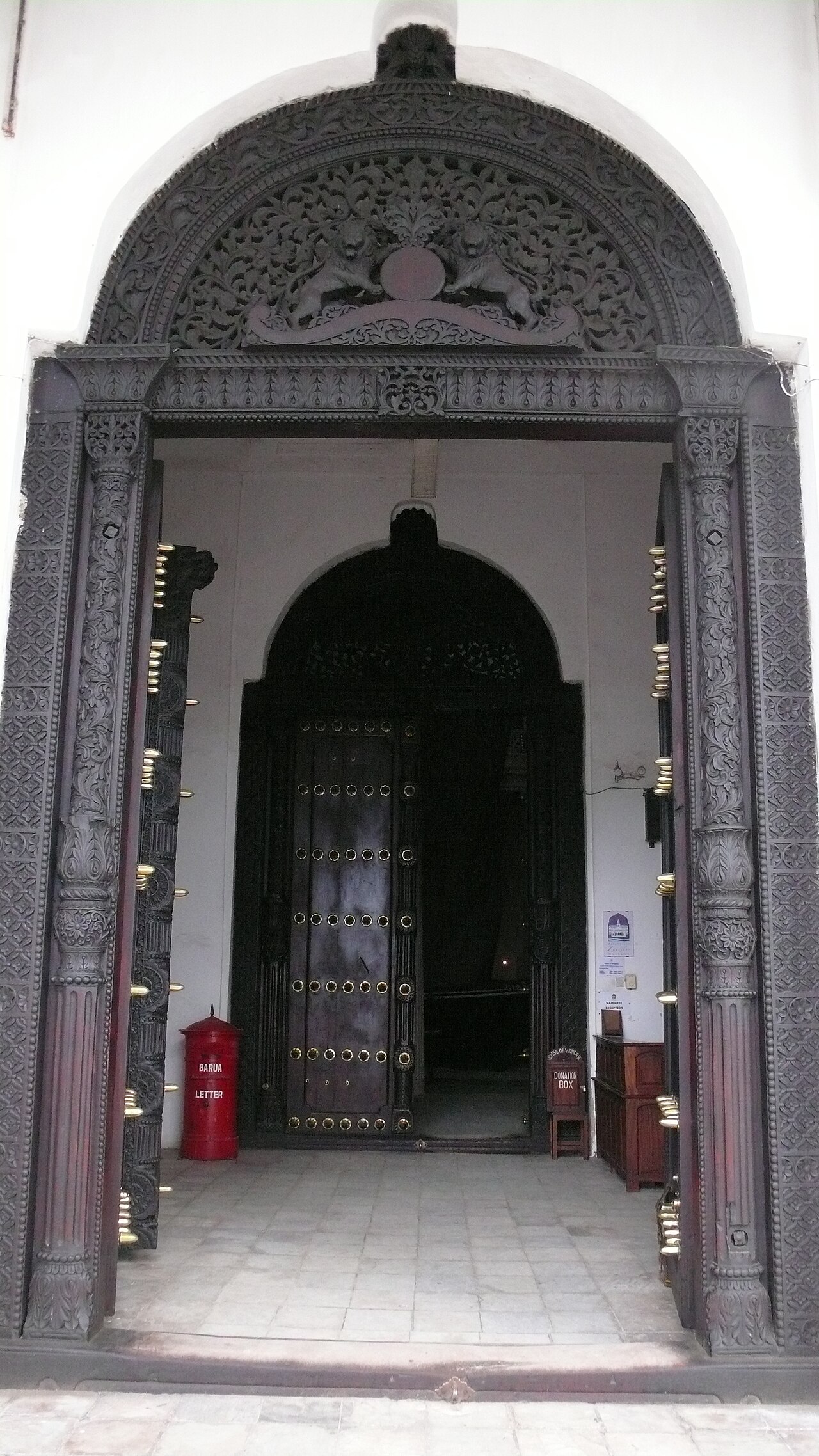
The doors of Stone Town are a language in themselves. Their carvings draw on Arab, Indian, and Swahili motifs: chains and lotus flowers, fish and frankincense, passages of Arabic inscription, and geometric and floral borders. Traditionally a fine door announced the status and taste of the household behind it, and the wealthier and more important the owner, the more magnificent the door. On a sultan’s palace, naturally, the door had to be the most magnificent of all.
The great brass studs that cover many Zanzibari doors are said to derive from an Indian tradition of spikes meant to protect against war elephants, kept on long after any elephant threatened the coast, transformed from defence into ornament. Whether or not every such story is literally true, the studs became an essential part of the style, catching the light and giving the doors their unmistakable bristling richness.
To stand before the palace door is to encounter the craft of Stone Town at its height. Generations of carvers, many of Indian and Swahili origin, made these doors the signature art of the island, and they remain one of the first things visitors photograph and one of the last things they forget. In them, the whole mixed heritage of Zanzibar is compressed into a single threshold of carved and studded wood.
The Tower That Watches the Sea
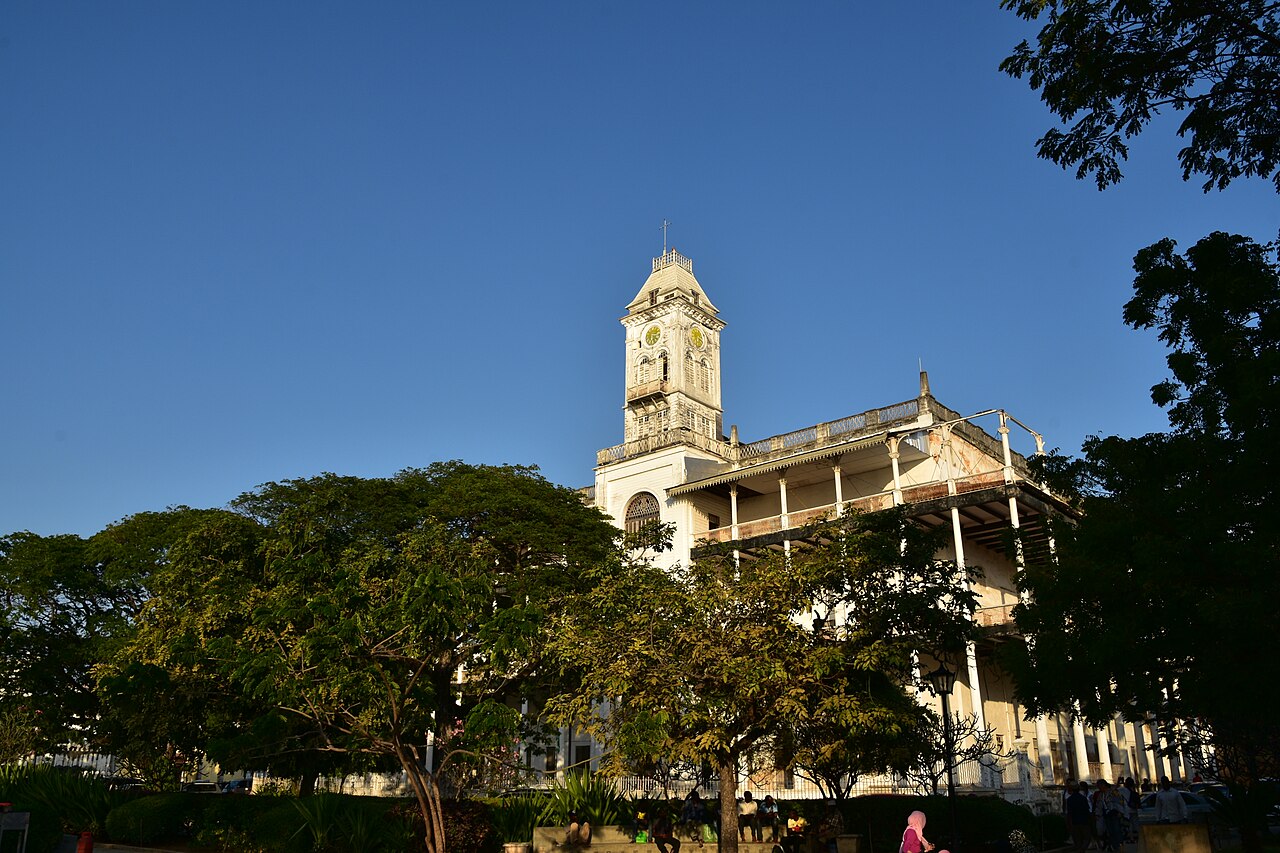
Rising above the tiered verandas of the House of Wonders is its clock tower, the feature that gives the building its unmistakable profile on the Stone Town skyline. Set toward the seaward front, the tower lifts the palace above its neighbours and turns it into a landmark visible from far out on the water, a marker for ships approaching the harbour and a fixed point in the crowded geometry of the town.
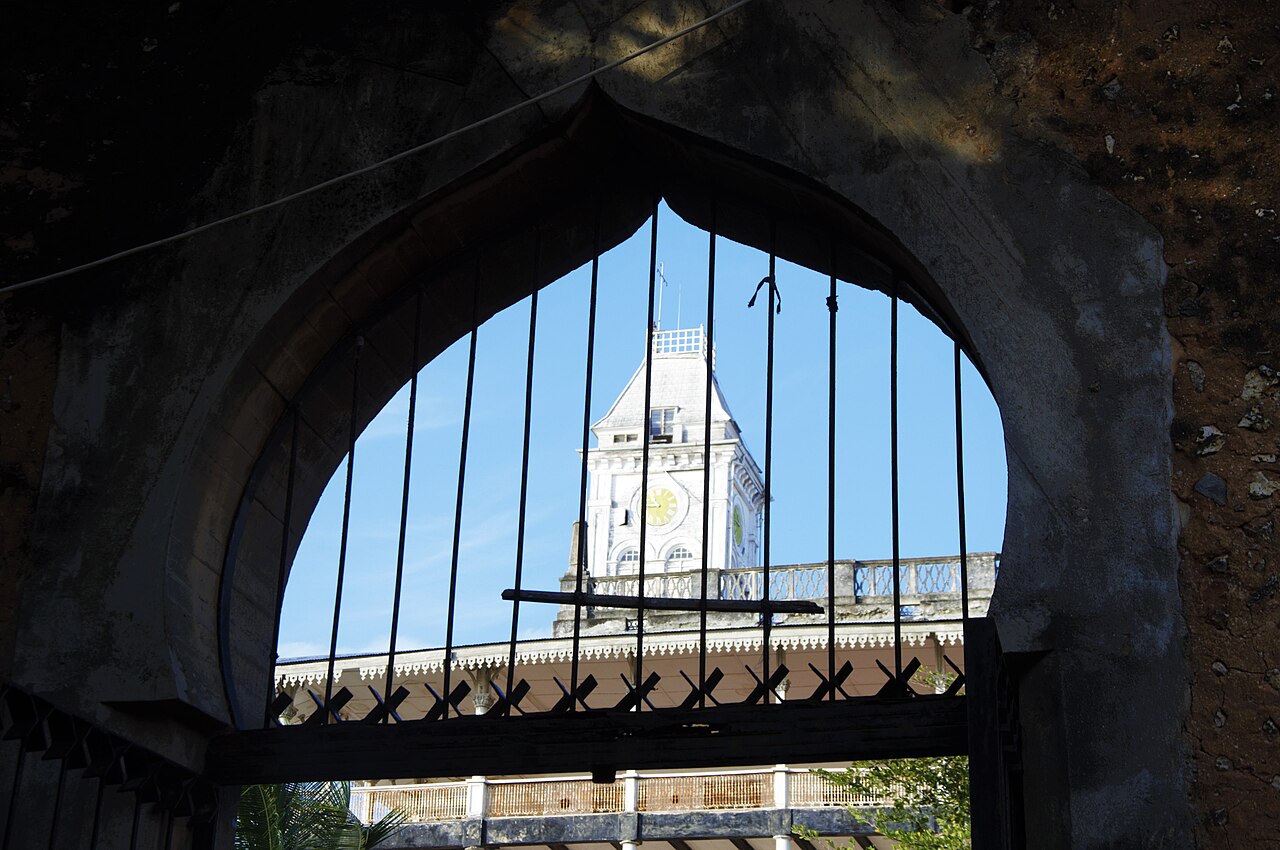
A public clock was, in its own way, another of the wonders. It brought a piece of the ordered, mechanical time of the industrial world to a coast that had long measured its days by the sun, the tides, and the call to prayer. Mounted high on the sultan’s palace, the clock was a symbol of a ruler who wished to be seen as modern and in command, regulating the rhythm of his capital from on high.
For travellers arriving by sea, the tower became part of the experience of reaching Zanzibar. It stood over the waterfront where dhows and steamers unloaded their cargoes and passengers, presiding over the meeting of ocean and town. To glimpse the clock tower of the House of Wonders was to know you had arrived at the heart of the island, the point where the sultan’s authority and the world’s commerce came together.
Even today, battered as the building has been, the tower keeps its role as a beacon. It anchors countless photographs of the Stone Town seafront, and it remains the silhouette by which the House of Wonders is instantly recognised. Whatever else changes, the tower still watches the same sea that made Zanzibar what it was, and still marks the spot where a sultan once tried to hold back the tide of empire with a display of marvels.
The Shortest War in History
Almost in the shadow of the House of Wonders, one of the strangest episodes in the history of warfare unfolded. In 1896, following the death of a sultan, a dispute over the succession set a claimant the British did not favour against the might of the Royal Navy. The result was the Anglo-Zanzibar War, remembered as the shortest war in recorded history, a bombardment that lasted well under an hour before the palace complex was reduced and the resistance collapsed.
The confrontation centred on the royal buildings along the seafront, the House of Wonders and the palace beside it. British warships in the harbour opened fire, and in a matter of minutes the guns wrecked the sultan’s defences and set parts of the complex ablaze. The claimant fled, a British-approved sultan was installed, and Zanzibar’s status as a state that could choose its own ruler was, in effect, over.
It is a story often told for its curiosity value, the war that was over before lunch, but it deserves to be understood for what it really was: the moment when the independence of the Zanzibar sultanate was settled by naval gunfire. The very seafront that Barghash had adorned with a palace of wonders became the stage on which that independence was demonstrated to be, in the end, at the mercy of a foreign fleet.
The House of Wonders survived, was repaired, and went on, but the meaning of the place had changed. What had been built as the confident showpiece of a sovereign monarch now stood over a protectorate whose real decisions were made elsewhere. The palace that was meant to overawe the great powers had instead witnessed, at point-blank range, just how much power those great powers could bring to bear.
Cloves, Commerce, and a Darker History
To understand the wealth behind the House of Wonders, you have to understand the empire of Zanzibar. In the nineteenth century the Omani sultans who ruled the island presided over a maritime commercial power that reached deep into the western Indian Ocean and far into the African mainland. Zanzibar became the world’s great source of cloves, its plantations scenting the air of the island, and its harbour a hub where the goods of Africa, Arabia, India, and Europe changed hands.

That prosperity, however, rested in part on a grim foundation. Zanzibar was also a major centre of the East African slave trade, and much of the wealth that adorned Stone Town, including the resources that raised palaces like this one, was entangled with that trade in human lives. It is impossible to tell the story of the island’s golden age honestly without acknowledging the suffering that helped pay for it.
The nineteenth century saw mounting pressure, above all from Britain, to end that trade, and treaties signed during Barghash’s own reign were part of the long and difficult process of abolition on the island. The very sultan who built the House of Wonders was also the ruler compelled to sign away the open slave trade, a reminder that the palace stands at the meeting point of splendour and shame, of a rich culture and a brutal commerce.
Holding both of these truths together is part of what makes Zanzibar so compelling and so sobering to visit. The House of Wonders is a genuine architectural marvel and a monument of Swahili civilization; it is also a product of an economy that included the buying and selling of people. To see it clearly is to admire the craft and the ambition while remembering the human cost woven into the island’s history.
A Palace in a Living Maze
The House of Wonders does not stand in isolation but at the edge of Stone Town, the historic core of Zanzibar City and one of the great surviving examples of a Swahili coastal trading town. This dense labyrinth of coral-stone buildings, narrow winding lanes, mosques, bathhouses, and merchant mansions grew up over centuries as Arab, Persian, Indian, African, and European influences fused into a single distinctive urban culture, and it is recognised as a World Heritage site.
To walk from the palace into Stone Town is to plunge from the open seafront into a cool, shaded world where the alleys are barely wider than a laden donkey and every second doorway seems to hide a courtyard, a shop, or a mosque. The town was built for shade and privacy, its high walls and narrow streets a response to the fierce sun, and getting pleasantly lost in it is one of the chief joys of a visit.
The House of Wonders was the grandest node in this web, the ceremonial peak of a town full of fine houses. Nearby stand the Old Fort, an earlier Omani stronghold, and the palace that served as the sultans’ residence, so that the seafront reads as a row of royal and defensive buildings facing the ocean. Behind them the town spreads inland, a densely packed record of everyone who ever traded, prayed, or lived on this shore.
Understanding the palace as part of Stone Town changes how you see it. It was never meant to be a solitary monument but the head of a living body, the ceremonial climax of a whole urban civilization built on the monsoon trade. The town gives the palace its context, and the palace gives the town its crown, and together they make the seafront of Zanzibar one of the most evocative in the Indian Ocean world.
From Palace to Museum
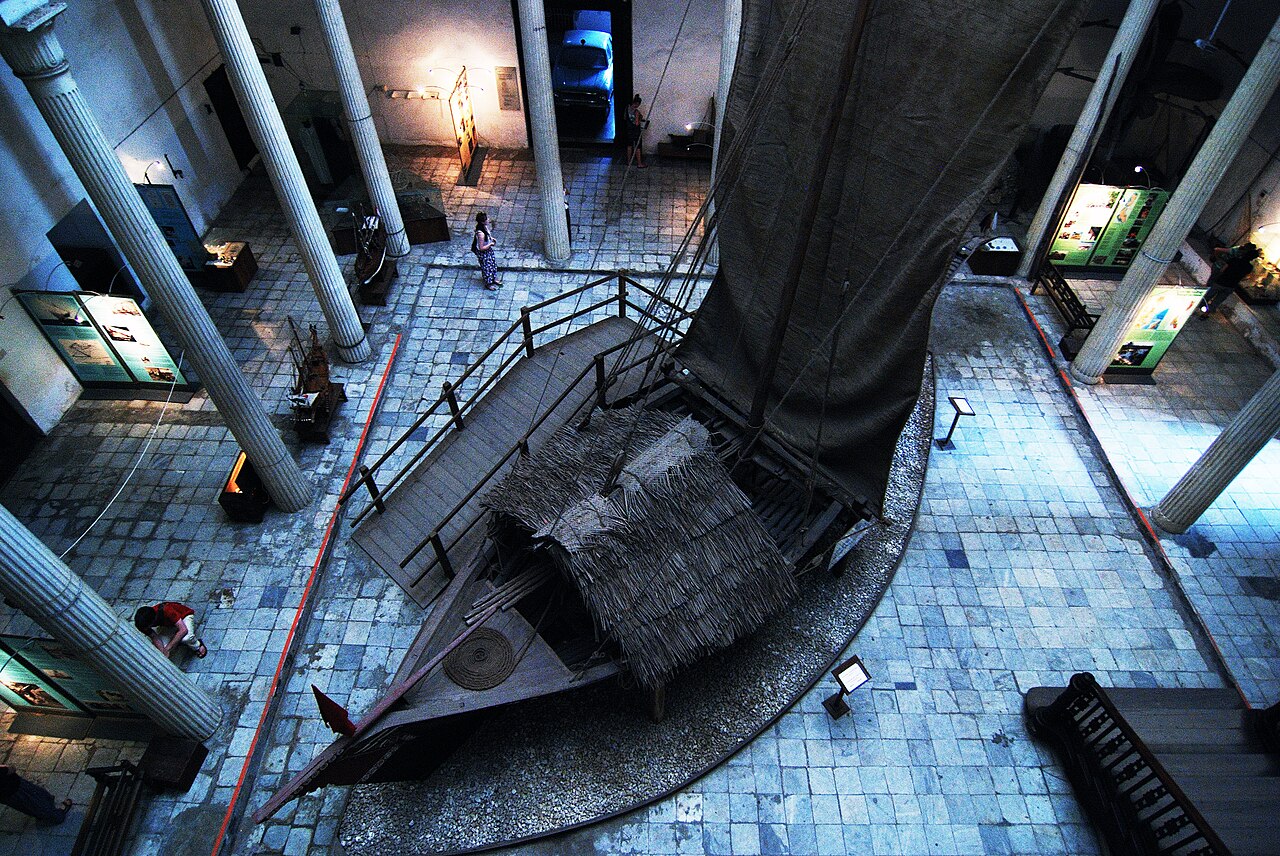
After the sultanate faded and the age of the palace as a working seat of power ended, the House of Wonders found a second life. In the decades that followed it served various official uses, and in time it became a museum, most memorably a museum of the history and culture of Zanzibar and the Swahili coast, using the grand halls of the old palace to tell the story of the world that had built it.

It was a fitting reuse. Where better to display the heritage of the monsoon trade, of the dhow and the clove and the mixed Swahili civilization, than in the very building that had once been that civilization’s proudest showpiece? Visitors could climb through the palace and encounter reconstructed dhows, exhibits on daily life, on the sultans, on the great web of Indian Ocean commerce, all housed within the marvel itself.
The museum turned the House of Wonders into a place of learning as well as of spectacle, a portal into the layered history of the island. Its exhibits helped visitors make sense of what they saw all around them in Stone Town: the doors, the mosques, the merchant houses, the traces of a hundred origins. The palace became a key to reading the town, and the town a vast extension of the palace’s story.
That role gave the old building a renewed dignity. No longer the seat of a sultan, it had become the memory of one, a house that now displayed the wonders of a whole civilization rather than merely dazzling with electric lights. For many travellers, a visit to the museum in the House of Wonders was the moment when the scattered impressions of Zanzibar finally came together into a single, coherent history.
Collapse, Loss, and the Work of Saving It
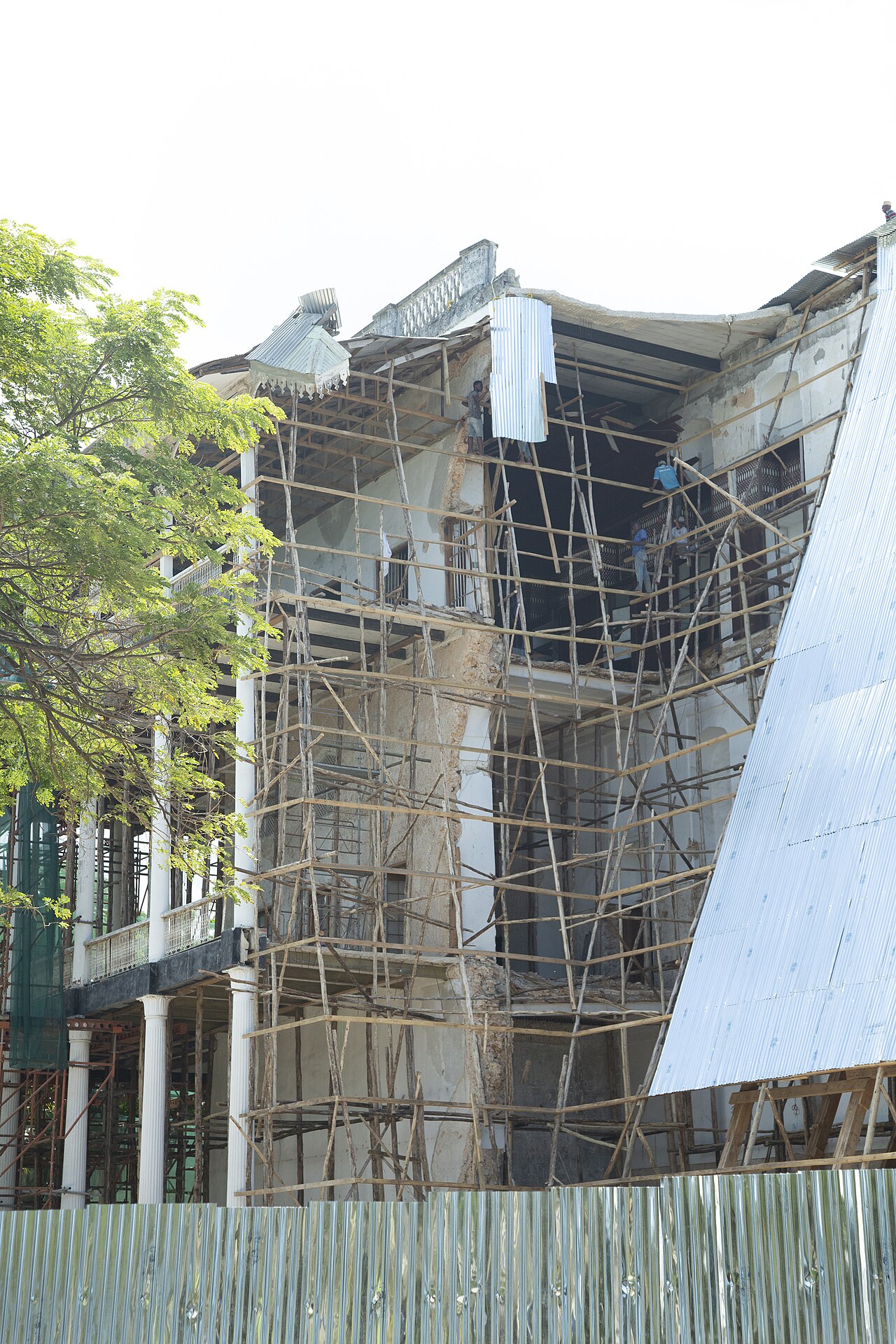
The House of Wonders has never had an easy existence, and in recent years it suffered a grievous blow. The great building, weakened by age and by long-standing problems with its fabric, partially collapsed, a disaster that brought down a section of the historic structure and underlined just how fragile even the grandest heritage can be. For a place that had survived bombardment and a century of hard use, it was a painful reminder that survival is never guaranteed.

The loss was felt far beyond the island. As one of the defining monuments of Stone Town and a symbol of Zanzibar itself, the House of Wonders matters to the whole story of the Swahili coast, and its damage prompted concern and offers of help from those who care about the world’s shared heritage. Securing the site and planning its restoration became an urgent task, both to protect what remains and to honour what the building has always meant.
Restoration of a structure like this is delicate work. The palace is built of coral stone and lime, wrapped in imported iron, and threaded with the marks of many periods, so putting it back together is not a simple matter of rebuilding but of understanding, conserving, and respecting a complex historical fabric. It calls for expertise, patience, and resources, and for careful decisions about how to balance safety, authenticity, and use.
The story of the collapse and the effort to recover from it is, in a way, the latest chapter in the palace’s long negotiation with time. The House of Wonders has always been a building under pressure, from empires, from war, from the sea and the years. That it is being fought for now, rather than abandoned, is a sign of how deeply it is woven into the identity of Zanzibar and of the wider Indian Ocean world.
The House of Wonders on Film
Photographs can capture the tiered verandas and the clock tower, but they struggle to convey the setting: the seafront, the light off the Indian Ocean, the bustle of Stone Town at the palace’s back. The short film below helps fill that gap, offering a moving portrait of the House of Wonders and the world around it that brings the still images in this article to life.
If you are planning to visit Zanzibar, watching something like this beforehand is a real help. It lets you place the palace in its surroundings, recognise the Old Fort and the seafront when you arrive, and arrive with a sense of the history you are walking into rather than encountering it cold. A few minutes of film can turn a blank facade into a building you already half understand.
And if Zanzibar is, for now, only a place on your map of someday, the film is a fine way to travel there in imagination. Let it play, watch the palace rise over the water, and picture yourself on that seafront where sultans once received the world and where the shortest war in history was fought and lost in less than an hour.
Seeing the House of Wonders Today
For travellers, the House of Wonders remains one of the essential sights of Zanzibar, even as it works through the long process of recovery from its collapse. It stands on the Stone Town seafront, an easy landmark to find and a natural anchor for exploring the historic town, and whatever its current condition, its scale and setting still make it the centrepiece of any walk along the waterfront.

Because the situation of the building can change as conservation and restoration proceed, it is wise to check locally what can currently be entered or viewed, and to treat it, above all, as the fragile historic monument it is. Even from the outside there is a great deal to take in: the tiered galleries, the clock tower, the great carved door, and the sweep of the seafront with the Old Fort close by.
Give yourself time to explore the wider setting on foot. Wander into the shaded lanes of Stone Town, seek out its famous doors and its mosques, visit the Old Fort, and pause at the fountains and squares that were part of the same age of improvement that raised the palace. The House of Wonders makes far more sense as the crown of this living town than as a solitary photograph.
However you find it, come to the House of Wonders with both admiration and awareness. Admire the ambition of a sultan who built the grandest house on the coast and filled it with marvels; remember the darker history and the hard century that followed; and feel the poignancy of a great building fighting for its future. Few monuments hold so much of a place’s story in a single silhouette against the sea.
Take a moment, before you leave, simply to sit on the seafront and look back at it. Watch the light move across the verandas as the day turns, the dhows crossing behind it, the town breathing at its back. In that quiet act of looking you join a very long line of arrivals who have gazed up at this improbable building and felt, as its first beholders did, that they were in the presence of something genuinely wonderful.
Palaces Nearby
If the fate of Zanzibar’s vanished monarchy has drawn you in, these two palaces of other lost thrones make fitting companions.
- Sitorai Mokhi-Khosa, the Moon and Stars Palace of Bukhara’s Last Emirs — the summer retreat of Bukhara’s final emirs.
- The Bogd Khan Palace and the Last God-King of Mongolia — the winter residence of Mongolia’s theocratic monarch.
You May Like
Konopiste the Bohemian Castle of a Doomed Archduke