In the heart of Ulaanbaatar, Mongolia’s cold and fast-changing capital, there is a walled compound that seems to belong to another age entirely. Behind its fence stand ranks of Chinese-style temple pavilions with sweeping tiled roofs, a two-storey building that looks as if it wandered in from imperial Russia, and, presiding over it all, a ceremonial gate built, so the story goes, without a single nail. This is the palace of the Bogd Khan, the last ruler of a Mongolia that was at once a kingdom and a living faith.
The Bogd Khan was no ordinary monarch. He was a Buddhist spiritual leader, held to be a reincarnate lama of the highest rank, who also became the head of state when Mongolia broke away from the Chinese empire in the early twentieth century. For a brief and remarkable period he ruled as both god-king and sovereign, and this compound was his winter residence, the place where religion, politics, and a taste for the exotic all came together under one set of golden roofs.
To visit today is to step into the strange, vivid world of that vanished monarchy. The palace survived when almost every other monastery and temple in the country was destroyed, and it kept its treasures: Buddhist art, ceremonial robes, gifts from foreign rulers, and the astonishing personal collection of a man who kept exotic animals and owned a ceremonial tent covered in the skins of snow leopards. In the sections that follow you will meet the Bogd Khan, his palace, and the lost country he embodied.

In This Article
- A Survivor in the Heart of Ulaanbaatar
- The God-King of Mongolia
- The Green Palace and Its Temple Roofs
- The Gate Built Without a Single Nail
- A Russian House on the Steppe
- Between Buddhism, China, and Russia
- Thangkas, Statues, and Sacred Art
- Snow Leopards, Elephants, and a King’s Curiosities
- The Palace and the Birth of Modern Mongolia
- The Death of a King and the End of a Monarchy
- How the Palace Became a Museum
- Inside the Palace on Film
- Visiting the Bogd Khan Palace
A Survivor in the Heart of Ulaanbaatar
Ulaanbaatar is not a city that wears its history lightly on the surface. Much of it is a landscape of Soviet-era apartment blocks, glassy new towers, and traffic, the product of a twentieth century that swept away most of what came before. That is exactly what makes the Bogd Khan Palace so striking: it is a fragment of the old Mongolia that somehow came through intact, a compound of temples and halls preserved amid the modern sprawl.

The palace sits toward the southern side of the city, a walled enclosure of pavilions and courtyards that you enter from the busy streets outside. Passing through the gate, the noise of the city recedes and you find yourself among the ranked roofs and painted timbers of a world that ended a century ago, a world of lamas, khans, and ceremony. Few places offer so direct a passage from the present-day capital into the country’s monarchical and religious past.
What survives is essentially the residence as the Bogd Khan knew it: the group of Chinese-style temple buildings known as the Green Palace, the ceremonial gate, and the separate European-style Winter Palace nearby. Together they form the Bogd Khan Palace Museum, one of the most important historic sites in Mongolia and a rare physical link to the era before the communist transformation of the country.
For the traveller, it is an essential stop, and not only for its beauty. To understand modern Mongolia, you have to understand the theocratic monarchy that briefly ruled it and the upheaval that followed, and there is no better place to feel that history than in the very compound where the last Bogd Khan lived, worshipped, and reigned. The palace is both a museum and a memorial to a country that no longer exists.
Arriving, many visitors are struck first by the simple improbability of the place: that these fragile painted pavilions should still be standing at all, in a city so thoroughly remade, is itself part of the experience. The compound feels less like a stop on a tour than like a door left ajar into a country that has otherwise almost entirely disappeared.
The God-King of Mongolia
At the centre of the story is the Bogd Khan himself, the eighth in a line of reincarnate lamas known as the Jebtsundamba Khutuktu, the highest religious authority of Mongolian Buddhism. Recognised as a child as the rebirth of his predecessor, he was raised to a position of immense spiritual prestige, revered by the faithful as a living embodiment of the sacred. In the theocratic tradition of Mongolia, such a figure stood at the very summit of society.
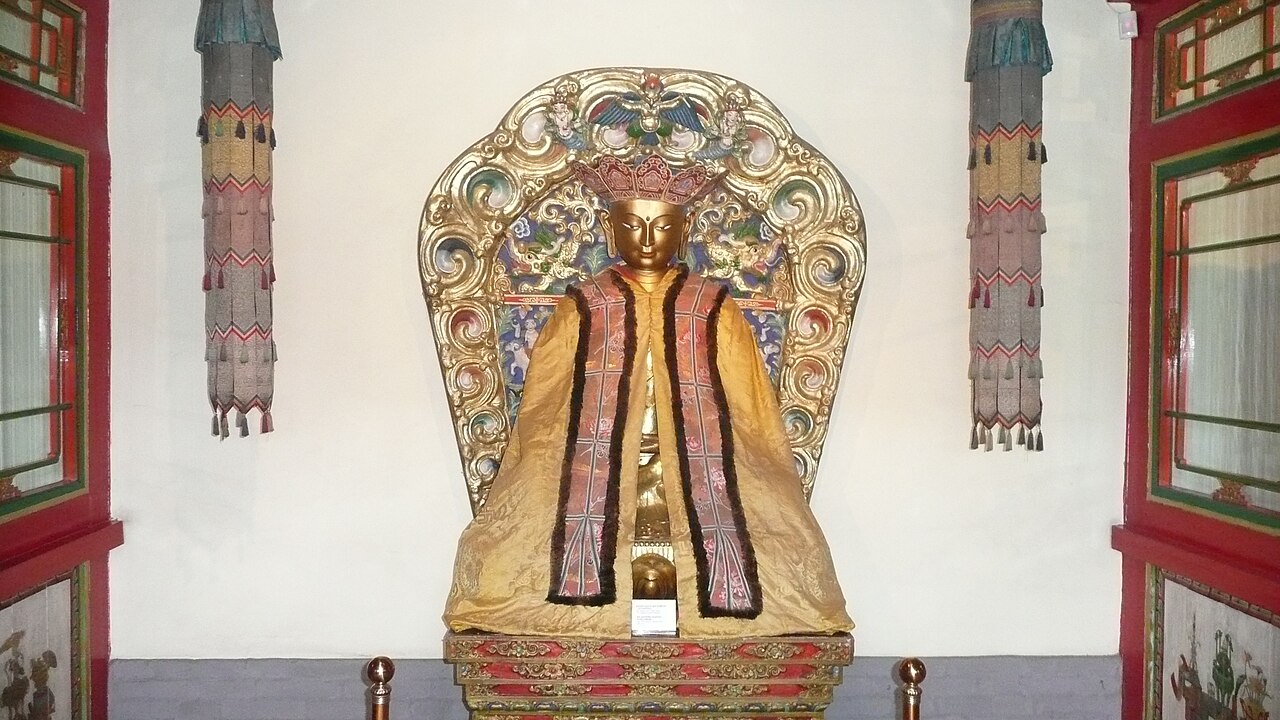
When Mongolia broke from the crumbling Chinese empire in the early twentieth century, this spiritual leader became something more: the head of a new independent state, the Bogd Khan, at once god and monarch. It was a fusion of roles familiar from other Buddhist lands, in which religious and temporal authority were combined in a single sacred person, and it placed him at the head of a country trying to define itself between two great powers.
He was, by the accounts that survive, a complex and very human figure as well as a holy one. He had a taste for the modern and the exotic, collected curiosities and animals, and enjoyed the pleasures available to a man of his rank, even as he carried the enormous religious expectations placed upon him. The palace reflects this doubleness, part temple, part royal residence, part cabinet of wonders assembled by a curious and powerful mind.
His reign spanned a turbulent age, as Mongolia struggled to secure its independence amid the ambitions of China and Russia and the shockwaves of revolution. He remained the symbolic head of state until his death, after which the monarchy was abolished and the country took an entirely different path. To walk his palace is to feel the presence of this last god-king, the final holder of an office that reached back centuries and ended with him.
He is often remembered, too, for his failing eyesight in later life, and for a reign shadowed by illness and by the relentless pressure of the powers around him. There is a poignancy in the figure of a nearly blind god-king, revered as a living Buddha yet unable to see clearly the country he symbolised, presiding over a nation whose fate was being decided as much in Beijing and in the turmoil of revolutionary Russia as in his own palace halls.
The Green Palace and Its Temple Roofs
The oldest and most atmospheric part of the compound is the group of buildings known as the Green Palace, a set of Chinese-style temple pavilions raised around the turn of the twentieth century. With their tiled, upturned roofs, painted eaves, and richly coloured timberwork, they follow the architectural traditions of the wider East Asian Buddhist world, brought north and adapted to serve the residence of Mongolia’s spiritual sovereign.

These pavilions functioned as temples and ceremonial halls as much as living quarters, and they house much of the museum’s religious art today. Arranged around courtyards and linked by the geometry of the complex, they create a sequence of spaces that lead the visitor deeper into the world of the Bogd Khan, from outer gates and courts toward the inner sanctuaries where the sacred images were kept.
The craftsmanship is remarkable. The bracketed eaves, the carved and painted detail, the play of colour under the wide roofs all speak of the skill lavished on a building meant to honour both a monarch and a faith. In a country where the felt tent, the ger, was the traditional dwelling, these permanent temple halls were a statement of a different, settled kind of grandeur, drawn from the great Buddhist civilizations to the south and east.
That so much of this survives is itself extraordinary, given what happened to Mongolia’s monasteries in the decades after the monarchy fell. The Green Palace lets you see the religious architecture of old Mongolia more or less as it was, its temple roofs still rising against the sky of Ulaanbaatar, a green and gold survivor of a world that was very nearly erased.
The Gate Built Without a Single Nail
Among the most admired features of the palace is its ceremonial gate, a richly decorated structure that visitors are often told was built without the use of a single iron nail, held together entirely by the interlocking joinery at which East Asian carpenters excelled. Whether or not one takes the claim literally, it captures the astonishing craftsmanship of the gate, whose brackets and beams fit together in a dense, ingenious web of worked timber.

Such gates are more than entrances. In the tradition the palace draws on, a great gate marks a threshold between the ordinary world and a sacred or royal precinct, and its decoration, its guardian figures and painted panels and layered roofs, is meant to impress upon you that you are passing into a special place. To walk beneath it was to leave the everyday behind and enter the domain of the god-king.
The gate is a masterpiece of colour as well as of structure. Its eaves and panels are painted in the brilliant palette of Buddhist temple art, greens and reds and gold, and its multiple tiers of bracketing create a rhythm of light and shadow that draws the eye upward. It stands as the ceremonial face of the whole compound, the image many visitors carry away as the emblem of the Bogd Khan Palace.
That it was raised by traditional methods, without nails, ties it to a long lineage of sacred architecture across the Buddhist world, where the skill of the carpenter was itself a kind of devotion. In an age of iron and concrete, the gate is a reminder of an older way of building, in which timber alone, cut and fitted with supreme precision, could be made to stand for generations.
A Russian House on the Steppe
Set apart from the temple pavilions is the building that gives the complex its common name, the Winter Palace, and it could hardly be more different from the rest. Instead of upturned tiled roofs and painted timber, it is a two-storey masonry building in a European style, the kind of substantial house one might find in a provincial Russian town, planted improbably here on the edge of the Mongolian steppe.
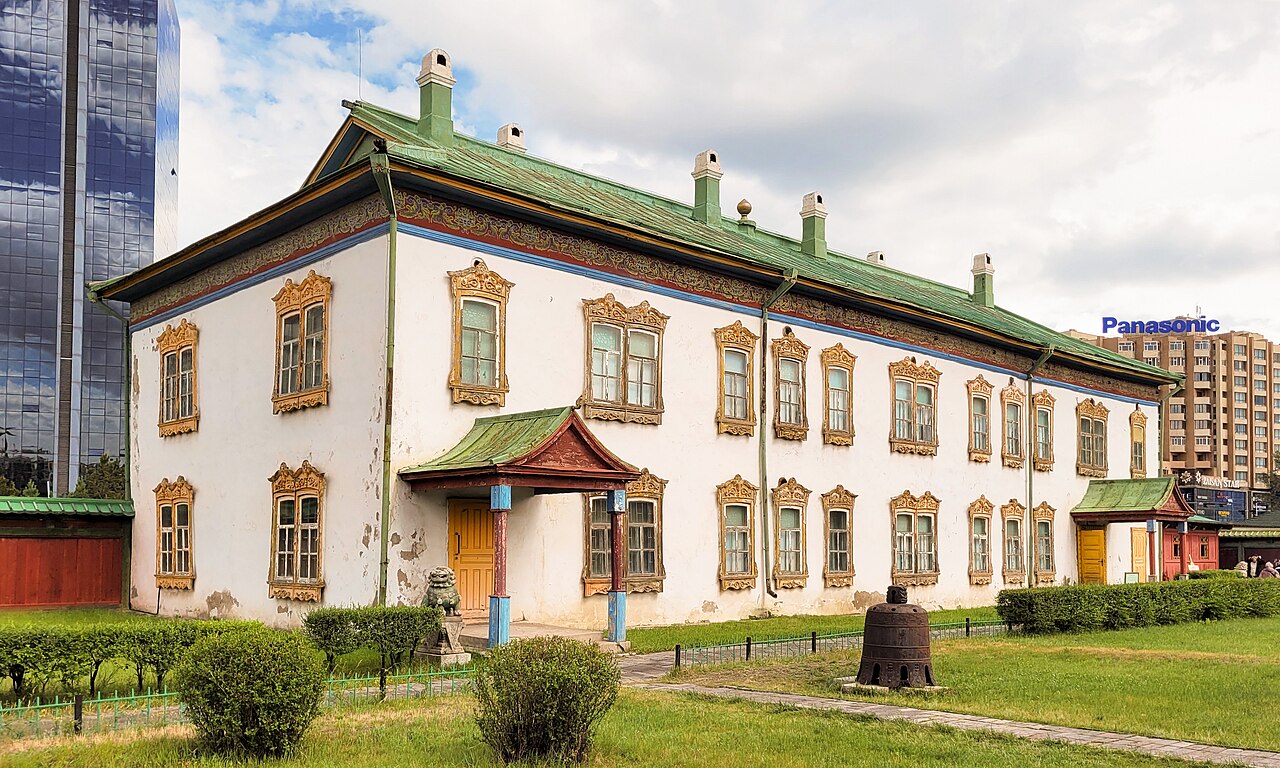
The building is traditionally described as a gift connected with imperial Russia, a diplomatic gesture from the great northern power that loomed so large in Mongolia’s fortunes. Whatever its precise origins, it was fitted out as a modern residence for the Bogd Khan, giving him a European-style home alongside his temples, and it stands as a symbol of Russia’s growing influence over the country in this period.
Inside, the Winter Palace housed the Bogd Khan’s more worldly life and much of his collection: furniture, gifts, personal possessions, and the accumulated curiosities of a ruler with wide interests and wide contacts. It is here that the sheer eclecticism of the man becomes vivid, in rooms that mix the trappings of a modern head of state with objects of religious and exotic significance.
The contrast between the Winter Palace and the Green Palace is the heart of the site’s fascination. Within a single compound you pass from the temple world of Buddhist Mongolia to a building that speaks of Russia and of the modern age pressing in from the north. The Bogd Khan lived at exactly that meeting point, and his residence, half temple complex and half European house, makes that historical position unforgettably concrete.
Between Buddhism, China, and Russia
The palace is, in a sense, a map of Mongolia’s predicament at the turn of the twentieth century. The country lay between two giants, the Chinese empire to the south, from which it was breaking away, and the Russian empire to the north, whose support it courted and whose influence it could not escape. The Bogd Khan’s residence, drawing on Chinese temple architecture and containing a Russian-style palace, embodies that in-between position with startling clarity.

At the same time the compound is thoroughly Mongolian and thoroughly Buddhist. Its heart is religious: the temples, the sacred images, the role of the Bogd Khan as a reincarnate lama. Mongolia’s version of Buddhism, rich in ritual and art and closely tied to Tibetan tradition, permeates the whole site, from the guardian figures on the gates to the thangkas and statues within the halls.
So three worlds meet here. There is the deep religious culture of Mongolia itself; there is the architectural and artistic influence of China and the wider Buddhist east; and there is the political and material weight of Russia. The Bogd Khan and his court moved among all three, trying to secure a place for an independent Mongolia in a world dominated by empires, and the palace is the physical record of that balancing act.
Understanding this makes the visit far richer. The seemingly odd juxtapositions, temple roofs beside a Russian house, sacred art beside foreign gifts, are not accidents but the signature of a specific historical moment. The palace shows you a small, ancient, deeply religious nation attempting to navigate between empires, and doing so, for a brief and precarious time, under the rule of a living god.
Thangkas, Statues, and Sacred Art
As a museum, the Bogd Khan Palace is above all a treasury of Mongolian Buddhist art, and its collections are one of the chief reasons to visit. The temple halls of the Green Palace hold statues of Buddhist deities, elaborate thangkas, the painted and embroidered scroll-images central to the tradition, ritual implements, masks, and the rich material culture of a faith that placed enormous value on sacred art.

These objects are not mere decoration; each carries deep religious meaning. The thangkas depict Buddhas, bodhisattvas, protective deities, and mandalas, serving as aids to meditation and devotion, while the statues and ritual objects were used in the ceremonies over which the Bogd Khan, as supreme lama, presided. To see them gathered in his own palace is to encounter the living heart of Mongolian Buddhism as it was before the storms of the twentieth century.
Among the treasures are also the ceremonial robes and regalia of the Bogd Khan and his consort, garments of extraordinary richness that speak to the splendour of the theocratic court. These costumes, heavy with embroidery and symbolism, bring the human figures of the monarchy vividly to mind, reminding you that behind the sacred images were real people who wore these clothes and enacted these rituals.
The survival of this art is precious beyond words. When Mongolia’s monasteries were destroyed and countless religious objects lost, the collections of this palace endured, making it one of the great repositories of a heritage that was very nearly annihilated. Every statue and painting here is, in a quiet way, a survivor, and the museum’s role in preserving them gives the whole site a weight beyond its beauty.
Snow Leopards, Elephants, and a King’s Curiosities
No account of the Bogd Khan does justice to him without the stranger, more personal treasures of his palace, for he was a monarch of famously wide and eccentric appetites. Among the most astonishing objects associated with the collection is a ceremonial ger, the traditional Mongolian felt tent, said to be covered with the skins of a great number of snow leopards, a display of exotic magnificence that stops modern visitors in their tracks.
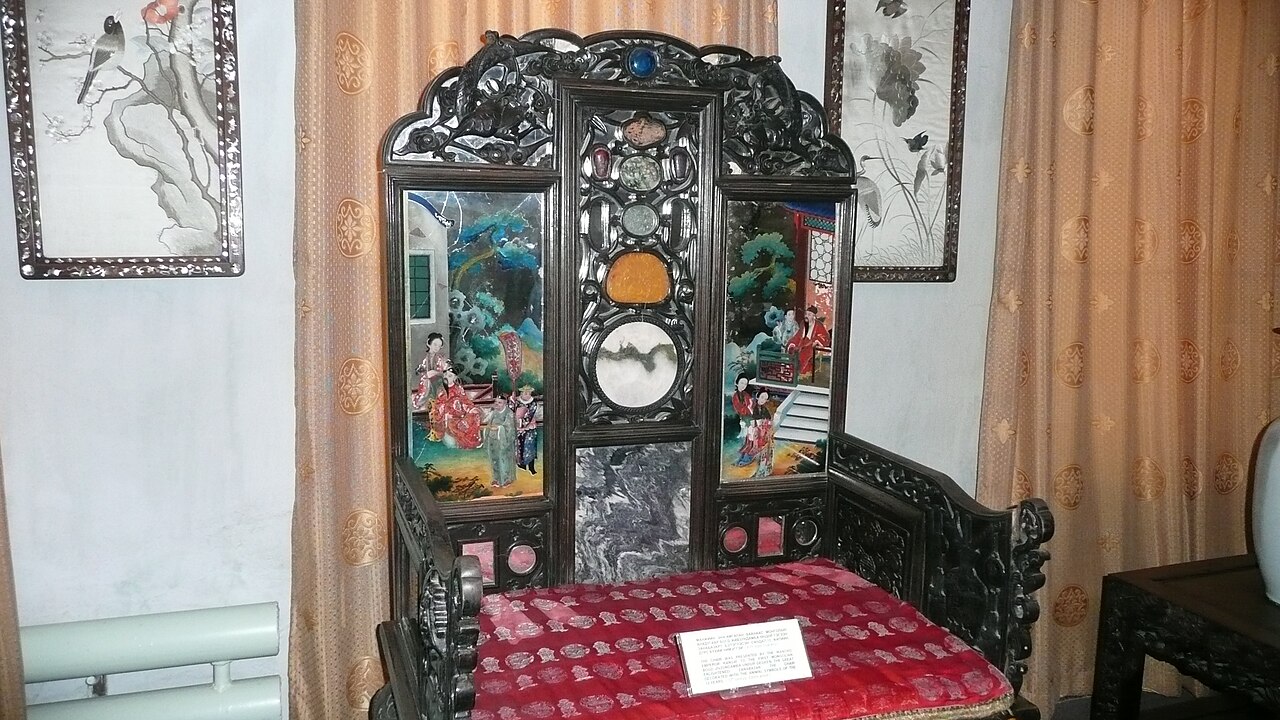
The Bogd Khan was a collector on a grand scale, gathering curiosities, luxuries, and gifts from around the world. He is remembered for keeping a private menagerie of animals, exotic and domestic, and for accumulating objects that ranged from the sacred to the frankly extravagant. The palace preserves something of this magpie splendour, a sense of a ruler who delighted in the rare and the remarkable.
Some of these treasures reflect the diplomatic gifts that flowed to a head of state, tokens from foreign courts and dignitaries; others reflect his own tastes and whims. Together they paint a portrait of a man who was both a revered spiritual figure and a worldly prince with a hunger for wonders, a combination that makes him one of the most intriguing of all the vanished monarchs.
For the visitor, these objects add a note of the marvellous and the slightly melancholy. The snow-leopard ger and the other curiosities speak of a lost world of absolute rank and exotic display, gathered by a ruler whose reign ended with his death and whose office was then abolished forever. They are the personal residue of the last god-king, preserved in the palace where he assembled them.
Objects like these blur the line between the sacred and the spectacular, and that blurring is exactly the point. The Bogd Khan lived in an age when a Mongolian ruler might receive a motor car, a foreign musical instrument, or a rare animal alongside religious offerings, and he embraced it all. The palace preserves that omnivorous curiosity, so that a visitor moves in a few steps from a meditation image of profound spiritual weight to a trophy of pure exotic display.
The Palace and the Birth of Modern Mongolia
The Bogd Khan Palace is not just a religious and artistic treasure; it stands at the centre of the story of how modern Mongolia was born. In the early twentieth century, as the Chinese empire that had long dominated Mongolia collapsed, Mongolian leaders seized the moment to declare their country independent, and it was the Bogd Khan who became the head of the new state, the sacred figure around whom a nation could rally.
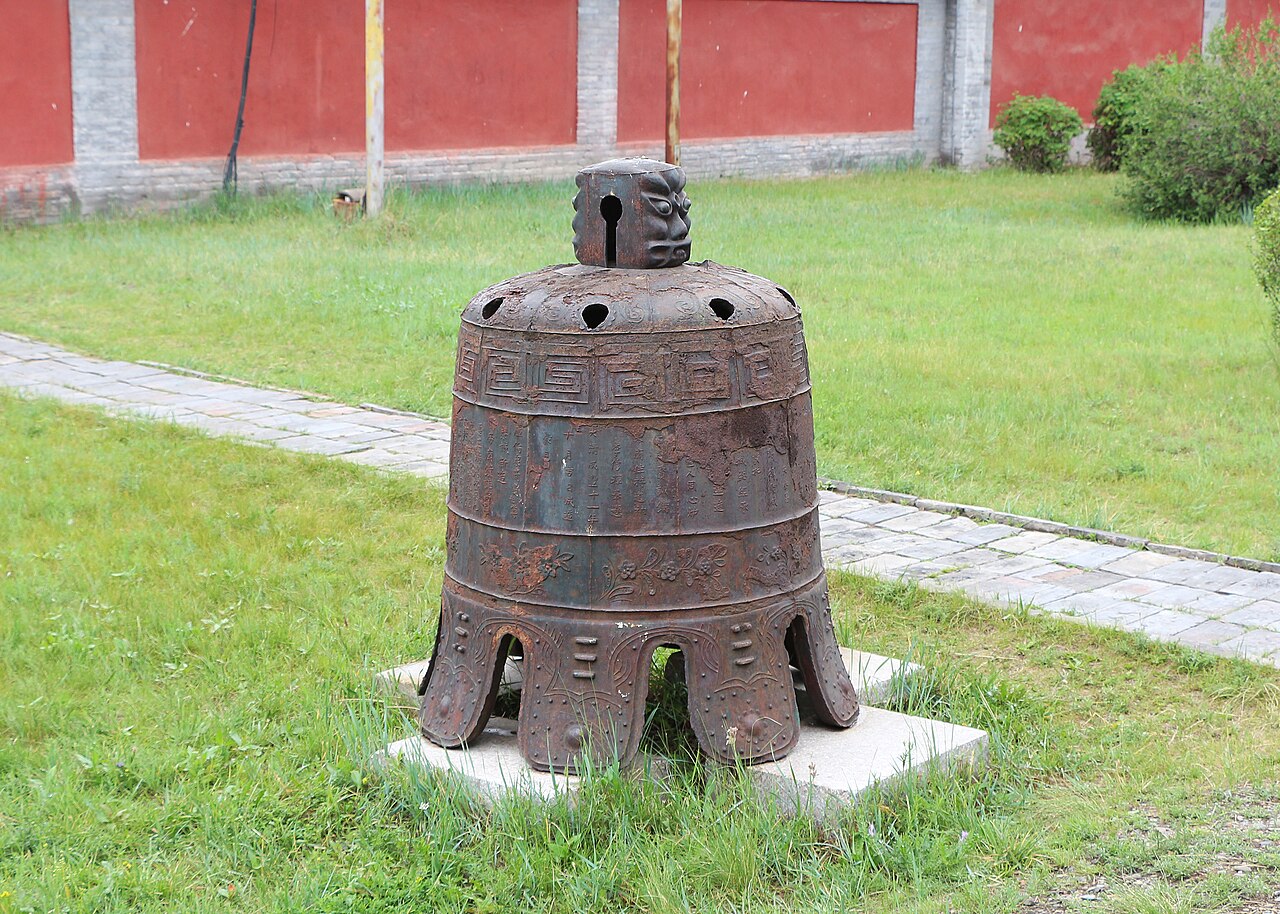
This was a fragile and contested independence. Mongolia found itself caught between the ambitions of China, which was reluctant to let it go, and Russia, whose support came with its own price, and the following years were marked by shifting fortunes, foreign interventions, and internal upheaval. Through much of it, the Bogd Khan remained the symbolic embodiment of Mongolian statehood, the person in whom the idea of an independent Mongolia was vested.
To stand in his palace, then, is to stand at a kind of birthplace of the modern nation. The declaration of independence, the assertion that Mongolia was a sovereign state under its own god-king rather than a province of an empire, was one of the defining acts of the country’s history, and this compound was the residence of the man in whose name it was made.
That the palace survives gives modern Mongolia a tangible link to that founding moment. Whatever came after, and much of what came after was harsh, the country traces its independent existence in part to the era of the Bogd Khan, and his palace remains the most vivid monument to the fraught, hopeful years in which a small Buddhist nation first claimed its place among the world’s states.
The Death of a King and the End of a Monarchy
The reign of the Bogd Khan, and with it a whole way of governing Mongolia, came to an end with his death in the 1920s. He was the last of his line to rule, and after he died the monarchy was not continued; instead, Mongolia was reshaped into a people’s republic aligned with the new Soviet power to the north, one of the first countries in the world to take that path outside Russia itself.
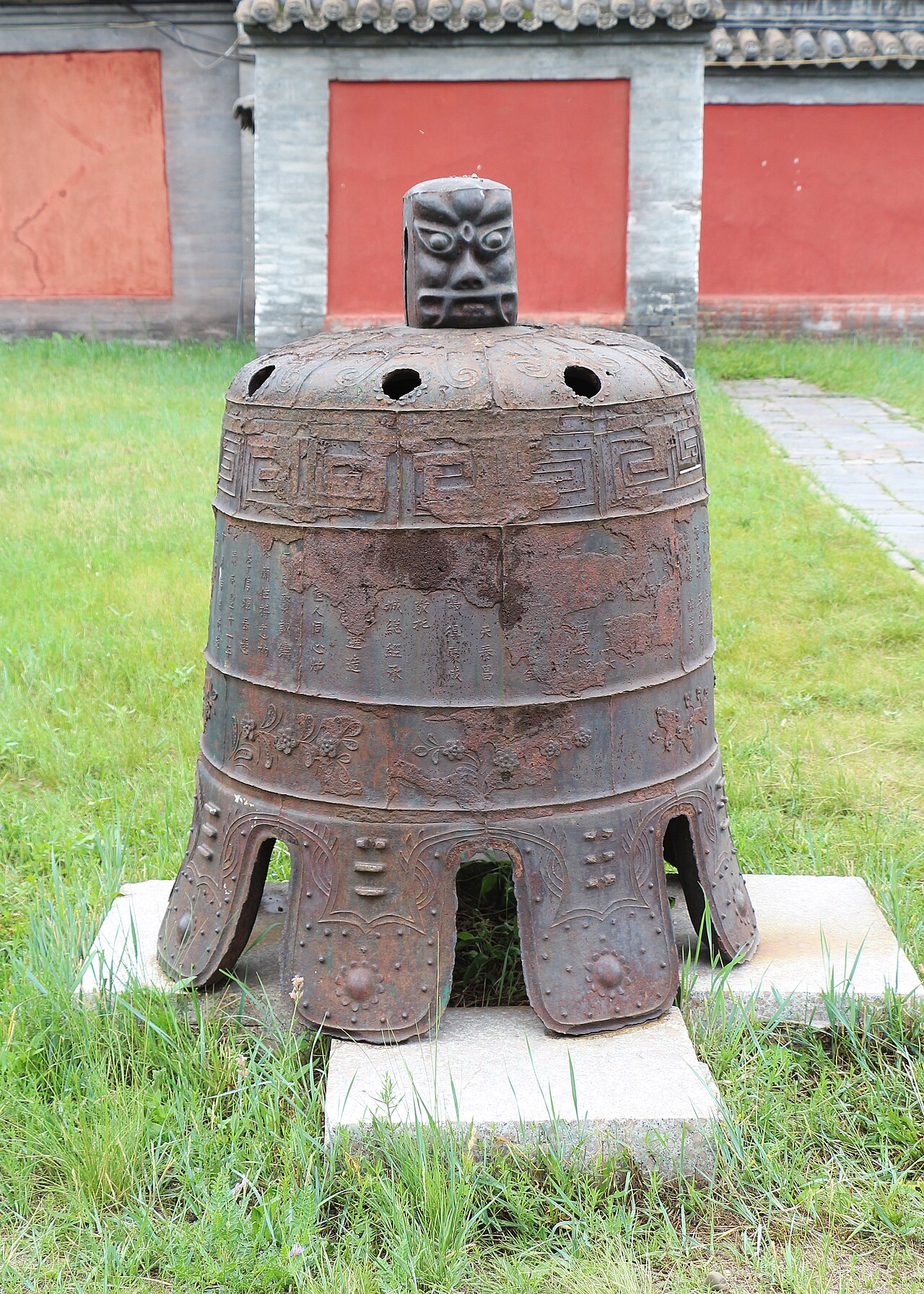
The change was profound and, for the country’s religious life, catastrophic. The new regime set about dismantling the old order, and in the following decades Mongolia’s monasteries were closed and destroyed, its religious art scattered or lost, and many of its monks killed or forced from their vocations. The theocratic world that the Bogd Khan had embodied was systematically swept away in a campaign of extraordinary severity.
Against that background, the fate of the palace is remarkable. Where so much was demolished, this compound was spared and instead turned into a museum, preserved as a relic of the very past the new state was otherwise erasing. The reasons were partly practical and partly propagandistic, but the result was the survival of one of the last great ensembles of old Mongolian religious and monarchical culture.
So the palace stands as a monument to an ending as much as to a reign. It marks the close of centuries of Buddhist theocratic tradition and the beginning of a hard new era, and it holds, within its preserved halls, the memory of the last god-king and of the world that died with him. There is a quietness to it that feels appropriate, the stillness of a place that outlived its own age.
How the Palace Became a Museum
The transformation of the Bogd Khan’s residence into a museum, only a few years after his death, is one of the more surprising twists in its history. In a period when the new regime was destroying temples across the land, this compound was set aside and preserved, its buildings and collections kept together and opened as a museum of the old order rather than reduced to rubble like so much else.
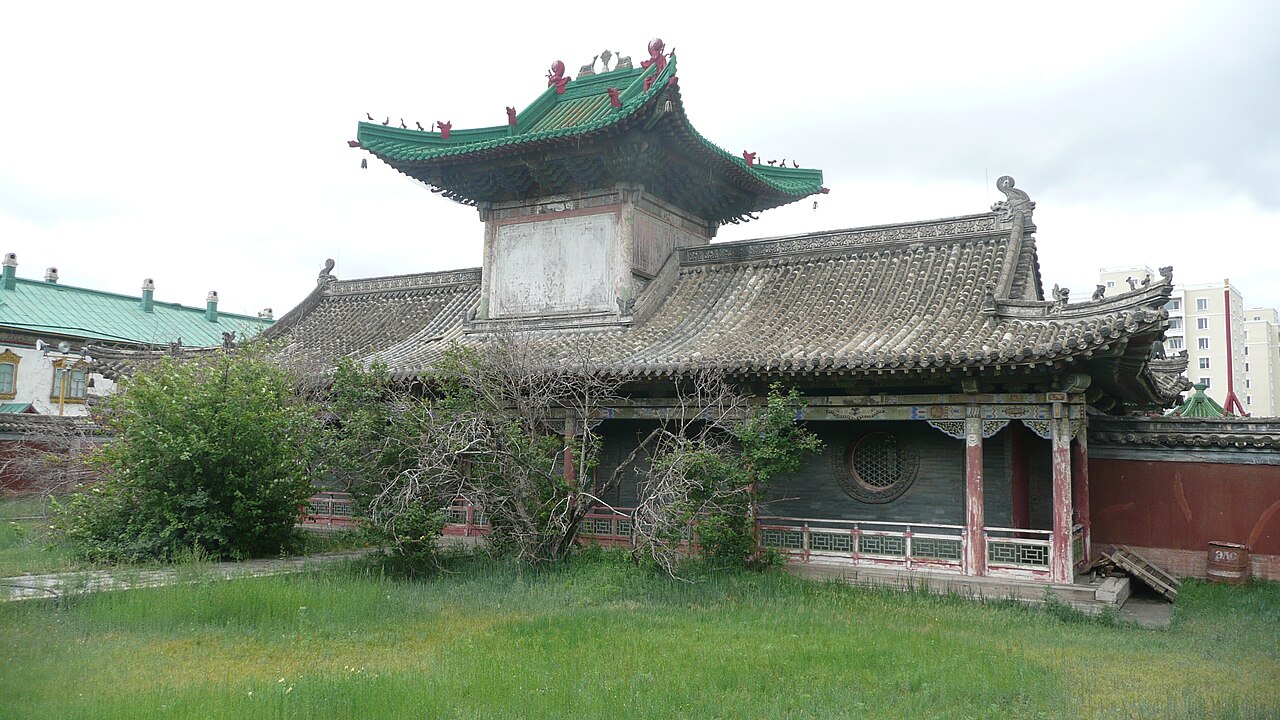
Part of the logic was to display the supposed excesses of the former ruling class and the old religion, using the palace as a kind of exhibit of a rejected past. But whatever the intention, the effect was preservation: the temples stood, the art remained in place, and the personal treasures of the Bogd Khan were kept rather than dispersed. A site that might easily have vanished instead became a protected repository of heritage.
Over the decades that followed, through all the changes in Mongolia’s fortunes, the museum endured. It weathered the long communist period and emerged, when the country changed course again toward the end of the twentieth century, as one of the treasured historic sites of a nation rediscovering its pre-revolutionary past. Its survival meant that Mongolians and visitors alike could still see the world of the Bogd Khan with their own eyes.
Today the palace museum is cared for as the national treasure it is, its buildings maintained and its collections studied and displayed. That it exists at all is a piece of great historical luck, and the debt is real: without this improbable act of preservation, one of the richest records of old Mongolia would have been lost with everything else. The museum is, in the end, a survivor’s story as much as a king’s.
There is an irony worth savouring here. A regime bent on erasing the old faith ended up becoming, almost in spite of itself, the guardian of one of that faith’s greatest surviving monuments. The temples were kept as evidence against the past, and in keeping them the state ensured that the past would still be there, waiting, when the country was finally ready to look at it with different eyes.
Inside the Palace on Film
The Bogd Khan Palace rewards slow looking: the layered roofs of the temple pavilions, the intricate joinery of the gate, the crowded richness of the sacred halls, the strange treasures of a god-king. The short film below offers a tour that brings these together, letting you move through the compound and sense the atmosphere of the place in a way that individual photographs cannot quite manage.

If Mongolia is on your travel horizon, watching something like this beforehand helps you make sense of what you will see. You will recognise the Green Palace and its temples, the ceremonial gate, and the European Winter Palace, and you will arrive knowing something of the extraordinary man who lived here and the history his residence embodies, ready to look rather than merely to gawp.
And if Ulaanbaatar is, for now, only a distant name, the film is a way to visit in imagination. Let it play, and picture yourself passing beneath the nail-less gate into the courtyards of the last god-king of Mongolia, among temple roofs and sacred images and the lingering presence of a vanished monarchy on the edge of the great steppe.
Visiting the Bogd Khan Palace
For travellers to Ulaanbaatar, the Bogd Khan Palace Museum is among the essential sights, offering a depth of history and a beauty that little else in the modern city can match. It lies within reach of the centre and can be explored in a couple of unhurried hours, wandering between the temple pavilions of the Green Palace, the ceremonial gate, and the European Winter Palace with its collections.
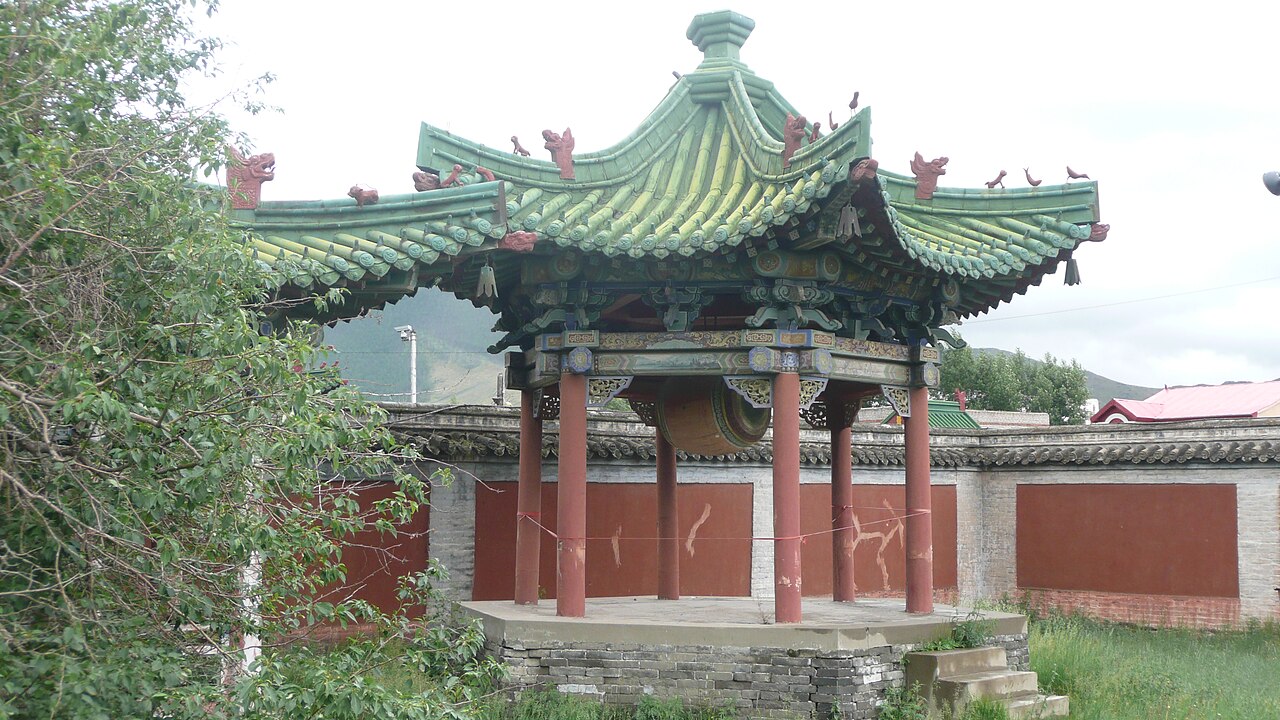
Take your time with the interiors and the art. Look closely at the thangkas and statues, the ceremonial robes, and the curiosities of the Bogd Khan, and let the guides and labels fill in the story of the man and his reign. Mongolia can be bitterly cold, so the season will shape your visit, but the compound repays attention in any weather, and its quiet courtyards offer a striking contrast to the bustle outside.
As always at a site of such fragility and significance, treat the buildings and their contents with care, follow local guidance on photography and access, and remember that much of what you see survived against terrible odds. You are among the last physical traces of a world that was very nearly destroyed, and the respect the place asks for is more than a formality.
However you come to it, let the palace tell its remarkable story: of a god-king who ruled a nation, of a country claiming its independence between empires, and of a compound of temples and treasures that outlived the monarchy it served. Few places gather so much history into so compact a space, and to walk the courts of the Bogd Khan is to touch the last chapter of old Mongolia.
Palaces Nearby
If the story of Mongolia’s last god-king has stayed with you, these two palaces of other fallen monarchies make natural companions.
- The House of Wonders That Astonished the Zanzibar Coast — the sultans’ ceremonial palace on the Stone Town seafront.
- Sitorai Mokhi-Khosa, the Moon and Stars Palace of Bukhara’s Last Emirs — the summer retreat of Bukhara’s final emirs.
You May Like
Konopiste the Bohemian Castle of a Doomed Archduke