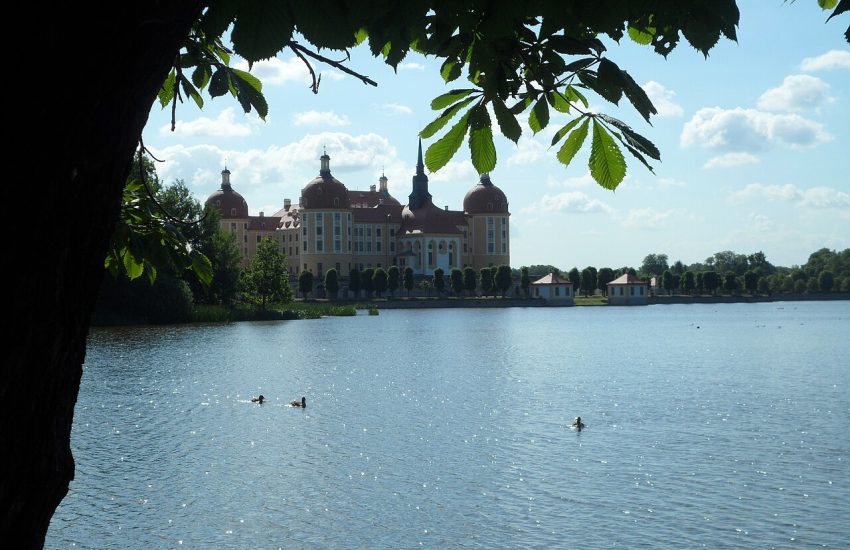
In the bustling city of Kumasi, in the forest heartland of Ghana, stands the seat of one of Africa’s most powerful and enduring monarchies: Manhyia Palace, home of the Asantehene, the king of the Asante. It is not a ruin, not a museum piece of a vanished order, but the living court of a kingdom that has survived war, conquest, and exile, and that still commands the deep loyalty of millions. To come here is to encounter a throne that has never stopped reigning.
The Asante built one of the great empires of West Africa, a state grown rich on gold and organised around a sacred symbol, the Golden Stool, believed to hold the very soul of the nation. Their kings warred with neighbours and, famously, with the British Empire, and though they were eventually brought under colonial rule, they were never truly extinguished. The palace at Manhyia is the proof: the enduring centre of a monarchy that outlasted the empire that tried to end it.
There is a deep irony at the heart of the palace’s story, for the original Manhyia was built by the British themselves, on the eve of returning an exiled king to his people. Today that first palace is a museum, complete with lifelike effigies of past monarchs, while a newer palace nearby houses the reigning Asantehene. In the sections that follow you will meet the kingdom, its sacred stool, its kings, and the palace that has become the proud symbol of the Asante nation.

In This Article
- The Living Court in Kumasi
- An Empire Built on Gold
- The Golden Stool and the Soul of a Nation
- Exile, Return, and a Palace Built by the Conqueror
- The Old Palace and the New
- The King Who Reigns Today
- Gold, Kente, and the Language of Symbols
- The Rhythm of the Akwasidae Festival
- The Palace Museum and Its Silent Kings
- The War of the Golden Stool
- A Throne Within a Republic
- The Palace on Film
- Visiting Manhyia Palace
The Living Court in Kumasi
Kumasi, the great city at the centre of Ghana’s Ashanti Region, has been the heart of the Asante nation for centuries, and Manhyia Palace is its crown. Set amid the busy, modern city, the palace complex is the residence and court of the Asantehene, the king of the Asante, and the focus of the ceremonial and cultural life of a people whose sense of identity remains extraordinarily strong.

What strikes the visitor first is that this is a living institution, not a relic. The Asante monarchy did not die with colonialism or with independence; it endures within the modern republic of Ghana as a revered traditional authority, and Manhyia is its beating heart. Here the king holds court, receives his chiefs and his people, and presides over the ceremonies that bind the nation together, exactly as his predecessors did.
The complex today has two main parts: the original palace, built in the early twentieth century and now preserved as the Manhyia Palace Museum, and a newer, larger palace built later in the century to house the reigning monarch. Together they express both the history and the continuing vitality of the kingship, the old palace keeping the memory, the new one keeping the throne.
To arrive at Manhyia, then, is to arrive not at a monument to something lost but at the seat of something very much alive. The gates, the guards, the ceremony, and the reverence of the people all speak of a monarchy that matters, and understanding that living quality is the key to understanding everything the palace contains.
For many Ghanaians, and for the Asante above all, a visit here is a matter of pride rather than mere tourism, a return to the source of a shared identity.
An Empire Built on Gold
To grasp the importance of Manhyia, you must know the kingdom it serves. The Asante built one of the most powerful states in the history of West Africa, a kingdom that rose in the forest lands and expanded, over the seventeenth, eighteenth, and nineteenth centuries, into a wealthy and formidable empire. Its strength rested on organisation, military skill, and above all on gold, which the region possessed in abundance.

Gold was the foundation of Asante wealth and the substance of its splendour. The kingdom traded it, adorned its kings and court with it, and made it central to the symbolism of power, so that the ceremonial life of the Asante glittered with golden ornaments, regalia, and treasures. This association with gold gave the kingdom its fame and helped make Kumasi one of the great capitals of the region.
The Asante state was also a sophisticated political structure, a union of peoples under the paramount authority of the Asantehene, bound together by shared institutions, law, and ceremony. It fielded powerful armies and pursued an ambitious foreign policy, expanding its influence across a wide territory and dealing, sometimes in trade and sometimes in war, with its neighbours and with the Europeans on the coast.
This was the kingdom whose throne Manhyia represents, a genuine empire with a long and proud history, not a minor chieftaincy. When you stand in the palace and see its treasures, you are seeing the memory of a state that ranked among the great powers of West Africa, and whose wealth, organisation, and confidence made it one of the most remarkable political achievements of the continent.
Kumasi, the capital, astonished some of the European visitors who reached it in the nineteenth century, who found a large, well-ordered city with broad streets, a disciplined court, and a wealth of gold that confounded their expectations. Whatever prejudices they arrived with, they could not deny that they had come to the capital of a serious and sophisticated power.
The Golden Stool and the Soul of a Nation
At the very heart of Asante identity lies not a crown or a throne in the European sense, but a stool, the Golden Stool, one of the most sacred objects in Africa. According to Asante tradition, this golden seat descended from the sky, conjured down by a great priest, and came to rest on the knees of the first Asantehene, embodying the very soul and unity of the entire nation.
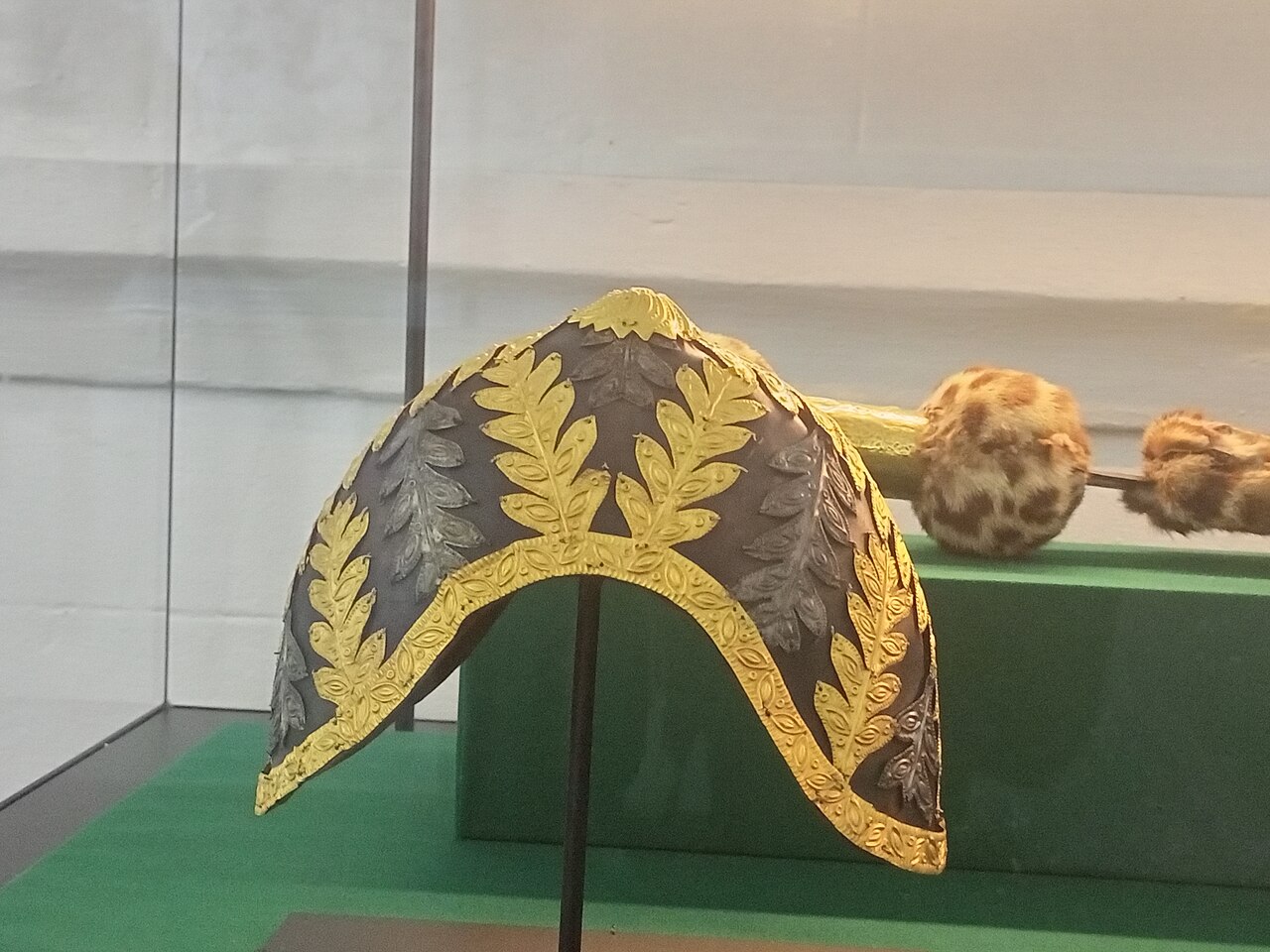
The Golden Stool is not something to be sat upon; it is far too sacred for that. It is understood to contain the spirit of the Asante people, past, present, and future, and its wellbeing is bound up with the wellbeing of the nation itself. It is treated with the utmost reverence, brought out only on the greatest occasions, and never allowed to touch the ground, resting instead on its own throne or on cloth.
This concept, of a sacred object embodying the collective soul of a people, gives the Asante monarchy a spiritual depth quite different from many other thrones. The Asantehene reigns as the custodian of the Golden Stool and the human focus of the nation it represents, so that kingship here is a sacred trust as much as a political office. The stool, not the king, is the ultimate symbol of the nation.
Understanding the Golden Stool is essential to understanding Manhyia and everything it stands for. The palace, the regalia, the ceremonies, all serve a monarchy whose deepest meaning lies in that golden seat and the unity it represents. When the Asante speak of their kingdom, they speak, in the end, of the Golden Stool, and the reverence surrounding it explains the passion with which the nation has always defended its independence and its throne.
It is hard to overstate how radically this reframes the idea of monarchy. In many traditions the throne is the seat of the ruler and the ruler is the state; among the Asante the sacred seat belongs to no one and to everyone, and the king is its servant and guardian rather than its owner. That single idea explains a great deal about the character of the kingdom, its cohesion, its endurance, and the depth of feeling that any threat to the stool has always aroused.
Exile, Return, and a Palace Built by the Conqueror
The story of the palace itself is bound up with one of the most dramatic episodes in Asante history. In the late nineteenth century, after a series of wars, the British forced the reigning Asantehene, Prempeh I, into exile, sending him far away to the Seychelles islands in the Indian Ocean and bringing the kingdom under colonial control. For years the king was kept from his people, a captive of empire.
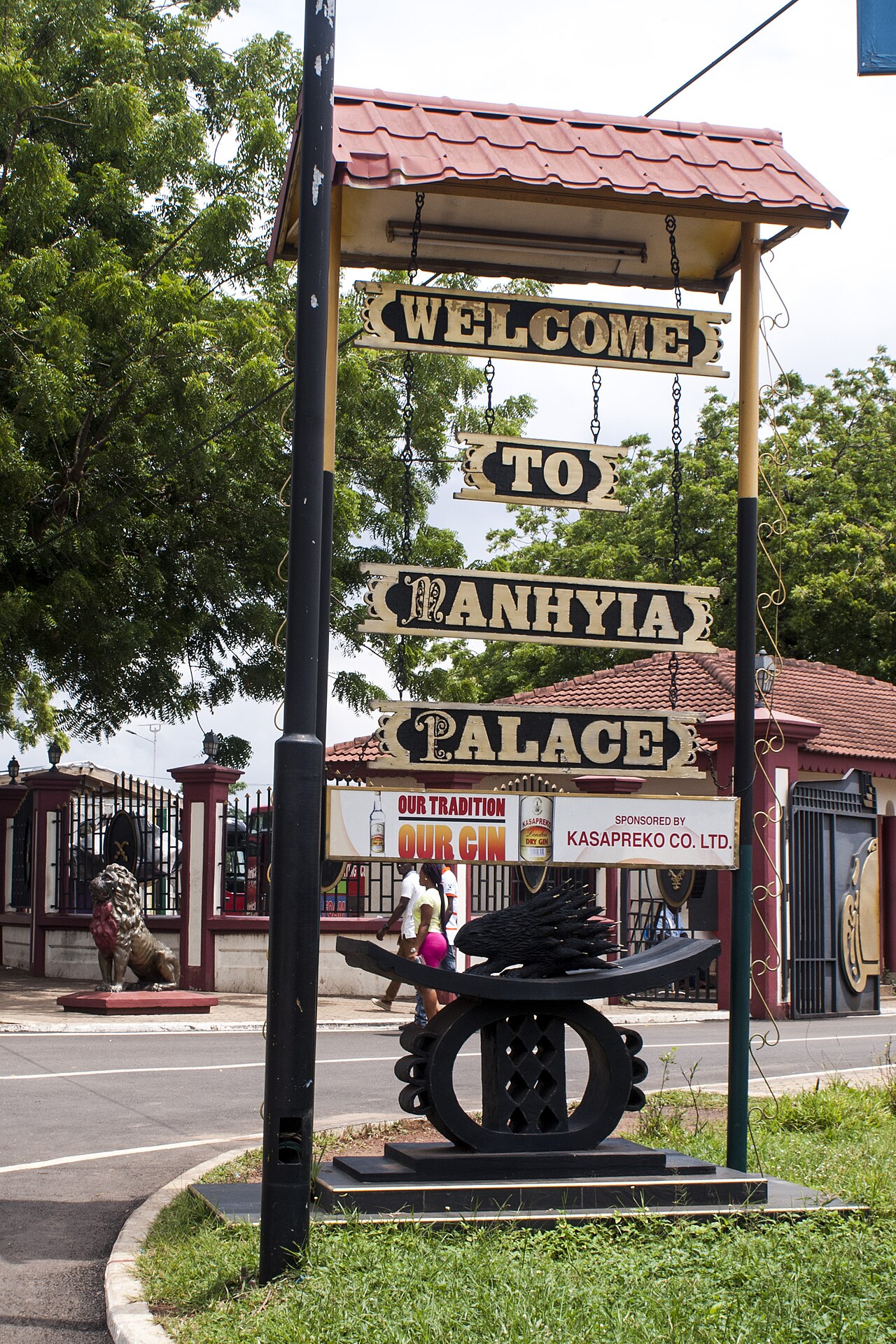
Eventually, after long campaigning and the passage of time, Prempeh I was allowed to return to Kumasi in the early twentieth century. It was on the occasion of his return that Manhyia Palace came into being, and in a striking twist, it was the British colonial authorities who built the residence and presented it to the returning king, who then acquired it as his home. The conquerors, in effect, built the palace of the king they had exiled.
That irony sits at the core of the palace’s identity. Manhyia was born out of both defeat and survival: the kingdom had been humbled, its king exiled, its independence lost, and yet the monarchy endured, the king came home, and a new seat rose for the throne. The palace thus embodies the resilience of the Asante, their capacity to suffer conquest and exile and still preserve their kingship and their identity.
The return of Prempeh I and the establishment of Manhyia marked the beginning of a new chapter, in which the Asante monarchy adapted to a changed world while holding fast to its traditions. From that base the kingship was gradually restored in dignity and influence, so that the palace built at the moment of return became the foundation of the enduring, living monarchy that Manhyia represents today.
Prempeh I returned not as the sovereign of an independent empire but, at first, in a reduced status, and only later was the full dignity of the Asantehene formally restored. Yet the people received him as their king regardless of any title the colonial authorities were willing to grant, and that gap, between what the empire recognised and what the Asante knew in their hearts, is itself part of the story Manhyia tells.
The Old Palace and the New
Architecturally, Manhyia is best understood as a complex that has grown over time. The original palace, dating from the early twentieth century, is a handsome colonial-era building, and it is this structure that now serves as the Manhyia Palace Museum, preserved much as it was when it housed the kings who lived there through the middle decades of the century.
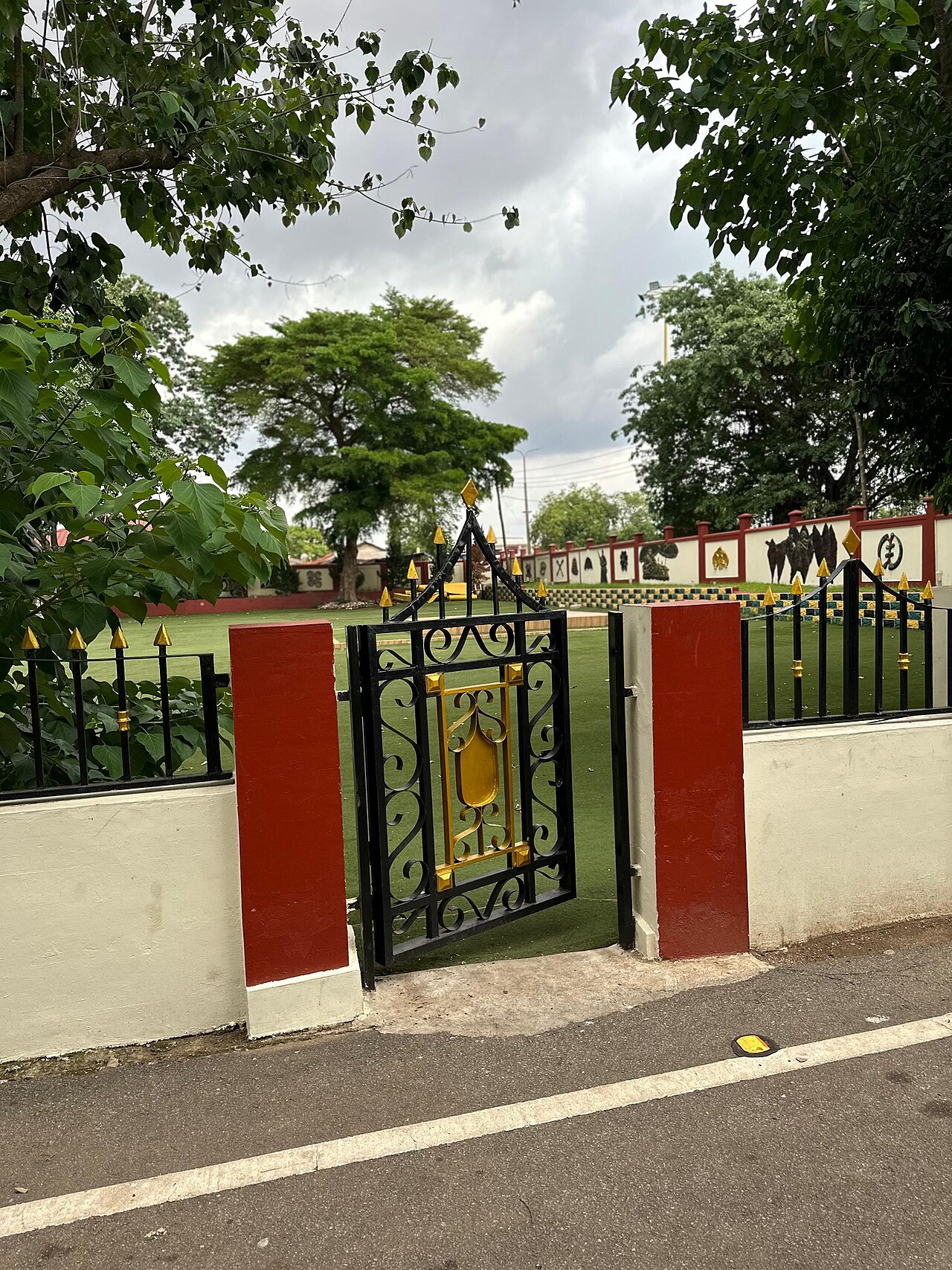
As the monarchy’s dignity and role were restored and the needs of the court grew, a newer and grander palace was built nearby in the later twentieth century to serve as the residence of the reigning Asantehene. This division allows the old palace to be opened to the public as a museum while the new one remains the private working seat of the king, keeping the throne’s daily life shielded from the visitor’s gaze.
The buildings themselves are dignified rather than flamboyant, their importance lying less in architectural extravagance than in what they house and what they mean. Manhyia is not a palace that seeks to overwhelm with size or ornament in the manner of some European or Asian courts; its grandeur is expressed above all through the ceremonies, the regalia, and the presence of the king and his court.
This is fitting for a monarchy whose true treasures are its traditions and its sacred symbols rather than its buildings. The palace provides the setting, but the real splendour of the Asante court appears when it is filled with people, with the king in his golden regalia, the chiefs in their kente, the drummers and horn-blowers and attendants, transforming the dignified buildings into the stage of a living kingdom.
The King Who Reigns Today
At the centre of it all is the Asantehene, the reigning king of the Asante, one of the most respected traditional rulers in Africa. Far from being a ceremonial figurehead alone, the Asantehene wields great moral and cultural authority, commanding the loyalty of the Asante people and playing a significant role in the life of modern Ghana, where traditional rulers hold an honoured and influential place.

The current Asantehene reigns from Manhyia as the latest in a long line of monarchs stretching back to the founding of the kingdom, the custodian of the Golden Stool and the head of the Asante nation. His authority blends the sacred and the political: he is at once a revered traditional and spiritual figure, a symbol of unity, and a leader whose voice carries weight far beyond the boundaries of the Ashanti Region.
The office is filled according to Asante custom, through the traditional processes by which a new king is chosen from the royal lineage and enthroned, or enstooled, in the language of a kingdom whose symbol of authority is the stool. The ceremonies surrounding the accession and reign of an Asantehene are elaborate and deeply significant, binding the new king to the Golden Stool and to the nation.
To the Asante, the Asantehene is far more than a relic of the past; he is a living link to their history, a guarantor of their identity, and an active force in their present. Manhyia is important precisely because it is his seat, the place from which this respected monarch reigns, and the reverence with which the palace is regarded flows directly from the reverence in which the king himself is held.
Gold, Kente, and the Language of Symbols
The visual splendour of the Asante court is famous, and much of it is on display in the treasures associated with the palace. Gold, the foundation of the kingdom’s wealth, appears everywhere in the regalia: golden ornaments, jewellery, ceremonial objects, and the gleaming adornments worn by the king and his court on great occasions, a dazzling expression of the nation’s historic riches.

Equally celebrated are the textiles, above all kente, the brilliantly coloured, intricately woven cloth that is one of the most recognisable symbols of Asante and Ghanaian culture. Worn by the king and chiefs, kente is far more than decoration; its patterns and colours carry meanings, and particular designs are associated with royalty and with specific occasions, making dress itself a language of status and significance.
The Asante also express meaning through adinkra, a system of symbols each carrying a proverb or concept, from ideas of endurance and wisdom to the supremacy of God, used in cloth, architecture, and art. Together with the gold and the kente, these symbols weave a rich visual culture in which nearly everything, colour, pattern, ornament, communicates values and beliefs, so that the court is legible as well as beautiful.
To see the regalia of Manhyia is thus to read the culture of the Asante. The golden objects speak of wealth and sacred kingship, the kente of status and occasion, the adinkra of the wisdom and beliefs of the people. This is a court where splendour is never merely splendour; every gleaming object and woven pattern is part of a language through which the nation expresses who it is.
Even the stools themselves are meaningful, for among the Asante a stool is the symbol of a person’s office and soul, and blackened ancestral stools are preserved with reverence as the seats of former chiefs and kings. In this world the humble stool, far from being mere furniture, is one of the most sacred objects of all, which is precisely why the Golden Stool could stand for the soul of the entire nation.
The Rhythm of the Akwasidae Festival
The living character of the Asante monarchy is nowhere more vivid than in its festivals, and the most important of these is the Akwasidae, a recurring celebration in the traditional calendar during which the Asantehene holds public court in great splendour. On these occasions the palace and its surroundings come alive with ceremony, and the visitor may glimpse the full magnificence of the Asante court.
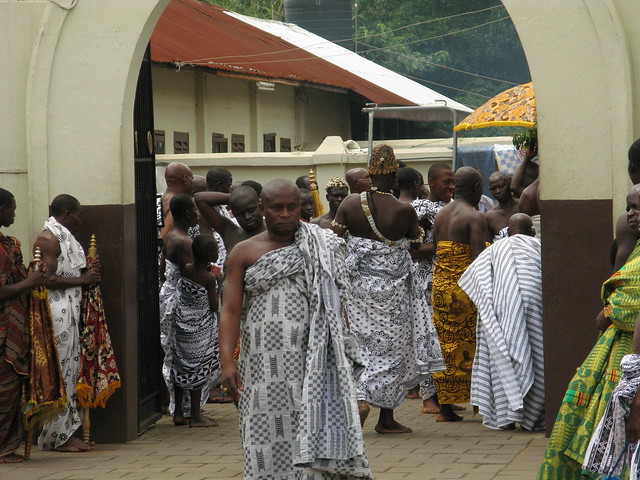
During Akwasidae, the king appears in his golden regalia, seated in state, surrounded by his chiefs in their finest kente, attended by drummers, horn-blowers, sword-bearers, and the whole apparatus of the court. The rhythms of the talking drums, the blowing of horns, the pouring of libations, and the paying of homage by chiefs and subjects create a spectacle of extraordinary richness and dignity.
These ceremonies are not performances for tourists but genuine expressions of the traditional and spiritual life of the nation, occasions on which the Asante renew their loyalty to the Golden Stool and to the king who embodies it. They connect the present to the deep past, enacting customs handed down over generations and reaffirming the bonds that hold the kingdom together.
For a visitor fortunate enough to witness an Akwasidae, it is an unforgettable experience, a chance to see one of Africa’s great monarchies in full ceremonial life. Even for those who visit at other times, knowing that such ceremonies still take place at Manhyia transforms the palace from a set of buildings into the living stage of a court whose traditions remain gloriously intact.
The Palace Museum and Its Silent Kings
The original Manhyia Palace, now the Manhyia Palace Museum, offers visitors a rare and intimate window into the monarchy. Opened as a museum in the later twentieth century, it preserves the residence of the kings who lived there, with its rooms, furnishings, and personal effects giving a vivid sense of the domestic life of the throne during a crucial period of its history.

Among the museum’s most striking features are the lifelike effigies of past Asantehenes and royals, wax-like figures that depict former kings and members of the royal family with remarkable realism. Encountering these silent, seated monarchs in the rooms they once inhabited is a powerful experience, bringing the recent kings of the Asante vividly, almost eerily, to life for the visitor.
The museum also displays a wealth of objects connected with the monarchy, from photographs and documents to regalia, furniture, and personal belongings, telling the story of the kingdom’s modern history, its exile and return, its endurance under colonial rule, and its continuing vitality. It is a place where the history recounted in these sections becomes tangible and specific.
By turning the old palace into a museum while the reigning king lives in the new one, the Asante have found a graceful way to share their heritage without disturbing the living throne. Visitors can walk through the very rooms where recent monarchs lived, meet their effigies, and learn their story, all while the true court continues its life nearby, a rare balance of openness and continuity.
Guides often tell the stories behind each figure and object with evident pride, for this is their own living heritage, not a foreign curiosity. That sense of ownership gives a visit to the museum a warmth and immediacy that few historical displays can match.
The War of the Golden Stool
No account of the Asante monarchy is complete without the story of its defence, and no episode captures the spirit of the kingdom better than the famous conflict remembered as the War of the Golden Stool. When a British official, during the period of colonial pressure, demanded to sit upon the sacred Golden Stool, the outrage of the Asante was profound, for it struck at the very soul of the nation.

Into this crisis stepped one of the great figures of African history, Yaa Asantewaa, a queen mother who rallied the Asante to armed resistance in defence of the stool and the kingdom’s honour. Her leadership in the uprising, at a time when the king was in exile, made her an enduring symbol of courage and of resistance to colonial domination, celebrated across Ghana and beyond.
The revolt was, in military terms, ultimately unsuccessful, and it led to further exile and tightened colonial control, but its meaning far outlived its outcome. The willingness of the Asante to fight for the Golden Stool demonstrated that the sacred symbol, and the independence and identity it represented, was worth any sacrifice, a lesson that resonated through the kingdom’s later survival.
The story of Yaa Asantewaa and the War of the Golden Stool is remembered with fierce pride, and it illuminates the reverence surrounding the palace and its treasures. The Golden Stool was never surrendered and never sat upon by a foreign hand; the soul of the nation was preserved. That preservation, won through such courage, is part of what Manhyia celebrates as the seat of an unbroken throne.
Her words on that occasion, urging the men to fight and vowing that the women would if they would not, have become some of the most famous in African history, a rallying cry of dignity and defiance. That a queen mother should lead the defence of the nation also speaks to the important political role of royal women among the Asante, whose queen mothers hold real authority, including in the choosing of kings.
A Throne Within a Republic
One of the most remarkable things about the Asante monarchy is how it has adapted and endured. When Ghana became an independent republic, the traditional kingdoms within it, the Asante foremost among them, were not abolished but preserved as honoured institutions, so that the country today combines a modern democratic state with a rich array of living traditional authorities.
Within this arrangement, the Asantehene and the court at Manhyia occupy a place of great prestige. The king exercises significant cultural and moral leadership, mediates disputes, champions development and education, and serves as a unifying figure for the Asante and a respected voice in national affairs. The monarchy has found a role that is both deeply traditional and thoroughly relevant to the present.
This blending of old and new gives the palace a special significance. Manhyia is not a museum of a dead institution but the seat of a monarchy that has proven able to carry its ancient traditions into the modern world, holding fast to the Golden Stool and the customs of the kingdom while engaging fully with contemporary Ghana. It is a model of how heritage and modernity can coexist.
For the Asante, this continuity is a source of enormous pride. Their kingdom suffered conquest and exile yet never lost its soul, and today its throne stands honoured within a modern nation. Manhyia is the symbol and centre of that achievement, a palace that represents not a vanished past but a living, adapting, and enduring monarchy, one of the great surviving thrones of Africa.
It is worth remembering, too, how unusual this survival is. Across much of the world the monarchies of the nineteenth century were swept away by revolution, war, or colonial conquest, their palaces left as museums and their thrones as memories. The Asante endured all of that and kept their throne occupied, which is why Manhyia feels so different from the many royal residences that are now only monuments to what once was.
The Palace on Film
The splendour and the living vitality of the Asante court are difficult to convey in words and still images alone, so much of it lies in movement, colour, drumming, and ceremony. The short film below offers a tour of Manhyia and its story, helping to bring the palace, its history, and its treasures to life alongside the account given in this article.

If you are planning to visit Kumasi, watching something like this beforehand will help you appreciate what you see, from the museum and its effigies to the meaning of the regalia and the significance of the Golden Stool. Arriving with a sense of the kingdom’s history lets you understand the palace as the living seat of a monarchy rather than merely a set of buildings.
And if Ghana lies beyond your travels for now, the film is a fine way to encounter one of Africa’s great monarchies from afar. Let it play, and imagine the court of the Asantehene in full ceremony, the gold, the kente, the drums, and the reverence for the Golden Stool that has held this nation together for centuries.
Visiting Manhyia Palace
For travellers to Ghana, Manhyia Palace is one of the essential sights of Kumasi and a highlight of any visit to the Ashanti Region. The Manhyia Palace Museum, housed in the original palace, is open to visitors and offers guided tours that explain the history of the kingdom, the meaning of its symbols, and the lives of the kings whose effigies stand within its rooms.
A visit rewards a respectful and curious spirit. This is the heart of a living monarchy, and the museum and its guides convey not just historical facts but the deep cultural and spiritual significance of the Asante throne, the Golden Stool, and the traditions of the court. Taking the time to listen and learn transforms the visit from sightseeing into a genuine encounter with a great African civilization.
Because Manhyia is the seat of a reigning king, visitors should be mindful of its living, ceremonial character, following the guidance of the museum and respecting the customs and dignity of the place, especially around the reigning palace and any ceremonies. If your visit can coincide with an Akwasidae or another festival, the experience of seeing the court in action is beyond compare.
However you come to it, Manhyia offers something rare and precious: a chance to encounter one of Africa’s most powerful historic kingdoms not as a ruin or a memory but as a living, reigning monarchy. To visit is to touch the enduring soul of the Asante nation, symbolised by the Golden Stool and embodied in the palace of their king, a throne that has survived everything history could throw at it and reigns still.
Palaces Nearby
If the enduring throne of the Asante has drawn you in, these two other nineteenth-century courts, each far from Europe, make natural companions.
- Sans-Souci, the Mountain Palace of the Slave Who Became King of Haiti — Henri Christophe’s baroque palace in the Haitian mountains.
- The Summer Palace of Petropolis and Brazil’s Last Emperor — the mountain retreat of Emperor Dom Pedro II.
You May Like
Konopiste the Bohemian Castle of a Doomed Archduke