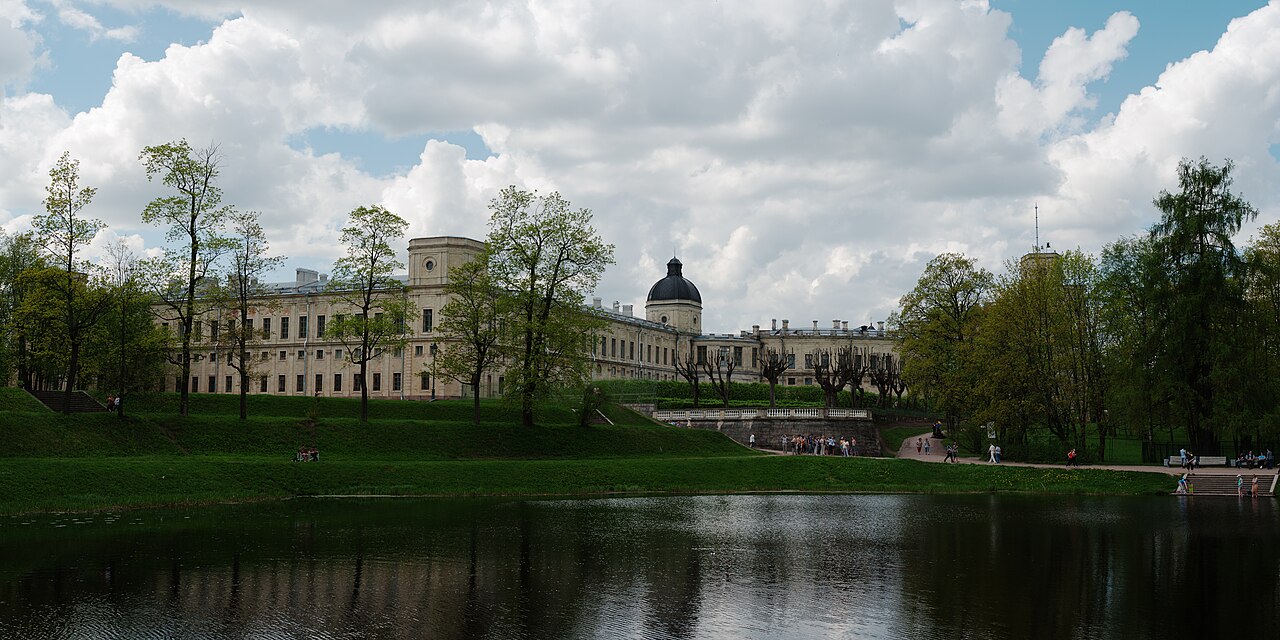
Of the three palaces in this little tour around St. Petersburg, Gatchina is the one that feels least like a palace and most like a castle. Long, grey, and faintly severe, it stands above its lakes with towers at either end and the air of a fortress rather than a pleasure house, and that difference of mood is exactly what makes it so memorable. Where other imperial residences flirt and dazzle, Gatchina broods.
The palace has had a dramatic cast of owners, from a favorite of Catherine the Great to an emperor who loved it so much he practically governed the country from behind its walls. It has secret passages, an underground tunnel that plays tricks with your voice, a vast park full of lakes, and a history that runs from courtly glamour to wartime ruin and slow, ongoing restoration. Few palaces pack so many different stories into one building.
This is the third article in a short set on imperial-era palaces around St. Petersburg, after the city-center opulence of the Yusupov Palace and the gentle neoclassical grace of Pavlovsk. Gatchina is the wild card of the three, a stone stronghold with a romantic soul, and by the end you will see why it has fascinated everyone from a lonely emperor to the modern visitors who come for its towers, its tunnels, and its lakes.
In This Article
- Arriving at Gatchina
- A Gift to a Favorite of Catherine the Great
- Paul the First and the Palace as a Fortress
- The Grey Stone Castle and Its Towers
- State Rooms Behind the Stern Facade
- The Emperor Who Made Gatchina His Home
- The Secret Tunnel and Its Famous Echo
- Lakes, Bridges, and the Great Park
- Collections, Arms, and Imperial Treasures
- Climbing the Tower for the View
- War, Ruin, and the Long Road Back
- Gatchina on Film
- Visiting Gatchina Today
Arriving at Gatchina

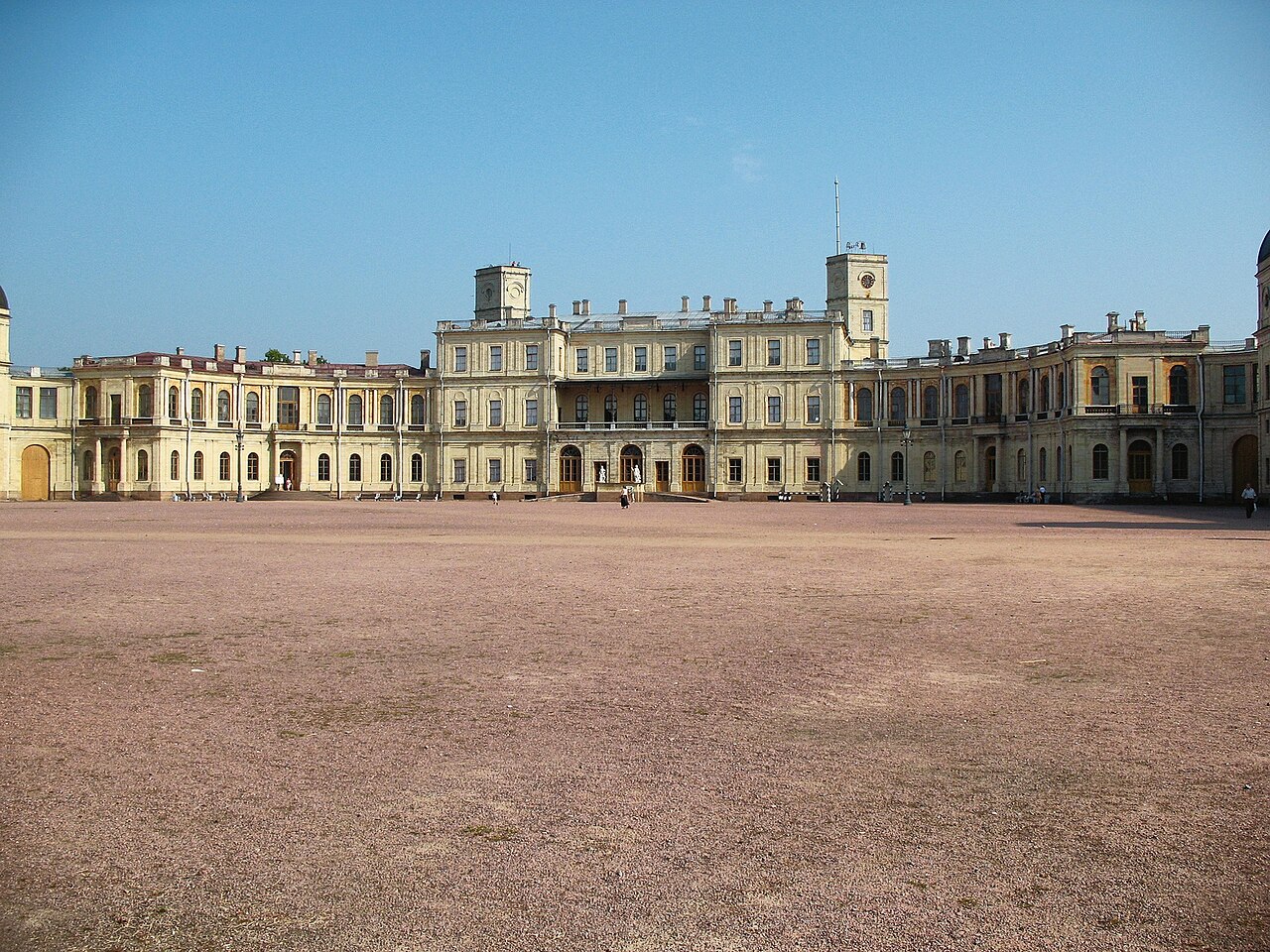
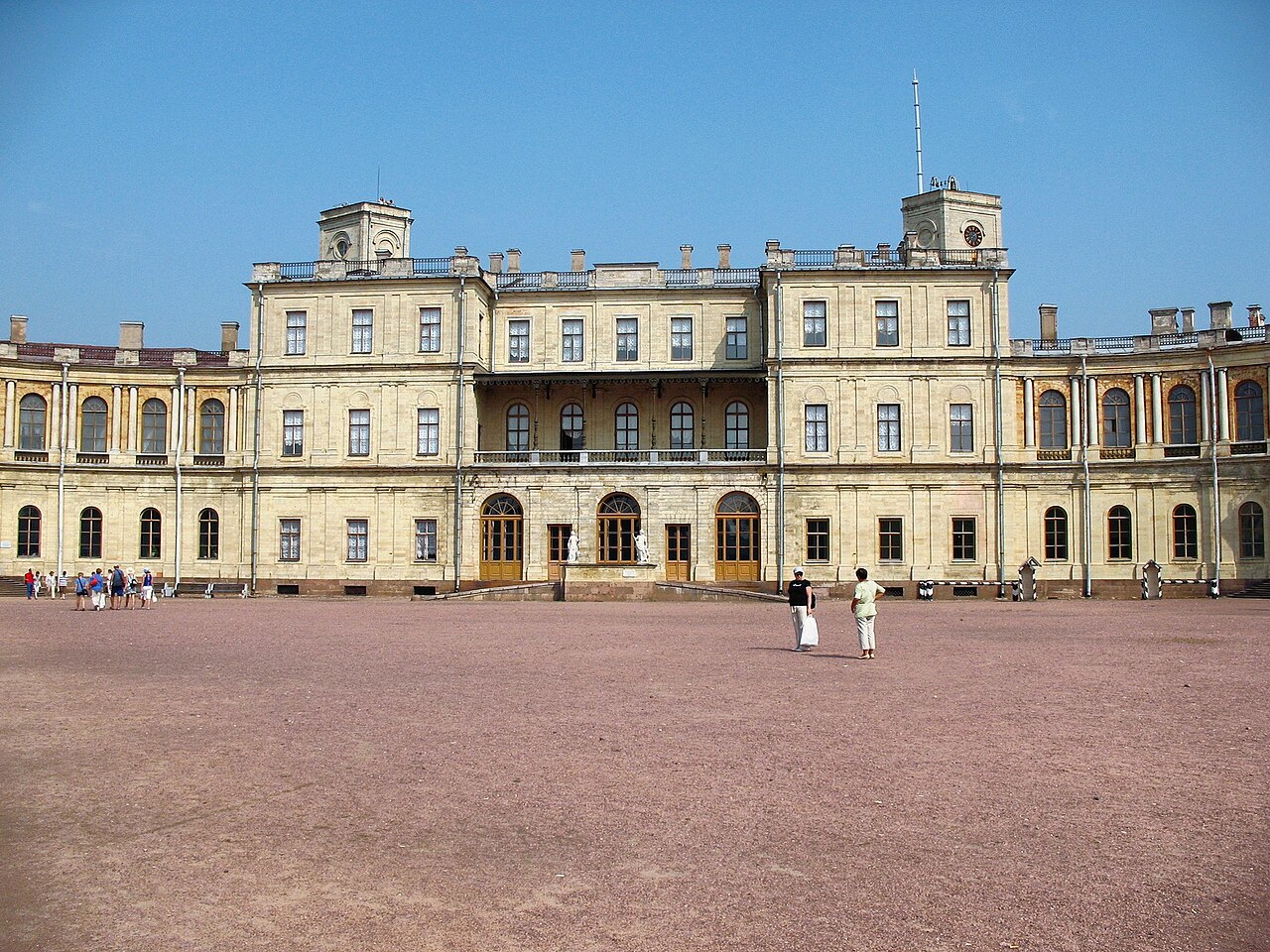
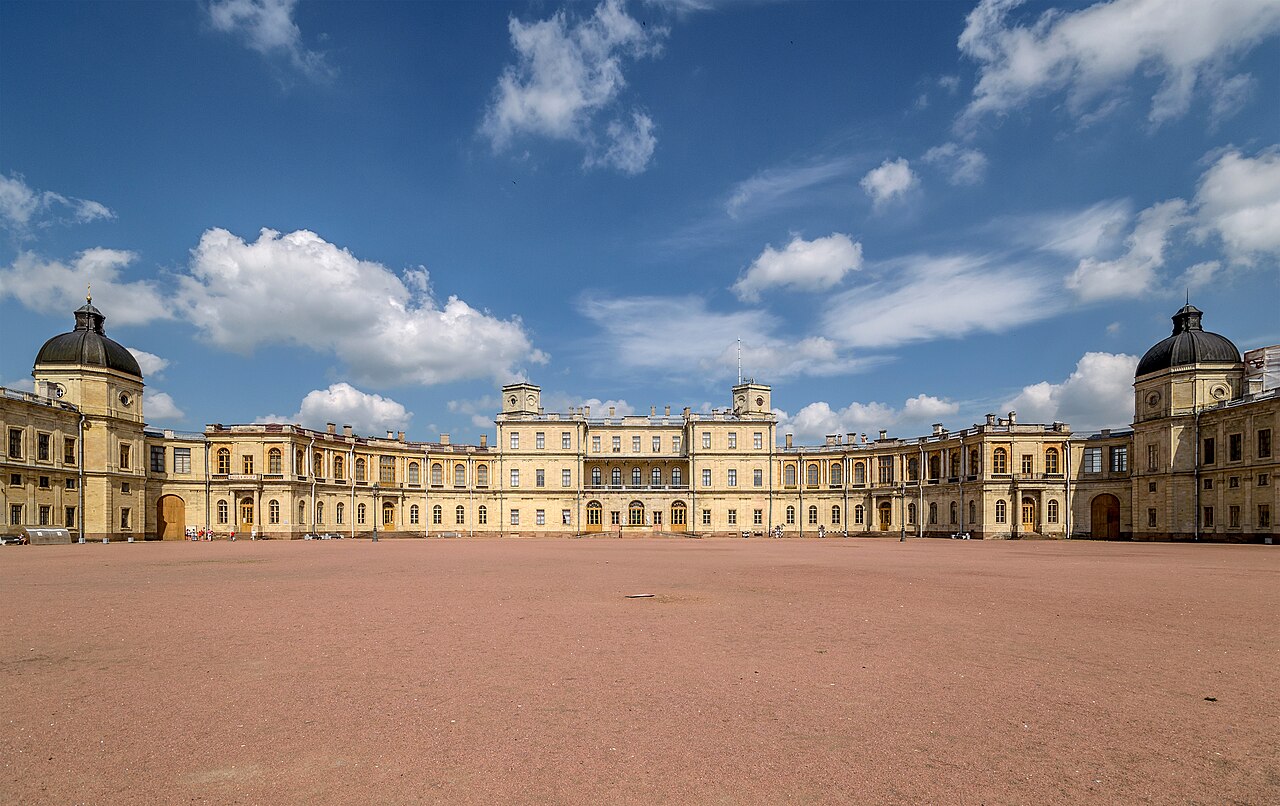
Your first sight of Gatchina is unlike any other palace near St. Petersburg. Instead of a bright, gilded facade, you see a long, grave building faced in grey stone, with a tower rising at each end and a frontage that suggests defense as much as display. It reads as a castle set in a park, and that martial character colors the whole experience from the moment you arrive.
The setting heightens the effect. The palace stands above a system of lakes, its grey walls reflected in the water, surrounded by an enormous park that stretches away in every direction. There is a stillness and a slight austerity to the scene that feels very different from the cheerful grandeur of other imperial residences, more northern, more romantic, and a little melancholy.
That mood is not an accident. Gatchina was shaped over time by owners who valued seclusion and a certain severity, above all the emperor Paul, who turned it into something close to a private fortress. Even when the interiors soften into elegance, the building never quite loses its castle-like reserve, and part of its appeal is precisely this tension between fortress and palace.
As you approach, give yourself a moment to take in the whole composition, the grey stone, the towers, the lakes, and the park. Gatchina is a palace that works at the scale of landscape, meant to be seen as part of its surroundings, and understanding that relationship from the start helps you appreciate everything that follows inside.
There is also a sense of discovery in reaching Gatchina that the closer palaces lack. Because it sits a little further from the city and draws smaller crowds, arriving can feel like stumbling upon a secret, a great grey castle rising unexpectedly from its park and lakes. That slight sense of remoteness is part of its romance and shapes the whole mood of a visit.
A Gift to a Favorite of Catherine the Great

Gatchina began as a gift from Catherine the Great to Count Grigory Orlov, one of her favorites and a key figure in bringing her to power. For Orlov, the empress commissioned a grand country residence on the estate, and the result was the first version of the palace, an elegant building designed by a leading architect of the day in a restrained classical style with its distinctive stone facing.
The architect behind this original palace brought a refined European sensibility to the project, creating a house that was grand but also unusual, with its fortress-like silhouette and fine local stone. From the beginning Gatchina stood apart, combining the dignity of a classical palace with something more solid and castle-like, a character that later owners would lean into rather than erase.
Orlov did not enjoy the estate for long, and after his death the property passed to the crown, beginning its transformation from a favorite’s country house into an imperial residence. This early chapter, however, set the template, the stone facing, the towers, and the dramatic relationship with the surrounding lakes and park that would define Gatchina ever after.
It is worth remembering this origin as you explore, because it explains the palace’s unusual blend of intimacy and grandeur. It was conceived not as a great affair of state but as a magnificent private retreat for one powerful man, and that slightly personal, secluded quality clings to the building even after it became a home for emperors.
The scale of Catherine’s generosity to her favorites is worth pausing on, because a gift like Gatchina was a statement of imperial power as much as personal affection. To hand over an entire estate and fund a palace of this ambition showed the world how richly the empress could reward those close to her, and the building stands as a monument to that lavish age of favorites and the fortunes they enjoyed.
Paul the First and the Palace as a Fortress

The owner who stamped his personality most deeply on Gatchina was Paul, the son of Catherine the Great. Fascinated by military order and discipline, and temperamentally drawn to seclusion, Paul transformed the estate into something like a private stronghold, complete with parade grounds, guardhouses, and a strict military atmosphere that reflected his obsessions.
Under Paul, Gatchina became a place where life ran to the beat of the drum. He maintained his own troops here and drilled them relentlessly, turning the peaceful country estate into a center of military routine. The palace and its surroundings took on the character of a garrison as much as a residence, an expression of Paul’s rigid, soldierly vision of order.
This militarization was partly a matter of temperament and partly of circumstance. Kept at a distance from power during his mother’s long reign, Paul retreated to Gatchina and created there a world entirely under his own control, where he could command and arrange things exactly as he wished. The palace became both a refuge and a stage for his particular idea of discipline.
Paul’s imprint survives in the atmosphere of the place. The fortress-like exterior, the emphasis on defense, the sense of a world turned inward, all owe much to him. Walking the grounds, you can still feel the ghost of that disciplined, slightly austere regime, which sets Gatchina apart from the more purely pleasure-seeking palaces of the region.
Paul’s reign, when it finally came, was short and ended in tragedy, but Gatchina remained bound up with his memory. The estate he had shaped as a private military world outlived him as a monument to his peculiar character, and later owners inherited not just a building but an atmosphere, the disciplined, inward-looking spirit he had poured into the place during his long years of waiting.
The Grey Stone Castle and Its Towers

Architecturally, Gatchina’s most distinctive feature is its construction in local grey stone, which gives the palace its sober, castle-like appearance. Rather than the bright stucco of many Russian palaces, the stone lends it a weighty, enduring quality, as if it had grown out of the landscape rather than been set down upon it.
The two towers that frame the main block reinforce the fortress image. Combined with the long, relatively austere facade, they make Gatchina look more like a fortified residence than a conventional palace, an impression entirely in keeping with the character its owners, especially Paul, wished it to have. It is a building designed to suggest strength and permanence.
Yet the severity is only skin deep in places. Behind the grave exterior lie interiors that range from military plainness to real elegance, and the contrast between the stern outside and the refined rooms within is one of the palace’s pleasures. Gatchina constantly plays on this tension between hardness and grace.
The use of local stone also ties the palace firmly to its region. This was not imported marble shipped at vast expense but material drawn from nearby, and that rootedness gives Gatchina an honesty and solidity that many grander palaces lack. It feels like a northern castle, made for its climate and its landscape.
The stone itself repays a close look. Quarried locally, it has a texture and color that change with the weather and the light, turning warm and almost golden in low sun and cold and forbidding under grey skies. This responsiveness to the northern climate gives the facade a living quality, so that the palace seems to shift in mood from hour to hour and season to season.
State Rooms Behind the Stern Facade
Step inside and Gatchina reveals a sequence of state rooms that soften its martial exterior with genuine elegance. Grand halls, including a celebrated White Hall, offered settings for ceremony and entertaining, decorated with the columns, moldings, and fine detailing expected of an imperial residence, a world away from the parade grounds outside.
These rooms were furnished and decorated by successive owners to reflect changing tastes, so that the interiors layer different periods and styles. Some spaces keep a certain restraint in keeping with the building’s character, while others open into real splendor, with gilding, paintings, and rich furnishings that would not look out of place in any European palace.
The contrast with the exterior is the point. After the grey stone and the towers, the elegance of the state rooms comes as a pleasant surprise, a reminder that this was, for all its fortress airs, a home for emperors and their courts. The interiors carry the social and ceremonial life of the palace, the receptions, dinners, and gatherings that any great residence required.
As with the other palaces of the region, much of what you see has been carefully restored, since Gatchina suffered terribly in the twentieth century. The state rooms you walk through today are the product of painstaking work to bring back interiors that had been gutted, and knowing this adds a layer of appreciation to their recovered grandeur.
The Emperor Who Made Gatchina His Home
Gatchina’s most devoted imperial resident was Alexander the Third, who chose it as his principal home and spent much of his reign there, earning a reputation as the recluse of Gatchina. For an emperor who valued privacy, family life, and a degree of security, the fortress-like palace set in its vast park was ideal, and under him it became the quiet center of the empire.
The choice was partly about safety, in an age when rulers had real reason to fear for their lives, and partly about temperament. Alexander preferred a simpler, more private domestic life to the glittering public rituals of the capital, and Gatchina allowed him to combine the dignity of an imperial residence with the seclusion of a family home behind strong walls.
Under his residence, parts of the palace were arranged for comfortable family living rather than pure ceremony, and the building took on the character of a genuine home for the imperial family. The emperor, his wife, and their children lived much of their daily life here, surrounded by the park and lakes, in a setting that suited their preference for privacy.
This chapter gives Gatchina a particular human warmth beneath its stern exterior. It was not only a stage for power or a monument to one man’s military obsessions, but also, for a time, a beloved family home at the very heart of the Russian state, and that domestic story runs quietly through the grand rooms you visit.
Daily life under this emperor was famously modest by imperial standards. The family kept to comparatively simple rooms within the vast palace, preferring comfort and privacy to ceremony, and the contrast between the grand scale of the building and the homely life led within parts of it is one of the quieter fascinations of Gatchina. It was a giant castle run, in places, like a family house.
This period also left its mark on the collections and arrangement of the palace, as the household adapted spaces to suit its tastes and needs. The result was a layering of imperial grandeur and domestic practicality that you can still sense in the rooms, a reminder that even emperors sought ordinary comforts behind their fortress walls.
The Secret Tunnel and Its Famous Echo
One of Gatchina’s most delightful curiosities is its underground passage, a tunnel leading from the palace down to one of the lakes. Secret passages suited the fortress character of the place, offering a discreet way in and out, but this tunnel is famous for a different reason, its remarkable echo, which has made it a favorite with visitors.
The echo is genuinely startling. Call out a word in the tunnel and it comes back to you, repeated and transformed, so that guides and visitors have long played games with it, shouting questions and listening to the stone seem to answer. This acoustic trick turns a simple passage into one of the most memorable experiences of a visit.
Beyond the fun of the echo, the tunnel speaks to the palace’s dual nature as both residence and stronghold. A hidden route to the water was a practical feature for a building conceived with security in mind, and exploring it you feel the fortress logic of Gatchina in a very direct, physical way, descending from the grand rooms into the cool stone underground.
Emerging at the lake, you also grasp how closely the palace is tied to its watery setting. The tunnel links the grand interiors to the open landscape of the park, and walking it is a small adventure that captures Gatchina’s particular blend of grandeur, mystery, and romance better than almost anything else in the building.
Children in particular adore the echo tunnel, and even the most dignified adults rarely resist calling out into the dark to hear the stone reply. It is a reminder that these great palaces were lived in by real families who delighted in such features, and that a visit need not be solemn; Gatchina wears its grandeur lightly enough to leave room for a little fun underground.
Lakes, Bridges, and the Great Park

Gatchina sits within one of the largest and most beautiful palace parks in the region, a landscape dominated by a chain of lakes whose still waters mirror the grey walls of the palace. The park was laid out in the naturalistic style, with winding paths, islands, bridges, and carefully composed views that make walking it a continual pleasure.
Water is the defining element here. The lakes shape the whole experience, providing reflections, vistas, and a sense of calm that balances the severity of the palace. Bridges and causeways link islands and shores, and pavilions and structures scattered through the grounds give the walker destinations and surprises, in the manner of the great landscape gardens of the age.
Among the park’s notable structures is a separate priory building set dramatically by the water, as well as various pavilions and monuments that punctuate the landscape. These add variety and romance to the grounds, turning a walk into a series of discoveries and extending the artistic vision of the estate well beyond the palace itself.
For many visitors the park is reason enough to come. Vast, watery, and beautiful in every season, it offers a peaceful counterpoint to the palace and a chance to experience the landscape the imperial family loved. To understand Gatchina fully you really must walk out among the lakes and look back at the grey castle rising above the water.
The changing seasons transform the park completely. In summer the lakes are ringed with green and alive with reflections, in autumn the surrounding woods blaze with color, and in winter the whole landscape freezes into a still, white world with the grey palace standing stark against the snow. Each season offers a different and memorable version of the same romantic scene.
Walking the shores, you come upon constantly shifting views of the palace across the water, each framed by trees or bridges, each worth pausing over. This interplay of architecture and landscape, seen again and again from new angles, is the essence of the great eighteenth-century park and one of the deepest pleasures Gatchina has to offer.
Collections, Arms, and Imperial Treasures
As an imperial residence, Gatchina held significant collections, reflecting both the tastes of its owners and the military character Paul gave it. Alongside paintings, furniture, and decorative arts, the palace was known for its arms and armory, fitting for a building with such a strong martial identity and for owners fascinated by soldiering.
These collections turned parts of the palace into something like a museum of imperial life, displaying the objects, weapons, and treasures accumulated over generations. The mix of fine art and military equipment captures the dual nature of Gatchina, at once a cultured residence and a soldier’s stronghold, and reflects the varied interests of the emperors who lived there.
Much like the other palaces of the region, Gatchina’s holdings were affected by the upheavals of the twentieth century, with objects dispersed, lost, or evacuated during war. What survives and what has been recovered or reassembled helps tell the story of the palace and the family life it once contained, grounding the grand rooms in the real possessions of real people.
Exploring these collections, you get a fuller picture of how the palace functioned as a home and a seat of power. The objects on display connect the architecture to the daily life and interests of its inhabitants, from the refined to the martial, and deepen the sense of Gatchina as a place of many overlapping stories.
Climbing the Tower for the View

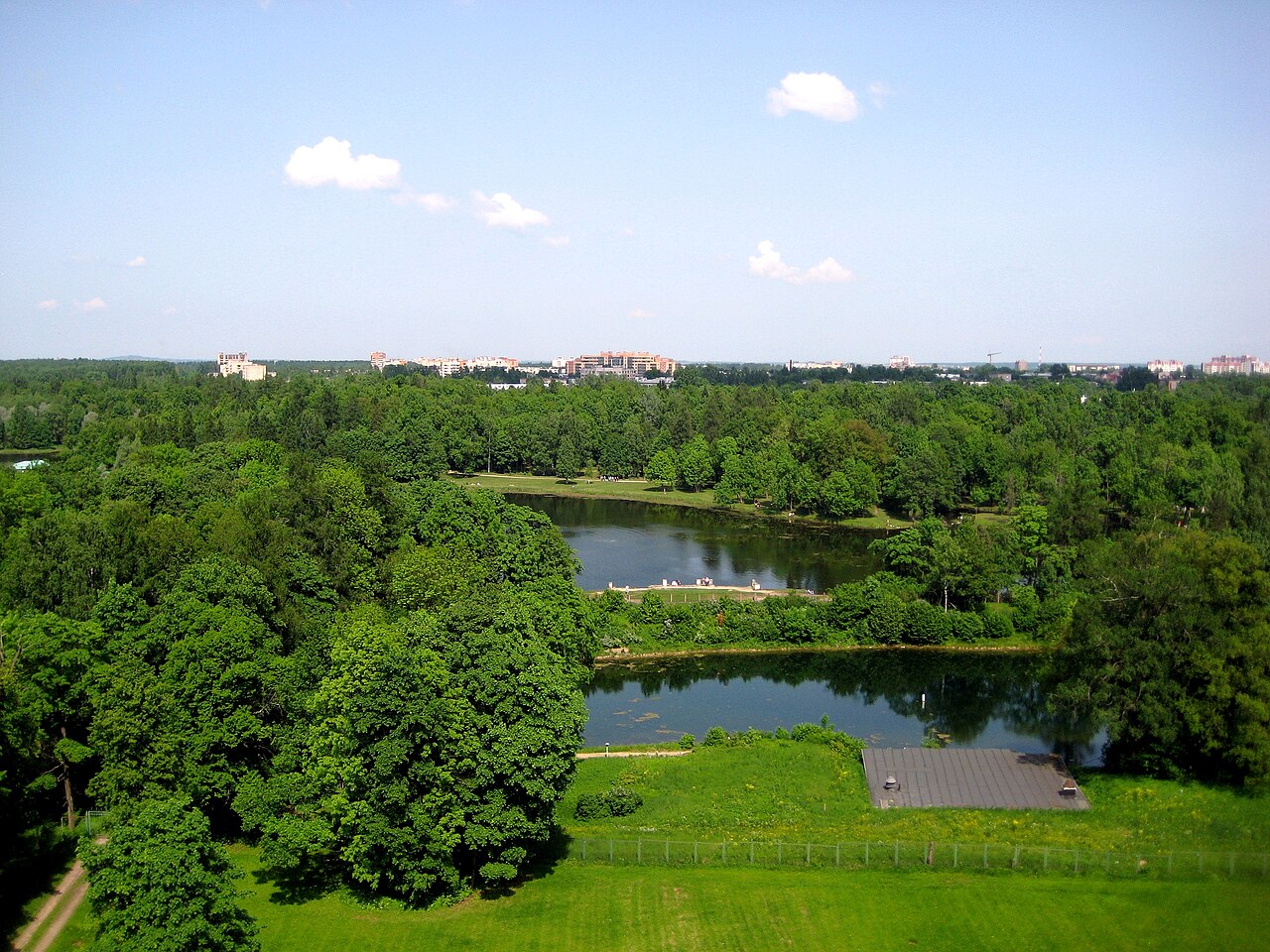
One of the rewards of a visit to Gatchina is the chance to climb one of its towers, the signal tower, for a panoramic view over the palace, the park, and the lakes. From the top, the whole composition of the estate spreads out beneath you, and you understand at a glance how the grey castle, the water, and the landscape fit together.
The climb itself is part of the experience, taking you up through the structure of the building to emerge high above the grounds. The view rewards the effort, offering a perspective that ground-level wandering cannot, and giving you a real sense of the scale of the park and the dominant position of the palace within it.
From this height the fortress character of Gatchina makes complete sense. You see how the building commands its surroundings, set above the lakes with clear sightlines across the park, every bit the stronghold its owners intended. The towers were not mere decoration but part of the palace’s whole conception as a castle in a landscape.
If your legs are willing, the tower is well worth the climb, especially on a clear day. It turns a visit from a tour of rooms into an encounter with the whole estate, and it is the best place to appreciate the romantic drama of Gatchina, grey stone and bright water under the wide northern sky.
On a clear day the view stretches far beyond the immediate park, taking in the wider landscape of woods and water that surrounds the estate. It is the kind of outlook that helps you imagine how the palace felt to those who lived here, masters of a vast domain spread out below, secure behind their grey walls and high above the quiet lakes.
War, Ruin, and the Long Road Back
Like the other palaces around St. Petersburg, Gatchina suffered catastrophic damage during the Second World War, when the area was occupied and the palace was burned and plundered. Many of its interiors were destroyed, its treasures scattered, and the proud grey castle left a gutted ruin, a wound from which recovery would take generations.
The restoration of Gatchina has been a long, patient process, carried out over decades and still continuing. Room by room, specialists have worked to bring back the lost interiors, using surviving fragments, old photographs, and documents to recreate what was destroyed, so that more and more of the palace can be opened to visitors as the years pass.
This ongoing nature of the work is part of what makes a visit to Gatchina distinctive. You are seeing a palace in the process of being recovered, where restored splendor sits alongside spaces still awaiting their turn, a vivid reminder of both the scale of the wartime loss and the determination to undo it.
Understanding this history deepens every room you enter. The recovered halls are not simply beautiful but hard-won, the result of enormous effort to reclaim a heritage that war had almost erased. In Gatchina, perhaps more than anywhere, you feel the living work of restoration, a palace being brought back to life before your eyes.
Visitors can often see the restoration at close hand, with some rooms gleaming in recovered splendor and others still bare or under work, a living illustration of how such heritage is painstakingly rebuilt. Far from detracting from a visit, this ongoing process adds a sense of purpose and hope, the feeling of watching a wounded masterpiece slowly made whole again.
Gatchina on Film

Because Gatchina is so much about atmosphere, the interplay of grey stone, bright water, and wide park, a video walkthrough is an excellent way to get a feel for it before or after a visit. On film you can follow the approach to the castle, move through the restored state rooms, and see the famous echo tunnel and the lakes that define the estate.
As you watch, notice the contrast that runs through the whole place, the stern, fortress-like exterior against the elegance of the recovered interiors, and the way the palace sits in dialogue with its watery landscape. These relationships are hard to capture in single photographs but come across clearly in moving footage.
Video also conveys the scale of the park and the ongoing restoration in a way words cannot. Seeing the lakes, the bridges, and the great grey walls together helps you understand why emperors chose this place for seclusion, and why modern visitors are drawn to its particular blend of grandeur, mystery, and romance.
Visiting Gatchina Today

Today Gatchina is a museum-reserve, with the palace and its vast park open to visitors, and it makes a rewarding day trip from St. Petersburg for those willing to venture a little further out. You can tour the restored state rooms, explore the famous echo tunnel, climb the signal tower for the view, and spend hours walking the lakeside park.
Getting there takes a bit more effort than reaching the closer palaces, but the reward is a site that feels less crowded and more atmospheric, with its unique castle character and its beautiful watery setting. Because restoration is ongoing, the rooms open to visitors can change over time, so it is worth checking current arrangements before you go.
Allow plenty of time, and come prepared to walk. The park is large and the tunnel and tower are part of the fun, so comfortable shoes and a sense of exploration serve you well. In fine weather especially, the combination of palace, lakes, and park can easily fill a full and very satisfying day.
You will find Gatchina southwest of St. Petersburg; see the map below to help plan your route: see the map below. Whether you come for the brooding grey castle, the echo in the secret tunnel, the view from the tower, or the quiet beauty of the lakes, Gatchina offers a darker, more romantic vision of imperial Russia that rounds out any tour of the palaces around the old capital.
For travellers who have already seen the more famous palaces closer to the city, Gatchina offers something genuinely different, a change of mood and scale that rewards the extra journey. Its castle character, its tunnel and tower, and its magnificent park give it a personality all its own, and many visitors come away feeling they have found the most atmospheric of all the imperial residences around the old capital.
View the location on Google Maps
Palaces Nearby
If you are exploring the imperial palaces around Saint Petersburg, these two pair naturally with a visit here:
You May Like
Konopiste the Bohemian Castle of a Doomed Archduke