Walk along Nevsky Prospekt, the great avenue at the heart of St. Petersburg, and you cannot miss the Stroganov Palace, a glorious confection of a building where the street meets the Moika River. With its exuberant baroque facade in soft green and white, it is one of the most beautiful houses in the city, and behind its grand front lies the story of one of Russia’s richest and most remarkable families.
The Stroganovs were not princes or royalty but merchants and industrialists, who built a colossal fortune on salt, mines, and the vast lands of the Russian north and the Urals, and then spent it with extraordinary flair on art, architecture, and the good life. Their palace on Nevsky Prospekt was the showpiece of this wealth, the work of the greatest baroque architect of the age, and a center of culture and hospitality for generations.
This is the third and final article in a short set on the grand city palaces of St. Petersburg, following Mikhailovsky Castle and the Menshikov Palace. The Stroganov Palace brings us the full splendor of Russian baroque and the fascinating tale of a merchant dynasty whose name, through a certain famous dish, is known at dinner tables around the world. By the end you will see why this pink-and-green palace is one of the jewels of Nevsky Prospekt.
In This Article
- A Baroque Jewel on Nevsky Prospekt
- The Merchant Dynasty Behind the Palace
- The Work of a Master of the Baroque
- The Green and White Facade
- Rastrellis Great Hall
- A Sequence of Splendid Interiors
- The Mineralogical Study and a Taste for Science
- A Great Collection of Art
- The Family Name on Dinner Tables Worldwide
- Patrons of Talent and a Remarkable Architect
- From Private Palace to Public Museum
- The Palace on Film
- Visiting the Stroganov Palace Today
A Baroque Jewel on Nevsky Prospekt

The Stroganov Palace occupies one of the finest positions in St. Petersburg, standing on the main avenue of the city where it crosses the Moika River. This prime location put the family at the very center of fashionable life, and the palace was designed to make the most of it, presenting a dazzling baroque facade to the crowds passing along the great street.
That facade is the first thing to strike you, a riot of columns, pediments, sculpture, and ornament painted in cheerful green and white. It is a textbook example of the exuberant Russian baroque, full of movement and richness, and it announces at once that this was the home of a family with both enormous wealth and a love of display.
The building wraps around an inner courtyard, turning its grand fronts to the street and river while enclosing a private world within. This arrangement, common in great city palaces, allowed the family to combine public magnificence with private seclusion, presenting a splendid face to the world while keeping a quiet refuge at the heart of the house.
Approaching the palace, you are stepping into the world of Nevsky Prospekt at its most glamorous. For centuries this has been the showcase avenue of the city, and the Stroganov Palace is one of its greatest ornaments, a building that embodies the wealth, taste, and ambition of the people who made St. Petersburg a European capital.
Standing before it, you are at one of the great crossroads of the city, where the main avenue meets the river and the life of St. Petersburg flows past in full view. The palace has watched over this spot for centuries, a constant presence through all the changes of the city’s history, and that sense of continuity adds depth to the simple pleasure of admiring its beautiful front.
The Merchant Dynasty Behind the Palace
The Stroganovs were one of the most remarkable families in Russian history, a dynasty that rose not through noble birth but through enterprise, building a vast fortune on salt production, mining, and the development of huge tracts of land in the Russian north and the Urals. Over generations they became fabulously rich, among the wealthiest families in the entire empire.
Their wealth brought influence, and in time titles and a place among the elite, but they never lost their distinctive identity as a family of builders and entrepreneurs. They financed exploration and settlement, supported the state in times of need, and used their fortune to become great patrons of art, learning, and culture, leaving a mark on Russian life far beyond their business affairs.
The palace on Nevsky Prospekt was the supreme expression of this family’s success and taste. It proclaimed their arrival at the summit of society and served as the setting for their rich cultural and social life, a place where their collections could be displayed and their hospitality lavished on the guests of a brilliant capital.
Understanding the family is key to understanding the palace. This was not a royal residence but the home of a dynasty of self-made magnates, and that gives it a particular character, combining aristocratic splendor with the energy and ambition of a family that had earned, rather than inherited, its extraordinary place in the world.
The scale of their landholdings in the north and the Urals is hard to grasp, amounting to territories larger than many European states, worked by vast numbers of people and yielding the salt, metals, and other resources that underpinned the family fortune. From these distant lands flowed the wealth that built and furnished the glittering palace on Nevsky Prospekt.
The Work of a Master of the Baroque
The palace was designed by Bartolomeo Rastrelli, the brilliant architect responsible for some of the most magnificent baroque buildings in Russia, including several of the great imperial palaces. For the Stroganovs, Rastrelli created a city residence worthy of their wealth, a masterpiece of the style that defined the golden age of St. Petersburg architecture.
Rastrelli’s baroque is characterized by movement, richness, and a love of ornament, and all of this is on display in the Stroganov Palace. The facade swells and recedes, columns cluster and part, and sculptural detail enlivens every surface, creating a building full of life and drama that catches the eye and holds it.
To have secured the services of such an architect was itself a mark of the family’s standing. Rastrelli worked for the greatest patrons of the age, and his design for the Stroganovs placed their palace in the very first rank of the city’s buildings, a private house that could hold its own alongside the palaces of emperors.
The palace thus stands as a prime example of mature Russian baroque, a style that the city made its own in this period. For lovers of architecture, it offers the chance to experience Rastrelli’s genius in a building of human scale, a grand but not overwhelming house where the exuberance of the baroque can be enjoyed up close.
Rastrelli’s style came to define the look of St. Petersburg in its baroque heyday, and buildings from his hand are among the most beloved in the city. That the Stroganovs chose him, and that he gave them a palace of such quality, places their home firmly within the greatest flowering of Russian architecture and links it to the grand imperial projects of the same era.
The Green and White Facade
The palace’s facade is one of the glories of Nevsky Prospekt, a magnificent baroque composition painted in the soft green and white that has become its signature. The color scheme, typical of the Russian baroque, gives the building a light, festive character, so that for all its grandeur it never feels heavy or forbidding.
Every element of the facade is handled with baroque exuberance, from the clustered columns and elaborate window surrounds to the sculptural ornament and the family coat of arms displayed with pride. The overall effect is one of richness and movement, a surface that seems almost to dance, drawing the eye along its length as you pass.
The facade was designed to impress the public on the city’s grandest street, and it still does. In a thoroughfare lined with notable buildings, the Stroganov Palace holds its own as one of the most beautiful, a favorite subject for photographs and a landmark that has defined this stretch of Nevsky Prospekt for centuries.
The restoration of the facade to its historic colors has returned it to its full splendor. Seeing it today, freshly presented in green and white, you can appreciate the building as its creators intended, a dazzling announcement of wealth and taste on the main avenue of the imperial capital.
Seen at different times of day, the facade takes on different characters, cool and crisp in the clear morning light, warm and glowing in the long evenings of the northern summer, and dramatic under floodlight at night. This changing play of light on the sculpted surfaces is part of the pleasure of the building, which seems to renew itself with every passing hour.
Rastrellis Great Hall

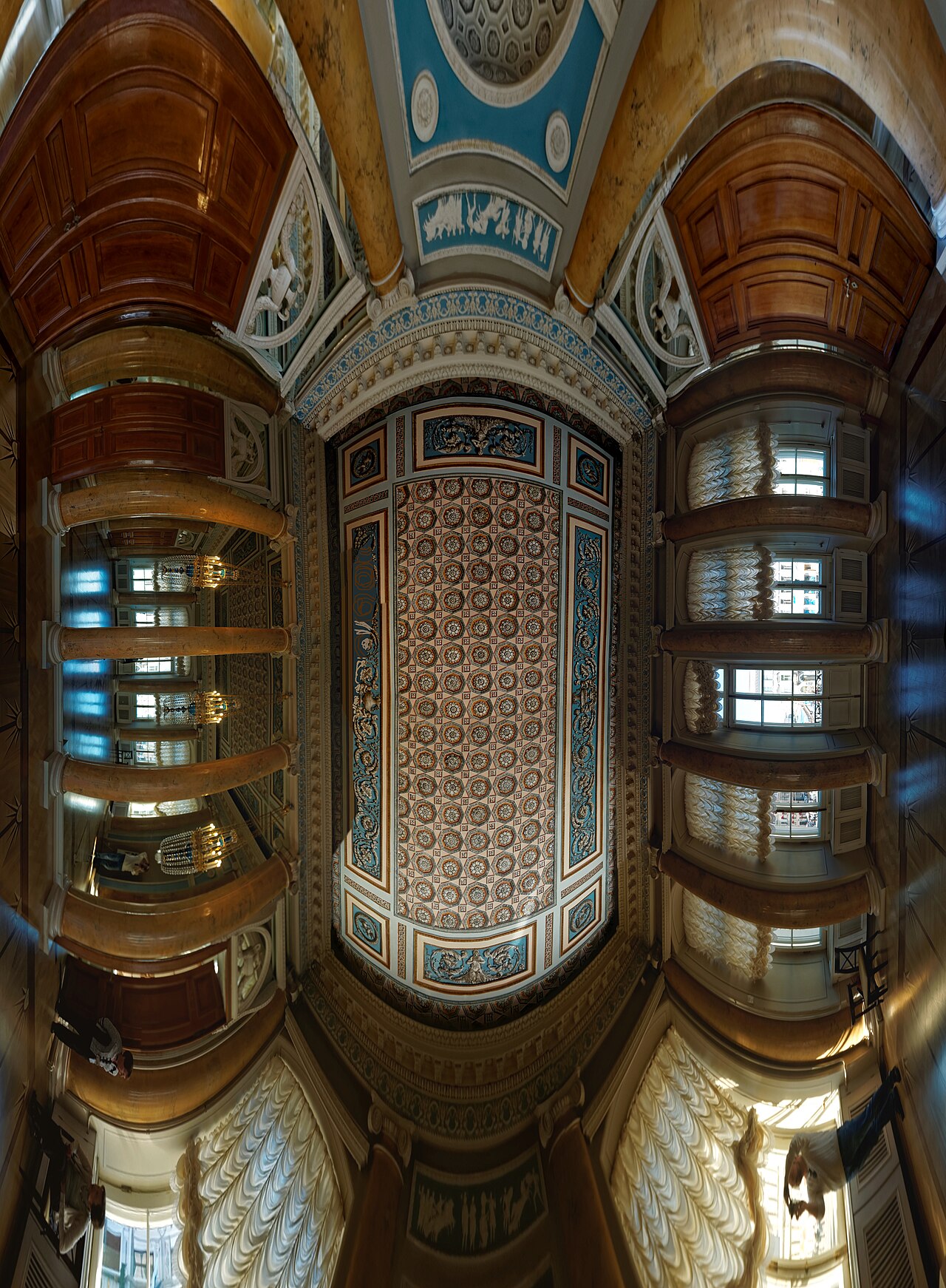
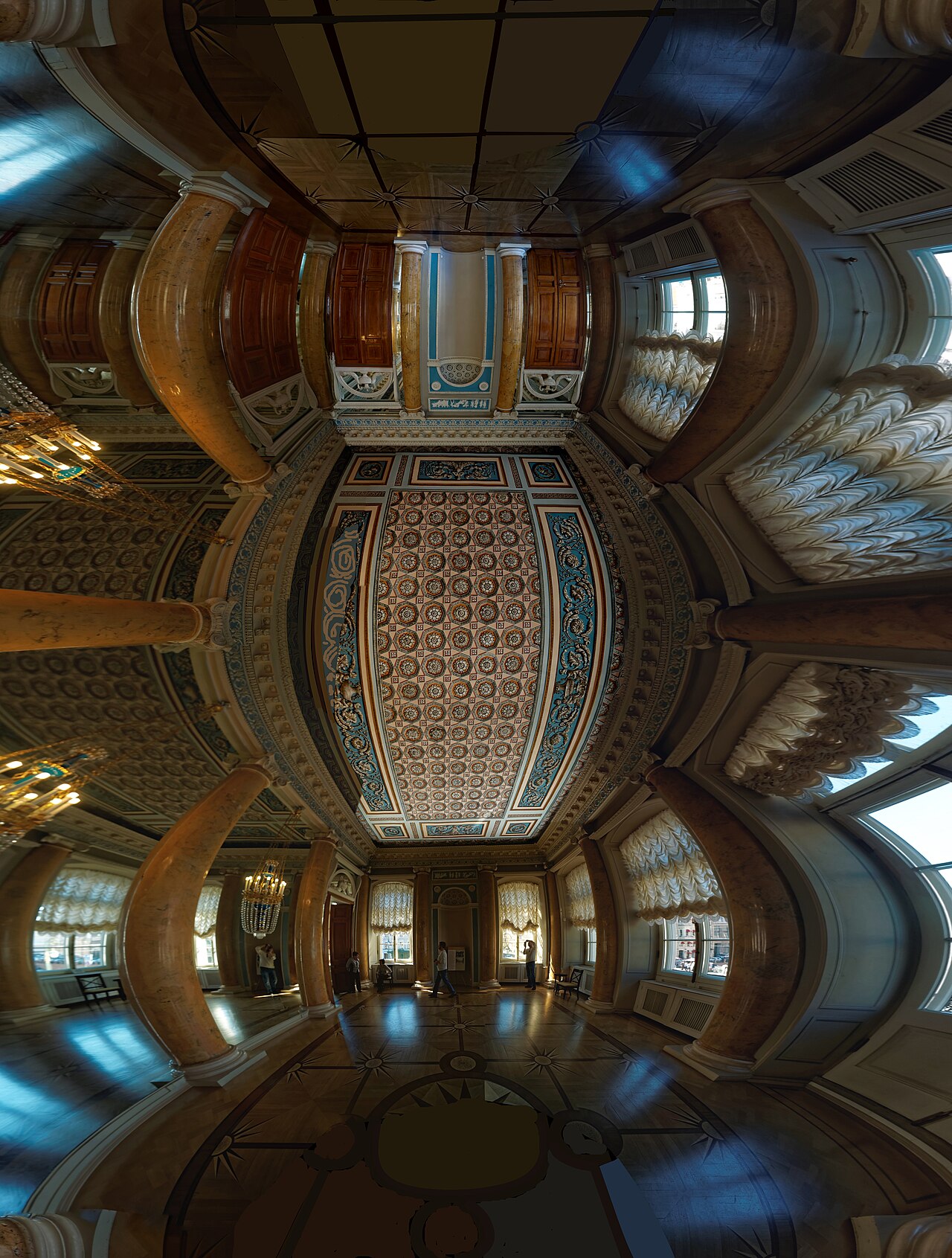
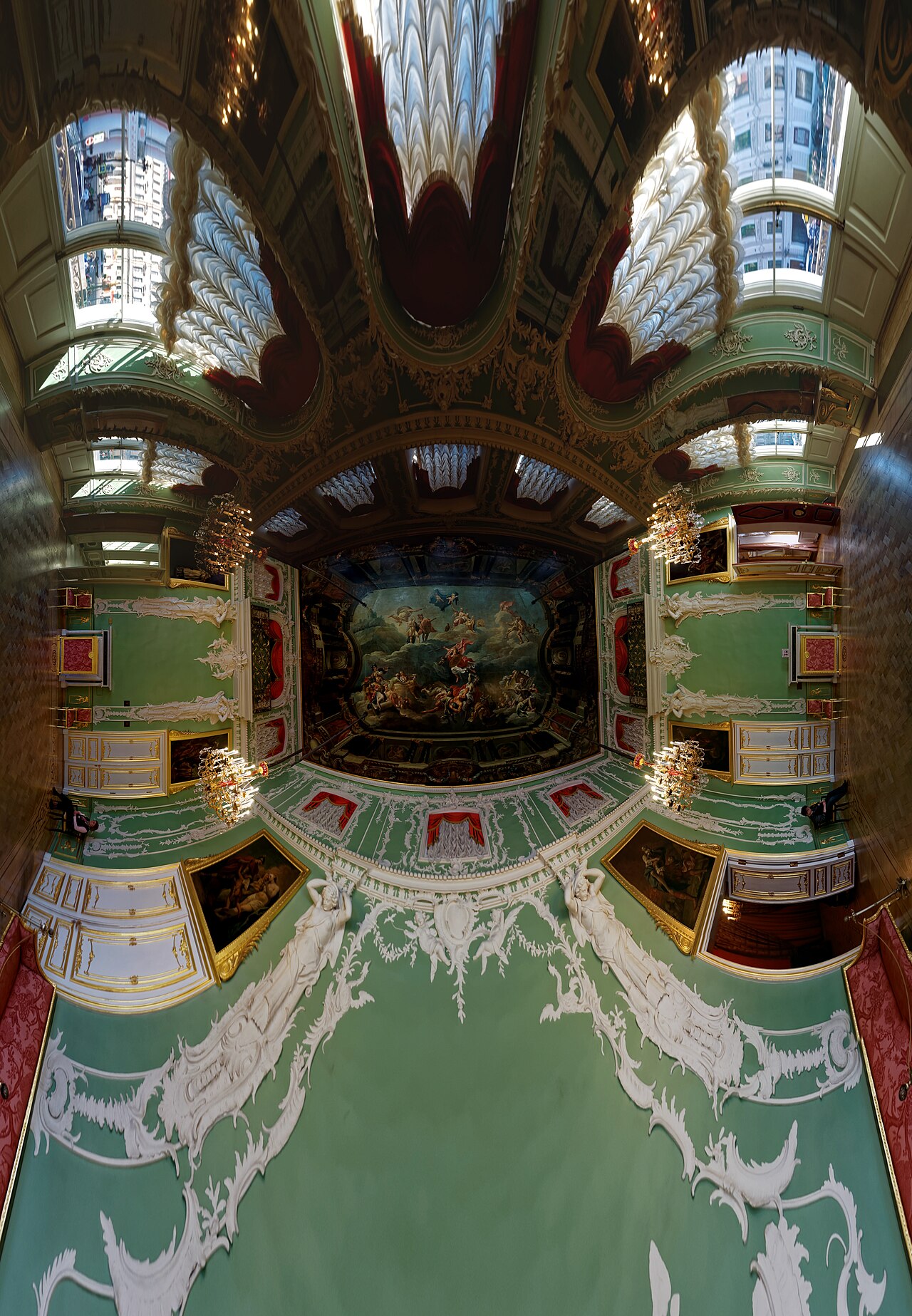
At the heart of the palace lies its grandest interior, a great hall created by Rastrelli for balls, receptions, and the lavish entertaining for which the family was famous. This magnificent room, rich with baroque decoration, gilding, and a splendid ceiling, was the setting for the glittering social occasions that made the Stroganov Palace a center of fashionable life.
The great hall embodies the spirit of the Russian baroque at its most exuberant. Mirrors, gilding, and elaborate ornament combine to create a space of dazzling richness, designed to overwhelm guests with a sense of splendor and to provide a worthy stage for the music, dancing, and ceremony of a great evening.
Rooms like this were the public face of aristocratic life, where wealth and taste were displayed and social bonds were forged. For the Stroganovs, whose hospitality was legendary, the great hall was essential equipment, the place where they could entertain on a scale befitting their fortune and their place at the summit of society.
To stand in this hall is to imagine the brilliant gatherings it once hosted, the candlelight, the music, the crowds of guests in their finery. It remains one of the highlights of the palace, a superb example of Rastrelli’s art and a vivid evocation of the glamorous world of the Russian baroque at its height.
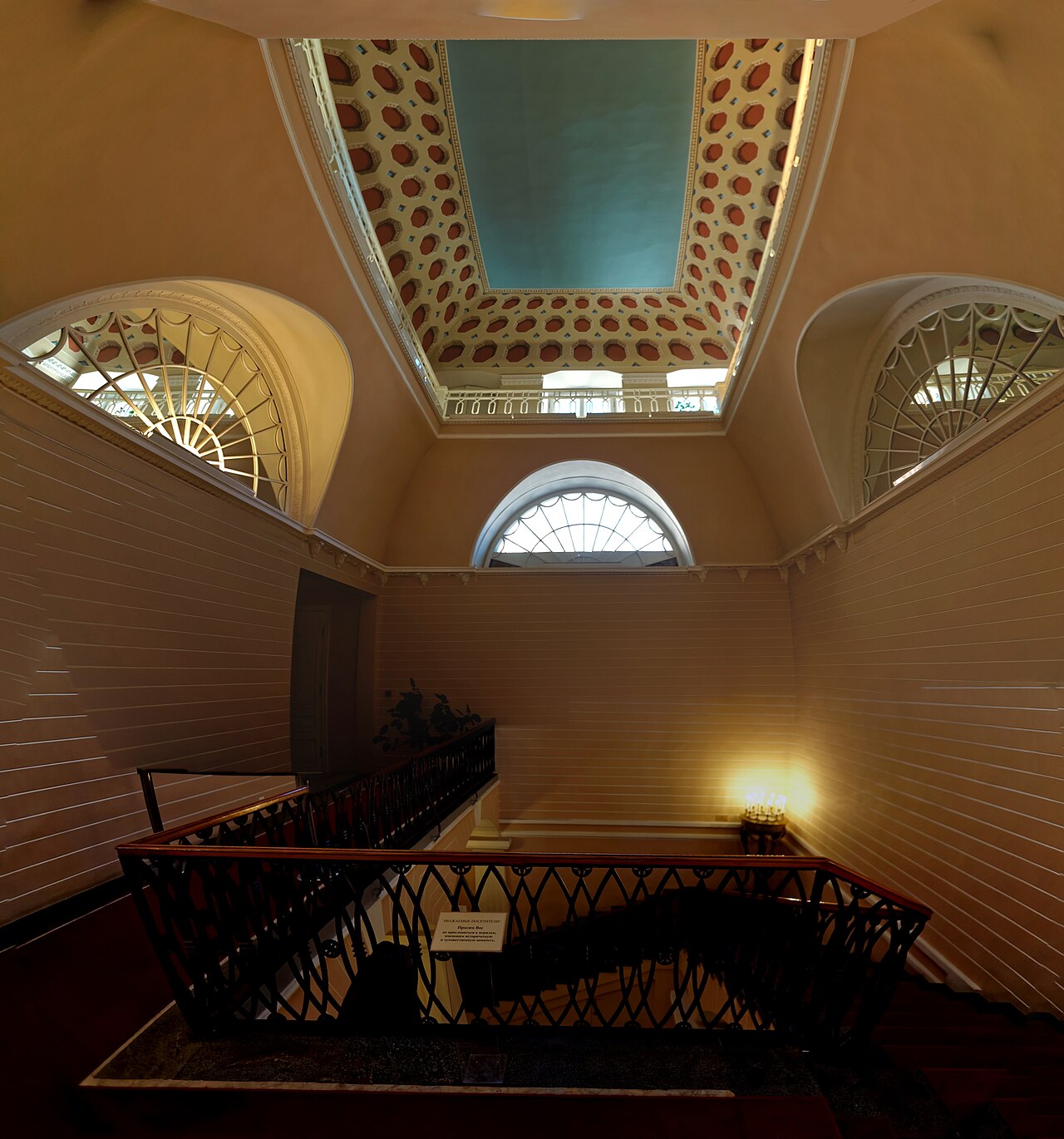
The ceiling of the great hall, with its painted decoration, is itself a work of art worth lingering over, drawing the eye upward into an illusion of space and splendor. Such ceilings were a hallmark of the grand baroque interior, designed to lift the spirits and complete the overwhelming effect of a room meant for the most important occasions.
A Sequence of Splendid Interiors
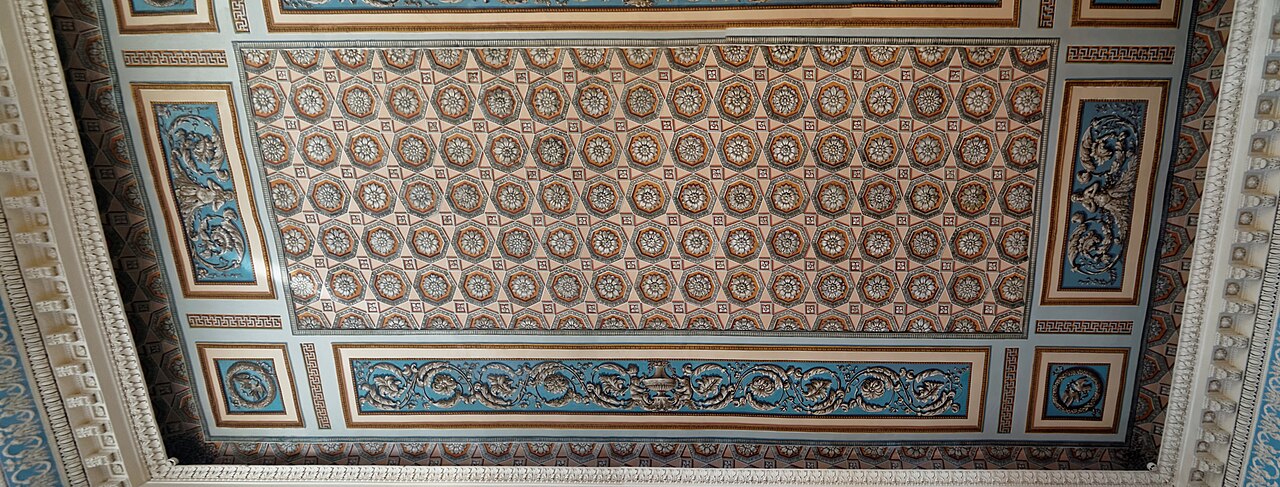
Beyond the great hall, the palace contains a rich sequence of state rooms and apartments, decorated over time by different architects and in different styles as tastes changed and the family’s needs evolved. The result is a fascinating layering of interiors, from baroque exuberance to the cooler elegance of later classical taste.
Among the architects who worked on the palace was a figure of particular interest, a talented designer who had been born a serf on the family’s estates and rose through his gifts to become an accomplished architect, going on to important work in the city. His contribution to the palace adds a remarkable human story to its history and reflects the family’s role as patrons of talent.
The varied interiors give the palace great richness and interest. As you move through the rooms, you pass through different moods and periods, each reflecting the taste of its age, so that the building becomes a kind of anthology of Russian interior design across the decades of the family’s occupation.
This layering is part of what makes the palace so rewarding to visit. Rather than a single frozen style, it offers a living record of changing fashion and of a family that continually updated and embellished their home, leaving a legacy of beautiful rooms that together tell the story of their long residence on Nevsky Prospekt.
Some of the finest later interiors show the move away from baroque exuberance toward the restrained elegance of classicism, with clean lines, columns, and refined ornament replacing the earlier abundance. The contrast within a single building between these two great styles is itself instructive, a lesson in the changing taste of Russia across the decades written in the rooms of one family’s home.
The Mineralogical Study and a Taste for Science
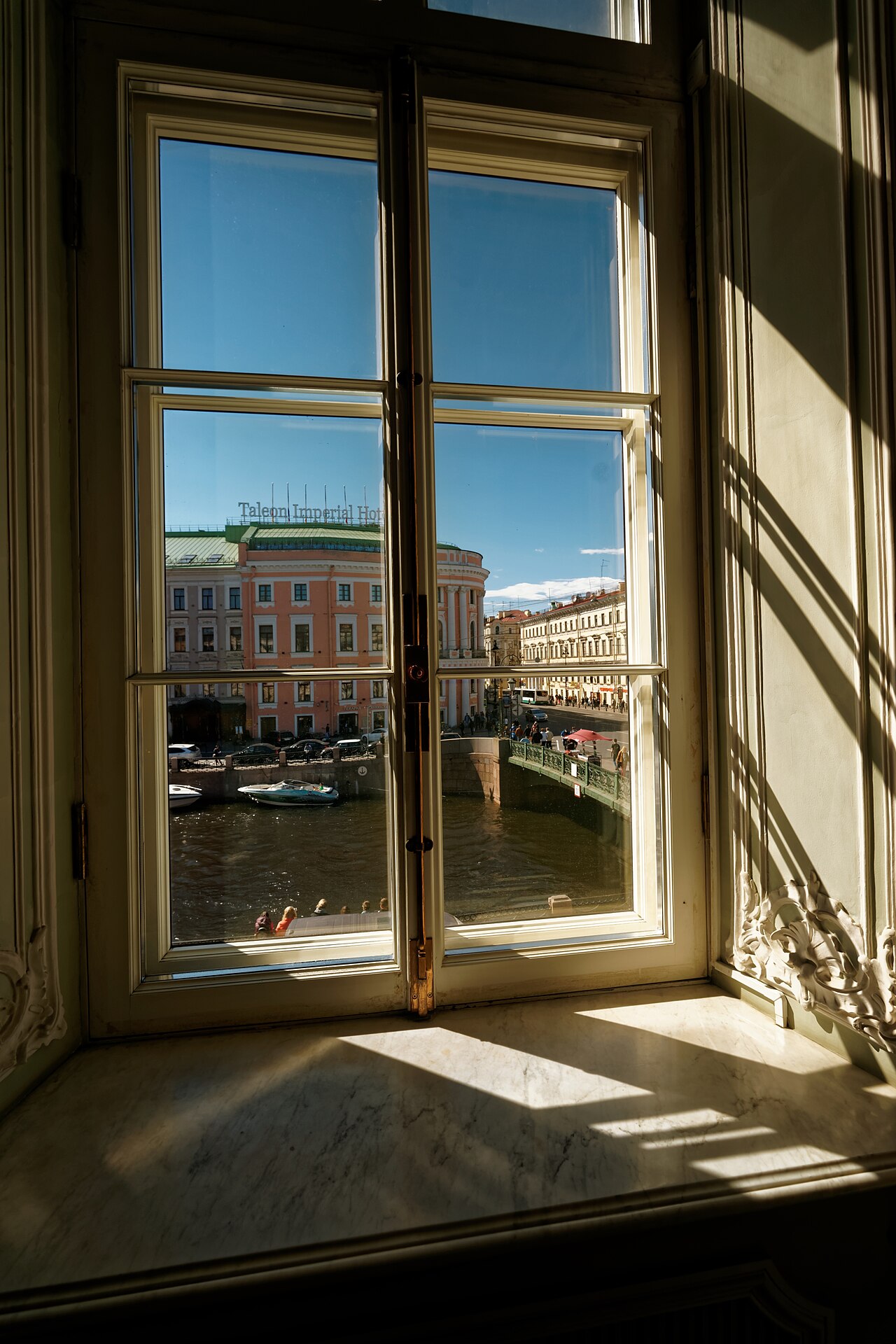
One of the more unusual rooms in the palace reflects the family’s interests beyond art and society, a mineralogical study devoted to the collection and display of minerals and natural specimens. Given the family’s fortune in mining and the exploitation of the mineral wealth of the Urals, this interest was entirely fitting and deeply personal.
The study shows that the Stroganovs were not merely consumers of luxury but also men of curiosity and learning, interested in the sciences and the natural world. Their wealth allowed them to indulge such interests, assembling collections and creating specialized rooms that reflected the enlightened tastes of the age.
Rooms like this remind us that a great palace was also a place of study and reflection, not just display. Alongside the ballrooms and galleries, there were spaces devoted to knowledge and collecting, expressing the varied personalities and pursuits of the family members who lived there.
For the modern visitor, the mineralogical study adds another dimension to the palace, connecting its splendor to the sources of the family’s wealth in the mines and lands of the empire. It is a reminder that behind the baroque glamour lay a hard-headed world of industry and enterprise that made all the beauty possible.
The scientific collections also reflected the broader spirit of the age, when enlightened nobles across Europe assembled cabinets of natural curiosities as expressions of learning and status. For a family whose fortune came from the earth, a mineralogical collection was both a fitting hobby and a kind of tribute to the sources of their wealth.
A Great Collection of Art

The Stroganovs were among the most important art collectors in Russia, assembling a magnificent collection of paintings, sculpture, and decorative arts over generations. Their palace was in part a gallery, with rooms designed to display the works of great European masters that the family gathered with a discerning eye and a deep purse.
The collection reflected the cosmopolitan taste of the Russian elite, who looked to the art of Western Europe as a mark of culture and refinement. Old Master paintings, antiquities, and fine objects filled the palace, making it a treasure house as well as a home and placing the family among the leading patrons and connoisseurs of their time.
Much of the original collection was dispersed after the revolution, scattered to museums and sales, so that the palace no longer holds all the treasures it once contained. But the rooms designed to display art remain, and together with surviving works and careful interpretation they convey the role the palace once played as a center of collecting and connoisseurship.
The family’s passion for art is an essential part of their legacy. As patrons and collectors they contributed greatly to the cultural life of Russia, and their palace stands as a monument to that role, a place where the love of beauty was expressed not only in architecture but in one of the great private collections of the age.
In its day the collection was famous throughout Europe, visited and admired by connoisseurs and travelers, and it helped establish the family’s reputation as among the foremost patrons of the arts in Russia. The loss and dispersal of so many of these works is one of the quiet tragedies of the upheavals that swept the country, though their former home still speaks of the taste that gathered them.
The Family Name on Dinner Tables Worldwide

Of all the ways the Stroganov name has endured, the most surprising is surely culinary. The famous dish known as beef Stroganoff is traditionally linked to the family, and whether it was created by a family chef or simply named in their honor, it has carried their name to restaurants and kitchens around the world, far beyond the walls of their palace.
The connection fits the family’s reputation for lavish hospitality. The Stroganovs were known for their generous entertaining, and the idea that a celebrated dish should bear their name chimes perfectly with their image as hosts of brilliant tables and patrons of the good life. It is a delicious footnote to their grand history.
This culinary fame gives the palace an unexpected point of connection for visitors from everywhere. Many who have never heard of the family’s mines or their art collection know the dish that bears their name, and learning that it is linked to this very dynasty adds a touch of delight to a visit to their splendid home.
It is a reminder, too, of how the legacy of a great family can live on in unexpected ways. Long after their fortune was dispersed and their palace became a museum, the Stroganovs are remembered daily at dinner tables across the globe, their name a byword for a rich and satisfying dish rooted in their tradition of hospitality.
The dish’s journey from a Russian noble table to menus across the world is a small marvel of culinary history, carried abroad by emigres, cooks, and the simple appeal of a rich and comforting recipe. Few families can claim such a delicious and enduring form of fame, and it ensures that the Stroganov name is spoken daily in places that have never heard of Nevsky Prospekt.
Patrons of Talent and a Remarkable Architect
The Stroganovs were notable not only as collectors but as patrons who nurtured talent, and one of the most striking examples is the architect who had been born a serf on their estates. Recognizing his abilities, the family supported his education and training, and he rose to become an accomplished architect who worked on the palace and went on to significant achievements in the city.
This story captures something admirable about the family’s role in Russian culture. In a society where birth usually determined destiny, their willingness to recognize and cultivate talent, even in a man born unfree, produced a remarkable career and enriched the architecture of the capital. It is a human story that adds warmth to the grandeur of the palace.
Patronage of this kind was part of how great families contributed to the flowering of Russian art and architecture. By supporting artists, architects, and craftsmen, they helped create the beauty that still defines St. Petersburg, and the Stroganovs were among the most generous and discerning of such patrons.
The presence of this architect’s work in the palace ties the building to one of the more inspiring stories in the history of Russian art. As you admire the interiors, it is worth remembering that some of their beauty is the achievement of a man who began life as a serf and, through talent and patronage, rose to shape the look of the imperial capital.
Stories like his also illuminate the complicated social world of the age, in which immense creativity and talent existed alongside deep inequality, and in which the patronage of a great family could occasionally open a door that birth had firmly shut. The beauty of the palace is thus bound up with these human histories, making it far more than a mere display of wealth.
From Private Palace to Public Museum

After the revolution the Stroganovs, like other great families, lost their palace, and the building passed into the hands of the state. Its magnificent art collection was largely dispersed to museums and sales, scattering treasures that had taken generations to assemble, and the palace itself began a new life in the service of the public.
In time the building became a branch of the Russian Museum, and a long program of restoration set about recovering its historic splendor. The baroque facade was returned to its original colors, and the interiors were carefully conserved, so that the palace could once again be seen as its creators intended, after the hard years of the twentieth century.
This transformation secured the palace’s survival and opened it to everyone. Where once only the family and their guests could enter, now any visitor may walk the great hall and the state rooms, experiencing the grandeur of a vanished way of life and learning the story of the family who built it.
As part of the Russian Museum, the palace is cared for and interpreted with expertise, its history told and its beauty preserved. This latest chapter has confirmed its place among the essential sights of St. Petersburg, a baroque masterpiece on Nevsky Prospekt kept alive for the enjoyment and education of all who come.
Visitors today benefit from decades of careful work to undo the damage and neglect of the harder years, and each restored room represents a small victory in the long effort to preserve the city’s heritage. The palace stands as proof of what such dedication can achieve, a baroque masterpiece brought back to shine once more on its famous avenue.
The Palace on Film

Because the Stroganov Palace is so rich in baroque splendor, a video walkthrough is a wonderful way to appreciate it, from the exuberant facade on Nevsky Prospekt to the magnificent great hall and the sequence of state rooms within. On film you can take in the detail of Rastrelli’s design and the richness of the interiors in a way photographs alone cannot convey.
As you watch, notice the interplay of styles, from the baroque exuberance of the oldest rooms to the cooler classical elegance of later additions, and the quality of the decoration throughout. Seeing the rooms in sequence helps you understand how the palace functioned as both a grand stage for entertaining and a treasure house of art.
Video also conveys the palace’s setting at the heart of the city, where it stands as one of the great ornaments of Nevsky Prospekt. Following a camera along the facade and through the interiors, you gain a vivid sense of the wealth, taste, and hospitality of the remarkable family that created this baroque jewel.
Visiting the Stroganov Palace Today

Today the Stroganov Palace is open to visitors as a branch of the Russian Museum, superbly located on Nevsky Prospekt in the heart of St. Petersburg. You can admire the restored baroque facade, tour the great hall and the sequence of state rooms, and learn the fascinating story of the family and their palace, all in one of the finest buildings on the city’s main avenue.
Its central location could hardly be more convenient, making the palace easy to include in any walk along Nevsky Prospekt and to combine with the many other sights nearby. As part of the Russian Museum, it is worth checking current opening hours and ticketing arrangements before you visit, especially if you plan to see several related sites.
Give yourself time to enjoy both the exterior and the interiors. The facade is a highlight in its own right, best appreciated from across the street or the river, while inside the great hall and the varied state rooms reward unhurried exploration. Knowing the story of the family adds greatly to the pleasure of the visit.
You will find the palace on Nevsky Prospekt at the Moika in central St. Petersburg; see the map below to help plan your route: see the map below. Whether you come for Rastrelli’s baroque masterpiece, the great collection the family once held, or simply the pleasure of connecting a world-famous dish to its source, the Stroganov Palace offers a brilliant finale to any tour of the city’s grand palaces.
Of the three great city palaces in this set, the Stroganov Palace is perhaps the most purely beautiful, a baroque masterpiece on the grandest avenue of the city. It makes a fitting climax to any exploration of the palaces of St. Petersburg, combining architectural splendor, a rich human story, and an unbeatable location at the very heart of the old imperial capital.
View the location on Google Maps
Palaces Nearby
If you are exploring the grand city palaces of Saint Petersburg, these two pair naturally with a visit here:
You May Like
Konopiste the Bohemian Castle of a Doomed Archduke