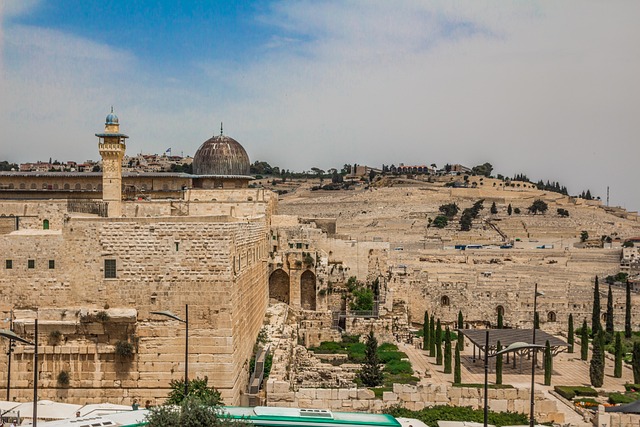
Jerusalem holds a place of profound importance in Islam as the home of Al-Aqsa, the third holiest site in the faith. As the first direction of prayer and the destination of the Prophet’s Night Journey, the walled compound at the heart of the Old City draws the devotion of Muslims around the world. This guide brings together our series on Al-Aqsa, its history, and the city that surrounds it.
Our Jerusalem Guides
We have explored the holy site across four articles. Start with our overview of Al-Aqsa, Islam’s third holiest site, which explains the meaning of the compound and its place in the faith. Then read about the Night Journey, Isra and Miraj, the story that binds Jerusalem to Mecca. Our guide to the Dome of the Rock describes the golden shrine at the centre of the platform, and our look at the Old City of Jerusalem and the Al-Aqsa compound explores the surrounding streets and structures.
Who Comes and Why
Muslim visitors come to Al-Aqsa to pray at one of the most revered places in their faith and to connect with its deep history as the first qiblah and the site of the Prophet’s ascension. The compound is treated with great reverence, and many describe praying there as a long-held aspiration. The wider Old City, sacred to several traditions, makes the visit part of a larger encounter with one of the most storied cities on earth.
Understanding the Site
It helps to know that Al-Aqsa refers to the whole walled compound, not just one building. Within it stand the silver-domed congregational mosque and the golden Dome of the Rock, two separate structures that are often confused. Access arrangements to the compound can vary and have been subject to restrictions over the years, so visitors should be aware that entry conditions are not always straightforward and can change.
The Setting
The compound lies within the walled Old City of Jerusalem, much of whose fortifications date from the Ottoman period. The narrow streets, ancient gates, and historic quarters around the holy precinct reward exploration on foot, and the layered history of conquest and restoration is visible at almost every turn.
Explore the Other Holy Cities
- Visiting Mecca: A Complete Guide
- Visiting Medina: A Complete Guide
- Visiting the Mezquita of Cordoba
- Visiting Konya: A Complete Guide to Rumi’s City
- The Holy Cities of Islam: Mecca, Medina and Jerusalem
- Visiting Kairouan: A Complete Guide
- The Umayyad Mosque and Old Damascus: A Complete Guide
- Visiting Hagia Sophia: A Complete Guide
You May Like
Visiting Konya: A Complete Guide to Rumi’s City