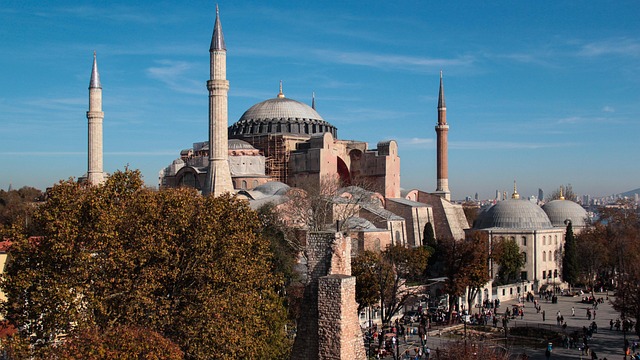
Before it was a mosque, Hagia Sophia was the crowning achievement of Byzantine architecture and the spiritual centre of the Eastern Roman Empire. Built in the sixth century under the emperor Justinian, it was designed to surpass anything that had come before, and for almost a thousand years it remained the grandest church in Christendom.
An Engineering Marvel
The building was completed in a remarkably short span during the 530s, the work of mathematicians and architects who pushed the limits of what was structurally possible. Its defining feature is the enormous central dome, which seems to float above the nave, carried on a ring of windows that flood the interior with light. This combination of a domed centre with a basilica plan marked a turning point in architectural history, and the techniques used to support such a vast span were studied and admired for centuries.
Light, Space, and Mosaic
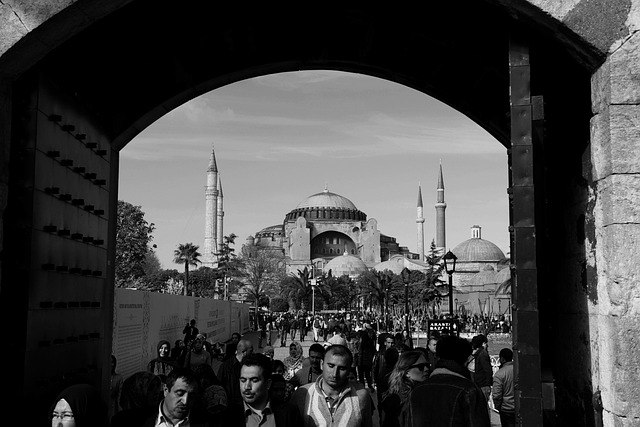
Contemporary visitors were overwhelmed by the interior, where sunlight pouring through the dome’s windows played across gold mosaics and polished marble. The effect was so striking that people of the time described the church as unique in all the world. Over the following centuries, successive emperors added figural mosaics depicting sacred Christian imagery, many of which survive in part and remain among the finest examples of Byzantine art.
Surviving the Centuries
The great dome did not escape difficulty. Earthquakes in the decades after its completion caused cracks and a partial collapse, leading to repairs that slightly altered its original profile. Across its long life the building was damaged and restored many times, yet its essential form endured. That resilience, alongside its beauty, is part of why Hagia Sophia is regarded as one of the most important buildings ever constructed.


