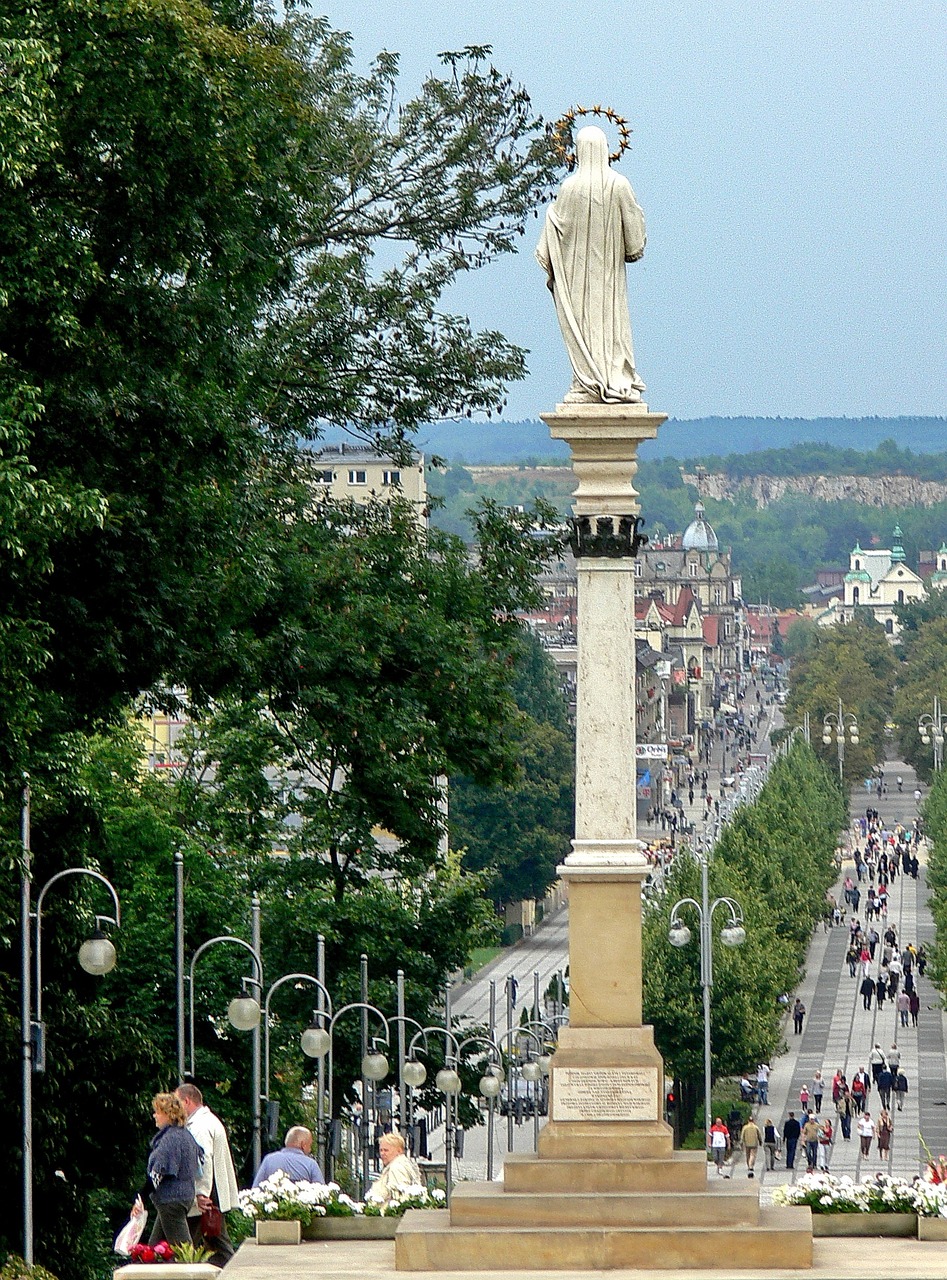
In the southern Polish city of Częstochowa stands the monastery of Jasna Góra, the spiritual heart of Catholic Poland and one of the most visited pilgrimage sites in Europe. At its centre is a revered icon known as the Black Madonna, a painting of the Virgin Mary and Child that has drawn pilgrims for centuries and become a powerful symbol of Polish faith and identity.
The Monastery of Jasna Góra
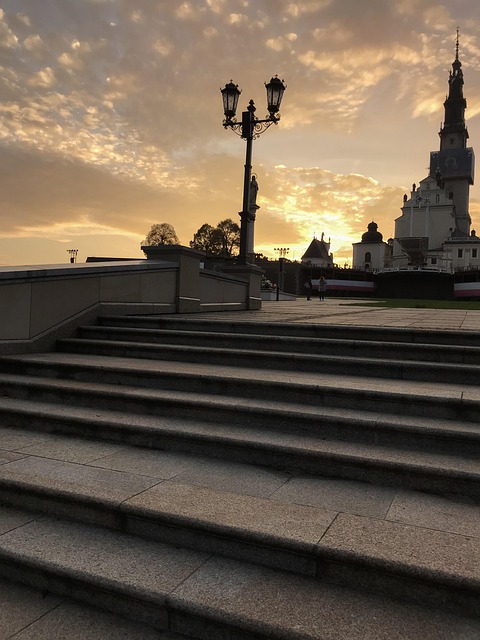
Jasna Góra, meaning “Bright Hill,” was founded in the late fourteenth century by Pauline monks, who still care for it today. Over the centuries it grew into a fortified complex of churches, chapels, towers, and treasuries. Its tall baroque bell tower is visible from far across the city, rising above the long avenue that leads pilgrims to its gates.
The Black Madonna
The icon of Our Lady of Częstochowa is famous for the dark tone of the Virgin’s face and for two scars on her cheek, marks tied to its long and eventful history. Tradition surrounds the image with stories of protection and miracles, and it has been crowned and venerated by generations of the faithful. Pilgrims come to pray before it in the chapel that houses the icon, often after travelling great distances.
A Symbol of a Nation
Beyond its religious meaning, Jasna Góra holds a special place in Polish history. The monastery’s defence during a seventeenth-century siege became a celebrated national story, and the site has long been associated with Polish resilience and unity. For many Poles, a visit is both an act of faith and a connection to their heritage.
Visiting the Sanctuary
The complex is open to visitors year-round, with the chapel of the Black Madonna at its heart. Modest dress and quiet reverence are expected, especially during Mass and the daily ceremonies when the icon is unveiled and covered. The monastery also holds museums and a treasury well worth exploring.


