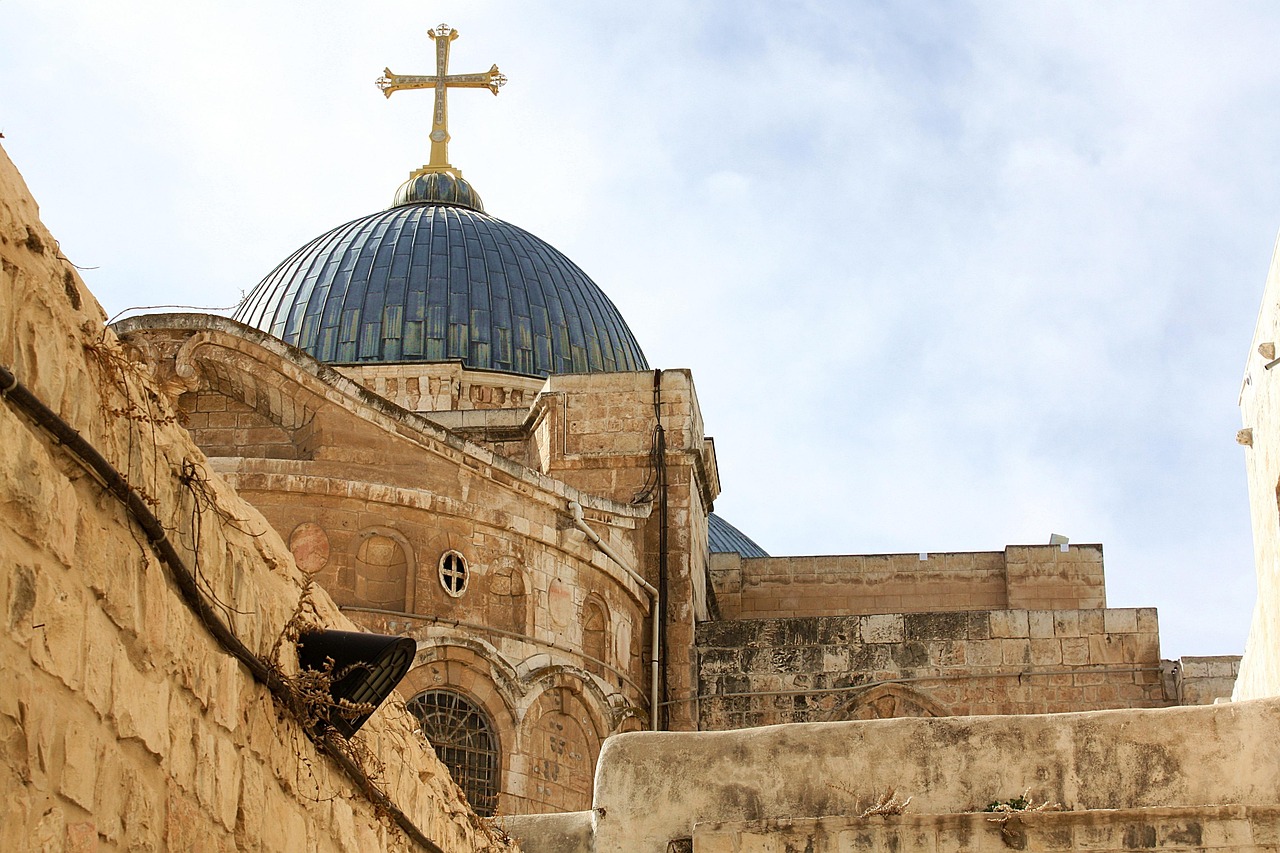
Tucked into the Christian Quarter of Jerusalem’s walled Old City stands the church that many Christians regard as the holiest place on earth: the Church of the Holy Sepulchre. For Eastern Christians it is the Church of the Resurrection (Anastasis), and the two names capture its dual meaning – this is the site where, according to ancient tradition, Jesus was crucified, buried, and rose again. Pilgrims have walked these stones for some seventeen centuries.
Golgotha and the Empty Tomb
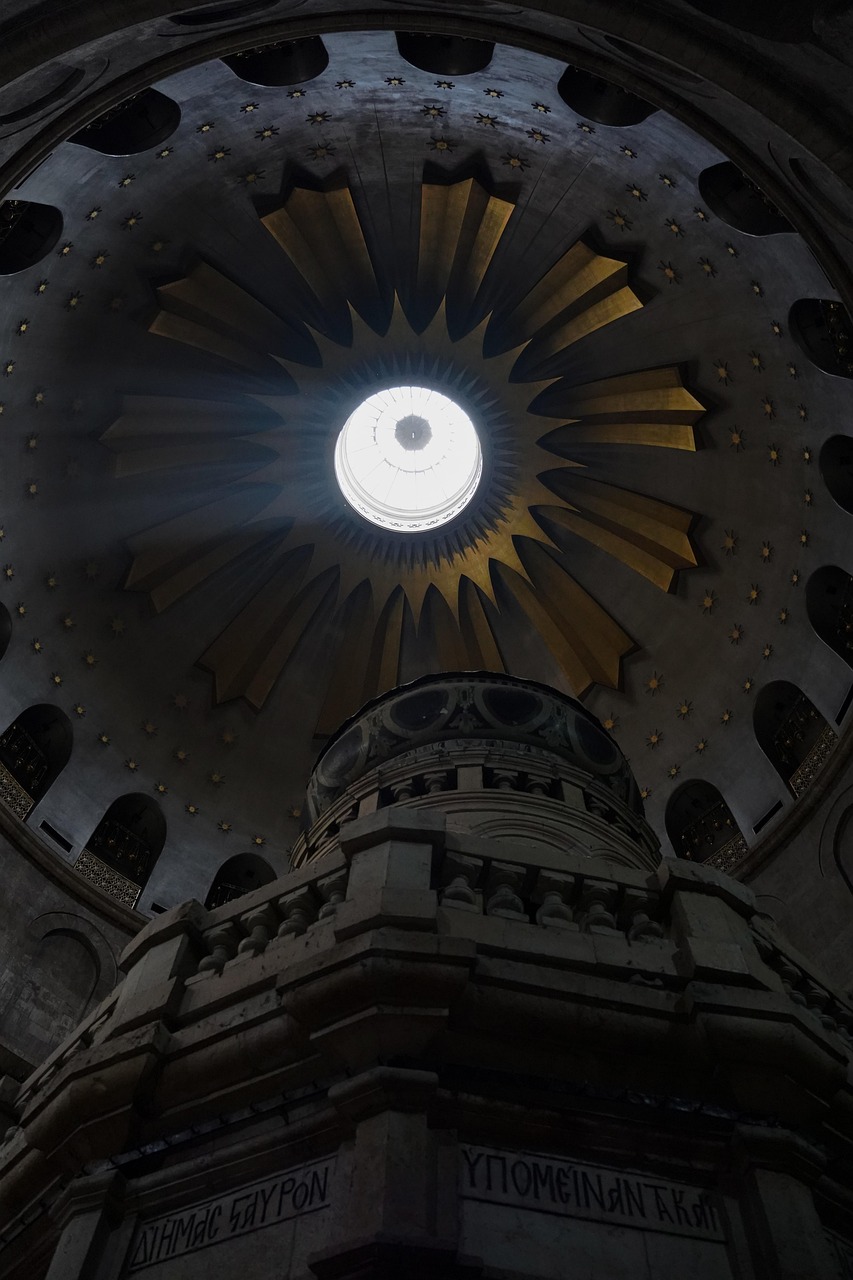
The church encloses two places held sacred since at least the fourth century. The first is Calvary, or Golgotha, the rocky rise identified in the Gospels as the site of the crucifixion. The second is the tomb itself – the rock-cut grave where the body was laid and which Christians believe was found empty on the third day. A small shrine called the Aedicule, rebuilt over the centuries, stands over the tomb beneath the church’s great rotunda, and the line of pilgrims waiting to enter rarely stops.
A Church Built, Destroyed and Rebuilt
The first basilica was raised in the 4th century in the reign of Constantine the Great, after his mother Helena’s journey to the Holy Land. The building has had a turbulent history: it was demolished in 1009 under the Fatimid caliph al-Hakim, partially rebuilt in the eleventh century, and reshaped again by the Crusaders after 1099. Fires, earthquakes and repairs have left it a layered structure where Byzantine, Crusader and later work stand side by side under one roof.
One Church, Many Communities
Few churches in the world are shared by so many. Six Christian communities – among them the Greek Orthodox, the Armenian Apostolic and the Roman Catholic (Franciscan) custodians – hold rights inside, governed by a centuries-old arrangement known as the Status Quo. It is so delicate that an “immovable ladder” on a window ledge has stayed in place for generations, and the keys to the main door have famously been entrusted to two local Muslim families. The result is a building that feels less like a single monument than a living, shared sanctuary.
For visitors, the Holy Sepulchre is the climax of a walk through the Old City and the traditional end of the Via Dolorosa, the route believed to trace Jesus’s final steps. Whatever one believes, few places carry such a weight of devotion in so small a space.


One thought on “The Church of the Holy Sepulchre: Christianity’s Holiest Site”