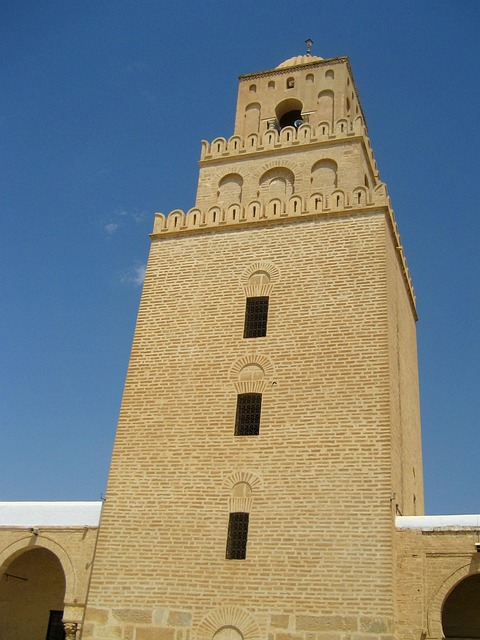
In the heart of Tunisia stands a city that played a founding role in the spread of Islam across North Africa. Kairouan, with its Great Mosque, is often counted among the most important holy places in the Muslim world, and for many it ranks as a major centre of pilgrimage after the great sanctuaries of the east. Its mosque is one of the oldest and most influential in all of Islam.
A City Born of Conquest
Kairouan was founded in the seventh century by the Arab general Uqba ibn Nafi as a garrison city, a base from which the new faith would spread westward across the Maghreb. Around the same time, a mosque was raised at its centre, and over the following decades it was rebuilt and enlarged, taking on much of its present form during the eighth century. As the first major Muslim city in the region, Kairouan became a hub of learning, trade, and religious life.
The Great Mosque of Uqba
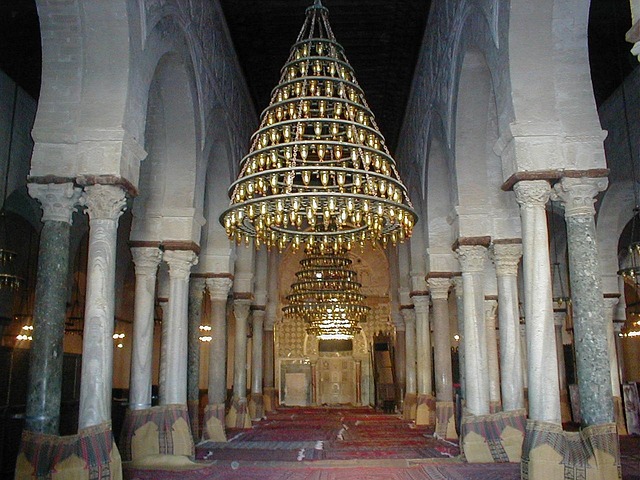
The Great Mosque, also known as the Mosque of Uqba after its founder, is a vast fortress-like structure with a massive square minaret thought to be among the oldest surviving in the world. Its huge courtyard, forest of columns, and dignified prayer hall served as a model for mosque builders across North Africa and beyond. The mosque’s sturdy, monumental character reflects both its early date and its role as the spiritual anchor of a frontier city.
A World Heritage Treasure
Today Kairouan and its monuments are recognised as a UNESCO World Heritage Site, celebrated for their historical and architectural importance. The Great Mosque remains an active place of worship and a powerful symbol of the deep roots of Islam in North Africa. For visitors, it offers a rare chance to stand within one of the religion’s earliest great sanctuaries.


