Nevali Cori is a Neolithic settlement in southeastern Turkey where carved stone pillars and a polished shrine floor, built nearly 11,000 years ago, now sit underwater.
For a few short seasons in the 1980s, archaeologists working on a hillside above the Euphrates River uncovered something that briefly rivaled the fame of Gobekli Tepe itself: a small farming village with a shrine full of carved pillars, a nearly life-size human head sculpted in limestone, and one of the strangest sculptures ever pulled from Neolithic soil, a figure that seems to show a bird perched on a human head like a totem pole. Then the water came, and the site disappeared beneath a reservoir. What survives today exists only in museum cases, excavation photographs, and the memories of the small team that raced to record it all before the valley was flooded for good.
Contents
- A Village Lost Beneath a Reservoir
- Digging Against the Rising Water
- From Round Huts to Rectangular Homes
- The Special Building and Its Three Lives
- A Floor Polished Like Stone
- Pillars With Arms, Hands, and Faces
- The Bird, the Head, and the Totem Pole
- A Face Carved Before Writing Existed
- Wheat Fields Before the Wheel
- What Nevali Cori Tells Us About Gobekli Tepe
- Nearby Places to Explore
- Why Nevali Cori Still Matters
A Village Lost Beneath a Reservoir
The site sits on a terrace above the Kantara stream, a tributary that once fed into the Euphrates near the modern city of Sanliurfa in southeastern Turkey. Long before the region became famous for Gobekli Tepe, a German-Turkish excavation team identified Nevali Cori as a settlement of the Pre-Pottery Neolithic B period, roughly contemporary with the middle centuries of the ninth and eighth millennia BCE. That makes the village a little younger than the earliest phases of Gobekli Tepe but old enough that its inhabitants were still centuries away from inventing pottery, the wheel, or writing.
What makes Nevali Cori remarkable is not simply its age but the fact that it combined ordinary domestic life with monumental religious architecture in the same small community. Most Neolithic villages of this era were unadorned clusters of mudbrick or stone houses. Nevali Cori had those too, but it also had a dedicated shrine building, filled with carved pillars and sculpture, tucked into the middle of its houses. The juxtaposition told archaeologists that organized communal ritual was not confined to isolated hilltop sanctuaries like Gobekli Tepe. It could exist inside an ordinary farming village, embedded in daily life.
The valley the village occupied is now gone. In 1992, the completion of the Ataturk Dam raised the level of the Euphrates and its tributaries across a huge stretch of southeastern Turkey, and the terrace holding Nevali Cori disappeared under the resulting reservoir along with dozens of other archaeological sites that were never fully studied. Today, visitors cannot walk the original ground. What remains is a rescued collection of sculpture, architecture, and data, most of it now housed in the Sanliurfa Archaeology Museum, where several of the site’s most important carvings are on permanent display.
Sanliurfa itself, the modern city closest to the site, has become something of a hub for Neolithic archaeology tourism in recent years, as visitors drawn by Gobekli Tepe increasingly seek out the museum collections that hold material from Nevali Cori and other nearby sites. The museum’s dedicated Neolithic gallery places these objects within a broader regional context, helping visitors understand that Gobekli Tepe was not a solitary phenomenon but part of a network of related communities spread across the surrounding hills and river valleys.
Digging Against the Rising Water
Nevali Cori was first noted in the late 1970s during a survey of sites that would be affected by the planned Ataturk Dam, one of the largest hydroelectric projects ever built in Turkey. Once it was clear the reservoir would eventually submerge the terrace, the German Archaeological Institute, working with Turkish authorities, organized a rescue excavation under the direction of Harald Hauptmann, an archaeologist who had already worked extensively in the region. Excavations ran through most of the 1980s and into 1991, conducted in short, intense seasons dictated by funding, weather, and the advancing timeline of the dam’s construction.
Rescue archaeology of this kind is a strange discipline. Instead of the slow, careful, decades-long excavations more typical of famous sites, the Nevali Cori team had to prioritize ruthlessly, deciding which trenches to open, which walls to fully expose, and which finds needed the most urgent conservation, all while knowing that whatever was left unexcavated when the water arrived would be lost to research forever. Despite these constraints, the team recovered an extraordinary amount of information: house plans spanning several building phases, a sequence of shrine structures, and dozens of carved stone objects, some so delicate that they required immediate stabilization before they could even be lifted from the ground.
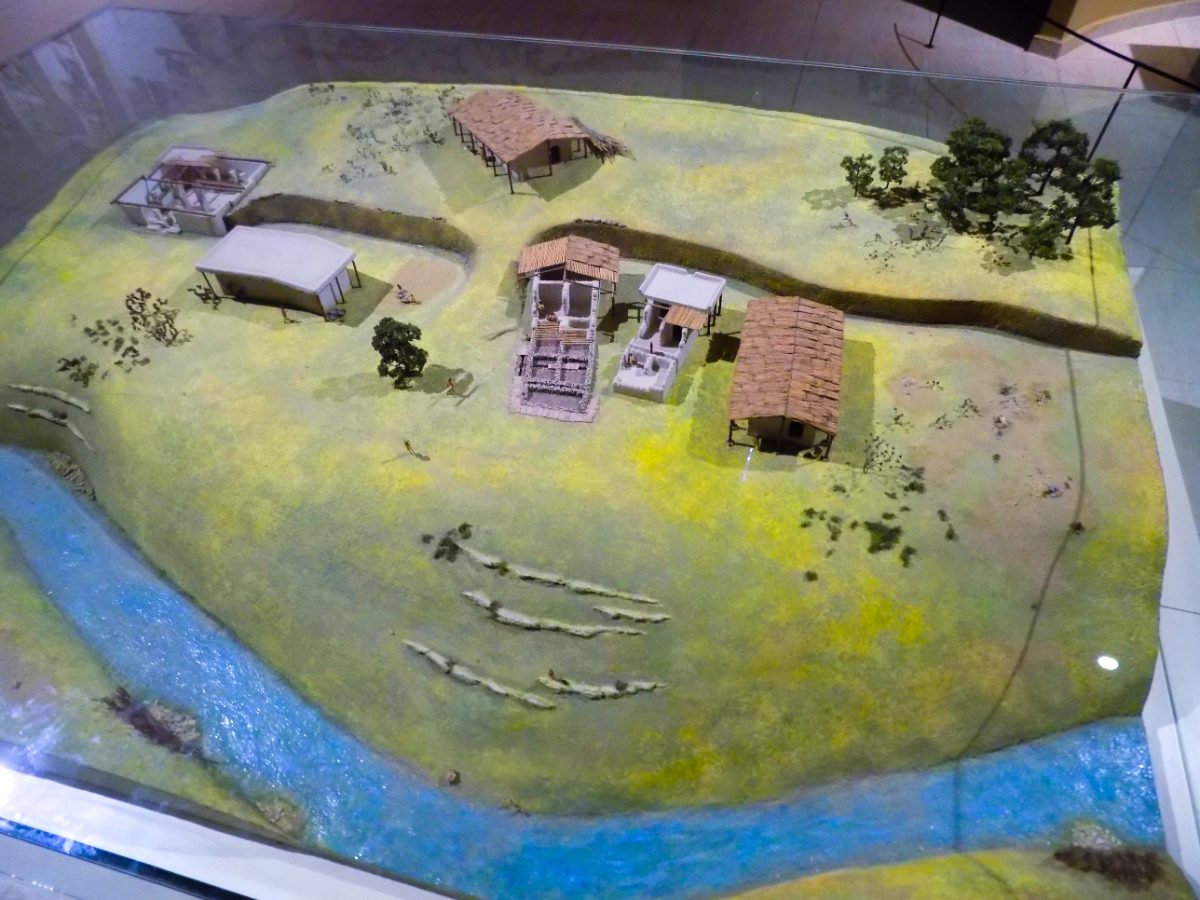
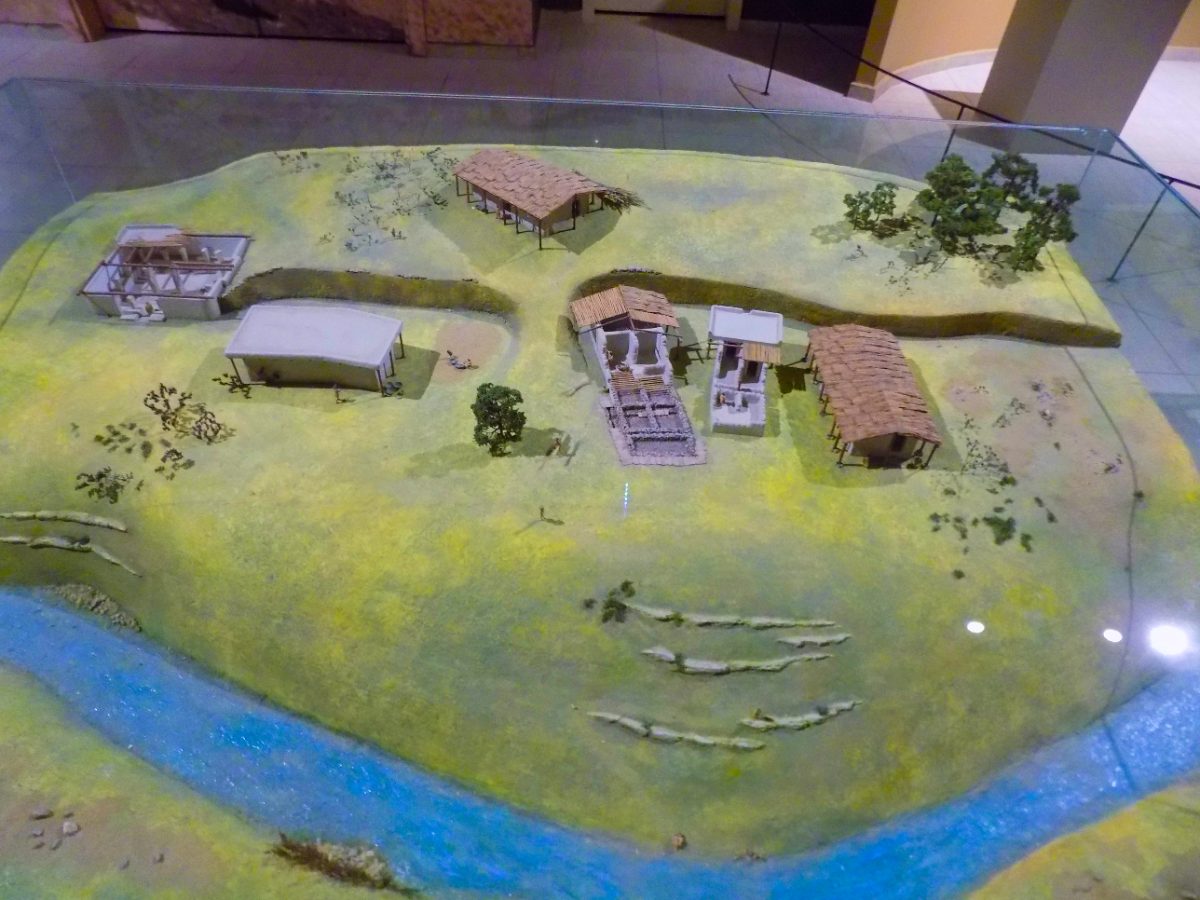
By 1992, the excavation had to stop. The reservoir began to fill, and within a short time the terrace where the village once stood was entirely underwater. The finds that had been recovered, along with detailed photographic and architectural records, became the only way to study Nevali Cori going forward. In an unusual move for a submerged site, replicas and models of the excavation area were later built for museum display, allowing visitors to see a physical reconstruction of a settlement that no longer physically exists above the waterline.
The rescue excavation at Nevali Cori is often cited in archaeological literature as a case study in the tension between development projects and heritage preservation. Dam construction across southeastern Turkey during the twentieth century, part of the broader Southeastern Anatolia Project, brought irrigation and electricity to a large region but also submerged numerous archaeological sites before they could be studied in full. Nevali Cori’s team managed to extract an unusually rich record given the time pressure, but archaeologists still note how much more could have been learned with additional seasons.
From Round Huts to Rectangular Homes
The domestic architecture at Nevali Cori tracks one of the most important transitions in early human building: the shift from round or oval one-room houses to rectangular, multi-room buildings with internal divisions. The earliest layers at the site included smaller, simpler dwellings, while later phases show houses with straight walls, subdivided interiors, and more standardized floor plans. This same shift appears at other sites in the upper Euphrates and Tigris basins during the Pre-Pottery Neolithic B period, including at Cayonu farther to the east, suggesting it was a regional pattern rather than a local quirk.
Rectangular architecture allowed for more efficient use of space, easier expansion by adding rooms, and shared walls between neighboring houses, which would have reduced the amount of stone or mudbrick needed per household. Archaeologists also see this shift as connected to changing social organization. Round huts tend to house small, self-contained family units with little internal specialization of space, while rectangular, multi-room buildings can accommodate storage areas, sleeping areas, and work areas within a single structure, hinting at more complex household economies as farming and animal keeping became more established.
The houses at Nevali Cori were built from a combination of stone foundations and mudbrick or pise walls, a construction technique common across the northern Fertile Crescent at this time. Postholes found within some structures suggest that flat or lightly pitched roofs were supported by wooden beams, likely poplar or tamarisk harvested from the riverbanks nearby. None of this architecture was especially grand on its own. What set the site apart was what stood beside these ordinary houses: a building unlike anything else in the settlement.
The Special Building and Its Three Lives
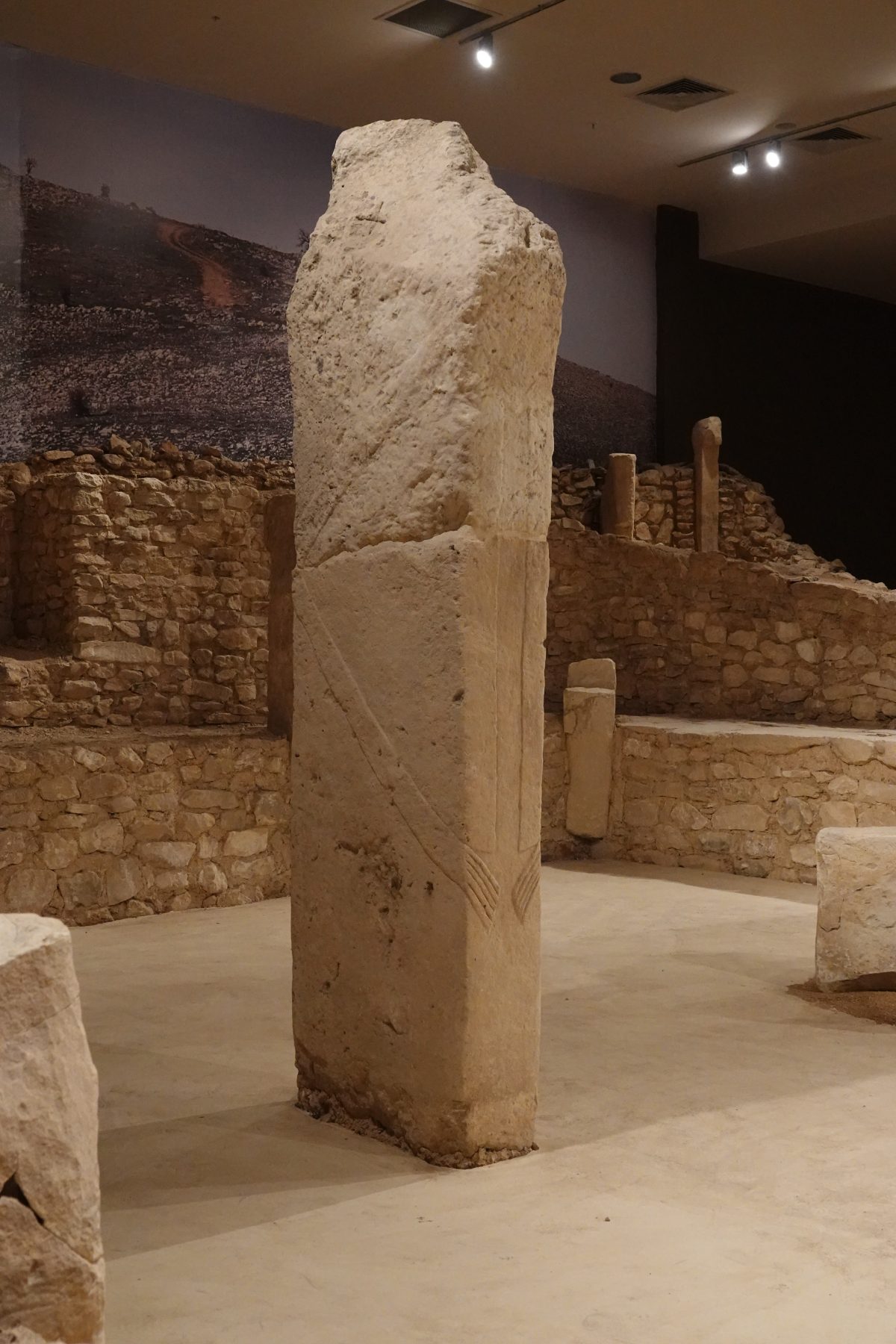
At the center of the village stood what excavators simply called the special building, a term used because it so clearly did not function as an ordinary house. Unlike the domestic structures around it, this building was partly subterranean, rectangular, and lined with stone benches along its interior walls. Built into those benches, at regular intervals, stood a series of T-shaped stone pillars, echoing the far larger pillars found at Gobekli Tepe but on a more intimate, walk-in scale. The building was rebuilt at least three times across its history, with each version reusing the same basic layout while adding or replacing decorative elements.
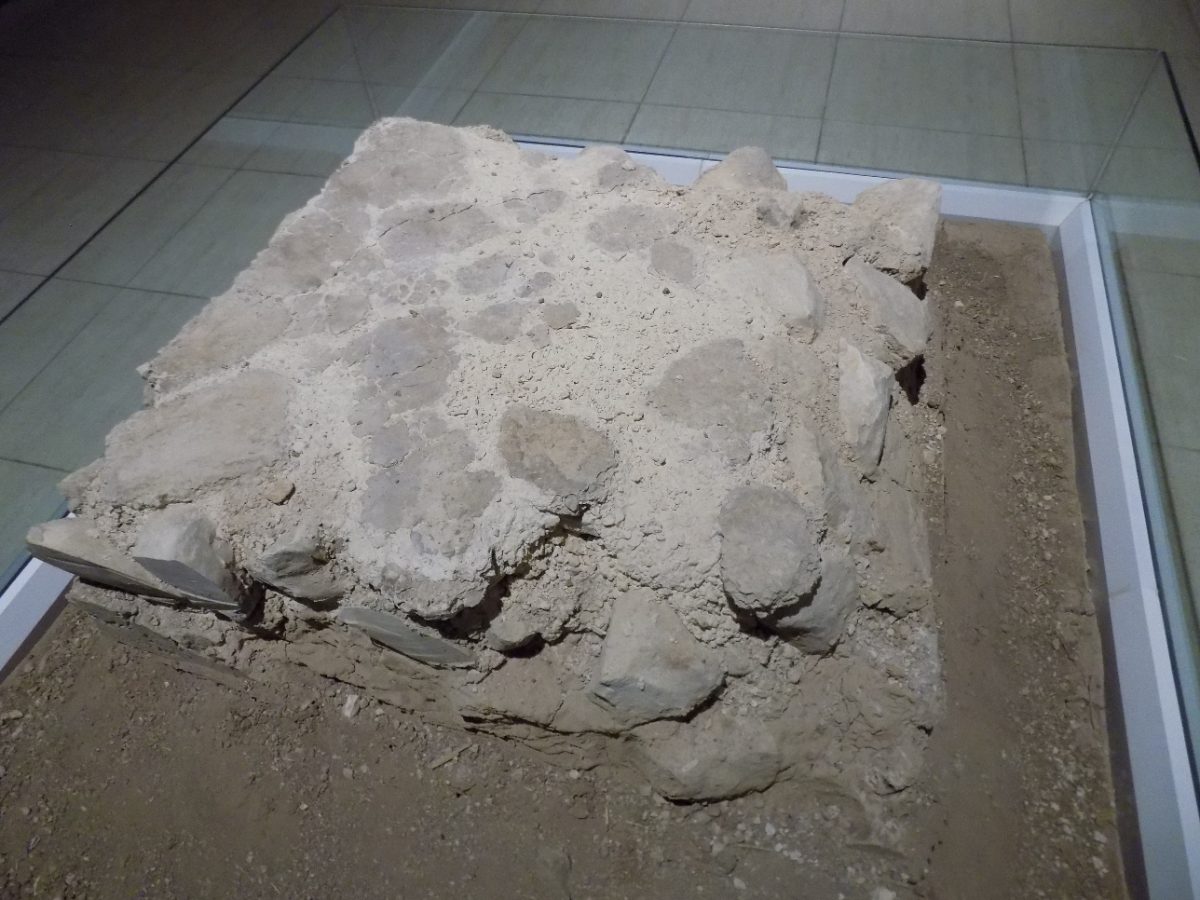
The three successive versions of the special building show a community that maintained the same sacred space across generations, periodically renovating it rather than abandoning it for a new location. In its final and most elaborate form, the building included the terrazzo floor and the most heavily decorated pillars, suggesting that ritual practice at the site became more visually elaborate over time rather than static. Archaeologists interpret this as evidence of an established, inherited tradition of communal ritual, maintained deliberately across at least several generations of villagers, rather than a one-time construction project.
Unlike Gobekli Tepe, where the great enclosures appear to have been built and used before any permanent village existed alongside them, the special building at Nevali Cori was clearly part of an inhabited settlement. Its builders lived in the houses just steps away, farmed the surrounding land, and returned to this same room for generations. That distinction matters because it shows monumental ritual architecture continuing on after villages had already taken root, rather than only appearing in the earlier, pre-village stage of Neolithic life.
A Floor Polished Like Stone
One of the most technically impressive features of the special building’s final phase is its floor: a smooth, reddish terrazzo surface made from burnt lime mixed with crushed stone and then polished until it resembled a solid slab. Producing lime plaster at this scale required burning limestone at high temperatures, a labor and fuel-intensive process that implies real technical knowledge and planning, all accomplished without the pottery kilns or metal tools that later societies would use for similar tasks. The floor was maintained carefully, with evidence of resurfacing and repair, indicating that its builders valued its appearance and were willing to invest ongoing effort in its upkeep.
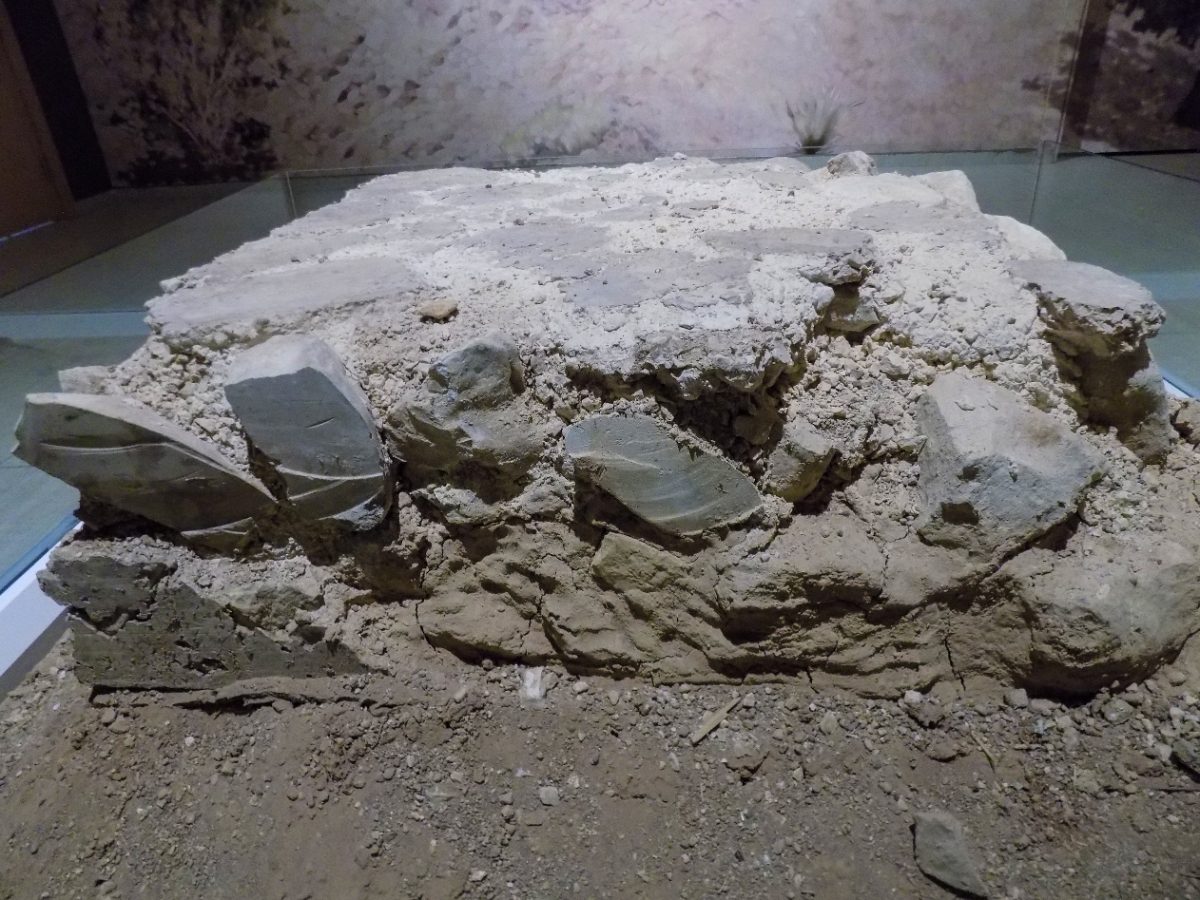
Terrazzo floors of this kind are rare in the Neolithic record and appear in only a handful of contemporary sites across the northern Fertile Crescent. Their presence at Nevali Cori places the site among a small group of early communities experimenting with sophisticated building materials centuries before pottery firing became widespread. Some researchers have suggested that the knowledge gained from burning lime for these floors may even represent an early conceptual step toward the later development of ceramic technology, since both processes require controlling fire at a sustained, predictable temperature.
Walking across this floor in antiquity would have meant walking across a surface unlike anything found in the ordinary houses nearby, smooth, cool, and faintly reflective compared to the packed earth floors of domestic buildings. That contrast between everyday living space and ceremonial space, built with unusual material investment, reinforced the special status of the building every time someone stepped inside it.
Pillars With Arms, Hands, and Faces
The T-shaped pillars set into the benches of the special building share the same basic form as the far more famous examples at Gobekli Tepe, a wide horizontal top set on a narrower vertical shaft, widely interpreted as an abstracted human figure seen from the side. Several of the Nevali Cori pillars carry carved relief decoration, including long arms that bend at the elbow and hands that meet at the front of the shaft, exactly where a belt or waistline would sit on a standing human body. This detail supports the idea that the pillars were never meant as abstract architecture alone but as stylized representations of beings, whether ancestors, spirits, or something else entirely.
Some pillars also carry carved bands interpreted as belts or garments, and at least one preserves faint traces of a face carved into the narrow front edge of the horizontal top, giving the T-shape an unmistakably head-like quality. This is significant because it confirms what many archaeologists had already suspected about the similar, larger pillars at Gobekli Tepe: the T-shape was not a purely architectural or symbolic device but a deliberate, if minimal, representation of a figure with a head, arms, and hands.
The pillars were carved from local limestone, the same material used for the human head sculptures and the totem-pole-like carving described further on. Their placement, built directly into the wall benches rather than standing freely in the center of the room, suggests they were meant to be viewed by people seated or standing around the interior perimeter, facing inward toward the center of the room where communal activity presumably took place.
Comparisons between the Nevali Cori pillars and those at Gobekli Tepe also extend to questions of scale and labor. The Gobekli Tepe pillars, some standing over five meters tall and weighing many tons, required coordinated labor from a large number of people, likely drawn from multiple communities across the region. The smaller Nevali Cori pillars, built into a single village’s shrine, could plausibly have been carved and erected by the resources of one settlement alone, suggesting a more localized, community-scaled version of the same architectural and symbolic tradition seen on a grander scale nearby.
The Bird, the Head, and the Totem Pole
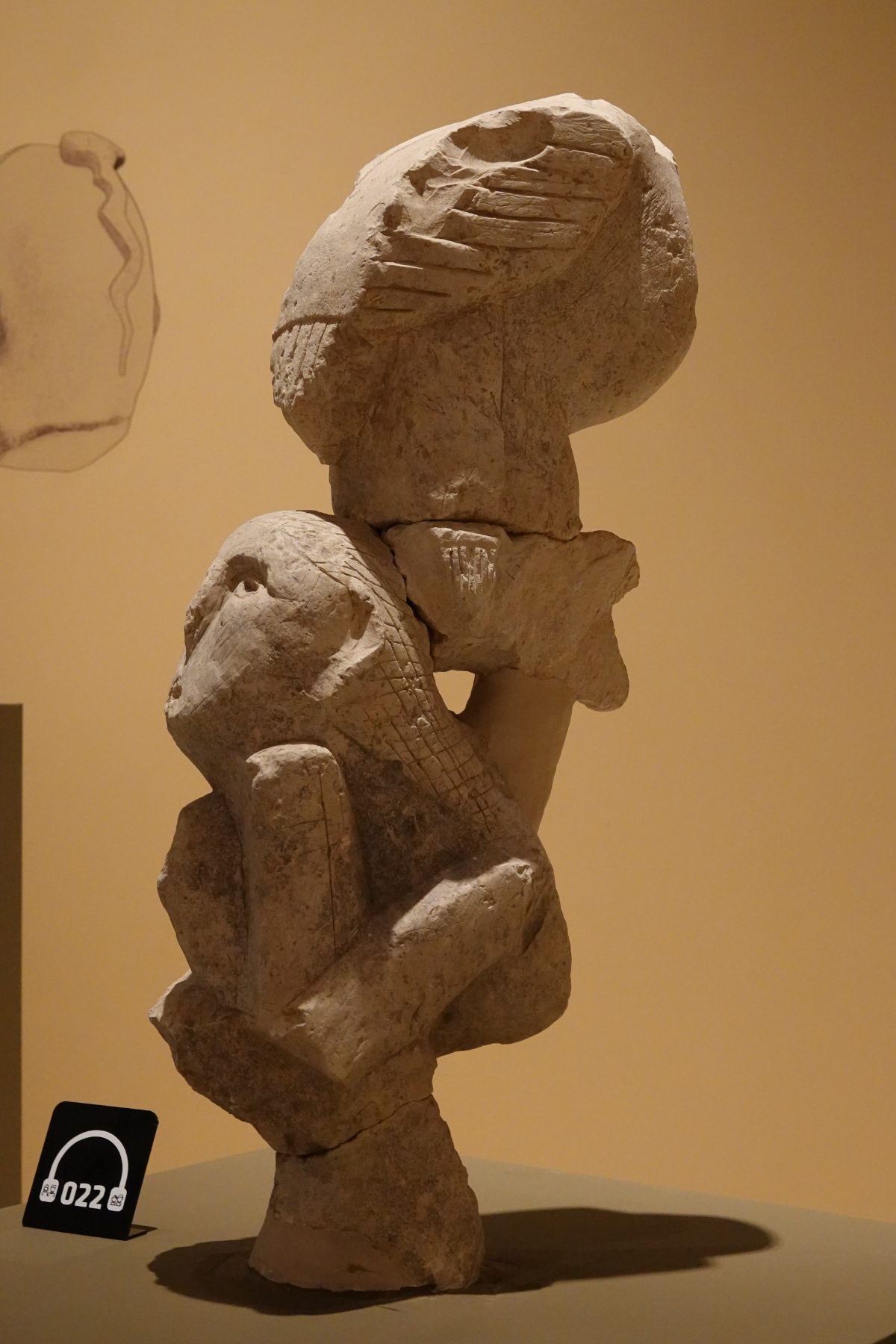
Among all the sculpture recovered from Nevali Cori, one piece stands out for its strangeness and its striking resemblance to something far more modern than Neolithic Anatolia: a tall, narrow limestone carving that archaeologists have nicknamed the totem pole. The sculpture stacks distinct forms vertically along a single shaft, most notably a bird with outstretched or folded wings positioned above what appears to be a human head, an arrangement that immediately evokes the totem poles of the Pacific Northwest even though the two traditions have no historical connection whatsoever.
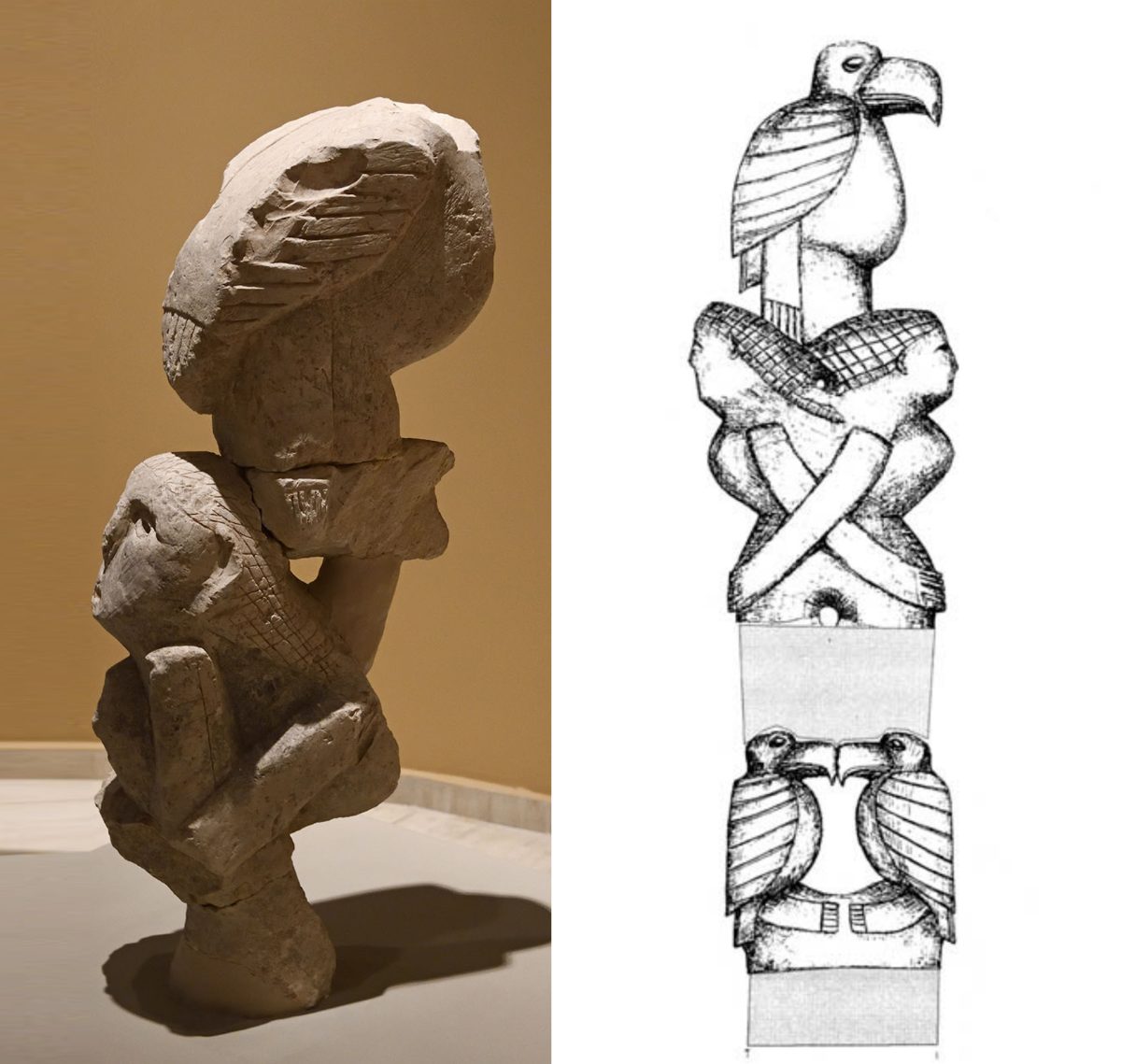
Interpretations of the totem pole vary. Some researchers connect the bird-over-head motif to similar imagery at Gobekli Tepe, where vultures and other birds appear carved on several pillars, sometimes in contexts that suggest a connection to death, excarnation, or the passage of the soul after death. Others read the composition more cautiously, noting that a single sculpture, without accompanying texts or a wider comparative sample, can only support tentative conclusions about its exact symbolic meaning. What is not in dispute is the piece’s craftsmanship: the carving shows confident, deliberate control of stone by artisans who had never worked with metal tools.
The totem pole was recovered in fragments and required careful reconstruction, and only a tentative arrangement of its components can be offered today. Even so, it remains one of the most frequently reproduced images associated with Nevali Cori, appearing in surveys of early Near Eastern art as an example of how sophisticated and symbolically layered Neolithic sculpture could already be, thousands of years before the first cities, kingdoms, or writing systems existed anywhere in the region.
A Face Carved Before Writing Existed
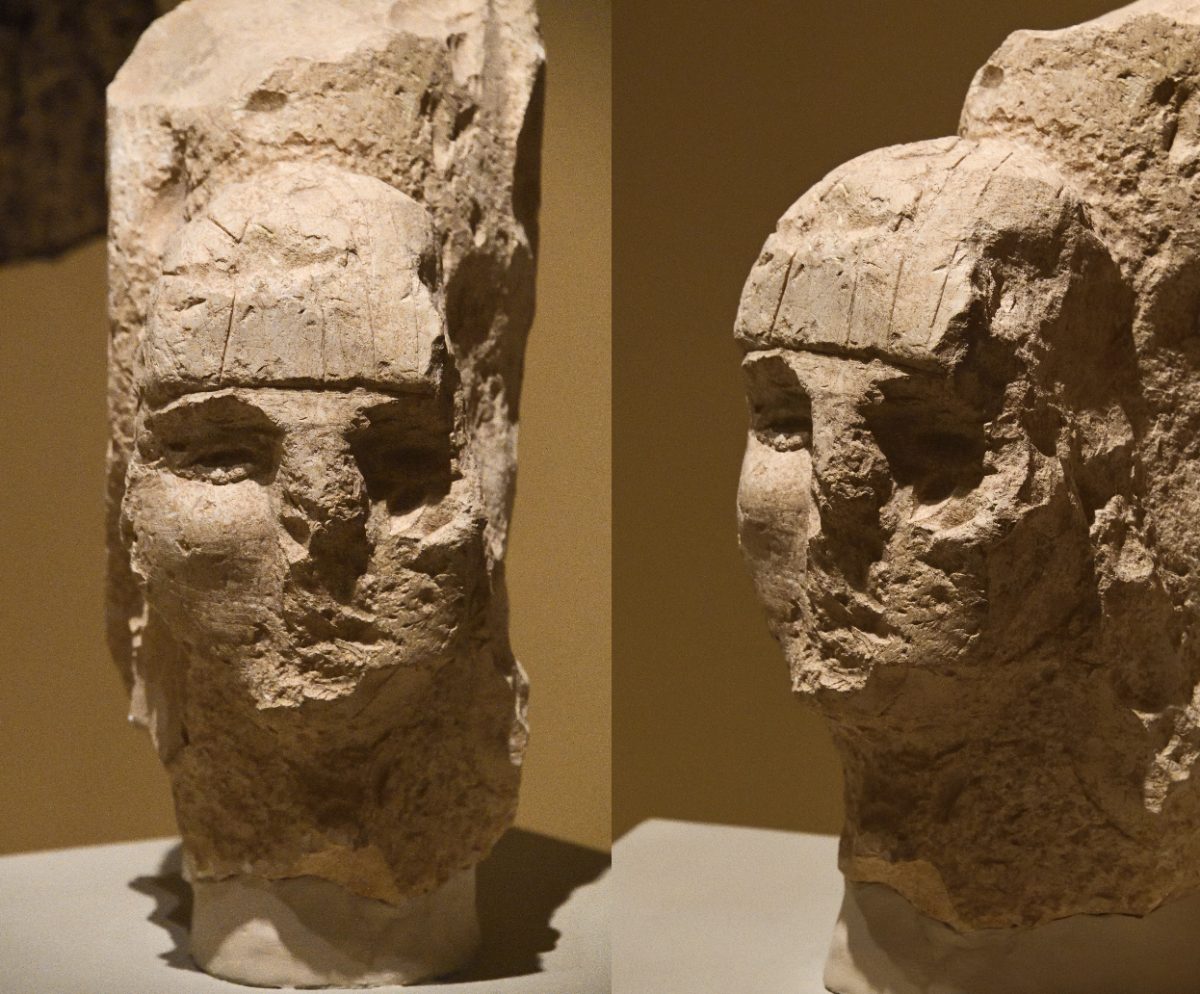
Perhaps the single most celebrated find from Nevali Cori is a nearly life-size human head carved from limestone, widely regarded as one of the earliest naturalistic representations of a human face in the archaeological record. Unlike the stylized, almost abstract T-shaped pillars, this sculpture aims for something closer to portraiture, with recognizable eyes, a nose, and a mouth rendered in careful, rounded proportions. A snake carved in low relief runs down the back of the piece, a detail that has invited comparison with snake imagery found on pillars and sculptures at other sites in the region, where snakes appear repeatedly in Neolithic symbolic art.
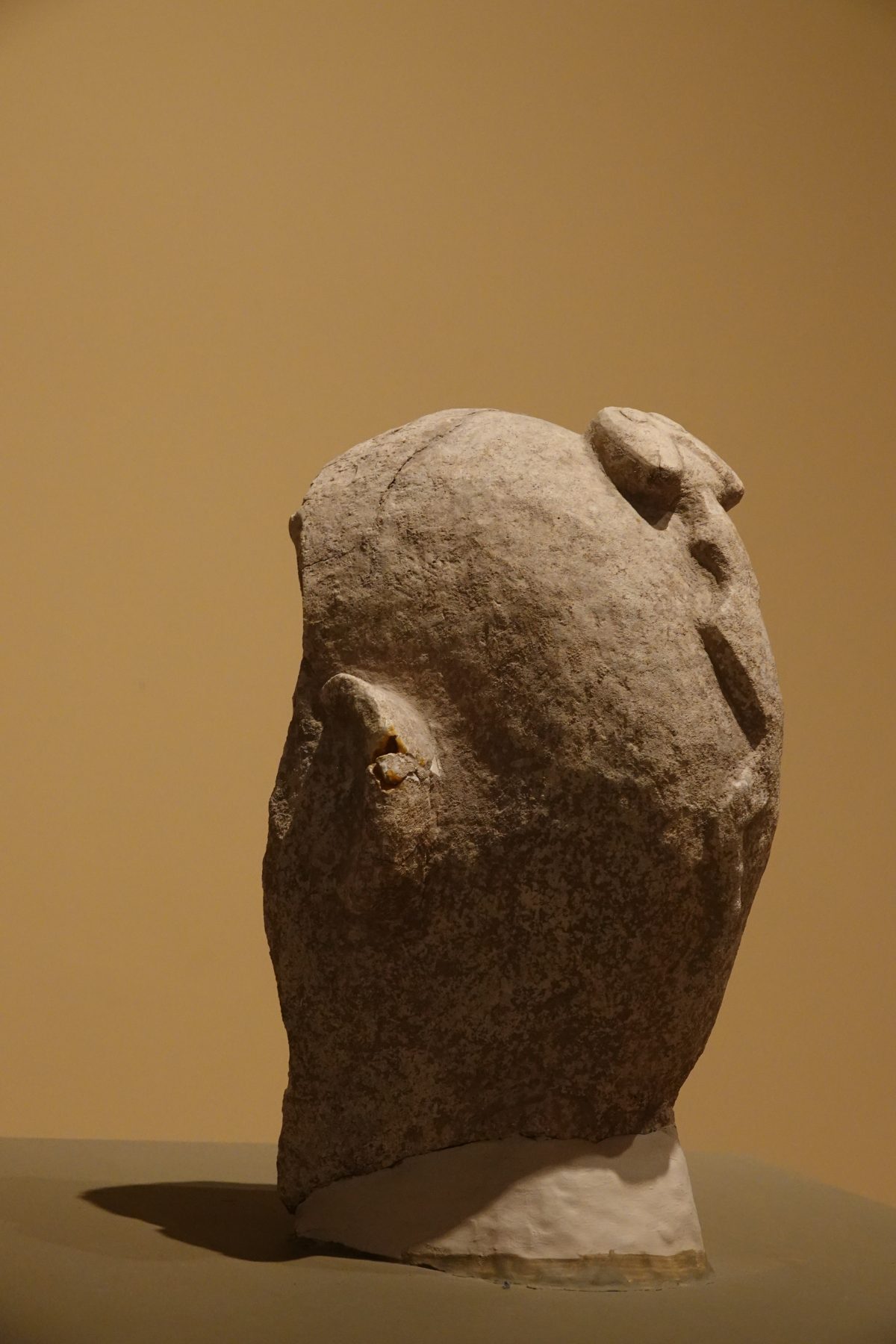
The head’s naturalism does not necessarily mean it was intended as a portrait of a specific individual in the modern sense. Many researchers interpret such Neolithic human sculptures as representations of ancestors, generalized human figures used in ritual, or ideal ancestral types rather than as likenesses of any one identifiable person. Still, the technical achievement is difficult to overstate: producing rounded, proportionate human features in stone, using only stone and bone tools, required both patience and an established artistic tradition passed down through direct instruction and practice.
Alongside this head, the site produced several other carved fragments depicting human features, including a separate piece showing a totem-like head with more schematic features, now also held at the Sanliurfa Archaeology Museum alongside the site’s other major sculptures. Taken together, these finds show that the community at Nevali Cori had already developed multiple parallel sculptural conventions, some highly naturalistic and some more abstract, existing side by side within the same small settlement.
The Sanliurfa Archaeology Museum today displays these sculptures alongside material from other regional sites, giving visitors a rare chance to see, in one place, the range of artistic approaches Neolithic communities in this part of Turkey were developing simultaneously. Placards throughout the gallery emphasize the connections between Nevali Cori, Gobekli Tepe, and Karahan Tepe, framing the region as a coherent zone of early symbolic innovation rather than a set of isolated, unrelated discoveries.
Wheat Fields Before the Wheel
Nevali Cori’s importance extends well beyond its sculpture. Archaeobotanical remains recovered from the site, particularly carbonized grains of einkorn wheat, place it among the communities involved in the earliest stages of cereal domestication in the Near East. Genetic studies comparing modern and wild einkorn populations have pointed to the Karacadag mountain range, not far from Nevali Cori and Cayonu, as a likely region where wild einkorn was first brought under cultivation. That research placed this stretch of the upper Euphrates and Tigris basin at the very center of the story of how humans began farming grain.
The people of Nevali Cori were not yet full-time farmers dependent entirely on domesticated crops. Evidence suggests a mixed economy that still relied heavily on hunting wild game and gathering wild plants, supplemented by increasing cultivation of einkorn and other cereals. Animal bones recovered from the site include wild sheep, goat, and cattle, with only limited evidence of the more managed herding practices that would become standard in later centuries. This mixture of old and new subsistence strategies is typical of the Pre-Pottery Neolithic B period across the region, a time of gradual transition rather than sudden, complete change.
Grinding stones, storage pits, and processing tools found throughout the domestic areas of the site further support the picture of a community increasingly organized around cereal processing, even while its members continued to hunt and forage. This combination of an economy still in transition alongside a fully developed ceremonial building complex is part of what makes Nevali Cori so valuable to researchers: it captures a community balancing old subsistence habits with new agricultural practices and new forms of communal religious expression, all at the same time.
This period of agricultural experimentation was not unique to Nevali Cori. Across the wider region, from Cayonu to sites further into the Levant, communities were independently working through similar processes of selecting, planting, and harvesting wild cereals, gradually shifting the genetic makeup of the plants they relied on. Nevali Cori’s einkorn evidence adds one more data point to this broader mosaic, helping researchers trace how domestication may have spread, been shared, or arisen independently at different points across the northern Fertile Crescent.
What Nevali Cori Tells Us About Gobekli Tepe
When Gobekli Tepe became internationally famous in the 2000s and 2010s for its massive carved pillars and monumental enclosures, Nevali Cori was already known to specialists as a kind of missing link. Its T-shaped pillars, carved in a similar style and arranged in a similar manner along interior benches, demonstrated that the architectural and symbolic vocabulary of Gobekli Tepe was not an isolated invention but part of a wider regional tradition, shared across multiple communities in the upper Euphrates and Tigris basins during the Pre-Pottery Neolithic period.
At the same time, the differences between the two sites are just as informative as the similarities. Gobekli Tepe’s enclosures are far larger, and current evidence suggests they were built and used before any permanent village existed on the hill. Nevali Cori’s special building, by contrast, sat inside an inhabited settlement of ordinary houses, occupied by people who farmed, cooked, and slept only steps away from their shrine. Comparing the two sites lets researchers trace how monumental ritual architecture may have moved from isolated ceremonial centers toward integration within the fabric of everyday village life.
Because the original site of Nevali Cori is now underwater, comparisons with Gobekli Tepe and other regional sites like Cayonu, Karahan Tepe, and Sayburc rely entirely on the excavation records and museum collections assembled before 1992. Every fragment recovered before the reservoir filled represents information that can never be supplemented by future digging at the original location, which makes the surviving archive from Nevali Cori unusually important, and unusually irreplaceable, within Near Eastern archaeology.
Modern research on the site continues even though the original location is inaccessible. Museum specimens are periodically restudied using updated methods, from more precise radiocarbon dating to detailed stylistic comparisons with newly discovered sites such as Karahan Tepe and Sayburc, both excavated well after Nevali Cori was already underwater. Each new discovery in the region tends to prompt a fresh look at the older Nevali Cori material, since the two bodies of evidence inform and refine each other.
Nearby Places to Explore
Anyone drawn to Nevali Cori and the early Neolithic of southeastern Turkey has several other sites within the same broad region worth exploring further, each adding a different piece to the picture of how villages, farming, and monumental ritual architecture developed together along the upper Euphrates and Tigris basins.
- Cayonu: The Neolithic Village Where Farming Life Began
- Alalakh: The Bronze Age City That Wrote Down Its Own History
- Hattusa: Highland Capital of the Forgotten Hittite Superpower
Why Nevali Cori Still Matters
Nevali Cori occupies an unusual place in the story of the Neolithic Near East. It is famous largely because of what it lost: a valley flooded before its full story could be told, an excavation cut short by an advancing reservoir, and a settlement now accessible only through the objects rescued from it in a race against rising water. Yet what survives is enough to secure its importance, from the naturalistic stone head and the strange totem-pole carving to the terrazzo floor and the sequence of special buildings that stood at the settlement’s heart for generations.
Alongside Cayonu and Gobekli Tepe, Nevali Cori helps fill in a region-wide picture of communities that were already building monumental ritual spaces, carving sophisticated sculpture, and experimenting with early cereal cultivation, all before the invention of pottery. The village beneath the reservoir may be gone, but the objects it left behind, now standing in museum cases in Sanliurfa, continue to reshape how archaeologists understand the deep roots of religion, art, and settled life in this part of the world.