Alacahoyuk is an ancient mound in central Turkey where Early Bronze Age royal tombs and a Hittite sphinx-flanked gate reveal nearly four thousand years of continuous settlement.
Long before Hattusa became the capital of a Hittite empire, and long before Gordion became famous as the resting place of a legendary king, a smaller mound near the modern town of Alaca in Corum Province was already a place of remarkable wealth and ceremony. Alacahoyuk’s Early Bronze Age tombs, packed with gold jewelry and strange bronze standards shaped like suns, bulls, and stags, rank among the richest non-Egyptian, non-Mesopotamian burials found anywhere from the third millennium BCE. Centuries later, the same mound became a Hittite religious center guarded by a gate flanked by carved sphinxes, making Alacahoyuk one of the very few sites in Turkey where visitors can trace an unbroken sequence from Bronze Age princes to Hittite priests within a single small archaeological park.
Contents
- A Mound on the Central Anatolian Plateau
- A Century of Digging
- The Sphinx Gate
- A Second City in the Hittite World
- The Royal Tombs Beneath the Mound
- The Sun Discs That Traveled to a Museum
- Bulls, Stags, and Bronze Standards
- A Procession Carved in Stone
- What Lies Beneath the Hittite City
- Alacahoyuk Today
- Nearby Places to Explore
- Why Alacahoyuk Still Matters
A Mound on the Central Anatolian Plateau
Alacahoyuk sits on the central Anatolian plateau, roughly 36 kilometers from Bogazkale, the village that grew up around the ruins of Hattusa. The surrounding landscape is open, rolling farmland, cut by small streams that fed the settlement across its many phases of occupation. Like most tells in this part of Turkey, the mound rose gradually over thousands of years as generation after generation built directly on top of the ruins of the settlements before them, leaving behind a layered record that runs from the Chalcolithic period through the Early Bronze Age, into the centuries of Hittite rule, and even into later Phrygian and Roman activity.
The location was well chosen. Central Anatolia’s plateau offered fertile land for cereal farming and open pasture for cattle and sheep, while its position along routes connecting the Black Sea coast to the Anatolian interior gave its inhabitants access to trade goods, including the metals that would later fill its royal tombs with gold, silver, and bronze. That combination of agricultural stability and access to exchange networks likely explains why a relatively modest-sized settlement was able to accumulate such extraordinary wealth during the Early Bronze Age.
Rainfall on the plateau is modest but reliable enough to support dry farming of wheat and barley, the same crops that would have sustained Alacahoyuk’s population across every phase of its long history. Excavators have also noted evidence of animal husbandry throughout the site’s sequence, including cattle bones consistent with the sacrificial animals interred alongside the dead in the royal tombs, suggesting that herding wealth and ritual practice were closely linked in the community’s economy from a very early period.
Geologically, the region sits within a broader zone of central Anatolia rich in metal ore deposits, a factor that likely contributed directly to Alacahoyuk’s ability to produce such a wide range of bronze and precious metal objects. Nearby sources of copper and other ores would have reduced the distance and effort required to supply local workshops, helping explain how a settlement of modest size could sustain metalworking on the scale suggested by its royal tomb finds.
A Century of Digging
European travelers noted the mound as early as the 1830s, but systematic excavation did not begin until 1935, when the newly founded Turkish Historical Society sponsored a project led by Hamit Zubeyir Kosay and Remzi Oguz Arik. The timing mattered. Alacahoyuk became one of the first major excavations carried out by Turkish archaeologists rather than foreign expeditions, and it received direct support from the early Republican government, which saw the discovery of a wealthy, sophisticated Bronze Age civilization on Anatolian soil as powerful evidence for a long, continuous Anatolian heritage predating the Hittites, the Greeks, and every later arrival to the peninsula.
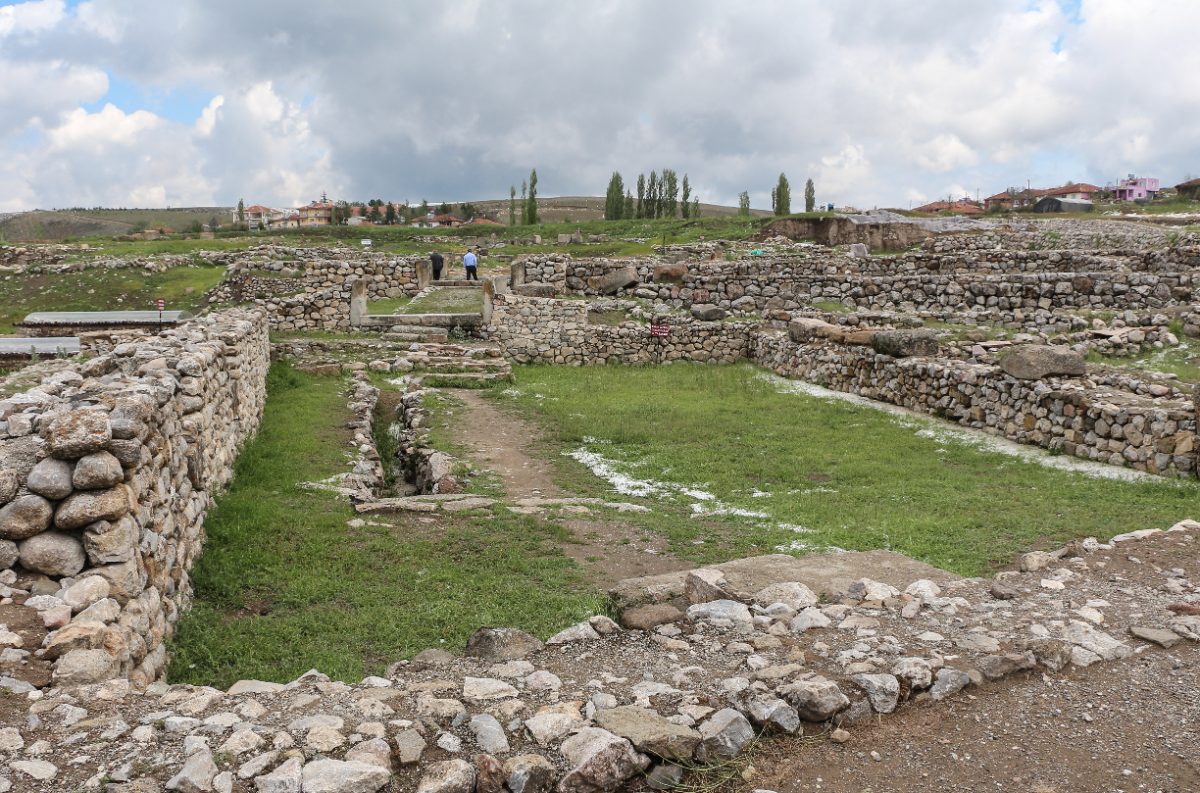
That early excavation uncovered the first of what would eventually be thirteen royal tombs, along with sections of the later Hittite city, including the sphinx gate. Work continued intermittently across the following decades, and the site remains an active subject of study today, with later excavation seasons refining the chronology of the tombs and clarifying the sequence of Hittite-period building phases. Alacahoyuk’s excavation history is now inseparable from the history of Turkish archaeology itself, since so many of the discipline’s early Turkish practitioners trained or worked on this single mound.
Kosay’s excavation reports, published over subsequent decades, became foundational texts for Turkish archaeology, establishing methodological standards and a chronological framework still referenced by researchers working on Bronze Age Anatolia today. The involvement of the Turkish Historical Society also meant that Alacahoyuk’s discoveries were quickly folded into a broader national narrative about Anatolia’s deep past, a narrative that continues to shape how the site is presented to visitors and schoolchildren across the country.
Later research seasons employed increasingly refined excavation techniques, including more systematic stratigraphic recording and, eventually, radiocarbon dating, which helped resolve some of the chronological uncertainties left by the earliest campaigns. Comparing Alacahoyuk’s sequence against other Anatolian sites excavated in subsequent decades has allowed archaeologists to place its royal tombs within a broader regional pattern of Early Bronze Age elite burial practices, linking the site to a wider cultural horizon rather than treating it as an isolated anomaly.
The Sphinx Gate
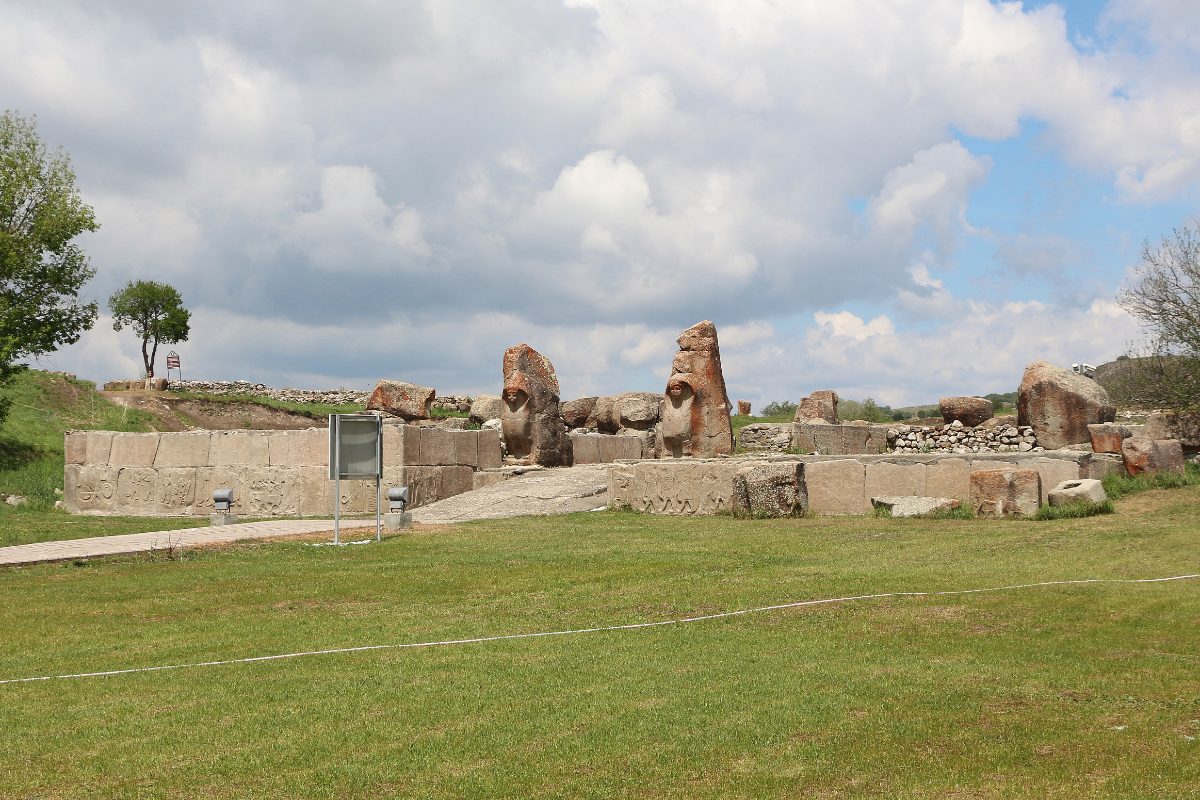
The most photographed feature at Alacahoyuk is its monumental entrance, known as the Sphinx Gate, built during the Hittite period atop the earlier Bronze Age layers. Two large stone sphinxes, carved in a style showing clear influence from Egyptian and Syrian art traditions that had spread through the Near East by the second millennium BCE, flank the gate’s opening. The gate itself follows a design familiar from Hattusa: a corbelled passage running beneath the city wall, allowing defenders and residents to move through the fortification without exposing themselves on top of it.
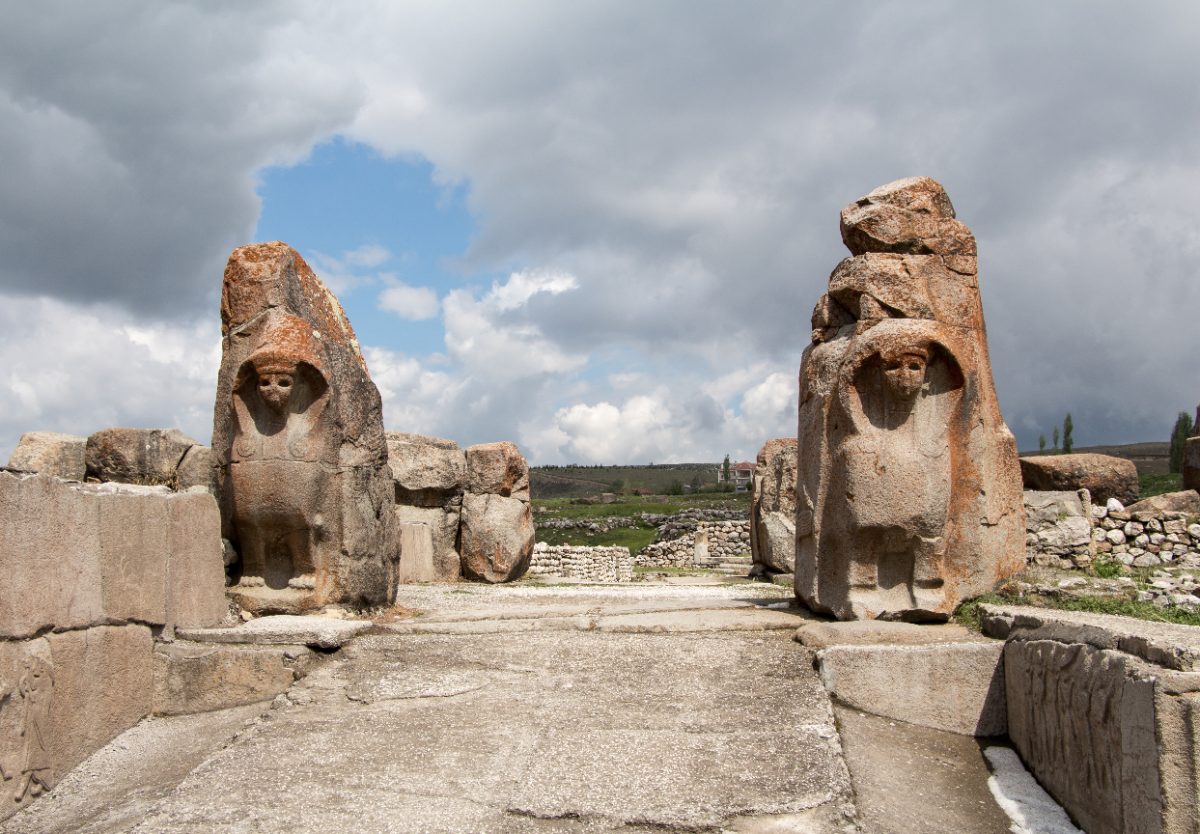
Set into the walls beside the gate are carved orthostats, stone slabs decorated with relief scenes that give a rare glimpse into Hittite ritual life. The reliefs depict a king and queen making offerings before an altar, musicians playing instruments, acrobats performing, animals being led to sacrifice, and, in one particularly well-known panel, a man climbing a ladder, an image whose exact ritual meaning remains debated among specialists. Together, these scenes suggest the gate marked the entrance to a space used for religious festivals, possibly connected to a specific Hittite deity associated with the city.
Comparisons between the Alacahoyuk sphinxes and similar figures from Syria and northern Mesopotamia have helped scholars trace the spread of this architectural motif across the wider Near East during the second millennium BCE. Sphinx and lion gates became something of a signature feature for major Hittite sites, appearing also at Hattusa and at other regional centers, suggesting a shared visual language used to mark the boundaries of important settlements and to project both religious and political authority to anyone approaching the city.
Visitors walking through the gate today pass between the same two sphinxes that once greeted Hittite priests, officials, and pilgrims arriving for festival observances. Weathering over more than three thousand years has softened some of the finer carved details, but the essential form, an animal body combined with a crowned or headdressed human-like head, remains clearly recognizable, offering a direct physical connection to a religious tradition that otherwise survives mainly through fragmentary cuneiform tablets recovered from Hattusa and other Hittite administrative centers.
A Second City in the Hittite World
Some scholars have proposed identifying Alacahoyuk with Arinna, a sacred city mentioned repeatedly in Hittite religious texts as home to the powerful sun goddess who stood at the center of the Hittite pantheon. The identification remains debated, since no inscription found at the site directly confirms the ancient name of the settlement, but the city’s clear religious character, its proximity to Hattusa, and the sophistication of its gate and associated buildings all fit comfortably with what Hittite texts describe about Arinna’s importance. Whether or not the identification is ever confirmed, Alacahoyuk’s Hittite-period remains show a settlement of real administrative and religious weight, not a minor rural outpost.
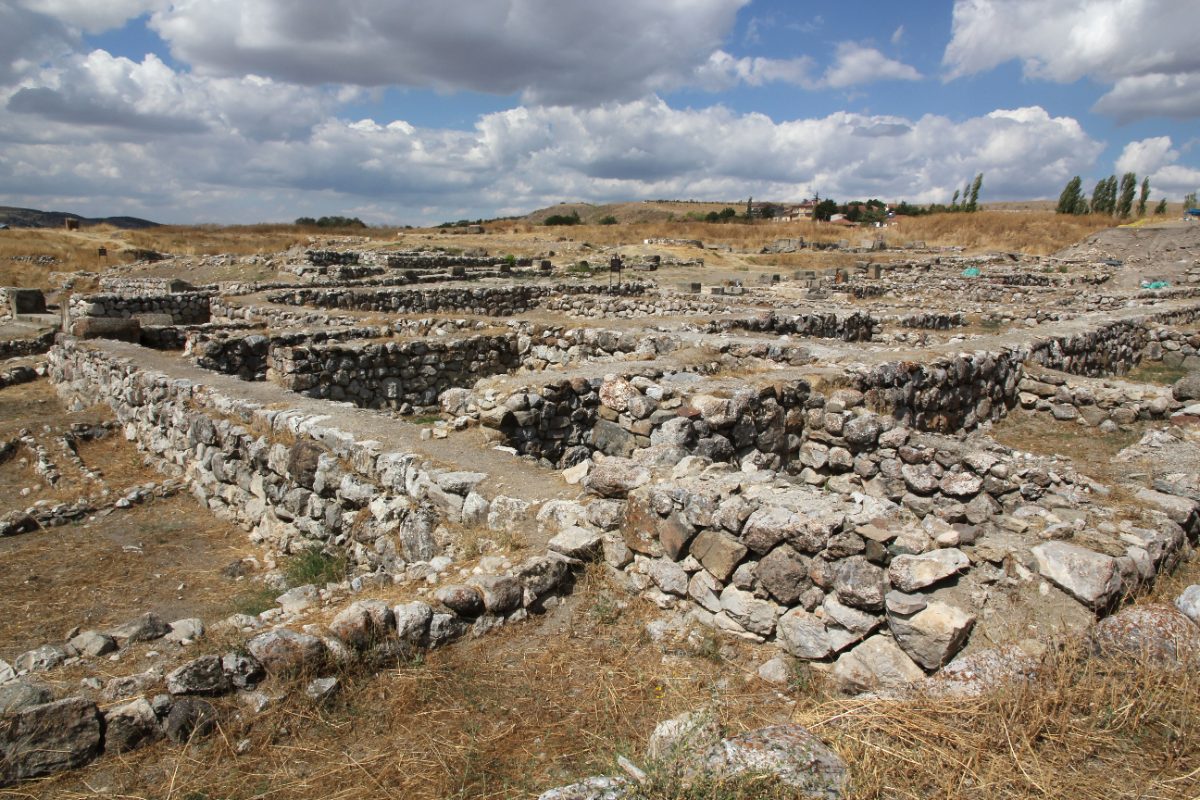
Excavators uncovered the remains of a building interpreted as a palace or major administrative structure just inside the Sphinx Gate, along with a postern tunnel similar to the famous ones at Hattusa, allowing movement beneath the fortification walls. This combination of defensive engineering, religious architecture, and administrative building places Alacahoyuk within the network of secondary Hittite centers that supported the capital, handling regional governance and ritual obligations that could not all be concentrated in Hattusa alone.
Hittite religious texts describe an elaborate calendar of festivals tied to specific cities across the kingdom, each associated with particular deities and particular ritual obligations owed by the local population and visiting royalty. If Alacahoyuk is indeed to be identified with Arinna, its Sphinx Gate and associated buildings would have hosted some of the most important religious events in the entire Hittite state, potentially including visits from the king and queen themselves, who are known from texts to have traveled between sacred cities to perform required rites at set points in the ritual year.
The Royal Tombs Beneath the Mound
Beneath the later Hittite structures, excavators found something that turned Alacahoyuk into one of the most important Bronze Age sites in the Near East: a group of thirteen shaft graves dating to roughly 2500 to 2250 BCE, now known as the royal tombs. Unlike simple pit burials, these graves were rectangular shafts lined with stone and roofed with wooden beams and stone slabs, built to hold both a deceased individual, often accompanied by sacrificed cattle, and an extraordinary quantity of grave goods. The wealth found inside rivaled anything known from contemporary Mesopotamia, and its presence so far from the great cities of Sumer surprised archaeologists when it was first uncovered.
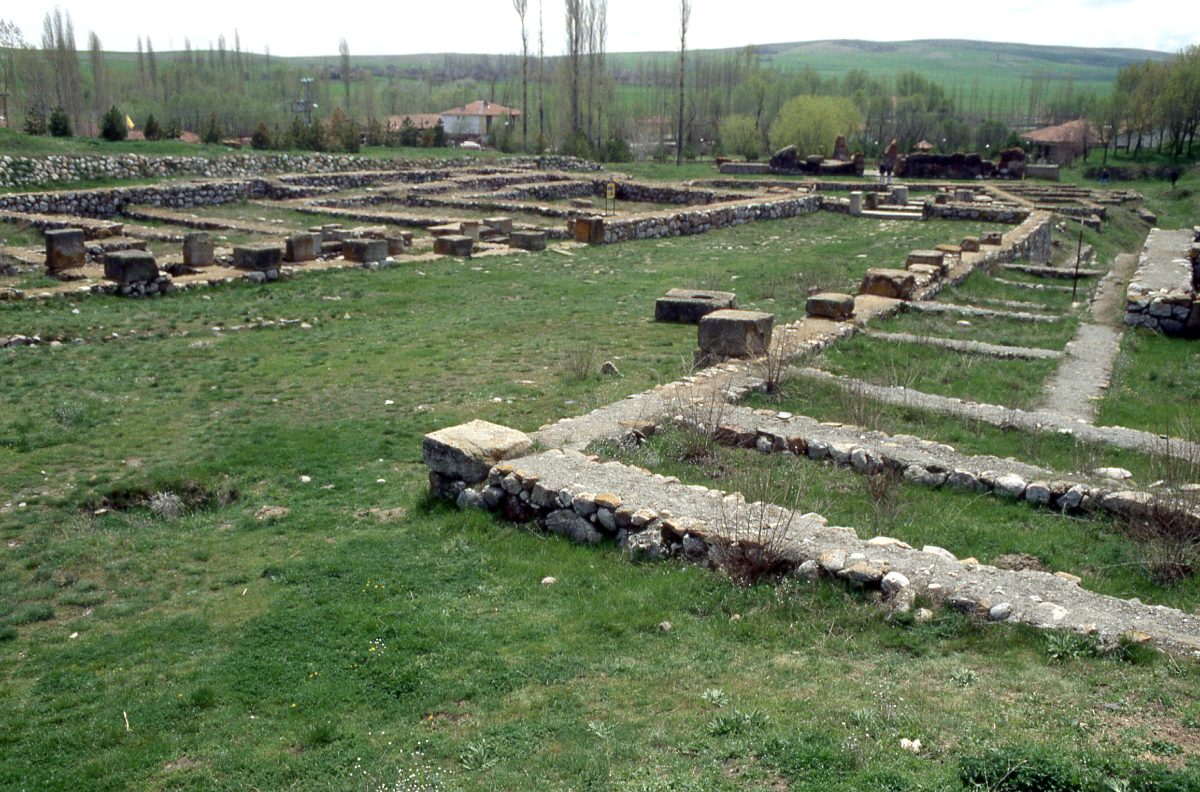
Grave goods included gold and electrum jewelry, diadems, pins, vessels of gold and silver, weapons, and a wide range of bronze objects, many showing exceptional metalworking skill for their era. The people buried in these tombs are generally interpreted as members of a local ruling elite, though whether they represent hereditary kings, chiefs, or another form of leadership remains uncertain, since no writing accompanies the burials to clarify their titles or names. What is clear is that Early Bronze Age Alacahoyuk supported a social hierarchy wealthy enough to commission objects of astonishing craftsmanship for the exclusive purpose of burial.
Not every tomb was equally rich. Some shaft graves contained only modest goods, while others held extraordinary quantities of gold and bronze, suggesting a clear hierarchy even among the small elite buried at the site. Several tombs also included the remains of servants or attendants alongside the primary burial, a practice that appears in other Bronze Age cultures across the wider Near East and points to beliefs about status and service continuing into the afterlife.
The method of construction used for the shaft graves, involving substantial excavation, stone lining, and timber roofing, represented a significant investment of labor for a relatively small community. This investment, combined with the practice of sacrificing cattle as part of the burial rite, indicates that funerary ceremony held enormous social importance at Alacahoyuk during the Early Bronze Age, likely serving to reinforce the status of surviving family members and successors as much as to honor the deceased individual.
The Sun Discs That Traveled to a Museum
Among the royal tombs’ most famous discoveries are a group of bronze objects known as sun discs, or gunes kursu in Turkish, flat circular standards decorated with an openwork pattern of concentric rings and radiating spokes, sometimes with small animal figures attached to the rim. Archaeologists believe these standards were mounted on poles and carried during processions or displayed as part of funerary ritual, though their exact function is still debated. Their striking, almost modern-looking geometric design has made them one of the most recognizable symbols associated with ancient Anatolia, reproduced on everything from museum logos to academic book covers.
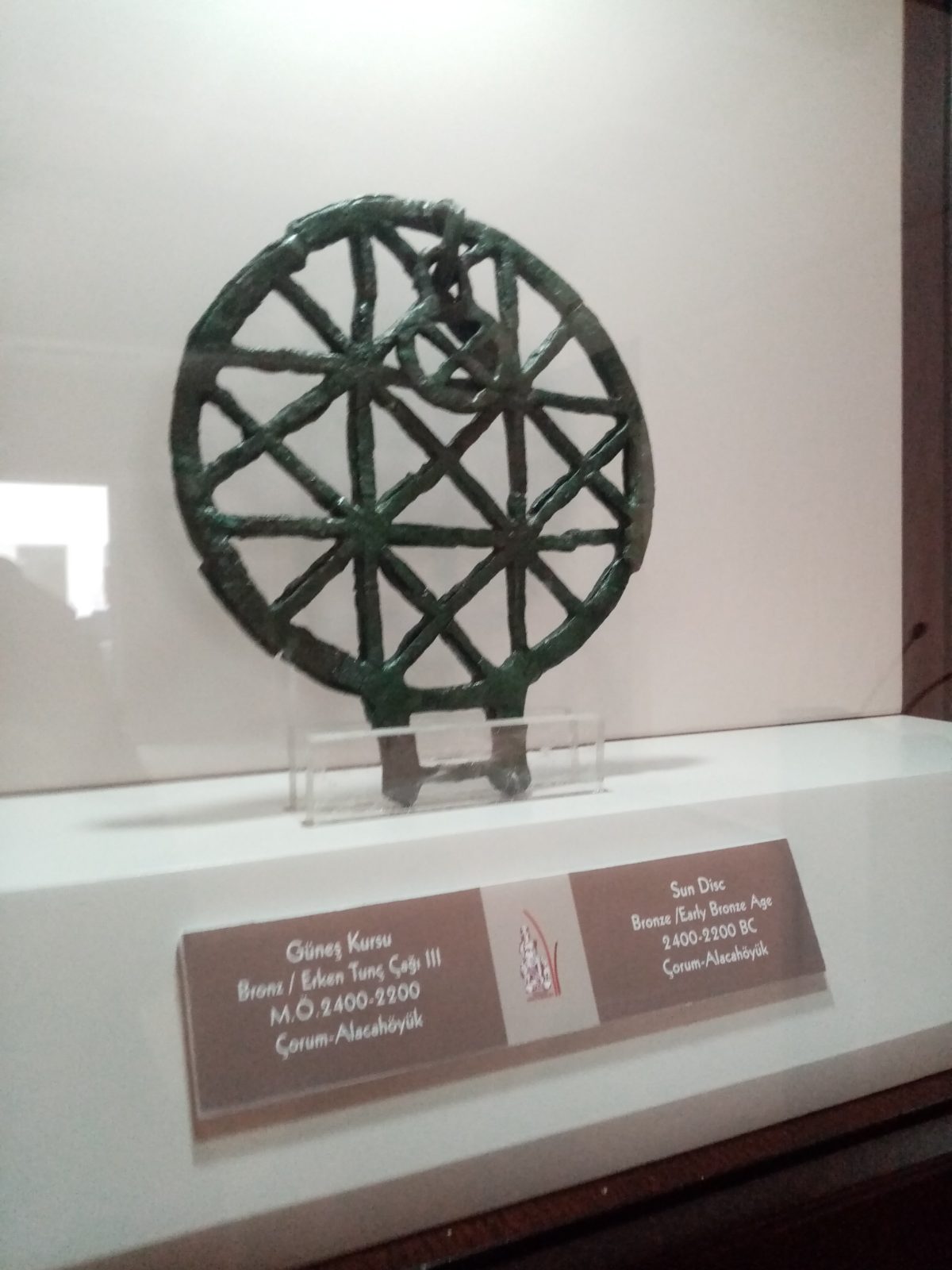
Most of the surviving sun disc standards, along with the bulk of the other royal tomb finds, are now displayed at the Museum of Anatolian Civilizations in Ankara, one of Turkey’s most important archaeological museums. Seeing them in person reveals details that photographs often miss: the thinness of the bronze, the precision of the openwork cutting, and the small variations between individual pieces that suggest they were made by hand rather than cast from a single mold. A smaller number of related finds remain on display closer to the site, in regional museum collections in central Turkey.
The exact ritual use of the sun discs remains one of the more actively debated questions in Anatolian archaeology. Some scholars argue the objects functioned as standards carried at the head of a funeral procession, mounted on long wooden poles that have long since decayed, leaving only the bronze fittings behind. Others suggest a more stationary role, perhaps fixed above a tomb entrance or displayed within a ritual structure now lost to later disturbance. The lack of any surviving pole fragments or clear in-situ positioning within the tombs makes a definitive answer difficult to establish.
Museum conservators have also studied wear patterns on several of the sun discs, looking for scratches or repairs that might indicate long use before burial rather than objects made specifically and only for funerary purposes. Some pieces show evidence consistent with prior handling and possible repair, suggesting they may have served a functional or ceremonial role during the lifetime of their owners before ultimately accompanying them into the grave, rather than being produced purely as burial offerings.
Bulls, Stags, and Bronze Standards
Alongside the sun discs, the royal tombs produced a related family of bronze standards shaped like bulls and stags, some solid and some built with an openwork body similar to the sun discs. These animal standards are thought to have carried religious significance, since bulls and stags appear repeatedly in later Anatolian religious art, including Hittite imagery associated with the weather god and other major deities. Whether the Early Bronze Age people of Alacahoyuk already associated these animals with specific gods, or whether the animals simply symbolized strength, fertility, and status, is impossible to say with certainty given the absence of any accompanying texts.
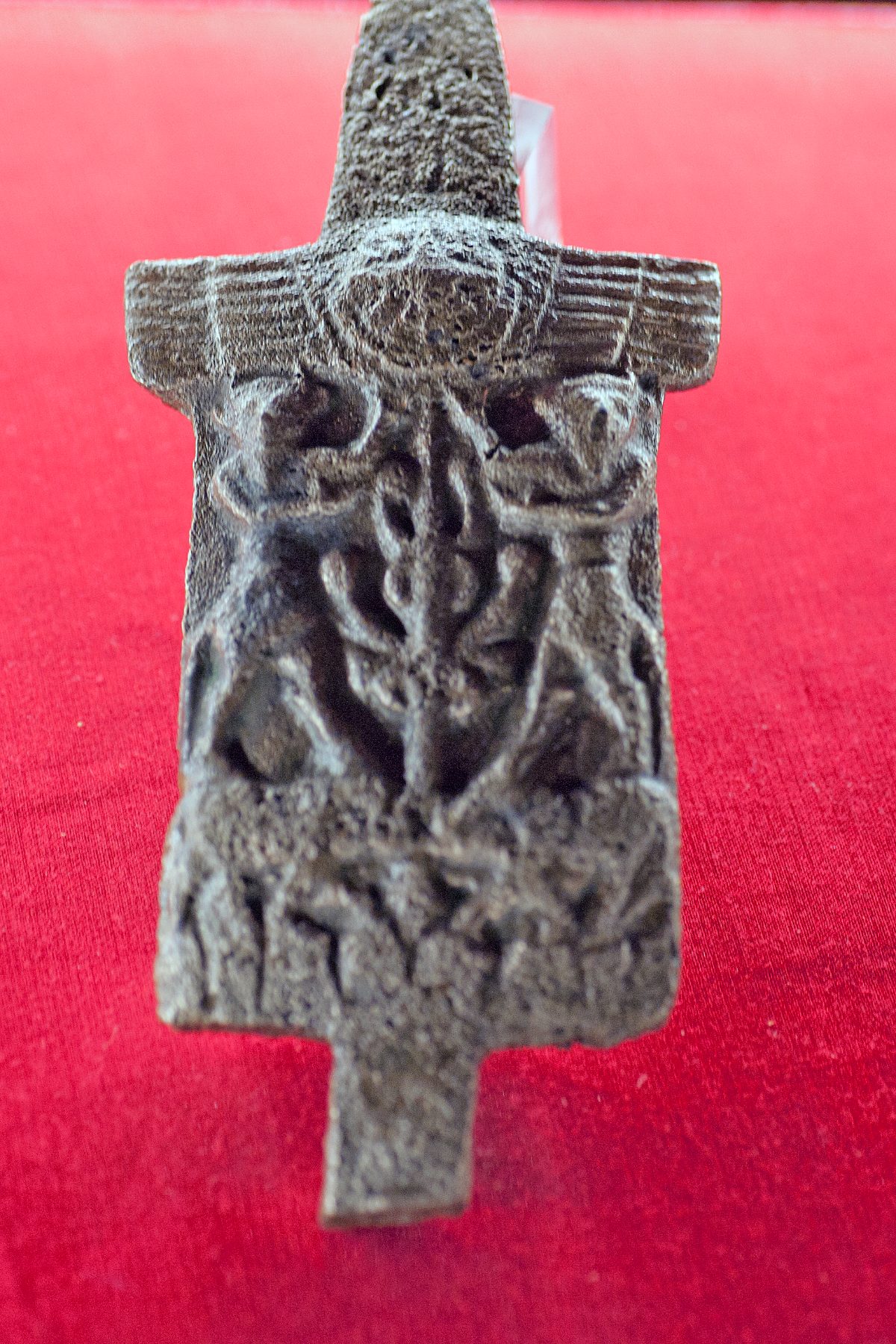
The technical skill behind these standards is significant in its own right. Producing a bull or stag figure with thin, evenly cast legs and horns, sometimes further decorated with inlaid materials, required real expertise in bronze casting at a time when metallurgy across most of the Near East was still developing. Alacahoyuk’s metalworkers were clearly operating at the leading edge of Bronze Age technology for their region, a fact that continues to surprise visitors more familiar with the later, better documented achievements of the Hittites who eventually settled the same mound.
Some standards combine both animal and solar imagery, with small bull or stag figures perched atop a sun disc frame, blending the two categories of object into a single composite piece. These hybrid standards are especially prized by museum curators for their visual complexity and are frequently chosen to represent Alacahoyuk in exhibitions covering the broader sweep of Anatolian Bronze Age art.
Metallurgical analysis of several standards has revealed the use of alloying techniques that improved the durability and casting properties of the bronze, evidence that Alacahoyuk’s craftspeople understood and deliberately controlled the composition of their metal rather than working with whatever raw material happened to be available. This level of technical control supports the broader argument that central Anatolia was an important, independent center of metallurgical innovation during the Early Bronze Age, rather than a periphery merely receiving finished technology from Mesopotamia or the Levant.
A Procession Carved in Stone
Returning to the later Hittite phase, the relief carvings along the Sphinx Gate deserve closer attention on their own terms. Reading the orthostats in sequence creates something like a carved narrative: figures approach an altar bearing offerings, a king and queen stand in ritual poses, and musicians and acrobats perform nearby, suggesting a festival scene rather than a single static image. This kind of processional relief closely parallels imagery known from other Hittite sites and from later Hittite religious texts describing elaborate festival calendars involving music, dance, and offerings to specific deities at specific times of year.
The famous ladder-climbing figure carved into one of the orthostats has attracted particular attention. Some researchers connect it to acrobatic performance as part of festival entertainment, while others suggest a more symbolic reading tied to ideas of ascent, perhaps toward a deity or a sacred space. Without accompanying inscriptions, definitive interpretation remains elusive, but the sheer variety of human activity depicted across the gate’s reliefs, from music to sacrifice to acrobatics, gives Alacahoyuk one of the richest visual records of Hittite ceremonial life found anywhere outside Hattusa itself.
Comparisons between the Alacahoyuk reliefs and contemporary Hittite texts describing the AN.TAH.SUM spring festival and other seasonal celebrations have led some researchers to suggest the gate’s carvings depict a specific, named festival rather than a generic ceremonial scene. If correct, this would make the Sphinx Gate one of the few places where a specific Hittite textual description and a surviving carved image can be tentatively matched to one another, though the connection remains a proposal rather than a settled conclusion.
What Lies Beneath the Hittite City
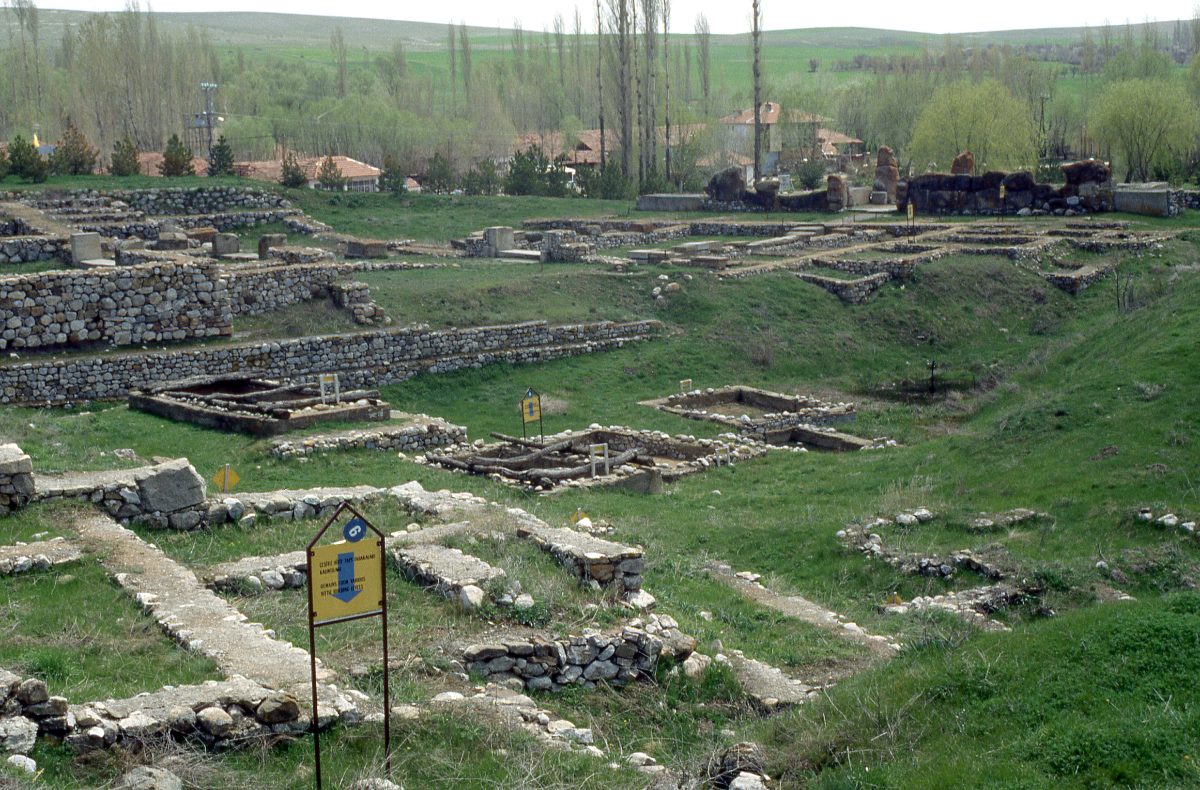
Excavation at Alacahoyuk did not stop at the Bronze Age tombs. Beneath them, archaeologists identified Chalcolithic layers showing an even earlier settlement, giving the mound a total occupation history stretching back before the introduction of bronze metallurgy to the region. These deeper layers are less visually dramatic than the royal tombs or the Sphinx Gate, consisting mainly of house foundations, pottery, and simple tools, but they establish that people were drawn to this particular spot on the Anatolian plateau many centuries before its Bronze Age elite began commissioning gold jewelry and bronze standards.
Later periods left their own traces as well. Evidence of Phrygian-era activity, dating after the collapse of the Hittite empire around 1200 BCE, shows the mound remained inhabited and locally significant even after its Hittite political role ended, while scattered Roman-period material indicates at least some continued use into the classical era. Taken together, the full sequence at Alacahoyuk, from Chalcolithic village to Bronze Age necropolis to Hittite religious center to Phrygian and Roman afterlife, makes it one of the most complete stratigraphic records available anywhere on the central Anatolian plateau.
The relationship between the Chalcolithic village and the later Bronze Age elite burials raises interesting questions about continuity and change at the site. It remains unclear whether the wealthy families buried in the royal tombs were direct descendants of the earlier Chalcolithic community or a new group that arrived and established dominance over an already-settled location. Pottery styles show gradual change rather than an abrupt break, which has led most researchers to favor a model of local continuity and internal social transformation rather than outside conquest or replacement.
Pottery recovered from the Chalcolithic levels shows connections to broader central Anatolian ceramic traditions of the fourth millennium BCE, helping situate early Alacahoyuk within a network of related communities across the plateau long before any of them had access to bronze, gold, or the elaborate burial customs that would later define the site’s fame.
Alacahoyuk Today
Today the mound is preserved as an open-air archaeological site, with the Sphinx Gate, sections of the city wall, the postern tunnel, and several of the royal tombs left visible for visitors to walk among. A small on-site museum displays replicas of the most famous finds alongside a limited number of original artifacts, while the majority of the gold jewelry and bronze standards remain in Ankara. The site receives far fewer visitors than Hattusa or the major coastal ruins of western Turkey, which means those who do make the trip to Corum Province often find themselves walking the site in near-total quiet, with the sphinxes and carved reliefs standing largely as they have for more than three thousand years.
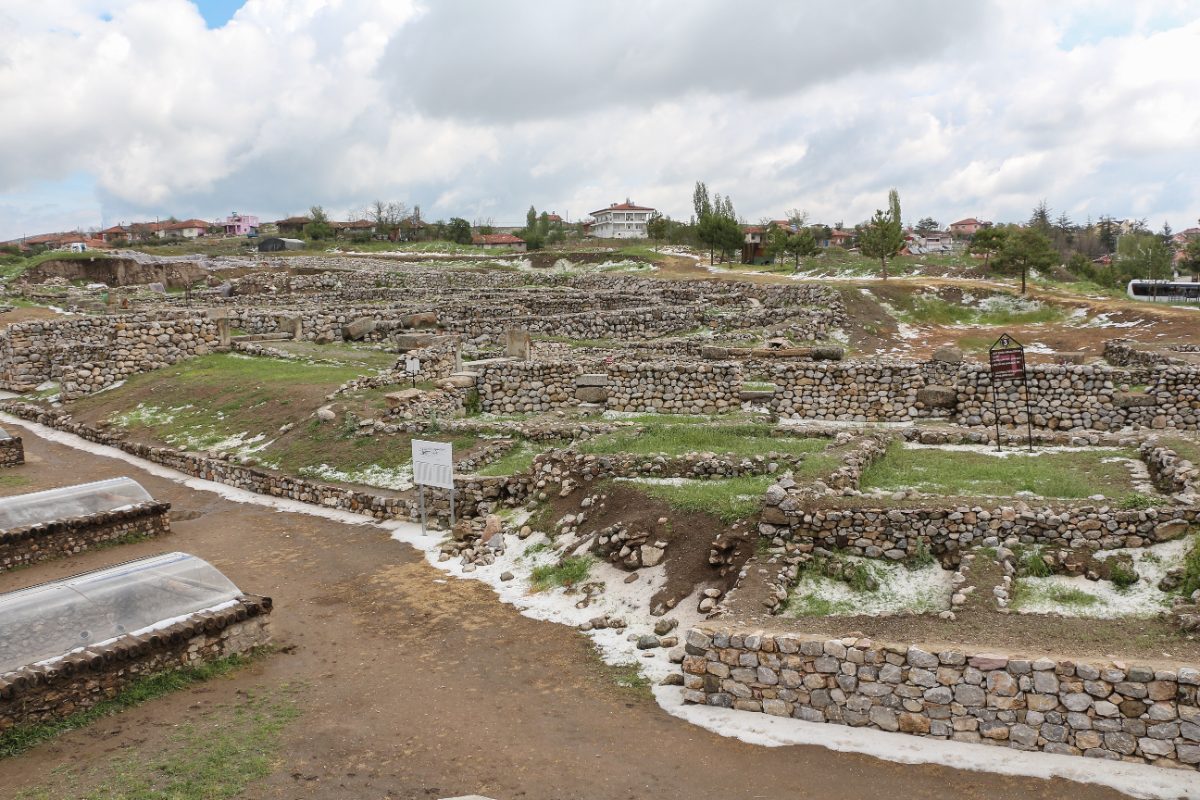
Conservation work at the site has focused heavily on stabilizing the Sphinx Gate’s stonework and protecting the exposed royal tombs from weathering, since both features are directly exposed to the elements after millennia buried beneath later construction. Turkish heritage authorities have periodically discussed expanding visitor facilities at Alacahoyuk, recognizing its significance despite its relatively low profile compared to other national archaeological sites, though development has proceeded more slowly than at higher-traffic destinations elsewhere in the country.
Nearby Places to Explore
Alacahoyuk sits within easy reach of several of central Anatolia’s most important ancient sites, each offering a different piece of the story of how Bronze Age communities, Hittite kings, and later peoples shaped this part of Turkey.
- Hattusa: Highland Capital of the Forgotten Hittite Superpower
- A Town of Thousands With No Streets, Where the Dead Slept Beneath the Living: The Story of Çatalhöyük
- Gordion: Where the Real King Midas Lies Beneath a Great Mound
Why Alacahoyuk Still Matters
Alacahoyuk rarely receives the international attention given to Hattusa or Gobekli Tepe, yet few sites in Turkey compress so much history into so small a space. Its Early Bronze Age royal tombs demonstrate that sophisticated, wealth-driven social hierarchies existed on the Anatolian plateau centuries before the Hittites ever arrived, while its Sphinx Gate and carved reliefs show how the same ground continued to matter to a very different civilization more than a thousand years later. The bronze sun discs pulled from its shaft graves have become quiet ambassadors for this history, appearing in museums and publications worldwide even when the site that produced them remains known mainly to specialists.
For visitors willing to make the drive into Corum Province, Alacahoyuk offers a rare chance to stand in one place and trace a continuous thread of human activity from the Copper Age through the Bronze Age, the Hittite Empire, and beyond, all without the crowds that now surround Turkey’s more famous archaeological destinations.
You May Like
Mafra, the Palace a King Built From a Vow


One thought on “Alacahoyuk: The Bronze Age Tombs Behind a Sphinx Gate”