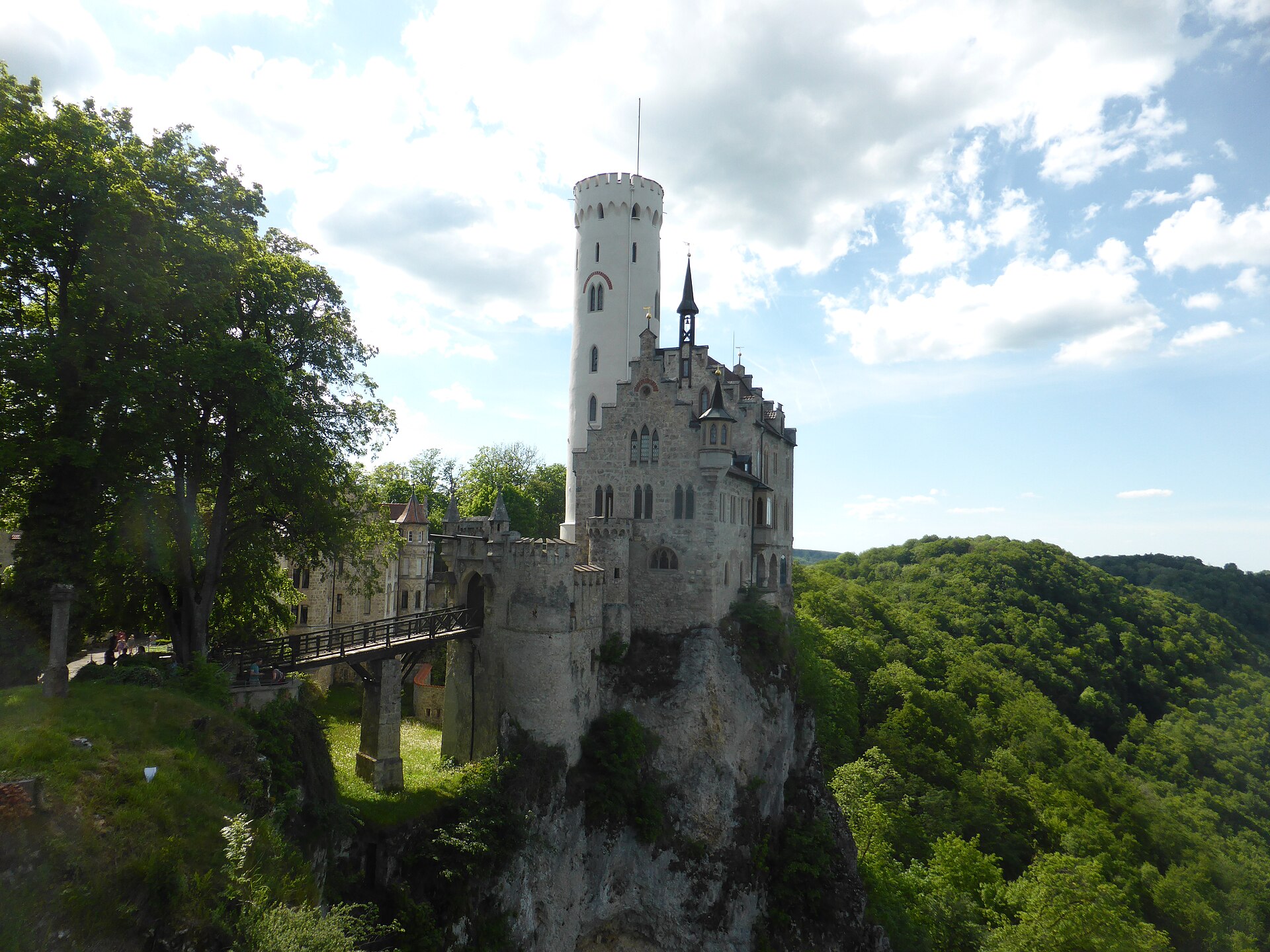
On the edge of a sheer cliff in southern Germany, so close to the drop that it seems to grow out of the rock itself, stands a slender white castle with a single tall tower, looking for all the world as though it has leapt straight from the pages of a storybook. This is Schloss Lichtenstein, often called the fairy-tale castle of Wurttemberg, and of all the romantic castles of Germany it may be the one that most perfectly matches the picture we carry in our heads of what a fairy-tale castle should be.
It is also, in a lovely twist, a castle that really did come from a story. Unlike the ancient fortresses of the Rhine, Lichtenstein was not built in the Middle Ages to guard a river or a road. It was raised in the nineteenth century by a romantic duke who had fallen in love with a novel, and who wanted to make its imagined castle real. The result is one of the earliest and most enchanting of Germany’s romantic castles, a building that turned a work of fiction into stone and mortar on a Swabian clifftop.
That does not mean the site is without deep history; castles have stood on and around this rock since the Middle Ages, and their ruins and legends fed the very romance that inspired the present building. But the castle you see, perched impossibly on its crag above the valley, is a monument to imagination as much as to history. Come up to the Swabian Alb with me and we will meet the duke and the novelist, the medieval fortresses that came before, and the cliff-top dream that became the fairy-tale castle of Wurttemberg.

In This Article
- A Castle on the Edge of the Cliff
- Above the Village of Honau
- A Castle Born From a Novel
- The Duke Who Built a Dream
- Gothic Revival in Stone
- The Older Castles on the Rock
- Guarding the Old Heights
- The Fairy Tale Before Neuschwanstein
- A Romantic Age Set in Stone
- The Castle Through the Seasons
- Still a Family Home
- Walking the Swabian Alb
- Visiting Schloss Lichtenstein
A Castle on the Edge of the Cliff
The first thing everyone notices about Lichtenstein is its astonishing position. The castle sits right on the lip of a tall limestone cliff, its walls rising directly from the edge of the precipice so that they seem to be a continuation of the rock itself. There is barely a hand’s breadth between the foot of the castle and the long drop to the valley below, and the effect is breathtaking, a building that appears to defy gravity as much as it obeys architecture.
This daring placement is the whole point of Lichtenstein, and it was chosen deliberately for its drama. The nineteenth-century builders wanted a castle that would look impossibly romantic, and they found the perfect spot: a narrow spur of rock jutting out from the plateau of the Swabian Alb, cut off from the land behind by a ravine and falling away sheer on the other sides. To build here was to court the sublime, to make a castle that would take the breath away.
To reach the castle you cross a bridge over the ravine that separates it from the mainland, a short span that heightens the sense of passing into another world. On one side is the ordinary ground of the plateau; on the other, the fairy-tale castle on its island of rock. That crossing, small as it is, is one of the most memorable moments of any visit, the threshold between the everyday and the dream that Lichtenstein was built to embody.
Standing on the castle terrace and looking straight down, you feel the full audacity of the place. The wall drops away beneath your feet into empty air, and the valley floor lies far below, so that the castle seems less built upon the rock than balanced upon it. It is a sensation no photograph quite captures, the vertigo and the wonder of a building poised on the knife-edge of a precipice, and it is one of the great thrills of a visit.
The little bridge that carries you across the ravine is itself part of the theatre. In earlier ages a drawbridge or a narrow span across such a gap was a serious defensive feature, the single controllable link between the castle and the world. At Lichtenstein it survives as a romantic gesture rather than a military necessity, but crossing it still gives you the delicious sense of leaving ordinary ground behind and stepping onto an island of stone suspended above the valley.

Above the Village of Honau
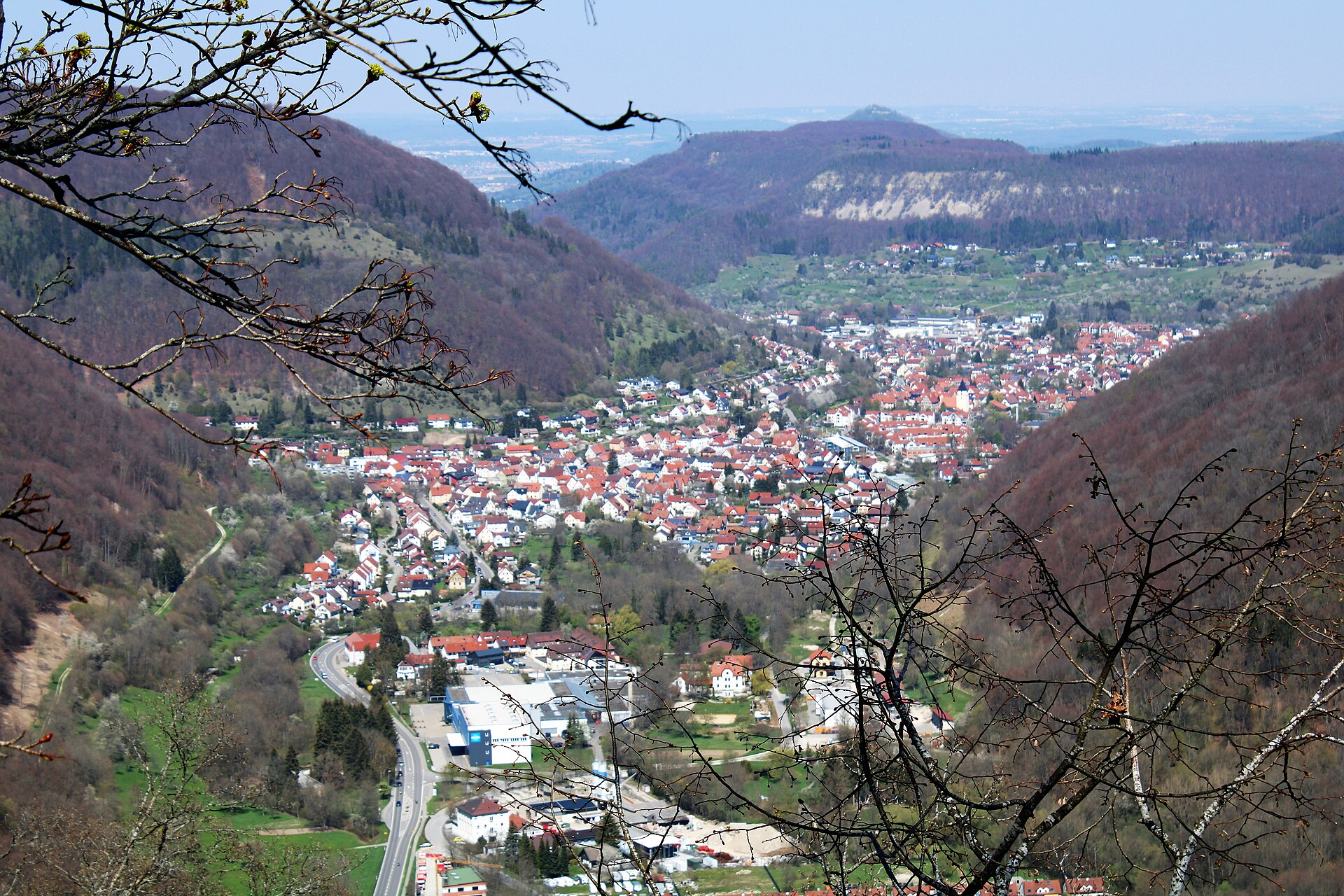
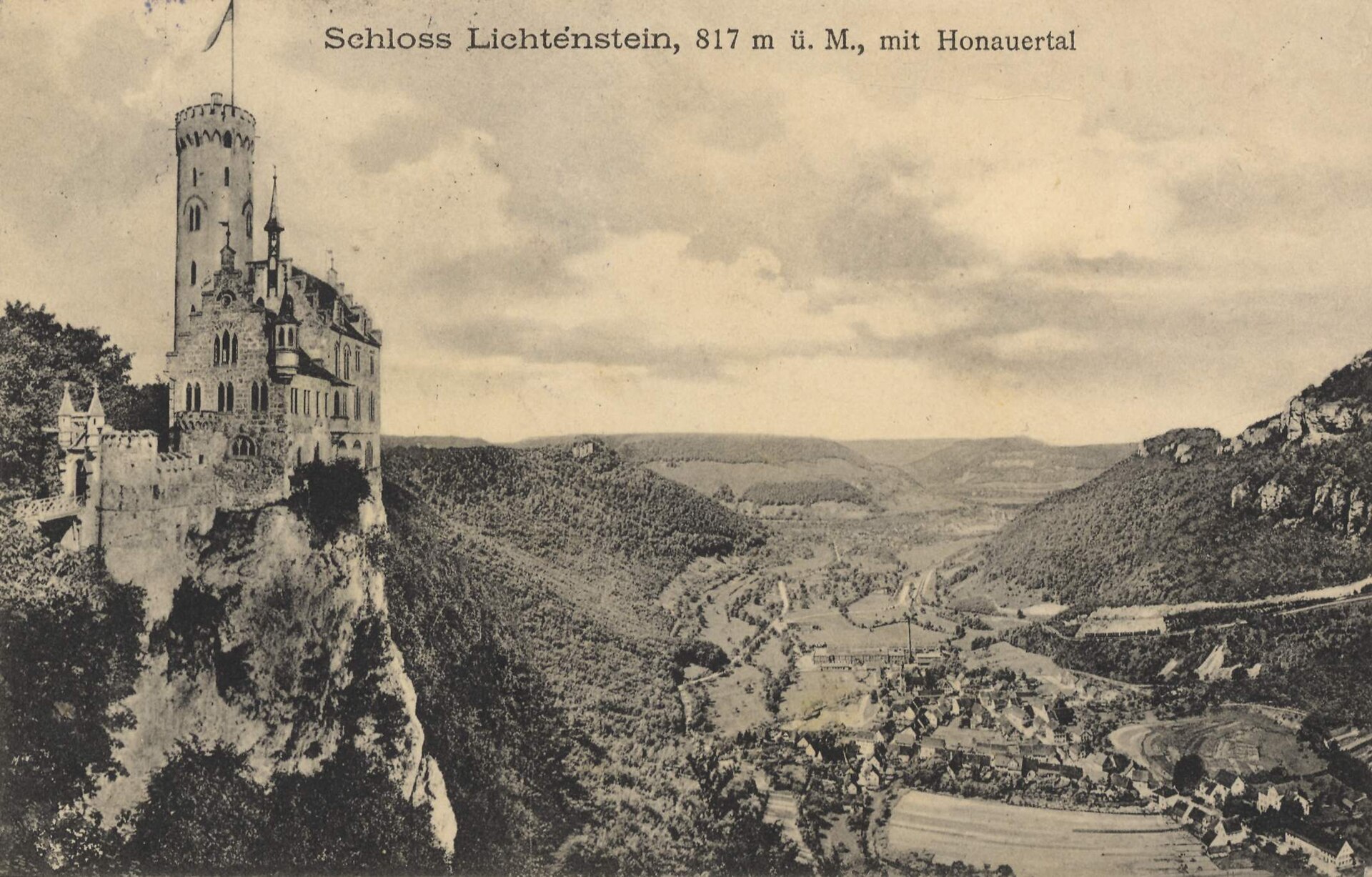
Far below the castle lies the village of Honau, tucked into the valley of the little Echaz river, and the relationship between the two gives Lichtenstein much of its charm. From the village you look up and the castle floats high above you on its cliff, small and perfect against the sky; from the castle you look down on the red roofs of Honau and the green valley winding away toward the wider plain of Wurttemberg beyond.
This is the landscape of the Swabian Alb, a high limestone plateau in southern Germany cut by deep valleys and edged with steep escarpments. It is a country of forests and pastures, of caves and springs and dramatic rock faces, and it has long had a romantic reputation. The cliffs and crags of the Alb were made for castles, and several stand along its edges, but none occupies its site quite so theatrically as Lichtenstein.
The valley of the Echaz was also, in earlier times, a route of some importance, and the heights above it were worth holding. That older strategic logic, which we will come to, is part of why there were castles here long before the present one. But for the visitor today the setting speaks first of beauty rather than defence: the little village, the green valley, the wooded slopes, and high above them all the white castle on its cliff, keeping its long romantic watch over the Swabian countryside.
In earlier centuries the little Echaz river that runs through Honau powered mills and workshops, and the valley had its own quiet industry beneath the castle heights. That older working life has largely given way to tourism and quiet country living, but the pattern of village in the valley and castle on the cliff remains exactly as it was, a living picture of how settlement and stronghold once fitted together across the landscapes of southern Germany.
From certain spots in Honau the castle aligns perfectly above the rooftops, framed by the wooded slopes, and it is easy to see why the village has become a favourite gathering point for photographers and day-trippers. The short walk or drive up from here to the castle is one of the classic small journeys of the region, carrying you from the intimate scale of the village to the giddy heights of the cliff in a matter of minutes.

A Castle Born From a Novel
The story of Lichtenstein begins not with a stone but with a book. In 1826 the German writer Wilhelm Hauff published a historical romance titled Lichtenstein, set in the sixteenth century and woven around the real history and legends of Wurttemberg. The novel was a great success, and it fixed in the public imagination the image of a romantic castle called Lichtenstein, a refuge of knights and loyalty in a turbulent age.
Hauff drew on the genuine medieval history of the region and on a ruined castle that had once stood on the Alb, but the Lichtenstein of his novel was very much a work of the romantic imagination, glowing with the ideals of chivalry and adventure that the age adored. The book helped kindle a wave of enthusiasm for the medieval past, and it made the name of Lichtenstein famous throughout the German lands as a symbol of romance.
Among the many readers captivated by the novel was a member of the ruling family of Wurttemberg, and it was he who would take the extraordinary step of turning Hauff’s fictional castle into a real one. Few buildings can claim so direct a literary parentage. Lichtenstein was, quite literally, a castle dreamed up in a novel and then built to match the dream, and that origin gives it a place all its own among the castles of Germany.
Wilhelm Hauff died tragically young, only in his mid-twenties and not long after the novel appeared, so he never saw the castle his book would inspire. There is something poignant in that: the writer who conjured Lichtenstein in words lived just long enough to make it famous, but not to see it rise in stone. The castle stands, in a sense, as an unintended monument to a gifted young author who died before his greatest creation took physical form.
The Duke Who Built a Dream
The dreamer who built Lichtenstein was Duke Wilhelm of Urach, a count of Wurttemberg and a passionate enthusiast for the Middle Ages and for Hauff’s romance. Inspired by the novel and by the ruins and legends of the Alb, he resolved to raise a new castle on the dramatic clifftop site, a building that would embody the chivalric ideal the age so admired. In the early 1840s his dream took shape in stone.
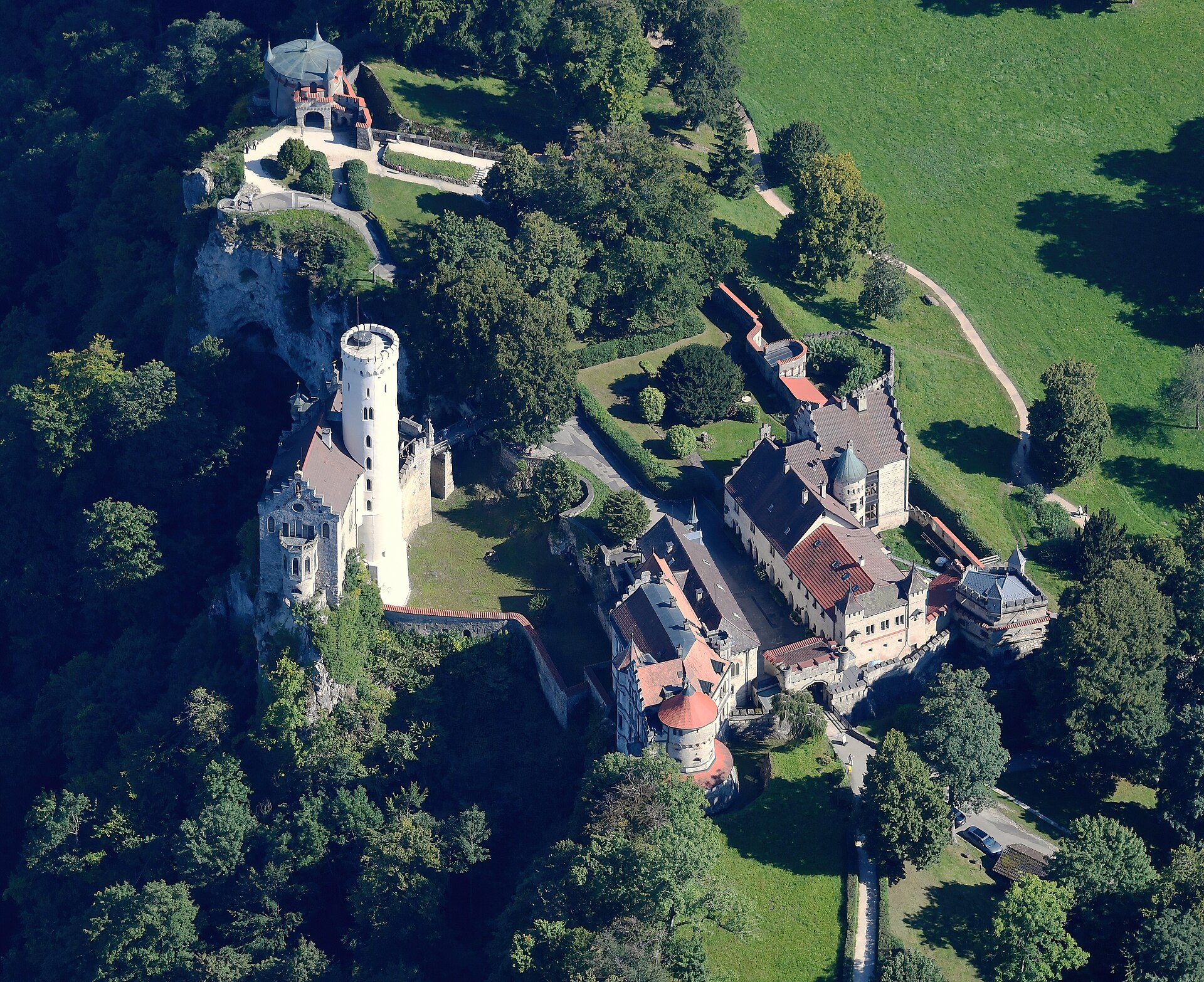
To design it he turned to an architect steeped in the Gothic revival, and together they created a castle that looked back to the medieval past through nineteenth-century eyes. The building was raised on the narrow rock with its cliffs and bridge, its walls and tower composed to achieve the maximum of romantic effect. It was completed within just a few years, an astonishingly swift birth for so complete a fantasy, and it stood at once as one of the finest expressions of German romanticism.
Duke Wilhelm did not build a museum piece but a residence, a castle to be lived in and enjoyed, filled with collections of arms and armour and furnished in the medieval taste. He and his descendants, the Dukes of Urach, made it their own, and it remains in the family to this day. Lichtenstein is thus not only a monument to a novel and an age but a genuine family home, cared for by the heirs of the man who first dreamed it into being.
The speed of the building is worth dwelling on. To raise so complete and so intricate a castle on such a difficult site in only a few years took determination and considerable expense, and it reflects the intensity of the romantic enthusiasm that drove the project. This was not a slow accretion across centuries, like a medieval fortress, but a single concentrated act of will, a whole dream castle brought into being within one man’s short span of years.

Gothic Revival in Stone
Architecturally, Lichtenstein is a jewel of the Gothic revival, the nineteenth-century movement that looked back to the pointed arches and soaring lines of the medieval age and sought to recreate their spirit. Everything about the castle, from its slender tower to its stepped gables, its pointed windows and its battlements, is composed to evoke the Middle Ages, but with a lightness and a picturesque grace that belong very much to the romantic era that built it.
The design is a triumph of setting as much as of style. The architect worked with the narrow, dramatic site rather than against it, letting the castle rise sheer from the cliff and crowning it with a tower that draws the eye upward and completes the fairy-tale silhouette. Seen from the valley or from the mountainside, the composition is perfect from every angle, as carefully arranged as a painting, which in a sense it was meant to be.
It is worth remembering that this kind of medievalising architecture was, in its day, both fashionable and heartfelt. The people who built Lichtenstein genuinely loved the imagined Middle Ages, and they poured that love into every detail. The castle is not a cynical imitation but a sincere act of homage, a nineteenth-century dream of chivalry given permanent form in stone on one of the most romantic sites in Germany.
The Gothic revival was an international movement, reshaping everything from parliament buildings to parish churches across Europe and beyond, but it found some of its most enchanting expression in castles like this one. Freed from the practical demands of a real fortress, the architects of romantic castles could indulge purely in effect, and Lichtenstein shows what that freedom could achieve: a building that exists, above all, to be beautiful and to move the beholder.

The Older Castles on the Rock
Although the present castle is a creation of the nineteenth century, the site and its neighbourhood have a much older history. A medieval castle called Lichtenstein existed on the Alb from at least the twelfth century, the seat of a line of knights who took their name from it. That original fortress played its part in the wars and feuds of the region, and it is from this genuine medieval Lichtenstein that the name and the legends ultimately descend.
The medieval castle led a troubled life. It was destroyed and rebuilt more than once in the course of the region’s conflicts, and by the modern era little remained of the old strongholds but ruins and memories. In the eighteenth century a hunting lodge stood on part of the site, a modest successor to the vanished fortresses. The rock, in other words, had carried castles for centuries before Duke Wilhelm raised his romantic vision upon it.
This deep past matters, because it means Lichtenstein is not pure invention set down on empty ground. The nineteenth-century castle stands in a landscape saturated with real medieval history, drawing on the ruins, the name, and the legends of the fortresses that came before. Hauff’s novel and the duke’s castle both grew from that authentic soil, transforming genuine history into romance. The fairy tale, in this case, has real medieval roots.
The knightly family who first held the medieval Lichtenstein were minor nobility of the kind that filled the fragmented map of medieval Germany, holding their small territory from a castle on the heights and playing their part in the shifting alliances and quarrels of the age. Their name outlived their fortress, carried forward first by legend, then by Hauff’s novel, and finally by the romantic castle that now bears it, a curious kind of immortality for a long-vanished line.
Guarding the Old Heights
To understand why castles first rose here, you have to look down into the valley and imagine it as a place that mattered strategically. The escarpments of the Swabian Alb formed a natural line of defence, and the routes that climbed from the lowlands onto the plateau were worth watching and controlling. A castle on the cliff edge commanded the valley below and the approaches to the heights, a classic position for a medieval stronghold.
The knights of the original Lichtenstein used their fortress in exactly this way, as a base from which to hold their patch of the Alb and to take part in the endless small wars of the medieval German world. Feuds between neighbouring lords, disputes over land and rights, and the larger conflicts of the age all washed over these heights, and the castle changed hands and suffered damage as the fortunes of war dictated.
When you stand at the edge of the modern castle and look out over the valley, you are seeing the same commanding prospect that made this rock valuable to warriors centuries ago. The romance of the nineteenth-century building can make it easy to forget that its site was chosen, long before, for hard military reasons. The view that now delights visitors was once, above all, a field of fire and a line of sight, the practical foundation on which the later fairy tale was built.
Control of the edge of the Alb meant control of movement between the high plateau and the fertile lands below, and in an age of local lordships that was worth fighting for. The escarpment is dotted with the sites of old castles for exactly this reason, each once holding its own stretch of the heights. Lichtenstein’s rock was simply one of the most dramatic of these positions, which is why it drew fortresses in the Middle Ages and a fairy tale in the nineteenth century alike.
The Fairy Tale Before Neuschwanstein
Lichtenstein deserves to be better known for a simple reason: it came first. The most famous fairy-tale castle in the world, Neuschwanstein in Bavaria, was not begun until the late 1860s, more than two decades after Lichtenstein was completed. In the story of Germany’s romantic castles, Lichtenstein is a pioneer, one of the earliest and purest expressions of the impulse that would later produce far more famous buildings.
That makes Lichtenstein something of a hidden treasure. Overshadowed in fame by the great Bavarian castles, it offers the same romance in a more intimate form, and to many who make the journey it feels all the more magical for being less crowded and less known. It is a reminder that the fashion for fairy-tale castles did not begin with Neuschwanstein but had earlier and quieter champions, of whom Duke Wilhelm of Urach was among the most devoted.
Seen whole, on its cliff above the valley, Lichtenstein embodies the romantic dream of the castle perhaps more perfectly than any of its more famous successors. It is smaller and more delicate, but its setting is unmatched, and its origin in a beloved novel gives it a charm entirely its own. For anyone who loves the idea of the fairy-tale castle, a visit to Lichtenstein is a kind of pilgrimage to one of the places where that idea first took solid form.
It is even possible that Lichtenstein and the wider romantic movement it belonged to helped prepare the ground for the more famous castles that followed. By the time King Ludwig of Bavaria began Neuschwanstein, the idea of building a fantasy castle in the medieval style was already established, and earlier projects like Lichtenstein had shown what was possible. The little Swabian castle may be less celebrated, but it stands near the head of the tradition rather than in its train.

A Romantic Age Set in Stone
Lichtenstein is best understood as a monument to a particular moment in German culture, the great flowering of romanticism in the earlier nineteenth century. This was an age that turned away from cold reason toward feeling, legend, and the glamour of the past, that treasured old ballads and ruined castles and tales of knightly honour. In architecture, that spirit produced buildings like Lichtenstein, castles that were less about defence than about emotion.
The whole conception of the castle, from its literary origin to its cliff-edge drama to its Gothic detail, is romantic through and through. It was built to stir the heart, to make the visitor feel transported to an age of chivalry and adventure, and it succeeds brilliantly. Even now, generations later, people cross the little bridge and feel the same thrill the builders intended, the sense of stepping into a story rather than merely a building.
In this Lichtenstein tells us as much about the nineteenth century as about the Middle Ages it imitates. It is a window into how the romantic age saw and idealised the medieval past, reshaping it into something more beautiful and more heroic than the reality had ever been. To visit Lichtenstein is to enter not only a fairy tale but the mind of an age that longed for fairy tales, and found in castles like this one a way to build its longing into the landscape.
The romantic love of the Middle Ages was not only about beauty; it was also bound up with a search for identity and roots at a time of rapid change. As the modern industrial world took shape, many people looked back to an imagined age of chivalry and order for reassurance and inspiration. Castles like Lichtenstein answered that longing, offering a tangible link to a heroic past that the present seemed to be leaving behind, and much of their emotional power came from that yearning.
The Castle Through the Seasons
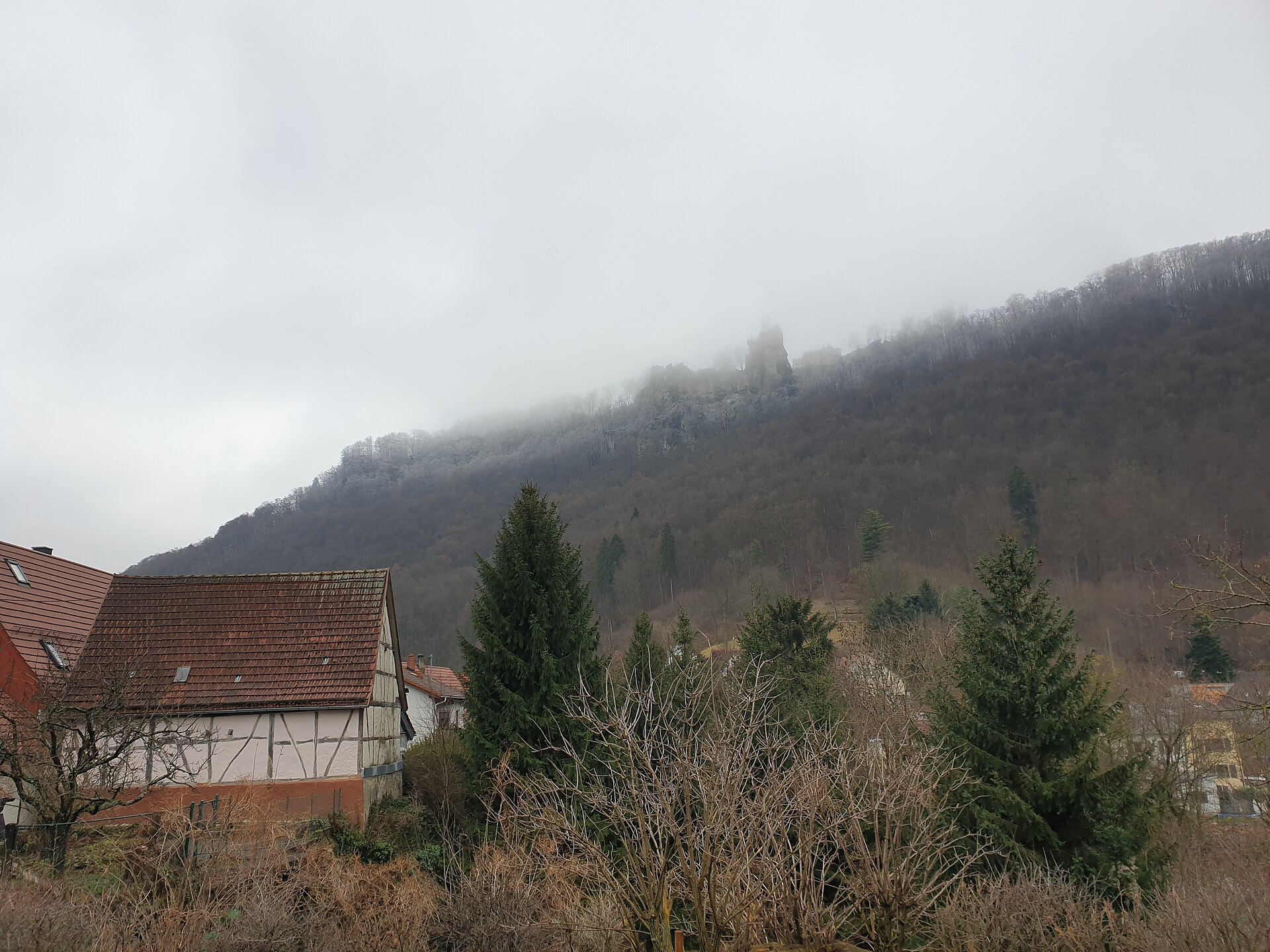
Few castles reward repeat visits across the seasons as richly as Lichtenstein, for its dramatic setting transforms with the weather and the light. In summer the white walls stand crisp against green forests and blue sky; in autumn the woods of the Alb blaze around it in gold and copper; and in winter, dusted with snow, the castle on its cliff looks more like an illustration from a book of fairy tales than ever.
A light snowfall in particular seems to suit Lichtenstein perfectly, softening its outlines and heightening the sense of enchantment. The white castle against a white landscape, rising from a cliff edged with frost, is an image of pure romance, and photographers return again and again to catch it. The very qualities that make the castle so magical, its slender tower, its perch on the rock, its storybook silhouette, are only sharpened by the drama of winter.
Whatever the season, the interplay of the castle and its wild setting is central to the experience. Lichtenstein was designed to be seen in the context of its cliffs and forests, and the changing moods of the Swabian Alb, from summer haze to autumn fire to winter frost, are part of what the castle offers. It is a building that belongs utterly to its landscape, and the landscape gives it a different beauty every time you come.
Mist, too, works its magic on Lichtenstein. On mornings when cloud fills the valley below, the castle can appear to float on a sea of white, its cliff hidden and only the towers rising above the vapour, an effect that seems almost supernatural. The builders could not have arranged the weather, but they chose a site where the moods of the Alb would forever conspire with their architecture to produce scenes of pure enchantment.

Still a Family Home
One of the most appealing things about Lichtenstein is that it remains a living family property, still owned by the descendants of Duke Wilhelm of Urach who first raised it. Unlike many castles that have passed into state hands or become pure museums, Lichtenstein has stayed with the family that dreamed it up, and that continuity gives the place a warmth and an authenticity that no state monument can quite match.
Inside, the castle preserves the collections and furnishings gathered by the family over generations, including fine displays of arms and armour that reflect Duke Wilhelm’s love of the chivalric age. The rooms are richly decorated in the medieval taste the nineteenth century adored, with painted walls, carved woodwork, and the trappings of a knightly household, all arranged to sustain the romantic dream from within as the architecture sustains it from without.
Because it is both a family home and a much-loved landmark, Lichtenstein is opened to visitors while still being cherished as a private inheritance. The guided tours that lead you through its rooms are led with evident affection, and the sense that the castle is genuinely lived in and looked after, rather than merely preserved, is part of its charm. It is a fairy tale that someone still calls home.
This private ownership has helped protect the castle’s character, sparing it the fate of becoming a mere ticketed attraction stripped of life. Decisions about its care are still taken by a family with a personal stake in its story, and the result is a place that feels loved rather than simply managed. In an age when so much heritage has passed into institutional hands, Lichtenstein’s continuity as a family home is a quiet rarity worth appreciating.

Walking the Swabian Alb
A visit to Lichtenstein is also an invitation to explore the Swabian Alb, one of the most rewarding walking landscapes in southern Germany. The plateau and its escarpments are laced with footpaths, and the area around the castle offers superb views, deep forests, and dramatic cliffs. Many visitors combine the castle with a walk along the edge of the Alb, from which the building can be seen in its full cliff-top glory.
The wider region has much to offer the curious traveller. The Alb is famous for its caves, some of them among the most important prehistoric sites in Europe, and for its springs, gorges, and rock formations. Its towns and villages preserve their own histories, and the whole landscape has the slightly wild, romantic character that so appealed to the nineteenth century and drew dreamers like Duke Wilhelm to build here in the first place.
Seeing the castle in this context deepens the experience. Lichtenstein was not conceived as an isolated object but as the crowning ornament of a romantic landscape, and to walk the surrounding heights is to understand why this spot was chosen. The forests and cliffs of the Alb are the natural setting the fairy tale demanded, and the castle and its landscape together make one of the loveliest excursions the region can offer.
For the energetic, the network of trails offers everything from gentle strolls to longer hikes along the escarpment, with the castle appearing at intervals as a distant white crown on its cliff. Seeing it from afar, across a fold of the hills, is a different pleasure from standing beneath its walls, and it helps you appreciate how cleverly the site was chosen to make the castle a landmark visible across the surrounding country.

Visiting Schloss Lichtenstein
Schloss Lichtenstein lies on the Swabian Alb in the state of Baden-Wurttemberg, in southern Germany, not far from the towns of Reutlingen and Stuttgart. It is reached by road up onto the plateau, and there is parking near the castle, from which a short walk brings you to the bridge and the entrance. Walkers can also climb to it on foot from the valley, following paths up through the woods from the village of Honau below.
The interior of the castle is seen on a guided tour, which leads you through the romantic rooms with their armour, paintings, and medieval-style decoration, and tells the story of the novel, the duke, and the building of the castle. Around the tour you can enjoy the courtyard, the bridge, and above all the views from the cliff edge, which are as spectacular as the castle itself. Photographers should seek out the viewpoints on the surrounding heights for the classic image of the castle on its crag.
If you would like to find it and plan your visit, here is the castle’s position on the edge of the Alb: 48.4064, 9.2575. Try to come when you can also walk a little of the surrounding country, and if you can catch it under snow or autumn colour, so much the better. Schloss Lichtenstein is one of the loveliest and least crowded of Germany’s romantic castles, a fairy tale born from a book and set on a cliff, and it rewards everyone who makes the journey to its remarkable rock.
The castle is generally open through the warmer part of the year, with more limited access in winter, so it is worth checking the season before you set out, especially if you hope to see the interior. However you time it, the approach across the bridge and the views from the cliff are unforgettable, and even a visit that catches the castle closed still rewards you with one of the most striking castle silhouettes in all of Germany.
Castles Nearby
- Neuschwanstein, the fairy-tale castle of the Dream King
- Hohenzollern Castle, the mountaintop seat of Prussia’s kings
- Reichsburg Cochem, the Moselle castle that was built twice
The Little Castle That Dreamed First
In the long story of Germany’s fairy-tale castles, Lichtenstein tends to be overlooked, standing quietly in the shadow of the far more famous Neuschwanstein. Yet it came first, and in some ways it embodies the romantic dream even more purely. Smaller, more delicate, and more perfectly placed on its dizzying cliff, it is the castle that most looks as though it stepped straight out of a fairy tale, which is fitting, since it very nearly did.
Its origin in a novel gives Lichtenstein a magic all its own. Here is a castle that began as words on a page, a romantic vision of chivalry and loyalty, and was then built into stone on one of the most dramatic sites in Germany by a duke who could not bear to let the dream remain only imagined. That a work of fiction should have produced so real and so beautiful a building is a kind of wonder in itself, a reminder of how powerfully stories can shape the world.
So if your travels take you to southern Germany, seek out this smaller, quieter fairy tale on the edge of the Swabian Alb. Cross the little bridge onto the rock, look out from the cliff over the valley, and remember that you are standing in a dream made solid, the castle that a book conjured and a duke built. Of all the romantic castles of Germany, Lichtenstein is the one that most gently, and most completely, keeps the promise of the fairy tale.
You May Like
Mafra, the Palace a King Built From a Vow