On the southern fringe of the Ural Mountains, in a lonely corner of the steppe where the border between Russia and Kazakhstan runs today, people did something strange four thousand years ago: they built small fortified settlements with round and square plans, cast metal inside them, drove horses, and then abandoned these places and moved on. The best known of these forts is Sintashta; this mound lying on the bank of the river that gave it its name became the name not just of a village but of an entire culture. The Sintashta culture is a window onto a world that held the earliest war chariots in history, advanced copper-arsenic metallurgy, and perhaps the roots of the Indo-Iranian languages. In this article we will discover, step by step, this extraordinary society that flared and faded in the middle of the steppe.
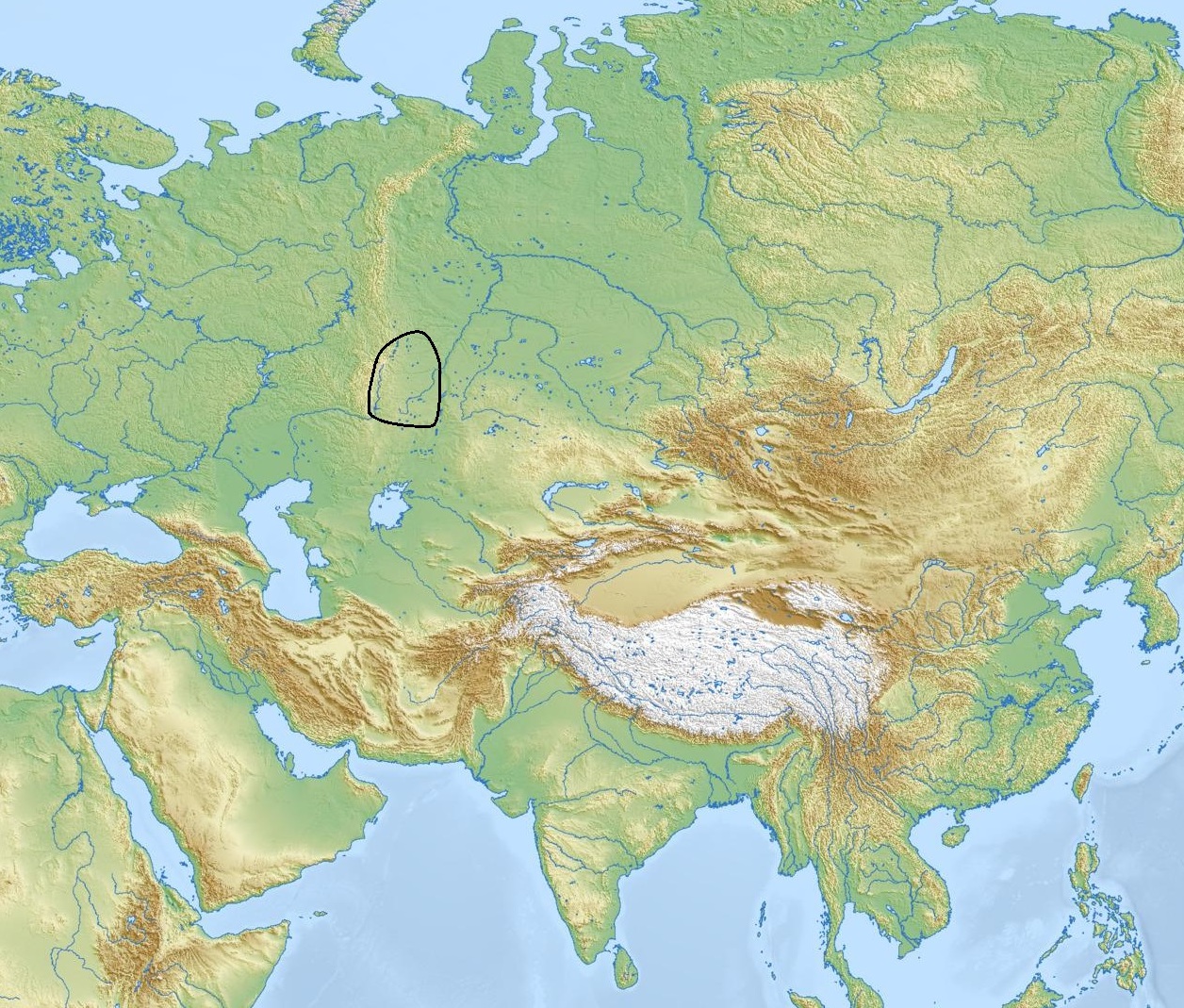
Table of Contents
- A Place That Bears a River’s Name
- The Country of Forts: Arkaim and Its Siblings
- The Order Behind the Walls
- Houses That Smelled of Copper
- The Oldest War Chariots in History
- A Bond Forged with the Horse
- The Wealth of the Dead
- On the Trail of the Indo-European Languages
- Why Were They Abandoned?
- The Legacy Left by the Steppe
- Geography and Climate of the Steppe
- Daily Life and Economy
- Archaeology’s Changing View
- Nearby Places
A Place That Bears a River’s Name
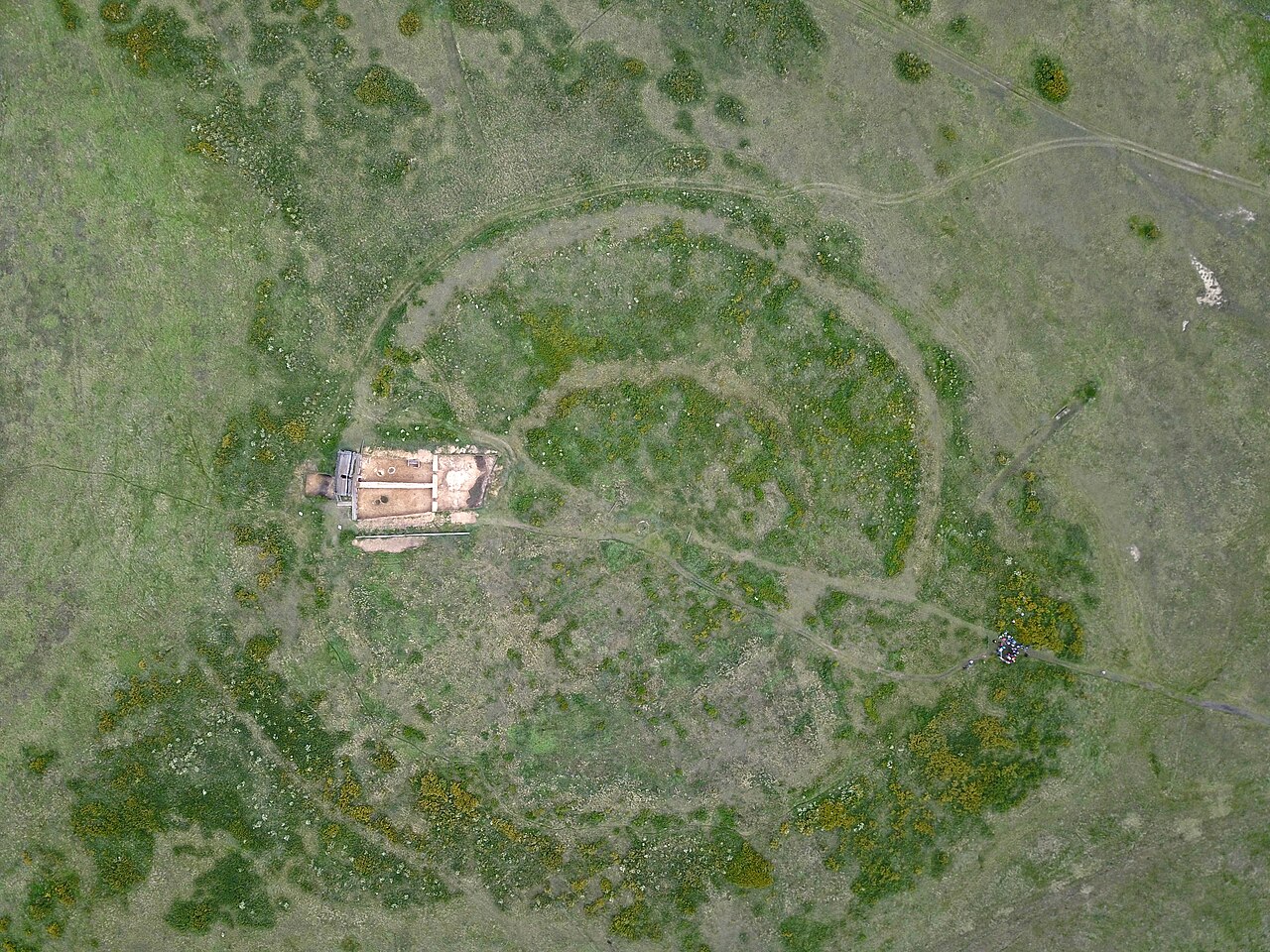
Sintashta lies in the Chelyabinsk region, on the bank of a small river that carries the same name. When Soviet archaeologists began surveying the area in the 1970s, it did not take them long to realize that this was no ordinary Bronze Age settlement. The circular traces that appeared in the soil when seen from the air were the sign of a buried defensive system.
What emerged as the excavations advanced fit nothing in the classic picture of steppe archaeology. Instead of nomadic tents, there was a fortified settlement made up of planned, adjoining houses. Sintashta was not an exception on its own but the first recognized member of dozens of sibling settlements that shared the same pattern.
The first excavations at Sintashta were carried out under the harsh field conditions of the Soviet era. The researchers worked with limited means, yet every layer they uncovered overturned expectations about the history of the steppe. Although the river’s flooding and erosion had destroyed part of the site, what remained was striking.
Studying the Sintashta mound was, in a sense, the beginning of an entire paradigm shift in steppe archaeology. Researchers at first assumed it was an isolated anomaly; but as systematic surface surveys and aerial reconnaissance in the region brought dozens of similar sites bearing the same architectural signature to light, it became clear that the picture was far larger. Thus a single mound opened the door to an entire civilization, and this region in the heart of Eurasia became one of the most exciting stages in the study of prehistory.
Every layer that came out from beneath this mound was, in a way, like reading the memory of the steppe; the earth had patiently kept the story of the people who had lived upon it.
Research on Sintashta gradually deepened with the participation of international teams, and this mound has now become a shared field of interest not only for Russian archaeology but for the study of world prehistory. Experts from different disciplines, asking the same soil different questions, sharpen the portrait of Sintashta a little more with each passing year.
This process of discovery is also a fine example of how science advances: a single strange find first triggered curiosity, then doubt, and finally a revolution in knowledge. The researchers who took Sintashta seriously turned their initial skepticism into admiration over time, and ensured that the steppe received the attention it deserved.
In the end, Sintashta is one of the loveliest surprises archaeology can offer us: a discovery that appears in an unexpected place, with unexpected richness, and forces us to rethink what we thought we knew.
What lies beneath this mound shows us once again how complex, how rich, and how human the prehistoric world was; the people there dreamed just as we do, made plans, and tried to leave a mark on the future.
And this is precisely why Sintashta is far more than a mound; it is a doorway that opens onto the memory of the steppe.
The Country of Forts: Arkaim and Its Siblings
After Sintashta was discovered, a network of similar structures came to light in the same region. Half in jest and half in earnest, archaeologists gave this area the name “The Country of Forts.” More than twenty settlements of this type are strung out along the Ural river valleys, and all of them date roughly to the same centuries.
The most famous of these settlements is Arkaim, with its almost perfect circularity. Sintashta and Arkaim are two faces of the same cultural tradition; one gave the tradition its name, the other became its most visual emblem. Together they represent a short-lived but extremely organized world on the steppe.
The term “Country of Forts” emphasizes that these settlements were not independent of one another but formed a network sharing a common cultural horizon. The resemblance among them is so strong that it is as if a single society applied the same plan again and again at different points.
The shared plan of these settlements suggests that there was regular communication among them and perhaps a common tradition of governance. That each of them was positioned a few dozen kilometers from the next points to a deliberate settlement strategy in which resources were shared and population was distributed in a balanced way. It is as if a single mind built the same dream over and over in different corners of the steppe; this makes them not merely villages but the nodes of a civilizational network.
Arkaim’s almost perfect circularity represents the aesthetic and engineering peak this network reached, and it is the settlement that most attracts the interest of tourists and researchers today.
The existence of this network also shows how wide an area the people of the period spoke a common cultural language across. The same plan, the same rituals, and the same technologies bound distant settlements to one another with invisible threads; this made them not isolated villages but parts of a single civilization.
The map of the Country of Forts is still expanding, and every new point proves once again that this steppe civilization was far larger and more organized than once supposed.
Perhaps one day, when all the points of this network have been excavated and studied, this civilization in the heart of the steppe will finally take the place it deserves in the main narrative of world history.
The Order Behind the Walls
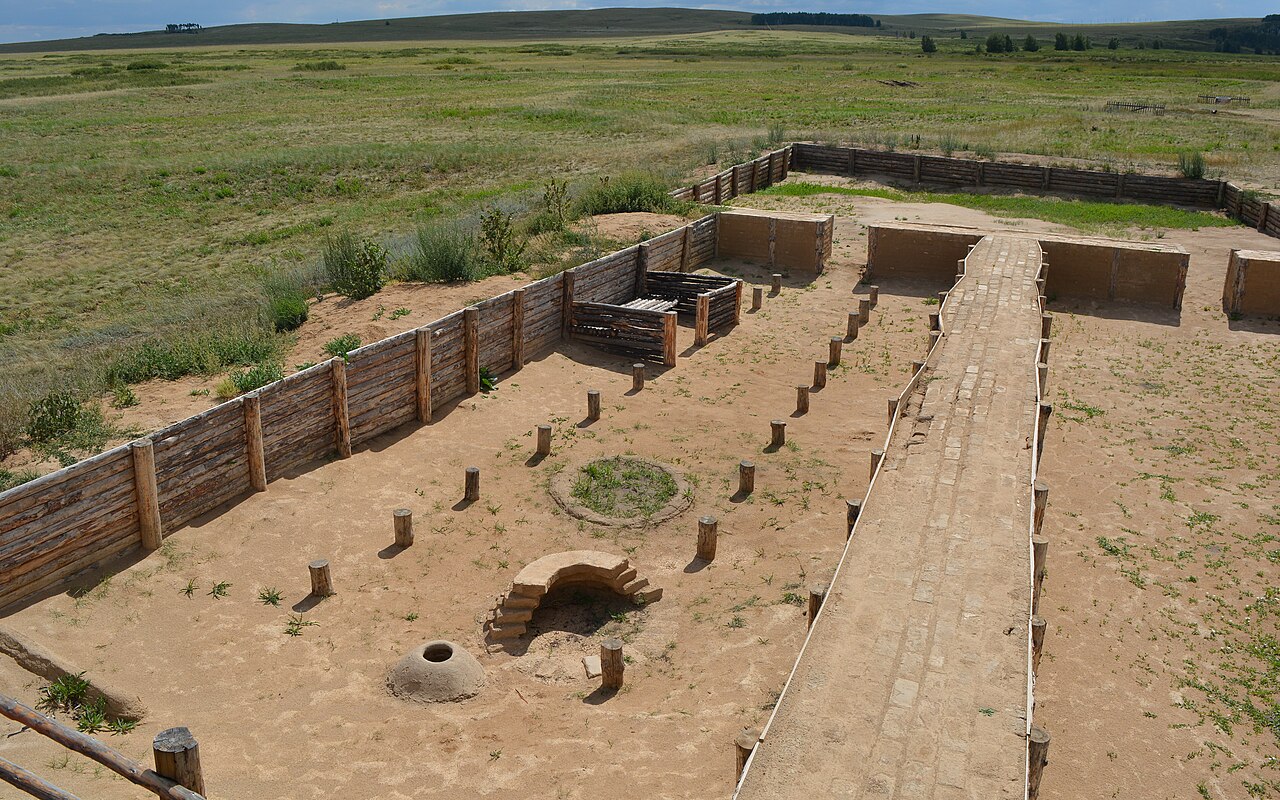
The plan of Sintashta-type settlements is surprisingly orderly. At the center is an open space, surrounded by a ring of adjoining houses, and on the outermost edge a rampart reinforced with a ditch. Each house shares a wall with the next, so that the entire settlement functions as a single defensive unit.
This order is no accident. Water channels, drainage systems, and shared courtyards show that the community acted according to a common plan. Even if we do not know who designed it, these structures point to the existence of a central authority or a powerful social consensus.
This symmetrical plan also holds hints about social equality. That the houses are close to one another in size suggests a shared identity and a sense of solidarity rather than a sharp class division.
The circular or rectangular plan of the settlements cannot be explained by practical defensive concerns alone; it very likely also carried a cosmological meaning. The open space at the center may have been the heart of the community’s ritual and social life; the surrounding ring drew a boundary that was both physical and symbolic. This order is as if the way people perceived the world, how they separated order from chaos, had been carved into stone and earth; here architecture is at the same time an expression of belief.
Faced with such meticulous order, one cannot help but wonder about the minds that designed it; what they thought, what they believed, and how they saw the world.
Another striking aspect of this architectural order is the way defense and social life merge in the same structure. The rampart did not only stop the danger outside; it also reinforced a sense of community within. To live behind the walls meant to share an identity.
For this reason, to look at the Sintashta settlements is to look not merely at a defensive structure but at a worldview poured into stone.
The order these walls traced was an elegant answer that humankind gave to the chaos of the steppe. And this elegant answer continues to inspire admiration even four thousand years later. The mind behind this order reminds us of the human desire to build order against chaos in every age.
Houses That Smelled of Copper
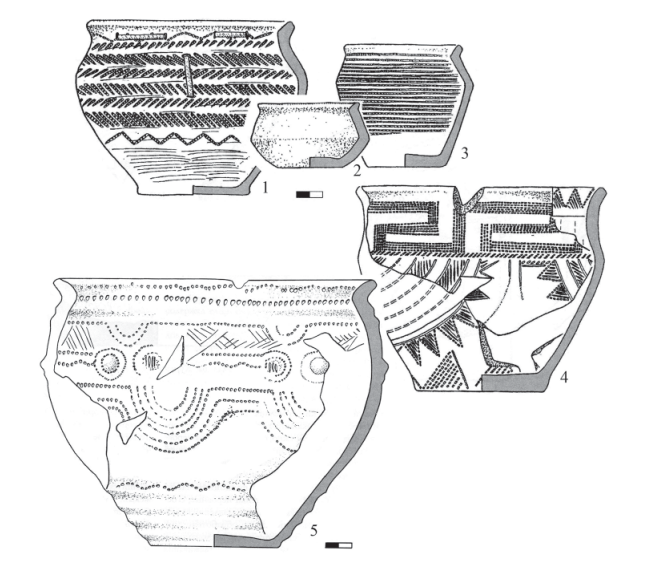
Perhaps the most striking aspect of Sintashta is that traces of metallurgy are found in nearly every house. Furnaces, heaps of slag, and casting molds prove that those who lived here were largely occupied with metal production. This shows that a specialized craft lay at the very heart of the society.
The copper-arsenic alloy they produced was among the most advanced metallurgy of the age. Nearby copper deposits supplied the raw material, and the settlements worked almost like small factories. Metal was the engine of this economy, serving at once as tool, weapon, and object of exchange.
The smell and smoke of metallurgy were an inseparable part of the everyday atmosphere of these settlements. This environment, where fire burned continually and the sound of hammers rang out, resembled an early industrial town.
The spread of metallurgy on this scale must have made Sintashta society one of the economic power centers of its time. The copper objects did not only meet local needs; they also formed the cornerstone of trade established with distant regions. This production capacity shows both that technical knowledge was carefully passed down from generation to generation and that the craftsmen who held this knowledge gained a privileged position in society.
An archaeologist walking among the slag heaps and casting molds is, in a sense, stirring the ashes of a hearth that went cold four thousand years ago and bringing that day’s economy back to life.
This early industrial scene shows how far back humankind’s relationship with production and technology reaches. The furnaces of Sintashta are the distant but real ancestors of the great workshops of much later ages.
The secrets of metalworking were a precious treasure of knowledge passed from master to apprentice; this knowledge nourished both the economic strength and the identity of the society. Behind a single copper ingot lay a tradition of mastery accumulated over generations.
These furnaces, where fire, ore, and human labor met, form one of the earliest and most vivid scenes of civilization’s relationship with metal. And for the people of that day, every piece of copper that was smelted was at once a tool, a fortune, and a bridge reaching toward the future.
The Oldest War Chariots in History
The most striking finds in the Sintashta graves are horses buried together with the traces of wheels. These traces belong to light, two-wheeled vehicles with fine-spoked wheels—that is, to war chariots. The earliest known examples of the war chariot have come from here.
This discovery strengthens the idea that the war chariot may have been invented not in the Near East but on the steppe. Fast and highly maneuverable, these vehicles must have been used both in battle and as a display of prestige. Sintashta thus stands at a critical turning point in the history of military technology.
The making of these vehicles required advanced carpentry and engineering knowledge. The spoked structure of the wheel reduced weight and increased speed; this pointed to a technology that was not only powerful but also cleverly designed.
The appearance of war chariots here is, from the standpoint of military history, almost a revolution; for these vehicles brought speed and shock power together on the battlefield for the first time. A fast chariot carrying an archer was both a terrifying weapon and a symbol of status. This invention of Sintashta planted the seed of a technology that, over the following millennia, would change the form of warfare across a vast geography from Egypt to China.
That these vehicles were buried in graves proves that they were seen not only as practical but also as sacred and prestigious objects; the war chariot meant both power and identity.
Although many societies throughout history have adopted the war chariot as though it were their own invention, the archaeological evidence shows that the earliest and clearest examples come from the graves of Sintashta. This strengthens the idea that the steppe was not a marginal region lagging behind the central civilizations but, on the contrary, a pioneering arena where certain critical technologies were born. Thus the story of the war chariot begins not with the pyramids or the ziggurats, but with the story of these small forts among the grass.
The war chariots of Sintashta were not merely a weapon but also the beginning of a journey of an idea; over the centuries this idea was adopted and developed by different peoples and turned into one of the most influential military instruments of the ancient world.
Two wheels, a few horses, and a bold driver: this simple combination changed the course of war and of history forever. The wheel-traces displayed in a museum today are, in truth, the oldest photographs of humankind’s relationship with speed and power. Those first fast vehicles are among the earliest proofs of humanity’s passion for pushing its limits.
A Bond Forged with the Horse
Without the war chariot, the horse is merely a beast of burden or of meat. The people of Sintashta took the horse to a new level: they learned to harness and control it. The horse sacrifices and cheekpieces in the graves show that horses were carefully trained and carried a special value in society.
This new role of the horse was the beginning of a process that would fundamentally change life on the steppe. In the following centuries riding would become widespread and would lay the foundation of the nomadic empires. Sintashta is an early but decisive chapter of this long story.
The cheekpieces and bridle gear of the horses show how refined the human-animal relationship had become. This was not merely using an animal but building a system that would work together with it.
Although the domestication of the horse goes back much further, the contribution of the Sintashta people was to turn it into an instrument of war and prestige. The skill of harnessing and controlling horses created a wholly new form of partnership between human and animal. This partnership would, in the ages to come, lay the ground for the birth of cavalry armies, postal routes, and nomadic empires; the roots of the steppe’s mounted culture reach all the way down to the graves of these small forts.
Learning to control the power of a horse was a quiet but revolutionary step in humankind’s mastery over nature, and its effects have lasted to this day.
The coming together of horse and chariot fundamentally changed humankind’s perception of space and distance. A distant place was now hours, not days, away; this carried communication, trade, and war to a wholly new speed. That the people of Sintashta perfected this combination meant laying the cornerstone of all the nomadic empires that followed.
This partnership was also the herald of a new form of relationship between human and animal, one based on trust and mutual harmony; the horse was now not merely a resource but a companion.
The horses of Sintashta were the first heralds of a future that ran with the wind of the steppe. This magnificent relationship, one of the most fruitful partnerships in human history, would carry horse and human along the same road for thousands of years.
The Wealth of the Dead
The graves of Sintashta reveal a society generous toward its dead. In some graves war chariots, horses, weapons, and metal goods were buried together. Such rich burials point to the existence of a distinct elite layer within the society.
Sacrificial rituals and careful burial practices reflect strong beliefs about the afterlife. The precious objects buried with the dead both proclaimed status and were meant to send the deceased into the next world well equipped. These rituals may carry the early traces of Indo-Iranian traditions.
The hierarchy in the graves also reminds us that the society was not wholly equal. While some were buried with magnificent equipment, the graves of others were far simpler; this difference is the trace of an emerging elite stratum.
The rich burials are not only a marker of status but also a mirror of a worldview. The horses and chariots buried with the dead reflect the belief that the warrior would preserve his identity and power in the other world as well. Beyond material wealth, these rituals reveal a vision of a social order that continued even after death; the burial is composed almost as a continuation of life.
Someone passing by these graves, even after thousands of years, can sense what that society valued and held sacred; the dead are silent but eloquent witnesses.
Burial customs hold a special importance in the study of prehistory because they reveal a society’s most intimate beliefs; in this sense the Sintashta graves are a generous source.
These silent graves are one of the most honest bridges built between the past and the present. In their silence lies the voice of an entire age.
And someone standing at the head of those graves, despite the four thousand years that have passed, can feel the warmth of a shared humanity.
On the Trail of the Indo-European Languages
Many linguists and archaeologists connect the Sintashta culture to an early community that spoke the Indo-Iranian languages. The horse sacrifice in the rituals, the chariots, and certain burial customs show striking similarities to the descriptions in sacred texts later written down in India and Iran.
This connection is not conclusively proven, but it is a strong probability. If it is true, these small forts of the steppe stand near the cradle of one of the world’s largest language families. Sintashta may be the starting point of a journey in which words and beliefs spread across thousands of kilometers.
This linguistic debate is especially exciting because it brings archaeology and mythology together. The bridge between a horse sacrifice on the steppe and sacred texts written thousands of years later shows how long the traces of history can run.
If Sintashta truly represents an early phase of the Indo-Iranian world, this means we stand near the starting point of one of the widest cultural expansions in human history. A group of people coming out of the steppe may have carried their languages, their gods, and their rituals with them and influenced an area stretching from India to the Iranian plateau. Thus a small fort on a riverbank becomes a distant ancestor of languages spoken by millions of people.
This possibility makes Sintashta not merely an archaeological site but a distant source of humankind’s shared cultural memory.
The traces of this wide cultural expansion can be found today in dozens of languages stretching from Europe to India; shared words, shared mythic motifs, and shared rituals are the silent proofs of this distant kinship. Because Sintashta stands so close to the region where this vast family was born, to study it is in a sense to touch our own linguistic roots.
To touch these roots makes one feel how deep and how interconnected history is; being able to trace part of the languages we speak today all the way back to these steppe forts is astonishing in itself.
And that whisper may still be echoing in the languages spoken by billions of people today. To think about Sintashta is therefore to look at a past that is both very distant and, surprisingly, familiar.
Why Were They Abandoned?
The Sintashta settlements survived for only a few centuries and were then abandoned. There are traces that some settlements were deliberately burned, which suggests that the departure may have taken place through a planned ritual or a collective social decision.
Population pressure, climate change, the exhaustion of resources, or the evolution of the way of life toward a more nomadic model are among the possible causes. Even if the exact reason is unknown, the tradition that built these forts did not vanish; it spread across the steppe and continued to live on within broader cultures such as Andronovo.
The silence behind the abandonment is still an unsolved puzzle for archaeologists. The deliberate burning of the settlements may be less a disaster than a ritual farewell marking the close of an era.
The abandonment of the settlements may reflect the transformation of a way of life rather than a sudden collapse. Perhaps these people left behind the life within the walls and passed into a more mobile, more nomadic existence, carrying their inventions with them. In that case the end of Sintashta is not a death but a metamorphosis; the culture did not disappear but simply changed form and dispersed into the vastness of the steppe.
Perhaps one day new excavations and analyses will give a definite answer as to why these forts were abandoned; for now this silence remains one of the steppe’s most tantalizing secrets.
Whether the abandonment was a farewell ritual or a transformation, the silence it left behind did not diminish this culture’s influence; on the contrary, it made it all the more mysterious and intriguing.
And perhaps for this reason the end of Sintashta is not a closing but the beginning of a new chapter; the culture did not vanish but merely mingled with the wind of the steppe and spread. The silence of the steppe sometimes hides the loudest stories.
An abandoned fort is not an empty place but a story waiting to be told; and Sintashta still whispers this story patiently. The steppe fell silent, but the trace of Sintashta still shines in the soil and in history.
The Legacy Left by the Steppe
Despite its short life, Sintashta left a mark on history out of all proportion to its size. The war chariot, advanced metallurgy, and horse culture set out from here and spread to every corner of Eurasia. This corner of the steppe was like a laboratory of a technological and cultural leap.
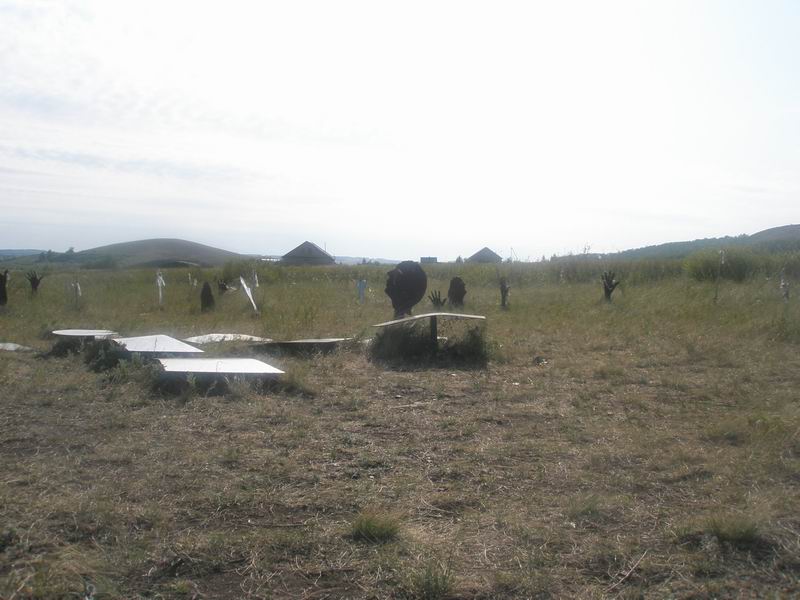
Today the Sintashta mound may look like a silent field, but the story lying beneath it tells of one of the most dynamic periods in human history. To understand it is to understand how chariot-riding warriors left their stamp on the world.
The story of Sintashta shows that it is not great monuments but the right ideas that change history. A wheel design or a metal alloy can leave a more enduring legacy than the grandest pyramid.
What makes Sintashta special today is not so much the physical remains it left behind as the ideas it added to human history. The war chariot, horse culture, and advanced metallurgy spread from here and influenced the course of civilizations. For this reason this modest mound in the middle of the steppe stands in the same history book as the grand capitals, in the important place it deserves; because sometimes what changes the world is not palaces of stone but the turning of a wheel.
And perhaps most striking of all is that all of this was set in motion not by a grand empire but by a small community on the steppe.
In the end, Sintashta whispers one of humankind’s greatest lessons: to change history you need not build an empire; sometimes the right idea, at the right time, in the right place, is enough.
We who carry its legacy today are still indebted to that distant steppe where a wheel first turned, a horse first ran, and perhaps a language was first whispered. Sintashta may have fallen silent, but the trace it left continues to speak.
Its legacy lives on not in stone but in the shared memory of humanity and in the most ordinary inventions of our daily lives. A story as simple as the turning of a wheel and as vast as the birth of a civilization.
Geography and Climate of the Steppe
The southern Ural steppe where Sintashta was founded is defined by treeless grasslands, slow-flowing rivers, and a harsh continental climate. Winters are long and freezing, summers short and dry. To survive in this environment required managing resources carefully and behaving flexibly with the seasons.
That the settlements were founded in the river valleys is no accident. Water was needed for drinking, for irrigation, and for metallurgy; the riverbanks also provided pasture and a line of transport. Geography largely determined where the Sintashta people would live and what kind of economy they would build.
This open terrain also made mobility easier. The steppe, with no obstacles across long distances, allowed both trade and ideas to spread quickly. One reason the inventions of Sintashta could spread across such a wide area was this geographic openness.
The openness of the steppe was at the same time a source of fragility; in the face of famine or enemy pressure there was no mountain or forest to hide in. For this reason ramparts and solidarity were the key to survival.
This climate and geography made it necessary for the Sintashta people to be both resilient and creative. In a world where resources were limited, using everything efficiently, reusing waste, and adapting quickly to seasonal change was the condition of survival. The openness of the steppe offered danger on one hand and opportunity on the other; the same plains allowed both the enemy to approach easily and ideas and goods to spread rapidly. This dual nature deeply shaped the character of the culture.
River, steppe, and sky; the world of Sintashta was built upon the simplicity of these three elements.
This harsh but open world of the steppe must also have shaped the character of the Sintashta people: resilient, organized, and inclined to movement. The constraints nature imposed paradoxically nourished creativity and cooperation; for in a place where it is hard to stand alone, community was everything. These settlements on the riverbank are proof that human beings can build order and beauty even in the harshest conditions.
This simple yet difficult world hosted some of humankind’s most creative leaps and reminded us that the constraints of nature can sometimes be the mother of the greatest innovations. The river still flows, the steppe still stretches out, and the soil still goes on telling that old story. The steppe was both their world and the silent witness that tells us about them today.
Daily Life and Economy
Life at Sintashta was a combination of herding, metallurgy, and limited agriculture. Herds of cattle, sheep, and horses were the basic means of subsistence; animals were food, raw material, and a measure of wealth all at once. The hearths and storage pits inside the houses reflect self-sufficient household economies.
That metallurgy was so widespread suggests that the society was open to trade. The copper objects produced were probably bartered with neighboring communities, and in return came different raw materials and goods. Thus a small settlement became part of a wide network of exchange.
This economic intensity means that production, defense, and daily life were all interwoven behind the same walls. The Sintashta house was as much a workshop and a refuge as it was a home.
The roles of women, men, and children in this economy can be partly read from the finds. Loom weights, grinding stones, and children’s graves remind us that not only warriors but an entire community lived here.
The rhythm of daily life was set by the cycle of the seasons and the herds: going out to the pastures in spring, preparation in autumn, and gathering behind the walls in winter. Within this cycle metallurgy, herding, and handicraft were interwoven, and every household was both producer and consumer. The Sintashta house was therefore not merely a shelter but the nucleus of a small economy; there the fire never went out and the sound of the hammer never fell silent.
This self-sufficient way of life must have given the Sintashta people a certain resilience against the outside world. Thus Sintashta, as both a warrior society and a hardworking community of producers, leaves us the traces of a rich life that does not fit into a single identity.
This interwoven life keeps us from seeing Sintashta as a one-dimensional “warrior culture”; here there was as much hammer as weapon, as much herd as horse, as much daily labor as war.
Thus a Sintashta day turns into a vivid picture full of the warmth of fire, labor, and community. This lively picture reminds us that the past was not lifeless at all. A Sintashta evening spent in the light of the fire was not as far from our own as we might think.
Archaeology’s Changing View
The discovery of Sintashta shook long-held views about steppe societies. For a long time these regions were assumed to be empty spaces through which only nomads passed; yet the fortified, planned settlements here revealed a complex and settled way of life.
Modern methods, especially aerial photography and radiocarbon dating, clarified the age and extent of these settlements. Every new excavation added a new point to the map of the Country of Forts and showed how wide the picture was.
Today Sintashta is seen not merely as an archaeological site but as a turning point that rewrites the history of the steppe. Thanks to it, the heart of Eurasia is now read not as an empty corridor of passage but as a creative center.
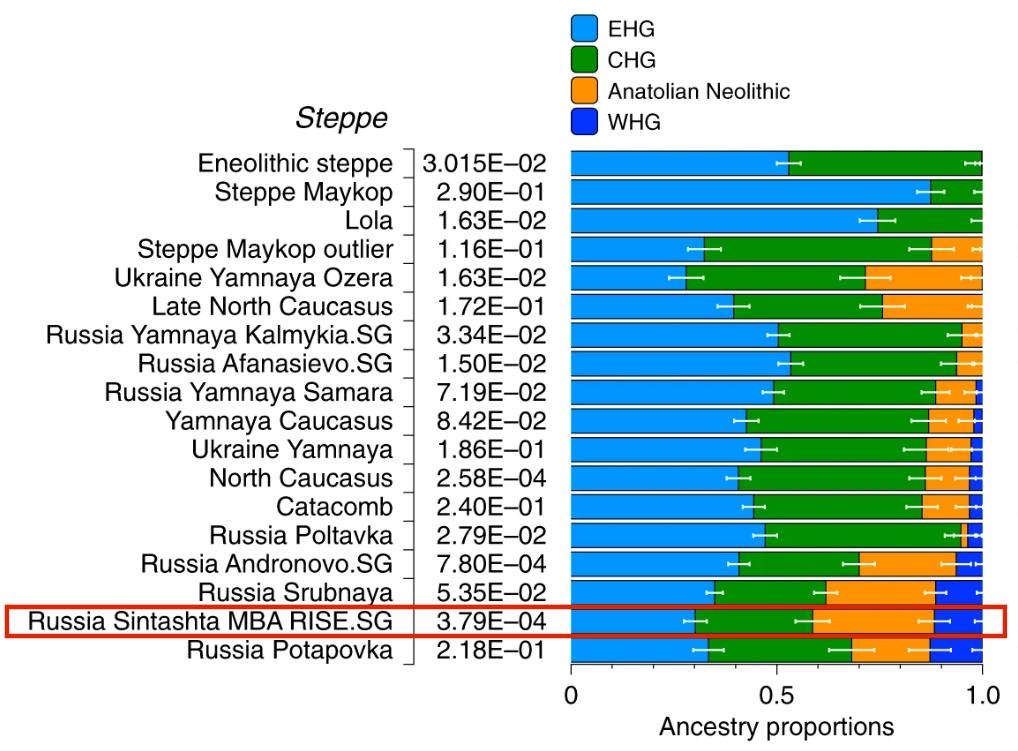
Every new technology deepens our knowledge of Sintashta a little more. DNA analyses and isotope studies allow us to understand even where these people came from and what they ate.
The emergence of Sintashta moved the heart of Eurasia from the edge of the prehistoric world to its center. This region is now seen not merely as a corridor of passage between great civilizations but as a center that produced innovations in its own right. Every new find proves once again how organized, creative, and influential the people here were; and this picture shakes our habit of reading world history only through the empires of the river valleys.
Today Sintashta and the surrounding sites are considered worth protecting for the sake of both scientific research and cultural heritage. For visitors, these places offer the chance to touch a moment four thousand years ago in the silence of the steppe; for archaeologists, they are like an open book still full of questions waiting to be answered.
The story of Sintashta is still being written; every new excavation season adds a new page to our knowledge of this extraordinary culture. This mound in the heart of the steppe stands before us as a window opening onto the past.
Nearby Places
- A Perfect Circle on the Steppe, Burned by Its Own People: The Story of Arkaim
- Siberia’s Valley of the Kings, Where an Empire Was Buried in Gold: The Story of Arzhan
- The Frozen Tombs That Preserved a 2,500-Year-Old World in Ice: The Story of Pazyryk
Final Word
Sintashta left behind no grand temples or giant monuments; its legacy is finer but deeper. It lives on in the trace of a wheel, in the reins of a horse, and perhaps in the roots of the hundreds of languages spoken today. These small burned forts in the middle of the steppe remind us how early humankind’s capacity for mobility and invention awoke.
You May Like
Mafra, the Palace a King Built From a Vow


One thought on “Sintashta: The Steppe Forts That Built the First War Chariots”