Some cities spread out; Pergamon climbed. Rising in tier after dramatic tier up the flank of a steep hill in western Anatolia, the ancient capital stacked its temples, palaces, and public buildings into one of the most theatrical urban landscapes the ancient world ever produced. To approach it is to look up, always up, at a crown of ruins silhouetted against the sky, and to understand at once that this was a city designed to impress from a distance and to dominate its surroundings both physically and politically.
For a brilliant period, Pergamon was the seat of a wealthy and ambitious kingdom that turned itself into a cultural capital to rival the greatest cities of the age. Its rulers spent lavishly on art, learning, and architecture, determined to make their mountain city a beacon of civilization. What they built, and what survives of it today near the modern town of Bergama, tells the story of how a relatively small state used culture and cleverness to secure a place among giants.

This is an account of that vertical city: its cliff-hanging theatre, its famous library, its monumental altar, its healing sanctuary, and the political skill that let a modest kingdom shine so brightly before folding itself, on its own terms, into the growing power of Rome.
Contents
- A Kingdom Built on a Mountain
- The Theatre That Clings to the Cliff
- A Library to Rival Alexandria
- The Altar That Traveled to Berlin
- Healing at the Asklepion
- Temples on the Upper Terraces
- The Giant Temple Down in the Town
- How a Small Kingdom Punched Above Its Weight
- From Royal Capital to Roman Province
- The Acropolis Today
- Nearby Places
- Parting Words
A Kingdom Built on a Mountain
Pergamon rose to prominence when a local dynasty seized control of the surrounding region in the turbulent centuries after the breakup of Alexander’s empire. Amid the constant warring of the successor kingdoms, the rulers of Pergamon carved out an independent state and, crucially, grew immensely rich. That wealth, secured through careful politics and shrewd alliances, funded the transformation of a hilltop stronghold into one of the most splendid capitals of its era.
The choice of site was deliberate and brilliant. Perched high above the surrounding plain, the acropolis was naturally defensible and visually commanding, a fortress and a showpiece in one. From its heights the rulers could survey their territory and impress any visitor with the sheer drama of their capital. The steepness that made the city hard to attack also forced its architects to become masters of terracing, building level upon level of monumental structures up the slope in a way that few other ancient cities attempted.
The dynasty that ruled here understood that power in their age was measured not only in armies and gold but in culture. They positioned themselves as patrons of Greek civilization, defenders of its values against the threat of raiders from the north, and their military victories were celebrated in art that spread their fame across the Mediterranean. Pergamon became known not just as a rich kingdom but as a guardian and champion of the wider Hellenic world, a reputation its rulers cultivated with great skill.
This blend of wealth, strategic location, and cultural ambition produced a capital of extraordinary character. Everything about Pergamon was designed to make a statement, from the vertiginous arrangement of its buildings to the treasures housed within them. It was a city that knew exactly what it wanted to be and spent freely to become it, and the ruins that survive still radiate that ambition across the centuries, even in their broken and scattered state.
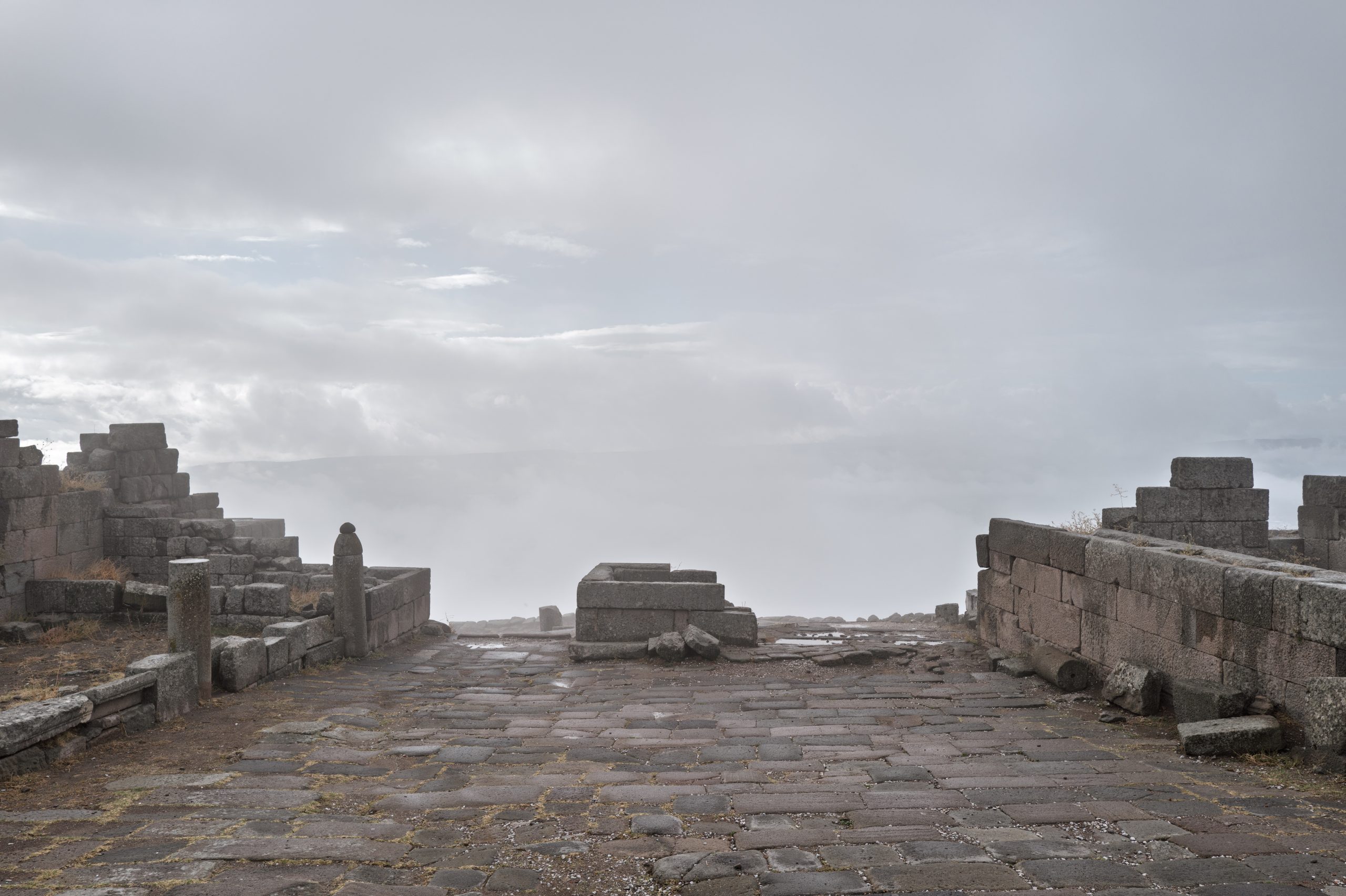
The Theatre That Clings to the Cliff
Of all Pergamon’s daring structures, none captures its vertical genius better than the theatre. Rather than resting comfortably in a gentle hollow like most ancient theatres, it was built into an astonishingly steep slope, its rows of seats rising at a dizzying angle up the hillside. The result is one of the most spectacular and precipitous theatres of the ancient world, a place where the audience seems almost to hang above the stage, gazing out over the plain far below.
The steepness was born of necessity. On a hill this abrupt, there was simply no room for a conventional broad, shallow theatre, so the architects tilted the whole structure upward, packing thousands of spectators into a narrow, towering wedge of seating. What began as a constraint became a triumph, producing a building of unforgettable drama. Sitting in the upper rows, an ancient spectator would have enjoyed not only the performance below but a breathtaking panorama stretching across the landscape.
The design also solved a practical puzzle in an ingenious way. Because the terrace at the foot of the theatre needed to serve other purposes, the stage building was made so that it could be assembled and dismantled as required, allowing the space to be used flexibly. This kind of clever adaptation is characteristic of Pergamon’s builders, who repeatedly found elegant solutions to the challenges their extreme site threw at them. Nothing here was easy to build, and the ingenuity shows at every level.
Standing in the theatre today, with the seats plunging away beneath you and the plain spread out in the distance, you feel the full audacity of the city’s design philosophy. This was architecture as spectacle, a building meant to thrill through sheer verticality. Where other cities built theatres to hold audiences, Pergamon built one to take their breath away, and after more than two thousand years it still does exactly that to everyone who climbs to its upper edge and looks down.
The very difficulty of reaching the upper seats added to the theatre’s sense of occasion. Climbing the steep rows would have been a small journey in itself, and by the time an ancient spectator settled into place high on the slope, they had earned a view that few other theatres could match. There is a psychology to such spaces: the effort of the ascent, the vertigo of the drop, and the sweep of the landscape all combined to make attending a performance here a heightened, almost dizzying experience quite unlike sitting in a comfortable hollow elsewhere.

A Library to Rival Alexandria
Among the proudest achievements of Pergamon was its great library, which grew into one of the most important centers of learning in the ancient world, spoken of in the same breath as the legendary library of Alexandria. The rulers of Pergamon assembled a vast collection of scrolls and drew scholars to their city, determined to make their capital a rival to the great intellectual centers of the age. In doing so they turned their mountain kingdom into a magnet for knowledge as well as wealth.
A famous story attached to this rivalry concerns the very material of books. According to tradition, the competition between the libraries grew so fierce that supplies of papyrus, the standard writing material, were cut off to Pergamon to hobble its collection. In response, the city is said to have refined the preparation of animal skins into a superior writing surface, and the name of this material is often linked etymologically to Pergamon itself. Whether or not the tale is literally accurate, it captures the intensity of the contest and the city’s inventive response to it.
The library was more than a storehouse of texts. It was part of a broader cultural program that made Pergamon a hub of scholarship, philosophy, and the arts, attracting learned men and producing works of lasting influence. The rulers understood that a great collection of books conferred prestige and soft power, marking their city as a true capital of civilization rather than a mere provincial stronghold. In the ancient world, as today, knowledge was a form of status.
The physical remains of the library are modest compared to its fame, a set of rooms near the summit of the acropolis whose function scholars have reconstructed. But its intellectual legacy far outlasted its walls. The story of Pergamon’s library reminds us that the ancient competition between cities was fought not only with armies and trade but with scrolls and scholars, and that a small kingdom could make itself immortal by investing in the life of the mind.

The Altar That Traveled to Berlin
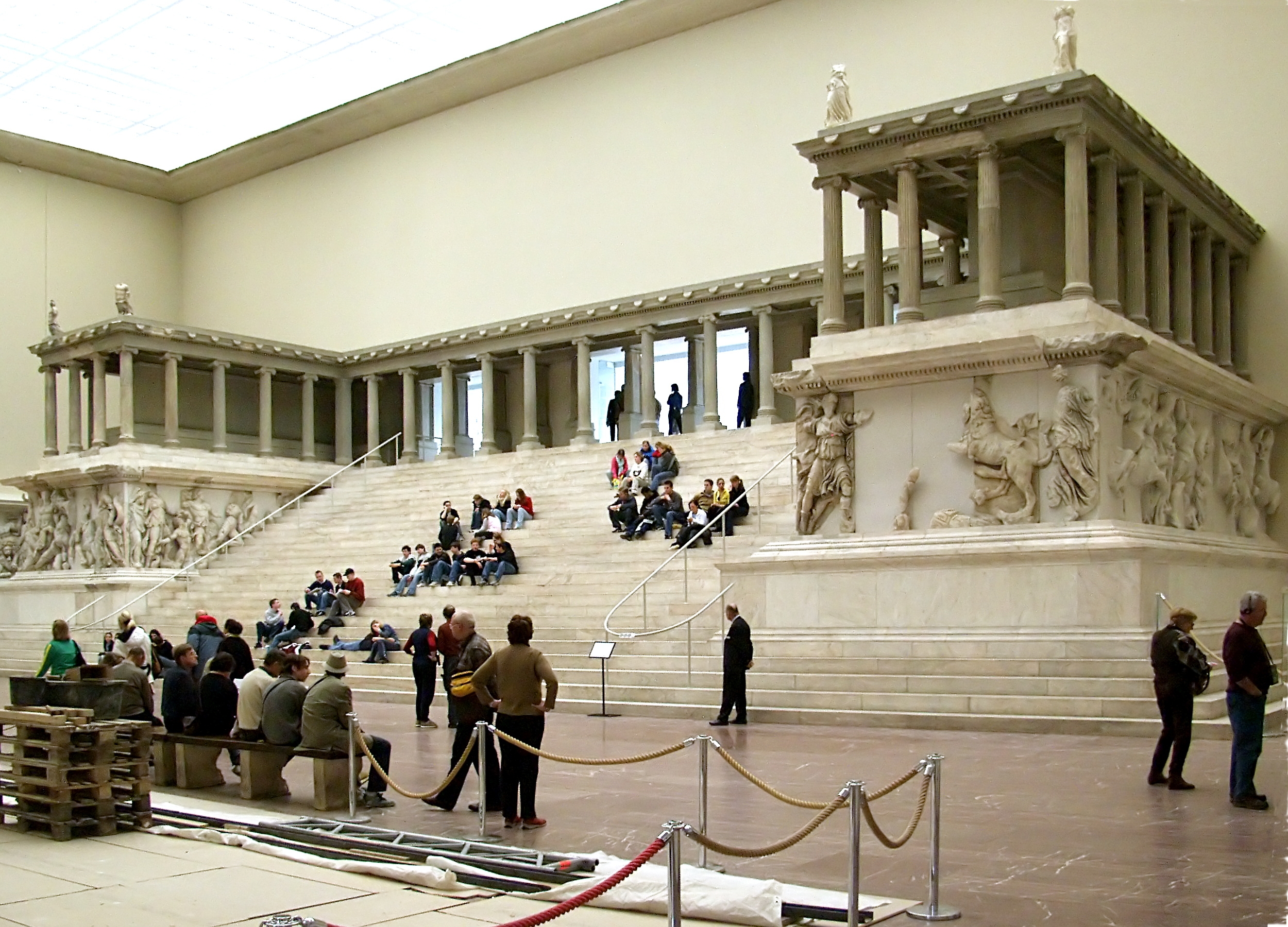
The single most famous monument of Pergamon is one you cannot see on the hill where it was built, because its magnificent sculpted friezes were removed in the nineteenth century and reassembled in a museum far away in Europe. The Great Altar was a monumental structure whose sweeping reliefs depicted a mythological battle between gods and giants, carved with such energy and emotional intensity that it stands among the supreme achievements of ancient sculpture. Its dynamism, drama, and technical brilliance mark the high point of a whole artistic style.
The subject of the great frieze was not chosen at random. The mythical struggle of the gods against the giants served as an allegory for Pergamon’s own victories over the raiders it had fought and defeated, casting the kingdom as the defender of order and civilization against chaos and barbarism. The altar was thus both a religious monument and a piece of political propaganda in stone, glorifying the dynasty’s triumphs by clothing them in the grandest possible mythological terms. Art and power fused completely in its carvings.
On the acropolis today, the site of the altar is marked mainly by its foundations and the trees that have grown up around them, a strangely quiet spot given the monument’s fame. The sculptures themselves, having been excavated and transported abroad, are displayed in a purpose-built hall that reconstructs the altar’s imposing front. The separation of the monument from its birthplace is a source of ongoing discussion about where such treasures belong, a debate that touches many of the great archaeological finds of the era.
Whatever one thinks of its current location, the altar remains Pergamon’s masterpiece and its most enduring gift to the history of art. The writhing, straining figures of its frieze, caught in the fury of cosmic battle, represent a peak of sculptural ambition that later ages studied and admired. To understand the artistic aspirations of Pergamon is to look at these reliefs and see a kingdom trying, quite literally, to carve its greatness into eternity.
The rediscovery and removal of the altar’s sculptures in the nineteenth century also illustrates how the ancient heritage of Anatolia became entangled with the ambitions of distant nations. Great museums of the era competed to acquire spectacular finds, and the excavation of Pergamon fed directly into that appetite. The result is that one of the supreme achievements of Anatolian antiquity is now most famously encountered far from the hill where it was made, a situation that continues to provoke reflection on ownership, context, and the meaning of displaying such works so far from home.
Healing at the Asklepion
Below the towering acropolis, on more level ground, lay one of the most renowned healing sanctuaries of the ancient world, dedicated to the god of medicine. People came from far and wide to seek cures at this Asklepion, which functioned as a kind of ancient medical center combining religious ritual, psychological treatment, and practical care. Approached along a colonnaded sacred way, the sanctuary offered the sick a place of hope, rest, and treatment under the protection of the healing god.
The therapies practiced here blended the spiritual and the physical in ways that can seem surprisingly modern. Patients bathed in sacred waters, followed prescribed diets and exercises, and famously slept within the sanctuary in the hope of receiving healing dreams that the resident priests and physicians would interpret. The emphasis on rest, environment, and the patient’s own mind alongside physical remedies suggests an intuitive grasp of the connections between body and psyche that medicine would take centuries to formalize.
The sanctuary is associated with one of the most influential physicians of antiquity, whose writings shaped medical thinking for well over a thousand years afterward. That such a figure was connected to Pergamon underlines the city’s reputation as a center of medicine as well as art and learning. The Asklepion was not a place of desperate superstition but a serious institution where the best knowledge of the age was applied to the relief of suffering, wrapped in the comforting rituals of faith.
Wandering the remains of the sanctuary today, with its sacred spring, its treatment rooms, and the tunnel through which patients passed, you sense the enduring human hope that lies behind it. People have always sought healing, and always sought it through a mixture of practical remedy and reassuring ritual. The Asklepion of Pergamon gave that universal longing a beautiful and sophisticated home, and its ruins still speak of the ancient effort to comfort and cure the sick.
It is striking how much the ancient approach to healing anticipated ideas that feel contemporary. The insistence on rest, pleasant surroundings, diet, and mental wellbeing as parts of recovery, rather than an exclusive focus on the diseased body, reflects a holistic instinct that modern medicine has in some ways rediscovered. Patients who came to the sanctuary were treated as whole people, their fears and dreams taken seriously alongside their physical complaints, and something in that gentle, comprehensive care still speaks across the centuries to anyone who has ever been ill and frightened.

Temples on the Upper Terraces
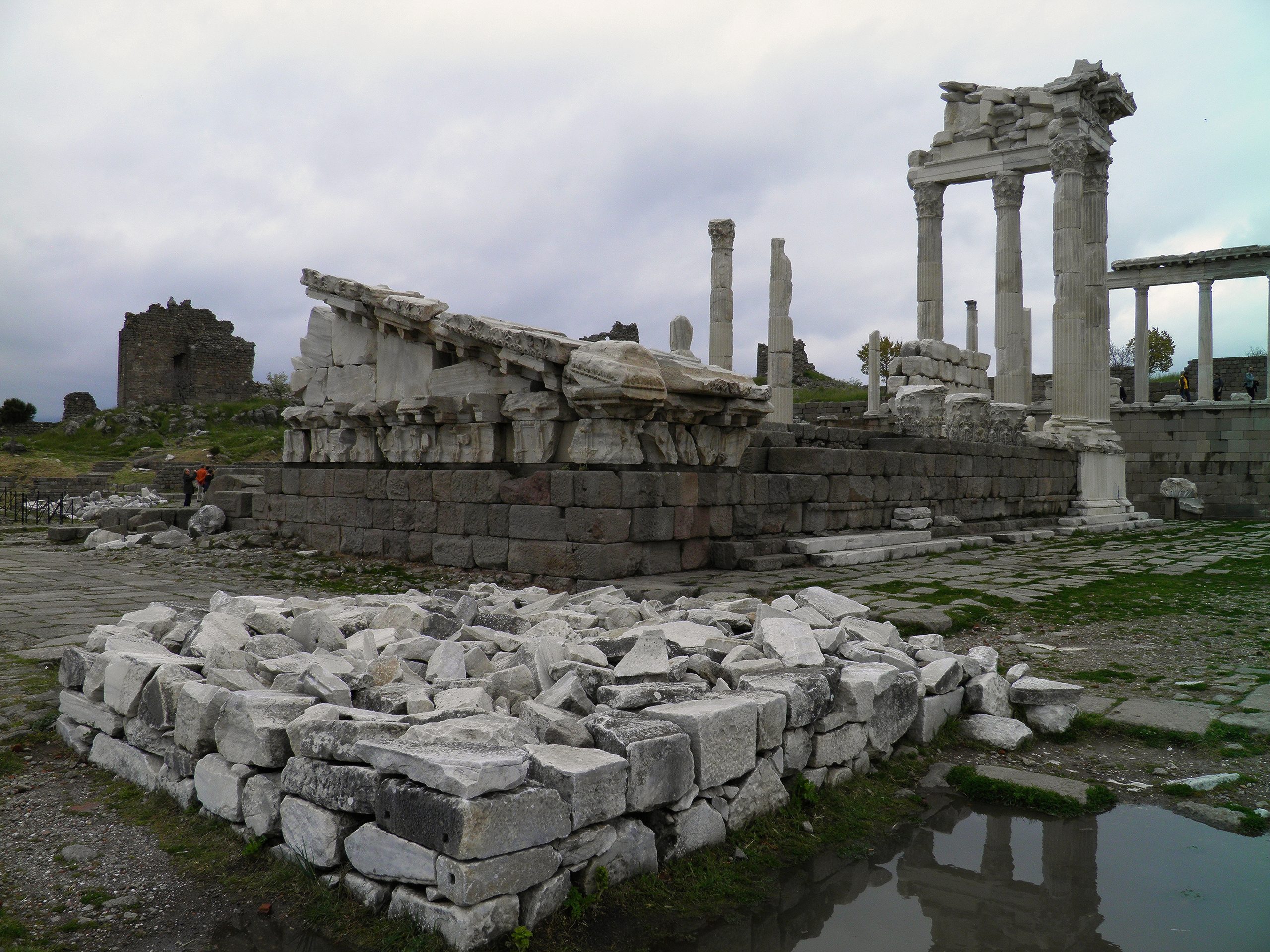
The summit of the acropolis was crowned with temples and civic buildings arranged across its narrow terraces, and among the most striking survivals is the great temple built in honor of a Roman emperor. Its rows of columns, some re-erected in modern times, stand proudly against the sky at the very top of the hill, visible for a great distance and offering commanding views over the surrounding landscape. It represents the continued importance of Pergamon into the Roman period, long after its days as an independent kingdom had ended.
This temple, set on a massive terrace supported by vaulted substructures, shows how the builders of Pergamon continued to work with and against their steep site. To create a level platform grand enough for such a monument, they raised enormous supporting structures, effectively manufacturing flat ground where nature had provided none. The engineering required to build a classical temple on a mountaintop was formidable, and the result crowns the whole city with a fitting flourish.
The upper terraces held more than temples. Here were the palaces of the rulers, arsenals, and the administrative heart of the kingdom, all packed into the constrained space at the top of the hill. This was the political and religious summit of Pergamon in every sense, the place from which the city was governed and where its gods and its power were most concentrated. Moving among these ruins, you trace the nerve center of a state that once loomed large in the affairs of the Mediterranean.
The gleaming white columns of the emperor’s temple make an unforgettable image, especially seen from below or against a dramatic sky. They embody the persistence of Pergamon’s grandeur across the transition from kingdom to province, a symbol that the city remained important even as the wider political order changed around it. Of all the sights on the acropolis, this crowning temple most powerfully conveys the sense of a place that always aimed for the heights, literally and otherwise.

The Giant Temple Down in the Town
Down in the modern town of Bergama, at the foot of the great hill, stands a colossal brick structure that once served as a temple on a truly monumental scale. Built of red brick that has given it its popular name, this enormous building was dedicated to Egyptian gods whose worship had spread across the Roman world, evidence of the cosmopolitan mixing of cultures and cults that characterized the empire. Its sheer size still astonishes, dwarfing the streets and houses that have grown up around it.
The building’s scale reflects the reach of religious ideas in the ancient Mediterranean, where deities born in one land could find enthusiastic worshippers thousands of miles away. That a temple to Egyptian gods should rise so grandly in an Anatolian city speaks of a connected world in which people, goods, and beliefs flowed freely across vast distances. Pergamon, ever the cosmopolitan capital, embraced these imported cults with the same appetite it showed for Greek art and learning.
In later centuries the great temple took on new life as the structure was adapted for Christian use, one of its towers eventually serving religious functions into modern times. This repurposing of a pagan temple for a new faith is a common thread in the history of ancient sites, where sacred spaces were rarely abandoned so much as reinterpreted. The building’s long afterlife shows how the physical bones of a city outlast the particular beliefs that first raised them.
Today the massive brick walls loom over the surrounding neighborhood, a reminder that ancient Pergamon was not confined to its famous hill. The lower city sprawled across the plain, and monuments like this one anchored its religious and civic life. Standing beneath these towering walls, you appreciate the full extent of the ancient metropolis, which combined a dramatic upper acropolis with a busy lower town, together forming one of the great cities of its world.

How a Small Kingdom Punched Above Its Weight
One of the most intriguing things about Pergamon is how a comparatively small state managed to loom so large in the affairs of the ancient world. It never controlled the vast territories of the greatest empires, yet it exercised an influence out of all proportion to its size through a combination of wealth, diplomacy, and cultural prestige. The rulers of Pergamon were master strategists who understood that a kingdom could project power through art, learning, and clever alliances as effectively as through conquest.
Diplomacy was central to their success. Rather than exhausting themselves in endless warfare, the rulers cultivated relationships with the rising power of Rome, positioning themselves as reliable friends and useful allies. This alignment brought them protection and advantage, allowing their kingdom to flourish under the shelter of a greater power while retaining its own distinctive splendor. It was a careful, pragmatic strategy that traded some independence for security and prosperity.
Cultural investment was the other pillar of their influence. By making Pergamon a center of art, scholarship, and monumental architecture, the rulers gave their kingdom a prestige that money and armies alone could not buy. The city became a symbol of civilization itself, and its patronage of the arts spread its name and its values far beyond its borders. In an age that revered Greek culture, being seen as its champion was a powerful form of authority.
The lesson of Pergamon is that greatness in the ancient world was not solely a matter of raw size or military might. A state that was rich, clever, and culturally ambitious could carve out a lasting place in history, admired and remembered long after larger but duller powers had faded. Pergamon understood the value of soft power centuries before the term existed, and its enduring fame is the proof that the strategy worked.
From Royal Capital to Roman Province
The independent life of the kingdom came to an unusual end. Rather than being conquered, Pergamon was, according to tradition, bequeathed to Rome by its last ruler, who left his kingdom to the growing republic in his will. This peaceful transfer of an entire wealthy state into Roman hands was a remarkable event, and it dramatically expanded Roman power in the region. Pergamon thus passed from royal capital to the heart of a Roman province without the usual bloodshed of conquest.
Under Roman rule the city did not decline into obscurity. It remained an important and prosperous center, adorned with new buildings that reflected its continuing status, including the great temple to the emperor that still crowns the acropolis. The Romans valued Pergamon for its wealth, its strategic position, and its cultural prestige, and they invested in it accordingly. The transition to provincial status changed the city’s political role but did not immediately diminish its splendor.
Over the longer term, however, the center of gravity in the region shifted, and Pergamon gradually lost the preeminence it had enjoyed as a royal capital. The rise of other cities, changes in trade and administration, and the general upheavals of later centuries slowly reduced its importance. The great acropolis, once the beating heart of a kingdom, became a monument to a vanished age even as the lower town continued to be inhabited in more modest form.
The story of Pergamon’s absorption into Rome is a reminder that not all endings are violent. A kingdom that had risen through cleverness and diplomacy departed the stage in the same spirit, handing itself over rather than being crushed. In doing so it preserved much of what it had built, allowing the grandeur of the Pergamene age to survive into the Roman world and, ultimately, down to our own, where its ruins still testify to what a small but brilliant kingdom achieved.
The Acropolis Today
Modern visitors reach the summit of Pergamon by a cable car that glides up the steep hillside, sparing them the climb that ancient inhabitants took for granted. From the top, the reward is one of the most spectacular archaeological panoramas in the region: the crowning temple, the vertiginous theatre, the terraces of temples and palaces, and the wide plain stretching away below toward the modern town. The vertical drama that defined the ancient city is as breathtaking now as it ever was.
The site is recognized as a UNESCO World Heritage property, valued for its outstanding testimony to the art and urban planning of its age. Excavation and conservation have been carried out here for well over a century, gradually recovering the plan of the city and stabilizing its fragile remains. Some structures have been partially re-erected to help visitors grasp their original grandeur, while ongoing research continues to deepen understanding of how this extraordinary vertical city functioned.
To visit Pergamon is to appreciate both the ambition of its builders and the imagination required to read its ruins. Much has been lost, and its greatest treasure, the sculpted altar, resides far away, yet enough survives to convey the audacity of the whole enterprise. Standing among the columns at the summit, with the world spread out below, you understand why its rulers chose to build here, on the very edge of the sky, and why their mountain city still commands admiration across the centuries.
Nearby Places
The western reaches of Anatolia are extraordinarily rich in ancient sites, from great classical cities to the deepest roots of settled human life. If Pergamon has whetted your appetite for the region’s past, these nearby places continue the story in fascinating directions.
- The Marble Metropolis the Sea Abandoned: The Story of Ephesus
- The Hill Above the Dardanelles Where Legend Turned Out to Have Foundations: The Story of Troy
- Göbekli Tepe: The World’s Oldest Temple and How It Rewrote History
Parting Words
Pergamon endures in the imagination because it dared to reach so high, both literally and figuratively. It took a steep and difficult hill and turned it into a stage for one of the most theatrical cities of the ancient world, and it took a modest kingdom and turned it into a cultural power admired across the Mediterranean. Its rulers understood that greatness could be built from art, learning, and ambition as surely as from armies, and they proved it in stone.
What remains today is a city of the sky, its columns and terraces clinging to the mountain against which they were raised. Much has been carried off or worn away, but the audacity of the place survives intact. To climb to the summit of Pergamon and look out over the plain is to feel, across more than two thousand years, the vaulting confidence of the people who chose to build their capital here, on the highest ground they could find, as close as they could get to the heavens.
You May Like
Norse Explorers Reached Canada 500 Years Before Columbus


One thought on “Pergamon: The Vertical City of Kings That Reached for the Sky”