Some places earn their fame twice. Troy earned it first as a story whispered across three thousand years, and then again as a low, wind-scoured mound in northwestern Turkey where archaeologists proved that the story had a floor to stand on. For most of recorded history, Troy belonged to poets. Then a stubborn hill near the Dardanelles turned out to hold the burnt and rebuilt remains of a real city, and the line between myth and mud got blurry in the most exciting way.
The site sits at Hisarlik, a name that means little more than “place of fortresses,” which is fitting, because the ground here has been fortified, ruined, and refortified more times than almost anywhere else in the ancient world. What visitors walk through today is not one city but the tangled remnants of many, pressed together over more than three millennia of continuous occupation. To understand Troy is to accept that you are never looking at a single moment, but at a whole compressed history of the Aegean and Anatolian worlds.
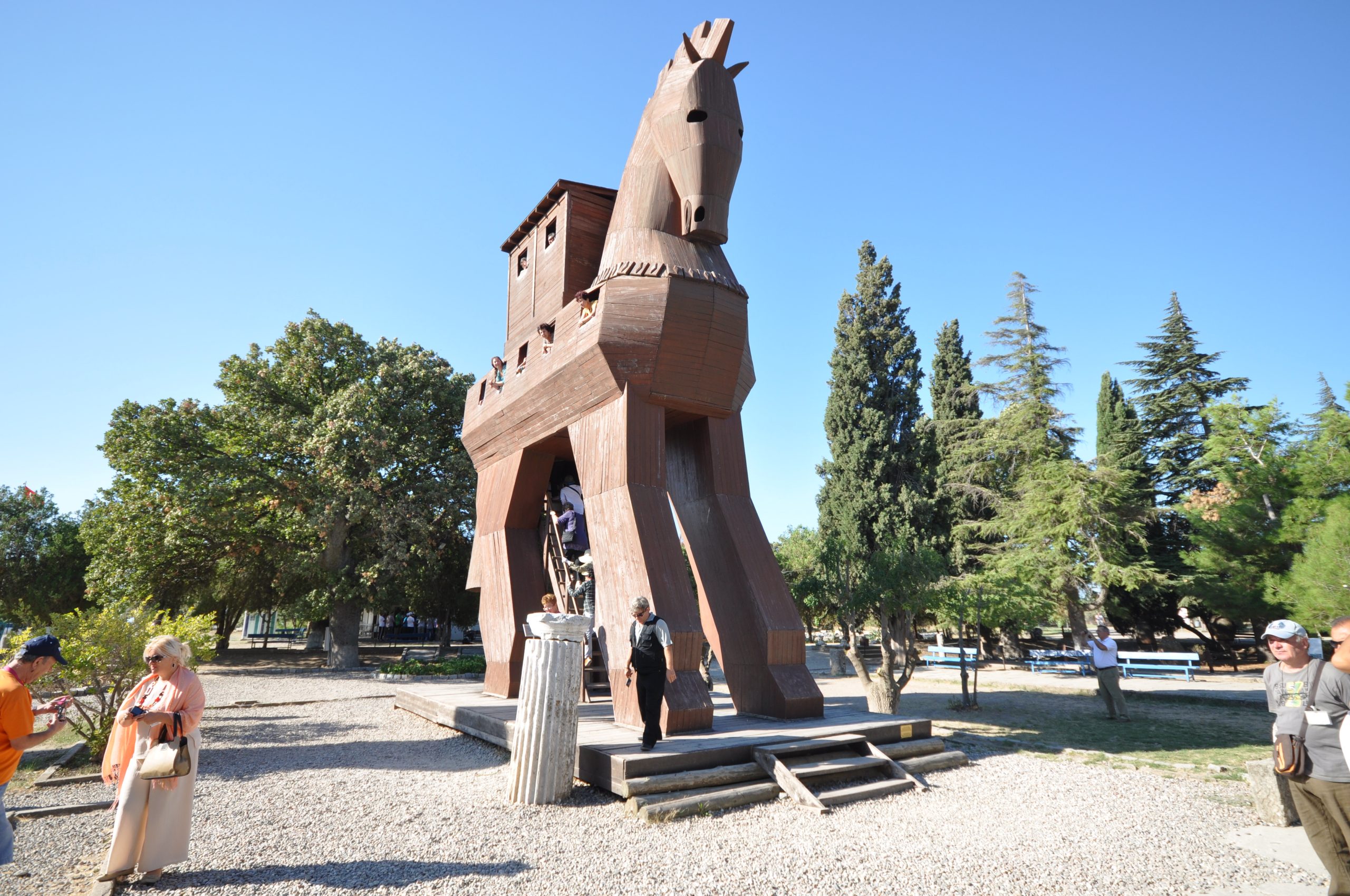
This is the story of how a hill became a legend, how a legend became an obsession, and how careful digging eventually gave both a foundation in fact. It is also a story about the limits of certainty, because for all we have learned, Troy still keeps some of its oldest secrets to itself.
Contents
- A Hill That Refused to Stay a Legend
- Nine Cities Stacked Like Pages
- The Man Who Dug Too Fast
- What the Bronze Age Left Behind
- Homer, History, and the Space Between
- A Gateway Between Two Seas
- The War Nobody Can Quite Prove
- Life Inside the Citadel
- Greeks, Romans, and a Sacred Afterlife
- Reading the Ruins Today
- Nearby Places
- A Closing Thought
A Hill That Refused to Stay a Legend
For centuries, educated Europeans treated the Trojan War the way we might treat the tales of King Arthur: a magnificent story, probably built around a grain of truth, but not something you could locate on a map with any confidence. The ancient Greeks themselves believed Troy had been real, and Roman visitors made pilgrimages to a settlement they were told stood on the sacred ground. But by the modern era, scholarly opinion had drifted toward skepticism. The war was myth, the city was metaphor, and anyone hunting for the actual walls of Priam was chasing shadows.
That skepticism ignored a persistent local memory and a scattering of clues in the ancient sources. Writers of antiquity had described Troy as sitting on a plain near the entrance to the strait now called the Dardanelles, within sight of the sea, close enough to feel the traffic of ships moving between the Aegean and the Black Sea. When nineteenth-century investigators laid these hints over the actual landscape, one modest mound kept fitting the description better than its rivals.
The mound at Hisarlik was not much to look at. It rose only a little above the surrounding farmland, its slopes softened by grass and scrub. But its position was uncannily right, commanding the approach to the strait and overlooking the plain where, in the poems, Greek and Trojan armies were said to have clashed. The people who first argued that this unremarkable hill was the lost city were dismissed as romantics. They turned out to be correct, which is a lesson worth remembering whenever expert consensus dismisses a stubborn amateur.
What made Hisarlik so persuasive was not any single spectacular find but the sheer density of the ruins packed inside it. This was not a natural hill at all. It was an artificial mound built up over thousands of years by generation after generation raising new buildings on the flattened rubble of the old. A place gets that tall only when people keep deciding, century after century, that this exact spot is worth living on. Troy, whatever else it was, was a location people refused to abandon.

Nine Cities Stacked Like Pages
Archaeologists eventually learned to read Troy the way you might read a book that had been rebound many times, its chapters numbered from the oldest at the bottom to the youngest at the top. They identified at least nine major settlement phases, usually labeled with Roman numerals, and each one represents a distinct Troy with its own architecture, ambitions, and eventual misfortune. Troy I lies deepest, a small fortified village from the Early Bronze Age. Troy IX sits near the surface, a Roman-era town that flourished when the empire cherished the site for its legendary past.
Between those bookends lie the layers that draw the most attention. Troy II, from around the middle of the third millennium BCE, was a wealthy fortified citadel whose treasures dazzled its excavators and misled them at the same time. Troy VI and the phase that followed it belong to the Late Bronze Age, the era when, if there was ever a historical Trojan War, it most plausibly occurred. Sorting one layer from another is painstaking work, because ancient builders were ruthless recyclers who quarried older walls for new construction, mixing centuries together in a single trench.
The stacking is not tidy. Fires, earthquakes, and sackings interrupted the sequence, and each catastrophe left its own signature of ash, collapsed masonry, and hastily abandoned belongings. In some places the destruction layers are dramatic enough to read like a crime scene. Reading them correctly, and resisting the urge to match every burnt layer to a favorite legend, has occupied more than a century of scholarship. The temptation to see the fall of Troy in every scorch mark is strong, and it has led careful people astray.
Understanding the layers matters because it dismantles the fantasy of a single, unchanging Troy frozen at the moment of Homer’s poem. The city rose and fell repeatedly, prospered under some rulers and shrank under others, and by the time Greek and Roman visitors arrived to pay their respects, they were honoring a memory layered over dozens of vanished communities. The Troy of legend is really a composite, an idea draped over a very long and very human sequence of building and rebuilding.
The Man Who Dug Too Fast
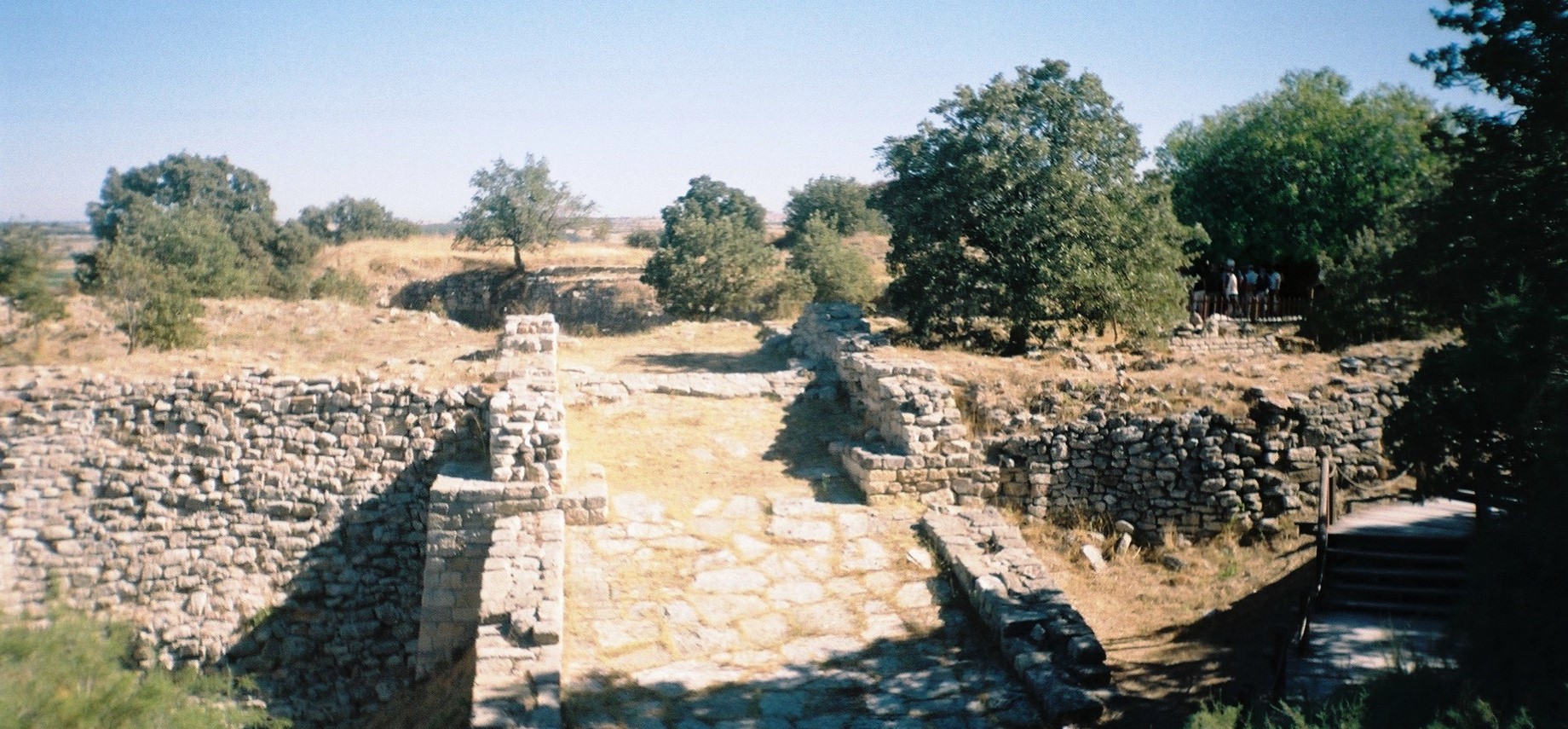
No account of Troy can avoid the figure who dragged it back into the light, a wealthy and relentlessly self-promoting businessman who arrived at Hisarlik in the 1870s convinced he would find Homer’s city. He was not a trained archaeologist, and it shows in the record he left. Determined to reach the earliest and, he assumed, the true Troy as quickly as possible, he drove a huge trench straight down through the mound, tearing through the very Late Bronze Age layers that later scholars would consider the strongest candidates for the Homeric city.
In his haste he did enormous damage. Walls that might have answered crucial questions were demolished to reach older ground beneath them. Stratigraphy that a patient excavator would have recorded inch by inch was churned into confusion. Later generations of archaeologists have spent decades trying to reconstruct what he destroyed, sifting through his spoil heaps and re-examining his trench walls for clues he never noticed or bothered to write down.
And yet, for all his recklessness, he found something. Deep in the mound he uncovered a cache of gold, silver, and bronze objects that he triumphantly announced as the treasure of a Trojan king from the poems. He was wrong about the date by more than a thousand years, for the hoard belonged to the much older Troy II rather than the era of the legendary war, and his showmanship around the discovery blurred the line between science and spectacle. But the finds were genuinely spectacular, and they made the world believe that real gold lay under the myth.
His legacy is genuinely double-edged. He proved that Troy was a real place and captured the public imagination as no cautious scholar could have done, but he also set a standard of destructive, glory-seeking excavation that the discipline spent the next century trying to unlearn. Every visitor who stands today at the great slash in the mound is looking at both a triumph and a wound, the moment Troy was rediscovered and the moment much of it was lost.

What the Bronze Age Left Behind
Strip away the poetry and Troy becomes something arguably more interesting: a real Bronze Age citadel with real walls, real houses, and real people whose daily lives we can partly reconstruct. The fortifications of the later Bronze Age phases were genuinely impressive, built from carefully fitted stone with sloping outer faces designed to resist both attackers and earthquakes. Towers guarded the gates, and the citadel enclosed the residences of an elite who clearly controlled significant wealth and organized labor.
Beyond the fortified core, more recent research has revealed something the early excavators badly underestimated: a substantial lower town spreading out beyond the citadel walls. Troy was not merely a small fortress but a settlement with a wider civilian population, defended in its later phases by a ditch cut into the bedrock to slow any attacking force. This changes the scale of the place. Instead of a tiny stronghold, we are looking at a genuine urban center by the standards of its age and region.
The material culture recovered from the mound speaks of connections reaching far beyond the local plain. Pottery styles, metalwork, and imported goods show that Troy sat within a web of Bronze Age exchange linking the Aegean, mainland Anatolia, and the wider eastern Mediterranean. Spindle whorls turn up in enormous numbers, hinting at a thriving textile industry, and the presence of horse bones has fed endless speculation about the city’s famous association with horses in later legend.
Piecing this together requires patience, because each artifact must be tied to its correct layer before it can tell its story, and the disturbed nature of the mound makes that difficult. But the accumulated picture is convincing. Troy was a prosperous, well-defended, outward-looking community that prospered from its command of a strategic crossing. It did not need a war to make it important. Its geography did that job on its own.

Homer, History, and the Space Between
The Iliad was composed centuries after the events it claims to describe, passed down through generations of oral performance before it was ever written down. That gap matters enormously. A poet working in a later age, drawing on inherited tales, is not a war correspondent filing dispatches. The world the poem describes is a patchwork, mixing memories of a vanished Bronze Age with the customs and objects of the singer’s own time. Trying to extract precise history from it is like trying to reconstruct a demolished building from a song someone wrote about it generations later.
And yet the poem is not pure invention either. Scholars have long noticed that certain details in the epics seem to preserve genuine Bronze Age realities that had otherwise been forgotten by the time the poems were written down, from particular weapons to social arrangements that fit the older world better than the poet’s own. Something real seems to lie underneath, filtered and reshaped by centuries of retelling but not entirely erased. The challenge is separating the durable memory from the poetic embroidery, and there is no clean tool for doing so.
Complicating matters further, texts from the Hittite empire, the great Bronze Age power of central Anatolia, mention a place and people in the northwest that many researchers connect to Troy and the region around it. If those identifications hold, they place Troy within the diplomatic and military world of the Late Bronze Age, a small but strategically valuable player caught between larger powers. That is a very different Troy from the poetic one, but it is arguably a more fascinating one, because it is anchored in the actual politics of its era.
The honest position is that Homer and history overlap without fully aligning. The poem preserves an echo of a real place and perhaps a real conflict, refracted through the imagination of a later culture that needed heroes. Insisting the epics are literally true does the evidence no favors, but dismissing them as pure fantasy ignores the stubborn threads of authentic memory woven through them. Troy lives in that uncomfortable middle ground, and it is richer for it.

A Gateway Between Two Seas
To understand why anyone would fight over Troy, or simply why it kept being rebuilt, you have to look at the map rather than the poem. The city stood near the mouth of the strait that connects the Aegean to the Sea of Marmara and, beyond it, the Black Sea. This was one of the great chokepoints of the ancient world, a narrow corridor through which any ship moving between the Mediterranean and the rich lands around the Black Sea had to pass.
Controlling the approach to such a corridor was a source of power and profit. Winds and currents in the strait could force sailing ships to wait for favorable conditions, and a settlement positioned to service, tax, or simply observe that traffic held a genuine strategic advantage. Whether Troy grew wealthy from tolls, trade, or the provisioning of stranded crews, its prosperity clearly flowed from its command of this maritime doorway.
This geographic logic offers a far more plausible motive for conflict than the abduction of a queen. If armed groups from the Aegean world clashed with the people of the northwestern Anatolian coast, competition over trade routes, resources, and access to the Black Sea provides a realistic backdrop. Wars in the Bronze Age were fought over such things constantly, and a prize like the strait would have been worth serious effort to seize or defend. The legend gave the war a romantic cause; geography suggests a harder-edged one.
Seen this way, Troy stops being a stage set for heroes and becomes what it always really was: a strategic town at a valuable crossroads, prosperous enough to be worth attacking and defensible enough to survive repeated blows. Its wealth and its vulnerability came from the same source. To sit astride a doorway between worlds is to be forever both rich and exposed, and Troy paid the full price of that position across three thousand years.
It is worth pausing on how unusual this kind of location really is. Most ancient cities grew up around farmland, a river crossing, or a defensible height, and they served the region immediately around them. Troy did all of that too, but it also plugged directly into a long-distance system of movement that stretched far beyond its own horizon. A pot made in the Aegean could pass its walls on the way to the Black Sea; grain or metal from distant lands could flow the other way. That connection to a wider world is part of what makes the site so valuable to archaeologists, because its rubbish heaps and imports let them trace the reach of Bronze Age trade with unusual clarity.

The War Nobody Can Quite Prove
So was there a Trojan War? The frustrating and honest answer is that we cannot say for certain, and anyone who claims otherwise is selling something. What we can say is that the Late Bronze Age layers of Troy show evidence of violent destruction, including fire, scattered weapons, and signs of a settlement that met a hard end. Whether that destruction was the work of an invading army, an earthquake, internal strife, or some combination has been argued over for decades without a final verdict.
The problem is that the Bronze Age was a violent, disaster-prone period across the whole eastern Mediterranean, and burnt cities are common rather than rare. A layer of ash and collapse at Troy tells us the city suffered a catastrophe, but it does not automatically confirm the specific war of legend, with its named heroes and ten-year siege. The archaeological record can show us that something terrible happened; it cannot read us the names of the people who caused it.
What tilts many scholars toward accepting a kernel of historical truth is the convergence of several independent lines of evidence: the physical destruction in the right era, the strategic value of the site, the Hittite references to the region, and the persistence of the story in later Greek memory. None of these alone proves anything, but together they make it reasonable to suppose that some genuine conflict, or series of conflicts, over this coveted stronghold was remembered, magnified, and eventually transformed into epic poetry.
Perhaps the most sensible conclusion is that the Trojan War of the poems is neither pure history nor pure fiction but a legend grown from real roots. There was very likely fighting over Troy, quite possibly more than once, and the memory of it survived because the place mattered. The poets took that memory and gave it heroes, gods, and a wooden horse. The archaeologists took the same memory and gave it walls, ash layers, and a date range. Both are trying to reach the same lost event from opposite directions.

Life Inside the Citadel
It is easy to lose the ordinary people of Troy beneath the weight of the legend, but they are the reason the mound exists. Inside the fortified citadel, the ruling families lived in substantial houses, some large enough to suggest halls where feasts and public business took place. The layout of the streets and buildings, insofar as it survives, points to a community that was organized, hierarchical, and comfortable, with clear distinctions between the elite core and the wider population beyond the walls.
Daily life revolved around the things that sustained any Bronze Age town: farming the fertile plain, herding animals, working metal and clay, and above all spinning and weaving. The extraordinary quantity of spindle whorls recovered from the site suggests that textile production was a major activity, perhaps even an export industry. Cloth was valuable and portable, and a town positioned on a trade artery would have found ready markets for it. The people of Troy, in other words, were not just warriors in a poem but producers and traders in a real economy.
The community also faced real dangers beyond human enemies. The region is seismically active, and there is evidence that earthquakes repeatedly damaged the city, toppling walls and forcing yet another round of rebuilding. Living at Troy meant accepting a certain precariousness, whether from the ground shaking beneath your feet or from the armed strangers whose ships appeared in the strait. That the town was rebuilt again and again in the face of these threats says something about how valuable, or how stubbornly loved, the location was.
We should picture Troy, then, as a living place full of ordinary routines: smoke rising from hearths, looms clacking, animals in their pens, ships being watched from the walls. The heroes of legend, if they ever existed, would have moved through a world of farmers and weavers and traders whose names no poem preserved. Those unnamed people built the mound one rebuilding at a time, and it is really their city that archaeology has recovered.
Greeks, Romans, and a Sacred Afterlife
The fall of Bronze Age Troy was not the end of the site’s story. In later centuries a Greek settlement rose on the same ground, and its inhabitants embraced the legendary past as a source of prestige. They built a temple and identified their town as the successor to Homer’s city, welcoming visitors who came to stand where the great heroes were said to have fought. Troy had begun its second career, this time not as a strategic port but as a place of pilgrimage and cultural memory.
The Romans took this reverence even further, because their own founding legend traced the origins of Rome back to a Trojan refugee who fled the burning city. To Romans, Troy was not a foreign ruin but a kind of ancestral homeland, and prominent figures visited to honor it. The site received imperial patronage, its buildings were maintained and expanded, and its symbolic importance far outstripped its modest physical scale. A small provincial town had become a spiritual anchor for the self-image of an empire.
This afterlife left its own archaeological traces, the uppermost layers of the mound belonging to these Greek and Roman phases rather than to the Bronze Age city of legend. It is a neat irony that the most historically famous Troy sits deep and damaged near the bottom, while the better-preserved upper remains belong to the tourists and pilgrims of antiquity who came to admire a Troy that had already been gone for a thousand years. Even in ancient times, Troy was as much an idea as a place.
The reverence eventually faded as the classical world gave way to new powers and new preoccupations. The town shrank, then emptied, and the mound settled back into the farmland, its legend surviving in manuscripts long after its stones fell silent. That the location was never entirely forgotten, and that its name clung to the landscape, is part of why nineteenth-century searchers were eventually able to find it again. Troy was too important to be fully erased, even after everyone stopped living there.
Reading the Ruins Today
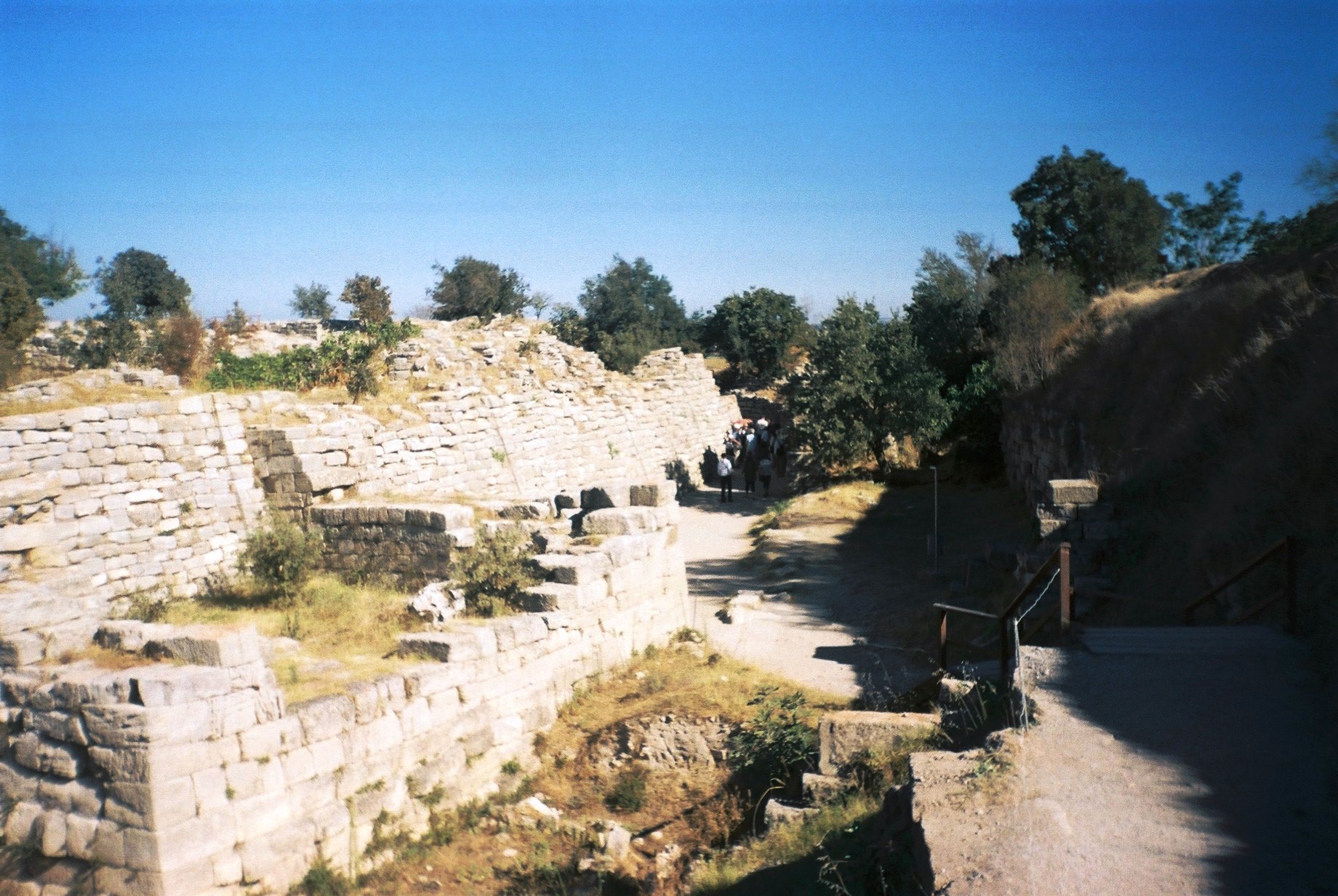
Modern Troy is a UNESCO World Heritage site, and the experience of visiting it defies the expectations set by the legend. There is no single towering citadel to gasp at, no obvious throne room of a doomed king. Instead there is a complex, layered landscape of low walls, trenches, and foundations that rewards patience and a bit of imagination. Signboards and reconstructions help visitors understand which stones belong to which of the nine cities, a task that even specialists find challenging.
Ongoing research continues to refine the picture, using methods the early excavators could never have imagined, from remote sensing that maps the buried lower town to careful re-analysis of finds and layers. Each season adds nuance rather than sensation, gradually replacing the melodrama of treasure hunts with the steadier satisfactions of genuine understanding. The Troy that emerges from this work is less glamorous than the poem but far more real, and arguably more impressive for being true.
For the visitor willing to slow down, the reward is a rare kind of time travel. Standing in the great trench, you can see thousands of years of human effort compressed into a single wall of earth, layer upon layer of building and burning and rebuilding. Few places on earth let you look at so much history in one glance. That, more than any wooden horse, is the real wonder of Troy: the sheer, stubborn persistence of a community that refused, for three thousand years, to let its hill go quiet.
There is also something quietly moving about how the site is presented now, with its emphasis on honesty over spectacle. Rather than pretending to offer the intact city of the poems, the modern interpretation invites visitors to appreciate the messy, layered truth: a place built and unbuilt by countless anonymous hands. In an age that often prefers its history dramatic and simple, Troy insists on being complicated, and it is a better teacher for it. The ruins ask you to think rather than simply to gawk, and that is a rarer gift than a restored temple.
Nearby Places
Anatolia is one of the richest archaeological landscapes on the planet, and Troy is only one chapter in a very long regional story. If the deep past of this part of the world draws you in, these earlier settlements make natural companions to a visit here.
- Göbekli Tepe: The World’s Oldest Temple and How It Rewrote History
- Çatalhöyük: The 9,000-Year-Old Town With No Streets
- Aşıklı Höyük: The 10,000-Year-Old Village That Came Before Çatalhöyük
A Closing Thought
Troy endures because it sits exactly on the seam between what we know and what we only imagine. Peel back the poetry and you find a real Bronze Age city on a strategic strait, prosperous, fortified, and repeatedly reborn from its own ashes. Look again and you find the shadow of a war that may or may not have happened, remembered long enough to become one of the founding stories of Western literature. Neither version cancels the other out.
Perhaps that is the truest thing about Troy: it teaches us how memory and evidence work together and pull apart. The archaeologists gave the legend a foundation, and the legend gave the ruins a meaning they would never have earned on their own. Standing on that layered hill above the plain, you are looking at both at once, the hard facts of stone and ash and the soft, enduring power of a story that simply would not die.
You May Like
Mafra, the Palace a King Built From a Vow


2 thoughts on “Troy: The Hill Above the Dardanelles Where Legend Met Fact”