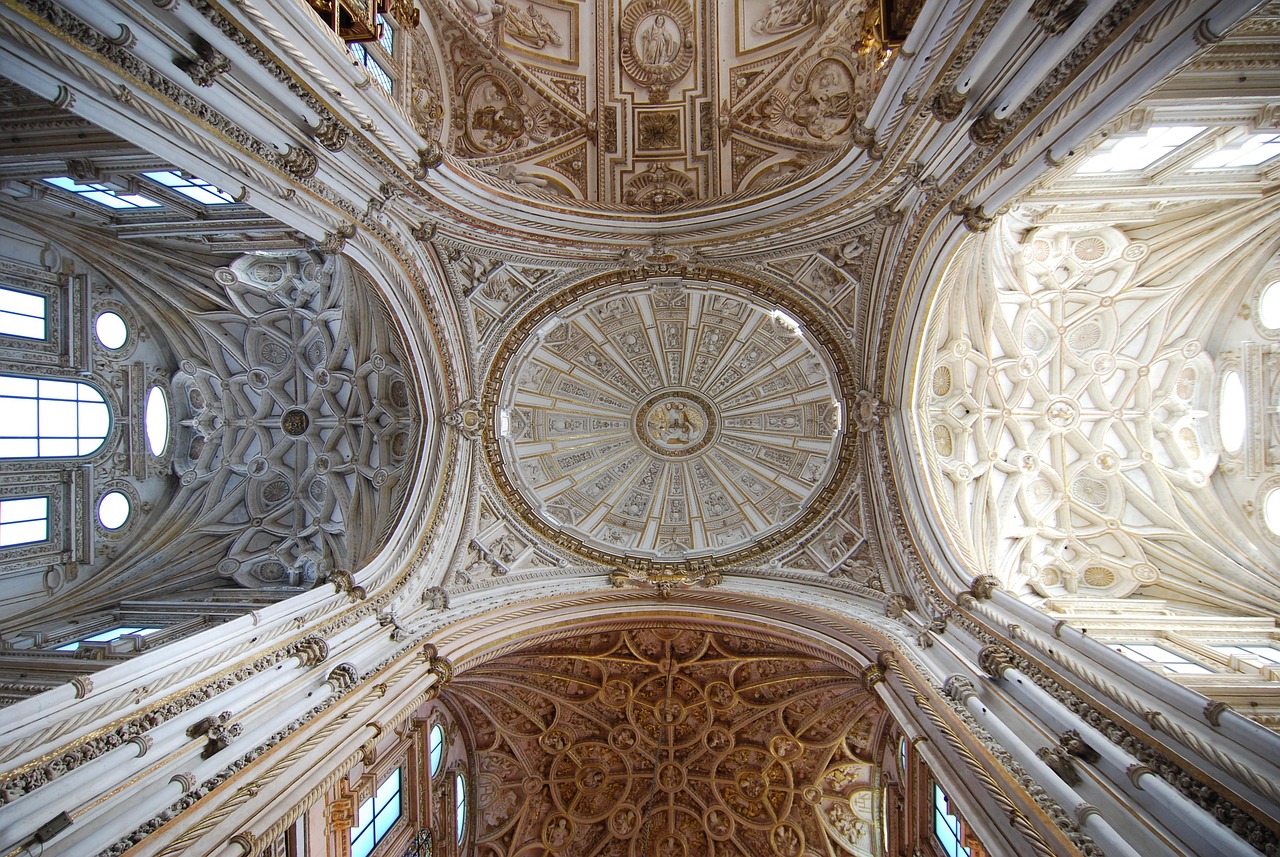
Few buildings in the world hold as many layers of history within a single roof as the Mezquita of Cordoba. Standing on the banks of the Guadalquivir river in southern Spain, this vast hall of red-and-white arches was for centuries one of the most important mosques of the Islamic world, and today it stands as a cathedral. For travellers tracing the footprints of Al-Andalus, it is the essential first stop.
A Mosque Born of a Golden Age
The foundation of the great mosque was laid in 786 by Abd al-Rahman I, the first Umayyad emir of Cordoba. Over the following centuries successive rulers enlarged and embellished it, turning it into the spiritual heart of a city that, at its peak, was among the largest and most learned in Europe. The endless forest of columns inside was designed to hold thousands of worshippers, and the rhythm of its arches still gives visitors the sense of stepping into something far bigger than themselves.
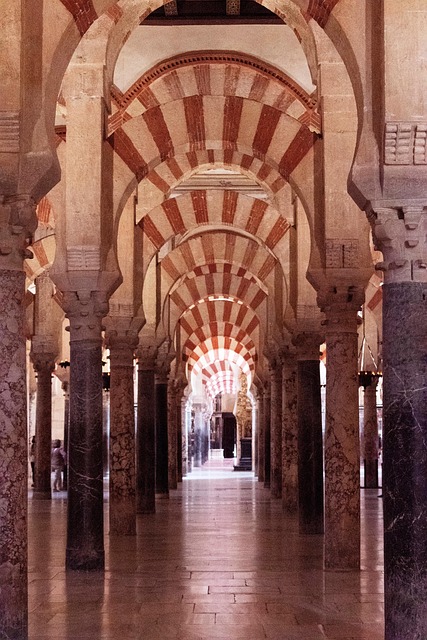
The Forest of Columns
The most famous feature of the building is its hypostyle prayer hall, where more than eight hundred columns of marble, jasper and granite support two tiers of striking horseshoe arches. The alternating bands of pale stone and red brick create an optical rhythm that seems to stretch endlessly in every direction. Many of the columns were reused from earlier Roman and Visigothic structures, a quiet reminder of the many civilisations that shaped this place.
Where Faiths Meet
After the Christian reconquest of Cordoba in 1236, the mosque was consecrated as a cathedral, and in the sixteenth century a Renaissance nave was raised in its centre. The result is a building unlike any other: Islamic arches framing a Christian altar, a single monument that carries the memory of more than one faith. UNESCO recognised its outstanding value by adding it to the World Heritage list in 1984. To walk through it is to read the history of medieval Spain written in stone.


