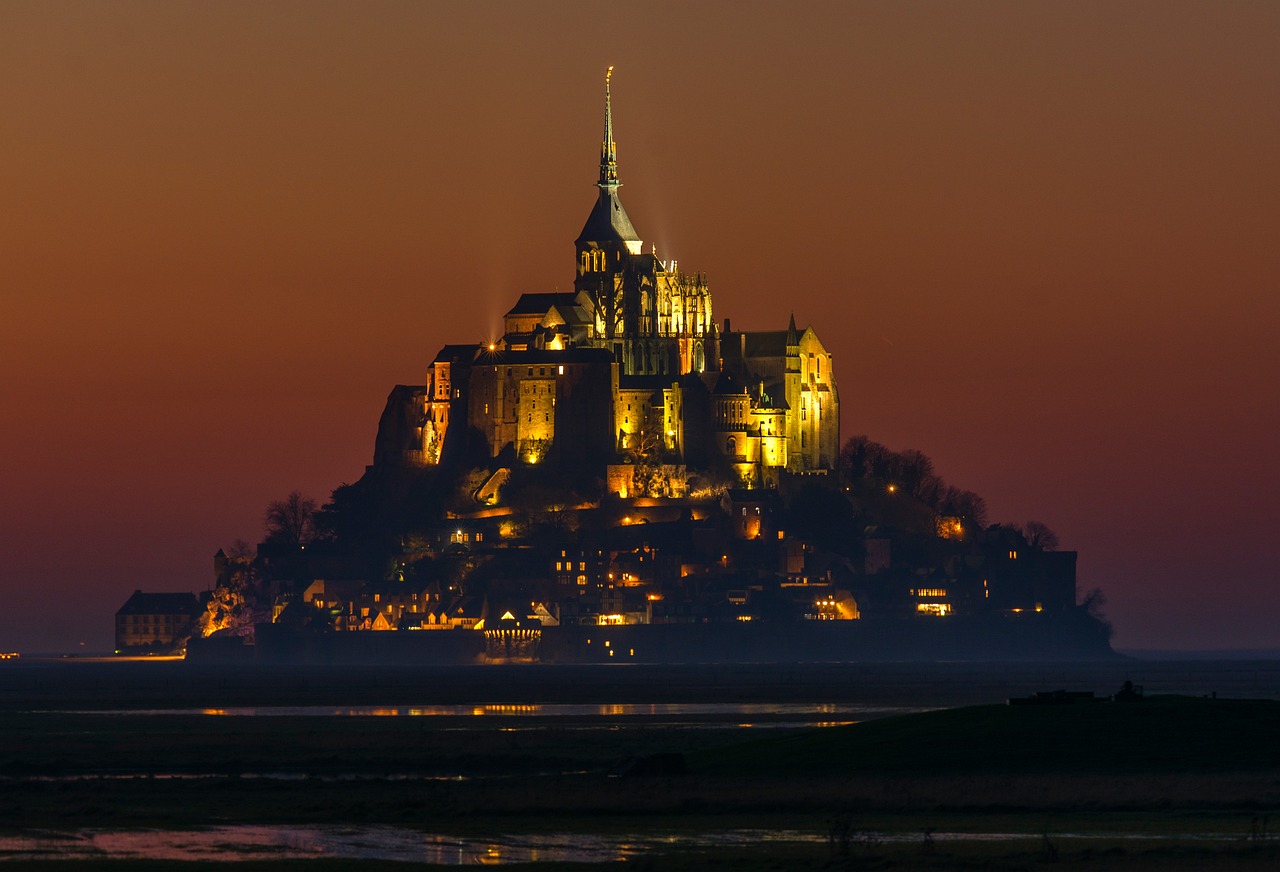
Mont-Saint-Michel is unlike any other pilgrimage site: a whole medieval town climbing a rock in the sea, ringed by some of the most powerful tides in Europe. Visiting it is part pilgrimage, part adventure. This guide looks at the tides, the village and the experience of reaching the abbey at the summit.
The Tides and the Crossing
The bay of Mont-Saint-Michel has an enormous tidal range, and the sea can sweep in and out across the sands with surprising speed. For centuries pilgrims crossed the dangerous flats on foot, and some were lost to the tides and quicksand – which gave the mount part of its awe. Today a bridge-causeway carries visitors safely to the island, but at the highest tides the mount still becomes a true island, surrounded by water.
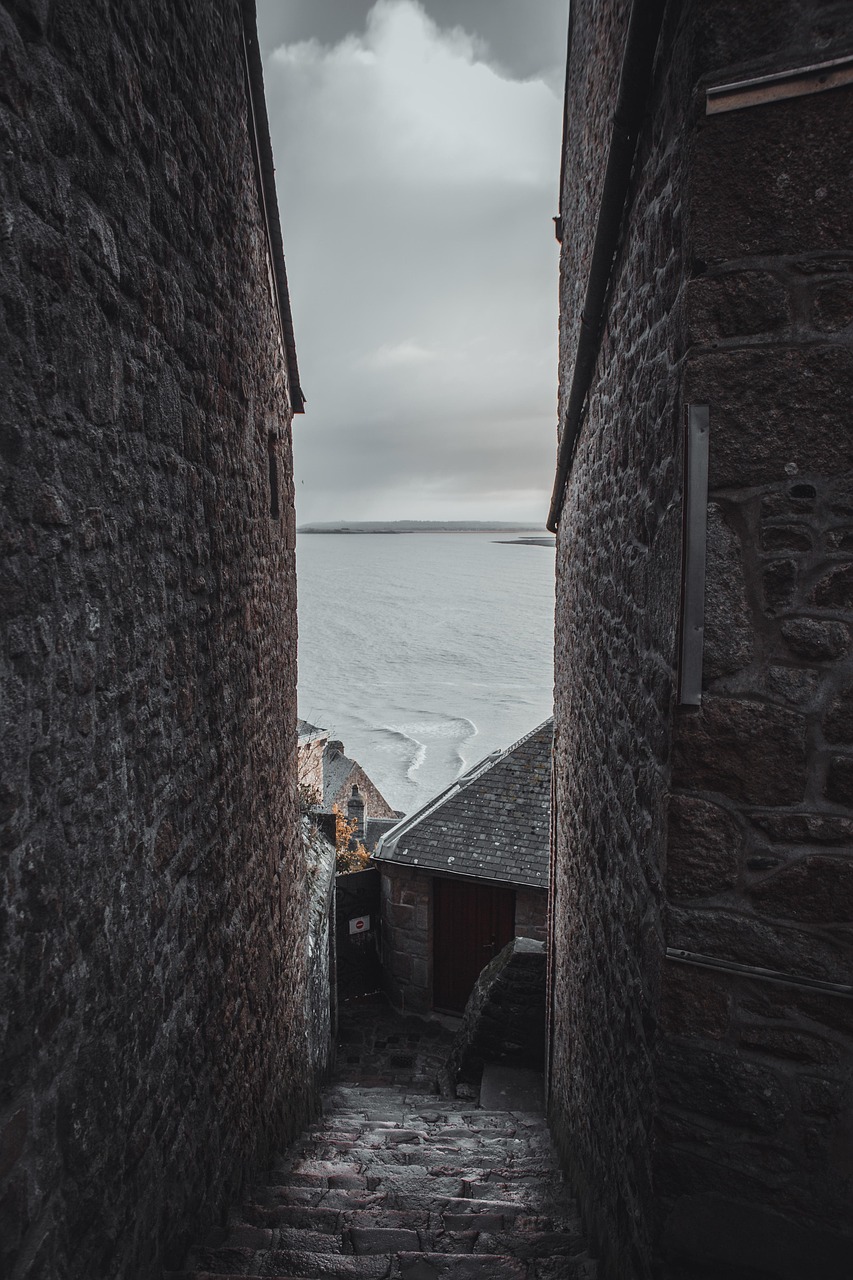
The Village and the Grande Rue
Once across, you enter the walled village through its gates and climb the Grande Rue, a single steep, winding street lined with old houses, shops, restaurants and small museums. It can be crowded in high season, but side stairways and the ramparts offer quieter routes and sweeping views over the bay. The climb upward, past the parish church, leads finally to the entrance of the abbey itself.
A Pilgrimage Through the Centuries
In the Middle Ages, pilgrims came from across Europe to honour Saint Michael, and the mount was nicknamed the “City of Books” for its great library. The pilgrim routes leading to it were known as the Chemins de Saint-Michel. That tradition continues: walkers still follow these paths today, and the abbey, once more home to a religious community, holds regular services amid the flow of visitors.
Making the Most of a Visit
Arriving early or staying late lets you experience the mount once the day-trippers have gone, when it is at its most magical. Comfortable shoes are essential for the steep, cobbled climb. Checking the tide times in advance adds drama to a visit – seeing the water surge around the rock is unforgettable – and the bay is beautiful at sunset, when the abbey glows above the sands.


