High in the eastern Himalaya, wedged between the giants of India and China, lies a kingdom that for centuries kept the world at arm’s length and that even now guards its identity with rare and deliberate care. This is Bhutan, known to its own people as Druk Yul, the Land of the Thunder Dragon, and the Bhutanese are one of the last peoples on earth to have carried a complete medieval Buddhist civilization, almost intact, into the twenty-first century. They are a small nation of fewer than a million people, scattered across deep valleys and towering ranges, yet they have given the world an idea that has travelled far beyond their mountains: that the true measure of a country’s success is not its wealth but the happiness of its people.
Bhutan sits at the eastern end of the great Himalayan arc, just beyond the lands of the Assamese of the plains below and not far from the hill peoples of India’s northeast such as the Naga. But where those neighbours were drawn into the vast machinery of British India and then the Indian republic, Bhutan alone among the Himalayan states kept its independence unbroken, never colonized, never absorbed, ruled by its own kings and its own monks. This is the story of how a remote mountain people built and preserved one of the most distinctive nations on earth.
- The Land of the Thunder Dragon
- A people of the high valleys
- The faith that shaped a nation
- The unifier and the age of the dzongs
- The Dragon Kings and a peaceful path to monarchy
- Gross National Happiness, a different measure of success
- The Tiger’s Nest and the sacred landscape
- The tsechu and the masked dances
- The gho, the kira, and the texture of daily life
- Chillies, cheese, and red rice
- The last Himalayan kingdom meets the world
- A small nation with a large idea
The Land of the Thunder Dragon
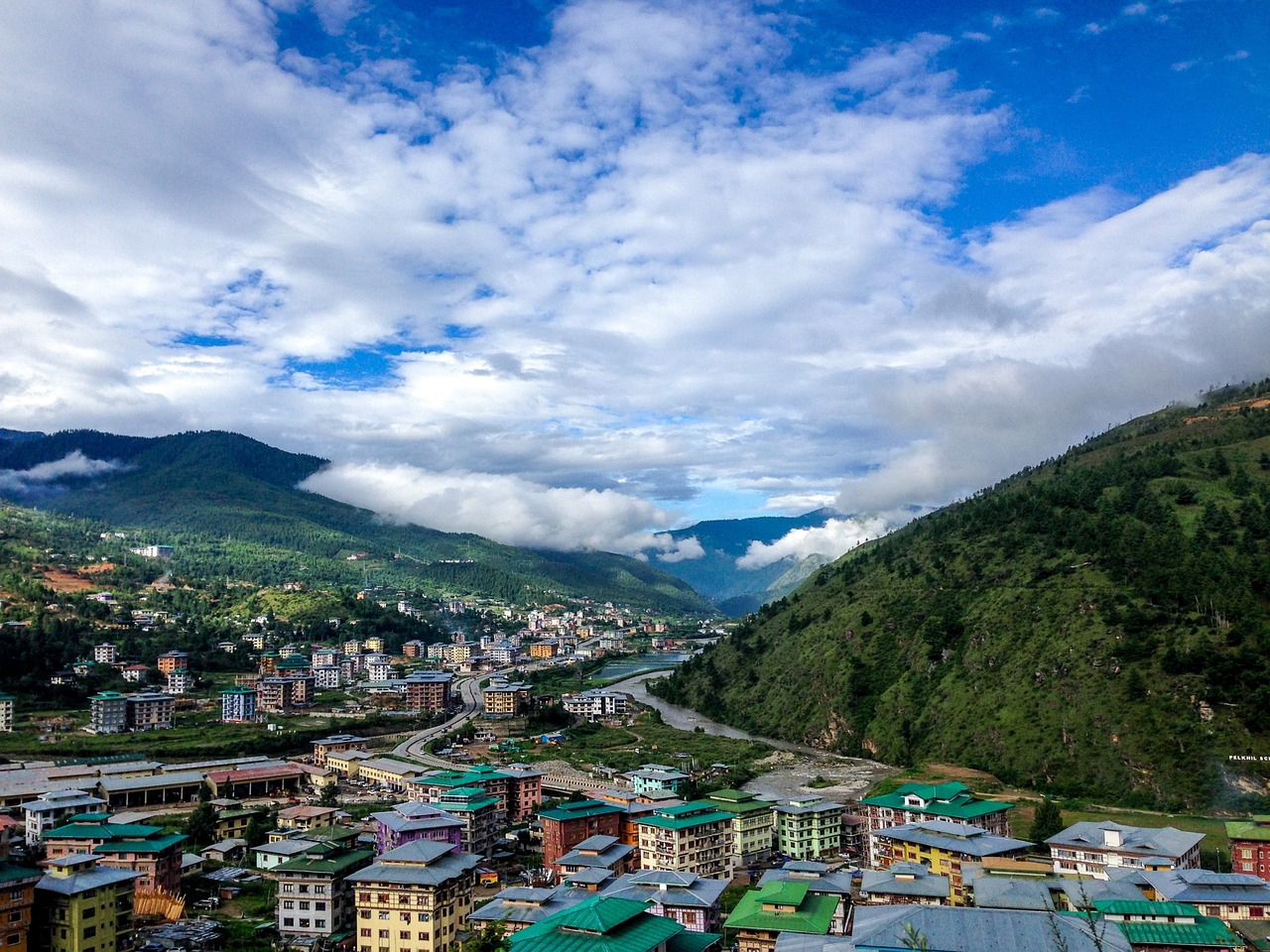
The geography of Bhutan is almost vertical. From the subtropical plains along its southern border the land rises in a few dozen kilometres to permanent snow and ice on the high peaks of the north, so that within a single small country one passes from steaming jungle to alpine meadow to glacier. Between these extremes lie the inhabited valleys, deep green clefts in the mountains where rivers run fast and cold and where the great fortress-monasteries and the towns and villages of the Bhutanese cluster on the valley floors and lower slopes.
This terrain has been the maker of Bhutanese history. The mountains divided the country into a patchwork of valleys, each somewhat isolated from the others, fostering local dialects and identities while making the land as a whole almost impossible to invade. The same ranges that walled Bhutan off from the world also shielded its Buddhist civilization from the upheavals that swept the plains, allowing it to develop and endure in a way few other places managed. Even the name, the Land of the Thunder Dragon, evokes the storms that roll through these high valleys.
Bhutan today is famous as one of the most pristine countries on earth. A huge share of its territory remains under forest, the constitution requires that most of the land stay forested in perpetuity, and the kingdom is one of the very few nations to be carbon negative, absorbing more greenhouse gas than it emits. The mountains that once isolated the Bhutanese now make them guardians of one of the last great wildernesses of Asia, home to tigers, snow leopards, and the rare black-necked crane.
A people of the high valleys

The Bhutanese are not a single uniform people but a blend of related groups bound together by faith, monarchy, and a shared way of life. The largest and most influential group are the Ngalop of the western and central valleys, whose culture and language set the national tone. To the east live the Sharchop, long-settled peoples of the eastern valleys, and in the south a population of Nepali origin, the Lhotshampa, who came as settlers and farmers. Across these groups stretch many local dialects, but the national language, Dzongkha, the tongue of the dzongs or fortresses, binds the country together.
Dzongkha belongs to the Tibetic branch of the Tibeto-Burman languages, closely related to the language of Tibet, and it is written in a graceful script descended from the same root. The cultural world of the Ngalop and the Bhutanese state more broadly is profoundly shaped by Tibet, from which came the religion, the script, the art, and much of the social order, even as Bhutan developed its own distinct national character separate from its great northern neighbour. The Bhutanese are, in a sense, the southern flowering of the Tibetan Buddhist world, grown into a nation entirely their own.
For most of their history the Bhutanese lived as farmers and herders in the valleys, growing rice and buckwheat and barley, keeping yaks on the high pastures and cattle lower down, and organizing life around the village, the family, and the local monastery. It was a self-sufficient mountain world, materially simple but rich in ritual, art, and meaning, and its rhythms still underlie Bhutanese life even as roads, schools, and the internet reach into the remotest valleys.
The faith that shaped a nation

To understand the Bhutanese is to understand that theirs is a Buddhist civilization in the fullest sense. The form of Buddhism they follow is Vajrayana, the tantric Buddhism of the Himalaya, brought from Tibet over many centuries and woven into every fibre of national life. Monasteries dot the valleys, prayer flags flutter on every ridge and bridge, prayer wheels turn at the touch of every passing hand, and the great religious festivals are the high points of the year. Religion in Bhutan is not a private matter set apart from public life; it is the very framework within which the nation understands itself.
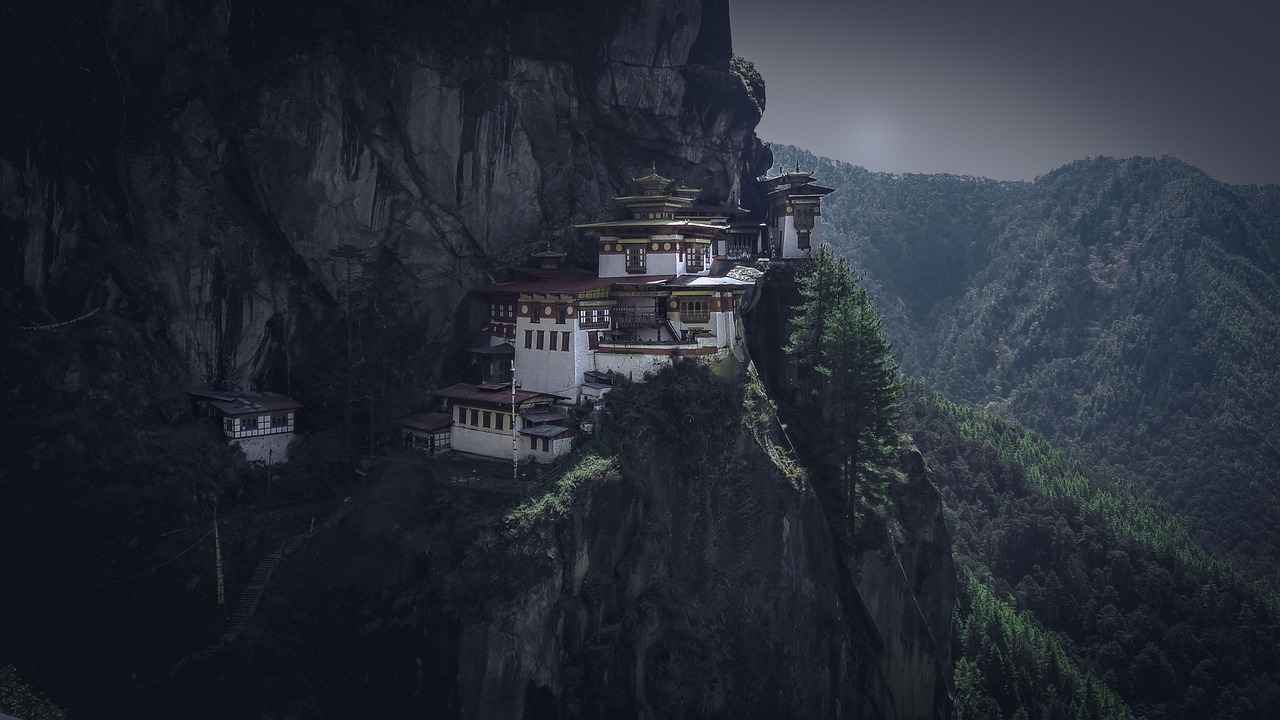
The figure who looms largest in the Bhutanese religious imagination is Guru Rinpoche, also called Padmasambhava, the great tantric master credited with bringing Buddhism to the Himalaya in the eighth century. Legend holds that he flew to Bhutan on the back of a tigress and meditated in a cave on a sheer cliff, the site that became the most sacred place in the country. Around such figures and stories the Bhutanese built a sacred geography, a landscape in which particular mountains, caves, lakes, and valleys are charged with spiritual power and pilgrimage.
This deep religiosity gives Bhutanese life a distinctive serenity and a strong sense of continuity with the past. The monastic body, the central clergy supported by the state, sits at the heart of the nation alongside the monarchy, and the two together, the spiritual and the temporal, have governed the country in a partnership that reaches back centuries. To be Bhutanese is, in large part, to be heir to this living Buddhist tradition.
The unifier and the age of the dzongs

Bhutan as a unified country was forged in the seventeenth century by a remarkable figure, a Tibetan lama and statesman who fled south into the valleys and there welded the scattered local powers into a single realm. He is remembered by the title Zhabdrung, and he is to Bhutan what a founding father is to other nations. Through a combination of religious authority, political skill, and military success against invaders from the north, he established a unified state, a code of law, and a system of government that fused spiritual and secular power.
His most visible legacy is the dzong. Across the valleys of Bhutan rise these great fortress-monasteries, massive whitewashed structures with sloping walls and golden-roofed towers, set commandingly at strategic points where rivers meet or valleys narrow. Each dzong served at once as a fortress against invasion, a seat of administration, and a monastery housing hundreds of monks. They are among the most magnificent works of architecture in the Himalaya, built without nails or drawn plans, and they remain the administrative and religious heart of each district to this day.
The system the Zhabdrung created, a dual government of an abbot for spiritual affairs and a temporal ruler for worldly ones, held the country together for two centuries. It was not always stable, and periods of internal strife followed, but the framework of dzong, monastic body, and unified law gave Bhutan an enduring identity. When the country eventually moved toward monarchy, it built upon this deep foundation rather than sweeping it away.
The Dragon Kings and a peaceful path to monarchy

At the beginning of the twentieth century Bhutan took a decisive turn. After a period of internal conflict, a powerful and respected governor was chosen in 1907 to become the first hereditary king, the first of the Wangchuck dynasty that has ruled ever since. The title taken by these monarchs, Druk Gyalpo, means Dragon King, and under their leadership Bhutan navigated the dangerous currents of the modern age, preserving its independence while cautiously opening to the outside world.
The achievement of the Dragon Kings was to modernize Bhutan without losing its soul. They built roads and schools and hospitals, abolished old forms of servitude, introduced their country to the world while strictly controlling the pace of change, and steered Bhutan to membership in the community of nations. Above all they did something almost unheard of in history: a monarch voluntarily gave away his own absolute power. In a move astonishing to outside observers, the king guided Bhutan to a democratic constitution and parliamentary elections, persuading at times a reluctant people to take up self-government.
This careful, top-down, deeply considered modernization is one of the most distinctive features of Bhutanese history. Where other monarchies clung to power until they were overthrown, Bhutan’s kings led their nation gently from medieval kingdom to constitutional monarchy and parliamentary democracy, all while keeping the throne respected and beloved. The result is a country that is at once modern and traditional, democratic and monarchical, open and protective.
Gross National Happiness, a different measure of success

No idea has carried Bhutan’s name further than Gross National Happiness. Coined by the fourth Dragon King, the concept holds that the proper goal of development is not merely economic growth but the holistic wellbeing of the people, and that a nation should measure its progress by the contentment, health, culture, and spiritual life of its citizens rather than by money alone. It was a radical notion when first proposed, and it has since drawn admiration and study from economists, governments, and thinkers around the world.
Gross National Happiness is not, as outsiders sometimes imagine, a vague slogan about smiling. It is a serious framework built on pillars such as sustainable development, environmental conservation, the preservation of culture, and good governance, and Bhutan has tried, imperfectly but earnestly, to weave these principles into actual policy. Decisions about roads, industry, tourism, and education are weighed against their effect on this broader wellbeing, and the protection of the environment and of Buddhist culture is written into the very constitution.
The philosophy flows directly from the Buddhist worldview of the Bhutanese, with its emphasis on contentment, balance, and the recognition that craving and endless accumulation do not bring peace. Whether or not Bhutan always lives up to its own ideal, the very fact that a nation should place happiness and harmony at the centre of its national purpose has made it a kind of moral exemplar, a small country whose biggest export may be an idea.
The Tiger’s Nest and the sacred landscape
If one place stands for Bhutan in the eyes of the world, it is Paro Taktsang, the Tiger’s Nest. This monastery clings impossibly to the face of a sheer cliff some nine hundred metres above the valley floor, its white walls and golden roofs seeming to grow out of the rock itself. It marks the cave where, according to legend, Guru Rinpoche meditated after flying to the spot on the back of a tigress, and it is the most sacred and most photographed site in the kingdom, reached only by a long, steep climb that is itself a pilgrimage.
But the Tiger’s Nest is only the most famous point in a landscape that the Bhutanese regard as sacred throughout. The whole country is dotted with monasteries, temples, hermitages, and holy caves, and the mountains, rivers, and forests are bound up with deities, guardian spirits, and the deeds of saints. Pilgrimage is woven into Bhutanese life, and the physical landscape is read as a spiritual one, in which every striking peak or hidden valley may carry sacred significance.
This sacred geography has practical consequences. Out of religious reverence for the mountains, Bhutan has forbidden the climbing of its highest peaks, so that some of them remain among the last great unclimbed summits on earth. The same reverence underlies the country’s fierce protection of its forests and wildlife. In Bhutan, conservation and devotion are not separate causes but two faces of a single way of seeing the world.
The tsechu and the masked dances

The great festivals of Bhutan are the tsechus, religious festivals held in the courtyards of the dzongs and monasteries to honour Guru Rinpoche and the triumph of the Buddhist faith. For several days the whole community gathers in its finest clothes to watch the cham, the sacred masked dances performed by monks in elaborate costumes and fearsome or beautiful masks. Each dance enacts a religious story, a victory of good over evil, a teaching about death and rebirth, and simply to witness them is believed to bring blessing and merit.
The tsechu is at once a profound religious occasion and the great social event of the year. Families travel from far valleys, spread out picnics, meet relatives, and watch the dances that have been performed in almost the same form for centuries. Comic figures called atsaras move through the crowd, the great appliqued religious banners are unfurled at dawn, and the whole spectacle binds the community to its faith and to one another in a way that few modern entertainments can match.
These festivals are also a powerful expression of the Bhutanese determination to keep their culture alive. In an age when global media reaches even remote valleys, the tsechu, the masked dance, and the gathered community in traditional dress assert, year after year, the living vitality of a tradition that elsewhere in the Himalaya has often faded. The dances are not museum pieces but the beating heart of a culture still very much in motion.
The gho, the kira, and the texture of daily life
One of the most visible marks of Bhutanese distinctiveness is dress. Bhutan is one of the few countries to require its citizens to wear traditional clothing in public and official settings, and the result is a nation where the everyday street scene looks strikingly different from anywhere else. Men wear the gho, a knee-length robe tied at the waist with a belt, folded to create a large pouch at the front, while women wear the kira, an elegant ankle-length dress of beautifully woven cloth. The patterns and fabrics signal region, occasion, and status.
This insistence on traditional dress is part of a wider, deliberate policy of cultural preservation that the Bhutanese call driglam namzha, a code of traditional values, etiquette, and conduct. It governs not only clothing but manners, the proper way to behave in a dzong, the etiquette of respect toward elders and monks, and the customs of hospitality. To some outsiders this looks like rigidity; to the Bhutanese it is the conscious maintenance of an identity they are determined not to lose to the homogenizing tide of globalization.
Daily life still moves to the rhythm of valley and village for most Bhutanese, even as the towns grow. Farming, the care of animals, the round of religious observance, the raising of children steeped in both modern schooling and traditional faith, all continue in a country that has chosen, more than almost any other, to modernize on its own terms and at its own pace. The gho and the kira are the everyday emblems of that choice.
Chillies, cheese, and red rice
Bhutanese food is, like the country, bold and unmistakably its own, and its defining feature is an almost fierce love of chillies. In Bhutan the chilli is treated not as a spice but as a vegetable in its own right, eaten by the handful, and the national dish, ema datshi, is a stew of whole chillies cooked in a sauce of the local farmhouse cheese. To outsiders it can be startlingly hot; to the Bhutanese it is the very taste of home, and no meal feels complete without its fiery, cheesy heat.
Around this signature dish the cuisine is built on the staples of the high valleys. Red rice, a nutty, reddish grain grown in the terraced paddies, is the foundation of most meals, accompanied by stews of cheese and chilli, dried and fresh meats, river fish, buckwheat noodles and pancakes in the higher regions, and the ever-present butter tea and, on festive occasions, the local rice and grain spirits. It is hearty mountain food, suited to a cold climate and a hardworking life.
Food in Bhutan, as everywhere in the Himalaya, is bound up with hospitality and religion. Offerings are made at the household altar, monks are fed as an act of merit, and the sharing of food binds family and community. The cuisine has remained remarkably untouched by outside influence, another small but telling sign of a people who have guarded their own ways with unusual success.
The last Himalayan kingdom meets the world

For most of its history Bhutan was almost entirely closed to the outside world, and even today it manages its opening with extraordinary care. The country famously had no television or internet until the very end of the twentieth century, and it controls tourism through a policy of high value and low volume, requiring most visitors to pay a daily fee that funds free healthcare and education for citizens and limits the crowds. Bhutan has watched what mass tourism and unchecked development did to other parts of the Himalaya, and it has chosen a different road.
This caution has not been without cost or controversy. The same drive to define and protect a single national culture led, in the late twentieth century, to painful tensions with the Nepali-speaking population of the south, many of whom left or were displaced in one of the region’s difficult and unresolved chapters. Bhutan, like its neighbours the Meitei and the Naga, has had to wrestle with the hard questions of who belongs and how a small people defines itself, and not every answer has been gentle.
Yet the overall trajectory has been one of remarkable success at preserving identity while embracing change. Young Bhutanese now carry smartphones, study abroad, and engage with global culture, and many leave for opportunities elsewhere, even as the monarchy, the monasteries, the dzongs, and the festivals continue to anchor national life. Bhutan is performing a delicate balancing act, opening just enough to thrive in the modern world without dissolving into it.
A small nation with a large idea

The Bhutanese are a small people who have achieved something that has eluded far larger and richer nations: they have entered the modern world without losing themselves. They preserved their independence when colonial empires swallowed the lands around them, kept a complete Buddhist civilization alive into the present age, moved from medieval kingdom to democracy at the gentle urging of their own kings, and gave the world the radical and hopeful idea that a nation’s purpose is the happiness of its people.
Their kingdom sits at the eastern gate of the Himalaya, neighbour to the valley of the Assamese and to the hill peoples of India’s northeast, yet it stands apart, a sovereign Buddhist realm of dzongs and dragons that answers to no one but itself. In an age of homogenization, the Bhutanese have made a deliberate, conscious choice to be different, to value forest over factory, contentment over accumulation, and tradition over fashion.
Whether so small and so deliberately protected a society can hold its course as the wider world presses ever closer is a question only time will answer. But the Bhutanese have already proved more resilient and more original than almost anyone expected, a mountain people who turned isolation into independence and who carry, in their thunder-dragon kingdom, a quiet challenge to the rest of the world: to ask not only how rich a nation is, but how happy, how harmonious, and how whole.
You May Like
The Damara, an Ancient People of Namibia


2 thoughts on “The Land of the Thunder Dragon, How Bhutan Chose Happiness Over Gold”
Comments are closed.