High on the southern slopes of the Annapurna massif, in a country of terraced fields and snow-capped horizons, live the Gurung, who call themselves Tamu. One of the best-known Tibeto-Burman peoples of Nepal, they have given the world some of its most famous soldiers and have built a culture rich in song, dance, and the rituals of the shaman.
Like their neighbours the Tamang to the east, the Gurung belong to the broad family of hill peoples who carried Tibetan religion and language southward into the middle ranges of the Himalaya. Yet their history took a distinctive turn, bound up with herding, with high mountain trade, and above all with the martial tradition that made the name Gurkha known around the globe.
This profile traces the Gurung along the same lines as our other studies in this series: their origins and language, the Annapurna homeland, their layered religion, the famous Rodi and Ghatu of their social and musical life, the food of the hills, the Gurkha legacy, and the migration that is reshaping their world today.
- Origins and the Name Tamu
- Language, the Gurung Tongue
- The Homeland in the Annapurna Hills
- Religion, Buddhism, Bon and the Shaman
- Society, Clans and the Rodi
- Festivals and the Ritual Year
- Music and the Ghatu Dance
- Dress and Ornament
- Food of the Middle Hills
- The Gurkha Tradition
- Livelihood, Herding and Migration
- The Gurung Today
Origins and the Name Tamu
The Gurung call themselves Tamu, a name they prefer to the term Gurung by which outsiders have long known them, and which most likely entered Nepali from a neighbouring language. The distinction matters to the community, for Tamu carries the weight of self-definition while Gurung is the label of administration and the wider society.
Like the other Tibeto-Burman peoples of the middle hills, the Gurung trace their ancestry to migrations that moved south from the Tibetan plateau in the distant past, settling the high valleys and ridges of central Nepal. Oral tradition, clan genealogy, and the chants of ritual specialists preserve the memory of these movements where written records are silent.
Their early history, like that of most hill peoples, was set down by others rather than by themselves, and must be pieced together from language, ritual, and the testimony of song. What is clear is that the Gurung established themselves firmly on the southern flank of the Annapurna and Lamjung Himal, where the demands of high pasture and steep field shaped a distinctive way of life.
That way of life sat at a cultural crossroads between the Buddhist, Tibetan world above and the Hindu kingdoms of the valleys below, and the Gurung, like their Tamang neighbours, drew on both while keeping an identity recognisably their own.
The Tamu themselves preserve elaborate origin myths, recited by ritual specialists, that root the people in a sacred geography of mountains, rivers, and ancestral migration. These narratives are not idle folklore but a living charter of identity, performed at the great rites of death and renewal, and they bind the scattered clans into a single people with a shared sense of where they came from and who they are.
Language, the Gurung Tongue

The Gurung speak a Tibeto-Burman language of the Tamangic group, tonal and closely related to Tamang and to the speech of other central-hill peoples, yet distinct enough to be mutually unintelligible with them and entirely separate from the Indo-Aryan Nepali of the national mainstream.
For most of its history the language was carried in speech alone, its vast oral literature of myth, ritual chant, and song held in the memory of elders and ritual specialists. Regional differences in dialect developed across the scattered valleys of the Gurung homeland.
In modern times there have been efforts to write the language and to teach it, using both Devanagari and scripts associated with the community’s Tibetan heritage, and Gurung now appears in cultural publications, recordings, and local media even as Nepali dominates schooling and public life.
The maintenance of the language has become a marker of Tamu identity, especially as migration and education draw younger Gurung toward Nepali and English. To keep the tongue is, for activists, to keep the ritual and the worldview that live within it.
Scholars value Gurung highly precisely because its oral tradition preserves archaic ritual language used by the pachyu and klihbri, a register distinct from everyday speech and carrying religious knowledge of great age. The survival or loss of this priestly vocabulary, more than ordinary conversation, is what most concerns those working to document and revitalise the tongue.
The Homeland in the Annapurna Hills
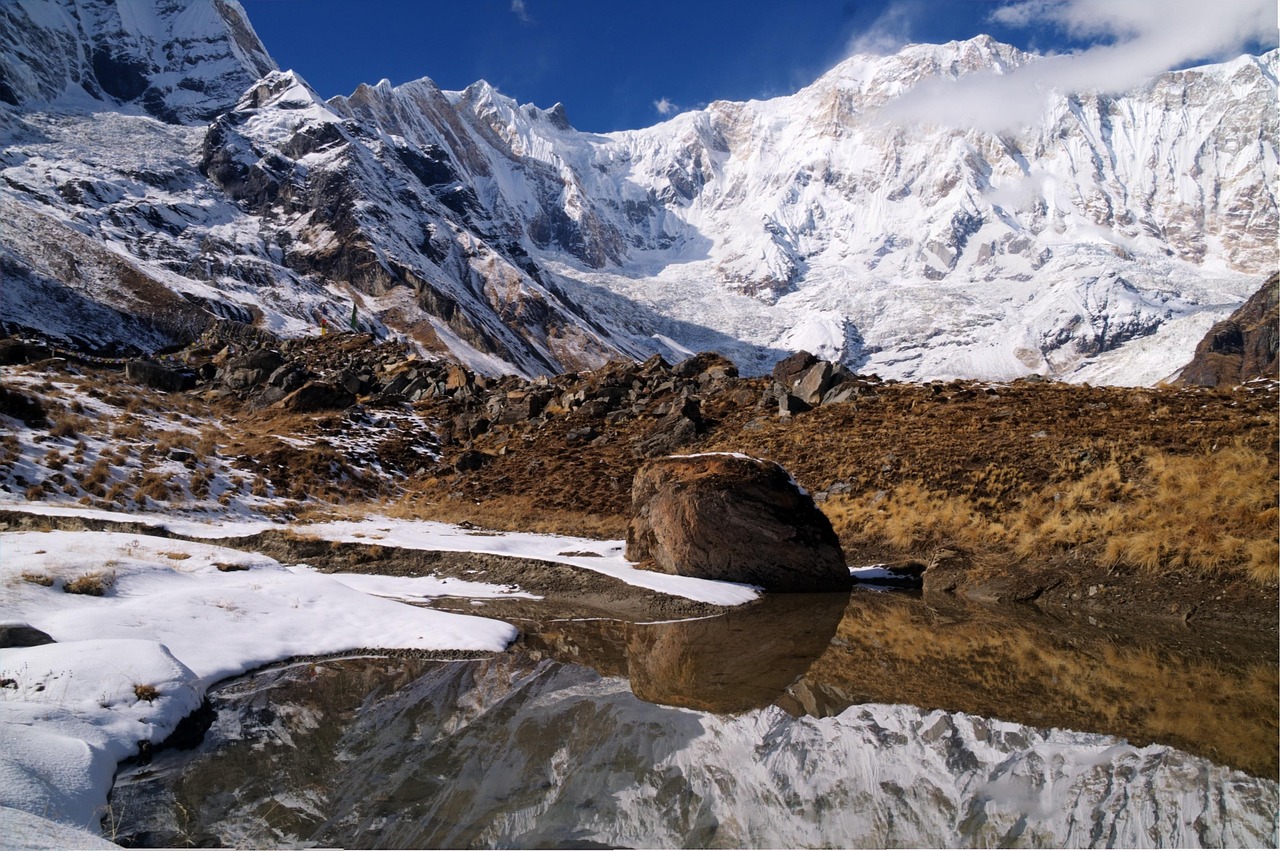
The Gurung heartland lies in the hills of central Nepal, on the southern slopes of the Annapurna and Lamjung Himal, in districts such as Kaski, Lamjung, Gorkha, Manang, Syangja, and Tanahun. The city of Pokhara, set beneath the towering Annapurna and the fishtail peak of Machapuchare, sits at the edge of this country and serves as its urban centre.
Their villages occupy the middle and upper slopes, in a zone suited to terraced grain and, higher up, to the grazing of sheep and goats on alpine pasture. Above the settlements rise some of the highest mountains on earth; below them the land falls away toward the warmer valleys, giving the Gurung command of a vertical world of many climates.
This is also some of the most famous trekking country in the world. The trails to the Annapurna Sanctuary and around the Annapurna circuit run straight through Gurung villages, and the trekking economy has become woven into local life as deeply as farming and herding once were.
The mountains are not merely scenery but the foundation of Gurung existence, setting the rhythm of transhumant herding, defining the routes of old trade, and shaping a culture attuned to high pasture, deep valley, and the long vertical journeys between them.
Within this vertical world the Gurung historically practised a finely tuned use of altitude, planting grain on the terraces, grazing flocks on the high meadows in summer, and gathering timber and fodder from the forest belt between. Each village commanded a slice of the mountainside from valley to pasture, an arrangement that made communities largely self-sufficient and tied them intimately to the particular slope on which they lived.
Religion, Buddhism, Bon and the Shaman

Gurung religion is a characteristic Himalayan layering of traditions. Many Gurung follow Tibetan Buddhism, with its monasteries, prayer flags, and mani stones, while older indigenous practices linked to Bon and to shamanism remain powerfully alive beneath and alongside the Buddhist surface.
Central to this older stratum are the traditional ritual specialists, the priests known as the pachyu and the klihbri, who preside over the great rites of the community, above all the elaborate ceremonies for guiding the souls of the dead. Their chants preserve a cosmology and a ritual knowledge of great antiquity.
Buddhist lamas and indigenous shamans coexist rather than compete, each handling different layers of the spiritual world. A funeral or a healing may call upon both, weaving canonical Buddhism and ancestral practice into a single fabric, exactly as among the neighbouring hill peoples.
Some Gurung have also absorbed Hindu influences from the surrounding society, and the precise balance of Buddhist, Bon, shamanic, and Hindu elements varies from valley to valley. The persistence of the pachyu and klihbri, however, marks the deep distinctiveness of Gurung religious life.
The death rites in particular reveal how completely the indigenous and Buddhist worlds are intertwined. The pachyu may chant the ancestral journey of the soul while a lama reads Buddhist scripture nearby, each addressing a different dimension of the same event, and the family sees no contradiction in calling on both, for in the Gurung understanding the welfare of the dead requires the full resources of every tradition the community holds.
Society, Clans and the Rodi

Gurung society is organised through patrilineal clans, traditionally grouped into divisions that ordered status and marriage. Clan membership locates each person within the community and governs ritual duty, alliance, and the obligations of mutual aid that bind households together.
One of the most celebrated Gurung institutions is the Rodi, a village association in which young people gathered in the evenings to sing, dance, work, and socialise, and through which courtship and the learning of song and tradition took place. The Rodi was a school of culture and a path to marriage as much as a place of entertainment.
As in other hill societies, cooperative labour, the authority of elders, and the bonds of clan and kin held the village together and managed the demanding agricultural and pastoral calendar. These internal structures provided order and identity in communities long distant from the centres of state power.
Migration, schooling, and the cash economy have strained the old institutions, and the classic Rodi in particular has faded, but the underlying logic of clan, reciprocity, and kin obligation continues to shape Gurung social life even across great distances.
The Rodi deserves special note as one of the most distinctive social institutions in the entire Himalaya. More than a courtship house, it functioned as a cooperative labour group, a venue for the transmission of song and etiquette, and a mechanism by which the young were integrated into adult village society under the loose supervision of elders, blending work, learning, and romance into a single institution.
Festivals and the Ritual Year

The Gurung ritual year blends Buddhist holy days with festivals particular to the community. Lhosar, the new year of the Tibetan calendar, is a major celebration, and the Gurung mark Tamu Lhosar as their own new year with feasting, dancing, and the renewal of community bonds.
The most distinctive observances are the great death rituals, the elaborate funerary ceremonies led by the pachyu and klihbri that guide the deceased through the afterlife. These rites, sometimes unfolding over several days, are among the most striking expressions of Gurung religious culture.
Festivals and rites of passage gather the dispersed community, repay the bonds of hospitality, and transmit song, dance, and ritual knowledge to the young. In a world of growing migration, these gatherings have become vital threads pulling people back to the ancestral village.
Public celebration of Tamu Lhosar, in Pokhara, in Kathmandu, and in the diaspora, has also become an assertion of identity, a way for a scattered people to reaffirm their membership in the Gurung world.
Beyond the great calendrical and death rituals, the agricultural year is studded with smaller observances tied to planting, harvest, and the movement of herds, moments when households make offerings to local deities and the spirits of the land. These quieter rites, less visible to outsiders than Tamu Lhosar, are the everyday religion through which the Gurung maintain their relationship with the mountain that sustains them.
Music and the Ghatu Dance
Music and dance lie at the heart of Gurung culture, and the most famous form is the Ghatu, a ritual dance performed by young girls who, in a trance-like state, enact an ancient royal legend over long hours of song. The Ghatu is both entertainment and sacred drama, tied to the ritual calendar.
Alongside the Ghatu stand other dances and a rich tradition of song that once filled the evenings of the Rodi, where young people sang in answer to one another and learned the melodies that carried the community’s stories and sentiments.
As with the neighbouring peoples, the themes of Gurung song range across love, labour, the mountains, soldiering, and the pain of separation, the last sharpened by generations of military service and migration far from home.
These performances are more than art; they are vehicles of memory and identity, carrying myth, history, and emotion from one generation to the next, and they now feature prominently in the public cultural events through which the Gurung assert their heritage.
The Ghatu in particular is remarkable for its length and intensity, with the young dancers entering a trance and performing the legend over many hours, sometimes across more than a day, accompanied by the singing of older men who know the sacred text. Few performances in the region so completely fuse dance, drama, religion, and communal participation into one extended ritual event.
Dress and Ornament
Traditional Gurung dress suits the cool hill climate and the textile traditions of the Himalaya. Women have worn wrapped skirts, blouses, and shawls, often with heavy gold and coral ornaments and distinctive jewellery, while men wore the hill costume of labeda-suruwal, a cap, and a waistcoat, with woollen garments for the heights.
As elsewhere, ornament marked status, wealth, and married life and served as a store of family value, while woven woollen goods—blankets, bags, carrying straps—answered the practical needs of mountain living and herding.
Everyday wear today is largely modern and factory-made, and the older costume has become the dress of festivals, weddings, and cultural performance, where it is worn with conscious pride as a badge of Tamu identity.
The bright traditional dress of the Ghatu dancers and of Tamu Lhosar celebrations has become one of the most visible public symbols of the Gurung, a deliberate display of heritage in a changing world.
The coral and gold worn by Gurung women is especially prized, often passed down through generations as both heirloom and family treasury, and the particular forms of necklace and earring can signal a woman’s village, clan, and status to those who know how to read them. In this way dress and ornament functioned as a silent language of belonging long before any of it was written down.
Food of the Middle Hills
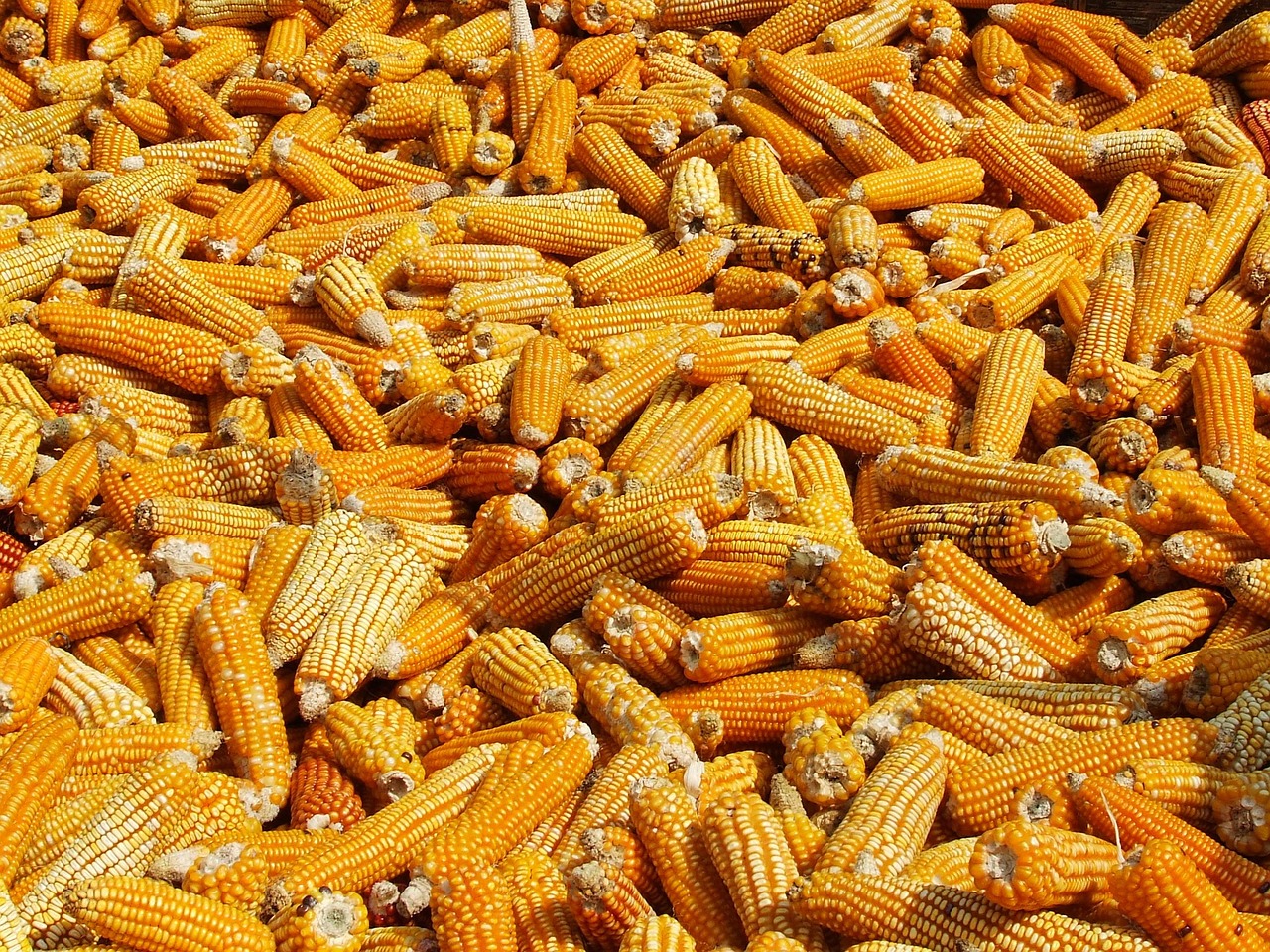
The Gurung table is built on the grains of the middle hills—maize, millet, and rice where it grows—eaten with lentils, seasonal greens, and potatoes in hearty dishes suited to the cool climate. Maize hung to dry on village houses is a familiar sight across the homeland.
Dairy and meat from herds of sheep, goats, and cattle supplement the diet, a natural reflection of the pastoral side of Gurung life, while millet is brewed into the local beer and spirits that feature in hospitality and ritual.
Food is bound up with religion and kinship, as offerings accompany worship and shared meals at festivals and funerals renew the bonds of clan and community. The mountain larder reflects both the terraced field and the high pasture.
In the trekking villages of the Annapurna region, Gurung cooking has also met the wider world, as lodges serve both traditional hill fare and the dishes expected by visitors, another sign of how deeply tourism has entered local life.
The Gurkha Tradition

No aspect of Gurung life is more famous than the martial tradition that made them, alongside a few other hill peoples, the backbone of the legendary Gurkha regiments. From the early nineteenth century, when their fighting qualities impressed the British, Gurung men were recruited in large numbers into Gurkha units.
Service as a Gurkha brought income, pensions, prestige, and a route to the wider world that transformed the economy and society of the Gurung hills. Remittances and pensions from military service have for generations been a mainstay of many villages, funding houses, schooling, and land.
The tradition continues today in the Gurkha regiments of the British and Indian armies and in Nepal’s own forces, and the figure of the Gurkha soldier remains a powerful element of Gurung identity and pride, celebrated in song and story.
Yet the same tradition drew generations of young men away from home for long years of service abroad, a pattern of absence and return, of separation and remittance, that prefigured the wider labour migration now reshaping Gurung life.
The word Gurkha itself derives from Gorkha, the hill principality whose ruler unified Nepal in the eighteenth century, and the Gurung were among the peoples whose soldiers filled the armies of that expansion before later serving foreign powers. The martial reputation thus reaches back before the British connection, into the very founding of the modern Nepali state, giving the tradition deep historical roots in the Gurung homeland.
Livelihood, Herding and Migration

Traditional Gurung livelihood combined the farming of terraced hillsides with the herding of sheep and goats on high pasture, a transhumant pattern that moved flocks up and down the mountain with the seasons. Trade across the high passes added another strand to the hill economy.
To these older pursuits were added, over two centuries, the income from military service, and more recently the earnings of the trekking and tourism industry centred on Pokhara and the Annapurna trails, where Gurung families run lodges and work as guides and porters.
Labour migration to the cities and abroad, to the Gulf, to Malaysia, and to the West, now sends remittances that sustain countless households, continuing in civilian form the long Gurung experience of earning a living far from the home village.
This dependence on income from elsewhere has raised living standards but hollowed out villages of their young, leaving fields and pastures harder to work and the old self-sufficient hill economy increasingly a thing of memory.
The seasonal movement of flocks to high pasture, once a defining feature of Gurung life, has declined sharply as herding gives way to remittance and tourism, and with it has faded a whole body of knowledge about pasture, weather, and the high country. The trekking lodge has in many villages replaced the shepherd’s hut as the symbol of how the Gurung make their living from the mountains.
The Gurung Today

Today the Gurung are a prominent and relatively prosperous people within Nepal, with strong communities in the Annapurna hills and Pokhara, in Kathmandu, and in a far-flung diaspora shaped by generations of military service and modern migration that reaches into Britain, Hong Kong, and beyond.
Cultural revival is active and visible, in the promotion of the language, the public performance of the Ghatu and other dances, the celebration of Tamu Lhosar, and the work of ethnic associations asserting the rights and recognition of the Tamu people. Like the Tamang and the other peoples of the hills, the Gurung balance full participation in national life with pride in a distinct heritage.
The challenges ahead echo those of their neighbours: how to carry language, ritual, and the institutions of village life into a mobile, globalised world, when the very income that has lifted the community also empties its villages and pressures its traditions.
In the trance-songs of the Ghatu, the chants of the pachyu, the bearing of the Gurkha soldier, and the bright festivals of Tamu Lhosar, the Gurung continue to tell a story rooted in the high pastures of the Annapurna—the story of a mountain people who carried their culture to the ends of the earth and still find their way home.
The Gurung experience also illustrates a wider Himalayan paradox, that the peoples best able to send their members out into the world are often those whose home culture comes under the greatest pressure. Prosperity earned abroad funds the very schooling and migration that draw the young away from language and ritual, so that cultural revival becomes not a luxury but a conscious necessity for a community determined to endure.
You May Like
The Damara, an Ancient People of Namibia