In the highlands of northern Ethiopia stand rows of towering carved stone monoliths, the tallest of which once rose over thirty metres. These are the stelae of Aksum, markers of the tombs of one of the great powers of the ancient world, a kingdom that traded with Rome and India and became one of the first states on earth to adopt Christianity.
The Kingdom of Aksum was a African superpower whose influence stretched across the Red Sea into Arabia. Its monuments, coins and churches reveal a wealthy, literate and deeply religious civilisation that shaped the history and faith of Ethiopia to this day.

Table of Contents
- The Ancient Kingdom of Aksum
- A Power of the Red Sea Trade
- The Great Stelae of Aksum
- Engineering the Giant Obelisks
- Royal Tombs Beneath the Stelae
- The Coming of Christianity
- The Church of Mary of Zion and the Ark
- Coins and the Reach of Aksum
- Decline and Legacy
- The Returned Obelisk and UNESCO
- Nearby Places
- Closing Thoughts
The Ancient Kingdom of Aksum
Aksum arose in the highlands of the Horn of Africa and reached its height between roughly the first and seventh centuries AD. From its capital it ruled a wide territory and dominated the trade of the region.
So important was it that a Persian writer of the third century ranked Aksum among the four greatest empires of the world, alongside Rome, Persia and China. Its power rested on control of trade, fertile highlands and a strong monarchy.

A Power of the Red Sea Trade
Aksum’s wealth flowed from commerce. Through its Red Sea port it exported ivory, gold, incense and other African goods, and imported luxuries from the Roman world, Arabia and as far away as India.
This trade linked the highlands of Ethiopia to a vast network stretching across the Indian Ocean and the Mediterranean. Aksum became a meeting point of African, Mediterranean and Asian worlds.
The Great Stelae of Aksum
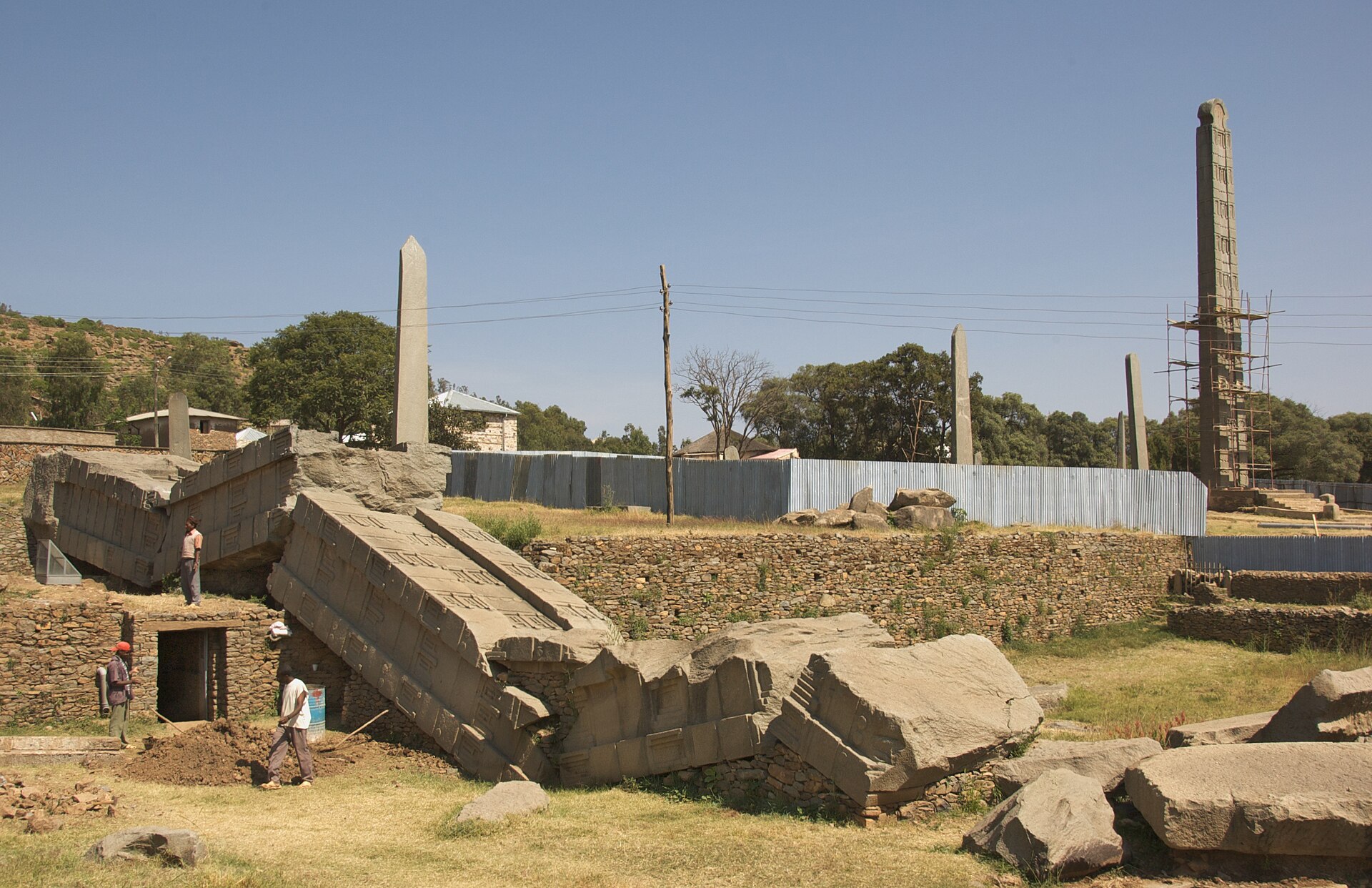
The most spectacular monuments of Aksum are its giant stelae, single pieces of granite carved to resemble tall multi-storeyed buildings, complete with false doors and windows. They marked the underground tombs of the kingdom’s rulers.
Several still stand in the main stelae field, while others have fallen. Carved and raised without the help of the wheel as we know it, they are among the largest single stones ever quarried and erected by human beings.

Engineering the Giant Obelisks
The largest stele of all, now lying broken on the ground, would have stood over thirty metres tall and weighed several hundred tonnes. It may have fallen while being raised, so ambitious was the attempt.
How the Aksumites quarried, transported and erected such colossal stones remains a subject of admiration and study. The effort involved reflects both the engineering skill and the immense resources of the kingdom.
Royal Tombs Beneath the Stelae
Beneath and around the stelae lie elaborate underground tombs, cut into the rock and reached by stairways and passages. These were the burial places of the kings the stelae commemorated.
Some are grand multi-chambered structures with finely built stone doorways. Though many were robbed long ago, they still testify to the wealth and status of Aksum’s rulers and their belief in an elaborate afterlife.

The Coming of Christianity
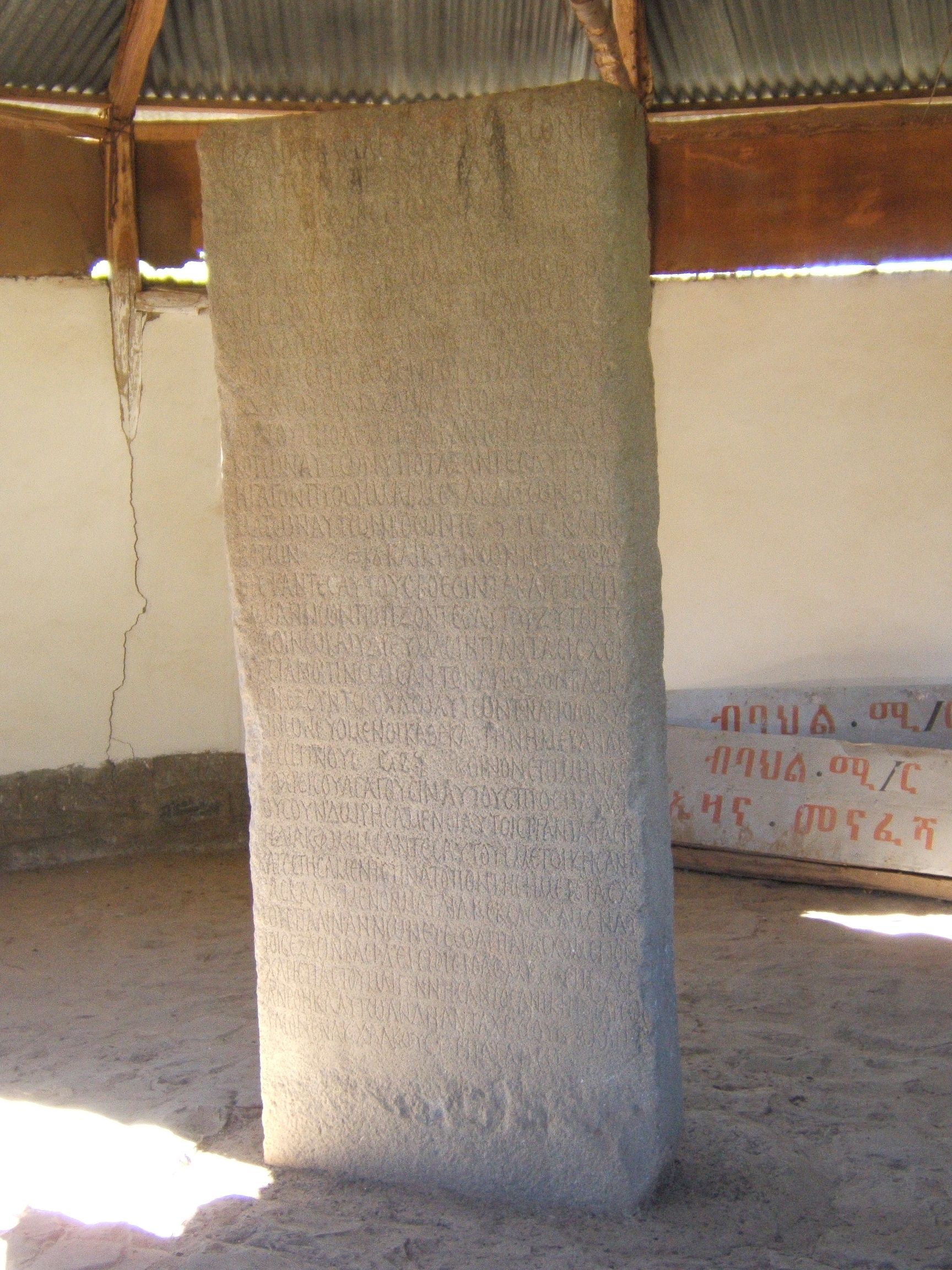
In the fourth century AD, King Ezana of Aksum converted to Christianity, making Aksum one of the very first kingdoms in the world to adopt the faith officially. The change is recorded on inscribed stones and reflected in the kingdom’s coins.
The famous Ezana Stone, inscribed in three scripts, marks this pivotal moment. From Aksum, Christianity spread through the highlands and became the enduring faith of Ethiopia, giving rise to one of the oldest churches on earth.
The Church of Mary of Zion and the Ark
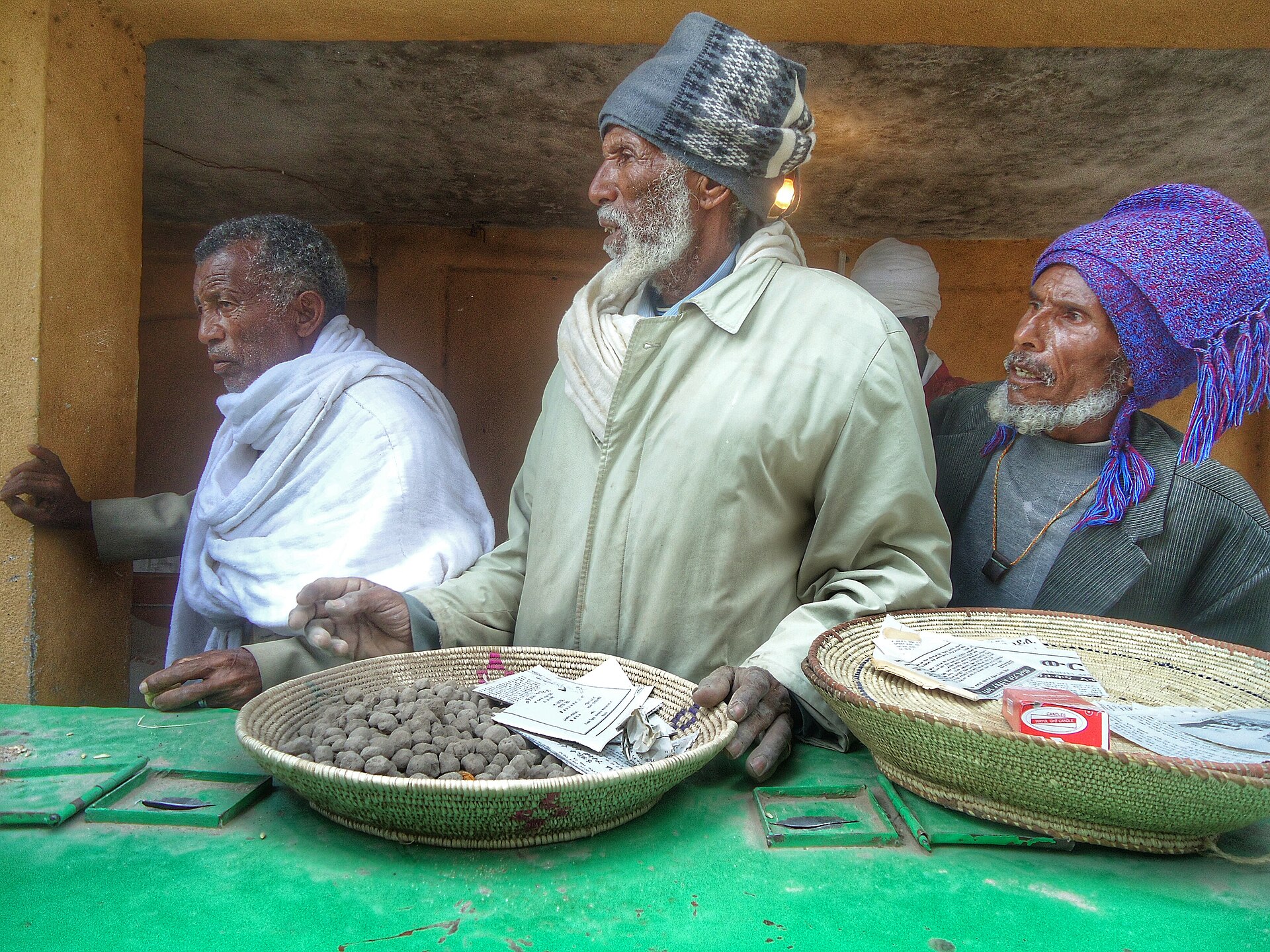
At the heart of Aksum stands the Church of Our Lady Mary of Zion, one of the holiest places in Ethiopian Christianity, rebuilt over many centuries on an ancient sacred site.
According to Ethiopian tradition, a nearby chapel houses the original Ark of the Covenant, said to have been brought from Jerusalem in the time of the Queen of Sheba and King Solomon. Guarded by a single monk, it is central to Ethiopian religious identity.

Coins and the Reach of Aksum
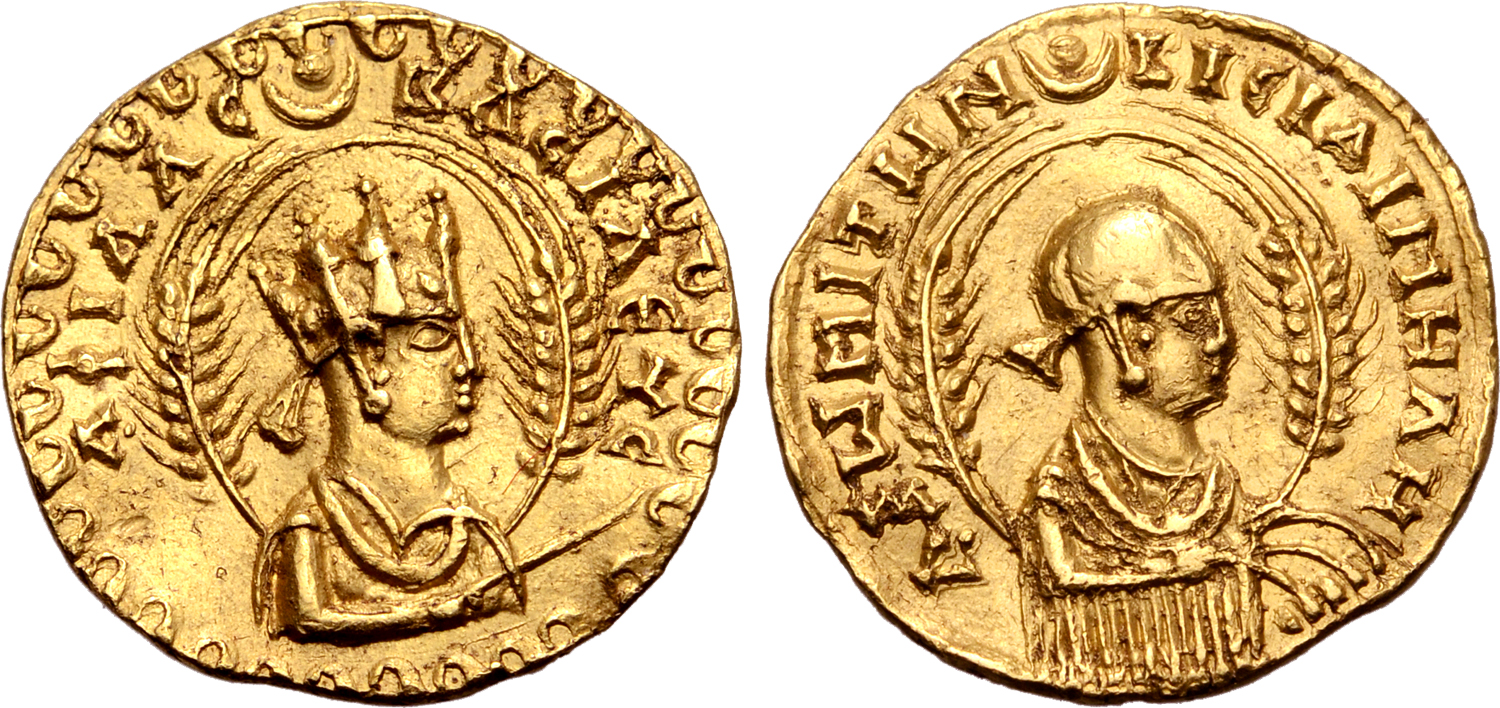
Aksum was one of the few ancient African states to mint its own coinage, striking coins in gold, silver and bronze. This alone places it among a small group of powerful, sophisticated ancient economies.
The coins, often inscribed in Greek as well as the local language, have been found far beyond Ethiopia, evidence of the kingdom’s wide trade. Later coins bear the cross, proclaiming Aksum’s new Christian faith to the world.
Decline and Legacy
From around the seventh century Aksum declined, as the rise of Islam reshaped Red Sea trade and cut the kingdom off from some of its markets, while environmental strain may also have played a part.
Power shifted southward within Ethiopia, but the legacy of Aksum endured. Its Christian faith, its script and its memory as a golden age remained central to Ethiopian civilisation for centuries to come.
The Returned Obelisk and UNESCO
One of the great stelae was taken to Italy in the twentieth century and set up in Rome. After long negotiations it was finally returned to Aksum and re-erected in the twenty-first century, a symbol of restored heritage.
Aksum was inscribed on the UNESCO World Heritage List in 1980, among the first sites so recognised. Today its stelae, tombs and churches keep alive the memory of one of Africa’s greatest ancient kingdoms.
Nearby Places
- Great Zimbabwe — another powerful African kingdom grown wealthy on gold and long-distance trade.
- Kerma — an earlier great civilisation of northeastern Africa, along the same corridor of trade and power.
- The Nubian Pyramids of Kush — the neighbouring African kingdom whose lands bordered the world of Aksum.
Closing Thoughts
Aksum was a African superpower that traded with Rome, raised some of the largest stones ever carved, minted its own gold, and became one of the first Christian kingdoms on earth. Its achievements deserve to be far better known.
In the standing stelae, the ancient coins and the living faith of Ethiopia, the legacy of Aksum endures. Few places so vividly connect the ancient world of trade and empire with a religious tradition still deeply alive today.
You May Like
Mafra, the Palace a King Built From a Vow


2 thoughts on “Aksum: The African Superpower of Giant Stelae, Gold Coins, and Early Christianity”