On a windswept plateau on the border between Turkey and Armenia, where a river gorge marks the modern frontier, stand the haunting ruins of Ani. Once a great medieval city and the capital of an Armenian kingdom, it was so rich in churches that it became known as the city of a thousand and one churches.
For a brief, brilliant period around a thousand years ago, Ani rivalled the great cities of the medieval world in size and splendour. Today it is a silent field of ruined cathedrals and chapels, a ghost city whose beauty and tragic history still move all who see it.
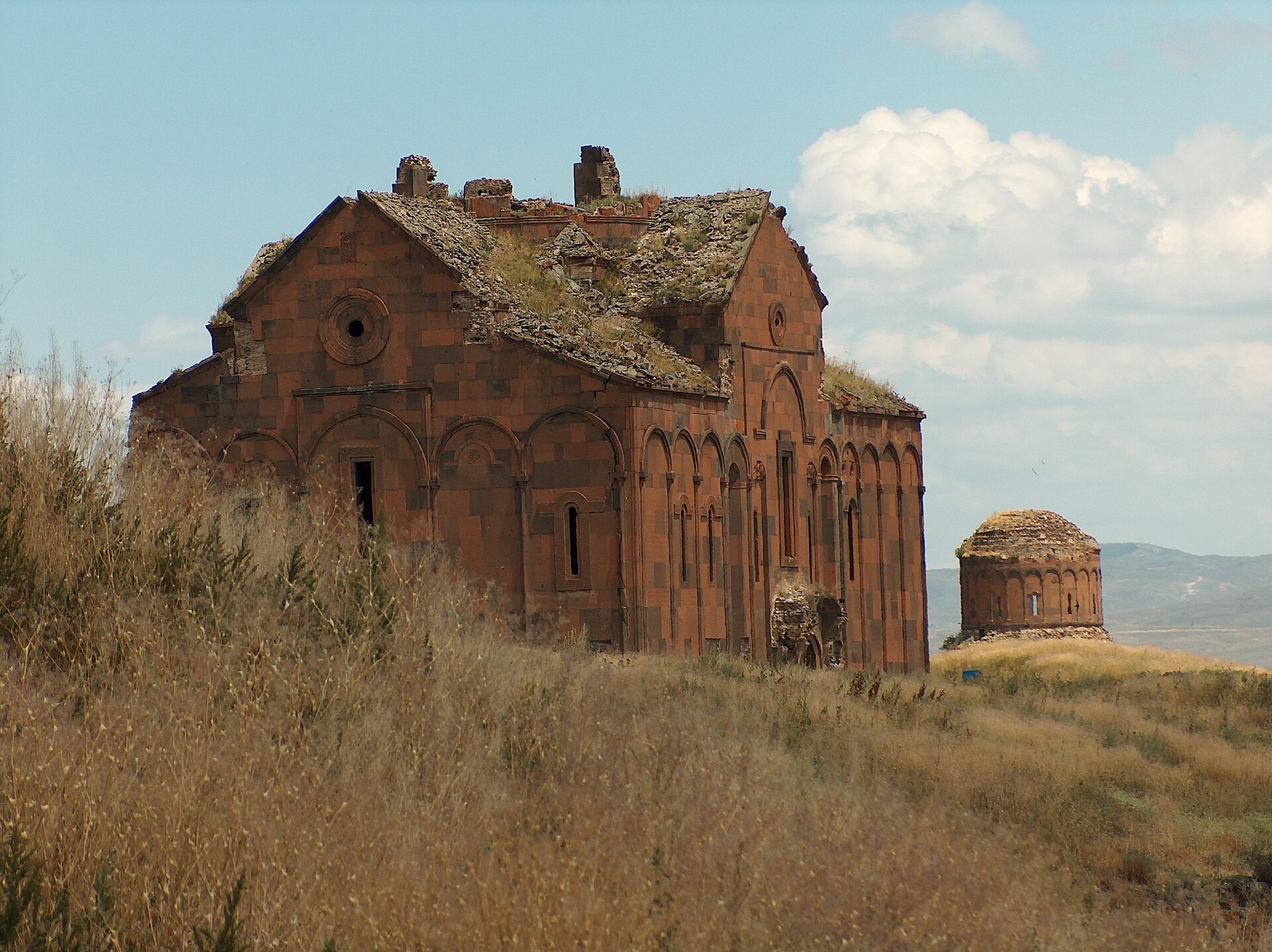
Table of Contents
- The City of a Thousand and One Churches
- An Armenian Capital on the Silk Road
- The Cathedral of Ani
- Armenian Church Architecture
- The Church of the Redeemer
- The Frescoes of Tigran Honents
- The Menuchihr Mosque
- A City on the Gorge
- Earthquake, Abandonment, and the Border
- Rediscovery and UNESCO
- Getting There
- Nearby Places
- Closing Thoughts
The City of a Thousand and One Churches
At its height around the year 1000, Ani was a thriving metropolis of perhaps a hundred thousand people, one of the largest cities of its day. Contemporary writers marvelled at its wealth and at the sheer number of its churches.
The famous description of Ani as the city of a thousand and one churches captures the density of religious building that once filled it. Even in ruin, the skeletons of great cathedrals and small chapels are scattered across the site.

An Armenian Capital on the Silk Road
Ani became the capital of the Bagratid Armenian kingdom in the tenth century. Its position on trade routes linking the Silk Road to the wider world brought it great prosperity, and its kings adorned it with monuments to match.
Protected by strong walls, the city flourished as a centre of trade, religion and Armenian culture. For a golden age it stood among the most important cities of the medieval Near East.

The Cathedral of Ani
The greatest monument of Ani is its cathedral, completed in the early eleventh century. Designed by the celebrated architect Trdat, it is a masterpiece of medieval Armenian architecture, its interior remarkably tall and elegant.
The cathedral’s pointed arches and sophisticated vaulting have led some scholars to see it as anticipating features of European Gothic. It remains, even roofless, one of the finest medieval churches in the region.

Armenian Church Architecture
Ani is a showcase of medieval Armenian church design, with its characteristic conical domes, richly carved stone facades and finely proportioned interiors. Armenian builders were among the most skilled of their age.
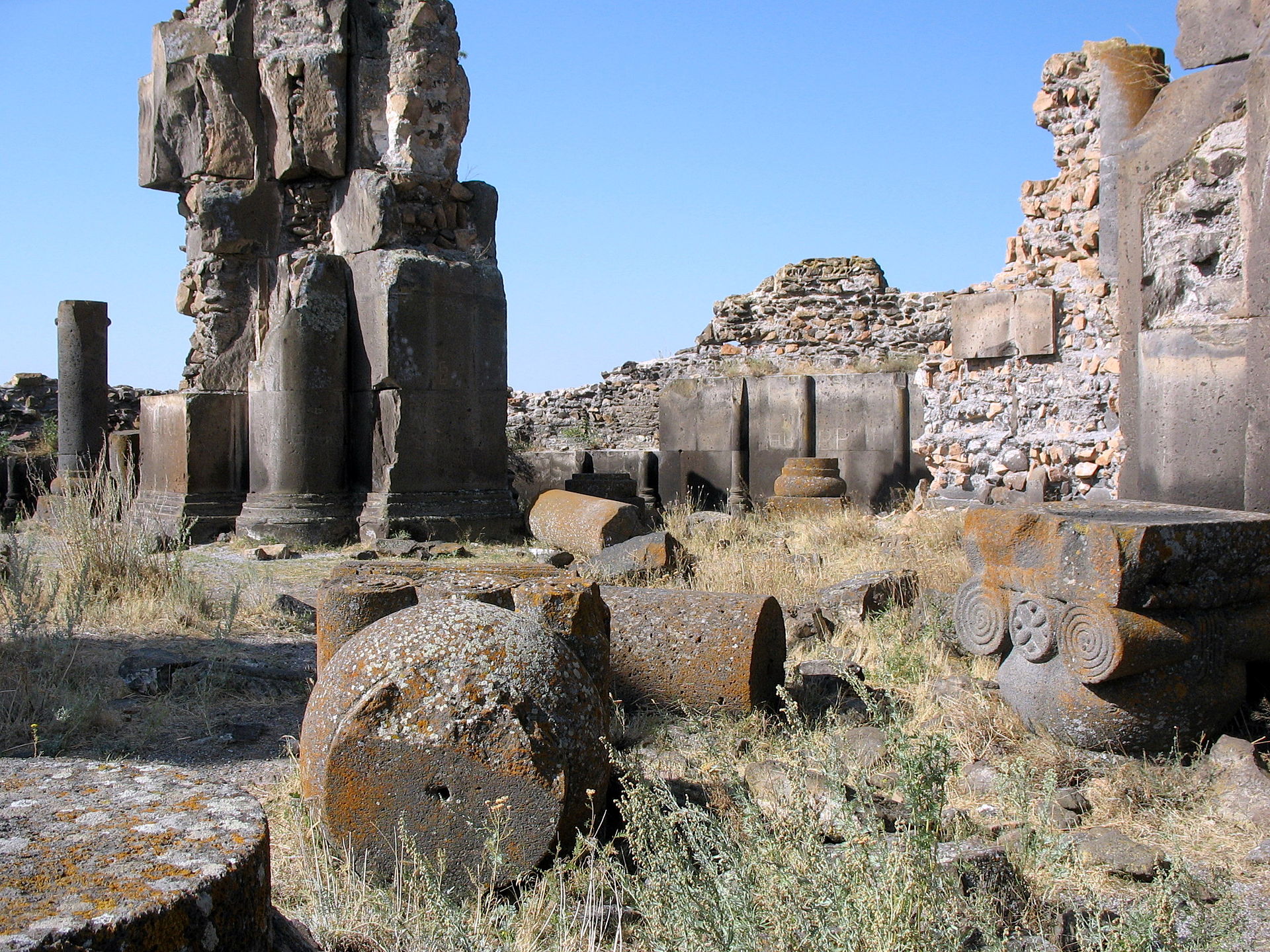
Across the site stand the remains of many churches, large and small, each reflecting this distinctive tradition. Their ruined domes and walls, silhouetted against the sky, give Ani its unforgettable and melancholy beauty.
The Church of the Redeemer
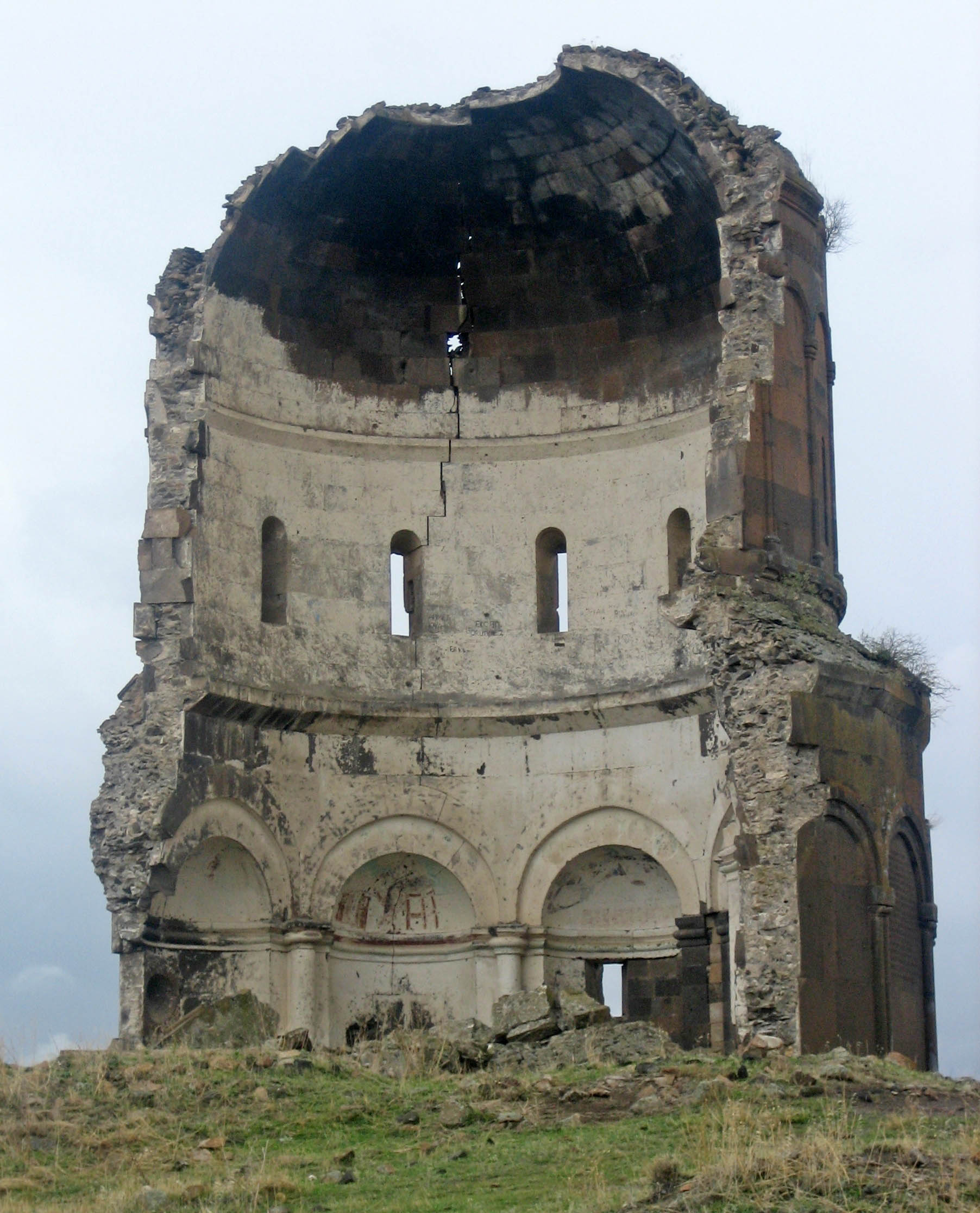
One of the most poignant monuments is the Church of the Redeemer, built in the eleventh century to house a fragment of the True Cross. For centuries it stood complete, a graceful round-walled church.
In the twentieth century half of it collapsed, probably struck by lightning or an earthquake, leaving it sheared dramatically in two. The surviving half still stands, a striking image of Ani’s slow ruin.
The Frescoes of Tigran Honents
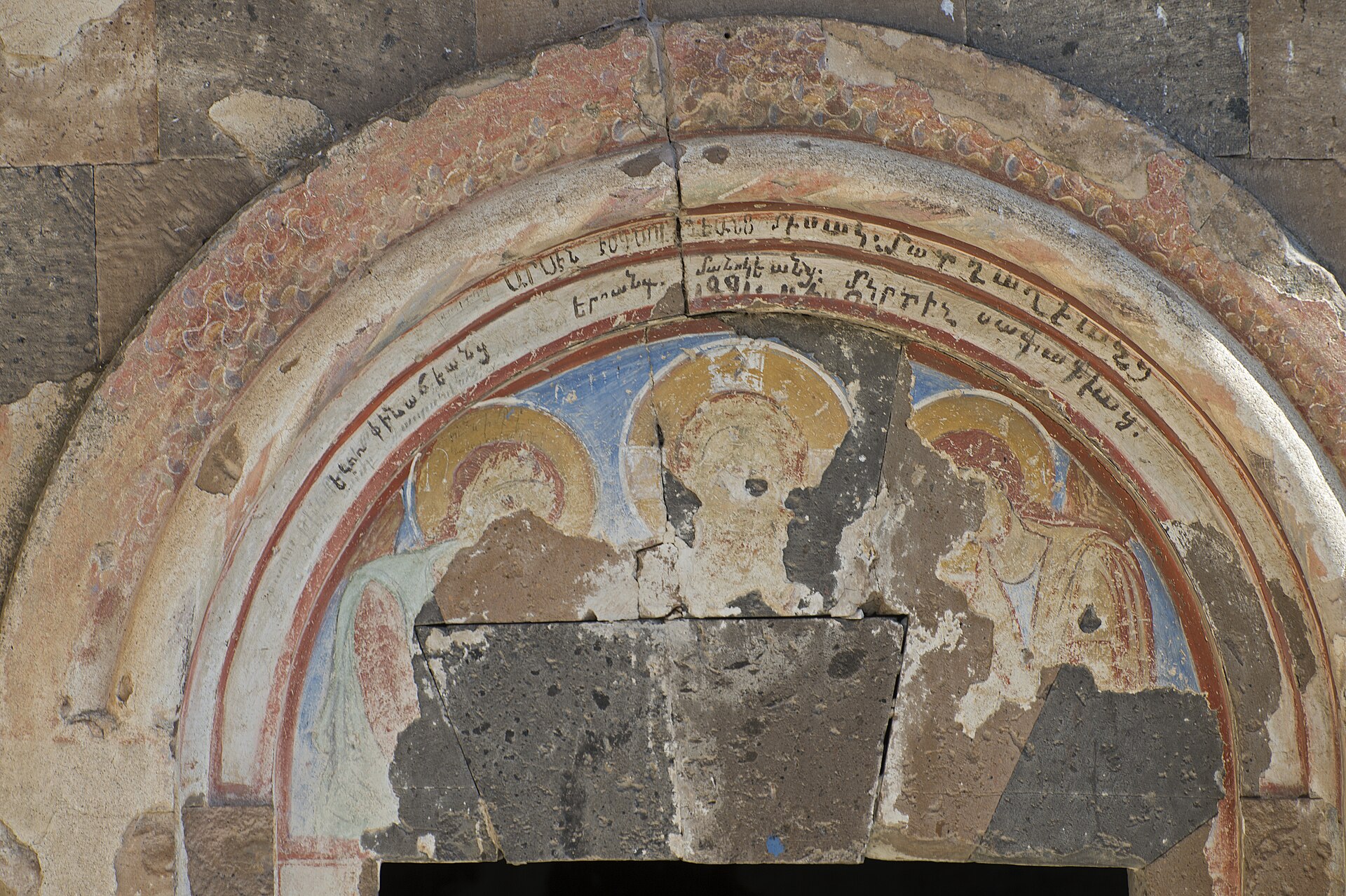
Among the best-preserved buildings is the Church of Saint Gregory, built by a wealthy merchant named Tigran Honents in the early thirteenth century. Uniquely at Ani, it retains much of its interior painting.
Its walls are covered with vivid frescoes depicting scenes from the Bible and the life of Saint Gregory. These paintings are a precious survival, giving a glimpse of the colour that once filled the churches of the city.
The Menuchihr Mosque
Ani was not only a Christian city. After it passed to Muslim rulers, a mosque was built overlooking the gorge, traditionally regarded as one of the oldest Seljuk mosques in Anatolia.
Its minaret and decorated hall reflect the city’s later chapters under different rulers. The presence of church and mosque side by side is a reminder of Ani’s shifting fortunes and mixed heritage.

A City on the Gorge
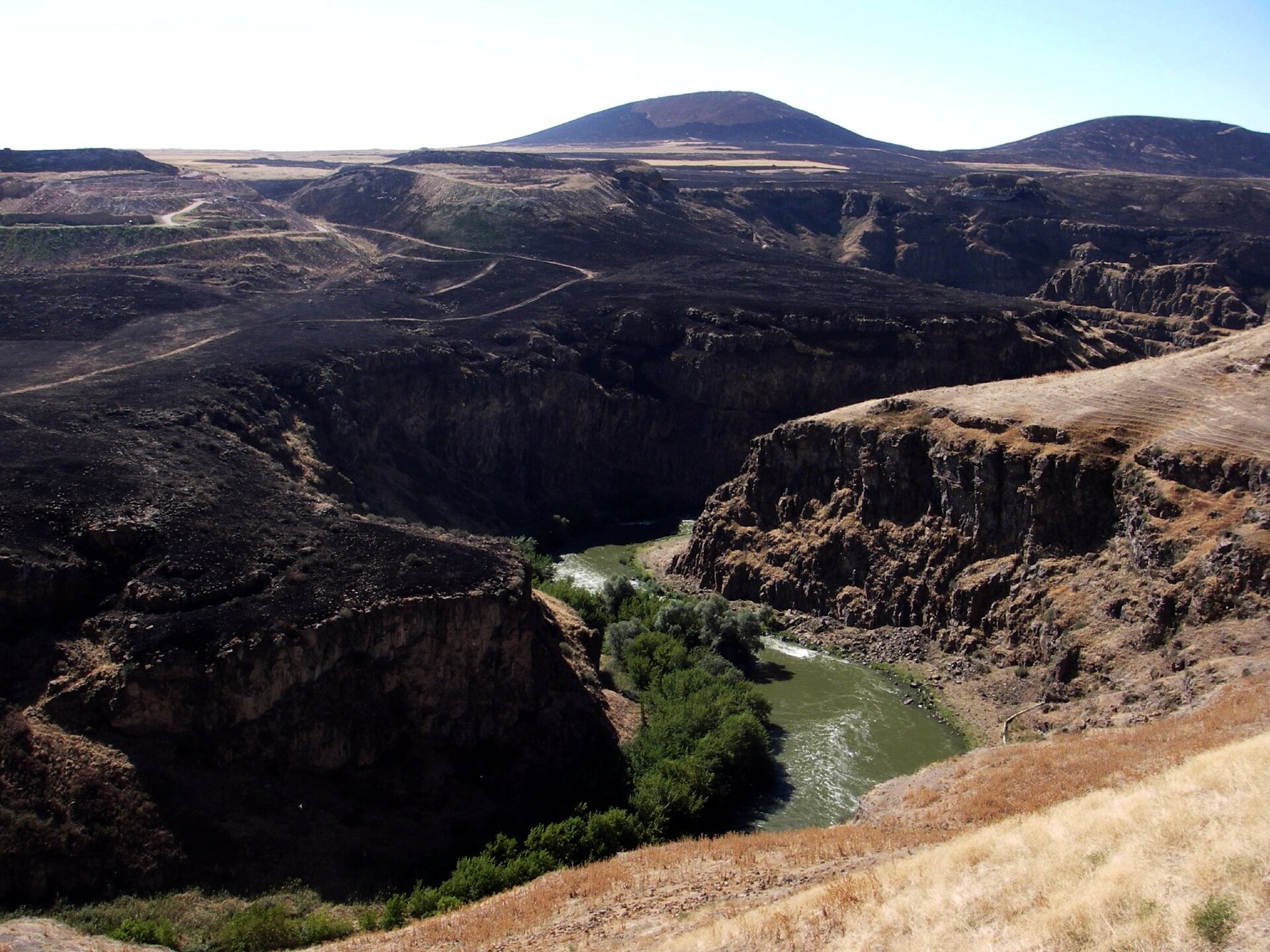
Ani occupies a naturally defensible triangle of land, bounded on two sides by deep ravines. The gorge of the Akhurian River, which runs below the city, today marks the closed border between Turkey and Armenia.
This dramatic setting, with ruined churches perched above steep valleys, adds to the site’s haunting atmosphere. The river that once helped protect the city now divides two modern nations.
Earthquake, Abandonment, and the Border
Ani’s decline came through a combination of misfortunes. Mongol invasion, the shifting of trade routes and a devastating earthquake in the fourteenth century sapped the city’s strength until it was gradually abandoned.
For centuries it lay deserted and largely forgotten, its ruins on a sensitive militarised frontier. Access was long restricted, which both protected and neglected the site.
Rediscovery and UNESCO
In modern times Ani has drawn growing attention as one of the great monuments of medieval architecture and of Armenian heritage. Conservation work has sought to stabilise its most important buildings.
Ani was inscribed on the UNESCO World Heritage List in 2016, recognising its outstanding universal value. Today, once hard to reach, it is increasingly visited as one of the most evocative ruined cities anywhere.
Getting There
Ani lies in the far east of Turkey, in Kars Province, close to the border with Armenia. The nearest city is Kars, about forty-five kilometres away, which has an airport with flights from Istanbul and Ankara.
From Kars, visitors reach the site by car, taxi or organised tour across the surrounding plateau. The ruins are open to visitors, though the adjacent border area should be treated with respect.
Coordinates: 40.5075, 43.5725 — open Ani in Google Maps.
Nearby Places
- Hatra — another great ruined city of the region whose religious monuments blended cultures and faiths.
- Petra — a caravan capital that, like Ani, dazzled the medieval and ancient worlds before falling silent.
- Aksum — another early Christian kingdom that raised remarkable religious monuments to its faith.
Closing Thoughts
Ani is one of the most beautiful and melancholy ruins in the world: a great medieval city of churches, now a silent field of broken domes on a lonely frontier.
Once the proud capital of an Armenian kingdom and a jewel of the Silk Road, it stands today divided from the land of its builders by a closed border and a river gorge. To walk among its ruins is to feel the full weight of a vanished golden age.
You May Like
Mafra, the Palace a King Built From a Vow