In a peaceful green valley in the western Peloponnese of Greece lies Olympia, the sanctuary where, for over a thousand years, the greatest athletic festival of the ancient world was held. Every four years the Greeks laid down their weapons and gathered here to compete in the Olympic Games in honour of Zeus, the king of the gods.
Olympia was both a sports ground and a holy place, filled with temples, treasuries and statues, and home to a colossal gold and ivory statue of Zeus that ranked among the Seven Wonders of the World. Its ruins are the birthplace of an idea that still unites the world today.
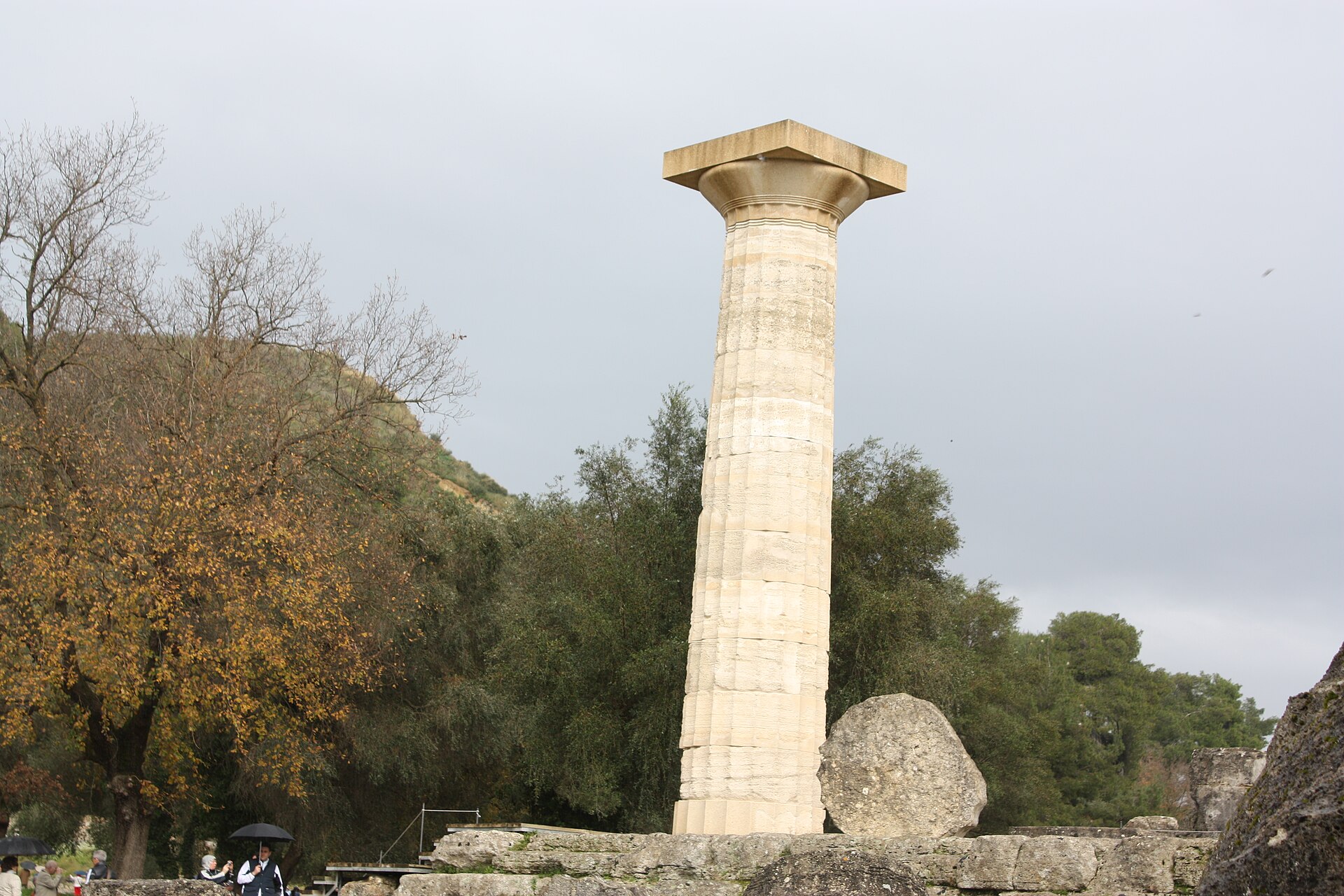
Table of Contents
- The Great Sanctuary of Zeus
- The Temple of Zeus
- The Statue of Zeus, a Wonder of the World
- The Birthplace of the Olympic Games
- The Ancient Games
- The Temple of Hera and the Olympic Flame
- The Workshop of Phidias
- Masterpieces of Olympia: Hermes and Nike
- The Palaestra and Athletic Training
- Decline, Rediscovery, and the Modern Revival
- Getting There
- Nearby Places
- Closing Thoughts
The Great Sanctuary of Zeus
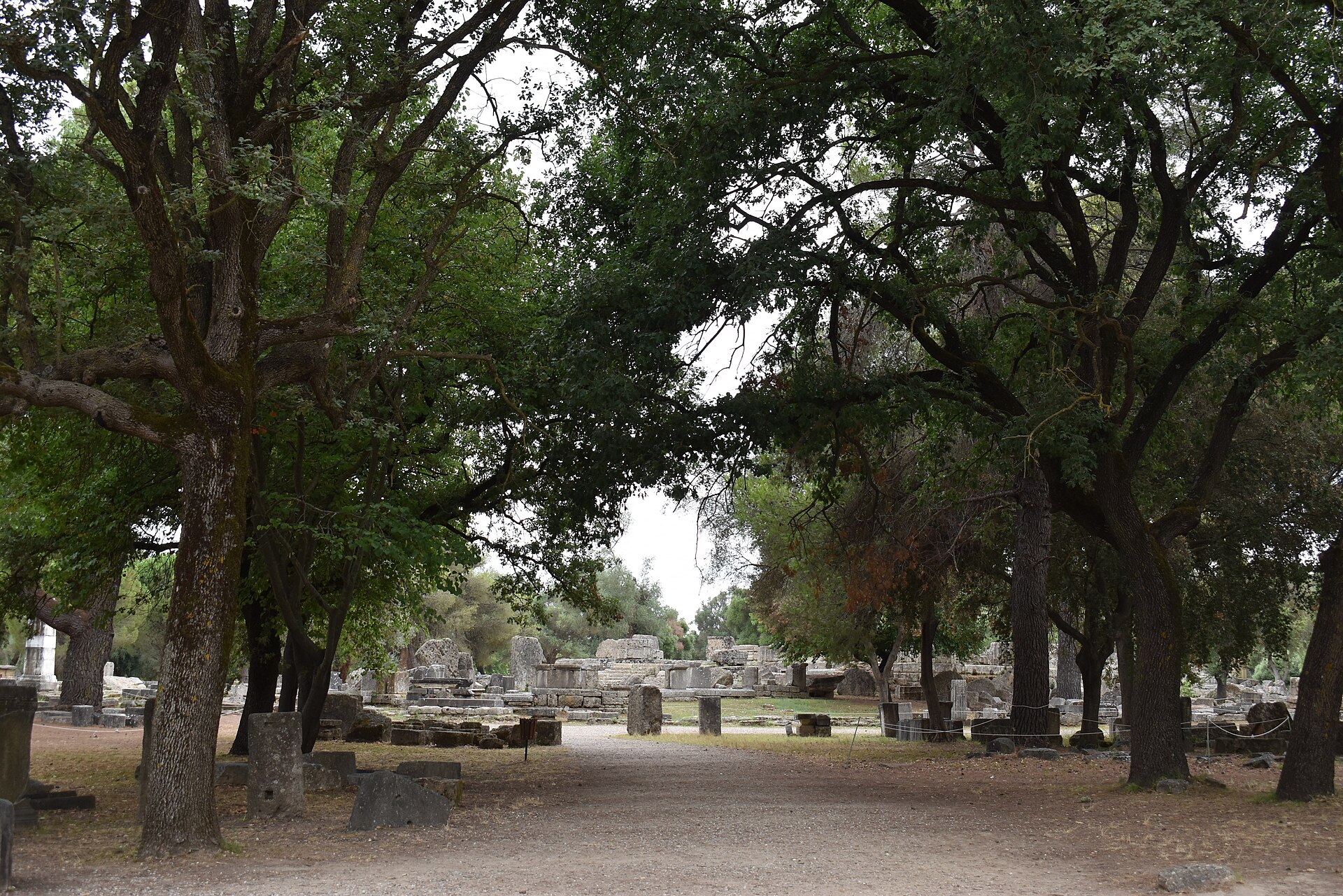
Olympia was not a city but a sanctuary, a sacred precinct dedicated above all to Zeus. Within its walls stood temples, altars, treasuries built by different Greek cities, and hundreds of statues offered to the gods.
For centuries it was one of the most important religious centres in Greece, drawing worshippers, athletes and spectators from across the Greek world. Its peaceful setting among rivers and hills added to its sacred atmosphere.
The Temple of Zeus
The greatest building at Olympia was the Temple of Zeus, a massive structure in the Doric style whose fallen columns still lie dramatically across the site. It was the centre of worship and of the games held in the god’s honour.
Its sculptures, showing mythological scenes and the labours of Heracles, were among the finest of their age. The temple was the proud heart of the whole sanctuary.
The Statue of Zeus, a Wonder of the World
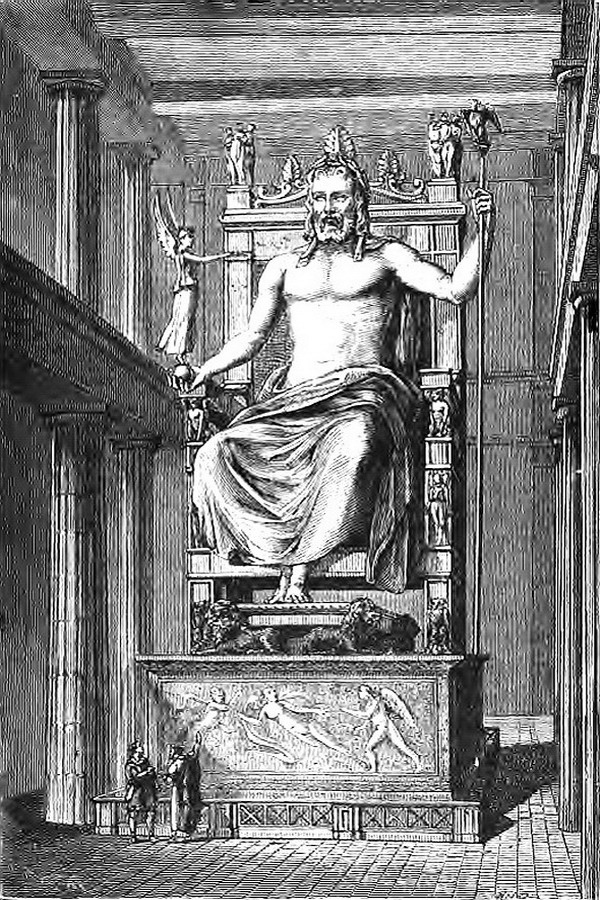
Inside the temple stood one of the most famous works of ancient art: the colossal statue of Zeus, made of gold and ivory by the great sculptor Phidias. Seated on a throne, the god towered some twelve metres high.
So magnificent was it that it was counted among the Seven Wonders of the Ancient World. The statue has long since vanished, but ancient descriptions convey the awe it inspired in all who saw it.
The Birthplace of the Olympic Games
Olympia is famous above all as the birthplace of the Olympic Games, first held, according to tradition, in 776 BC. Every four years the games brought the often-warring Greeks together in a sacred truce.
Athletes competed for the glory of victory and a simple crown of olive leaves, and winners were celebrated as heroes in their home cities. The games continued for nearly twelve centuries.

The Ancient Games
The ancient Olympics featured running, wrestling, boxing, the pentathlon, chariot racing and other contests. Competitors trained for months and swore oaths to compete fairly before the statue of Zeus.
The games were as much a religious festival as a sporting event, filled with sacrifices, feasts and ceremonies. They expressed the Greek ideals of physical excellence, competition and honour.
The Temple of Hera and the Olympic Flame
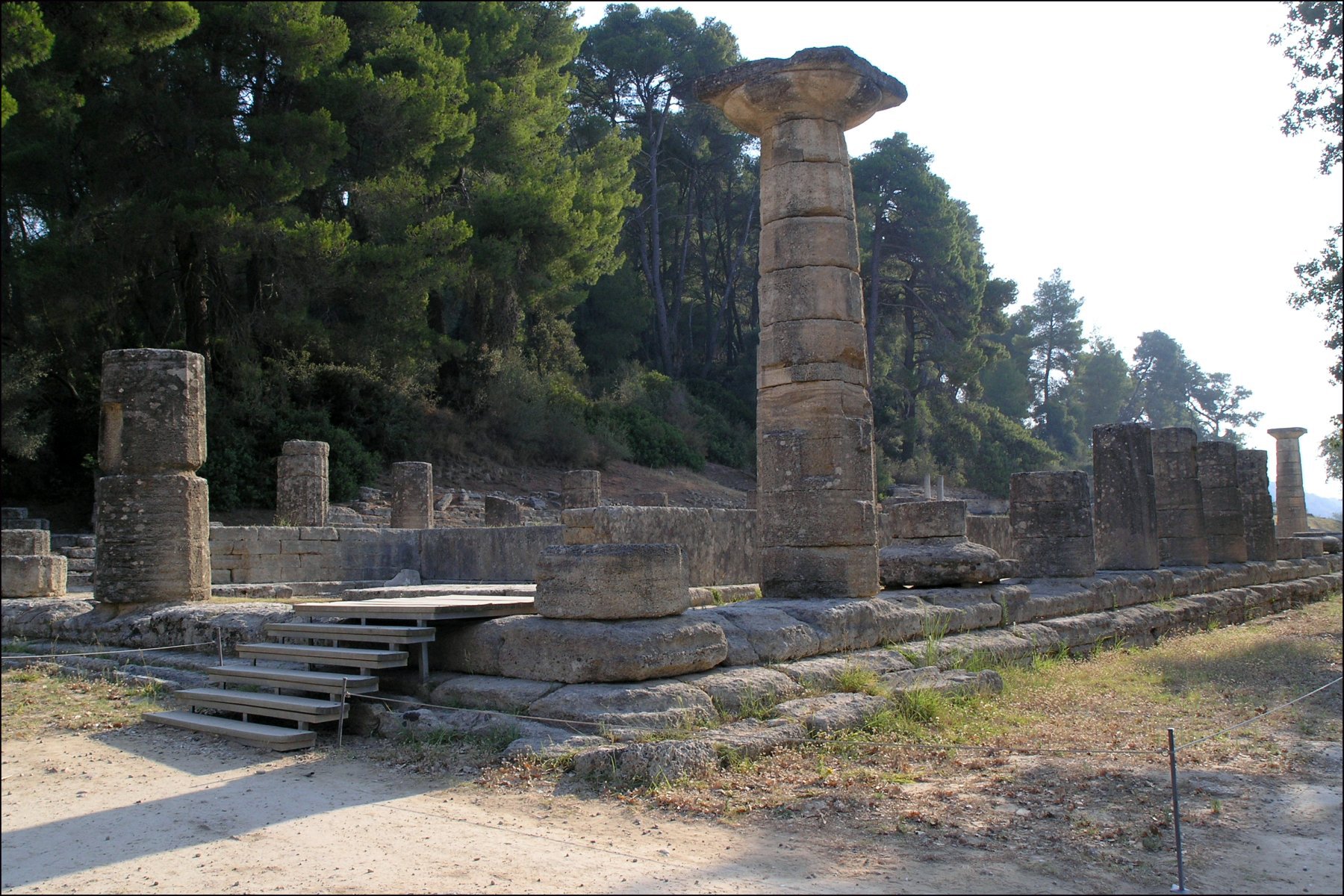
One of the oldest buildings at Olympia is the Temple of Hera, wife of Zeus. Its ancient columns still stand, and it is here, in modern times, that the Olympic flame is lit before each Games using the rays of the sun.
This ceremony links the modern Olympics directly to their ancient birthplace, carrying a symbolic fire from Olympia to host cities around the world.
The Workshop of Phidias
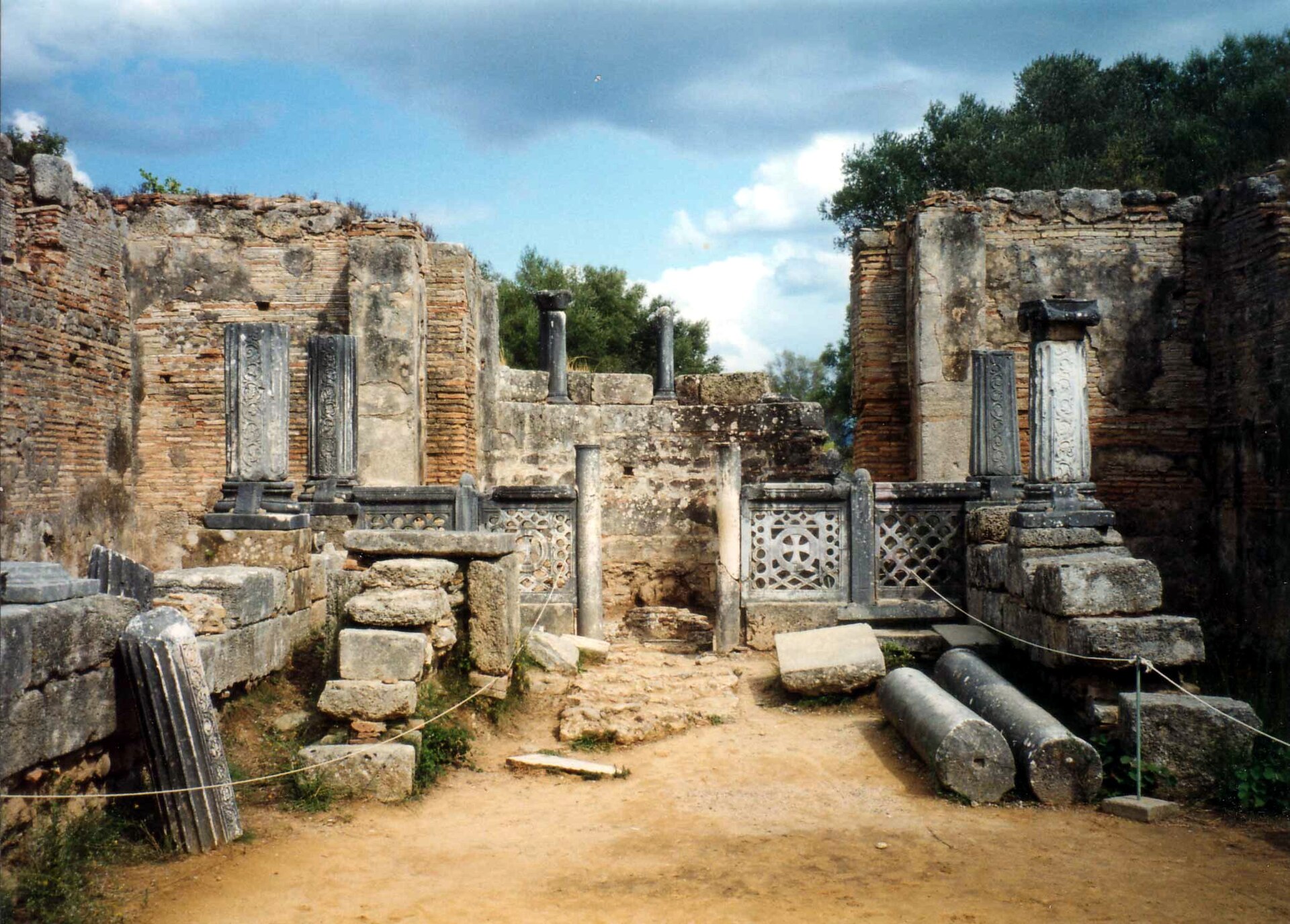
Archaeologists have identified the very workshop where Phidias created his great statue of Zeus. Remarkably, they even found a cup bearing his name, confirming the identification.
The workshop was later turned into a church, which helped preserve it. It is a rare chance to stand in the actual place where one of the wonders of the ancient world was made.
Masterpieces of Olympia: Hermes and Nike
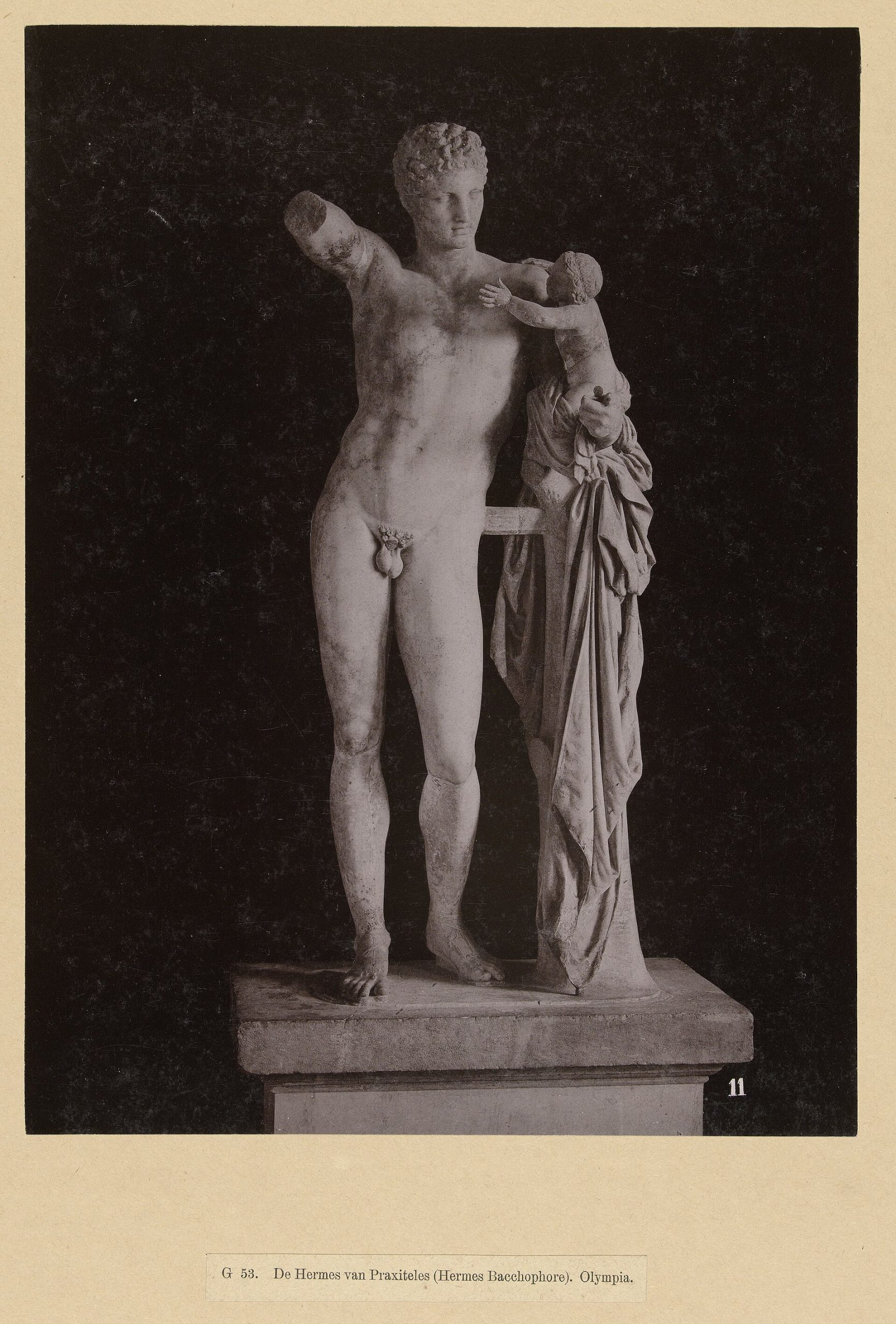
Olympia’s museum holds some of the greatest surviving works of Greek sculpture. Chief among them is the marble Hermes, attributed to the sculptor Praxiteles, admired for its grace and lifelike beauty.
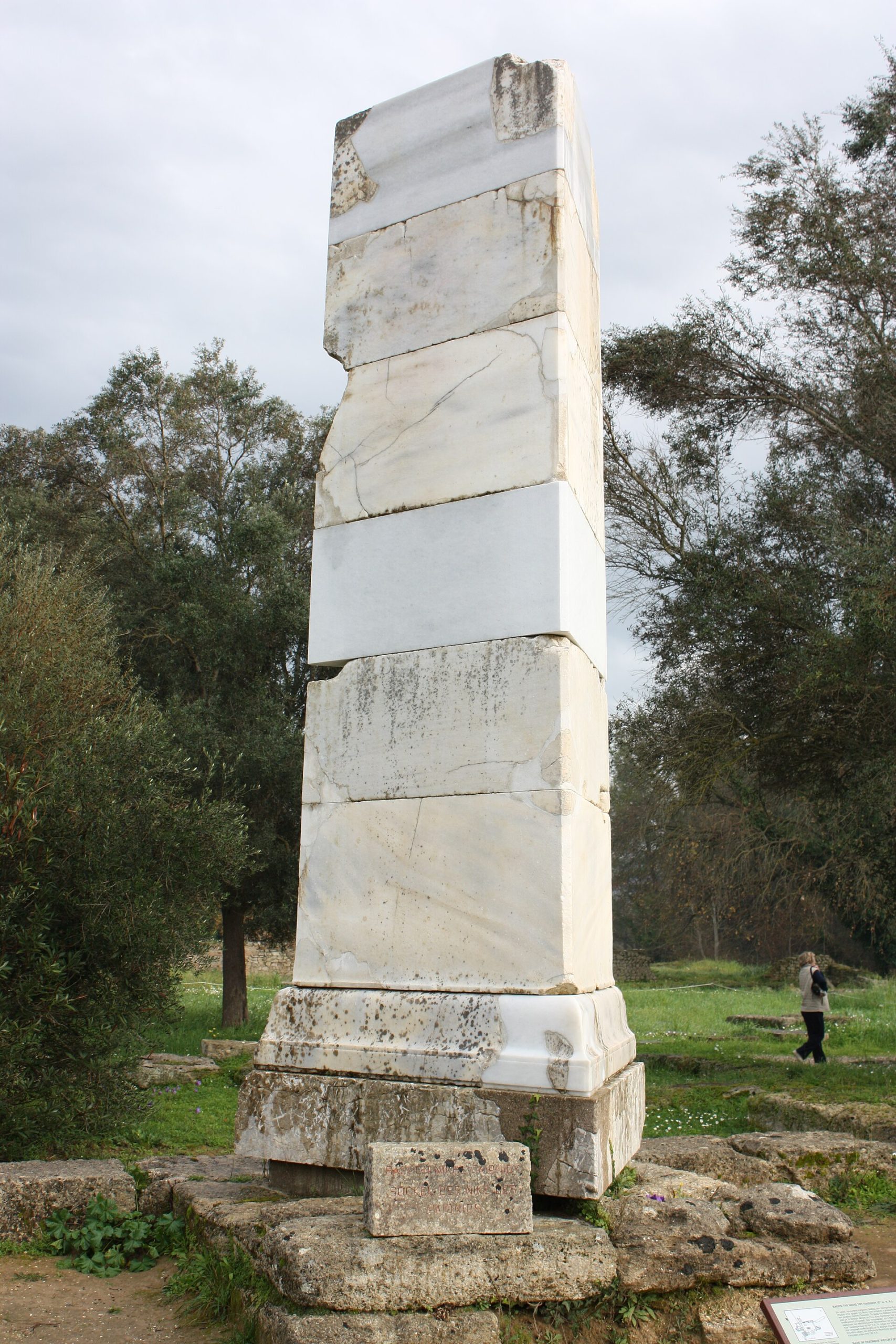
Another treasure is the Nike of Paionios, a statue of winged Victory shown as if descending from the sky. These masterpieces show why Olympia was a showcase of the finest Greek art.
The Palaestra and Athletic Training
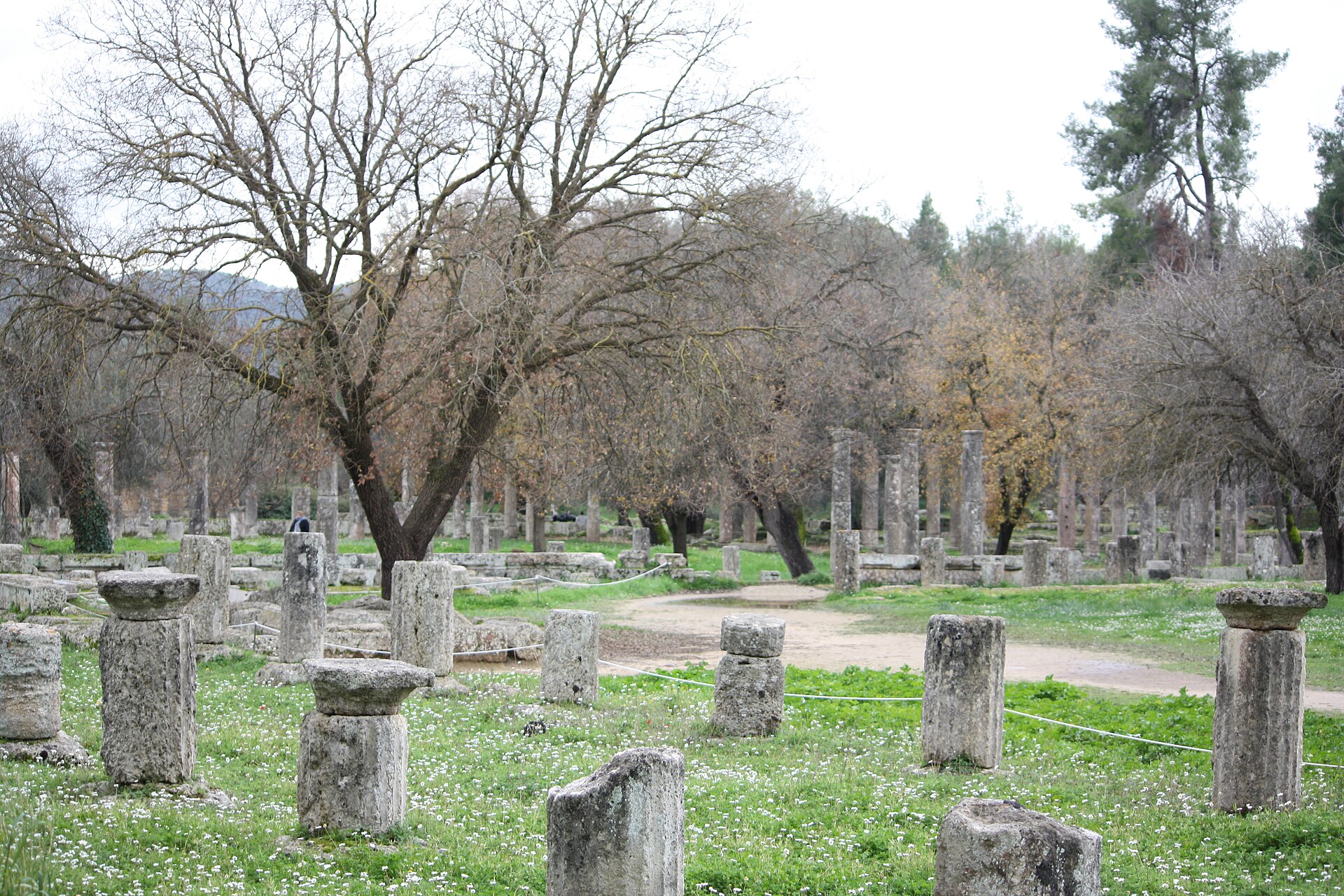
Around the sanctuary lay facilities for the athletes, including the palaestra, a colonnaded courtyard used for wrestling and other training, and the gymnasium. Here competitors prepared under the eyes of trainers and judges.
These buildings show how seriously the ancient Greeks took athletic training and the cult of the body. The rows of columns still frame the space where champions once prepared for glory.
Decline, Rediscovery, and the Modern Revival
With the coming of Christianity the games were finally banned, and Olympia was abandoned, its buildings toppled by earthquakes and buried by floods and landslides from the nearby rivers.
Rediscovered and excavated from the eighteenth and nineteenth centuries, Olympia inspired the revival of the Olympic Games in 1896. It was inscribed on the UNESCO World Heritage List in 1989, honoured as the source of an enduring ideal.
Getting There
Olympia lies in the region of Elis in the western Peloponnese of southern Greece, near the modern town of Archaia Olympia. It is roughly a four to five hour drive from Athens.
Visitors reach it by car, bus or organised tour, and some cruise ships dock at the nearby port of Katakolon. The excellent site museum, home to the Hermes and other treasures, is an essential part of any visit.
Coordinates: 37.6383, 21.6300 — open Ancient Olympia in Google Maps.
Nearby Places
- Delphi — the other great Greek sanctuary, home of the Pythian Games and the oracle of Apollo.
- The Acropolis of Athens — the artistic and civic heart of the Greek world that gathered at Olympia.
- Mycenae — the Bronze Age citadel of the same Peloponnese, from the heroic age before the games began.
Closing Thoughts
Olympia is the birthplace of one of humanity’s greatest ideas: that rivals can lay down their arms and meet in peaceful contest. For over a thousand years the Greeks did exactly that, in a sanctuary crowned by a wonder of the world.
Its fallen columns, its stadium and its masterpieces of sculpture still speak of that ideal, and every four years its flame is carried to the modern Games. Few ruins connect the ancient and modern worlds so directly, or so nobly.
You May Like
Mafra, the Palace a King Built From a Vow