Fethiye – Kekova – Fethiye Route: Ölüdeniz – Gemile – Kalkan (Patara-Xantos – Letoon) Çayağzı (Myra-St.Nicholaus) – Gökkaya – Kaleköy – Kaş-Bayındır – Karacaöre – Göcek – Kızıl Ada – Fethiye.
Kekova
Kekova is a paradise on earth where nature and history are integrated and the turquoise sea is surrounded by thousands of bays. After Kaş, passing Uluburun and heading towards Kekova, you first encounter the Sıçak Peninsula. The ancient city of Aperlai is located on Sıçak Pier, and Toprakada and Karaada are located at the tip of the peninsula. After this lies Kekova Island. Because of this island, the entire region is called Kekova.
These bays of the Kekova region are also one of the most favorite coasts of yachtsmen, as they serve as natural harbors in all seasons. Along the northern coast of Kekova Island, the ancient city of Apollonia dates back to B.C. Summer mansions dating back to the 4th century can be seen in some parts of the water. Tectonic events that occurred in the region throughout history caused some waterside residences to remain below sea level.
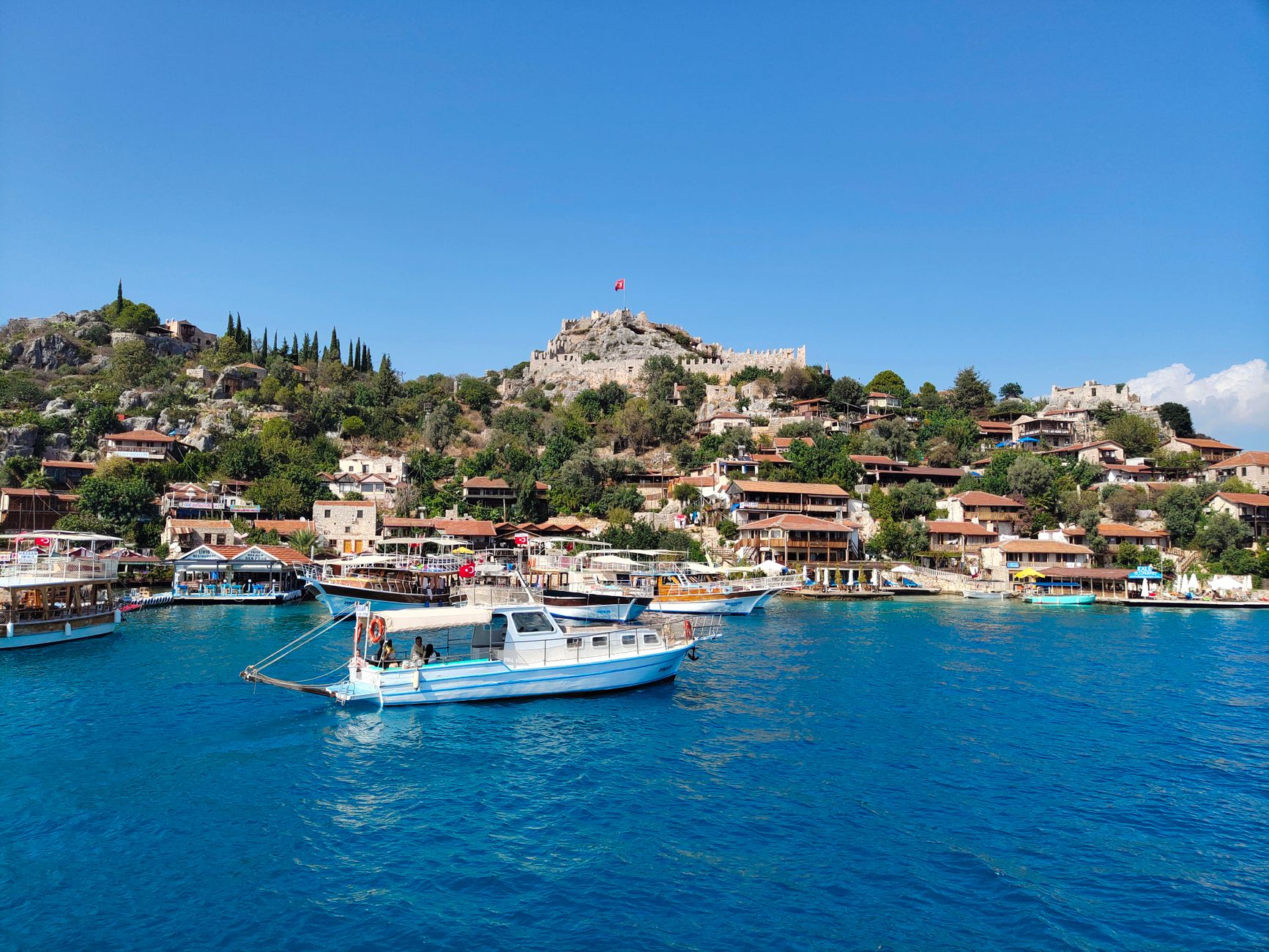
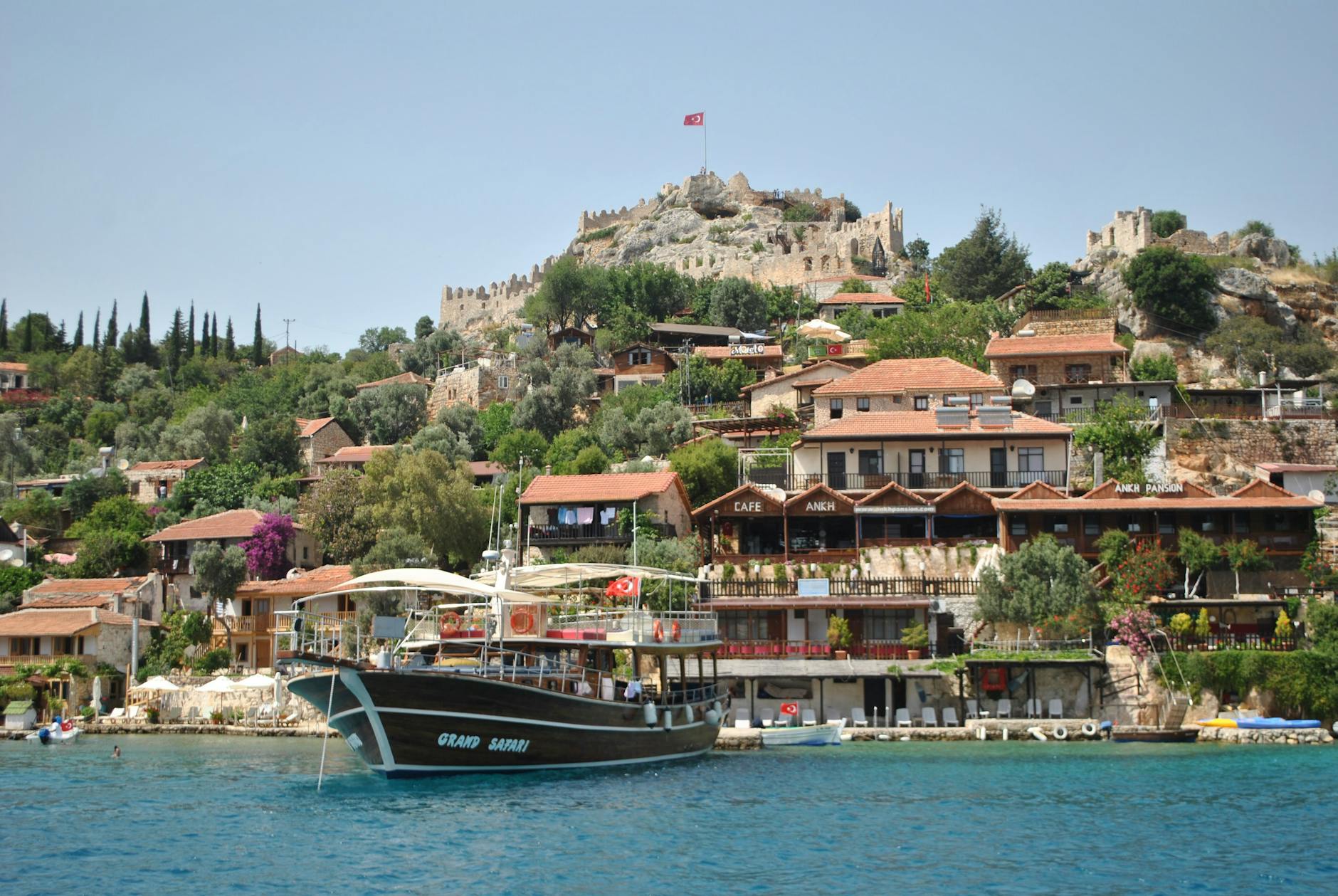
Simena (Kaleköy) Castle is the best place to watch the yachts sailing in these clear waters, countless bays and islands from a bird’s eye view.
Kekova Island, which gives its name to the region, is located between Kaş and Demre, right in front of Simena. Kekova Island is known as the sunken city because it was partially submerged in water due to earthquakes. Opposite Kekova Island is Kaleköy and a little further away is Üçağız Village, which is a quiet bay for yachts. Tersane Bay, located on the island, which is 10 minutes away by sea from Simena, can be reached by boat.
While passing through the Sunken City by boat, you can see the traces and stairs of the submerged city. The area is under protection and diving is prohibited.
Theimussa (Üçağız) 36 kilometers away from Kaş, Theimussa (Üçağız) is a natural shelter with its bays surrounded by the sea on three sides. Theimussa, which is important for yacht tourism, provides transportation to Simena (Kaleköy) and Kekova Island by sea. The ruins that need to be seen are the castle located on a low rocky hill, the part of the city wall that is submerged in the sea today, and the pier carved into the rocks at the eastern end of the city.
Kalkan, a town of Kaş, is established on the shores of a bay worth seeing. Kalkan, a small but very charming holiday destination, is one of the most interesting holiday centers of recent years with its old Greek houses and small marina. Kalkan is a very peaceful place with its traditional white houses, shutters and balconies bursting with flowers. Narrow streets lined with souvenir shops end at the marina.
It has become a tradition in Kalkan to gather for an aperitif before dinner on the roof terraces at sunset and watch the comings and goings of yachts and the hectic activity in the marina. During the population exchange in 1922, some of the people living in Kalkan went to Greece and some to Australia. Those who went to Greece started to live in a village called “Kalamaki” near Athens.
Their children come and visit Kalkan from time to time to relieve their homesickness. Kalkan, which until recently earned its living by making soap and olive oil, has become a frequent destination for blue cruisers, with its clean hostels and hotels, restaurants offering delicious products, as well as its recently built marina. While you can swim in Kalkan, you can also go to the surrounding beaches with boats departing from the coast.
The marina in Kalkan, which attracts thousands of tourists every year with its hotels, hostels, restaurants and shopping opportunities, is capable of meeting all the needs of the boats calling.
41 km from PataraKaş. The ancient city in Patara (Ovagelmiş) is spread over a wide area on the east side of the harbour. The city and its port are approximately 3 km away. It is located at the entrance of the long valley. Patara Port took its current appearance when it was filled with alluviums brought by the Xanthos (Eşen) Stream. Herodotus mentions the name of the city for the first time. According to rumor, Patara is the name of the founder of the city. The history of the city dates back to BC. 5th and 6th
According to mythology, Apollo, the God of Fine Arts, was born in Patara. Historical documents indicate that this region is known as St. It reveals that it is the birthplace of Nikolas (Santa Claus). Patara, where archaeological artifacts are numerous and interesting, is also ideal for beach lovers. 22 km. Its long, thin sandy beach stretches as far as the eye can see, providing a suitable environment for all kinds of sand sports. One of the apostles of Jesus Christ, St.
Paul boarded a ship in Patara to go to Rome, and Patara became the center of the Diocese in the Early Christian Period. While entering Patara, Lycian type Roman Period tomb monuments are seen on the road. At the entrance, there are the ruins of the three-eyed Triumphal Arch, the submerged three-naved Harbor Church and the Hurmalık Bath. 100 meters of this. A road guide showing the distance between Lycian cities was found during recent excavations.
The guide is the oldest and most comprehensive road sign of the world’s highways. Vespasian’s Bath located in the ancient city was built in A.D. It was built in 69-79. If you follow the path next to the bath, you can reach Patara’s marble-paved main street. Further down the street, the wide walls of the Byzantine Castle are encountered. The Corinthian Temple is located to the east of this castle and the Byzantine Church is located to the west. It was built at the foot of a slope and dates back to B.C. 2.
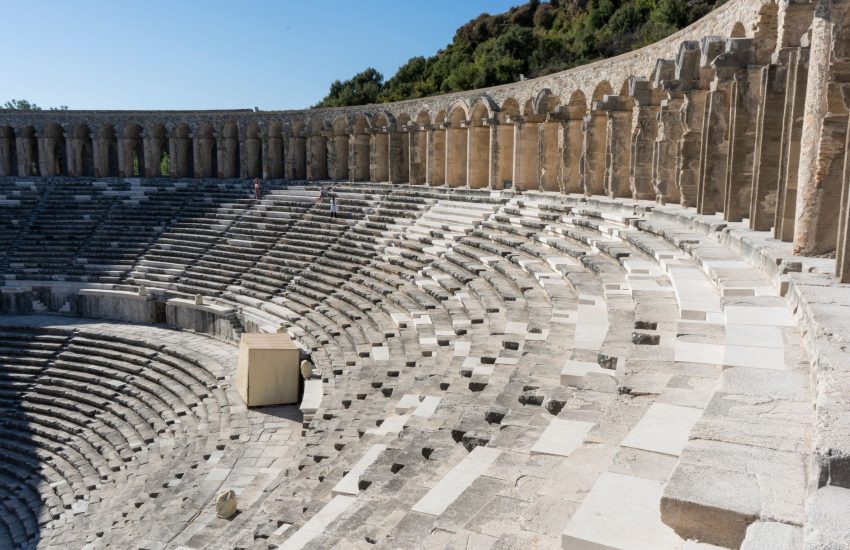
Dating back to the 19th century, Patara Theater has an average capacity of 10,000 people. The sand-covered sections of the theater were cleaned and the structure was revealed.
Xanthos is 45 km away from Kaş. Xanthos, located on the east bank of the Eşen Stream, was the capital of the Lycian Union. It means “yellow” in ancient Greek. Surface finds obtained from the city’s acropolis indicate that the settlement dates back to B.C. It reveals that it dates back to the 8th century. Xanthos, literally a city of disasters, dates back to B.C. It lived independently until the Persian invasions in 429.
When the people of Xanthos, who heroically defended their city during the Persian invasion, realized that they could not prevent the invasion, they first killed all their women and children, and then committed mass suicide by setting the city on fire. The city was rebuilt by 80 families who survived this massacre and immigrants from other places. But Xanthos was destroyed again by a fire about 100 years later.
Despite this, the newly established city continued to exist as an important center for a long time as a result of the good relations it established with the western world. However, this situation did not last long. B.C. When they resisted the taxes of the Roman Brutus in 429, the people of Xanthos were dragged into another war that would cause the complete destruction of their city.
The most striking historical structure in the ancient city is a war monument… This 8.87-meter-high tomb monument consists of a massive pillar carved from rocks and a small burial chamber surrounded by friezes on all four sides. The reliefs of the mausoleums in this room, covered with a capstone, including the Nereid Monument, the Harpy Monument, the Payave Sarcophagus and the Lion Tomb, were taken to London by British Fellows in 1842.
In their place were plaster copies taken from the originals. The reliefs depict gifts presented to the grave owner and his wife by other family members. Half-bird-half-woman creatures called Sirens in the north and south symbolize babies and carry the soul of the dead to the sky. This tomb dates back to B.C. It is estimated to date back to 470-480.
The city walls were repaired and strengthened with various additions during the Roman and Byzantine periods. In the south, B.C. There is a door from the 2nd century. Behind this door is the Doric Triumphal Arch belonging to Emperor Vespasian. In the southwest is the Lycian Acropolis, where the city was first founded. The ruins of a temple thought to belong to Artemis and a Byzantine church are also located on the acropolis.
A magnificent monastery on the Roman Acropolis in the north attracts attention. Dated to the 2nd century, the theater belongs to the Roman Period.
Letoon is thought to be the cultural center of the Lycian city-states. Because in those days, national festivals were held here. The name Letoon comes from legends. Zeus, the king of the gods, falls in love with Leto and from their union, Leto becomes pregnant with twin children. Leto, afraid of Zeus’ jealous wife, runs away and comes to Delos.
Leto, who gave birth to her children Apollo and Artemis here, runs away to Lycia, the Anatolian coast, to get further away from Hera. The wolves he encounters on the road guide him to the Xanthos River. In gratitude, Leto dedicates the river to Apollo and gives the name “Lykia”, derived from the Greek word “lykos”, meaning wolf, to the place known until then as “Termilles”.
In the north of Letoon, there is a theater with a Greek plan, dating back to the Hellenistic period. The doors to the east and west of the theatre, whose stage part is not standing, are decorated with Doric friezes. The theater largely reminds of the Patara theater. During the excavations, inscriptions that could shed light on the history of Lycia were found among the temple ruins. The most important of these is the inscription describing Alexander the Great’s visit to Letoon. M.S. in the city 8.
No traces of ruins dating back to more than a century can be seen. It is estimated that the city was abandoned due to the beginning of Arab raids and the brutal attitude of Christianity towards pagan structures.
Myra (Demre) Myra, a few kilometers away from Demre, is a city built into rocks overlooking the sea. Perhaps it is one of the most beautiful examples of its kind in Anatolia… From the ruins, tombs and Lycian inscriptions spread over a wide area, it dates back to B.C. It appears to be an old city dating back to the 5th century. M.S. It is known that Emperor Germanicus visited Myra with his wife Agrippina in 17 BC. St. Paul M.S. He stopped by Myra in 60. M.S. 2.
The 11th century is the period when Myra was honored with the title of Metropolis and witnessed a great development. Under Byzantine rule, the city again became a religious and administrative center, especially in the 4th and 5th centuries.
St. Nicholas Church, commonly known as Santa Claus. Nicholas M.S. He was born in Patara in 245 A.D. He died in 363. St. Nicholas, the well-educated son of a wealthy family, devoted his life to helping people, especially children and sailors. The fame of these aids has become the legend of Santa Claus to this day. St. John, who provided religious and social aid to people as a priest of Demre.
When Nicholas died, he was buried in Demre and a church was built in his name next to his grave. In 1080, Italian pirates smuggled some bones from his grave to Bari. Some of the remaining bone fragments are located in the Antalya Museum today. The Santa Claus Symposium, which was first held on December 5-7, 1983, has been repeated every year since then with the participation of people from different religions and tendencies. In this symposium, St.
Following the line of Nicholas, people from different religions and beliefs are called for peace, friendship and brotherhood.
You May Like
Amasya Hotel Pension Accommodations