Fethiye – Ekincik – Fethiye Route: Fethiye – Ölüdeniz – Gemile Bay – Ağa Limani – Ekincik – Kaunos Ancient City – Semizce – Tersane Island – Manastır Bay – Göcek – Yassıca Island – Katrancık – Tavşanlı Island -Fethiye
Ölüdeniz
Described as “the paradise given to the world by God”, Ölüdeniz is a world-famous tourism center with its fame extending beyond the country.
Having a seductive beauty, Ölüdeniz is as calm and still as its name. Ölüdeniz, 14 kilometers away from Fethiye, fascinates you with its blue that suddenly appears after the road among the pine trees. When you walk along Belcekız Bay and the beach that lies within this bay, you will see the unique Ölüdeniz. The Dead Sea is as motionless as if it were magical… Not a single seaweed can be seen at the bottom. It is covered with pure white sand.
The light refracted by the water and the sand at the bottom gives Ölüdeniz its famous turquoise color…
Ölüdeniz is a true wonder of the world with its lush pine forests extending to the shores, its warm sea where every shade of green, blue and purple can be seen, and its long sandy beach. Those who parachute from the peaks of Babadağı, at an altitude of 1975 meters, encounter the most breathtaking view in the world. In this unique bay, which offers the opportunity to swim ten months of the year, you can find many tourist facilities, restaurants, shopping centers and units all together.
The Legend of Belcekiz
Belcekız, which gave its name to the bay in Ölüdeniz, has a sad legend. In ancient times, ships passing here would anchor offshore and go ashore by boat to get drinking water.
One day, when the young, handsome son of an old captain went out to the bay to get water, he saw the beautiful Belcekız. They fell in love with each other as soon as they saw each other. However, the young man had to take the water and return. The ship sailed away. Belcekız always looked at the shore, watching for her lover’s path. The young man would come to get water every time the ship passed through here and they would meet. One day, while passing through here, a storm broke out.
The young man told his father that there was a bay where they could take shelter. His father thought that the young man risked destroying the ship to see his girlfriend. With the storm, the fight between father and son also grew. Just as the ship was about to hit the rocks, the father threw his son into the sea with a stroke of the oar. However, just as he entered the bay, he realized the truth. The sea was really like a sheet. The young man died on the spot.
Belcekız, who was waiting for her loved one on the rocks and saw what happened, jumped onto the rocks and died. Since that day, the place where the girl died has been called Belcekız, and the place where the young man died has been called Ölüdeniz.
Ghost Town Kayaköy
Kayaköy is among the most interesting tourism centers in our country with its architectural structure, narrow streets and churches. The village maintains its loneliness by sharing it with the “Fireflies” at night and the “Blue Crow”, the symbol of the village, during the day.
Kayaköy, where Turks and Greeks once lived together, is a settlement spread on the slope of a 65-meter high hill between Fethiye and Ölüdeniz and the plain called “Kaya Çukuru” in front of it. Research shows that Kayaköy was built on ancient Karmillassos. The rock tombs in the Antikragos Mountains have survived until today. Kayaköy was built in the 11th century according to some sources, and in the 14th century according to others.
It was founded in the 19th century on the ruins of the Lycian civilization by the Greeks living in the region. Kayaköy, also mentioned in Evliya Çelebi’s travelogue and whose Greek name is Levissi, continued its life as a rich city until the beginning of the 20th century. The village, with a population of 6,500 people, has become the largest social and commercial center of the region with its churches, pharmacies, hospitals and doctors, schools, post office and craft workshops.
The only newspaper of the region started to be published in the village, which also has a printing house.
In accordance with the “exchange agreement” made between the governments of Türkiye and Greece in 1922, the Greeks living in Kayaköy and the Turks living in Western Thrace had to migrate mutually. The Turks who came to the region settled on the plain in front of Kayaköy and in other cities instead of the houses on the hillside, as they could not adapt to the environment and living conditions.
The “Panayia Pirgietissa” church in the lower neighborhood of the city and the “Taksiyarhis” church in the upper neighborhood are among the important surviving architectural examples. On the other hand, the village took on the appearance of a ghost because approximately 2 thousand stone houses, chapels, various workshops, schools, hospital building, library and other purpose-built buildings could not resist the physical conditions.
However, the stone walls of almost all the houses, corner hearths, quarries, spiral toilets, cisterns, pebble floors, stone roads, streets and squares still reveal the cultural richness of the city.
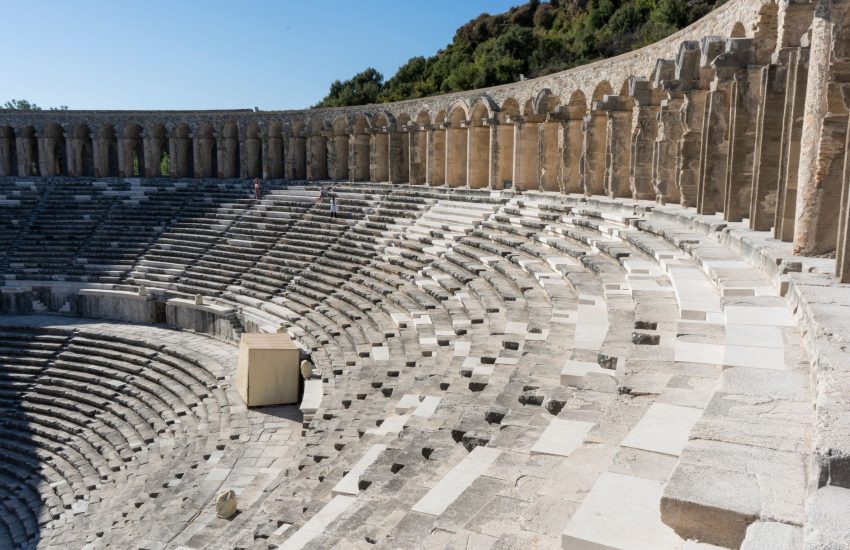
Rock Tombs (Kaunos)
Kaunos, like other ancient cities, has a large cemetery outside the settlement. Different types of graves stand out in the cemetery area positioned towards the view. In fact, there are dozens of king tombs carved into rocks in Dalyan and its immediate surroundings.
The most striking of these are the monumental rock tombs belonging to kings and nobles. The rock tombs carved into high rocks have become the symbol of Dalyan today.
The reason why the tombs are Lycian type rock tombs is the proximity of the region to the Caria-Lycia border. Rock tombs of this type have not been found anywhere outside Anatolia. It is especially easy to come across the most outstanding examples of rock tombs in the ancient cities of the Lycian Region. Kaunos is also a region rich in Lycian type rock tombs. Rock tombs in Dalyan date back to B.C.
It was built in the 4th century and was later used during the Roman Period. Some ceramics and pottery were found inside the rock tombs. In the Rock Tomb, you enter a 6 square meter room through the door behind the columns. In addition, the surroundings of the room were opened like a tunnel inside the mountain. In other words, you can wander around the mountain from outside the room.
However, climbing into the rock tombs has been prohibited for the last few years. Inside the tombs, there are three stone beds on which the dead were laid. There are two Ionic columns on the facade, and a frieze and pediments on the columns. Lion reliefs can be seen on one of the pediments.
Monastir (Hamam) Bay
After a short journey after Göbün and Merdivenli bays, you will encounter the unique beauty of Manastır Bay. Manastır Bay, also known locally as Cleopatra’s Bath or Sunken Bath Bay due to the ruins of an old bath in the southwest of the bay, has a tectonic coastal formation like many other bays in the bay.
When the slope of the hill just behind the bay is examined carefully, this tectonic structure and the channels that carry the waters of a crater lake that was active in the past on the hill to the shore can be clearly seen. Monastir Bay is covered with pine trees and occasionally carob trees from the shore to the hill. An ancient wall structure and other small ruins running parallel to the coast in the northeast direction remind you that you are not far from the ancient city of Lydae in Lycia.
You can reach Lydae from the Ağ Port as well as from Monastery Bay with a trail walk of approximately 1.5 hours. Monastery Bay is a beauty that should definitely be included in your route for day visits and overnight stays…
You May Like
Amasya Hotel Pension Accommodations