Phaselis, 35 km from Antalya. It is an ancient city right next to Tekirova. Phaselis is a word meaning “God is merciful” in the Hellenic language. According to Bilge Umar, it is of Luwian origin and comes from “Passala” meaning “sea town”.
According to legends, the city was founded in B.C. It was founded by Mopsos and Lakious at the end of the second millennium. According to the legend told by historian Athenaios, Lakious came here with some of his tribes, liked the land and decided to establish the city here. But at that time, a shepherd named Kylabras was living here and grazing his flocks here. Since there was no concept of money at that time, Lakious offered grain or fish from the shepherd in exchange for land.
The shepherd preferred dried fish and left the land with his flock. That’s why it has become a tradition to use dried fish as an offering here. In the following centuries, this was adopted so much that “Phaselis offering” remained an expression for a cheap sacrifice.
Strabo writes that Phaselis has three harbours, and the largest is in the south of the peninsula. Although the founding of the city is not certain, its name is mentioned in history as a stopover place for trade ships between Phoenicia and Greece. The city was founded as a colony of the Rhodesians in 690 BC due to its proximity to the rich forest area. In the 7th – 6th centuries BC, it earned its living from the sea and developed through trade.
When the Persians dominated Western Anatolia, Phselis also got its share. The city produced its first coins in BC. It was printed according to Persian standards in the 5th century BC. The oldest known silver coins from the 5th century have a ship on one side and a star on the other. 3rd century. Coin printing continues until . When Alexander the Great came to Anatolia, the city opened its doors to him. Strabon explains how Alexander benefited from this city as follows:
“…after this, you come to Phaselis, a city with three important ports, and a lake. Above this lies Solyma, a mountain, and Termessos, built next to the long passes between the mountains. Through this long pass, there is a strait crossing the mountain to Milyas. Alexander (Alexander) destroyed Milyas because he wanted to open the pass. Near Phaselis, there are long passes along the mountains by the sea, through which Alexander passed his army…”
Alexander treated the people of Phaselis very well and even accepted the ambassadors of the cities of Pamphlia here. After the death of Alexander, like other Lycian cities, it came under the rule of the Ptolemies between 309 and 197 BC. After the peace of Apameia, the administration of the city was given to the Rhodians. B.C. In 160, the city gained its freedom and joined the Lycian League. Meanwhile, the city, along with Olympos, harbored pirates for a while.
With Rome dominating the region, B.C. In 42, Brutus came to the city, cleared the region of pirates, and thus Roman rule began. After this, there was a great development in the city. Emperor Hadrian came to Phaselis in 129 AD, and the townspeople decorated everywhere with the statues of the emperor they made with their own means. They also built a monumental gate on the road to the port where the Emperor’s ship would dock.
Although the city was an important episcopal center during the Byzantine period, it was destroyed in A.D. In the 3rd century, pirate raids started again due to its convenient ports. In addition, the city, which was damaged by Arab raids, was abandoned in the 9th century AD. Trade dominates everything in this Lycian city. In the ancient world, the wild roses growing here and the perfume made from them were highly appreciated.
Their merchant people even abetted them during the Persian invasion, just so that their business would not be disrupted. In fact, the ship on the coins symbolizes trade and the fish symbolizes the founding legend. Athenaus explains that it was not considered very popular in the time of the city people. In fact, Statonikos, one of the well-known musicians of the period, answered the question of who the despicable people in the world were, in a drinking meeting, as follows:
“The most vile people of Pamphylia are the people of Phaselis, and the most vile people of the whole world are the people of Side.”
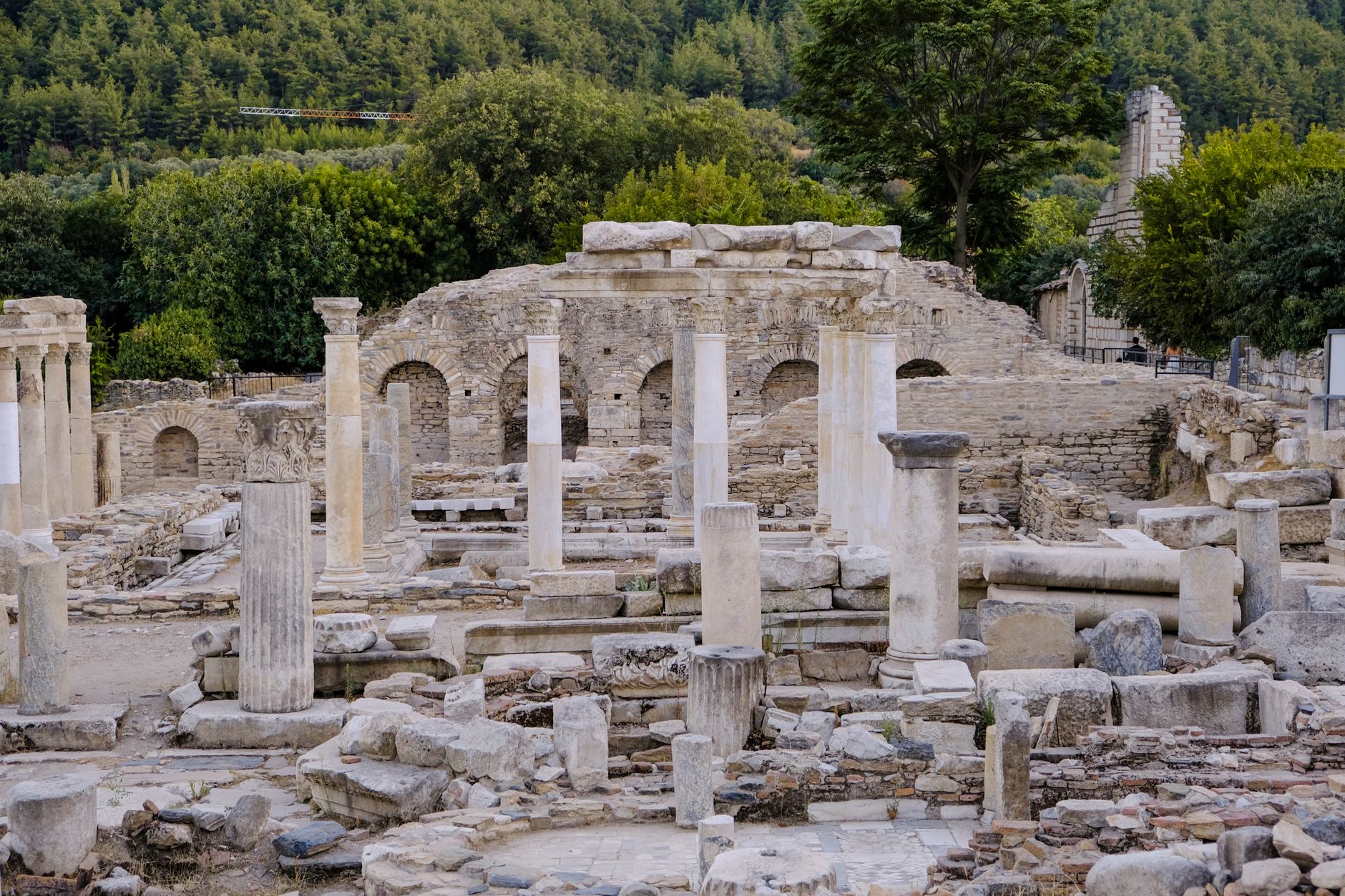
Ruins of PhaselisThe excavations of Phaselis are carried out by Antalya Museum in accordance with the protocol made between the Ministry of Culture and the Provincial Special Administration Directorate.
This is a city famous for its ports, the largest of which is in the south-west of the peninsula and at the entrance of this port is 200 m. There is also a long breakwater. Today, a large part of this breakwater is under water. The second port is to the north-east of the theatre, it also has a breakwater and has survived to the present day in a very good condition. The third port is on the wide beach in the north.
Although the ruins of the dock in the south of the harbor are visible, no breakwater was built there.
The ruins of the walls surrounding Phaselis can be seen in the south-west of the peninsula. The walls, which were repaired during the Byzantine period, have almost completely lost their old features.
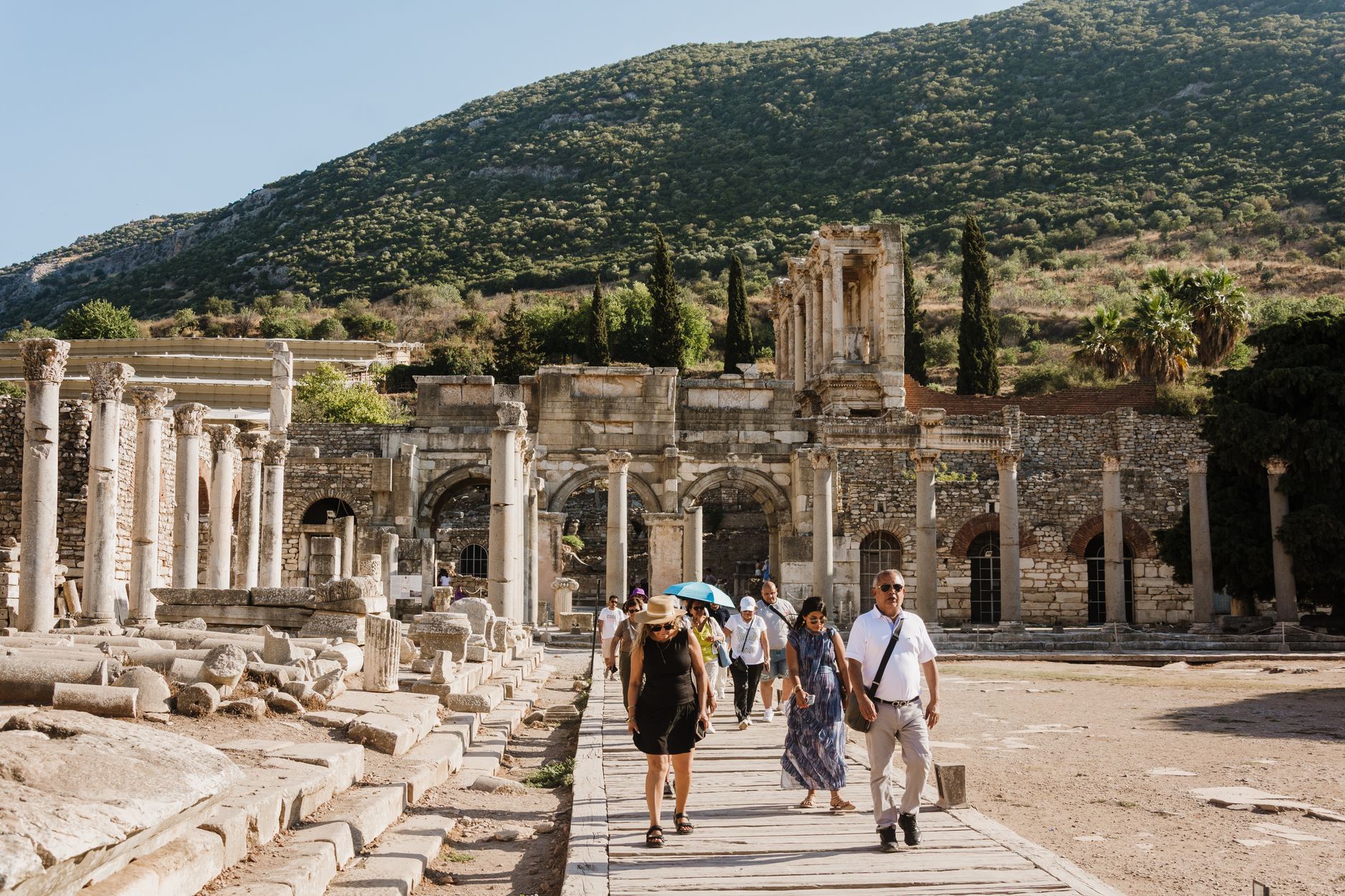
The state administration and other important buildings of Phaselis are lined up on both sides of the main street connecting the ports in the north and south. Its length is 125 m and its width is 20-25 m. The street is accessed by three steps on each side. The street, which also has a square in the middle, is paved with smooth stones and a perfect sewer system has been built underneath.
The ruins of Emperor Hadrian’s gate are in the west of the street, the shops lined up along the street, the complex planned structure behind them, the bathhouse and the Gymnasium are in very good condition. The rooms built for sports training behind the Gymnasium have largely lost their feature due to the additions made in later periods.
However, its mosaic-paved floor, two doors and the sections leading to the changing rooms, cold and warm rooms in the south are still in good condition. M.S. It is clear that the Bath, built in the 3rd century, was also used in later periods.
Agora is to the south of the Turkish Bath and opens to the square with a large door. Since it was built during the reign of Emperor Hadrian (AD 117-138), the Agora was named after the Emperor and statues were placed on the walls facing the street. Among these, the statues of Opramoas of Rhodiapolis and Saxa Amyntianus, who helped the Lycian cities and especially gave their greatest support to them, had a different position in A.D. V-VI.
In the 19th century, a rectangular basilica was added to the northwest of Hadrian’s Agora, of which only the apse is visible today.
A second Agora was added to the south of where Phaselis main street meets the square. This Agora, called Domitian’s Agora, is a symbol of the aid provided to the city by Emperor Domitian (81-96 AD). Reflecting late period architecture, this Agora opens to the street with two doors. There is an inscription of Emperor Domitianus on one of the doors. The agora, which is a large building complex with a courtyard, has an inner courtyard surrounded by porticos.
The shops behind them have survived to the present day in a very good condition.
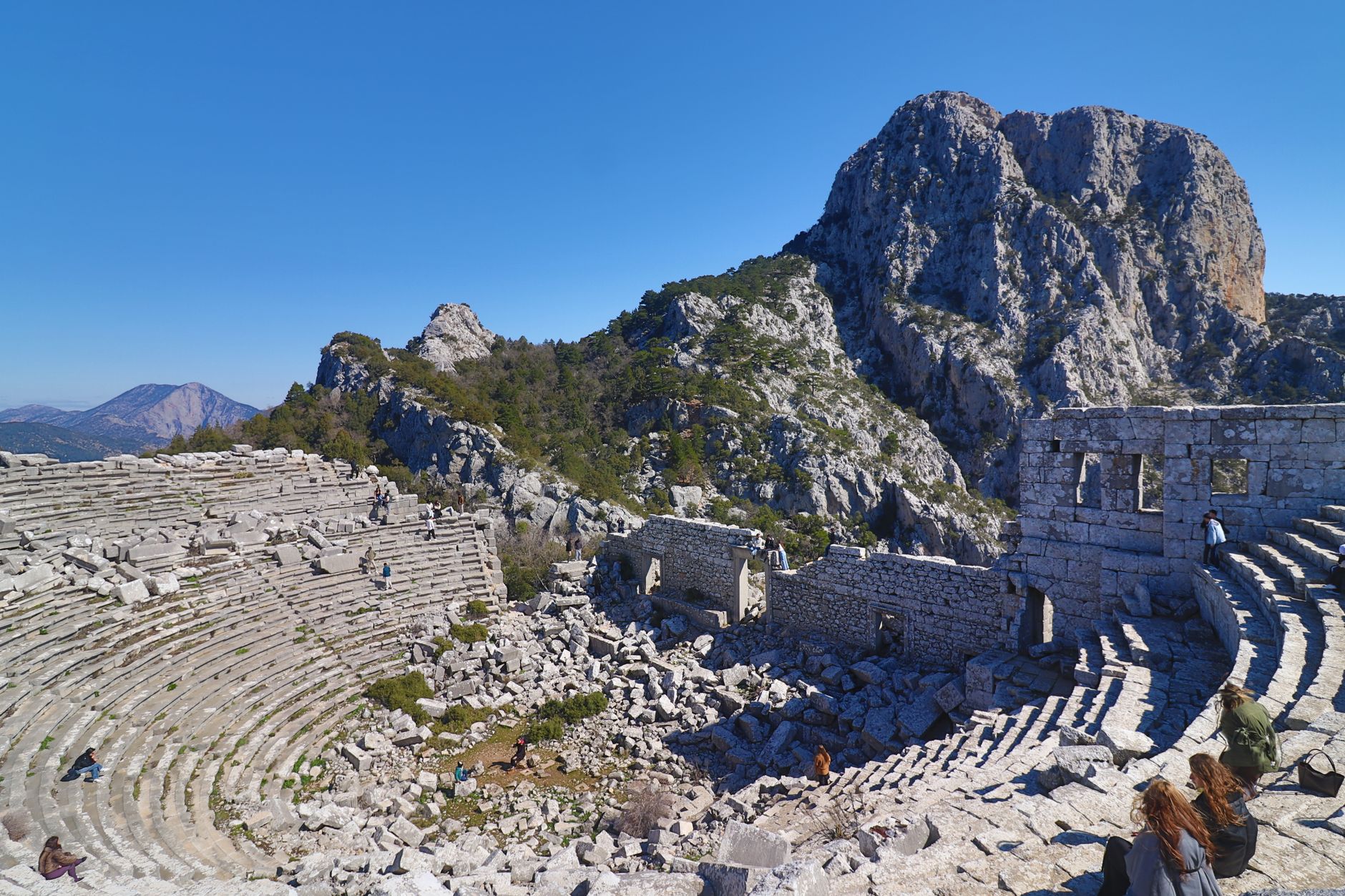
The theater is at the top of the hill on the peninsula and is towards the west. M.S. 2nd century. We do not have enough information and documents to understand whether the dated theater was built on a Hellenistic structure. It has a capacity of approximately 1500-2000 people. The theater, which overlooks both the city and the sea, is accessed via stone stairs from the main street.
The entrances and exits are on the side, the Cavea is semicircular and has 20 rows of seats divided into five sections with four stairs. It is understood from the ruins that Scene was entered through five different doors. The upper part of the theater, which consists of two floors, has not survived to the present day. The Temple of Athena was located in the Acropolis above the Phaselis Theatre. It is also learned from sources that there were temples dedicated to Heracles, Hestia and Hermes.
Although there are necropolises in a few parts of the city, they were largely destroyed by treasure hunters. The one in the best condition is by the sea, on the north port side.
You May Like
Aspendos Ancient Theater Travel Guide