In the heart of the city of Pune in Maharashtra rise the massive fortified walls of Shaniwar Wada, the great seat of the Peshwas who once guided the destiny of the Maratha Empire. Though a devastating fire long ago consumed much of the mansion that stood within, the mighty gates and ramparts remain, charged with the memory of power, intrigue and one of the most haunting legends in Indian history.
You come to Shaniwar Wada to stand at the center of Maratha power at its height, the stronghold from which the Peshwas ruled much of India. Behind its spiked gates once rose a sprawling palace of courtyards, fountains and halls; today its walls enclose a storied ruin that still stirs the imagination of all who enter.
In this guide you will get to know Shaniwar Wada beyond its weathered walls. We will trace the rise of the Peshwas who built it, explore its formidable gates and the palace that once stood within, confront the tragic legend that haunts it, and understand why this fortress-palace remains one of the most evocative historic sites in India. By the end you will see why Shaniwar Wada holds such a powerful grip on the imagination.
In This Article
- Arriving at Shaniwar Wada
- The Mighty Peshwas
- The Founder and His Vision
- The Palace That Once Stood
- The Formidable Gates
- The Great Fire
- The Haunting Legend
- The Ruins and Grounds Within
- History Brought to Life
- The Heart of Historic Pune
- The Culture of the Peshwa Court
- A Closer Look on Film
- Shaniwar Wada Today
Arriving at Shaniwar Wada
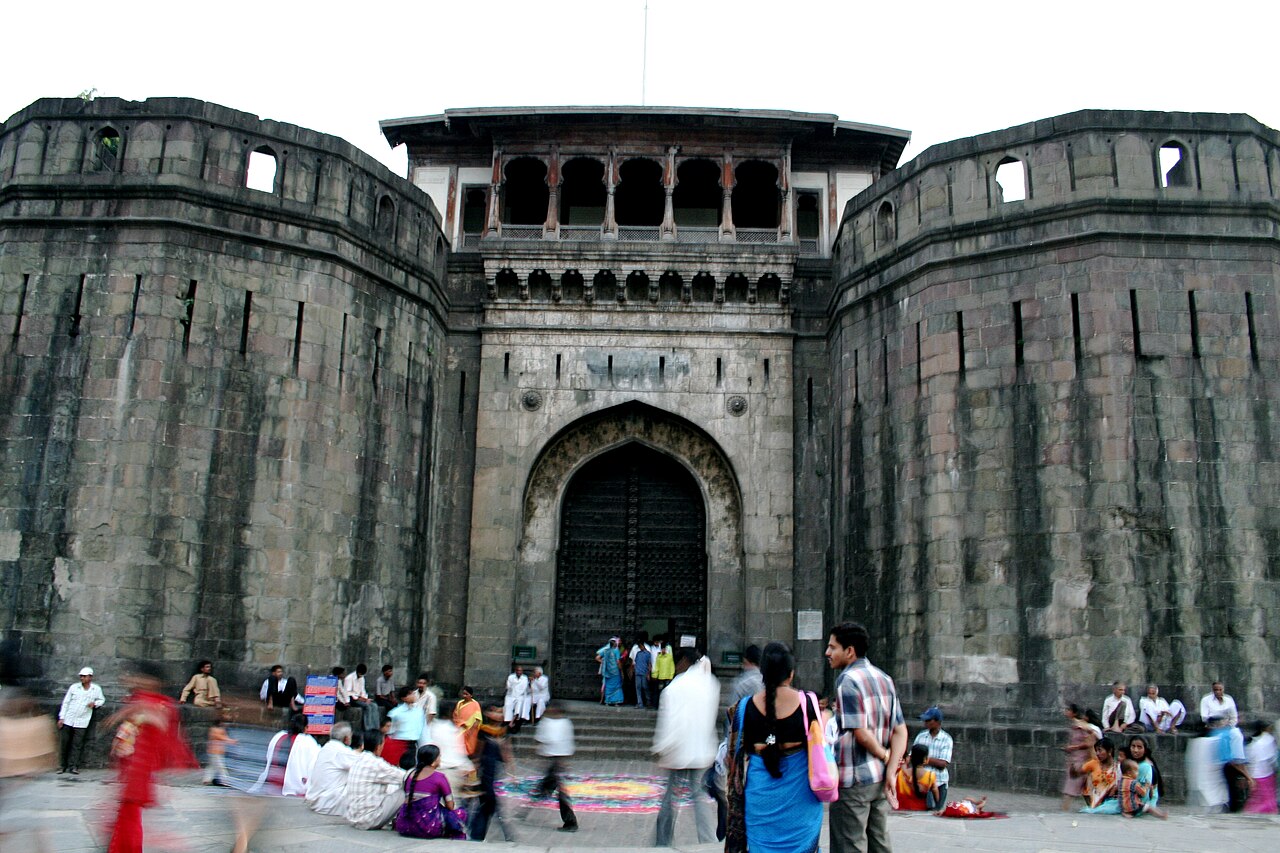
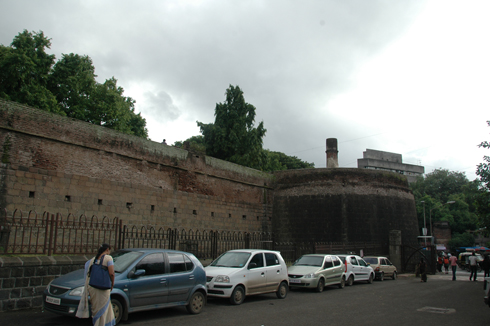
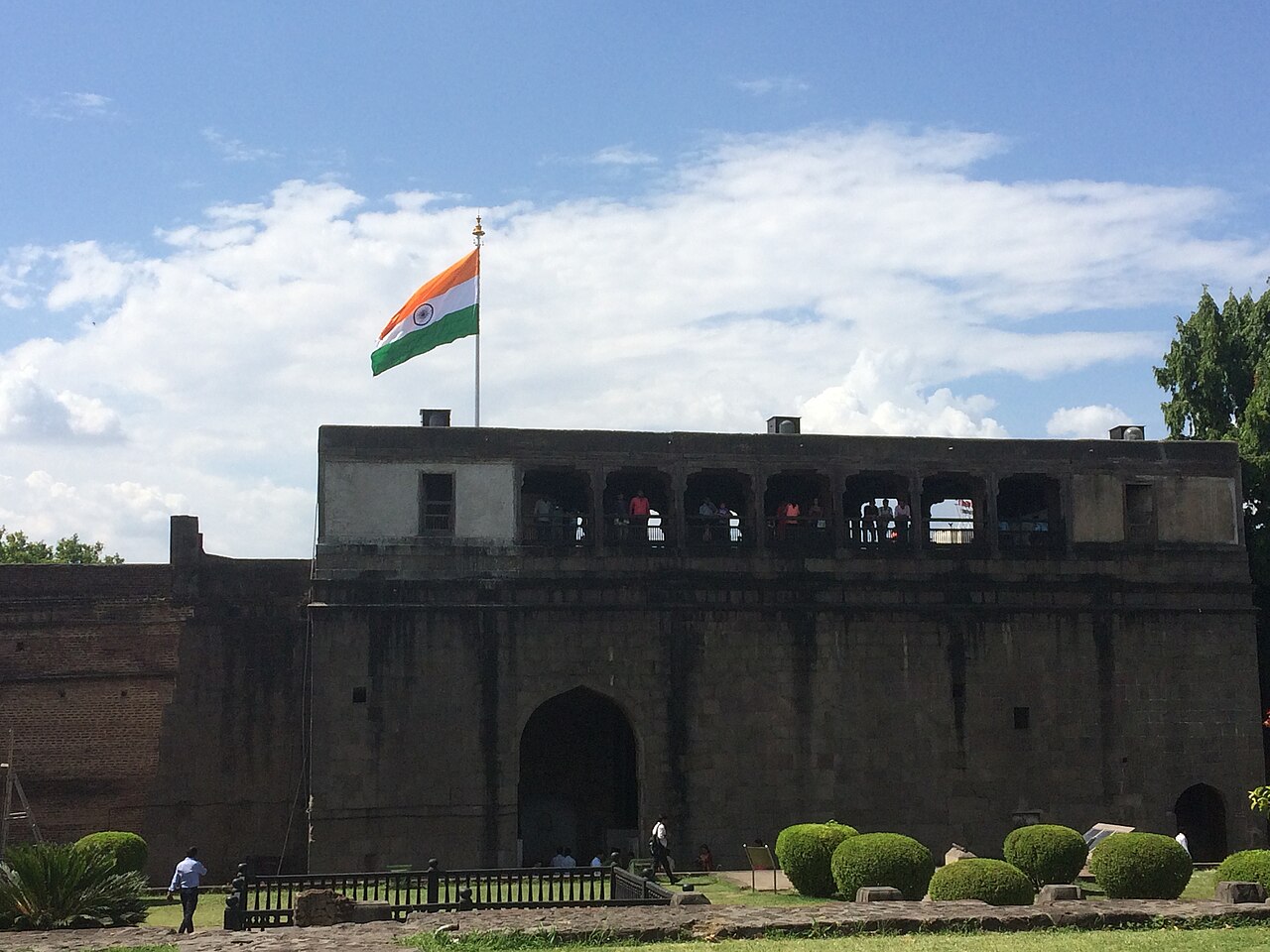
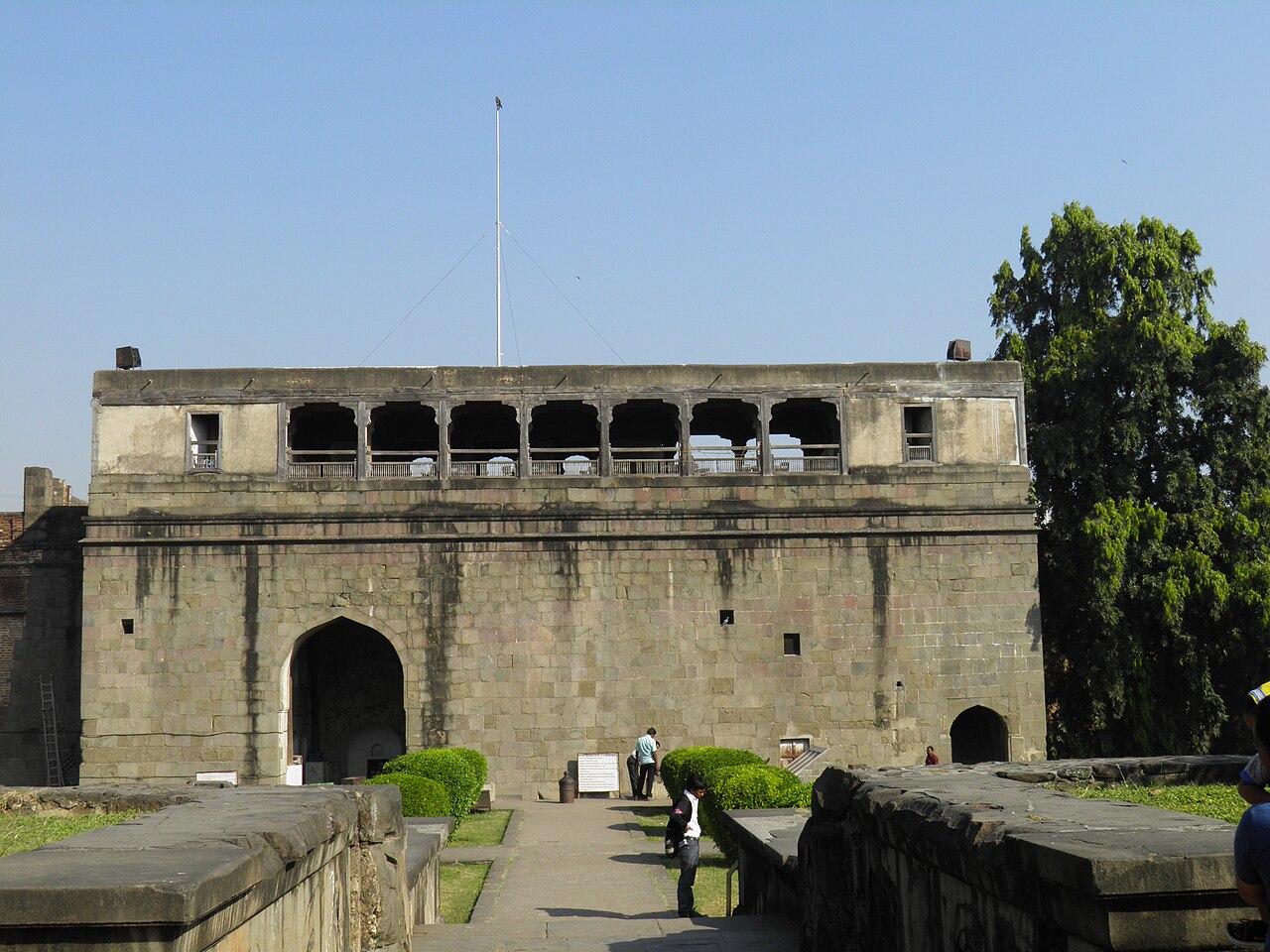
Your first sight of Shaniwar Wada is of massive, dark stone walls and a great fortified gateway rising in the midst of the busy city. Unlike a delicate palace of marble or carved stone, this is a stronghold, imposing and martial, its very appearance speaking of power and defense.
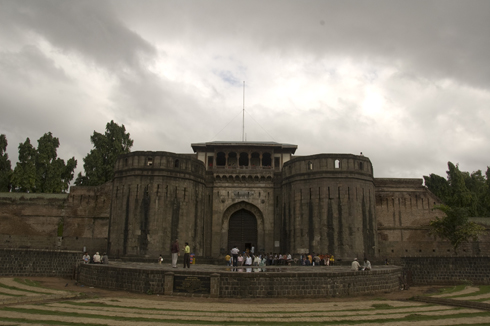
The fortress stands in the heart of old Pune, its ramparts enclosing a large compound. Passing through the great gate, you enter a vast open space where once a sprawling palace stood, now largely a green and atmospheric ruin within the surviving walls.
As a protected monument, Shaniwar Wada welcomes those who come to explore its history and legend. Walking its grounds, you feel the weight of the dramatic events that unfolded here, at the very center of Maratha power.
Take a moment to appreciate the scale of the walls and gates before exploring within. The fortified exterior tells much of the story, a reminder that this was the stronghold of a dynasty that ruled an empire.
The contrast between the martial walls and the busy modern city around them is striking, a fragment of a heroic age set amid everyday life.
First-time visitors often feel the weight of history the moment they pass through the great gate.
It is a place where imagination is essential, for much of its grandeur must be pictured rather than seen.
The surviving walls, however, are impressive enough to convey the scale of what once stood here.
The approach prepares you for a monument of power rather than delicacy, and that martial character is part of its appeal.
Set amid the bustle of modern Pune, the fortress offers a sudden and dramatic plunge into the past.
The transition from busy street to silent rampart is one of the memorable experiences of a visit.
Few first impressions in Pune are as powerful as the sight of those dark, spiked gates.
It is a monument that rewards both the historian and the casual visitor, each finding something to marvel at within its walls.
Whatever draws you here, the fortress leaves a deep and lasting impression on every visitor.
The Mighty Peshwas
Shaniwar Wada is inseparable from the Peshwas, the powerful ministers who rose to become the effective rulers of the vast Maratha Empire. From this stronghold they directed the affairs of a realm that at its height dominated much of the Indian subcontinent.
The Peshwas transformed their office from that of a minister into a dynasty of rulers in their own right, leading the Maratha confederacy through an age of expansion and power. Shaniwar Wada was the seat from which they governed.
Under the Peshwas, Pune grew into a great capital, and Shaniwar Wada stood at its heart as the center of political power. The fortress was the stage for the councils, ceremonies and intrigues of one of India’s mightiest powers.
Keeping this in mind transforms a visit. Shaniwar Wada is not merely an old fort but the seat of a dynasty that shaped the history of India, the stronghold of the Maratha power at its zenith.
At their height, the Peshwas commanded the allegiance of a vast confederacy stretching across much of India.
Their rise from ministers to rulers is one of the most remarkable stories in Indian history, and the fortress is its monument.
Their legacy endures in the fortress, the most powerful reminder of the age when the Marathas dominated India.
The office of Peshwa became hereditary, and its holders ruled with the authority of kings.
From Shaniwar Wada they coordinated campaigns and alliances across the subcontinent.
Their court attracted the ablest administrators and soldiers of the age, making Pune a magnet for talent.
The story of their rise and eventual fall mirrors the arc of the Maratha Empire itself.
Shaniwar Wada remains the single most powerful symbol of that extraordinary chapter.
To walk the fortress is to walk in the footsteps of the men who once ruled much of India from this very spot.
The administrative systems they developed were sophisticated for their time, governing a vast and diverse realm.
Their diplomacy and warfare shaped the political map of eighteenth-century India.
The fortress witnessed the full arc of their story, from triumphant expansion to eventual decline.
No other site so completely embodies the memory of Maratha power at its height.
Their memory is cherished across Maharashtra, and the fortress is the enduring symbol of their achievement.
From this single stronghold, decisions were taken that echoed across the whole of the subcontinent, shaping the fate of kingdoms far away.
The Founder and His Vision
The fortress was founded by one of the greatest of the Peshwas, a brilliant general and statesman who laid its foundation stone in the early eighteenth century. Under his leadership the Maratha power expanded dramatically, and Shaniwar Wada rose as the symbol of that ascendancy.
This founder was renowned as an undefeated commander, a figure of energy and ambition who carried Maratha arms across much of India. The fortress he began reflected the confidence and power of his age.
The building of Shaniwar Wada was a statement of intent, the creation of a grand seat worthy of a rising power. Its construction marked the emergence of Pune as the true center of Maratha authority.
Understanding this founder enriches a visit. Shaniwar Wada was born of the ambition of a remarkable leader, and it carried the imprint of his vision throughout its history.
His military genius became legendary, and under him the Maratha power reached new heights.
The fortress he founded would remain the seat of his dynasty for generations.
His reputation as a brilliant and tireless commander endures to this day in the history of the Marathas.
In founding the fortress, he gave his dynasty a seat worthy of its soaring ambitions.
The energy of his reign set the tone for the dynasty that followed, ambitious, confident and expansive.
It is fitting that so dynamic a leader should have founded so formidable a stronghold.
His legend, like the fortress he founded, has endured as a symbol of Maratha pride.
Legends of his campaigns are still recounted across Maharashtra, and the fortress keeps his memory alive.
His descendants would hold the fortress for decades, making it the enduring heart of Maratha power.
The Palace That Once Stood
Within the fortified walls once rose a magnificent palace, a sprawling mansion said to have stood several storeys high, filled with halls, courtyards, fountains and gardens. It was one of the grandest residences in India, the splendid home of the ruling Peshwas.
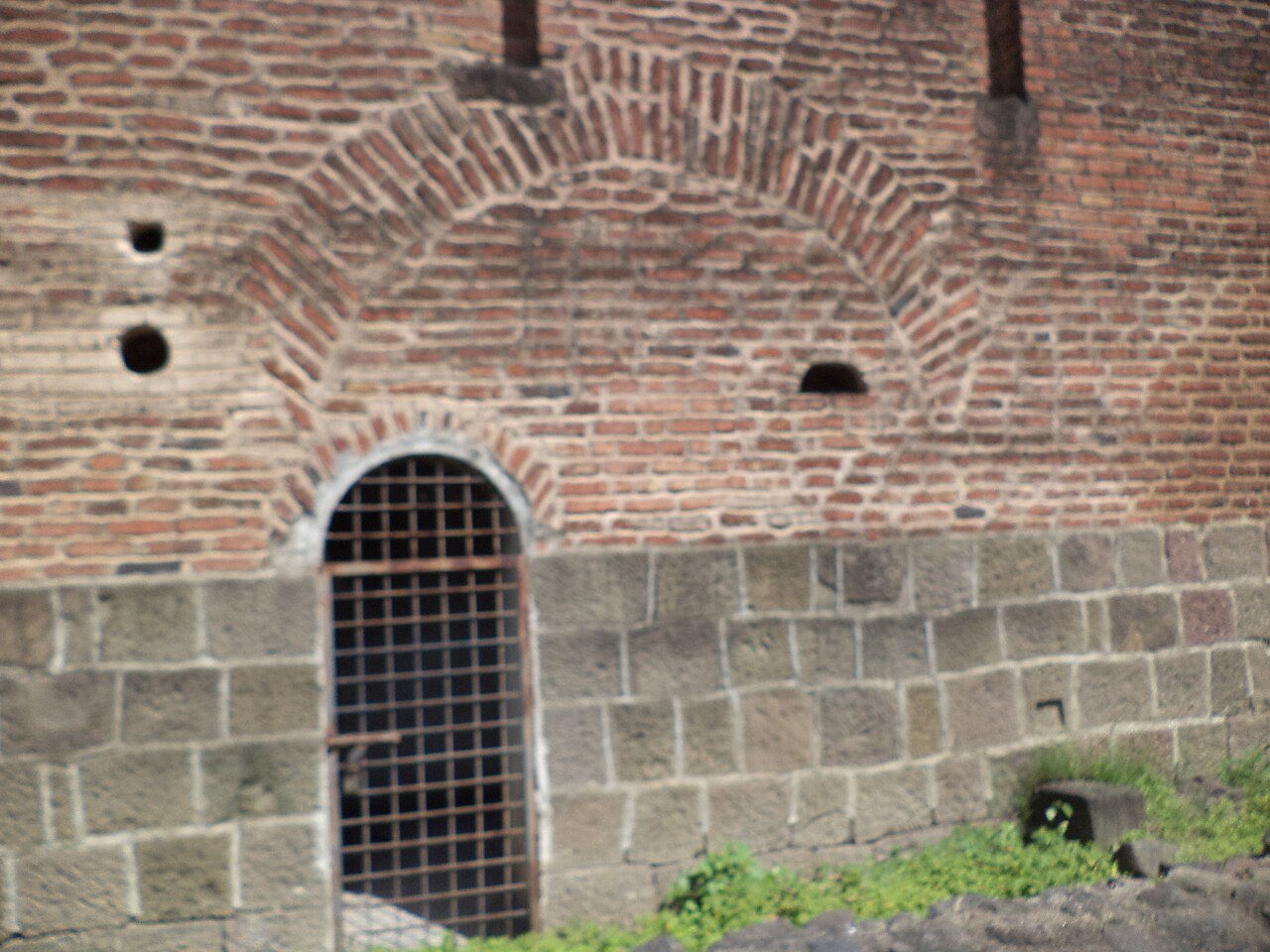
The palace was renowned for its luxury and beauty, with ornate halls, intricate woodwork and elegant chambers. Fountains played in its courtyards, and its upper storeys offered views across the city and beyond.
Though little of this grand mansion survives today, accounts and remains allow us to imagine its former splendor. The vast open space within the walls hints at the scale of what once stood here.
To walk the grounds today is to picture the lost palace rising around you, a reminder of the grandeur that the fire would later consume. The absence itself is eloquent, evoking a vanished magnificence.
Contemporary accounts describe a palace of great beauty, with painted halls and cool, fountain-filled courtyards.
Its upper storeys were said to command sweeping views across Pune and the surrounding country.
The scale of the vanished mansion is hard to grasp today, but the vast enclosure hints at its former grandeur.
The fountains and gardens within were designed for both pleasure and display, the mark of a confident court.
Craftsmen and artisans lavished their skills on the mansion, making it one of the wonders of its day.
The vanished palace lives on in the imagination, conjured from accounts and the silent testimony of the walls.
It is said the mansion rose through several storeys, a rare height for a residence of its age in India.
The loss of so grand a structure is one of the great tragedies of Indian architectural history.
To imagine it fully is part of the pleasure and poignancy of a visit to the fortress today.
The memory of its lost splendor lends every corner of the ruin a quiet, elegiac beauty.
The Formidable Gates
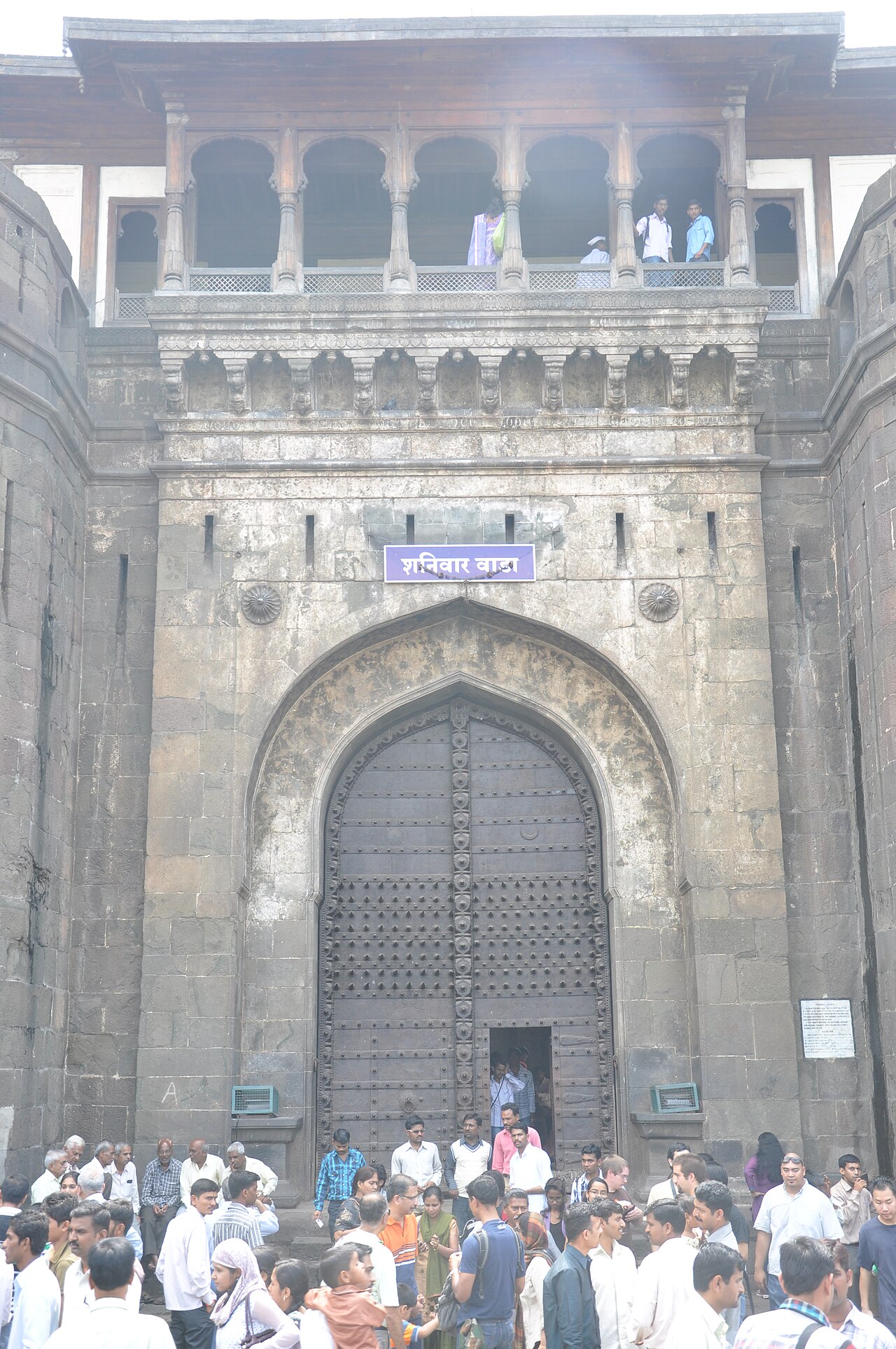
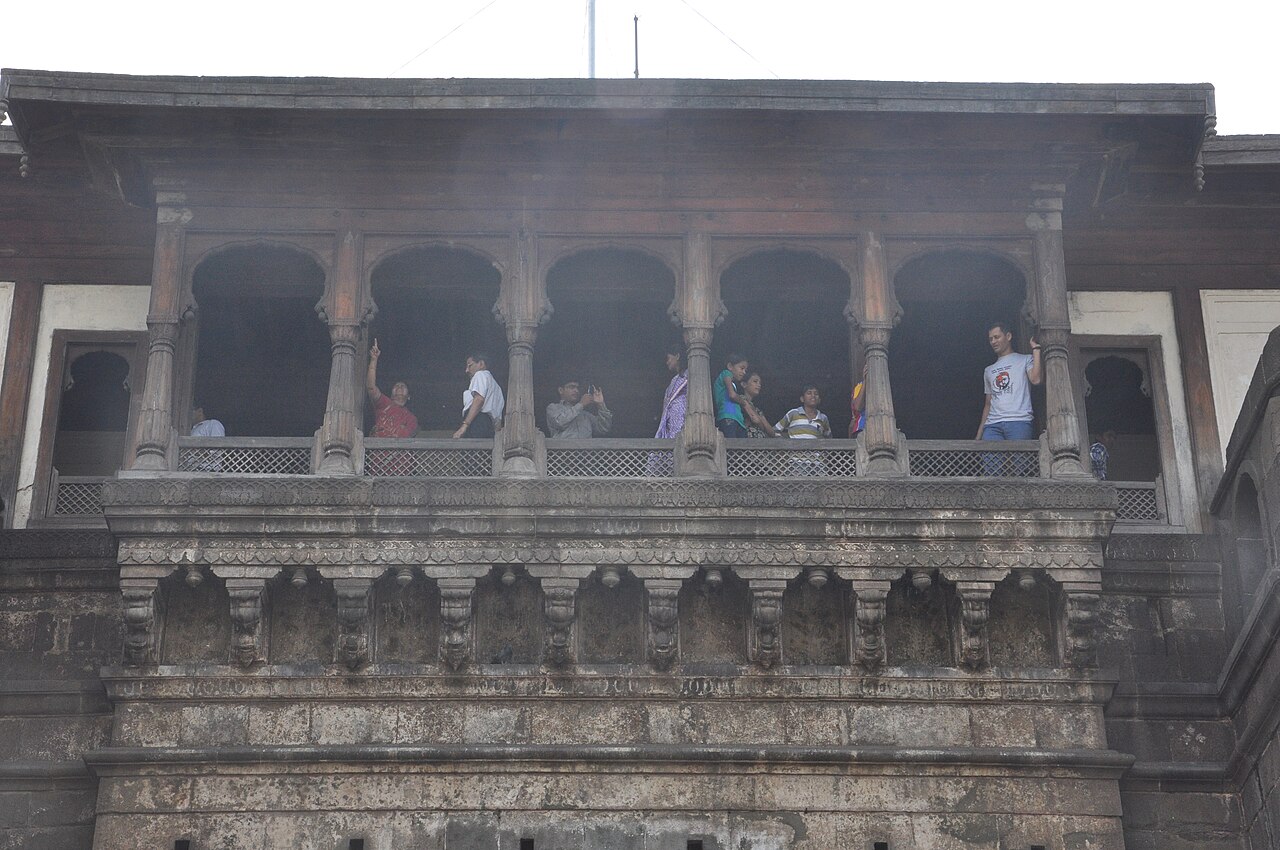
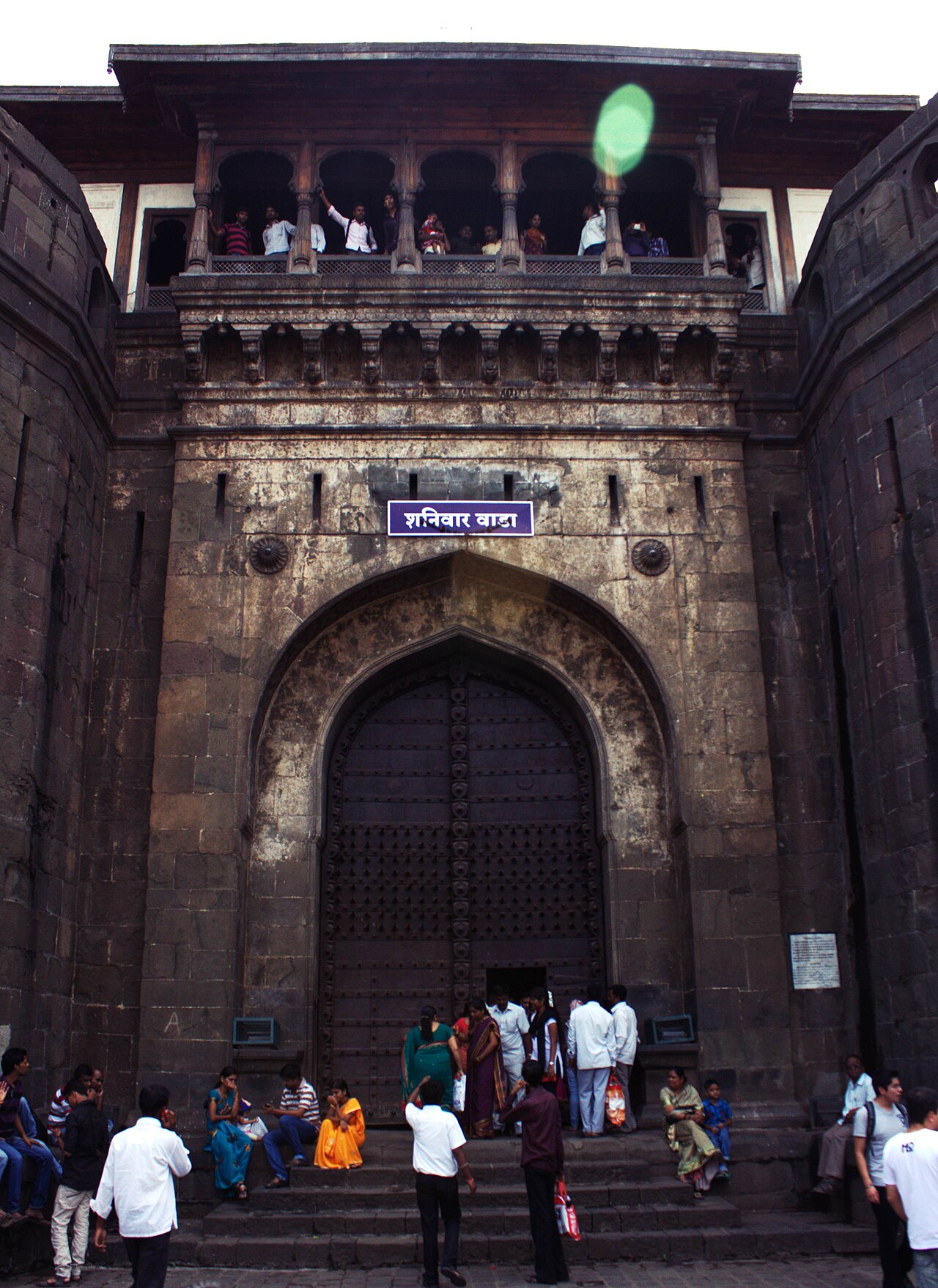
Among the most impressive surviving features of Shaniwar Wada are its great gates, massive fortified entrances built to withstand assault. The main gate in particular is famous for the fearsome iron spikes set into its doors, designed to repel attacking war elephants.
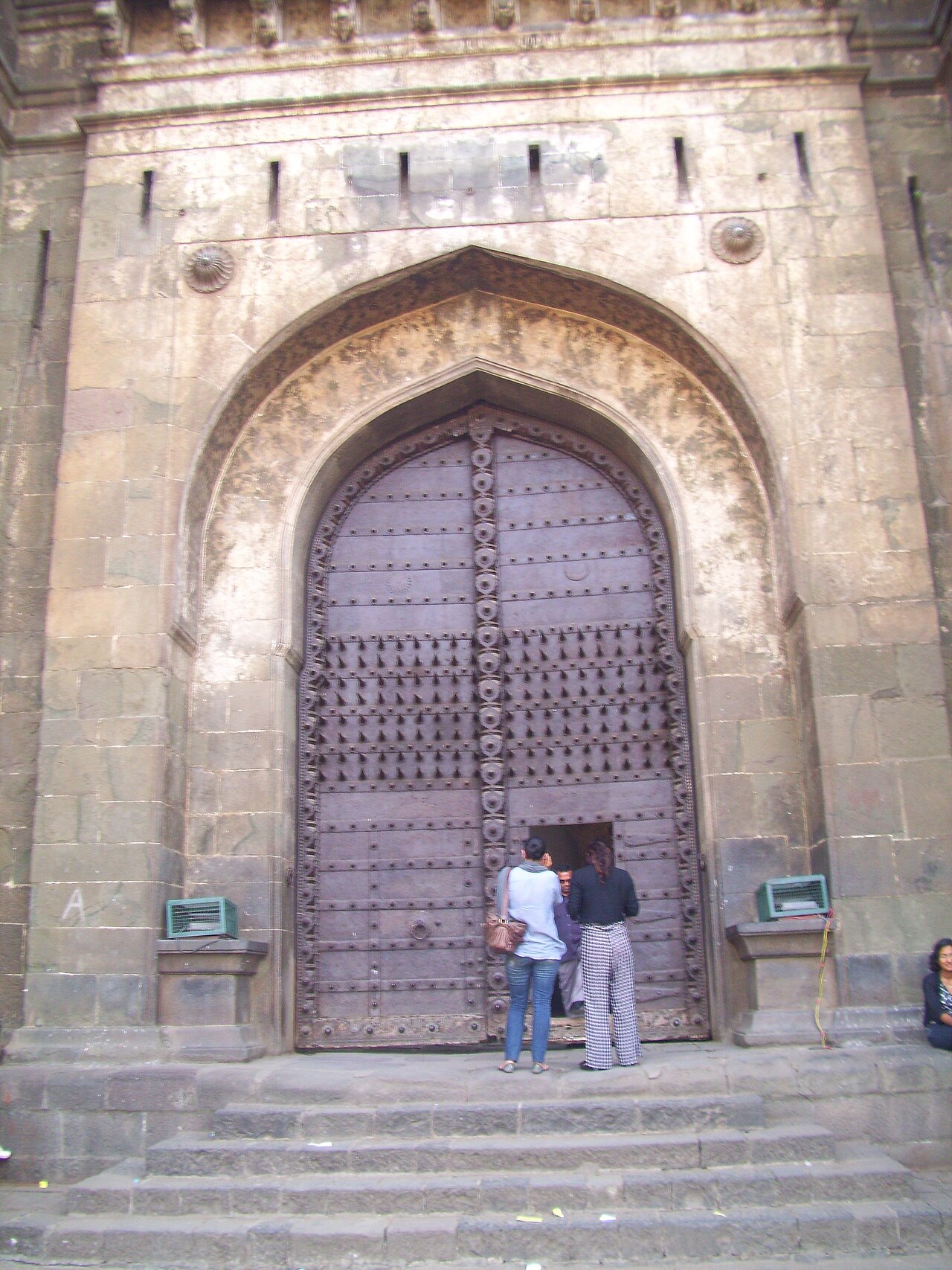
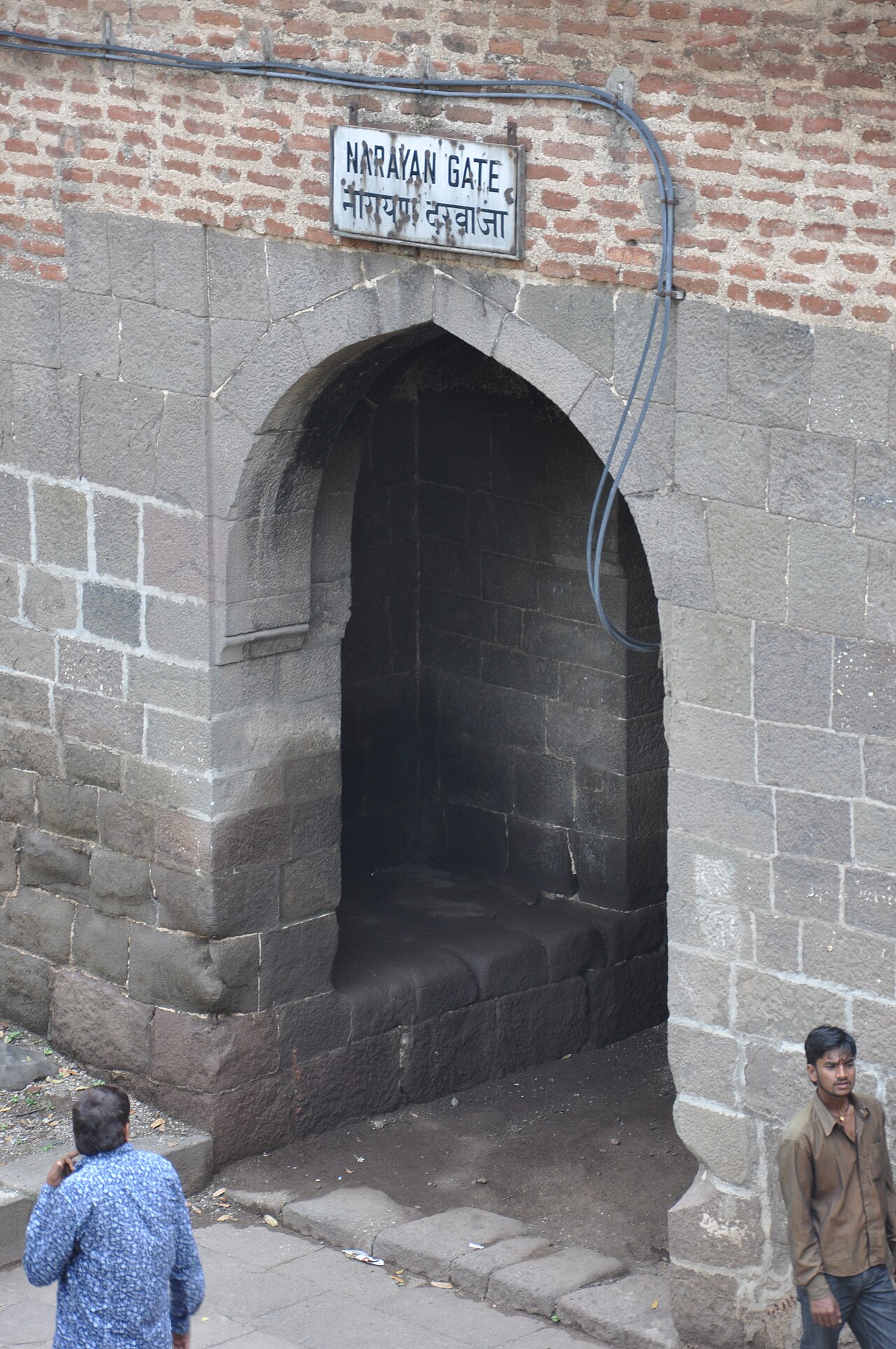
These gates are masterpieces of defensive architecture, their sheer scale and strength conveying the martial character of the fortress. Passing through them, you feel the power they were built to protect.
Each gate had its own name and purpose, and together they formed a formidable system of defense. They remain among the best-preserved and most striking features of the whole complex.
Take time to examine the gates closely, for they are among the highlights of a visit. The spiked main gate in particular is an unforgettable sight, a vivid reminder of the warfare of the age.
The iron spikes of the main gate, set at the height of an elephant’s head, speak vividly of the warfare the fortress was built to withstand.
Each gate was a statement of strength as well as a practical defense.
Standing before them, one senses the power and ambition of the dynasty that raised them.
The gates were named and oriented with care, each playing its part in the fortress’s defenses and ceremonies.
They remain the most tangible link to the martial world of the Peshwas.
For many visitors, the great spiked gate is the single most memorable image of the fortress.
The scale of the fortifications reminds us that this was an age of constant warfare and shifting alliances.
The gates stand today as proud survivors of a turbulent era.
Each visitor who passes beneath them follows in the footsteps of the Peshwas and their armies.
In their strength and scale, the gates capture the martial spirit of the Maratha age better than any description could.
Few architectural details in India tell so vivid a story of warfare as those iron-spiked doors.
The Great Fire
The splendor of Shaniwar Wada came to a tragic end in a devastating fire that swept through the palace in the early nineteenth century. The blaze raged for days, consuming the magnificent mansion and leaving only the massive outer walls and gates standing.
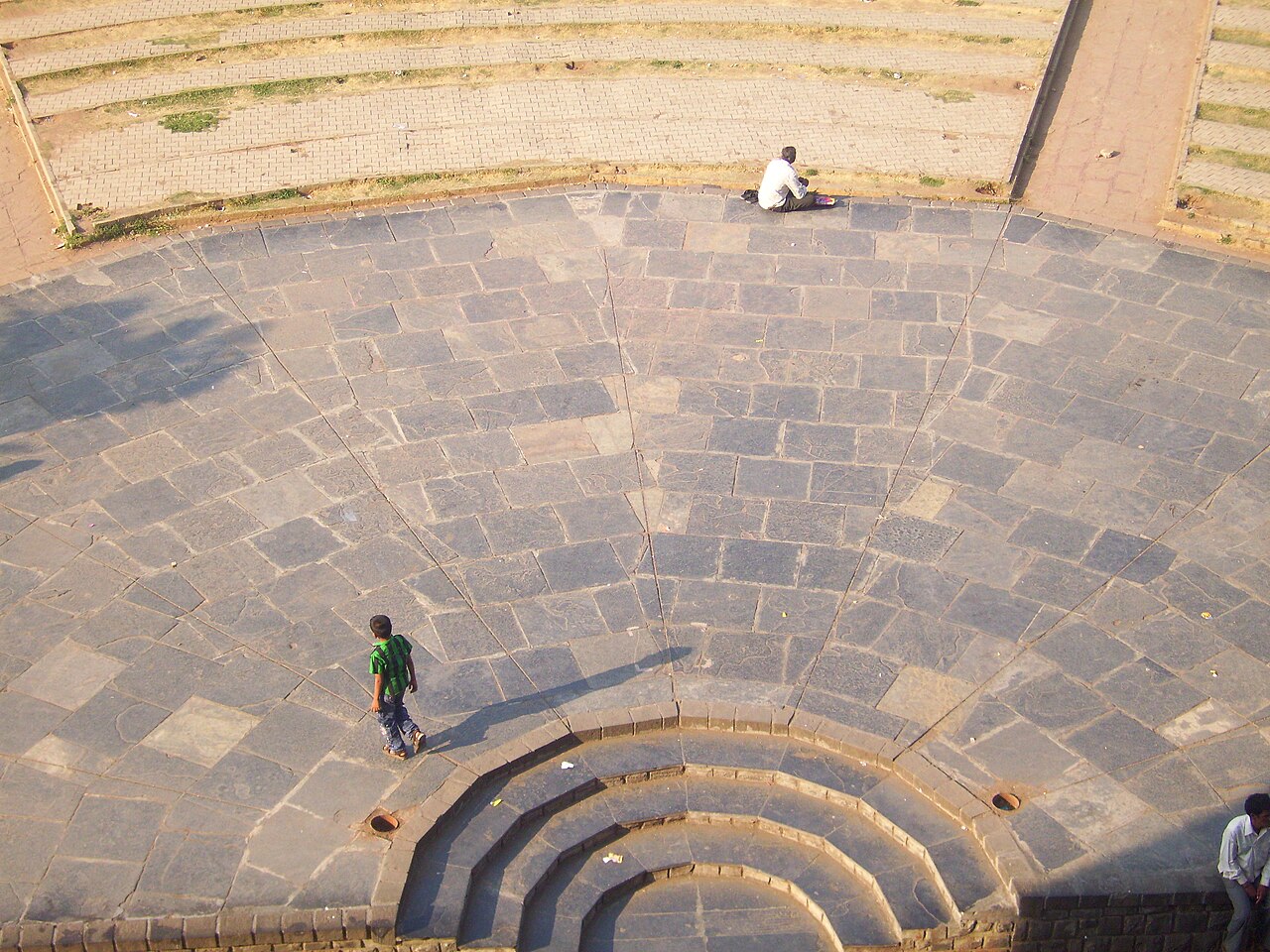
The loss was immense, reducing one of India’s grandest palaces to a shell. What the fire spared, time and change further reduced, so that today the interior is largely an open ruin within the surviving fortifications.
The cause of the great fire remains uncertain, adding to the air of mystery that surrounds the site. Whatever its origin, it marked the end of Shaniwar Wada as a living palace.
To stand within the walls today is to feel the poignancy of this loss. The grandeur that once filled the space is gone, leaving only the mighty walls as witnesses to what was.
For days the flames consumed the mansion, and when they died only the great walls remained.
The destruction was so complete that the palace was never rebuilt.
The great fire stands as a turning point in the story of the fortress, dividing its age of glory from its age of ruin.
Yet even in ruin, the walls preserve the memory of all that was lost.
The ruin that followed has, paradoxically, given the fortress much of its haunting power.
Visitors today confront not the splendor of the palace but the eloquent emptiness left by its loss.
The memory of that catastrophe hangs over the ruins, deepening their melancholy grandeur.
The ruins left by the fire have, over time, acquired a beauty and resonance all their own.
They draw visitors who come to reflect as much as to admire.
It is sobering to think how swiftly so much splendor was reduced to ash and bare stone.
What survives, though a fraction of the original, is still enough to humble and move every visitor who enters.
The Haunting Legend
Shaniwar Wada is famous not only for its history but for one of the most haunting legends in India. The fortress is associated with a terrible episode of royal intrigue, the murder of a young Peshwa within its walls, a crime of betrayal that has echoed down the centuries.
According to the legend, the cries of the murdered young ruler still echo through the fortress, and Shaniwar Wada has gained a reputation as one of the most haunted places in the country. The story lends the site a dark and powerful atmosphere.
Whether or not one believes the tales of hauntings, the historical tragedy behind them is real, a reminder of the ruthless intrigues that could accompany power. It gives the fortress an emotional depth beyond its stones.
For many visitors, the legend is part of the fascination of Shaniwar Wada. It draws those curious about the supernatural as well as those interested in history, adding to the site’s enduring mystique.
The tale of betrayal and murder has become inseparable from the fortress, part of its dark and compelling aura.
It is a story that continues to draw the curious from across India and beyond.
Beneath the ghostly tales lies a true human tragedy, which lends the fortress a genuine and lasting poignancy.
The fortress’s reputation for hauntings has made it a magnet for those drawn to tales of the supernatural.
But it is the real history of ambition and betrayal that gives the legend its enduring power.
Guides and locals alike delight in recounting the tale, and it has become part of the very identity of the fortress.
The combination of real tragedy and ghostly legend gives Shaniwar Wada a unique hold on the imagination.
Few historic sites in India are so steeped in story.
Whatever one makes of the ghost stories, the fortress undeniably possesses a brooding, powerful atmosphere.
For many, the mingling of history and legend is precisely what makes a visit so unforgettable.
The Ruins and Grounds Within
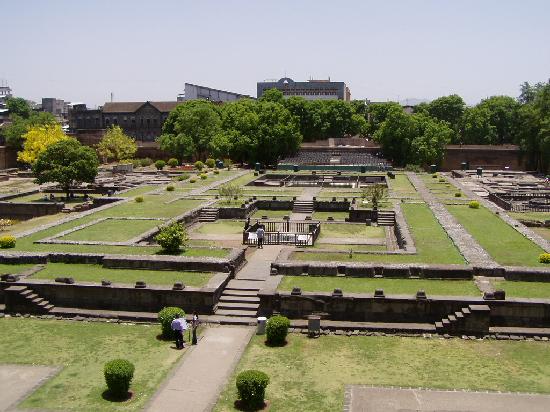
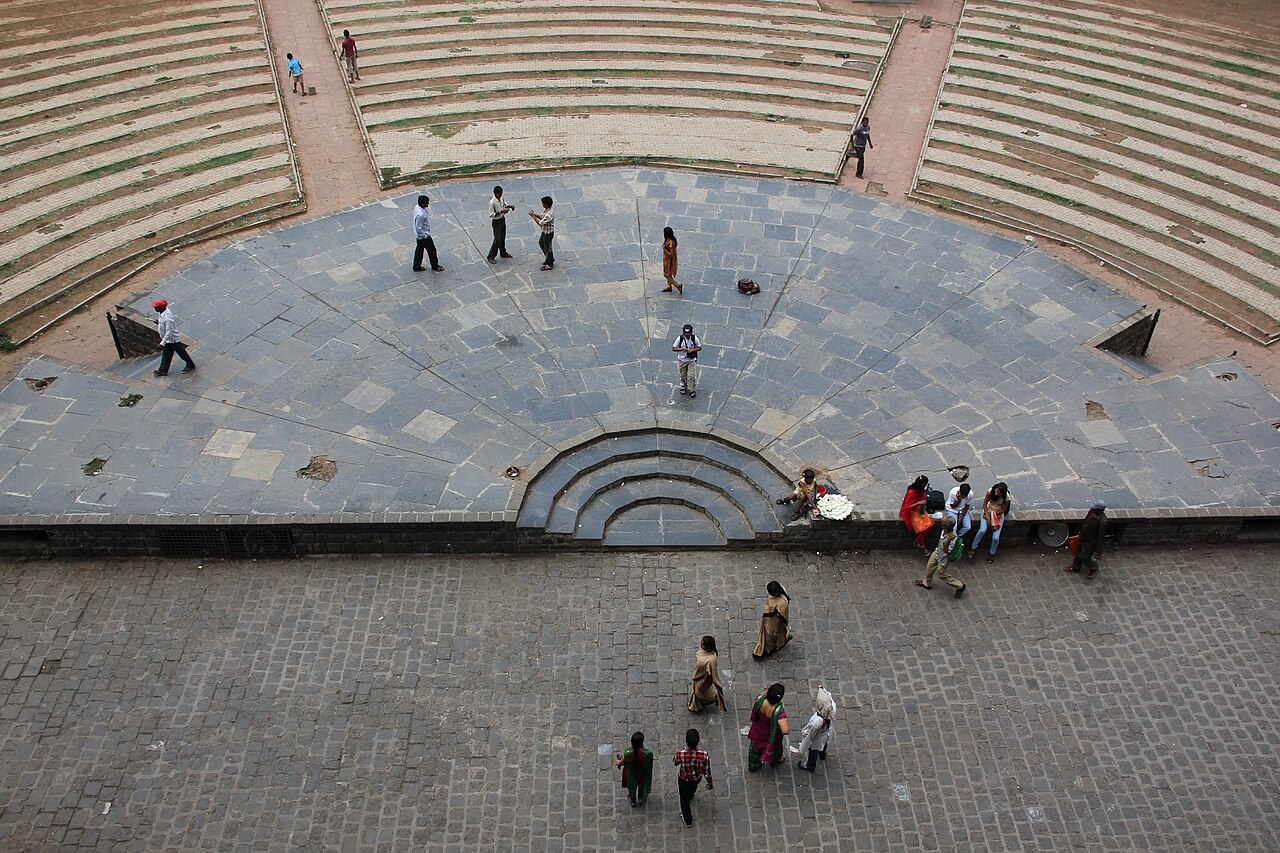
Within the great walls, the grounds of Shaniwar Wada are now a largely open space, dotted with the foundations and remains of the vanished palace. Walking among them, you can trace the outlines of courtyards, halls and the famous fountains that once adorned the complex.
Among the remains are the bases of structures, old steps, and the foundations of a renowned lotus-shaped fountain that was one of the glories of the palace. These fragments evoke the grandeur that once filled the space.
The green and open character of the grounds today lends them a melancholy beauty, a peaceful ruin at the heart of a busy city. It is a place that invites quiet reflection on the rise and fall of power.
Exploring the grounds, you piece together the story of the lost palace from its surviving traces. It is an atmospheric experience, rewarding the imaginative visitor with glimpses of a vanished world.
The lotus-shaped fountain, now reduced to its foundations, was once among the marvels of the palace, famed for its elaborate design.
Markers and remains help the visitor reconstruct the layout of the vanished mansion.
The open grounds, enclosed by the mighty walls, have a serene and reflective atmosphere all their own.
Wandering the grounds at a quiet hour, one feels the melancholy grandeur of a great power brought low.
The foundations and fragments scattered across the grounds are like words from a half-erased story.
Piecing them together is part of the quiet pleasure of a visit.
In the contrast between the mighty walls and the empty space within lies much of the fortress’s poignant power.
In spring and after the rains, the grounds turn green, softening the austerity of the surviving walls.
The quiet of the grounds offers a striking contrast to the drama of the history that unfolded here.
It is a place that rewards slow, reflective exploration far more than a hurried glance.
Benches and shaded corners invite the visitor to pause and absorb the atmosphere of this storied place.
History Brought to Life
Today Shaniwar Wada is brought vividly to life through a famous sound-and-light show, which recounts the history and legends of the fortress after dark. The show uses the dramatic setting of the walls and grounds to tell the story of the Peshwas and their stronghold.
Through light, sound and narration, the show conjures the vanished palace and the dramatic events that unfolded here, from the glory of the Peshwas to the tragedy of the fire and the haunting legend. It is a memorable way to experience the site.
The performance draws visitors in the evening, when the atmosphere of the fortress is at its most evocative. It has become one of the most popular ways to engage with the history of Shaniwar Wada.
For the visitor, the sound-and-light show is a wonderful complement to a daytime visit, bringing the stones to life and making the history and legend of the fortress unforgettable.
Narrated with drama and feeling, the show transforms the ruins into a stage for the story of the Peshwas.
Many visitors find the evening performance the most memorable part of their visit.
As night falls and the lights play across the ancient walls, the fortress seems to come alive once more.
The show has introduced the history of the Peshwas to countless visitors who might otherwise pass the ruins by.
It is a fitting way to end a visit, sending the visitor home with the drama of the fortress fresh in mind.
The Heart of Historic Pune
Shaniwar Wada stands at the very heart of Pune, the city that grew around it as the Maratha capital. The fortress is woven into the identity of Pune, a constant reminder of the days when this city was the center of a great Indian power.
The relationship between fortress and city tells you much about the Maratha age. Pune flourished under the Peshwas, becoming a center of culture, learning and power, and Shaniwar Wada was its beating heart.
Around the fortress, the old city still preserves traces of this history, from temples to mansions of the Maratha era. Shaniwar Wada is the centerpiece of this rich historical landscape.
For the visitor, the fortress is an essential part of any exploration of Pune’s heritage, the monument that most powerfully evokes the city’s days as a Maratha capital.
The old quarters of Pune around the fortress still echo with the history of the Maratha age.
Shaniwar Wada remains the proud symbol of the city’s days as an imperial capital.
To understand Pune is to understand Shaniwar Wada, the fortress at the heart of its proudest age.
The fortress anchors the old city, a fixed point around which the story of Pune revolves.
A visit to Shaniwar Wada is the natural starting point for exploring the Maratha heritage of Pune.
Even today, the rhythms of the old city seem to flow around the fortress as around a sacred and immovable center.
The Culture of the Peshwa Court
Beyond its role as a stronghold, Shaniwar Wada was the center of a rich courtly culture. Under the Peshwas, Pune became a hub of learning, religion and the arts, and the fortress was the setting for the ceremonies and festivals of the Maratha court.
The Peshwas were patrons of scholarship, music and religious tradition, and their court drew learned men, artists and administrators from across their realm. Shaniwar Wada was the heart of this vibrant cultural life.
Great festivals and ceremonies were held here, occasions on which the power and piety of the Peshwas were displayed. The fortress was not only a seat of war and politics but a center of celebration and devotion.
This cultural dimension is an important part of the fortress’s story. Shaniwar Wada was the focus of a flourishing capital, a place where the many strands of Maratha life came together.
For the visitor, remembering this cultural richness adds depth to the ruins. The fortress was once alive with the ceremonies and learning of a great court, not only the intrigues for which it is now famous.
The traditions nurtured here helped shape the culture of Maharashtra for generations to come.
In its heyday, the fortress buzzed with the energy of a capital at the height of its influence.
The religious and artistic patronage of the Peshwas left a lasting mark on the culture of the region.
Even today, echoes of that cultural flowering can be felt in the traditions of the city around the fortress.
The Peshwa court set standards of patronage and administration that influenced the region for generations.
The patronage of the Peshwas helped make Pune a lasting center of Marathi culture and learning.
In its prime, the fortress was as much a center of culture and faith as of politics and war.
To picture the fortress alive with festival and ceremony is to restore, in the mind, the vanished world of the Peshwas.
Religious festivals in particular drew great crowds to the fortress, binding the ruling house to the devotion of its people.
A Closer Look on Film
To appreciate the full atmosphere of Shaniwar Wada, from its mighty gates to its haunted grounds, film offers a fine complement to a visit. The short video below helps bring the fortress and its history to life.
Watching it, you can better sense the scale of the walls, the drama of the gates and the melancholy of the ruins, details that reward a closer look. It makes an ideal companion to understanding this storied stronghold.
Shaniwar Wada Today
Today Shaniwar Wada endures as one of the most evocative historic sites in India, a mighty fortress-ruin that recalls the glory and tragedy of the Peshwas. Its walls, gates and haunted grounds continue to fascinate all who visit.
For travelers, the fortress offers a powerful encounter with the history of the Maratha Empire, a chance to stand at the center of a once-great power. Its blend of grandeur, tragedy and legend creates an experience that lingers in the memory.
There is a lesson in the endurance of Shaniwar Wada. Though the palace it once held is gone, its walls preserve the memory of a dynasty and an empire, kept alive for new generations to explore.
When you finally turn to leave, glance back at the great spiked gate and the massive walls. You will carry with you the memory of a vanished palace, a haunting legend and the lost grandeur of the Peshwas who once ruled an empire from within these stones.
Long after leaving, travelers find the image of the spiked gate and the silent walls returning to mind.
For anyone drawn to the drama of Indian history, the fortress is an essential and unforgettable destination.
It endures as a reminder that even the mightiest powers are subject to the turns of fortune.
In its silent walls and haunted grounds, the drama of the Maratha age lives on for all who come to explore it.
Whatever route brings you here, Shaniwar Wada rewards the journey with a vivid encounter with history and legend alike.
For the traveler ready to look beyond the surface, the fortress offers a profound meditation on power, loss and memory.
It remains a place of pilgrimage for all who wish to understand the glory and tragedy of the Maratha age.
In the end, Shaniwar Wada stands as a monument not only to a dynasty but to the enduring power of memory itself.
For anyone drawn to the rise and fall of great powers, the fortress offers an unforgettable lesson written in stone.
And so Shaniwar Wada endures, its mighty gates still standing guard over the memory of a vanished empire.
For the traveler willing to listen, the old walls still have a great deal to say.
It stands, in the end, as both a monument to Maratha glory and a haunting reminder of how swiftly fortune can turn.
Few monuments in India so completely combine grand history, architectural power and unforgettable legend in a single place.
View the location on Google Maps
Palaces Nearby
If the martial grandeur of Shaniwar Wada has deepened your love of India’s royal strongholds, two more palaces of the subcontinent make fitting companions to this one.
- the Thanjavur Maratha Palace, a southern treasure house of painted halls, a famous library and Chola bronzes.
- Ramnagar Fort in Varanasi, the riverside home of the Maharajas of Benares on the banks of the Ganges.
You May Like

Konopiste the Bohemian Castle of a Doomed Archduke



One thought on “Shaniwar Wada, the Spiked-Gate Fortress of the Peshwas in Pune”