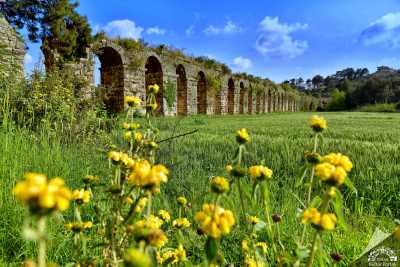
Isinda Ancient City is on the peak and slopes of a hill three kilometers south of Belenli village in Kaş district. Isinda is a small settlement whose name we do not often encounter in ancient writers. Three funerary monuments written in Lycian language that are still visible show that the city was inhabited before the first half of the 4th century BC. It was represented together with Aperlai in the 2nd century BC, when the Lycian Union was formed. Just like in Apollonia, there are inscriptions showing the name of the city as “Aperlaians of Isinda”.
Antalya Provincial Directorate of Culture and Tourism
Isinda is more of a fortified position. The city continued its existence for a long time and was abandoned over time as Antiphellos developed and became rich during the Paxromana period and the people of Isinda migrated to this coastal city.
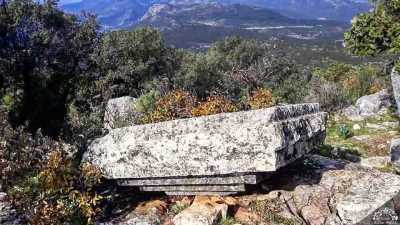
Among the surviving ruins of the city of Isinda, the city walls surrounding the acropolis, made of regular rectangular limestone blocks, which are natural formations of the region, are more prominent, especially in the north and northeast corners. There are wells and cisterns within the walls of Isinda to collect rainwater. Additionally, foundation traces of a long building can be seen near the middle of the wall. The most important ruins of this small city are two monumental house-shaped tombs with Lycian inscriptions on their pediments, under the acropolis peak. In addition to rock tombs in the direction of Belenli or in the direction of Aperlai, Lycian type sarcophagi from the Roman period can also be seen.
Source: “İsinda” Antalya from Past to Today (Volume II), Antalya Provincial Directorate of Culture and Tourism (2012)
Places to Visit in Antalya
Source: Antalya Provincial Culture and Tourism Directorate