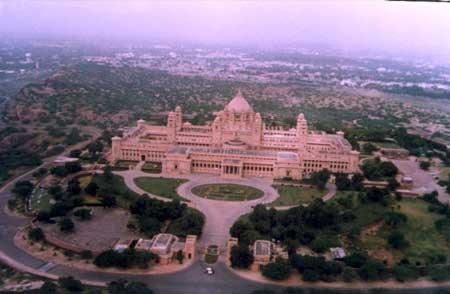
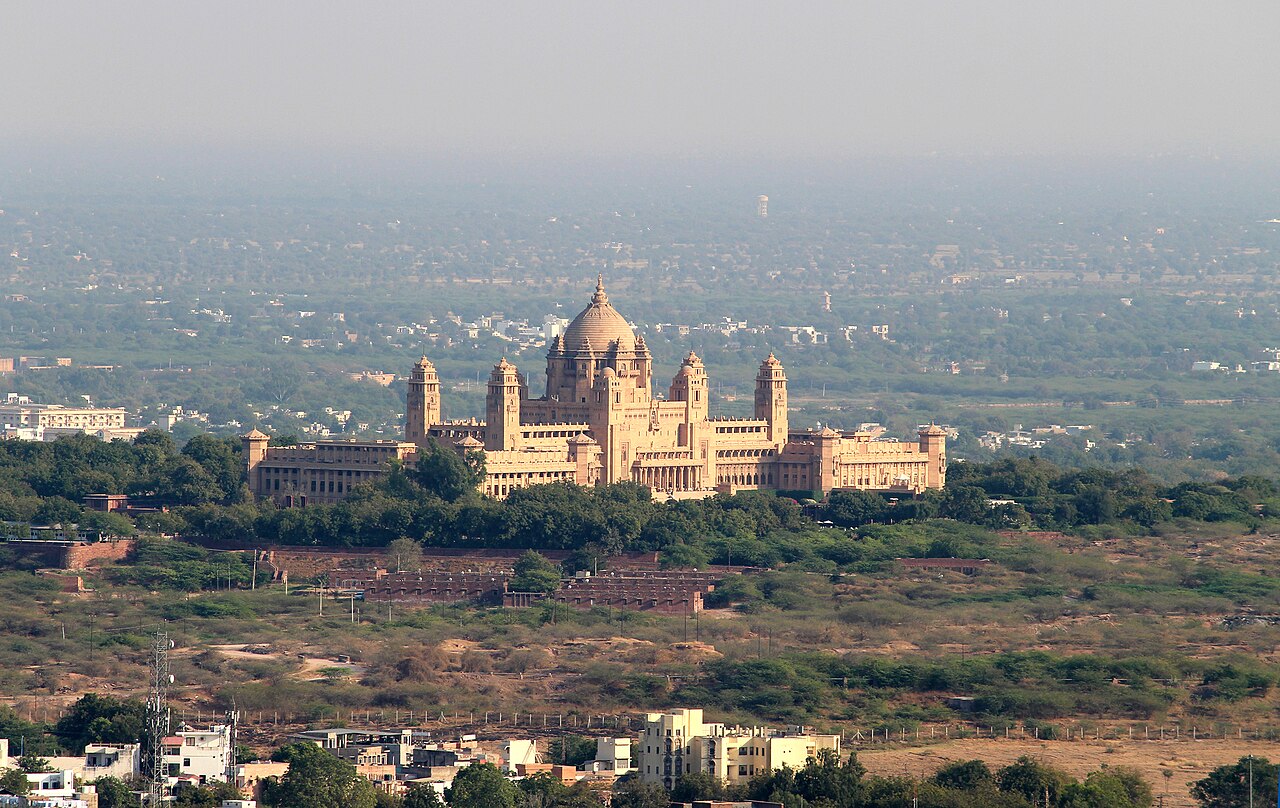
On a rise above the blue city of Jodhpur, in the desert state of Rajasthan, stands a palace of honey-gold sandstone crowned by a great dome, its silhouette unlike anything else in India. This is Umaid Bhawan Palace, one of the largest private residences ever built, a monument that blends the grandeur of Indian tradition with the sleek lines of Art Deco, and one of the last of the truly colossal palaces of the princely age.
Yet the most remarkable thing about Umaid Bhawan is not its size or its style but the reason it was built. It rose during a time of terrible famine, commissioned by the maharaja of Jodhpur expressly to give work and wages to thousands of his people through years of drought and hardship. It is a palace born of compassion as much as of grandeur, a public work disguised as a private home.
Today Umaid Bhawan wears three faces at once: it remains the residence of the royal family of Jodhpur, it houses one of the most celebrated luxury hotels in the world, and it holds a museum of the dynasty’s treasures. To arrive is to enter a place where history, hospitality, and living royalty meet beneath a single golden dome. In the sections that follow you will get to know the palace, its extraordinary origin, and the maharaja whose name it bears.
In This Article
- A Golden Dome Above the Blue City
- A Palace Built to Feed the Hungry
- The Maharaja and His Desert Kingdom
- Golden Stone and Years of Labour
- Where Rajput Tradition Meets Art Deco
- The Deco Interiors and a Ship Lost at Sea
- Hundreds of Rooms Beneath One Dome
- One Palace, Three Lives
- A Living Royal Home
- A Palace of Luxury and Celebration
- The Palace and the Blue City
- The Palace on Film
- Visiting Umaid Bhawan Today
A Golden Dome Above the Blue City
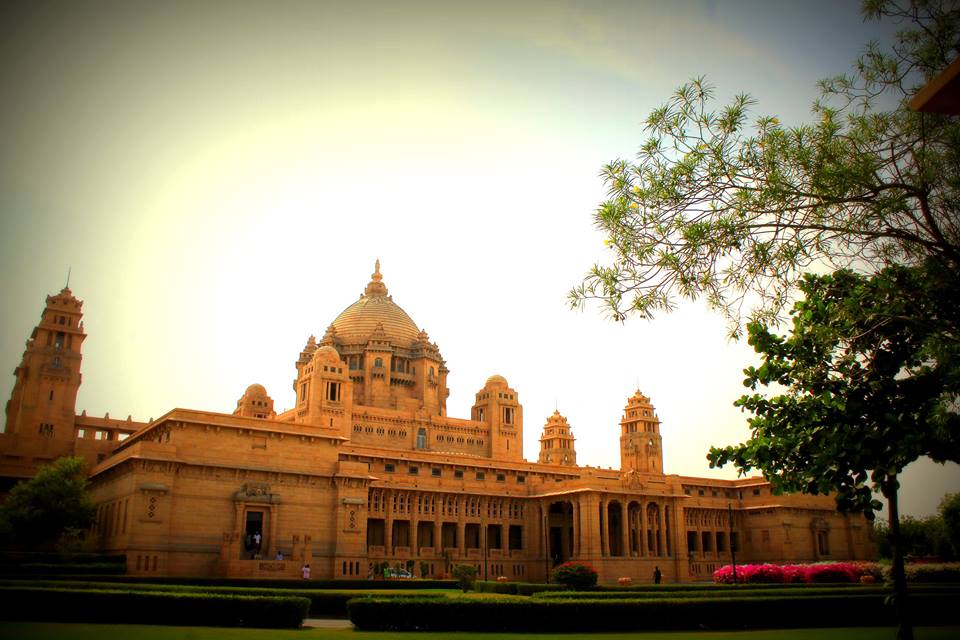
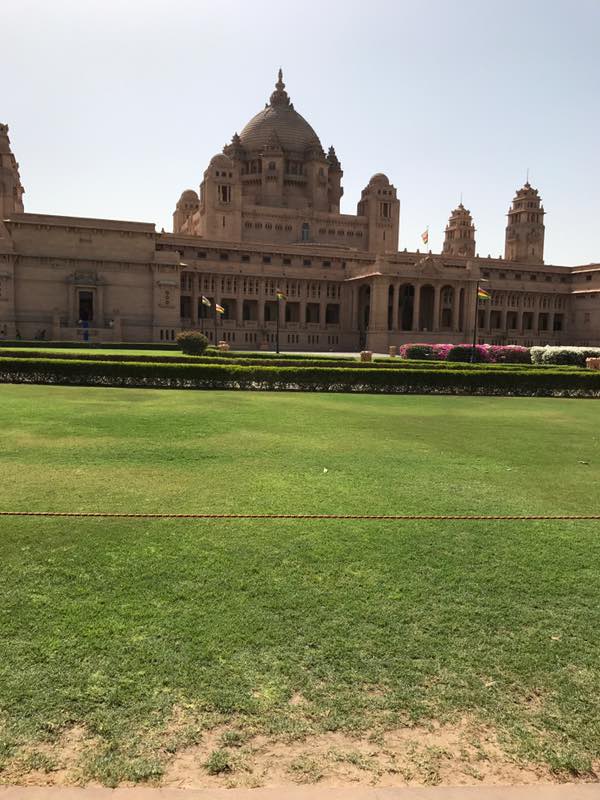
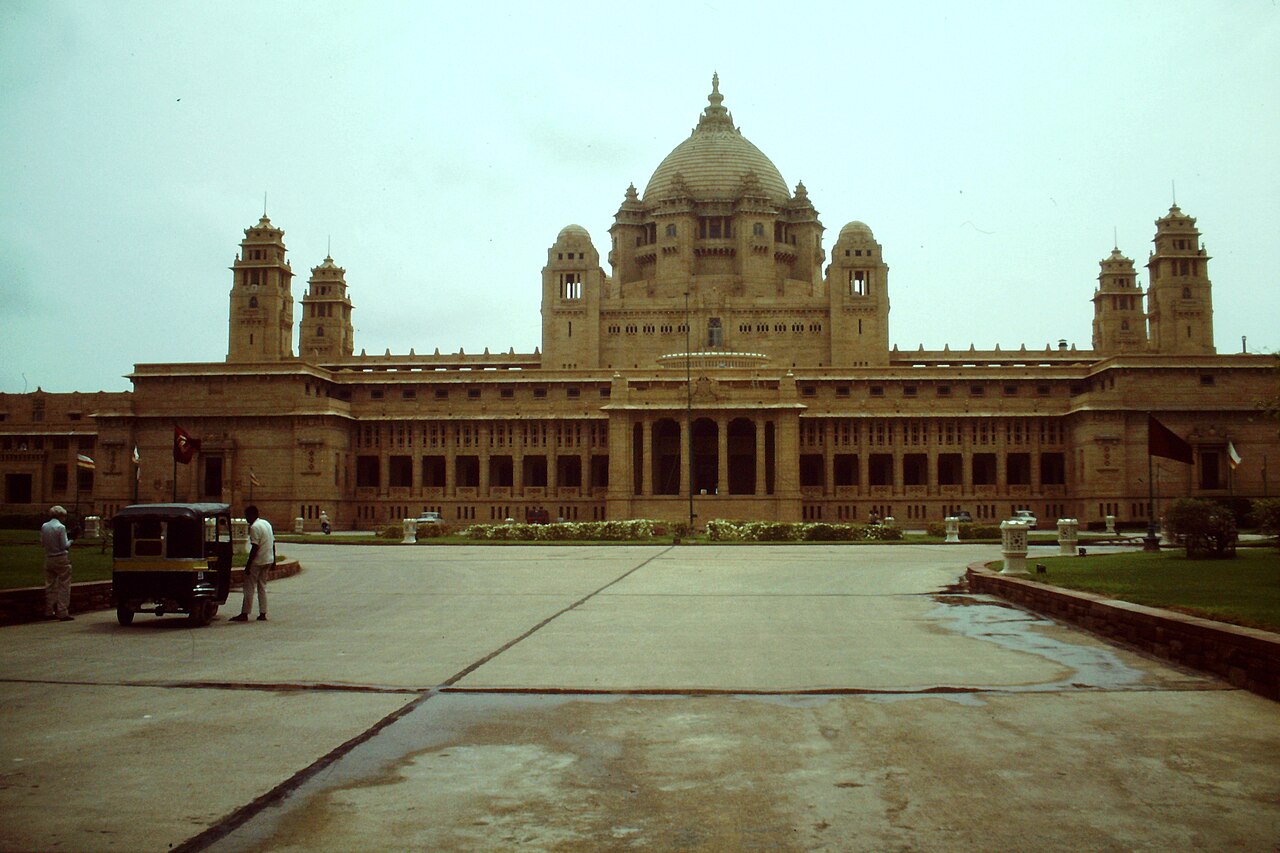
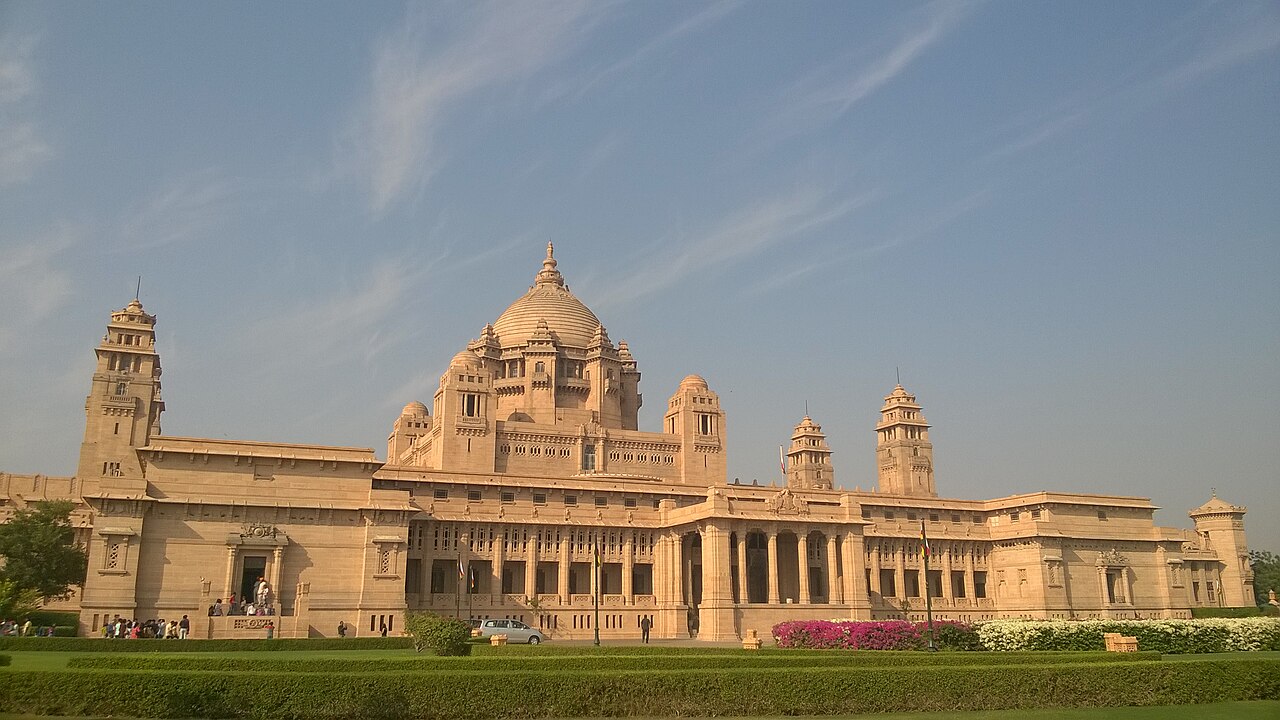
The first sight of Umaid Bhawan is unforgettable. Set on a hill above Jodhpur, it rises in warm, golden sandstone to a great central dome, its long symmetrical wings stretching out beneath, the whole composition at once monumental and strangely modern. In a land of ancient forts and traditional palaces, its clean lines and Deco-inflected grandeur mark it as something quite different, a palace of the twentieth century.
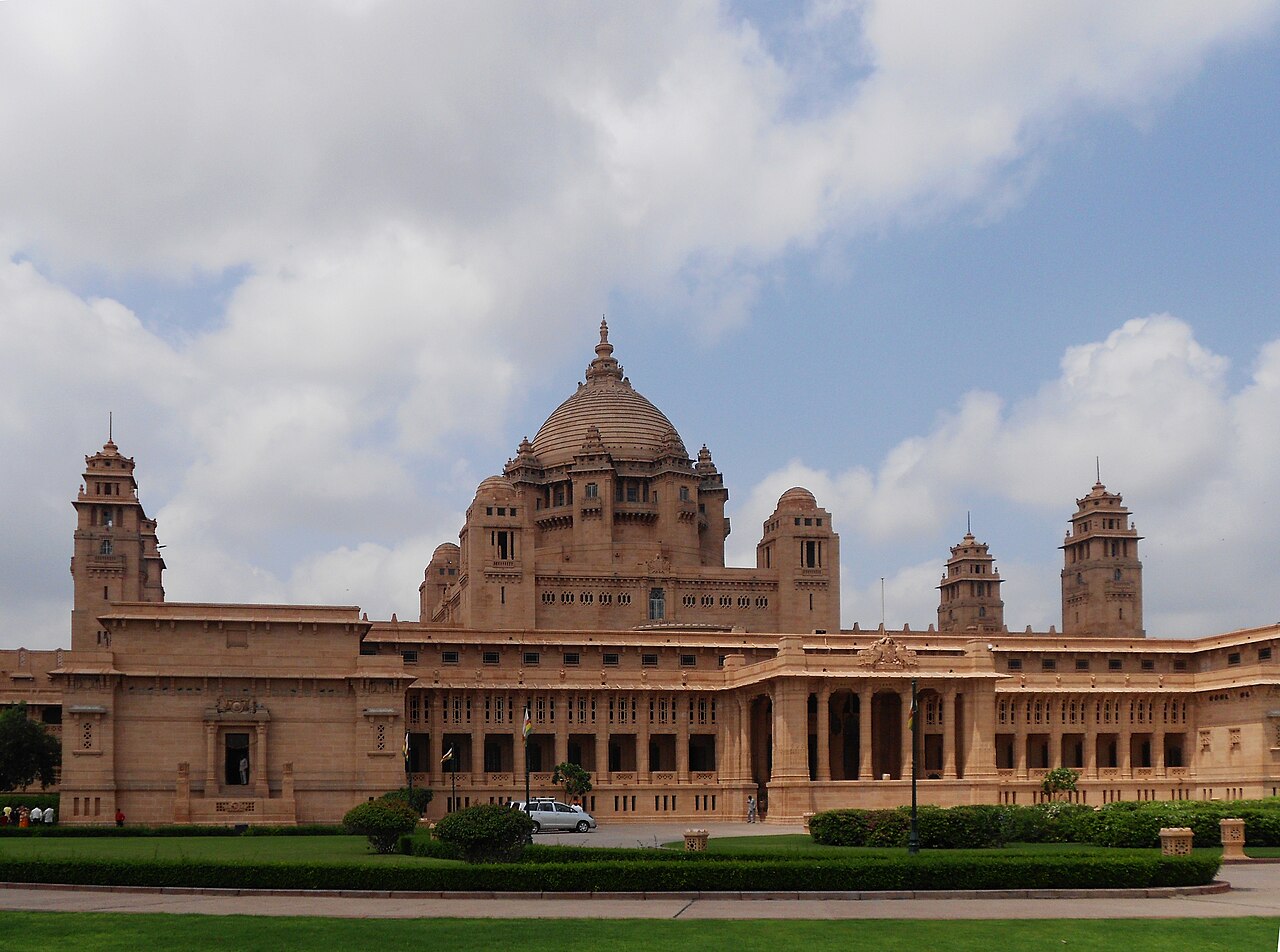
The building glows in the desert light, its pale golden stone catching the sun so that it seems to shine against the sky. From its terraces and gardens the city of Jodhpur spreads below, the famous blue-painted houses of the old town clustered beneath the great fort on its crag, so that the palace commands one of the most striking urban views in all of India.
For all its size, the design has a coherence and calm that set it apart from more fevered palace architecture. The symmetry of its plan, the balance of its wings around the central dome, and the restraint of its ornament give it a dignity that is grand without being fussy, a reflection of the particular moment in which it was conceived, when Indian tradition met the modern taste of the age.
To approach Umaid Bhawan is thus to encounter a palace that feels both timeless and of its time, rooted in the traditions of Rajasthan yet reaching toward the modern world. Its golden dome has become one of the emblems of Jodhpur, a landmark visible across the city and a promise of the splendour and the remarkable story contained within.
Seen at sunset, when the low light sets the sandstone ablaze and the dome stands dark against a burning sky, it is one of the most beautiful sights in a state famous for beautiful buildings.
A Palace Built to Feed the Hungry
The origin of Umaid Bhawan is one of the most moving stories attached to any palace in the world. It was built during a period of severe famine, when a prolonged drought brought hardship and hunger to the people of the desert state of Marwar, of which Jodhpur was the capital. Faced with the suffering of his subjects, the maharaja conceived a response that was as practical as it was grand.
Rather than simply distributing charity, the maharaja commissioned the building of an enormous palace, a project that would take many years and employ thousands of people, providing them with work and wages through the lean years of the famine. In this way the construction became a vast programme of relief, turning the desperate energy of a starving population into the raising of a monument.
For well over a decade, the building of the palace sustained a great workforce, giving employment to labourers, stonemasons, and craftsmen who might otherwise have had no means of survival. The scale and slowness of the project were, in this light, not extravagance but mercy, spreading its benefits across the years of hardship and touching countless families in the state.
This origin gives Umaid Bhawan a moral dimension that few palaces possess. It stands not only as a display of royal wealth but as a monument to a ruler’s response to his people’s suffering, a public work in the guise of a private residence. To know its story is to see the golden dome differently, as the crown of an act of compassion that fed a starving land.
There is a deep dignity in the idea. Charity that simply hands out food can leave its recipients idle and dependent; work, by contrast, lets people earn their bread and keep their pride. By choosing to build rather than merely to give, the maharaja offered his people wages and purpose through the worst of the drought, and the palace that resulted is, in a sense, a receipt for those years of honest labour, written in golden stone.
It is this, more than its dome or its size, that makes people remember Umaid Bhawan once they have heard its story.
The Maharaja and His Desert Kingdom
The palace bears the name of the ruler who built it, Maharaja Umaid Singh of Jodhpur, and it stands as the great monument of his reign. He ruled the state of Marwar, one of the most important of the princely states of Rajasthan, a desert kingdom with a proud history stretching back centuries and a warrior tradition embodied in the great fort that towers over Jodhpur.
Umaid Singh was a moderniser as well as a traditional ruler, interested in the new technologies and ideas of his age, and the palace reflects this outlook in its embrace of modern design and construction alongside the grandeur expected of a maharaja. His decision to meet the famine with so ambitious a public work speaks to a ruler who thought on a large scale and who saw the welfare of his people as a royal responsibility.
The Rathore dynasty to which he belonged had ruled Marwar for generations from the mighty Mehrangarh Fort, and the building of a vast new palace marked a shift toward a more modern kind of royal residence, one suited to the changing world of the twentieth century. Umaid Bhawan was to be the family’s grand new home, a statement of the dynasty’s enduring wealth and standing.
In building it, Umaid Singh created a lasting memorial to himself and his reign, one that continues to shelter his descendants and to bear his name. The palace is inseparable from his memory, and to understand it is to understand a ruler who combined the grandeur of a maharaja with a modern sensibility and a real concern for the people of his desert kingdom in their hour of need.
That his name still adorns the palace, and that his descendants still live within it, is a fitting tribute to a ruler whose great building outlasted the age of princes and became one of the enduring landmarks of modern Rajasthan.
Golden Stone and Years of Labour
The construction of Umaid Bhawan was a monumental undertaking that stretched across many years, from its beginning late in the 1920s to its completion in the early 1940s. It was designed by a distinguished British architect of the period, who brought to the project the latest currents in Western design, blending them with Indian tradition to create the palace’s distinctive character.
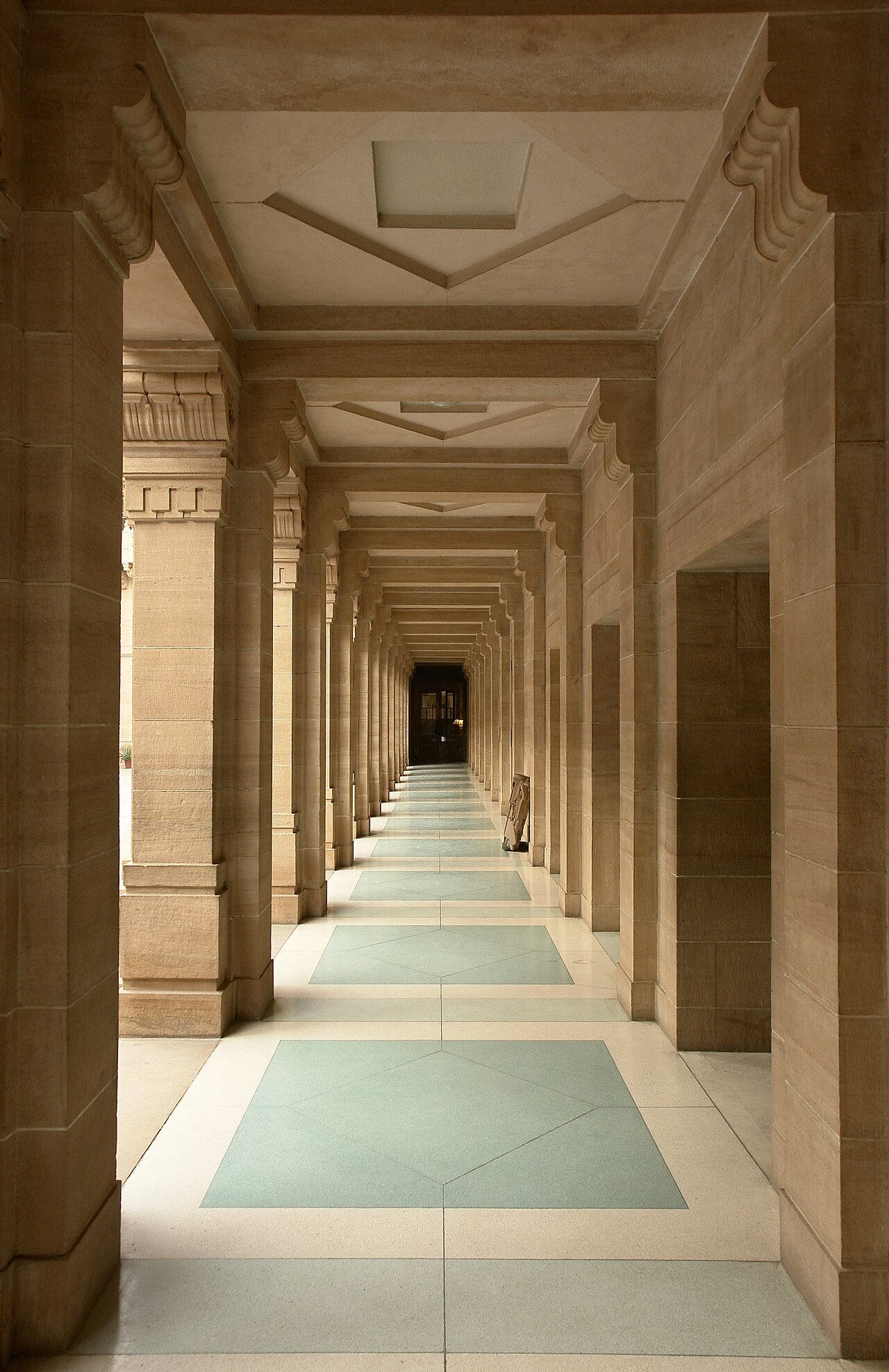
The building is constructed of the golden-yellow sandstone for which the region is known, a warm honey-coloured stone that gives the palace its glowing appearance. Much of it was built using finely cut blocks fitted together with great precision, a technique that gives the masonry a smooth, seamless quality and has led to the palace sometimes being known by a name referring to this special stone.
The scale of the work was immense, and it drew on the labour of a great workforce over its long years of construction, the same workforce whose employment was the palace’s charitable purpose. Vast quantities of stone were quarried, cut, and raised, and the building rose slowly and steadily, its progress measured in the wages it paid as much as in the walls it raised.
The result of all this labour was one of the last great palaces of princely India, a building that stands comparison with the largest private residences anywhere in the world. Its construction, spanning the years of famine and reaching completion on the eve of great political change, marks it as a kind of culmination, the final flowering of an age of princely palace-building that was about to pass into history.
The precision of the stonework is one of the palace’s quiet marvels. In parts of the building the blocks are cut to interlock so exactly that they hold together with little need for mortar, a feat of craftsmanship that speaks to the skill of the masons who spent years shaping the golden stone into this vast and seamless whole.
Where Rajput Tradition Meets Art Deco
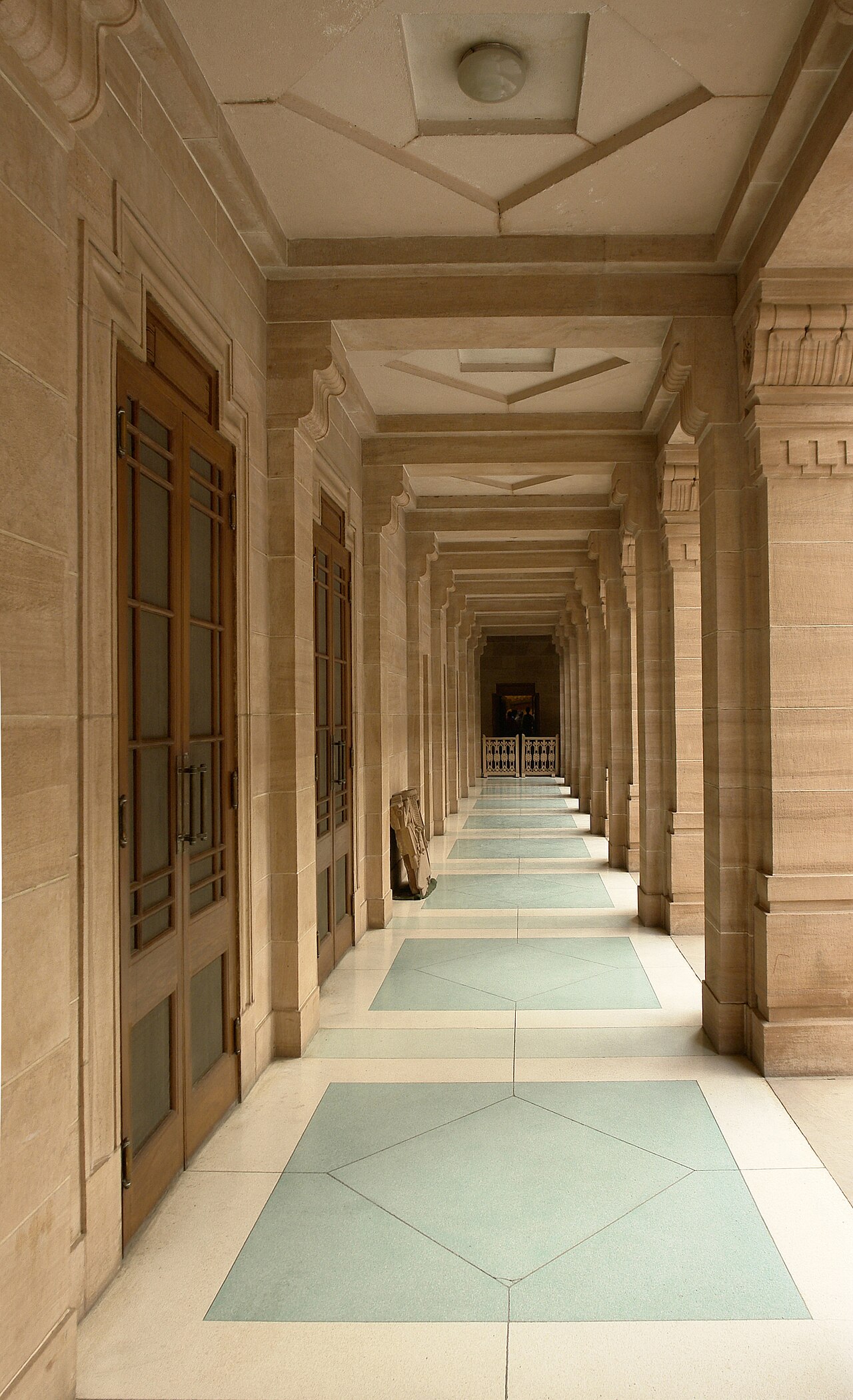
Architecturally, Umaid Bhawan is a fascinating fusion of styles, blending the traditions of Indian, and especially Rajput, architecture with the fashionable modern manner of its day, above all Art Deco and Western classicism. This combination gives the palace its unique character, at once rooted in the architecture of Rajasthan and unmistakably a product of the twentieth century.
The great central dome dominates the design, rising high above the symmetrical wings and drawing on Renaissance and classical inspiration as much as on Indian tradition. Beneath it, the plan unfolds with a grand balance and order, its long ranges of rooms and its central rotunda arranged around the dome in a composition of considerable sophistication and calm.
The Art Deco influence is felt throughout, in the clean lines, the geometric ornament, and the sleek modern sensibility that runs alongside more traditional Indian elements. This was a palace built for a maharaja who embraced the modern age, and its architecture reflects that outlook, marrying the grandeur of the past with the style of the present in a way that few buildings achieve so successfully.
The effect is a palace that feels both grand and surprisingly modern, a monument that could only have been built in its particular moment, when Indian princes looked outward to the fashionable currents of the wider world while remaining proudly rooted in their own traditions. Umaid Bhawan is one of the finest and most complete expressions of that meeting of worlds, a golden Deco palace in the heart of royal Rajasthan.
Seen against the older architecture of Rajasthan, with its carved screens and clustered domes, Umaid Bhawan can look almost startlingly restrained, its grandeur expressed through mass, symmetry, and the glow of its stone rather than through dense ornament. That restraint is precisely what marks it as a building of the modern age, and what gives it its calm, commanding presence.
The Deco Interiors and a Ship Lost at Sea
One of the most extraordinary stories about Umaid Bhawan concerns its interiors. The palace was to have been furnished with fine European furniture and fittings, ordered and shipped from abroad, but during the upheavals of the Second World War the vessel carrying much of this precious cargo was lost, sunk at sea, so that the treasures intended for the palace never arrived.
Faced with this loss, the maharaja turned to an artist who happened to be in India at the time, a talented Polish painter and designer, who took on the task of decorating the interiors. This artist created striking Art Deco murals and interiors for the palace, so that what might have been a disaster instead gave Umaid Bhawan a set of interiors of real distinction and originality, the work of a single gifted hand.
The murals and decorative schemes he produced, drawing on both Western Deco style and Indian themes, are among the treasures of the palace, giving its principal rooms a bold, modern, and highly individual character. The story of the lost ship and the artist who stepped in has become part of the legend of Umaid Bhawan, a tale of misfortune transformed into unexpected beauty.
These interiors complete the palace’s character as a monument of the Art Deco age. Where its architecture blends Indian tradition with modern design, its interiors carry that modern spirit indoors, in murals and finishes that are unmistakably of their period. The result is a palace whose inside matches its outside in originality, a complete and coherent work of the Deco imagination adapted to the world of an Indian maharaja.
It is one of history’s happier accidents. Had the ship arrived safely, the palace would have been furnished, no doubt handsomely, in imported European taste much like other grand houses of the age. Instead, chance handed it a distinctive artistic identity of its own, so that Umaid Bhawan carries interiors found nowhere else, the singular vision of one artist working far from home in the palace of a maharaja.
His work here remains a highlight for many who tour the palace.
Hundreds of Rooms Beneath One Dome
Umaid Bhawan is famous for its sheer size, counted among the largest private residences ever built, with hundreds of rooms arranged beneath and around its great dome. The scale is staggering: a building conceived to house not only the maharaja and his family but the whole apparatus of a royal court, with grand halls, apartments, and every facility a princely household could require.
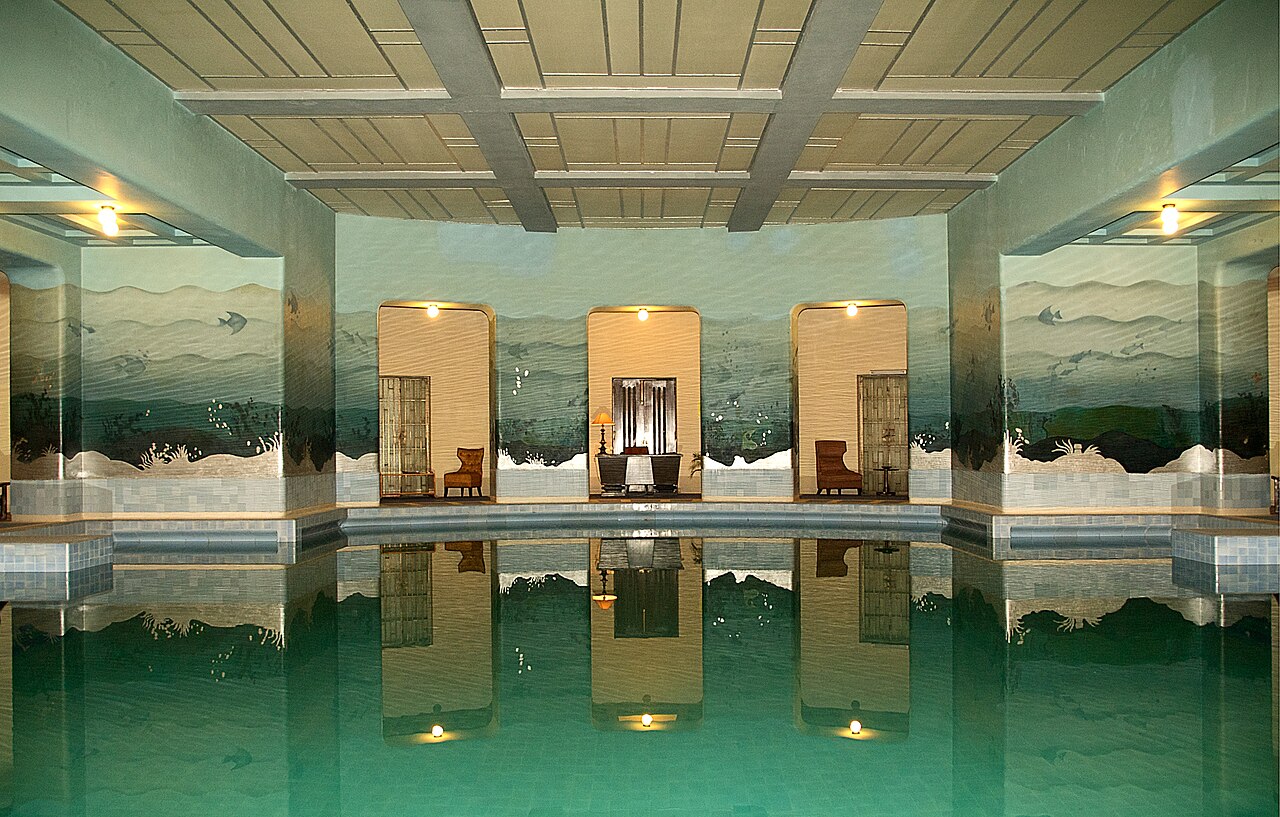
Among its many features were the luxuries expected of a modern palace of its age, from grand reception rooms to private amenities, including, famously, an indoor space for swimming, a mark of the up-to-date comforts the maharaja demanded. The palace was designed to be a self-contained world, providing for ceremony, comfort, and pleasure on a scale befitting one of India’s leading princes.
This vastness served the palace’s dual purpose. As a public work, its size meant more years of employment and more wages paid during the famine; as a residence, it provided a home grand enough to express the standing of the Jodhpur dynasty in the modern world. The great scale, in other words, was both a charitable virtue and a statement of royal magnificence.
For the visitor today, the size of Umaid Bhawan remains one of its most impressive qualities. Whether experienced as a hotel guest, a museum visitor, or an admirer of its exterior, the sheer extent of the building, its long wings and towering dome, conveys the ambition of its creation. It stands as one of the last and largest of the great palaces of the princely era, a monument to a vanishing scale of private grandeur.
For all these hundreds of rooms, the palace never feels merely like a warehouse of space. The great domed rotunda at its heart draws the whole composition together, so that the vastness is organised around a single soaring centre, and the visitor moving through the building is always aware of that dome above, holding the enormous house together.
One Palace, Three Lives
What makes Umaid Bhawan unusual among great palaces is the way it lives three lives at once. The vast building is divided into three parts, each serving a different purpose, so that the same golden walls contain a private royal residence, a world-famous luxury hotel, and a museum, coexisting beneath the single great dome.
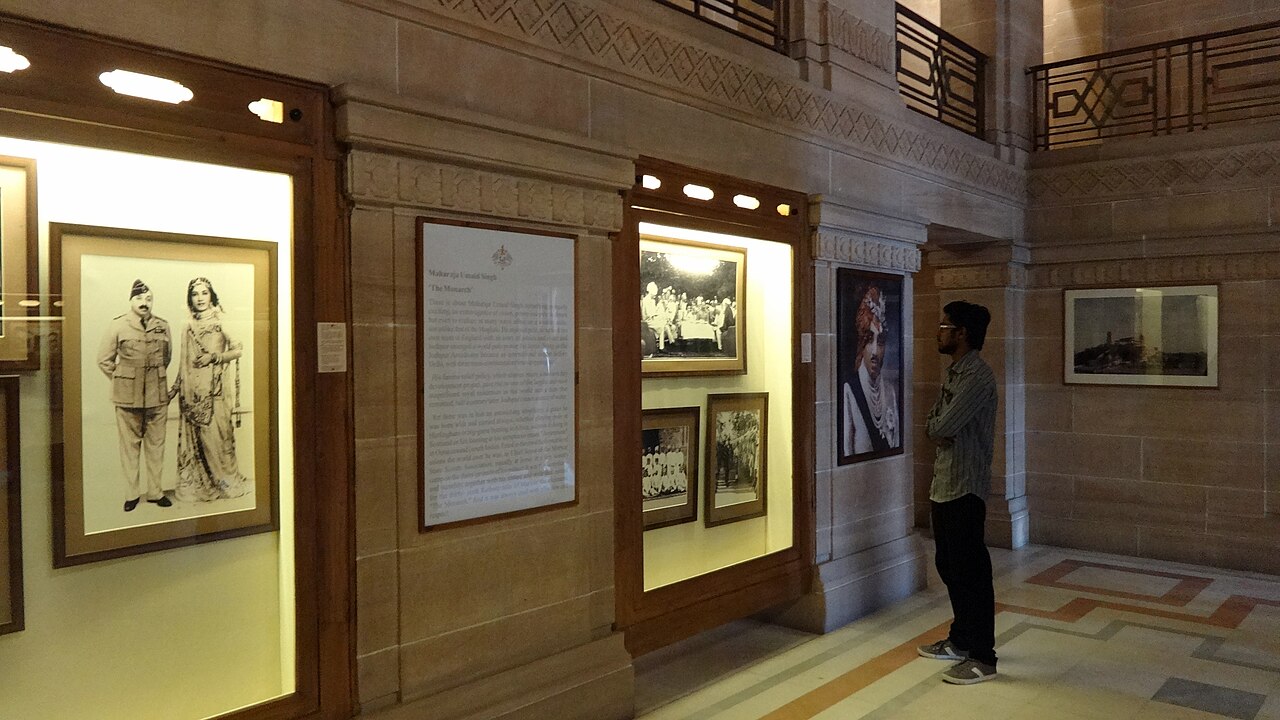
One portion of the palace remains the private home of the royal family of Jodhpur, who continue to live in the residence their ancestor built. Another substantial part operates as a luxury hotel, allowing guests to stay within the palace and experience something of its splendour. A third section houses a museum displaying the treasures, history, and memorabilia of the dynasty.
This threefold arrangement is a clever and practical solution to the challenge of maintaining so enormous a building in the modern world. By opening part of the palace as a hotel and part as a museum, the family generates the means to sustain the whole, while continuing to live in their historic home, a model that has helped ensure the survival of the palace in fine condition.
For the visitor, this arrangement means that Umaid Bhawan can be experienced in several ways: as a hotel guest enjoying its luxury, as a museum visitor exploring its history, or simply as an admirer of one of India’s great buildings. That a single palace should be at once a living home, a grand hotel, and a museum is part of what makes Umaid Bhawan so distinctive among the palaces of the world.
The arrangement also quietly answers a question that has defeated many aristocratic families elsewhere: how to keep an enormous historic house alive without either abandoning it or freezing it into a lifeless museum. Umaid Bhawan’s answer, to let the building earn its own keep while remaining a home, has become a model admired well beyond India.
A Living Royal Home
Like the finest of India’s surviving palaces, Umaid Bhawan is not a dead monument but a living royal home, still associated with and inhabited by the descendants of the maharaja who built it. The Jodhpur royal family maintains its residence within the palace, keeping alive the connection between the building and the dynasty whose name and history it embodies.
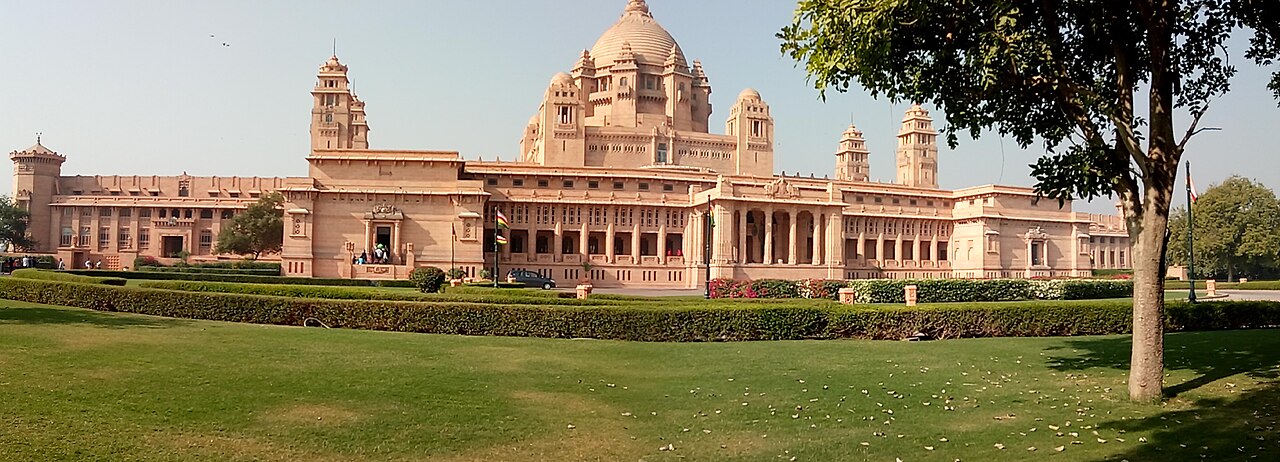
This continuity gives the palace a special resonance. The family that lives within its walls are the heirs of the ruler who built it to feed his people, and their continued presence links the modern palace directly to its origins and to the long history of the Rathore dynasty of Marwar. Umaid Bhawan is, in a real sense, still doing its original job as a family home.
The royal family remains a respected presence in Jodhpur and beyond, associated with cultural and charitable activities and with the stewardship of their remarkable heritage. Their custodianship of the palace, and their decision to share much of it with the world as hotel and museum, has ensured that this great building continues to be cared for and to play a role in the life of the city and the region.
For visitors, the knowledge that Umaid Bhawan remains a family home adds a rare intimacy to the experience. This is not merely a preserved relic but a living palace, home to the descendants of its founder, where the princely past continues into the present. Few of the world’s grand palaces retain so direct a link to the dynasty that created them, and it is part of what makes Umaid Bhawan so special.
In a century that turned so many palaces into ticket offices, that continuity is quietly precious.
A Palace of Luxury and Celebration
In its life as a luxury hotel, Umaid Bhawan has become one of the most celebrated and sought-after destinations in the world. Guests can stay within the palace, in rooms and suites of great splendour, and experience the hospitality, service, and grandeur of a genuine maharaja’s residence, an experience that has earned the hotel a place among the most admired in the world.
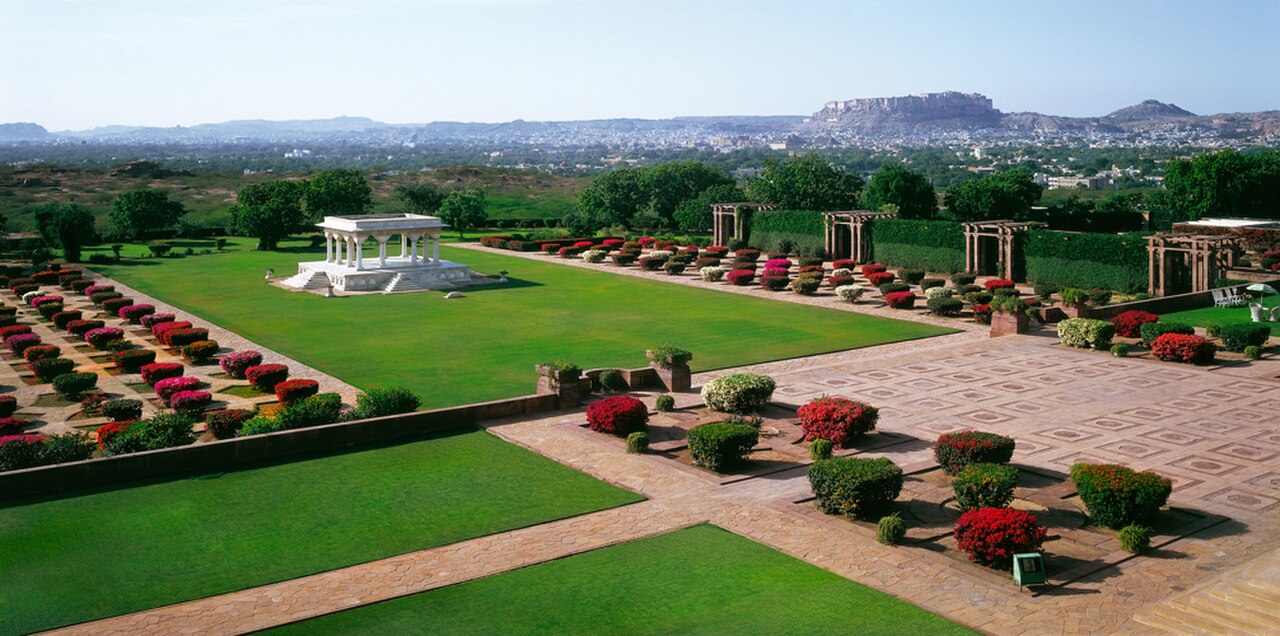
The palace has become especially famous as a setting for grand celebrations, above all weddings, drawing couples and guests from around the world who wish to marry amid its golden halls and gardens. Its combination of royal splendour, romantic setting, and superb hospitality has made it a byword for luxury celebration, and high-profile events held there have brought it international fame.
This role as a place of celebration continues, in its way, the palace’s original function as a stage for grand occasions. Where once it hosted the ceremonies of a princely court, it now hosts the great events of guests from across the globe, its golden architecture and its gardens providing an incomparable backdrop for weddings, parties, and gatherings of every kind.
For those fortunate enough to stay or celebrate there, Umaid Bhawan offers a rare chance to live, however briefly, like royalty, within one of the largest and most beautiful private palaces on earth. The hotel has ensured that the splendour of the palace is not confined to memory or museum but remains a living experience, shared with guests who come to taste the magic of princely Jodhpur.
Its fame as a wedding destination has, in recent years, spread around the globe, and images of its golden halls dressed for celebration have carried the name of Jodhpur to audiences who might never otherwise have heard of the desert kingdom of Marwar.
The Palace and the Blue City
Umaid Bhawan cannot be separated from its setting in Jodhpur, one of the most atmospheric cities in India. Known as the Blue City for the blue-painted houses that cluster in its old quarter, Jodhpur is dominated by the mighty Mehrangarh Fort, which rises on a great crag above the town, the ancient stronghold of the Rathore rulers before the age of the modern palace.
From Umaid Bhawan, the visitor looks out over this remarkable landscape: the blue houses, the bustling old city, and the vast fort on its rock, a panorama that tells the whole story of Jodhpur at a glance. The palace and the fort together represent two ages of the dynasty, the medieval stronghold and the modern residence, gazing at each other across the city they have ruled.
Jodhpur sits on the edge of the great Thar Desert, and the golden stone of Umaid Bhawan seems to belong to this arid, sun-baked land, glowing with the same warm light as the desert around it. The city is a gateway to the wonders of Rajasthan, with its forts, palaces, and desert landscapes, and Umaid Bhawan is one of its crowning attractions.
To visit the palace is thus also to explore one of India’s most rewarding cities. The fort, the old town, the markets, and the desert beyond all form part of the experience, and Umaid Bhawan, on its hill above it all, provides both a magnificent destination and a superb vantage point from which to take in the beauty and history of the Blue City and its desert kingdom.
Few cities offer so complete a royal landscape in a single view, and the palace’s hilltop terraces are among the best places of all to take it in.
The Palace on Film
The scale and beauty of Umaid Bhawan, its golden dome, its Art Deco interiors, its commanding views over Jodhpur, are best appreciated in motion, and the short film below offers a tour that brings the palace and its story to life. Watching it alongside the images in this article helps convey the grandeur and the atmosphere of this remarkable building.
If you are planning a visit to Jodhpur, or dreaming of a stay at the palace, a video like this is a fine way to prepare, letting you recognise its highlights and understand the extraordinary story of its creation as a famine relief project and its life today as home, hotel, and museum. It sets the palace in the context of Jodhpur and its desert kingdom.
And if a visit lies beyond your plans for now, the film lets you tour one of the world’s largest private palaces from afar. Let it play, and picture yourself beneath the golden dome of Umaid Bhawan, gazing out over the Blue City, in the last great palace of the maharajas of Jodhpur.
Visiting Umaid Bhawan Today
For travellers to Rajasthan, Umaid Bhawan Palace is one of the great sights of Jodhpur, and it can be experienced in several ways. Guests may stay in the luxury hotel that occupies part of the palace, enjoying its rooms, gardens, and hospitality, while others can visit the museum, which is open to the public and displays the history and treasures of the Jodhpur dynasty, so it is worth checking current arrangements.
The museum offers a fine introduction to the palace and its story, with exhibits on the building’s construction, the royal family, and the history of Marwar, along with displays of memorabilia, vintage cars, clocks, and other treasures. It allows visitors who are not hotel guests to experience something of the palace and to learn the remarkable tale of its origins.
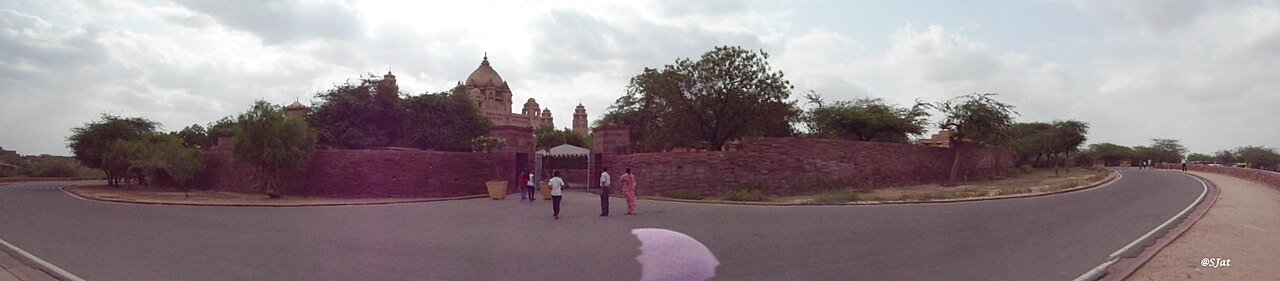
As with any lived-in palace that is also a working hotel, visitors should be mindful that parts of the building are private or reserved for guests, and should follow the guidance about which areas may be seen. Appreciating the palace also means taking in its setting, the views over the Blue City and toward the great fort, which are among the finest in Jodhpur.
However you come to it, Umaid Bhawan offers a rare experience: a chance to encounter one of the largest and most beautiful private palaces ever built, a monument that was also an act of compassion, and that lives on as home, hotel, and museum beneath its golden dome. To visit is to touch the world of the maharajas of Jodhpur and to stand before a palace whose story is as moving as its architecture is magnificent.
Palaces Nearby
If the golden palace of Jodhpur has captured you, these two other palaces of India’s princely states make a natural next stop.
- Falaknuma Palace and the Fabulous Riches of the Nizams of Hyderabad — the hilltop palace of Hyderabad’s fabulously rich Nizams.
- Laxmi Vilas Palace, the Baroda Home Larger Than Buckingham Palace — the vast Indo-Saracenic seat of the Gaekwads of Baroda.
You May Like