Here is a fact that surprises almost everyone the first time they hear it. The country with the most pyramids in the world is not Egypt. It is Sudan. Just south of Egypt, in the deserts of what was once called Nubia, there stand somewhere around 200 to 250 ancient pyramids, far more than Egypt ever built. They are smaller and steeper than their famous northern cousins, and for a long time the world more or less forgot they were there. But the story behind them, the story of the kingdom of Kush, is one of the most remarkable and overlooked chapters in all of ancient history. In this piece I want to introduce you to these forgotten pyramids, the powerful African kingdom that raised them, and the strange twist of history in which Black pharaohs once ruled Egypt itself.
Table of Contents
- Where are the Nubian pyramids?
- The kingdom of Kush
- When Nubians ruled Egypt
- Why they look so different
- The pyramids of Meroë
- Treasure, tombs, and a destructive explorer
- Why the world forgot them
- The pyramids today
- Closing thoughts
Where are the Nubian pyramids?
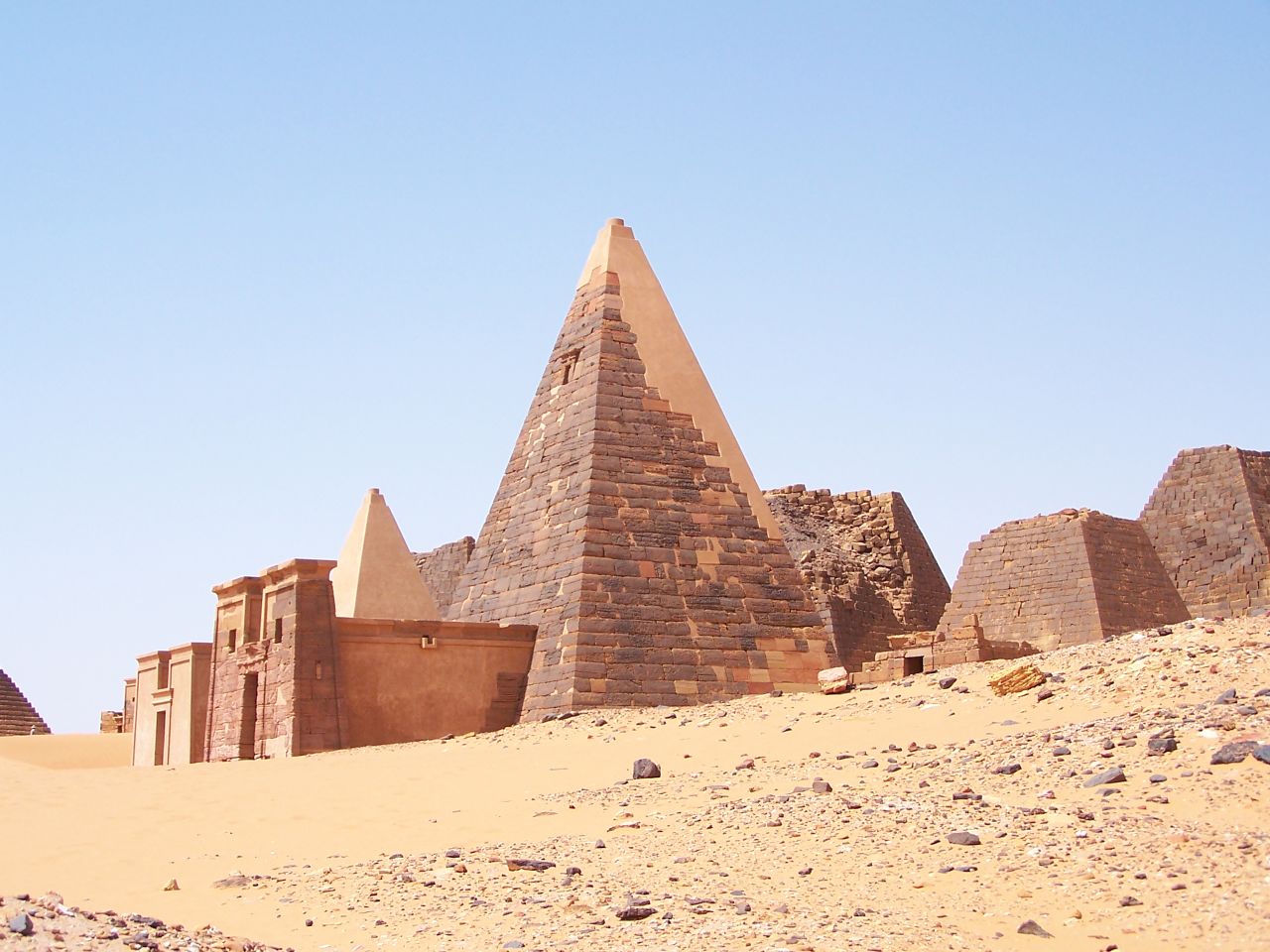
The Nubian pyramids stand in modern-day Sudan, in the region that ancient peoples called Nubia. This was the land along the Nile to the south of Egypt, beyond the natural rocky barriers in the river known as the cataracts. For thousands of years Nubia and Egypt were neighbors, trading partners, rivals, and at times each other’s conquerors. The two cultures were deeply intertwined, which is part of why the Nubians eventually adopted the pyramid as their own royal monument.
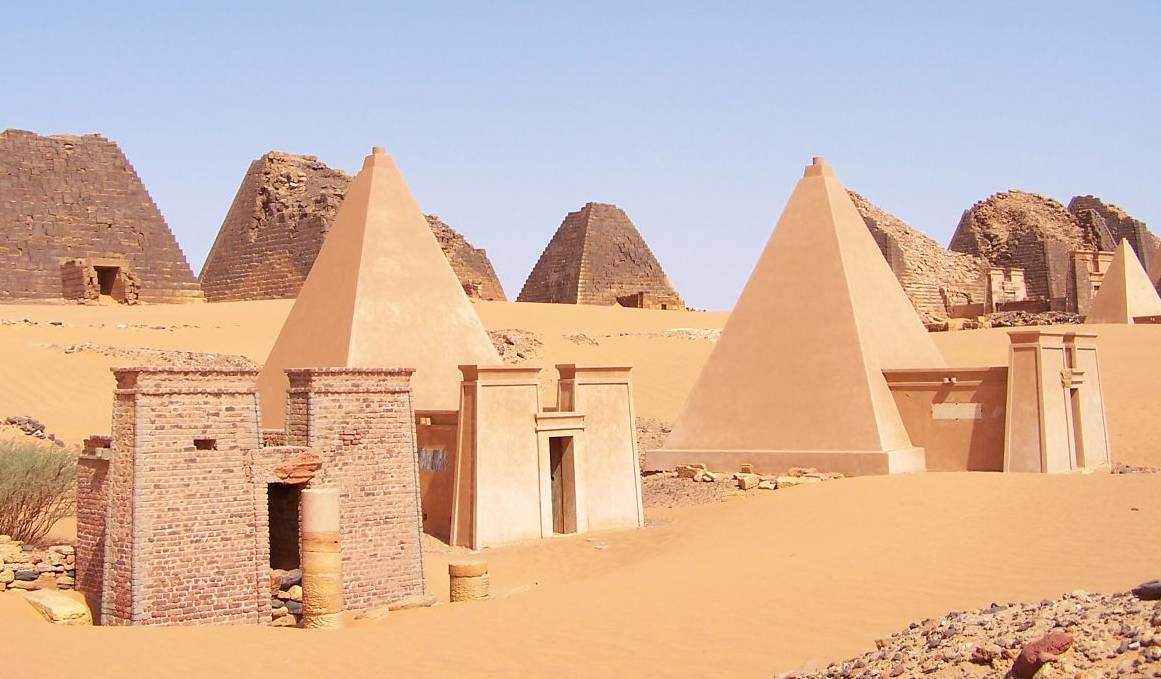
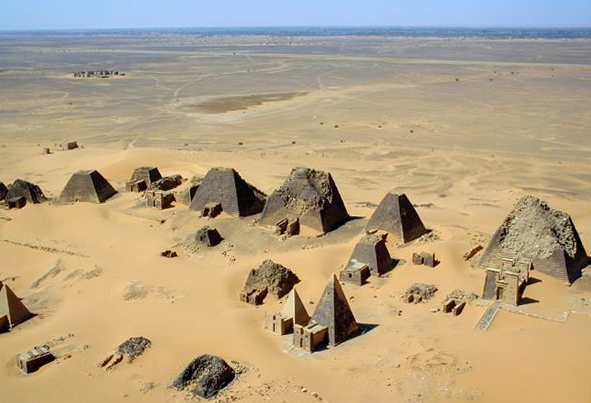
The pyramids are spread across several sites, with names like El-Kurru, Nuri, and most famously Meroë. At Meroë in particular, dozens of steep, narrow pyramids cluster together on desert ridges, packed far more tightly than anything at Giza. When you see photographs of them rising in rows out of the golden sand, with no crowds and often not another soul in sight, they have a haunting, lost-world quality that the heavily visited Egyptian sites simply cannot match anymore.
Numbers help drive the point home. While Egypt built around 120 or so pyramids over its long history, the Nubians built well over twice that many in their own homeland. They are just spread across more sites and built on a smaller, steeper scale, which is part of why they never grabbed the same headlines. But if you are simply counting pyramids on the ground, Sudan wins, and it is not even close.
The kingdom of Kush
The people who built these pyramids belonged to the kingdom of Kush, one of Africa’s great ancient civilizations. Kush rose along the upper Nile and lasted, in various forms, for well over a thousand years. It was wealthy, powerful, and sophisticated, controlling trade in gold, ivory, ebony, and other goods that flowed up and down the Nile and out into the wider ancient world. Gold was so central to the region that the very name Nubia may be linked to an old word for it.
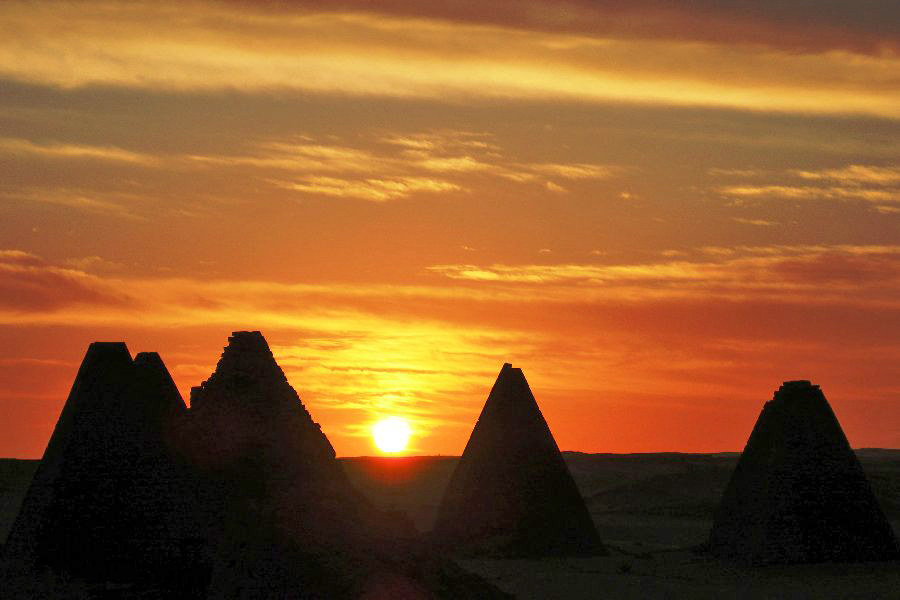
For much of its history Kush lived in the cultural shadow of Egypt, borrowing many of its gods, its writing, its art styles, and eventually its royal tradition of building pyramids over the tombs of kings and queens. But it would be a mistake to think of Kush as a mere copy of Egypt. The Kushites blended these borrowed ideas with their own deeply African traditions, languages, and beliefs, producing a civilization that was distinct and self-confident. In time they even developed their own writing system, a script we can read phonetically but still cannot fully translate, which means the Kushites partly remain a people speaking to us in a language we have not finished decoding.
To picture the geography, imagine the Nile flowing northward through a series of stony rapids, the cataracts, that acted like natural gateways and frontiers. South of those rapids lay the heartland of Kush, with successive capitals rising over the centuries, first at Kerma in very ancient times, then at Napata near the sacred mountain of Jebel Barkal, and finally at Meroë further south. Each shift of capital marked a new chapter in the kingdom’s long life, and each left behind monuments and pyramid fields that archaeologists still study today. This was not a brief flash of civilization but a deep, continuous tradition stretching across more than a millennium.
When Nubians ruled Egypt
Now comes the part of the story that really should be in every history textbook and somehow often is not. Around the eighth century BCE, when Egypt had fallen into weakness and division, the kings of Kush marched north and conquered it. For roughly a century, Nubian rulers governed all of Egypt as pharaohs. Historians call them the Twenty-fifth Dynasty, or more vividly, the Black Pharaohs.
These Kushite kings, with names like Piye, Shabaka, and the great Taharqa, did not simply loot Egypt and leave. They saw themselves as the rightful restorers of ancient Egyptian tradition and religion. They repaired temples that had fallen into ruin, revived old religious practices, and launched a wave of building and artistic activity. Under their rule, pyramid construction, which had largely stopped in Egypt centuries earlier, came back into fashion, this time driven by kings from the south. It is one of history’s great reversals. The civilization that Egypt had long looked down upon as a southern frontier ended up sitting on its throne and reviving its oldest customs.
Eventually, an invasion by the Assyrians, armed with iron weapons, pushed the Kushites back out of Egypt and down the Nile to their homeland. But the experience left a permanent mark. Back home, the kings of Kush kept building pyramids over their tombs for many more centuries, long after the practice had died out completely in Egypt. In a real sense, the Nubians kept the pyramid tradition alive after the Egyptians themselves had given it up.
Taharqa in particular looms large in this era. He was a builder and a warrior whose reach extended across both Egypt and Nubia, and his name even appears in some ancient near-eastern records of the period. Under rulers like him, the Nile valley was, for a time, united under southern leadership in a way that would have seemed unthinkable to earlier Egyptians who regarded Nubia mainly as a source of gold and soldiers. The Black Pharaohs flipped that relationship on its head.
Why they look so different
If you put a Nubian pyramid next to the Great Pyramid of Giza, you would immediately notice they are not built to the same recipe. The differences are striking, and they tell us a lot.
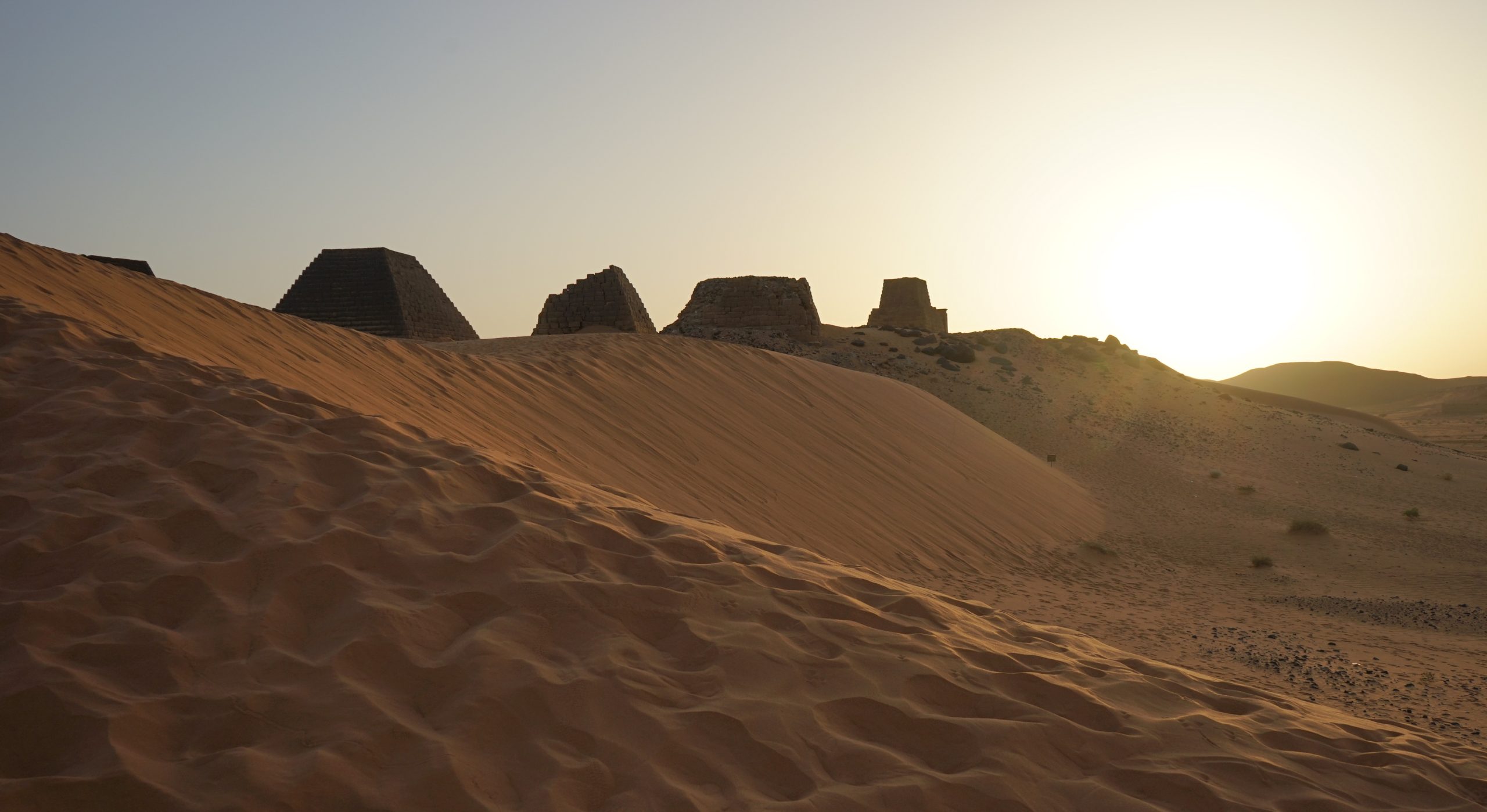
First, the size. Nubian pyramids are much smaller, typically rising somewhere between six and thirty meters, a fraction of the height of the great Egyptian monuments. Second, and more obviously, they are far steeper. The sides climb at a sharp angle, often around 70 degrees, giving them a slender, almost needle-like profile compared to the broad, gentle slopes of the Egyptian pyramids. Stand among them and they feel tall and narrow rather than massive and wide.
They were also built with a different technique and on a different scale of ambition. Many were constructed with stepped courses of sandstone, and a number of them were attached to a small offering chapel on the eastern side, where rituals for the dead could be performed. The actual burial chamber was usually cut into the rock beneath the pyramid rather than inside it. So while they share the pyramid silhouette with Egypt, the Nubian version is really its own architectural idea, adapted to local materials, local beliefs, and a kingdom that wanted royal monuments without the colossal expense of Giza-scale construction.
The pyramids of Meroë
The grandest collection of all stands at Meroë, which became the great royal capital of Kush for centuries. Here, generation after generation of kings and queens were buried beneath their own pyramids, until the desert ridges filled with them. Today the site holds dozens of pyramids grouped together, and it is the single most spectacular pyramid field in Sudan.
One striking feature of Meroë is the prominence of women. Kush was ruled at various points by powerful queens, sometimes called Kandakes, a title that may be the origin of the name Candace. These were not figurehead consorts but reigning monarchs and warrior queens who led their kingdom in their own right, and they too were honored with pyramids. In an ancient world where female rulers were rare, the queens of Meroë stand out as genuine sovereigns commemorated with the same royal monuments as kings.
Meroë was also an industrial powerhouse of its day. The city sat in a region rich in iron ore and timber for fuel, and it became a major center of ironworking, producing weapons and tools that some historians have nicknamed the Birmingham of ancient Africa. Great mounds of slag, the waste left over from smelting iron, still surround the ancient city, silent evidence of a busy manufacturing economy that helped make Kush rich and strong.
The reason Meroë rose to such prominence had a lot to do with its location. Set further south and east of the older capitals, it was better watered by seasonal rains and sat astride lucrative trade routes that connected the Nile to the Red Sea and to the rest of Africa. Caravans and rivercraft carried goods through the city, and the wealth that flowed in paid for the temples, palaces, and royal pyramids that made it the jewel of Kush. The kingdom centered on Meroë flourished for centuries, outliving the great age of the pharaohs in Egypt by a very long stretch.
Treasure, tombs, and a destructive explorer
The story of the Meroë pyramids has a villain, and his name was Giuseppe Ferlini. In the 1830s, this Italian treasure hunter came to Sudan and, in his hunt for gold, did something almost unthinkable. He blew the tops off dozens of the pyramids, smashing their summits in the hope that riches were hidden inside.
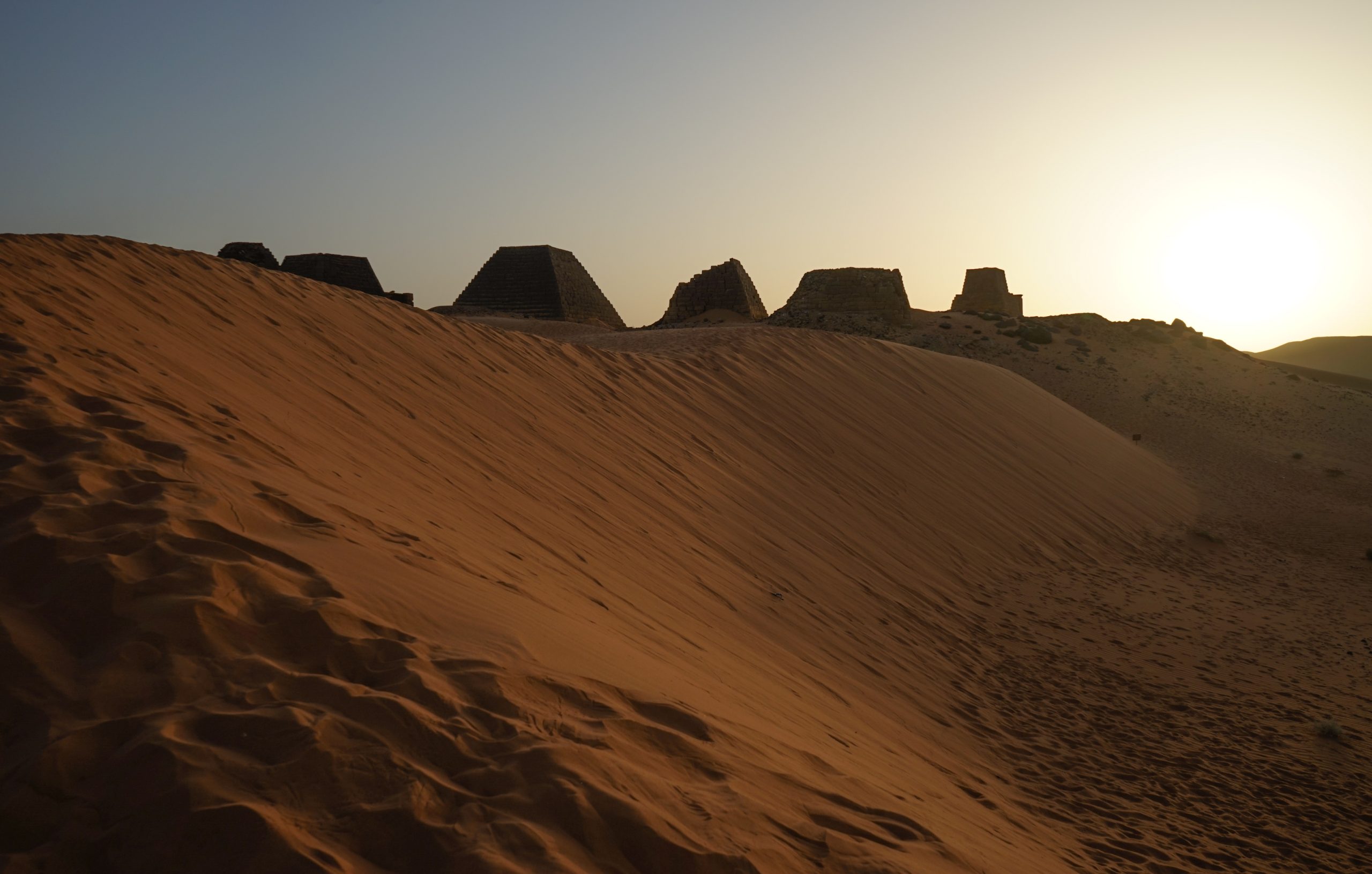
In one pyramid he struck it lucky, uncovering a stunning hoard of gold and jewelry that had belonged to a Kushite queen named Amanishakheto. The treasure was real and magnificent, and much of it ended up in European museums, where some of it remains today. But the cost was devastating. Ferlini’s reckless demolition is the reason so many of the Meroë pyramids today appear flat-topped or broken, their original pointed peaks blasted away forever in a frenzy of greed. It is one of the most painful examples of how early treasure hunting, with no regard for history, permanently scarred an ancient wonder.
Why the world forgot them
So why have so few people heard of these pyramids, when they outnumber Egypt’s? A few reasons come together. For one, Egypt’s pyramids are simply bigger, older, and were swept up early into the Western imagination through centuries of travelers, paintings, and later Hollywood films. Egypt became the headline act, and Nubia was treated as a footnote.
There is also an uncomfortable historical bias at work. For a long time, many European scholars were reluctant to credit a Black African civilization with such achievements, and some even tried to explain the Nubian pyramids as the work of outsiders rather than the local people who actually built them. That prejudice slowed honest study and kept Kush out of the popular story of the ancient world. On top of all that, modern Sudan has often been difficult for tourists and researchers to reach, with remoteness, conflict, and political instability keeping visitor numbers low. The result is that one of humanity’s great achievements sat in relative obscurity, even as crowds packed the plateau at Giza just a few hundred kilometers to the north.
It is worth pausing on how strange this neglect really is. We are talking about hundreds of royal monuments, an entire ancient African empire that conquered and ruled Egypt, powerful queens who led armies, and a thriving iron industry, all of it comparatively absent from the popular story of the ancient world that most of us absorb in school. Imagine if the situation were reversed and it was Egypt that sat forgotten while Sudan filled the textbooks. The imbalance tells you something important about whose history gets remembered and whose gets quietly set aside, and correcting that imbalance is part of why telling the story of Kush matters.
The pyramids today
The Meroë pyramids are now recognized as a World Heritage Site, a long-overdue acknowledgment of their importance, and archaeologists continue to uncover the secrets of Kush. Yet the challenges remain serious. The shifting desert sands constantly threaten to bury the monuments, and conservation teams work to hold the dunes back. Beyond nature, instability and conflict in the region have repeatedly put both the sites and the people who study them at risk.
Still, awareness is slowly growing. As more people learn that Sudan, not Egypt, holds the most pyramids on Earth, interest in the kingdom of Kush has begun to rise. Each new study, each restored chapel, each deciphered inscription brings this remarkable civilization a little further out of the shadows and back into the story where it belongs.
For the people of Sudan, these pyramids are also a source of deep national pride, a tangible link to a glorious and independent African past that long predates the colonial era. Reclaiming and celebrating that heritage has become meaningful in its own right, a way of insisting that this history belongs at the center of the human story rather than its margins.
Closing thoughts
The Nubian pyramids are a powerful reminder that history is far richer and more surprising than the famous highlights we all grow up with. South of the Egypt everyone knows, a great African kingdom built hundreds of pyramids of its own, produced powerful warrior queens, smelted iron on an industrial scale, and at one extraordinary moment even ruled Egypt itself as pharaohs.
That so many people have never heard of Kush says less about the kingdom and more about the gaps and biases in how we have told the story of the past. The pyramids of Meroë deserve to stand in our imagination right alongside Giza and Chichén Itzá, not as a curiosity or a footnote, but as the proud monuments of a civilization that shaped the ancient Nile every bit as much as its more famous neighbor. Next time someone asks which country has the most pyramids, you will know the answer, and the wonderful story behind it.
To keep exploring, browse more on topics like pyramids, the Nubian pyramids, the kingdom of Kush, Meroë, Nubia, and ancient Sudan.
You May Like
The Bardo, a Palace of the Beys Filled With Roman Mosaics